

C0755 on 2015-2022 GMC Acadia: TPMS and Key Fob Fixes
Code C0755 on a 2015-2022 GMC Acadia indicates a fault with the left front tire pressure sensor. The most common fix is replacing the sensor itself due to a dead battery. However, if key fob issues are also present, the problem is very likely a faulty Remote Control Door Lock Receiver (RCDLR), a known failure point that requires professional replacement and programming.
- C0755 means there's a problem with the left front TPMS sensor signal.
- The most likely cause is a dead battery in the sensor itself, which requires replacing the sensor.
- If your key fob is also not working, the problem is very likely the Remote Control Door Lock Receiver (RCDLR) module, as noted in a GM Technical Service Bulletin.
- A TPMS diagnostic tool is essential for accurate diagnosis to avoid replacing unnecessary parts.
- After any repair, a TPMS relearn procedure is required to sync the sensor with the vehicle.
What's Unique About the 2015-2022 Gmc ACADIA
On many GM vehicles, including the Acadia and its platform mates (Chevy Traverse, Buick Enclave), the Tire Pressure Monitoring System (TPMS) and the keyless entry system are linked. Both systems send their radio frequency (RF) signals to a single module: the Remote Control Door Lock Receiver (RCDLR). This module is typically located in the rear of the vehicle, often behind the interior trim panel on the passenger side. Because of this shared component, an internal fault within the RCDLR can cause seemingly unrelated symptoms, such as a TPMS warning light and a non-responsive key fob, as highlighted in manufacturer service bulletins.
Diagnostic Flowchart
Tap your situation to follow the diagnostic path that matches what you're seeing on this vehicle.
Generation note: The 2015-2022 range covers two generations of the GMC Acadia: the first generation (through 2016) and the second generation (2017-2023). The underlying TPMS architecture, where the RCDLR receives sensor signals, is similar across both generations. However, the specific TPMS sensor frequency differs: models up to mid-2016 use 315 MHz sensors, while models from mid-2016 onward use 433 MHz sensors. It is critical to use the correct frequency for the specific model year.
Symptoms You May Notice
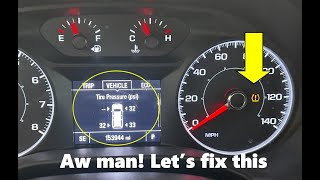
- "Service Tire Monitor System" message on the driver information center.
- TPMS warning light flashes for about a minute at startup, then stays on solid.
- The tire pressure display shows dashes (--) for the left front tire.
- Key fob functions (lock, unlock, remote start) may be inoperative or work only intermittently.
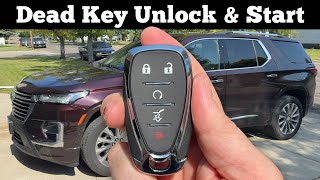
- "No Remote Detected" message on the DIC, even with the key fob inside the vehicle. 🎬 Watch: How to start your vehicle with a dead key fob.
- In some cases, a no-start or start-and-stall condition with the security light on.
- Replacing the Body Control Module (BCM) when the RCDLR is the actual cause. The RCDLR communicates with the BCM, but is often the source of the fault for this specific code.
- Replacing the key fob or its battery. If the key fob battery is good but the fob doesn't work, and a TPMS code is present, the issue is more likely with the vehicle's receiver (RCDLR), not the fob itself.
Most Likely Causes
- Dead TPMS Sensor Battery 🔴 High Probability → Shop Tire Pressure Monitoring System (TPMS) Sensor TPMS sensor batteries have a finite, sealed-in lifespan, typically 5-10 years. Vehicles in this year range are reaching the age where battery failure is a common maintenance item.
How to confirm: Use a TPMS diagnostic tool to attempt to 'wake up' or read the sensor. If the tool gets no response from the left front sensor but can read the other three, the sensor has almost certainly failed.
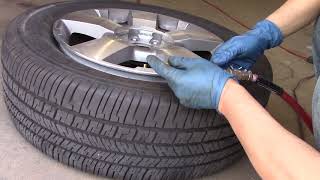
Typical fix: Replace the left front TPMS sensor 🎬 Watch: A step-by-step guide to replacing the TPMS sensor yourself. and perform a TPMS relearn procedure. It is often cost-effective to replace all four sensors if they are original and the tires are being replaced anyway.
Est. part cost: $20-$70 per sensor - Faulty Remote Control Door Lock Receiver (RCDLR) 🟡 Medium Probability → Shop Keyless Entry Receiver As documented in TSB #16-NA-396 and PI1085, internal issues within the RCDLR can cause it to stop receiving signals from TPMS sensors and key fobs. This is a well-known failure point on this platform.
How to confirm: This is the likely cause if multiple TPMS codes (C0750, C0755, C0760, C0765) are present simultaneously, and/or the key fobs are not working. A professional scan tool is needed to check for communication errors with the RCDLR. The problem may be intermittent at first.
Typical fix: Replace the RCDLR module. This part is located in the rear of the vehicle and must be programmed to the vehicle by a dealer or a qualified shop with GM-specific software.
Est. part cost: $100-$250 - Failed TPMS Relearn Procedure ⚪ Low Probability After a tire rotation or sensor replacement, if the TPMS relearn procedure is not performed or fails, the BCM will expect the sensor signal from the wrong location, setting a code. If one sensor cannot be learned, the procedure will fail for all of them.
How to confirm: This is a likely cause if the light appeared immediately after a tire rotation or new tire installation. A Reddit user noted that after a failed relearn attempt, all tire pressure readings disappeared until the faulty sensor was replaced and the relearn was completed successfully.
Typical fix: Perform the TPMS relearn procedure using either the vehicle's DIC menu and a TPMS tool, or the key fob method.
Est. part cost: $0
Rare But Worth Checking
- Wiring Harness or Connector Issue:
Diagnosis Steps
- Check the tire pressure display. Note if the left front reading is missing or showing dashes.
- Test key fob functionality (lock, unlock, remote start) from a normal distance. If it is inoperative or has very poor range, suspect the RCDLR.
- Using a TPMS diagnostic tool, attempt to read all four sensors. If the left front sensor does not respond, it has likely failed due to a dead battery.
- If the sensor responds to the tool, attempt a TPMS relearn procedure via the Driver Information Center (DIC). Note that if one sensor has failed, the relearn procedure will not complete for any of the wheels.
- If the relearn fails for all wheels, or if key fob issues are also present, the primary suspect becomes the Remote Control Door Lock Receiver (RCDLR).
- Locate and inspect the RCDLR and its wiring. It is generally in the rear passenger side of the vehicle, behind the trim panel, near the seatbelt mechanism. Check for loose connections or wire damage.
- Scan the BCM for any other related trouble codes (C0750, C0760, C0765, B3055) to help confirm an RCDLR fault.
Parts You'll Likely Need
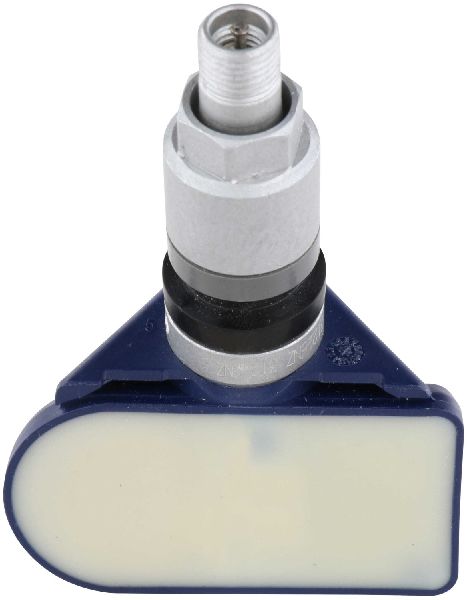
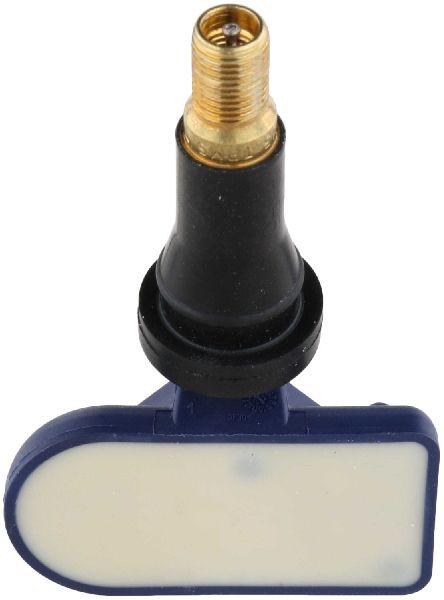
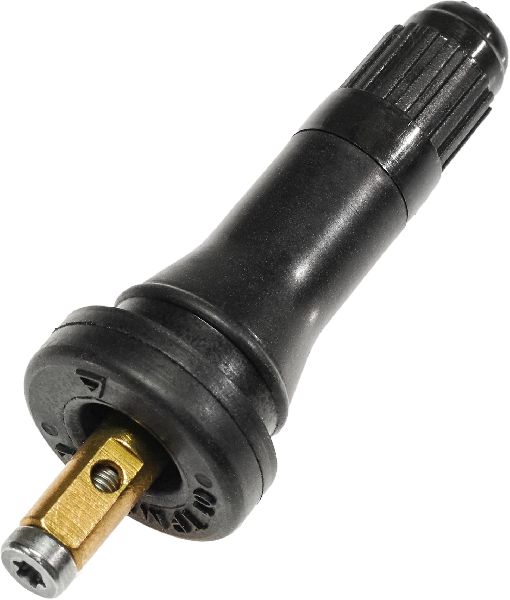
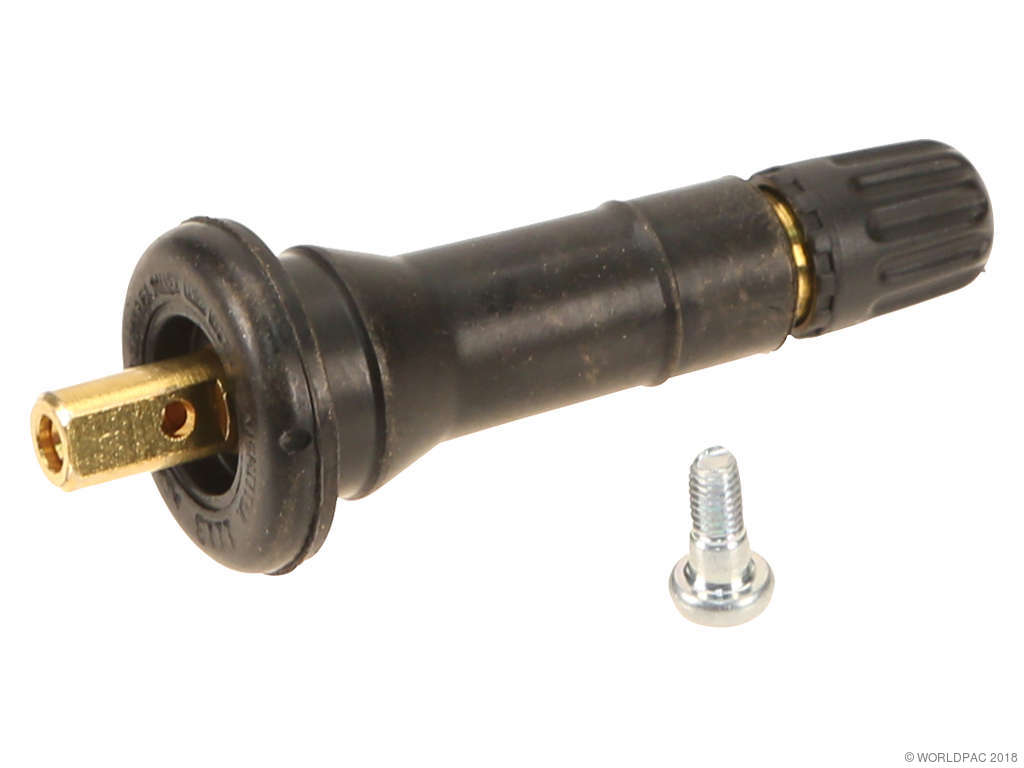
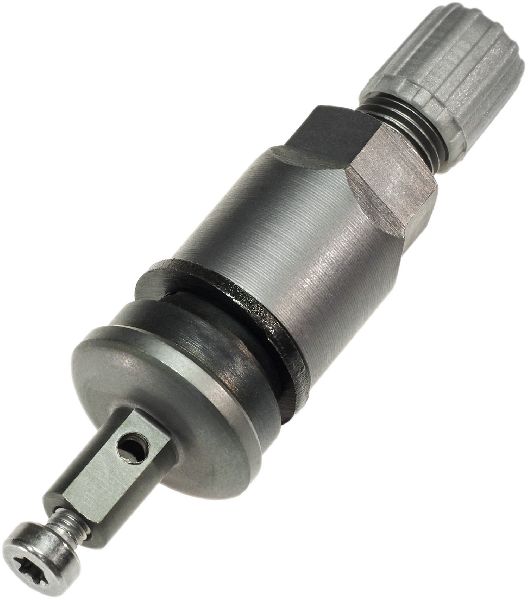
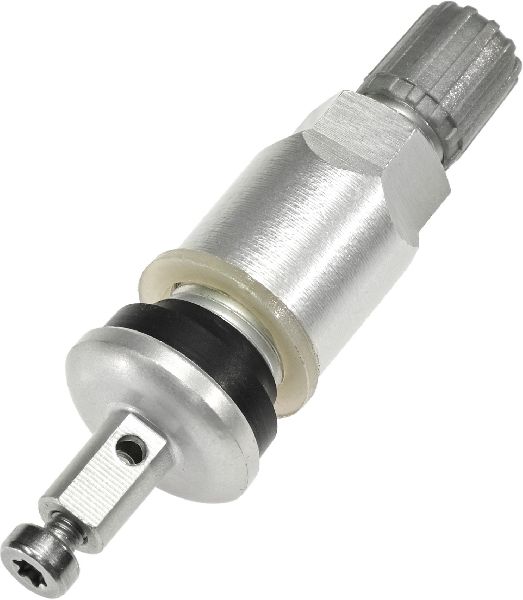
- Tire Pressure Monitoring System (TPMS) Sensor
(OEM #13586335 or 13598771 (315 MHz, for models up to mid-2016) / 13516165 or 13598772 (433 MHz, for models from mid-2016 on))— This is the most frequent cause of failure, usually due to an exhausted internal battery after 5-10 years of service.
Trusted brands: ACDelco, Schrader, Continental, Huf
OEM price range: $40-$70
Aftermarket price range: $20-$50 - Remote Control Door Lock Receiver (RCDLR)
(OEM #20863945 or 13595511 (Part numbers can vary by year and specific options, always verify with VIN))— This module is a known failure point documented in TSBs. It fails internally, causing it to lose communication with both TPMS sensors and key fobs.
Trusted brands: ACDelco (GM Genuine Part)
OEM price range: $100-$250
Aftermarket price range: $75-$150
Related Codes That Often Appear With This One
- C0750 — This code is for the Right Front TPMS sensor. Seeing it with C0755 suggests a systemic issue, like a failing RCDLR, rather than two individual sensor failures.
- C0760 — This code is for the Left Rear TPMS sensor. Seeing it with C0755 suggests a systemic issue, like a failing RCDLR.
- C0765 — This code is for the Right Rear TPMS sensor. Seeing it with C0755 suggests a systemic issue, like a failing RCDLR.
- B3055 — This code relates to the keyless entry system. Its presence alongside C0755 strongly points to a fault in the Remote Control Door Lock Receiver (RCDLR), which handles both TPMS and key fob signals.
Technical Service Bulletins (TSBs) & Recalls
- 16-NA-396: Notes that inoperative key fobs and multiple TPMS codes (including C0755) can be caused by an internal failure of the Remote Control Door Lock Receiver.
- PIC5650M: Connects C0755 with a group of other codes that may appear during a no-crank, no-start, or start/stall condition involving the vehicle security system.
- PI1085: Details symptoms of poor remote transmitter range and TPMS indicator issues on 2012-2013 models, recommending RCDLR replacement.
Platform-Specific Known Issues
- TSB #16-NA-396: The Smoking Gun for RCDLR Failure: This TSB explicitly identifies internal RCDLR failure as a cause for multiple TPMS codes (including C0755) and inoperative key fobs. It specifically calls out the symptom code ':29 – Too Few Pulses' as a direct pointer to this failure. The recommended fix is to replace the RCDLR module.
- TSB #PI1085: Poor Remote Range and TPMS Dashes: This earlier bulletin also points to a faulty RCDLR on 2012-2013 models (covering the first-gen Acadia) when customers complain of poor key fob range and dashes on the TPMS display.
- Real-World Repair Story: Intermittent Failure: A Camaro owner (which shares similar electronics) on a forum described intermittent 'No Remote Detected' messages. The car would fail to start or unlock, but then work normally after sitting for an hour. This behavior is classic for a failing RCDLR module, which was the
Hidden / Shadow Codes Worth Checking
- C0755 with Symptom :29: Too Few Pulses. This specific symptom byte, when viewed on a professional scan tool like the GM GDS2, is explicitly mentioned in TSB #16-NA-396 and points directly to an internal failure of the Remote Control Door Lock Receiver (RCDLR). (see via GM GDS2 (Global Diagnostic System 2) or equivalent professional-grade scan tool.)
- C0755 with Symptom :03: Low Voltage. This indicates the BCM has detected low voltage from the sensor's transmission, which is often a sign of a dying sensor battery. (see via GM GDS2 or equivalent professional-grade scan tool.)
- C0755 with Symptom :39: Internal Malfunction. This indicates the sensor has transmitted a signal reporting an internal fault. (see via GM GDS2 or equivalent professional-grade scan tool.)
Scan Tool Commands That Help
- GM GDS2 / Tech2Win: Module Diagnostics > Body Control Module > Data Display > Key Fob Status — To check if the BCM is recognizing key fob button presses. If no function is registered when buttons are pressed, but the fob itself tests good, it points to an issue with the RCDLR.
- GM GDS2 / Tech2Win: Service Programming System (SPS) — This function is required after replacing the RCDLR. It is used to program the new module to the vehicle's VIN and learn the existing key fobs and TPMS sensor IDs to the new module.
- GM GDS2 / Tech2Win: Module Diagnostics > Remote Control Door Lock Receiver > Control Functions — To perform bidirectional tests on the RCDLR, verifying it can receive commands from the scan tool. This helps differentiate between a failed module and a wiring or BCM communication issue.
Wiring & Ground Locations
- RCDLR Module — In the rear of the vehicle, on the right (passenger) side, behind the interior trim panel and often located near the rear seatbelt retractor assembly.. This is the central receiving unit for both the TPMS sensors and key fobs. Physical access is required for replacement or to inspect its connector for damage or corrosion.
- G101 / G103 — G101 is on the left side of the engine compartment, on the frame rail. G103 is on the left inner fender panel.. These are primary chassis ground points. While not directly for the RCDLR, poor engine or chassis grounds can introduce electrical noise and intermittent issues in various modules throughout the vehicle.
- RCDLR Connector — Attached directly to the RCDLR module behind the rear passenger-side trim.. A 4-wire connector provides power, ground, and serial data communication to the BCM. A video for a 2022 Acadia shows Pin 1 is ground from the BCM, Pins 2 and 3 are signal wires to the BCM, and Pin 4 is 12V power from the BCM. Damage to this connector or its wiring can mimic a failed RCDLR.
Real Owner Repair Stories
- YouTube channel 'Phillip Bailey' (2017 GM 2500HD (similar electronic architecture)) — Keyless entry not working and a "Service Tire Monitor System" message on the dash. Multiple TPMS codes were present, including for the front tires.
❌ Tried (didn't work) Customer replaced key fob batteries., Technician confirmed TPMS sensors were transmitting a signal., Technician confirmed key fobs were transmitting a signal.
✅ What actually fixed it A broken green/yellow wire in the wiring harness running under the driver's side door sill plate. The wire was part of the circuit for the RCDLR. After splicing and repairing the wire, both the key fobs and TPMS system began working correctly. - Reddit user on r/GMCACADIA (GMC Acadia (year not specified)) — One TPMS sensor was not displaying pressure. After a shop replaced it, all four sensors stopped displaying and were blinking red.
❌ Tried (didn't work) Replacing the single bad TPMS sensor.
✅ What actually fixed it The user was advised that the shop likely failed to perform the mandatory TPMS relearn procedure after replacing the sensor. The resolution is to take it to a competent shop to have the TPMS system relearned using a proper tool, which should resolve the issue without replacing the 'control board' the first shop incorrectly blamed.
OEM Part Supersession History
13595511→13540045— Standard part revision or manufacturer change.
Heads up: No known incompatibilities, 13540045 is the direct replacement for 13595511. Always verify the correct part number for your vehicle's specific VIN and options before ordering.
Model Year Variations Within This Range
- 2017-2022 (Second Generation): The RCDLR module is located in the rear right quarter panel area. These models use a 433 MHz TPMS sensor frequency. Diagnosis is primarily done with the GDS2 software platform.
- 2015-2016 (First Generation): The RCDLR location is similar, but the interior trim and access may vary slightly. These models use a 315 MHz TPMS sensor frequency. Diagnosis can be done with either a Tech2/Tech2Win or GDS2 scan tool.
Helpful Videos
We Have This Part in Stock

The information in this article is provided for general reference and educational purposes only. Vehicle specifications, procedures, and part compatibility can vary by production date, trim level, and region. Always consult your vehicle's factory service manual and verify part numbers before purchasing or performing repairs. Safety-critical components such as airbags, seat belts, and braking systems should be installed by a qualified professional.
- Gmc ACADIA:
- 🧭 Diagnostic Flowchart
- 🎬 Helpful Videos
- 🛍️ Shop This Part
- What's Unique About the 2015-2022 Gmc ACADIA
- Symptoms You May Notice
- Most Likely Causes
- Rare But Worth Checking
- Diagnosis Steps
- Parts You'll Likely Need
- Related Codes That Often Appear With This One
- Technical Service Bulletins (TSBs) & Recalls
- Platform-Specific Known Issues
- Hidden / Shadow Codes Worth Checking
- Scan Tool Commands That Help
- Wiring & Ground Locations
- Real Owner Repair Stories
- OEM Part Supersession History
- Model Year Variations Within This Range
- 🎟️ Get 5% Off