

C0760 on 2016-2023 Buick Enclave: Left Rear TPMS Fault Causes and Fixes
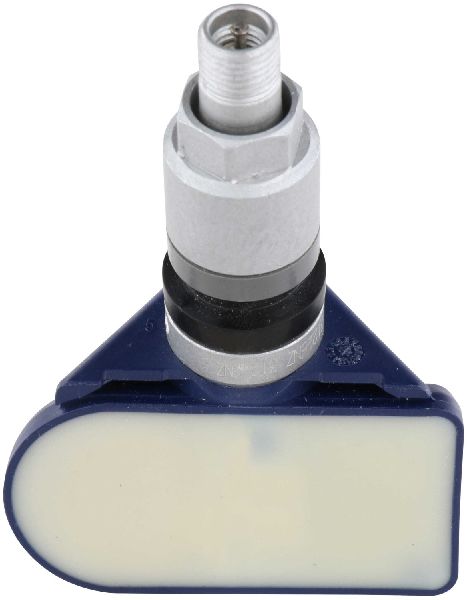
Code C0760 on a Buick Enclave indicates a fault with the left rear Tire Pressure Monitoring System (TPMS) sensor. The most common cause is a dead battery in the sensor, requiring replacement of the sensor itself. The part costs approximately $25-$75. If key fob issues are also present, the problem is likely the Remote Control Door Lock Receiver (RCDLR) module.
- C0760 points specifically to the left rear tire pressure sensor.
- The most likely fix is replacing the sensor due to a dead internal battery.
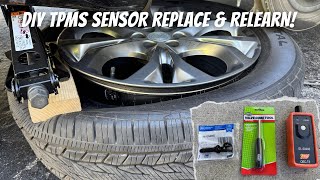
- A special TPMS relearn tool is required to program the new sensor to the vehicle after installation.
- If you also have problems with your key fob, the issue may be the Remote Control Door Lock Receiver (RCDLR) module, not the sensor itself.
- Always check tire pressures manually when the TPMS light is on.
What's Unique About the 2016-2023 Buick ENCLAVE
On many GM platforms, including the Enclave and its platform mates (Chevy Traverse, GMC Acadia), the Tire Pressure Monitoring System (TPMS) is integrated with the keyless entry and security systems through the Remote Control Door Lock Receiver (RCDLR). This means a TPMS fault like C0760 can sometimes be linked to seemingly unrelated issues like the key fob not working, a "No Remote Detected" message, or even a no-start condition with the security light on, as documented in manufacturer bulletins like 16-NA-396 and PIC5650M. This is a more complex integration than on many other vehicles where a TPMS fault only affects the tire pressure warning light.
Diagnostic Flowchart
Tap your situation to follow the diagnostic path that matches what you're seeing on this vehicle.
Generation note: This range covers two generations of the Buick Enclave: the first generation (Lambda platform, 2016-2017) and the second generation (C1XX platform, 2018-2023). While the TPMS technology is fundamentally the same, the specific part numbers for the sensors differ. The first generation often uses ACDelco part 13540602 (which supersedes 13598773). The second generation (2018+) typically uses ACDelco part 13540603. The RCDLR-related issues are common to both generations.
Symptoms You May Notice
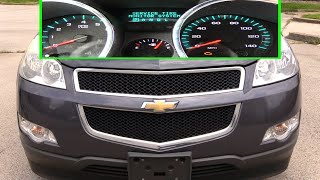
- "Service Tire Monitor System" message on the Driver Information Center (DIC).
- TPMS warning light is illuminated on the instrument cluster, often flashing for 60-90 seconds at startup before staying solid.
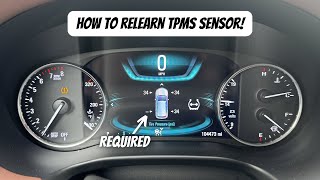
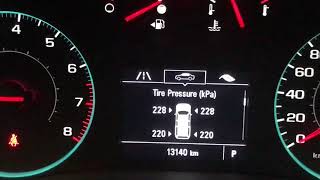
- The pressure reading for the left rear tire shows as dashes (--) on the DIC.
- Intermittent failure of key fobs (lock/unlock/remote start) or passive entry system.
- "No Remote Detected" message on the DIC when trying to start the vehicle.
- Rarely, a no-start or stall condition with the security light on, as mentioned in TSB PIC5650M.
- Replacing the Body Control Module (BCM) when the issue is the less expensive RCDLR module.
- Replacing a single TPMS sensor when the RCDLR is faulty, leading to the code returning or moving to another wheel.
- A tire shop claiming all sensors are 'dead' after a tire rotation, when in reality their tool failed to complete the relearn procedure, effectively de-programming the existing sensors from the vehicle's memory.
Most Likely Causes
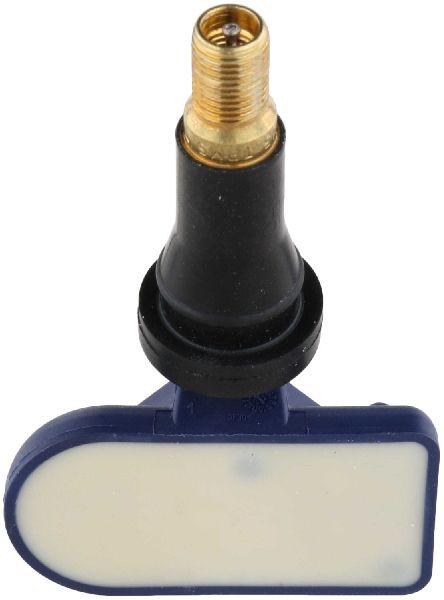
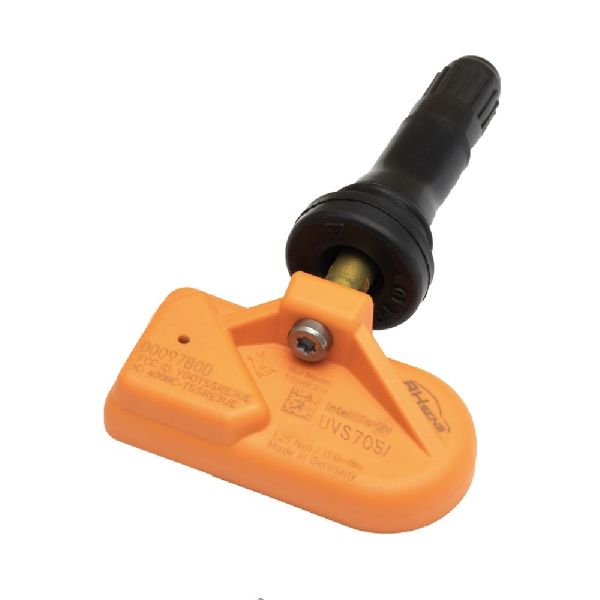
- Failed Left Rear TPMS Sensor 🔴 High Probability → Shop Tire Pressure Monitoring System (TPMS) Sensor TPMS sensors contain a non-replaceable battery with a finite lifespan, typically 5-10 years. As vehicles in this year range are reaching or surpassing this age, battery failure is the most common reason for this code.
How to confirm: Use a TPMS diagnostic tool to attempt to activate and read the sensor. If the tool cannot get a response from the left rear sensor but can from the others, the sensor has failed. A professional scan tool can also check the sensor's reported battery status in the RCDLR data list.
Typical fix: Replace the left rear TPMS sensor and perform the TPMS relearn procedure. It is often recommended to replace all four sensors at once if the vehicle is over 5-7 years old, as the others are likely to fail soon.
Est. part cost: $25-$75 - Faulty Remote Control Door Lock Receiver (RCDLR) ⚪ Low Probability → Shop Keyless Entry Receiver GM has issued multiple technical service bulletins (like #16-NA-396 and PI1085) for various models, including the Enclave, regarding internal failures of the RCDLR. This module processes signals from both the TPMS sensors and key fobs, so its failure often causes issues with both systems simultaneously.
How to confirm: This is the likely cause if you have codes for multiple TPMS sensors (e.g., C0750, C0755, C0760, C0765) and are also experiencing problems with your key fobs not working. A temporary fix can sometimes be achieved by disconnecting the vehicle's battery for 15-30 minutes, which resets the module.
Typical fix: Replace the RCDLR module. This requires programming by a dealer or a properly equipped independent shop using GM's GDS2 software to sync it with the vehicle's keys and TPMS sensors.
Est. part cost: $80-$200 - TPMS Relearn Procedure Not Performed or Failed ⚪ Low Probability
How to confirm: This typically occurs immediately after a tire rotation or sensor replacement. If the relearn procedure was skipped or failed, the vehicle is still looking for the sensor in its old location, or the new sensor ID was never learned. Attempting to perform the relearn procedure will fail to register the sensor.
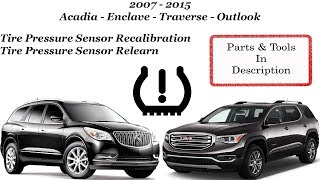
Typical fix: Perform the TPMS relearn procedure. On most GM vehicles, this is done by putting the vehicle in learn mode via the DIC or by holding the lock/unlock buttons on the key fob, then using a TPMS activation tool to trigger each sensor in sequence (Left Front, Right Front, Right Rear, Left Rear).
Est. part cost: $0 (if you own a relearn tool) or ~$15 for a basic tool
Rare But Worth Checking
- Radio Frequency (RF) Interference: Aftermarket electronic devices like phone chargers, dash cams, LED lighting, or even some toll passes can interfere with the 315 MHz or 433 MHz signals from the TPMS sensor to the RCDLR. TSB PIC5650K specifically advises checking for and unplugging all aftermarket accessories before replacing parts.
- Disconnected RCDLR Antenna: A poor or disconnected coax cable connection at the RCDLR module or its antenna amplifier can cause intermittent loss of signal from the sensors, particularly those farthest from the receiver (like the left rear). This can also cause poor key fob range.
Diagnosis Steps
- Manually check the air pressure in all four tires to ensure they are inflated to the specification on the driver's door jamb sticker. A solid TPMS light indicates low pressure, while a flashing light indicates a system fault.
- Check for other symptoms. Are the key fobs working correctly? Is the keyless entry system functioning? If not, the RCDLR is a strong suspect.
- Use a TPMS diagnostic tool to attempt to read the signal from the left rear sensor. If it does not transmit, the sensor battery is likely dead, and the sensor needs replacement.
- If the sensor does transmit, try performing the vehicle's TPMS relearn procedure. This can be initiated through the Driver Information Center (DIC) and requires a TPMS tool to activate each sensor in sequence.
- Check for Radio Frequency Interference (RFI). Unplug all aftermarket accessories (phone chargers, dash cams, etc.) and remove any toll passes from the vehicle, then see if the fault clears.
- If key fob issues are present and RFI is ruled out, suspect a faulty Remote Control Door Lock Receiver (RCDLR). Diagnosis requires a professional scan tool that can read BCM and RCDLR data and check for related TSBs like 16-NA-396.
- If a no-start condition is present, refer to TSB #PIC5650M, which points to a more complex module communication issue requiring advanced diagnostics.
Parts You'll Likely Need
- Tire Pressure Monitoring System (TPMS) Sensor
(OEM #13540602 (Gen 1, 2016-17), 13540603 (Gen 2, 2018+))— The internal battery in the original sensor fails after 5-10 years, which is the most common cause for code C0760.
Trusted brands: ACDelco, Schrader, Huf, Continental/VDO
OEM price range: $45-$90
Aftermarket price range: $25-$50 - Remote Control Door Lock Receiver (RCDLR)
(OEM #13595511 (Check VIN, part may vary))— A common failure point documented in TSB 16-NA-396 that causes simultaneous TPMS and key fob issues.
Trusted brands: ACDelco (GM Genuine)
OEM price range: $80-$200
Aftermarket price range: N/A
Related Codes That Often Appear With This One
- C0750, C0755, C0765 — These are the codes for the other three wheel sensors (Left Front, Right Front, Right Rear). When they appear together with C0760, it strongly suggests a central problem with the receiver (RCDLR) or its antenna, rather than four simultaneously failed sensors.
- B3055, B3060, B3935 — The provided TSB #PIC5650M links these security and body codes with TPMS codes, indicating a potential module or communication issue, often caused by RF interference, that can lead to a no-start or stall condition.
Technical Service Bulletins (TSBs) & Recalls
- PIC5650M: Mentions a potential link between C0760 (and other codes) and a no-start or stall condition due to RF interference.
- 16-NA-396: Details how an internal RCDLR fault can cause both TPMS codes and key fob inoperability.
- PI1085: Recommends RCDLR replacement for poor key fob range and missing rear TPMS readings on earlier models.
Platform-Specific Known Issues
- TSB #PIC5650M notes that on some GM vehicles, including the Enclave, TPMS codes like C0760 can be associated with a no-start or stall condition accompanied by the security light, often due to RF interference.
- TSB #16-NA-396 describes a condition where an internal fault in the Remote Control Door Lock Receiver (RCDLR) can cause intermittent loss of key fob functions and set multiple TPMS codes simultaneously.
- TSB #PI1085 specifically calls out poor RKE transmitter range and dashes for rear tire pressure readings on 2012-2013 Enclaves (and platform mates) as a reason to replace the RCDLR.
Mechanic-Grade Diagnostic Values
- RCDLR Coaxial Antenna Cable Continuity Check — expected: 1. Near 0 Ω resistance between the center pin of the RCDLR connector and the corresponding terminal at the antenna amplifier/grid. 2. Near 0 Ω resistance between the outer shield of the connector and a known good chassis ground. 3. Infinite resistance (Open Line) between the center pin and the outer shield of the same connector.. Failure: High resistance or an open circuit on checks 1 or 2 indicates a broken wire. Any continuity on check 3 indicates a short circuit in the cable.
- Scan Tool Live Data: Pressure Sensor Mode — expected: Parameter should change from 'Stationary' or 'Wake' to 'Drive' or 'Rolling' when the vehicle is driven above 25 mph (40 km/h).. Failure: If the sensor mode for the left rear tire does not change while the others do, it indicates a fault with that specific sensor's internal roll switch.
Hidden / Shadow Codes Worth Checking
- C0760 00: Indicates a general failure where the sensor has not transmitted for a set period (e.g., 18 minutes) or has reported a low battery condition. (see via GM GDS2 (Global Diagnostic System 2) or an equivalent professional-grade scan tool that can read symptom bytes.)
- C0760 08: Indicates 'Signal Invalid.' The RCDLR is receiving a transmission from the sensor, but the data is not plausible or is outside the expected range. (see via GM GDS2 or equivalent professional scan tool.)
- C0760 29: Indicates 'Too Few Pulses.' The RCDLR is receiving an incomplete or corrupted data packet. This often points to a weak sensor battery or significant RF interference rather than a completely dead sensor. (see via GM GDS2 or equivalent professional scan tool.)
- C0760 39: Indicates 'Internal Malfunction' of the TPMS sensor itself. (see via GM GDS2 or equivalent professional scan tool.)
Scan Tool Commands That Help
- GDS2: Module Diagnostics -> Remote Control Door Lock Receiver -> Configure and Reset Functions -> Add or Replace Key Fobs — This specific menu path is used to put the vehicle into a learn mode to program new or existing key fobs to a newly installed RCDLR module.
- GDS2 / Tech 2: RCDLR Setup / Module Setup — This is the initial step required after physically installing a new RCDLR. It 'marries' the new module to the vehicle's communication network before other learn procedures can be performed.
- GDS2 / Tech 2: Theft Deterrent System Learn — This procedure is critical after RCDLR replacement. It synchronizes the new RCDLR with the vehicle's immobilizer system. Failure to perform this step can result in a no-start condition even if the key fobs lock and unlock the doors.
Wiring & Ground Locations
- RCDLR Module (Gen 1: 2016-2017) — Located in the rear of the vehicle, typically mounted vertically behind the uppermost rear trim panel, near the center of the headliner. Access requires removing rear interior trim panels.. This is the central receiver for TPMS and key fob signals. Physical access is required for replacement or to check its direct coaxial antenna connection.
- RCDLR Module (Gen 2: 2018-2023) — Located in the rear of the vehicle, behind a side trim panel. TSB 16-NA-061 specifies the antenna is on the right rear quarter glass, making the right rear trim area the most likely location for the module and its amplifier.. As the central receiver, its location is key for diagnosis. A loose coaxial cable at this module is a primary diagnostic step outlined in service bulletins.
- G103 (Probable Ground) — On some GM platforms, this ground is located on the cowl panel in the engine compartment, above the brake booster.. Service information for other GM vehicles lists G103 as the ground point for the Remote Door Lock Receiver. A poor ground here could cause intermittent RCDLR operation, leading to TPMS and key fob issues.
- RCDLR Antenna System — Consists of the RCDLR, a coaxial cable, an antenna amplifier module (likely near the RCDLR), and an antenna grid integrated into the right rear quarter glass.. A disconnect at any of the three connection points (RCDLR, amplifier, or glass) can cause this code. A disconnect at the amplifier or glass may only affect the farthest sensors (like the left rear), perfectly mimicking a single failed sensor.
Real Owner Repair Stories
- Reddit user on r/MechanicAdvice (2014 Buick Enclave) — Needed to replace the RCDLR. After installing the new module, key fobs would not work.
❌ Tried (didn't work) Using an Autel MaxiSys scan tool to program the new RCDLR and key fobs. The tool appeared to complete the process, but the fobs remained inoperative.
✅ What actually fixed it The user concluded that GM-specific software was required to properly 'marry' the new RCDLR to the car's main computer before the key fobs could be programmed and function correctly. - Cadillac XLR Forums user (2004 Cadillac XLR (similar RCDLR/immobilizer logic)) — Replaced a faulty RCDLR. After programming new fobs, the remote buttons (lock/unlock) worked, but the car would not crank or start.
❌ Tried (didn't work) Only programming the key fobs to the new RCDLR.
✅ What actually fixed it A 30-minute Vehicle Theft Deterrent (VTD) relearn procedure was required. The user performed three consecutive 10-minute cycles of turning the ignition to the accessory/ON position and waiting for the security light to turn off. This synchronized the new RCDLR with the engine's immobilizer and allowed the car to start.
OEM Part Supersession History
13595511→13540045— Standard part evolution and consolidation by the manufacturer.
Heads up: The new part number 13540045 also replaces older part numbers 13509518 and 13523281. All versions require dealer-level programming after installation.
Model Year Variations Within This Range
- 2016-2017 (Gen 1): Uses 315 MHz TPMS sensors. The RCDLR is typically located behind the rear quarter panel trim or near the headliner. The TPMS relearn mode can often be initiated by holding the lock and unlock buttons on the key fob.
- 2018-2023 (Gen 2): Uses 433 MHz TPMS sensors. The RCDLR is located in the rear of the vehicle, with its antenna integrated into the right rear quarter glass. The TPMS relearn mode is initiated through the Driver Information Center (DIC) menu. The emergency key fob slot ('transmitter pocket') for starting with a dead fob battery is located inside the center console armrest storage bin.
Helpful Videos
We Have This Part in Stock

The information in this article is provided for general reference and educational purposes only. Vehicle specifications, procedures, and part compatibility can vary by production date, trim level, and region. Always consult your vehicle's factory service manual and verify part numbers before purchasing or performing repairs. Safety-critical components such as airbags, seat belts, and braking systems should be installed by a qualified professional.
- Buick ENCLAVE:
- 🧭 Diagnostic Flowchart
- 🎬 Helpful Videos
- 🛍️ Shop This Part
- What's Unique About the 2016-2023 Buick ENCLAVE
- Symptoms You May Notice
- Most Likely Causes
- Rare But Worth Checking
- Diagnosis Steps
- Parts You'll Likely Need
- Related Codes That Often Appear With This One
- Technical Service Bulletins (TSBs) & Recalls
- Platform-Specific Known Issues
- Mechanic-Grade Diagnostic Values
- Hidden / Shadow Codes Worth Checking
- Scan Tool Commands That Help
- Wiring & Ground Locations
- Real Owner Repair Stories
- OEM Part Supersession History
- Model Year Variations Within This Range
- 🎟️ Get 5% Off