

C0760 on 2019-2025 Cadillac XT4: Causes, Fixes, and No-Start Issues
Code C0760 on a 2019-2025 Cadillac XT4 means the Left Rear Tire Pressure Monitoring System (TPMS) sensor has failed. On this vehicle, this sensor is also part of the keyless start system, so a failure can cause a no-start condition. The most common fix is replacing the faulty TPMS sensor and performing a relearn procedure.
- C0760 on a Cadillac XT4 points directly to a bad Left Rear TPMS sensor.
- This is not just a tire pressure issue; a failed sensor can prevent your car from starting due to its integration with the keyless security system.
- The most common solution is to replace the faulty TPMS sensor.
- After replacement, a TPMS relearn procedure is mandatory for the system to function correctly.
- If you experience a no-start along with this code, place the key fob in the front cup holder to start the car as a temporary measure.
What's Unique About the 2019-2025 Cadillac XT4
The Cadillac XT4, like many modern GM vehicles, integrates the Tire Pressure Monitoring System (TPMS) with the vehicle's security and keyless start functions. A failed TPMS sensor isn't just a nuisance that disables your tire pressure reading; it can prevent the car from detecting the key fob properly. This can lead to a 'No Remote Detected' message and prevent the engine from starting, a situation documented in manufacturer TSB #PIC5650K. This dual-functionality often surprises owners who don't expect a tire sensor to disable their vehicle. If the fob battery is dead or the car can't detect it, placing the fob in the designated transmitter pocket (inside the center console cup holder on the XT4) will allow the car to start.
Diagnostic Flowchart
Tap your situation to follow the diagnostic path that matches what you're seeing on this vehicle.
Symptoms You May Notice
- Vehicle will not start or starts and immediately stalls. [⭐ MANUFACTURER TSB — highest authority, 25]
- Security/anti-theft light is illuminated on the dashboard. [⭐ MANUFACTURER TSB — highest authority, 25]
- "Service Tire Monitor System" message on the Driver Information Center (DIC).
- TPMS warning light is on (may flash for about a minute on startup, then stay solid).
- DIC shows dashes (---) for the left rear tire pressure reading.
- "No Remote Detected" message when trying to start the vehicle.
- Poor or no keyless entry (RKE) range.
- Replacing the car battery. While a dead battery is a common cause for a no-start, it won't trigger the specific C0760 code. A Reddit user noted that low battery voltage can cause strange electronic issues, but a specific TPMS code points to the sensor system.
- Replacing the key fob battery. While a good first step for 'No Remote Detected' messages, it won't fix a C0760 code, which points specifically to the vehicle-side sensor.
- Issues with the starter or alternator. These are common no-start causes but are unrelated to the TPMS and security system codes.
Most Likely Causes
- Failed Left Rear TPMS Sensor 🔴 High Probability → Shop Tire Pressure Monitoring System (TPMS) Sensor TPMS sensors have a finite internal battery life, typically 7-10 years. Failure is a matter of when, not if. The sensor's dual use in the keyless start system makes its failure more noticeable and critical on the XT4.
How to confirm: Use a TPMS activation tool to attempt to read the sensor. If the tool cannot get a response from the left rear sensor but can read the other three, the sensor is bad. A professional scan tool will also show the sensor's battery status as 'Low' or 'Offline' in the RCDLR data list.
Typical fix: Replace the left rear TPMS sensor and perform the TPMS relearn procedure so the vehicle recognizes the new sensor.
Est. part cost: $30-$75 - Remote Control Door Lock Receiver (RCDLR) Fault ⚪ Low Probability → Shop Keyless Entry Receiver On some GM platforms, the RCDLR module, which receives signals from both the TPMS sensors and key fobs, can fail internally. This is less common than a sensor failure but can cause identical symptoms.
How to confirm: If replacing the TPMS sensor does not resolve the code, and especially if key fob functions (lock/unlock) are also intermittent or multiple TPMS codes (e.g., C0750, C0755, C0765) are present, the RCDLR is the next suspect. This requires advanced diagnostics with a professional scan tool to check module communication.
Typical fix: Replace the RCDLR module and program it to the vehicle.
Est. part cost: $80-$200
Rare But Worth Checking
- Radio Frequency Interference (RFI): Aftermarket electronic devices plugged into the vehicle's power outlets (like phone chargers, dash cams, or GPS units) can sometimes emit RFI that interferes with the RCDLR's ability to receive signals from the TPMS sensors and key fob. This is mentioned in GM TSB #PIC5650K as a possible cause for these symptoms, which affects the 315 MHz, 433 MHz, and 125 kHz frequencies used by the car's systems.
Diagnosis Steps
- Verify the code with an OBD-II scanner capable of reading C-codes (Chassis).
- Check the tire pressure display on the Driver Information Center. Confirm if the left rear tire shows '---'.
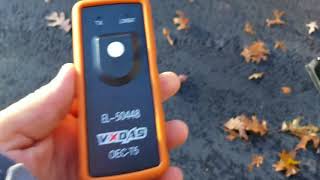
- Use a TPMS activation tool to test each of the four tire sensors. Start with a known good tire (e.g., front right) to ensure the tool is working.
- Attempt to activate the left rear sensor. If it fails to respond, the sensor has failed and needs replacement.
- If the sensor responds to the tool but the car still sets the code, inspect for Radio Frequency Interference. Unplug all aftermarket accessories (phone chargers, dash cams, etc.) and re-test, as recommended by TSB PIC5650K.
- If the issue persists, the problem may lie in the Remote Control Door Lock Receiver (RCDLR) or its wiring, which requires professional diagnosis.
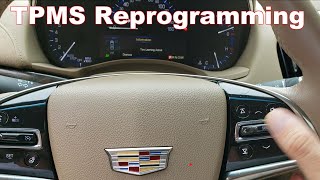
- After replacing the sensor, perform the TPMS relearn procedure. On the XT4, this is typically done by navigating to the Tire Pressure screen in the DIC, holding the select button to enter learn mode, and then using a TPMS tool to activate each sensor in sequence (LF, RF, RR, LR) until the horn chirps for each one.
Parts You'll Likely Need
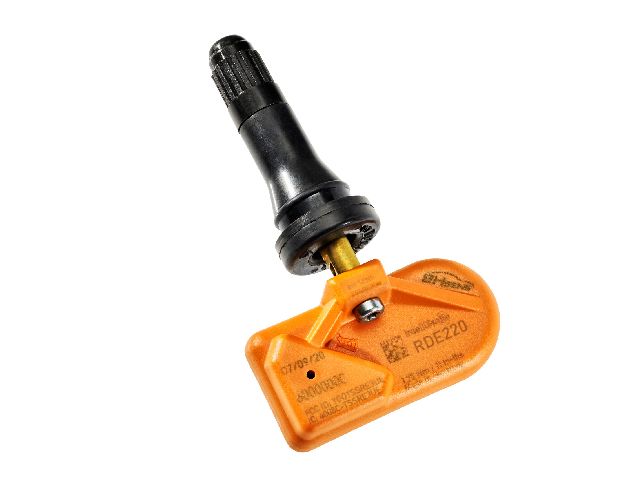
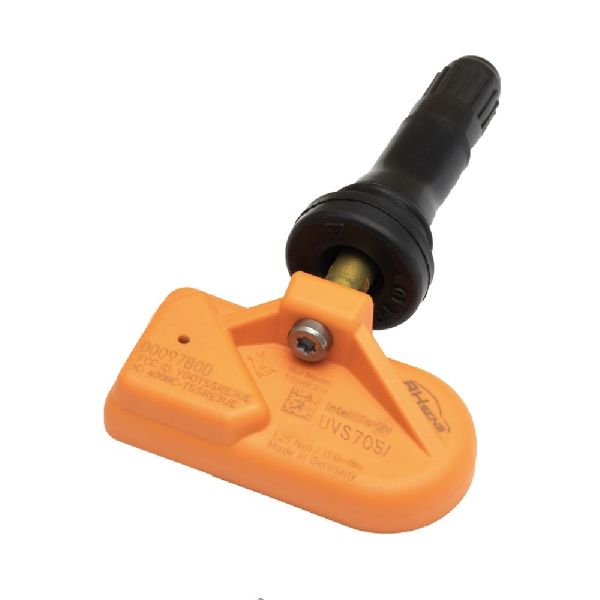
- Tire Pressure Monitoring System (TPMS) Sensor
(OEM #13516165, superseded by 13540603)— This is the direct cause of the C0760 code. The sensor's internal battery has a limited lifespan and fails over time, requiring replacement. Part number 13516165 has been superseded by 13540603 for many GM applications.
Trusted brands: ACDelco (OEM), Schrader, Huf, Bosch, VDO
OEM price range: $50-$90
Aftermarket price range: $30-$60
Related Codes That Often Appear With This One
- C0750 — This is the code for the Left Front TPMS sensor. It's common to see codes for multiple sensors if they are original and their batteries are failing around the same time.
- C0755 — This is the code for the Right Front TPMS sensor.
- C0765 — This is the code for the Right Rear TPMS sensor.
- B3055 — This code relates to the key fob. It can be set alongside C0760 because the failed TPMS sensor is preventing the keyless entry system from properly authenticating the fob. [⭐ MANUFACTURER TSB — highest authority, 25]
- B3935 — A transponder authentication code that can also be triggered by the same RFI or RCDLR issues that cause C0760, as noted in TSB PIC5650K.
Technical Service Bulletins (TSBs) & Recalls
- PIC5650M/K: Mentions that C0760 can be found with other security and TPMS codes during a no-start or start/stall concern with the security light on. It strongly points towards checking for Radio Frequency Interference (RFI) from aftermarket devices before replacing any parts. [⭐ MANUFACTURER TSB — highest authority, 25]
Platform-Specific Known Issues
- A known issue, documented in TSB #PIC5650M and its later revisions like PIC5650K, links this TPMS code directly to a no-start or start-and-stall condition accompanied by the security light, due to the sensor's role in the keyless start system. [⭐ MANUFACTURER TSB — highest authority, 25]
- If a no-start occurs, the vehicle can still be started by placing the key fob into the transmitter pocket located in the front cup holder area of the center console. This allows the vehicle's immobilizer to read the fob directly, bypassing the need for the TPMS/RCDLR localization system.
Mechanic-Grade Diagnostic Values
- TPMS Sensor RF Transmission Frequency — expected: 433 MHz. Failure: N/A. An incorrect frequency sensor will not communicate with the vehicle.
- TPMS Sensor Activation Frequency — expected: 125 kHz. Failure: Sensor will not 'wake up' or respond to a TPMS tool.
- Body Control Module (BCM) / RCDLR Operating Voltage — expected: 9-16 Volts. Failure: Low voltage can cause various unpredictable electronic faults, though it may not isolate to a single TPMS code.
Hidden / Shadow Codes Worth Checking
- C0760 08: Indicates a 'Signal Invalid' or 'Transponder Status Error'. This is more specific than the general code and points to a data communication problem. (see via GM GDS2 or other professional scan tool capable of reading manufacturer-specific symptom bytes.)
- C0760 29: Indicates 'Too Few Pulses' were received from the sensor. This suggests the sensor is transmitting intermittently or weakly. (see via GM GDS2 or other professional scan tool capable of reading manufacturer-specific symptom bytes.)
- C0760 39: Indicates an 'Internal Malfunction' within the sensor itself, confirming the sensor is the point of failure. (see via GM GDS2 or other professional scan tool capable of reading manufacturer-specific symptom bytes.)
Scan Tool Commands That Help
- GM GDS2 (Global Diagnostic System 2): Vehicle DTC Information — To perform a full system scan to identify all DTCs across all modules. This is critical to see related codes in the BCM (like B3055) that are set along with the chassis code C0760.
- GM GDS2 (Global Diagnostic System 2): Module Diagnostics > RCDLR/BCM > Data Display — To view live data from the TPMS sensors, including individual sensor ID, pressure, temperature, and crucially, the 'Sensor Battery Status' (e.g., OK, Low). This can confirm a dead sensor battery without physical removal.
- GM GDS2 (Global Diagnostic System 2): Module Diagnostics > RCDLR/BCM > Control Functions > TPMS Learn Mode — To command the vehicle into the TPMS relearn state after replacing a sensor. This is the dealer-equivalent method of initiating the relearn process before using a TPMS activation tool to assign the new sensor to its position.
Wiring & Ground Locations
- Body Control Module (BCM) — Located on the passenger side of the vehicle, accessible by removing the right-side front floor console extension panel.. The BCM integrates the functions of the Remote Control Door Lock Receiver (RCDLR). A loose connector at the BCM can cause a loss of signal from TPMS sensors and key fobs, leading to C0760 and no-start conditions. This was the subject of GM Service Update N222390510 for 2023 models.
- RCDLR Antenna Coaxial Cable — Runs from the BCM/RCDLR module to an antenna amplifier, which then connects to an antenna often embedded in the right rear glass.. A disconnected or damaged coaxial cable, especially at the module connection, can cause a complete loss of signal from all TPMS sensors and key fobs, resulting in multiple TPMS codes and a 'No Fob Detected' message. This is a critical point of failure to check if multiple sensors are not reporting.
- BCM Ground Path — Varies, but typically grounds to the chassis near the module's location (e.g., A-pillar or cowl).. A poor ground connection for the BCM can cause erratic behavior or complete failure of the TPMS and keyless entry systems. Per GM bulletin 07-08-47-004D, the negative battery cable must always be disconnected before servicing BCM grounds to prevent damaging the module.
OEM Part Supersession History
13516165, 13522631, 13522955, 13528563→13540603— Standard part evolution and consolidation for newer GM platforms.
Heads up: The correct frequency for the Cadillac XT4 is 433 MHz. While 315 MHz sensors exist for other GM vehicles, they are incompatible. Part number 13540603 is specified as 433 MHz and is the correct replacement.
Model Year Variations Within This Range
- 2023: A factory quality control issue may exist where one or more Body Control Module (BCM) connectors are not fully seated. This can cause symptoms identical to a failed RCDLR or TPMS sensor. GM issued Service Update N222390510 for dealers to inspect and ensure BCM connectors are fully seated on affected vehicles.
Helpful Videos
We Have This Part in Stock

The information in this article is provided for general reference and educational purposes only. Vehicle specifications, procedures, and part compatibility can vary by production date, trim level, and region. Always consult your vehicle's factory service manual and verify part numbers before purchasing or performing repairs. Safety-critical components such as airbags, seat belts, and braking systems should be installed by a qualified professional.
- Cadillac XT4:
- 🧭 Diagnostic Flowchart
- 🎬 Helpful Videos
- 🛍️ Shop This Part
- What's Unique About the 2019-2025 Cadillac XT4
- Symptoms You May Notice
- Most Likely Causes
- Rare But Worth Checking
- Diagnosis Steps
- Parts You'll Likely Need
- Related Codes That Often Appear With This One
- Technical Service Bulletins (TSBs) & Recalls
- Platform-Specific Known Issues
- Mechanic-Grade Diagnostic Values
- Hidden / Shadow Codes Worth Checking
- Scan Tool Commands That Help
- Wiring & Ground Locations
- OEM Part Supersession History
- Model Year Variations Within This Range
- 🎟️ Get 5% Off