

C0760 on 2013-2019 Cadillac XTS: Left Rear TPMS Fault or RCDLR Failure?
Code C0760 points to a fault with the left rear tire pressure sensor. However, on the 2013-2019 XTS, if this code appears with other TPMS codes (C0750, C0755, C0765) and key fob problems, the actual cause is likely a faulty Remote Control Door Lock Receiver (RCDLR) module, a known issue documented in multiple GM Technical Service Bulletins. Before replacement, checking antenna connections and performing a battery reset are crucial diagnostic steps.
- C0760 means there's a problem with the left rear tire pressure sensor signal.
- Before buying a new sensor, check your key fob. If it's also not working, the problem is almost certainly the Remote Control Door Lock Receiver (RCDLR) module.
- If only the C0760 code is present and the key fob works, the cause is most likely a dead battery in the TPMS sensor itself.
- Replacing the RCDLR requires professional programming; replacing a TPMS sensor requires tire removal and a relearn procedure.
- Do not ignore the warning; manually check your tire pressure until the system is repaired to ensure safety.
What's Unique About the 2013-2019 Cadillac XTS
On the Cadillac XTS and similar GM platforms, the Remote Control Door Lock Receiver (RCDLR) is responsible for interpreting signals from both the TPMS sensors and the key fobs. Because of this shared module, a failure within the RCDLR can cause both TPMS warnings and keyless entry problems to appear simultaneously. This often leads to the incorrect diagnosis of replacing the TPMS sensors when the receiver module is the actual root cause, an issue specifically addressed by GM in Technical Service Bulletin #16-NA-396. Other TSBs also point to software glitches or simple antenna connection faults as potential causes.
Diagnostic Flowchart
Tap your situation to follow the diagnostic path that matches what you're seeing on this vehicle.
Symptoms You May Notice
- TPMS warning light is illuminated on the dashboard (may flash for 60 seconds at startup, then stay solid).
- "Service Tire Monitor System" message on the Driver Information Center (DIC).
- DIC displays dashes (---) for the left rear tire pressure reading, and potentially other tires.
- Key fob functions are inoperative or work intermittently (lock, unlock, remote start, panic).
- Passive entry system not responding to lock/unlock commands.
- "No Remote Detected" message when trying to start the vehicle.
- Security light may be illuminated, potentially with a no-start or start-and-stall condition.
- Replacing the left rear TPMS sensor when the actual fault is with the Remote Control Door Lock Receiver (RCDLR). This is especially common when multiple TPMS codes are present along with key fob issues.
- Replacing the RCDLR module without first checking for a simple disconnected antenna coax cable as outlined in TSB 16-NA-061.
Most Likely Causes
- Faulty Remote Control Door Lock Receiver (RCDLR) 🔴 High Probability → Shop Keyless Entry Receiver This is a documented issue in GM TSB #16-NA-396. The RCDLR is a shared component for TPMS and keyless entry, and internal failure is a known cause for these combined symptoms. 🎬 Watch: See how these combined symptoms appear on a GM vehicle.
How to confirm: Check for multiple TPMS codes (C0750, C0755, C0760, C0765) and test all key fob functions. If both systems are malfunctioning, the RCDLR is the most likely culprit.
Typical fix: Replace the RCDLR module and have it professionally programmed to the vehicle. A security relearn procedure may also be required.
Est. part cost: $80-$150 - Dead or Faulty Left Rear TPMS Sensor 🟡 Medium Probability → Shop Tire Pressure Monitoring System (TPMS) Sensor TPMS sensor batteries have a finite lifespan, typically 5-10 years. Vehicles in this year range are reaching the age where battery failure is common.
How to confirm: Use a TPMS diagnostic tool to attempt to activate and read the sensor. If the tool cannot get a response, the sensor has failed. This is the most likely cause if C0760 appears alone and key fobs work correctly.
Typical fix: Replace the left rear TPMS sensor and perform the TPMS relearn procedure.
Est. part cost: $30-$70 - RCDLR Antenna Connection Issue ⚪ Low Probability As documented in TSB #16-NA-061, the coax cable providing signal to the RCDLR can become disconnected or have a poor connection, mimicking a failed module.
How to confirm: Before replacing the RCDLR, inspect the three connection points for the antenna system: where the coax cable connects to the RCDLR module, where it connects to the antenna amplifier, and where the amplifier connects to the rear glass antenna.
Typical fix: Securely reconnect the loose coax cable or connector.
Est. part cost: $0 - Failed TPMS Relearn Procedure ⚪ Low Probability This can happen after a tire rotation or replacement if the procedure is not performed correctly or is skipped.
How to confirm: Attempt the TPMS relearn procedure as outlined in the owner's manual or with a TPMS tool. If the procedure completes successfully for all tires, the code should clear. If it fails at the left rear, it points to a bad sensor or module.
Typical fix: Correctly perform the TPMS relearn procedure.
Est. part cost: $0
Rare But Worth Checking
- Radio Frequency (RF) Interference: As noted in TSB #PIC5650M, aftermarket electronic devices (like phone chargers, dash cams, or CB radios) can sometimes interfere with the signals between the sensors and the RCDLR. Before replacing parts, try unplugging all aftermarket accessories to see if the problem resolves.
- RCDLR Software Abnormality: TSB #PIC6227 indicates that a software glitch can cause intermittent TPMS and key fob issues. As a temporary fix or a diagnostic step, a battery disconnect and reconnect can reset the RCDLR and may restore function. If the problem returns, a permanent fix (like RCDLR replacement) is needed.
Diagnosis Steps
- Scan all vehicle modules for stored Diagnostic Trouble Codes (DTCs).
- Note if C0760 is present alone or with other codes like C0750, C0755, and C0765.
- Thoroughly test all functions of the key fob(s): lock, unlock, trunk release, and remote start.
- If multiple TPMS codes and key fob issues are present, perform a battery disconnect/reconnect to reset the RCDLR as a preliminary step, per TSB #PIC6227.
- If symptoms persist, inspect the RCDLR antenna system connections before considering module replacement, as per TSB #16-NA-061. Check the coax cable at the RCDLR module, at the antenna amplifier, and the amplifier's connection to the rear glass antenna.
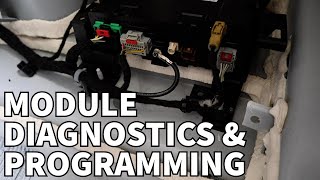
- If connections are secure and the problem remains, the RCDLR is the primary suspect. Proceed with RCDLR replacement and programming. 🎬 See this guide on control module diagnostics, replacement, and programming. Be aware a security relearn (e.g., 3x 10-minute ignition cycles) may be needed post-installation.
- If C0760 is the only code and the key fob works correctly, the left rear TPMS sensor is the primary suspect.
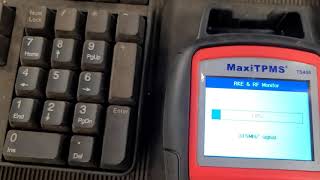
- Use a TPMS activation tool to try and read the data (ID, pressure, temperature, battery status) from the left rear sensor.
- If the tool cannot get a reading, the sensor has failed (likely a dead battery) and must be replaced.
- If the tool can read the sensor, but the code won't clear, attempt the vehicle's TPMS relearn procedure.
- If the relearn procedure fails specifically at the left rear wheel, this confirms a problem with either the sensor's transmitter or the RCDLR's ability to receive its signal. Given the sensor is transmitting to the tool, the RCDLR is still a possibility, but the sensor is the more probable failure point in this isolated scenario.
Parts You'll Likely Need
- Remote Control Door Lock Receiver (RCDLR)
(OEM #13595511, 13586852)— This module is the most likely cause when C0760 is accompanied by other TPMS codes and key fob issues, as documented in TSB #16-NA-396.
Trusted brands: ACDelco, GM Genuine Parts
OEM price range: $80-$150
Aftermarket price range: $60-$120 - Tire Pressure Monitoring System (TPMS) Sensor
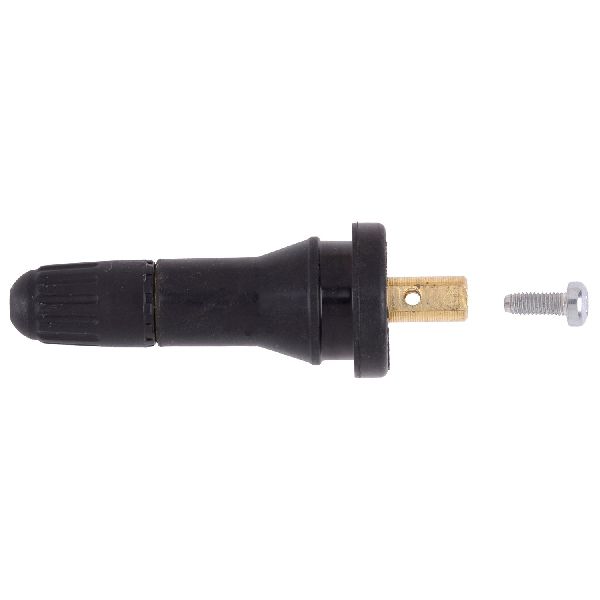
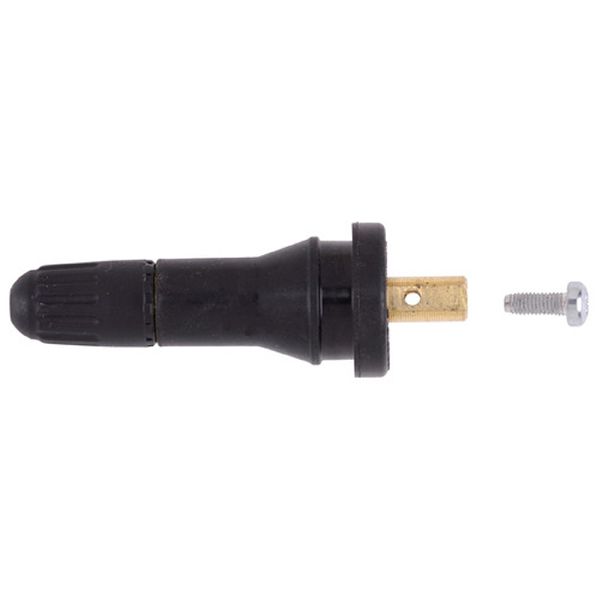
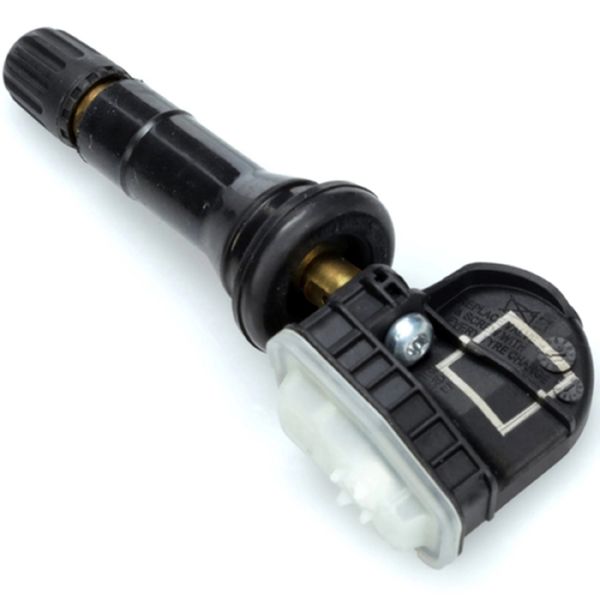
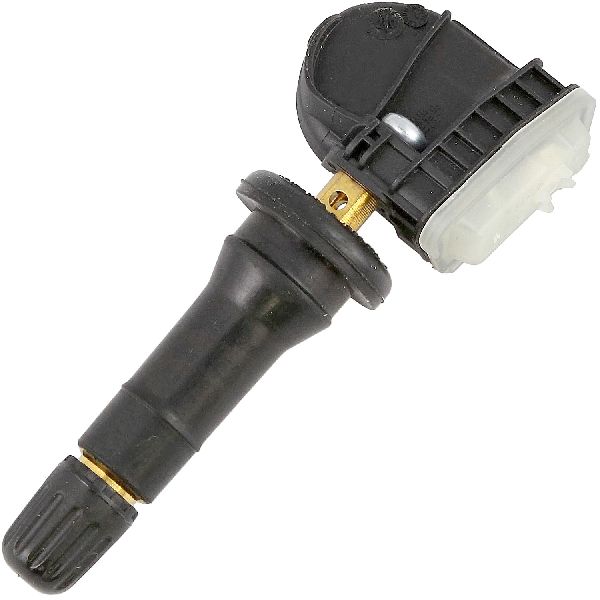
(OEM #13540601)— This is the most common fix if C0760 appears by itself. The sensor's internal battery has a limited lifespan of 5-10 years.
Trusted brands: ACDelco, Schrader, Denso, Dorman
OEM price range: $50-$70
Aftermarket price range: $25-$50
Related Codes That Often Appear With This One
- C0750 — Fault code for the Left Front TPMS sensor. Often appears with other TPMS codes when the RCDLR module fails.
- C0755 — Fault code for the Right Front TPMS sensor. Often appears with other TPMS codes when the RCDLR module fails.
- C0765 — Fault code for the Right Rear TPMS sensor. Often appears with other TPMS codes when the RCDLR module fails.
- B3055, B3060, B3935 — These are security and key-related codes that can appear alongside TPMS codes during no-start conditions, pointing to a central module or communication issue, as cited in TSB #PIC5650M.
Technical Service Bulletins (TSBs) & Recalls
- 16-NA-396: Cites an internal failure of the Remote Control Door Lock Receiver (RCDLR) as the cause for multiple TPMS codes and inoperative key fob functions.
- 16-NA-061: Points to a poor or disconnected RCDLR a
Platform-Specific Known Issues
- Per TSB #16-NA-396, a known issue on this platform is an internal failure of the Remote Control Door Lock Receiver (RCDLR), which can cause DTCs C0750, C0755, C0760, and C0765 to set with a 'Too Few Pulses' symptom, along with inoperative key fob functions.
- TSB #16-NA-061 suggests that before replacing the RCDLR, technicians should inspect for a poor or disconnected antenna connection at the module, amplifier, or rear glass, as this can cause identical symptoms.
- TSB #PIC6227 notes that a 'Software Abnormality' can be the cause, and a battery disconnect/reconnect may temporarily resolve the issue by resetting the RCDLR.
- TSB #PIC5650M indicates that C0760 can be found along with various security codes in a no-start or start/stall situation, pointing towards a broader communication or security system fault.
Mechanic-Grade Diagnostic Values
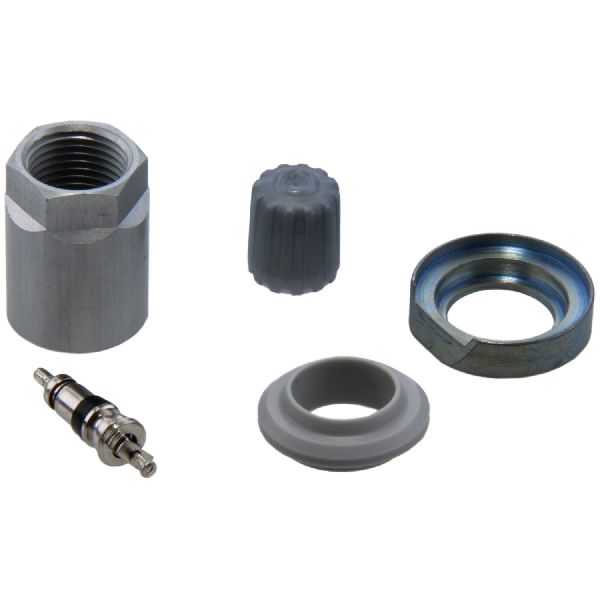
- TPMS Sensor Nut Torque — expected: 71 in-lbs (8 Nm). Failure: An incorrect torque can lead to air leaks or damage to the sensor or wheel.
- TPMS Sensor Valve Core Torque — expected: 3.5 in-lbs (0.4 Nm). Failure: Over-tightening can damage the valve core, while under-tightening can cause slow leaks.
Hidden / Shadow Codes Worth Checking
- C0760 with Symptom :29: This specific sub-code means 'Too Few Pulses'. It indicates the RCDLR is receiving an incomplete or corrupted data packet from the sensor. This is a strong indicator of a weak sensor battery, RF interference, or a fault in the RCDLR's receiver circuitry, rather than a completely dead sensor. (see via GM GDS2 (Global Diagnostic System 2) or an equivalent professional-grade scan tool.)
- C0760 with Symptom :39: This sub-code indicates an 'Internal Malfunction' within the TPMS sensor itself. The sensor has self-diagnosed a fault and is reporting it to the RCDLR. (see via GM GDS2 (Global Diagnostic System 2) or an equivalent professional-grade scan tool.)
Scan Tool Commands That Help
- GDS2 (GM Global Diagnostic System 2): Module Diagnostics > Remote Control Door Lock Receiver > Configuration/Reset Functions > Add/Replace Key Fobs — This function is required after replacing the RCDLR module to program the existing or new key fobs to the new module. The tool places the new module into a learn mode to accept the fob signals.
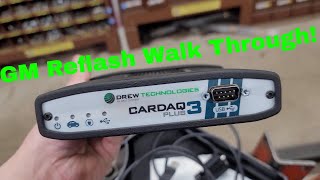
- GDS2 (GM Global Diagnostic System 2): RCDLR Reprogramming with VCI Number — In cases of software corruption or to apply updates that address specific issues like delayed passive entry (as noted in TSB PI0946), the RCDLR module may need to be fully reprogrammed. This often requires obtaining a Vehicle Configuration Index (VCI) number from GM technical support.
Wiring & Ground Locations
- Remote Control Door Lock Receiver (RCDLR) — On the Cadillac XTS, the RCDLR is typically located behind the rear seat back, often on the passenger side, to be in proximity to its antenna in the rear glass.. This is the central module that receives signals from both the TPMS sensors and key fobs. Its location is critical for checking antenna connections as per TSB 16-NA-061.
- RCDLR Antenna — The primary antenna for the RCDLR is integrated into the right rear glass of the vehicle. A coax cable runs from the RCDLR, through an amplifier, to this antenna.. A disconnected coax cable at the RCDLR, the amplifier, or the glass connection itself can cause the exact symptoms of a failed RCDLR, including multiple TPMS codes and key fob issues.
- Ground G218 — Located on the driver's side, under the dash/carpet area, often on a stud near the front of the dash insulator mat.. While not directly for the RCDLR, G218 is a major body ground point. TSB PIT5405C identifies a poor connection at G218 (due to a loose nut or trapped insulation mat) as a cause for a wide range of bizarre electrical issues, including module communication DTCs and blank instrument clusters, which could be confused with or accompany an RCDLR fault.
- Key Fob Transmitter Pocket — Inside the center console storage area.. This pocket is not just for storage; it contains an inductive coil that allows the vehicle to read the key fob's passive chip and start the engine even if the fob's battery is dead or if RCDLR reception is poor. This is a critical diagnostic step to differentiate a dead fob battery from a vehicle-side RCDLR problem.
Real Owner Repair Stories
- Cadillac XLR Forums user (2004 Cadillac XLR (similar GM platform)) — RCDLR was going in and out. After replacement, key fob buttons (lock/unlock) worked, but the car would not start (no crank) and would only go into accessory mode.
❌ Tried (didn't work) Initial programming of the new fobs to the new RCDLR only restored button functions, not the ability to start the car.
✅ What actually fixed it A security relearn procedure was required to sync the new RCDLR with the vehicle's ECU. The procedure involved turning the ignition to the accessory-on position for 10 minutes until the security light turned off, then turning the vehicle off. This cycle was repeated a total of three times. After the third cycle, the car started and functioned correctly.
OEM Part Supersession History
13595511→13540045— Part has been updated or replaced by the manufacturer. Functionality remains the same.
Heads up: While 13595511 is widely cited for this vehicle range, always verify the correct part number with a VIN at a dealership parts counter before ordering, as multiple revisions exist.
Model Year Variations Within This Range
- 2013-2014 vs 2015-2019: The key fobs used have different FCC IDs. Early models (approx. 2013-2014) often use FCC ID NBG009768T, while later models (approx. 2015-2019) use HYQ2AB. The fobs look identical but are not interchangeable. Using a fob with the wrong FCC ID will result in a programming failure. Always match the FCC ID from the original fob when replacing.
Helpful Videos
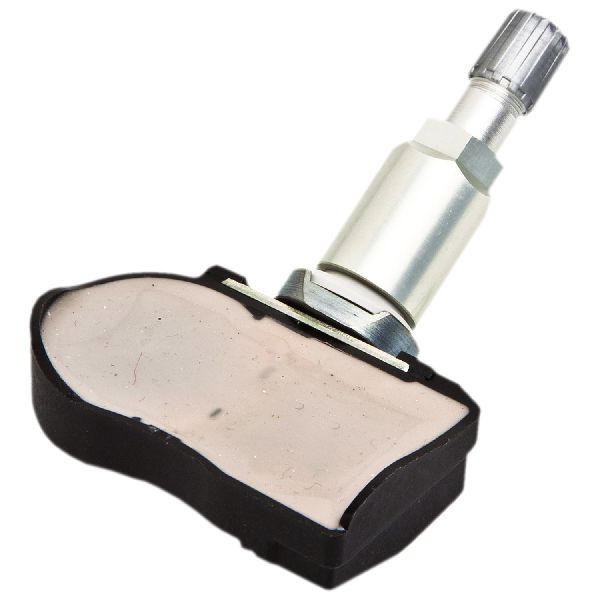
We Have This Part in Stock

The information in this article is provided for general reference and educational purposes only. Vehicle specifications, procedures, and part compatibility can vary by production date, trim level, and region. Always consult your vehicle's factory service manual and verify part numbers before purchasing or performing repairs. Safety-critical components such as airbags, seat belts, and braking systems should be installed by a qualified professional.
- Cadillac XTS:
- 🧭 Diagnostic Flowchart
- 🎬 Helpful Videos
- 🛍️ Shop This Part
- What's Unique About the 2013-2019 Cadillac XTS
- Symptoms You May Notice
- Most Likely Causes
- Rare But Worth Checking
- Diagnosis Steps
- Parts You'll Likely Need
- Related Codes That Often Appear With This One
- Technical Service Bulletins (TSBs) & Recalls
- Platform-Specific Known Issues
- Mechanic-Grade Diagnostic Values
- Hidden / Shadow Codes Worth Checking
- Scan Tool Commands That Help
- Wiring & Ground Locations
- Real Owner Repair Stories
- OEM Part Supersession History
- Model Year Variations Within This Range
- 🎟️ Get 5% Off