

C0760 on 2007-2014 Chevrolet Corvette: Left Rear TPMS and RCDLR Faults
Code C0760 on a 2007-2014 Corvette means there's a fault with the left rear Tire Pressure Monitoring System (TPMS) sensor. The most common cause is a dead sensor battery, requiring sensor replacement. If you also have key fob problems or a no-start issue, the Remote Control Door Lock Receiver (RCDLR) module is a likely culprit, especially on 2007-2013 C6 models, a well-documented failure point.
- C0760 points directly to a problem with the left rear TPMS sensor.
- The most probable cause is a dead battery in the sensor, which is expected for a vehicle of this age.
- If you have a 2007-2013 C6 Corvette and are also experiencing key fob detection or starting problems, the RCDLR module is the likely culprit.
- A simple sensor replacement is a straightforward job for a tire shop, but an RCDLR replacement requires specialized programming.
- Do not ignore the warning; while the car is drivable, the TPMS system is a key safety feature, and related faults can potentially lead to starting issues.
What's Unique About the 2007-2014 Chevrolet CORVETTE
On the C6 Corvette (2007-2013), the Tire Pressure Monitoring System is uniquely integrated with the keyless entry and security system through a single module: the Remote Control Door Lock Receiver (RCDLR). This module, located above the center HVAC vents in the dashboard, processes signals from both the TPMS sensors and the key fobs. A failure within the RCDLR is a well-documented issue on the C6 platform and can cause a cascade of problems, including TPMS codes like C0760, "No Fob Detected" messages, and even no-start conditions, as noted in TSB #PIC5650M. The 2014 C7 model has a different electronic architecture but is still susceptible to individual sensor failures.
Diagnostic Flowchart
Tap your situation to follow the diagnostic path that matches what you're seeing on this vehicle.
Generation note: This range covers the C6 (2007-2013) and the first year of the C7 (2014). The most common cause, a failed TPMS sensor, applies to both. However, the secondary cause involving a faulty Remote Control Door Lock Receiver (RCDLR) is a widely known issue specific to the C6 generation. The C7 uses a different RCDLR system and architecture.
Symptoms You May Notice
- "Service Tire Monitor System" message on the Driver Information Center (DIC).
- TPMS warning light flashing for one minute, then staying on.
- DIC shows dashes (--) for the left rear tire pressure.
- "No Fob Detected" message (if RCDLR is the cause).
- Car fails to start or stalls, requiring the key fob to be placed in the glovebox slot to start (if RCDLR is the cause).
- In some cases, stability control may enter a limited mode.
- Audible single click from the RCDLR module area (above radio) when pressing the start button, instead of a series of clicks (indicates RCDLR fault).
- Reduced range for the key fob's lock/unlock functions.
- Replacing the key fob battery. While a good first step for fob issues, it will not resolve a C0760 code, which originates from the tire sensor or the car's receiver module.
- Replacing the vehicle's main battery. While a weak car battery can cause numerous electrical gremlins, it is not the direct cause of a single, specific TPMS sensor code like C0760. However, a healthy battery above 12.4V is necessary for proper module function.
Most Likely Causes
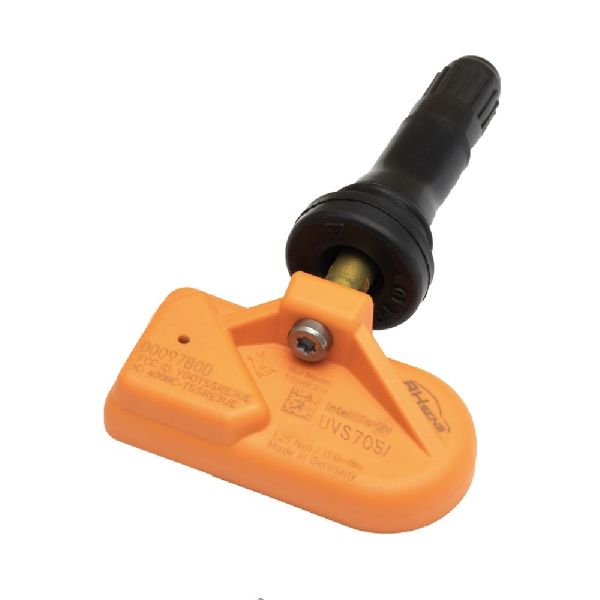
- Failed Left Rear TPMS Sensor 🔴 High Probability → Shop Tire Pressure Monitoring System (TPMS) Sensor The internal, non-replaceable batteries in TPMS sensors have a finite lifespan of 7-10 years. Vehicles in the 2007-2014 range are at or beyond this age, making battery failure the most likely reason for the sensor to stop transmitting.
How to confirm: Use a TPMS diagnostic tool to attempt to read the sensor. If the tool cannot get a signal from the left rear sensor but can read the other three, the sensor has failed. A tire shop can perform this test quickly.
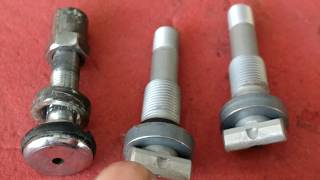
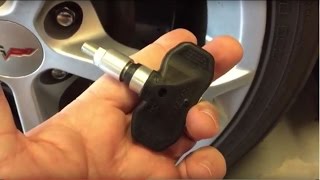
Typical fix: Replace the left rear TPMS sensor and perform the TPMS relearn procedure. 🎬 Watch: An easy way to reset your TPMS sensors. This requires breaking the tire's bead to access the sensor inside the wheel. Some DIY methods exist using a vehicle's jack to break the bead, but a tire machine is recommended. 🎬 See how to install new TPMS sensors on a C6.
Est. part cost: $40-$90 - Faulty Remote Control Door Lock Receiver (RCDLR) 🟡 Medium Probability → Shop Keyless Entry Receiver This is a known failure point on C6 Corvettes (2007-2013). The module handles both TPMS and key fob signals, and internal failures (like bad solder joints, corroded connector pins, or failed transistors) can cause it to stop communicating with sensors and/or fobs. The issue is common enough that owners on forums frequently discuss it.
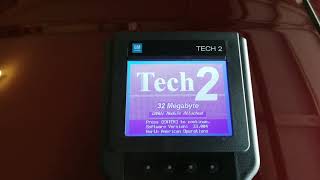
How to confirm: This is the likely cause if you have code C0760 along with other TPMS codes (C0750, C0755, C0765) and/or key fob recognition issues (e.g., "No Fob Detected", needing to use the glovebox slot to start). A GM Tech 2 scanner may show a communication failure with the module, and listening for a single click from the dash when trying to start is a strong indicator.
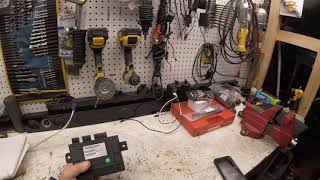
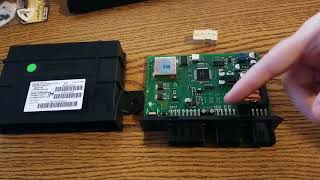
Typical fix: Replace the RCDLR module. 🎬 Watch: Step-by-step guide to replacing the RCDLR module. This part requires programming to the vehicle using a specialized scan tool like a GM Tech 2. Some owners have attempted to repair the board by reflowing solder joints, but results are mixed.
Est. part cost: $150-$250
Rare But Worth Checking
- Radio Frequency (RF) Interference: Aftermarket electronic devices like phone chargers, dash cams, or even some LED bulbs can sometimes interfere with the low-power signal from the TPMS sensor to the RCDLR. TSB #PIC5650M specifically mentions this possibility. Before replacing parts, try driving the car with all aftermarket electronics unplugged to see if the code clears.
- Loose or Disconnected RCDLR Antenna Coax Cable: As detailed in GM bulletin 16-NA-061, the RCDLR antenna system has several connection points (at the module, at the antenna amplifier, at the rear glass antenna). A loose or disconnected coax cable can cause intermittent or total loss of signal from one or more TPMS sensors, as well as poor key fob range. Checking these connections behind the dash and near the right rear glass is a valid diagnostic step before replacing the module.
Diagnosis Steps
- Verify the code C0760 is present using an OBD-II scanner capable of reading C-codes (Chassis).
- Manually check the pressure of the left rear tire with a reliable gauge to rule out an actual low-pressure issue.
- Using a TPMS activation tool, attempt to read the left rear sensor. If it fails to respond while the other three sensors do, the sensor itself has failed.
- If you are experiencing key fob issues ('No Fob Detected') on a C6 model, place the fob in the glovebox slot. If the car starts, the RCDLR is the primary suspect.
- Listen for an audible click from the RCDLR area (above the radio) when pressing the start button with the fob out of the slot. A single click instead of a series of clicks points to a faulty RCDLR.
- Check for other related DTCs. Multiple TPMS codes (C075x) or key fob codes (B3055, B3060) strongly suggest an RCDLR failure.
- Unplug any aftermarket 12V accessories (chargers, dash cams) to eliminate Radio Frequency Interference as a cause.
- If the RCDLR is suspected, diagnosis and replacement should be performed by a qualified technician with a GM Tech 2 or equivalent programming tool, as module setup is required.
Parts You'll Likely Need
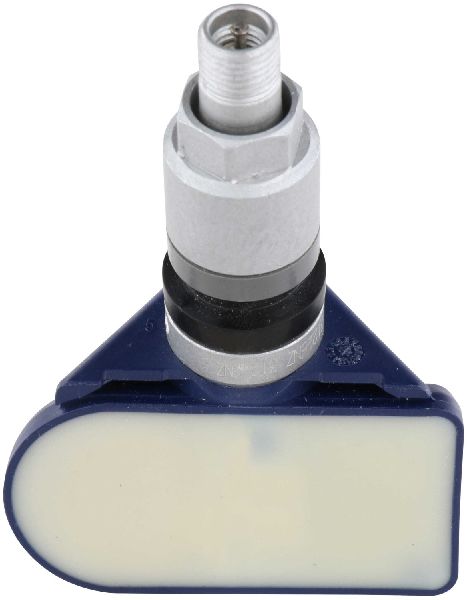
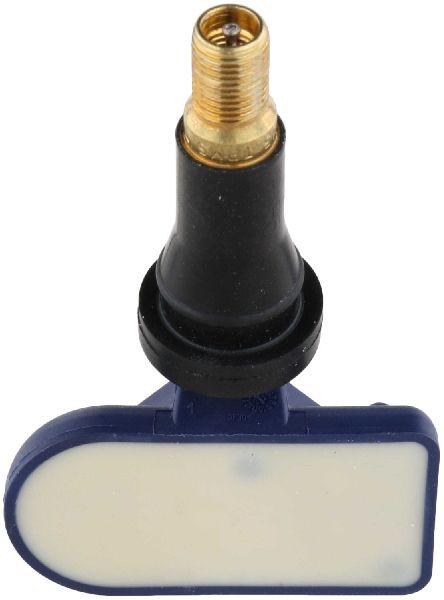
- Tire Pressure Monitoring System (TPMS) Sensor
(OEM #13598773)— This is the most common failure point due to the sensor's internal battery life. The entire sensor must be replaced when the battery dies. Part number 13581560 is also cited for this application. Both operate at 433 MHz.
Trusted brands: ACDelco, Schrader
OEM price range: $60-$90
Aftermarket price range: $40-$60 - Remote Control Door Lock Receiver (RCDLR)
(OEM #25971267)— This module is a known weak point on C6 Corvettes and is the likely cause if TPMS and key fob issues occur simultaneously. Note: This part may have been superseded or discontinued, making a used part the only option for some owners.
Trusted brands: ACDelco (OEM)
OEM price range: $150-$250
Aftermarket price range: N/A
Related Codes That Often Appear With This One
- C0750, C0755, C0765 — These are the corresponding codes for the other three TPMS sensors (Left Front, Right Front, Right Rear). If multiple codes are present, it points more strongly toward a central receiver (RCDLR) issue or its antenna system rather than multiple simultaneous sensor failures.
- B3055, B3060 — These codes relate to the keyless entry and ignition system, indicating a failure to recognize the key fob transponder. Their presence alongside C0760 on a C6 Corvette is a strong indicator that the RCDLR module is the root cause, as it controls both systems. This link is explicitly mentioned in Bulletin #PIC5650M.
Technical Service Bulletins (TSBs) & Recalls
- Bulletin #PIC5650M: Mentions C0760 in a group of codes related to a no-start or start/stall concern with the security light on, pointing to a potential link between the TPMS and vehicle security systems. It also highlights RF interference from aftermarket devices as a possible cause.
Platform-Specific Known Issues
- The RCDLR module on 2007-2013 C6 models is known to fail, causing simultaneous issues with the TPMS and keyless entry system. Owners report "No Fob Detected" messages and intermittent starting problems that coincide with TPMS warnings.
- Due to the age of these vehicles, many owners find that dealerships may be reluctant to diagnose or work on RCDLR issues, sometimes due to lack of experience with the older platform or part availability concerns.
- Cold weather can exacerbate a failing RCDLR, with some owners on CorvetteForum reporting that the "No Fob Detected" issue only appears below a certain temperature (e.g., 45°F).
Mechanic-Grade Diagnostic Values
- RCDLR Connector 'Battery Positive Voltage' (Pin H, Circuit 2440) — expected: 12.4V or higher. Failure: A reading below 12V, or a significant voltage drop compared to the battery terminals, indicates a wiring or fuse issue. A Tech 2 scanner showing RCDLR voltage in the 11V range while the battery is healthy points to a problem.
- RCDLR Connector 'Ignition 1 Voltage' (Pin C, Circuit 3) — expected: Briefly jumps to ~12V during ignition switch activity, otherwise near 0V.. Failure: A constant low voltage (e.g., 0.05V) at idle is normal, but a failure to jump to ~12V when the start button is pressed could indicate a problem with the ignition signal to the module.
Scan Tool Commands That Help
- GM Tech 2 / Tech2Win: Module Setup > RCDLR — This function is required after installing a new or used RCDLR to marry the module to the vehicle's BCM and security system.
- GM Tech 2 / Tech2Win: Remote Control Door Lock Receiver > Program Fobs — Used after RCDLR installation to program the key fobs to the new module. This often involves a 10-minute or 30-minute security relearn procedure.
- GM Service Programming System (SPS) via TIS2WEB: Replace and Reprogram ECU — This is the official GM procedure for flashing the correct firmware onto a new RCDLR. It requires a pass-thru device (like a Tech 2 or VXDIAG VCX Nano) connected to a computer with a TIS subscription.
- GM Tech 2 / Tech2Win: Special Functions > TPM Sensor Learn — After the RCDLR and fobs are programmed, this function is used with a TPMS trigger tool to teach the new module the unique IDs of each tire sensor.
Wiring & Ground Locations
- RCDLR Module — In the dashboard, directly above the center HVAC vents and radio.. This is the central receiver for all TPMS and key fob signals on the C6 Corvette. A failure or poor connection here is a primary cause of C0760, especially when accompanied by key fob issues.
- G104 — On the top of the right front frame rail, just ahead of the battery.. This ground point serves the Remote Control Door Lock Receiver (RCDLR) and the Body Control Module (BCM). Corrosion or a loose connection here can cause a wide range of electrical issues, including RCDLR and TPMS malfunctions.
- G201 / G202 — At the bottom of the A-pillars (driver and passenger side, respectively), behind the plastic kick panels.. These are major interior ground points. G201 specifically grounds the BCM via a splice pack. A bad ground here can disrupt communication between the BCM and RCDLR, leading to various faults.
- RCDLR Fuse #11 — In the Underhood Block Engine Compartment (UBEC) fuse box.. This fuse provides battery positive voltage to the RCDLR. If programming fails, pulling this fuse for at least 30 seconds can reset a 'locked up' RCDLR, allowing the programming procedure to be restarted.
Real Owner Repair Stories
- CorvetteForum user (2005 C6 Corvette) — "No Fob Detected" message, car would not start even with fob in glovebox slot, car was 'brain dead' and unresponsive.
❌ Tried (didn't work) Replacing key fob battery, Replacing car battery, Dealer replaced the RCDLR, Dealer replaced the BCM
✅ What actually fixed it A second dealership discovered the root cause was a faulty factory radio. When the radio was unplugged, all RCDLR and BCM functions returned to normal, and the car started and operated correctly. The faulty radio was creating electrical noise or a data bus issue that interfered with the security modules. - CorvetteForum user (2005 C6 Corvette) — "No Fob Detected" message, but the car would start if you tapped on the dashboard above the radio.
❌ Tried (didn't work) Re-pinning the RCDLR connector plugs.
✅ What actually fixed it The owner removed the RCDLR module, opened the case, and re-soldered the header pins where the main connector attaches to the circuit board. The physical tapping indicated a cold or cracked solder joint, which was resolved by reflowing the solder. This fixed the problem without needing to program a new module. - YouTube user Mike Schneider (Maktonc6) (C6 Corvette) — No start, security lock light on, fobs not working, no clicking from RCDLR relays.
❌ Tried (didn't work) Standard 30-minute key relearn procedure did not work initially., Initial attempts to get the new RCDLR into 'learning mode' with a Tech 2 failed.
✅ What actually fixed it A 'hot-swap' trick was used. The old (faulty) RCDLR was connected to put the car into accessory mode. While in accessory mode, the old module was unplugged and the new (unprogrammed) module was plugged in. This forced the new RCDLR into learning mode, allowing the 30-minute fob programming and subsequent 30-minute security handshake with the ECM to complete successfully.
OEM Part Supersession History
15268606, 15921013, 20925924→13598773— Part consolidation and updates over the model years.
Heads up: While 13598773 is a common replacement, different TPMS systems were used in the C6 generation. 2007-2009 cars used one system, while 2010-2013 cars used another that required different sensors. The 2014 C7 uses a 433 MHz sensor, while US-spec C6 models use 315 MHz. Always verify the correct part number for the specific model year.13581560→13598773— Part update/consolidation, primarily for C7 and later GM vehicles.
Heads up: Part number 13581560 was used for the 2014 C7 Corvette. While it may have been superseded by 13598773 for newer applications, it's critical to use the sensor specified for the vehicle's exact year and market (US vs. Europe).
Model Year Variations Within This Range
- 2007-2009 vs 2010-2013 (C6): The TPMS system (integrated into the RCDLR) was changed for the 2010 model year. Although both systems operate on 315 MHz (for US market), they require different TPMS sensors. A sensor for a 2009 model will not work on a 2010 model, and vice-versa.
- 2013 (C6) vs 2014 (C7): The 2014 C7 Corvette introduced a completely new electronic architecture. The TPMS sensors for the C7 operate on a 433 MHz frequency, whereas the US-market C6 used 315 MHz sensors. They are not interchangeable.
- 2010-2011: For a brief period, 2010 and early 2011 models used TPMS sensors that could be triggered for relearn by changing the tire's air pressure. In January 2011, GM switched to a different sensor that requires a dedicated TPMS activation tool for the relearn procedure.
Helpful Videos
We Have This Part in Stock

The information in this article is provided for general reference and educational purposes only. Vehicle specifications, procedures, and part compatibility can vary by production date, trim level, and region. Always consult your vehicle's factory service manual and verify part numbers before purchasing or performing repairs. Safety-critical components such as airbags, seat belts, and braking systems should be installed by a qualified professional.
- Chevrolet CORVETTE:
- 🧭 Diagnostic Flowchart
- 🎬 Helpful Videos
- 🛍️ Shop This Part
- What's Unique About the 2007-2014 Chevrolet CORVETTE
- Symptoms You May Notice
- Most Likely Causes
- Rare But Worth Checking
- Diagnosis Steps
- Parts You'll Likely Need
- Related Codes That Often Appear With This One
- Technical Service Bulletins (TSBs) & Recalls
- Platform-Specific Known Issues
- Mechanic-Grade Diagnostic Values
- Scan Tool Commands That Help
- Wiring & Ground Locations
- Real Owner Repair Stories
- OEM Part Supersession History
- Model Year Variations Within This Range
- 🎟️ Get 5% Off