

C0760 on 2007-2014 Chevrolet Express 3500: Left Rear TPMS Fault Explained
Code C0760 on a 2007-2014 Express 3500 means there's a problem with the left rear Tire Pressure Monitoring System (TPMS) sensor. The most common cause is a dead battery inside the sensor, which requires replacing the entire sensor unit. Expect to pay around $30-$60 for an aftermarket sensor and $60-$90 for an OEM part, plus labor for tire mounting and balancing. If key fob issues are also present, the fault is likely the RCDLR module or its wiring.
- C0760 specifically means there is a fault with the left rear TPMS sensor.
- The most likely cause on a 2007-2014 model is a dead sensor battery, requiring sensor replacement.
- If you also have key fob problems or starting issues, the problem is more likely the Remote Control Door Lock Receiver (RCDLR), its wiring, or Radio Frequency Interference (RFI).
- Replacing the sensor requires dismounting the tire, and a TPMS relearn tool (like an EL-50448) is almost always needed to program the new sensor to the van.
- Given the age of the vehicle, if one sensor has failed, the others may not be far behind. Consider replacing all four to save on future labor costs.
What's Unique About the 2007-2014 Chevrolet EXPRESS 3500
On the Chevrolet Express and other GM vehicles of this era (GMT610 platform), the Tire Pressure Monitoring System (TPMS) and the keyless entry system are both managed by the Remote Control Door Lock Receiver (RCDLR). This shared responsibility is a key design point. A failing RCDLR can cause a wide array of seemingly unrelated symptoms. TSB PIC5650M explicitly links TPMS codes like C0760 with security system codes (B3055, etc.) and no-start conditions, confirming that a single module failure can impact both systems. Furthermore, the physical distance of the left rear sensor from the RCDLR makes it one of the first to drop out if there is a weak signal due to antenna issues.
Diagnostic Flowchart
Tap your situation to follow the diagnostic path that matches what you're seeing on this vehicle.
Symptoms You May Notice
- Flashing (for ~60 seconds), then solid 'Service Tire Monitor System' warning light on the instrument cluster.
- Tire pressure reading for the left rear tire shows dashes ('--') on the driver information center (DIC).
- In cases where the RCDLR module or its wiring is the root cause, you may also experience key fob issues (poor range, inoperative), or a no-start/start-and-stall condition with the security light on, as noted in TSB PIC5650M.
- Replacing the Body Control Module (BCM) when the fault lies with the much cheaper TPMS sensor or the RCDLR.
- Replacing only one TPMS sensor when others are likely near the end of their battery life. It is often cost-effective to replace all four at once, especially if paying for labor to dismount the tires.
- Assuming the relearn procedure can be done without a tool. While some older GM manuals suggest letting air out of the tires works, owners on forums frequently report that a dedicated relearn tool (like the EL-50448) is required for these models.
Most Likely Causes
- Dead TPMS Sensor Battery 🔴 High Probability → Shop Tire Pressure Monitoring System (TPMS) Sensor TPMS sensor batteries have a finite lifespan, typically 5-10 years. Vehicles in the 2007-2014 range are at or beyond the expected end-of-life for their original sensors. A sensor's low battery condition can be confirmed with a scan tool.
How to confirm: Use a TPMS diagnostic tool to attempt to 'wake' or read the sensor. If the tool cannot get a response, or if it reads a 'Low Battery' status, the sensor is the culprit. The system will set code C0760 with a symptom byte of '00' for a low battery condition.
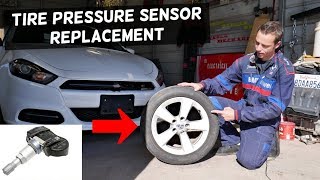
Typical fix: Replace the left rear TPMS sensor. The tire must be removed from the wheel to access the sensor. 🎬 Watch this walkthrough on how to replace a TPMS sensor. A new sensor must then be programmed to the vehicle using a TPMS relearn tool like the EL-50448.
Est. part cost: $30-$90 - Faulty TPMS Sensor 🟡 Medium Probability → Shop Tire Pressure Monitoring System (TPMS) Sensor Sensors can be damaged by impacts from potholes or during tire service. Corrosion can also cause electronic failure. Using unapproved tire sealants can also clog the sensor's pressure port and cause it to fail.
How to confirm: Even if a TPMS tool can wake the sensor, it may fail to transmit data correctly or send an invalid signal, which can set a C0760 with symptom byte '08'. If a relearn procedure fails repeatedly for only this wheel, the sensor is likely faulty.
Typical fix: Replace the left rear TPMS sensor and perform the relearn procedure.
Est. part cost: $30-$90
Rare But Worth Checking
- Faulty Remote Control Door Lock Receiver (RCDLR): → Shop Keyless Entry Receiver This is a critical possibility if you are experiencing other issues. If your key fobs are not working correctly or you have intermittent starting problems along with the C0760 code, the RCDLR is a likely culprit. TSB PIC5650M specifically links TPMS codes with security and no-start issues, pointing to this module. 🎬 See how a faulty RCDLR causes no-start and DIC issues. In some cases, a blown fuse powering the RCDLR can be the cause.
- RCDLR Antenna Connection Issue: GM TSB 16-NA-061 and PIT5446A describe how a poor or disconnected coaxial antenna cable to the RCDLR can cause loss of signal from one or more TPMS sensors. The left rear sensor is often one of the first to lose connection as it is farther from the receiver. Checking the three main connection points (at the RCDLR, at the antenna amplifier, and at the antenna itself) can prevent unnecessary module replacement.
- Radio Frequency Interference (RFI): TSB PIC5650K warns that aftermarket electronic devices, such as phone chargers, USB power banks, and especially aftermarket LED lighting, can generate RFI that 'jams' the 315 MHz frequency used by the TPMS sensors and key fobs. If the problem is intermittent, try removing all aftermarket plug-in devices and see if the issue resolves before replacing parts.
Diagnosis Steps
- Verify the code with an OBD-II scanner capable of reading Chassis (C) codes. A professional scanner can also read symptom bytes like '00' (low battery/no signal) or '08' (invalid signal).
- Use a TPMS diagnostic tool to try and activate the left rear sensor. If it does not respond, the sensor is the primary suspect.
- If the sensor responds, check its reported battery status (if the tool supports this). A 'Low Battery' status confirms the need for replacement.
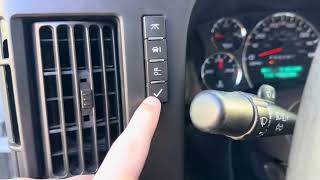
- Attempt a TPMS relearn procedure. On the Express van, this is initiated through the Driver Information Center (DIC) buttons. 🎬 Watch this tutorial on the Express van tire relearn procedure. While the manual may suggest letting air out of the tires, a relearn tool is often necessary to activate each sensor in sequence (LF, RF, RR, LR).
- If the relearn fails for the left rear sensor but works for others, replace the sensor.
- If other TPMS codes or key fob/security issues are present, inspect the RCDLR and its antenna connections as per GM service bulletins before replacing any parts. Also check for any aftermarket electronics that could cause RFI.
- If the RCDLR is suspected, check for power and ground at the module connector before condemning the unit. A blown fuse or wiring issue can mimic a failed module.
Parts You'll Likely Need
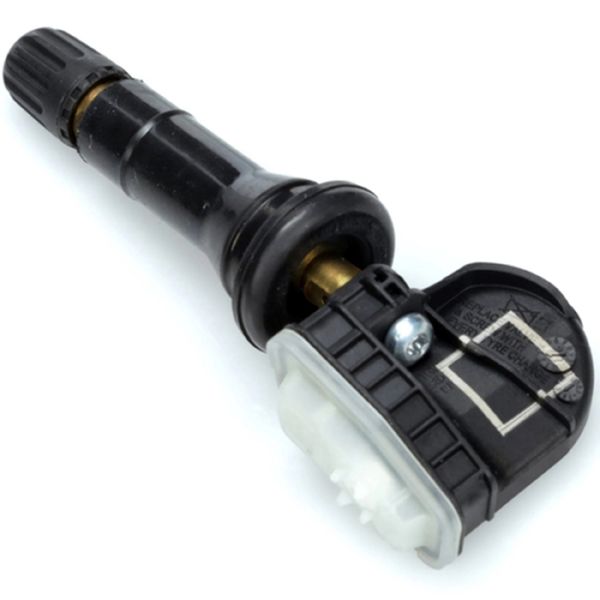
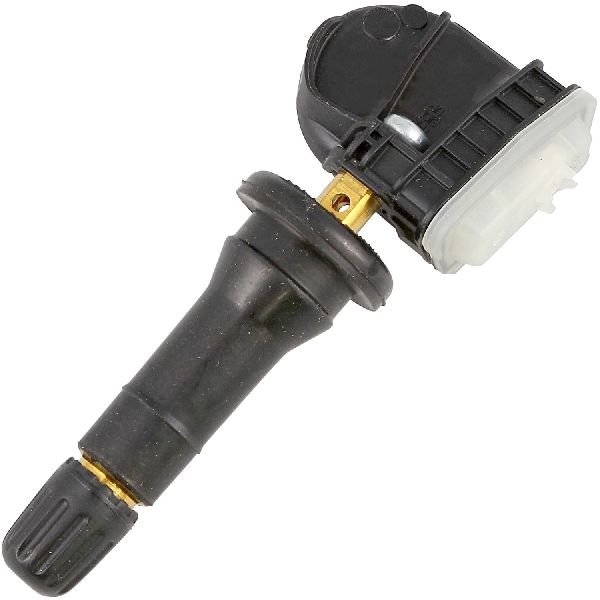
- Tire Pressure Monitoring System (TPMS) Sensor
(OEM #13598771)— This is the most common failure point for code C0760, usually due to an expired internal battery. This part number has been superseded and interchanges with many others, including 13540600, 13586335, 20923680, 22853741, and 23445327.
Trusted brands: ACDelco (OEM), Schrader (Original OEM Supplier), Dorman, Standard Motor Products
OEM price range: $60-$90
Aftermarket price range: $30-$50
Related Codes That Often Appear With This One
- C0750 — Fault in the Left Front TPMS sensor. Often appears when sensors are failing due to age.
- C0755 — Fault in the Right Front TPMS sensor. Often appears when sensors are failing due to age.
- C0765 — Fault in the Right Rear TPMS sensor. Often appears when sensors are failing due to age.
- B3055, B3060, B3935 — These are vehicle security system codes. According to TSB PIC5650M, their presence with C0760 strongly points to a fault in the Remote Control Door Lock Receiver (RCDLR) or its wiring/power, not the individual TPMS sensor.
Technical Service Bulletins (TSBs) & Recalls
- PIC5650M (and its revisions J, K): Addresses a no start or start/stall condition with security light and various DTCs including C0760, pointing towards the RCDLR or Radio Frequency Interference (RFI) as a potential cause.
- 16-NA-061 / PIT5446A: Details how a disconnected RCDLR antenna coax cable can cause TPMS codes, often starting with the sensors farthest from the receiver like the left rear.
Platform-Specific Known Issues
- As documented in TSB PIC5650M, a no-start or start-and-stall condition accompanied by security lights and TPMS codes like C0760 points directly to a potential issue with the Remote Control Door Lock Receiver (RCDLR) or Radio Frequency Interference from aftermarket devices.
- A recall (GM #15819, NHTSA 16V-184) was issued for some 2014-2016 Express/Savana incomplete vehicles that were shipped without a TPMS system installed. While this doesn't directly cause C0760, it highlights the importance of ensuring the system is present and active on these vans.
Mechanic-Grade Diagnostic Values
- RCDLR Module Battery Positive Voltage — expected: Should be close to battery voltage (e.g., 12.4V+ with key on, engine off).. Failure: A reading below 12V, especially in the 11V range, indicates a voltage drop issue in the power supply circuit or a bad ground.
- RCDLR Module Ignition 1 Voltage — expected: Should be close to battery voltage when the ignition is in the 'ON' or 'RUN' position.. Failure: A reading near 0V (e.g., 0.05V) when the ignition is on points to a problem in the ignition voltage supply circuit to the module.
Hidden / Shadow Codes Worth Checking
- C0760 00: Indicates the RCDLR has not received a transmission from the left rear sensor for a set period, often due to a dead sensor battery or a complete sensor failure. (see via A professional scan tool like the GM Tech 2 or GDS2 that can read manufacturer-specific DTCs with symptom bytes.)
- C0760 08: Indicates the RCDLR is receiving an invalid or malformed signal from the left rear sensor. This can also be related to a transponder or security status error, given the RCDLR's dual function. (see via A professional scan tool like the GM Tech 2 or GDS2.)
Scan Tool Commands That Help
- GM Tech 2 / GDS2: RCDLR Module Programming — This function is required after replacing the RCDLR module to program the new unit to the vehicle's VIN and configure its options (TPMS, RKE, etc.).
- GM Tech 2 / GDS2 or TPMS Tool: Tire Pressure Indicator Sensor Learn — Used after replacing a TPMS sensor or rotating tires to teach the RCDLR the new position of each unique sensor ID.
- GM Tech 2 / GDS2: Observe 'Pressure Sensor Mode' Data Parameter — While test driving the vehicle over 25 mph, a technician can watch this live data parameter. A healthy sensor should change from 'Wake' or 'Stationary' to 'Rolling' or 'Drive'. If it doesn't change, the sensor itself is faulty.
Wiring & Ground Locations
- RCDLR Module — For 2014 models, it is located behind the center of the dash. On similar GMT900 trucks, it is often found behind the passenger side A-pillar or C-pillar trim.. This is the receiving module for the TPMS signal. All wiring and antenna connections to this module are critical for system operation.
- G302 — Located behind the left kick panel.. This is a major body ground point shared by multiple systems, including potentially the BCM or other related modules. A poor connection here can cause a wide range of difficult-to-diagnose electrical issues.
- RCDLR Antenna Coax — The coaxial cable runs from the RCDLR module to an antenna amplifier, and then to an antenna often integrated into the right rear quarter glass.. A disconnection at any of the three points (module, amplifier, or antenna) can cause a loss of signal, especially from the farthest sensors like the left rear, mimicking a bad sensor.
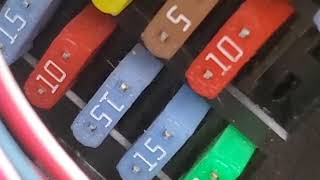
- DSM Fuse — In the instrument panel fuse block. On a similar GM truck, it was a 10A fuse labeled 'DSM'.. This fuse provides power to the RCDLR. If it's blown, the module will be completely dead, causing all TPMS sensors and key fobs to stop working, which can be misdiagnosed as a failed module.
Real Owner Repair Stories
- HR Repair on YouTube (2011 Chevrolet Silverado (similar architecture)) — Key fobs did not work. Scan tool showed 'Loss of communication' with the Remote Control Door Lock Receiver (RCDLR).
❌ Tried (didn't work) Initially ordered a new RCDLR module, assuming the original had failed.
✅ What actually fixed it Before installing the new module, the technician tested for power at the connector and found none. The root cause was a blown 10A fuse labeled 'DSM' in the instrument panel fuse block. Replacing the fuse restored power and communication with the original RCDLR, and the key fobs began working again. - Wires 2 Wrenches on YouTube (2008 Chevrolet Silverado) — Intermittent no-start, erratic instrument cluster (DIC), and other CAN bus communication issues. Key fobs worked.
❌ Tried (didn't work) Replaced an aftermarket radio, thinking it was causing interference.
✅ What actually fixed it The owner found a Technical Service Bulletin mentioning water leaks from the third brake light or roof seams running down the C-pillar. Water had dripped onto the RCDLR module, causing corrosion on the circuit board and its connectors. Cleaning the corrosion from the board and connector pins with electronic cleaner resolved the communication issues.
"I Checked Everything" — The Actual Cause
- A common scenario for this code is when all TPMS sensors are tested with a tool and appear to be transmitting, yet the C0760 code persists. This often points away from the sensor and toward the receiving side of the system. The actual cause is frequently a problem with the RCDLR module, its power supply (like a blown fuse), its ground connection, or its antenna, preventing it from properly receiving or processing the sensor's signal.
When the Usual Fixes Don't Work
- In a case involving a 2011 Silverado with no key fob function and an RCDLR communication fault, the initial diagnosis pointed to a failed RCDLR module. However, the actual fix was replacing a blown 10A 'DSM' fuse that powered the module. This demonstrates that before condemning an expensive module, it is critical to first verify it has proper power and ground, as the symptoms of a dead module and a module with no power are identical.
OEM Part Supersession History
13598771→13540600— Standard part number update/revision by GM.
Heads up: This part number is one of many that are cross-compatible. Other valid numbers include 13586335, 15922396, 20923680, 22853741, and 23445327. The critical factor is ensuring the sensor operates at 315 MHz for this vehicle. All new sensors require a relearn procedure.
Model Year Variations Within This Range
- 2007-2014: The core TPMS architecture (315 MHz sensors reporting to an RCDLR) remained consistent through this generation. While minor wiring or connector differences may exist, the diagnostic approach for C0760 (Sensor vs. RCDLR vs. RFI vs. Wiring) is the same for all years in this range.
Helpful Videos
We Have This Part in Stock


The information in this article is provided for general reference and educational purposes only. Vehicle specifications, procedures, and part compatibility can vary by production date, trim level, and region. Always consult your vehicle's factory service manual and verify part numbers before purchasing or performing repairs. Safety-critical components such as airbags, seat belts, and braking systems should be installed by a qualified professional.
- Chevrolet EXPRESS 3500:
- 🧭 Diagnostic Flowchart
- 🎬 Helpful Videos
- 🛍️ Shop This Part
- What's Unique About the 2007-2014 Chevrolet EXPRESS 3500
- Symptoms You May Notice
- Most Likely Causes
- Rare But Worth Checking
- Diagnosis Steps
- Parts You'll Likely Need
- Related Codes That Often Appear With This One
- Technical Service Bulletins (TSBs) & Recalls
- Platform-Specific Known Issues
- Mechanic-Grade Diagnostic Values
- Hidden / Shadow Codes Worth Checking
- Scan Tool Commands That Help
- Wiring & Ground Locations
- Real Owner Repair Stories
- "I Checked Everything" — The Actual Cause
- When the Usual Fixes Don't Work
- OEM Part Supersession History
- Model Year Variations Within This Range
- 🎟️ Get 5% Off