

C0760 on 2015-2022 Chevrolet Malibu: Left Rear TPMS Fault Causes and Fixes
Code C0760 indicates a fault with the left rear Tire Pressure Monitoring System (TPMS) sensor. The most common cause is a dead sensor battery, requiring sensor replacement. However, a known issue on this platform is a faulty Remote Control Door Lock Receiver (RCDLR), which can also trigger this code, often along with key fob problems. Diagnosis is key to avoid replacing the wrong part.
- C0760 specifically identifies a fault with the left rear TPMS sensor on your Malibu.
- Before buying any parts, check if your key fob is also malfunctioning. If it is, the problem is very likely the Remote Control Door Lock Receiver (RCDLR), not the tire sensor.
- The most common cause is a dead battery in the TPMS sensor itself, which is a normal wear item.
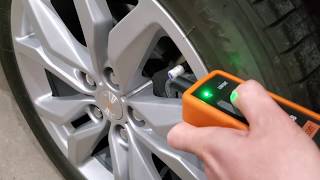
- Diagnosis with a TPMS tool is highly recommended to confirm if the sensor is bad before spending money.
- If the RCDLR needs to be replaced, it must be programmed by a dealer or a shop with the correct GM software.
What's Unique About the 2015-2022 Chevrolet MALIBU
On many cars, C0760 would simply mean a bad tire sensor. However, on this generation of Chevrolet Malibu and other related GM vehicles, the Tire Pressure Monitoring System (TPMS) is integrated with the Remote Control Door Lock Receiver (RCDLR). This single module processes signals from both the 433MHz tire sensors and your key fob. A well-documented internal fault in the RCDLR can cause it to stop receiving signals properly, leading to TPMS codes like C0760, even when the tire sensors are perfectly fine. This is a critical distinction that can save you from replacing parts unnecessarily.
Diagnostic Flowchart
Tap your situation to follow the diagnostic path that matches what you're seeing on this vehicle.
Generation note: This range covers the end of the 8th generation (2015) and the entire 9th generation (2016-2022) of the Chevrolet Malibu. The underlying TPMS architecture and the potential for RCDLR failure are relevant to both generations within this year range. TSB #16-NA-396 specifically calls out the 2016-2017 Malibu.
Symptoms You May Notice
- TPMS warning light illuminated on the dashboard (may flash for 60-90 seconds on startup, then stay solid)
- "Service Tire Monitor System" message on the Driver Information Center (DIC)
- Pressure reading for the left rear tire shows as dashes (--) on the DIC
- Intermittent or complete failure of the key fob (lock, unlock, remote start)
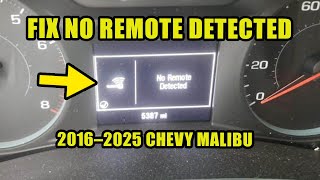
- "No Remote Detected" message on the DIC
- Vehicle may fail to start unless the key fob is placed in the transmitter pocket (typically in the center console) 🎬 Watch: How to find the key fob pocket to start your car.
- Replacing the TPMS sensor when the RCDLR is the actual point of failure. This is common if the technician does not know about TSB #16-NA-396 and fails to ask about key fob performance.
- Replacing all four TPMS sensors when only one has failed, or when the RCDLR is the root cause.
Most Likely Causes
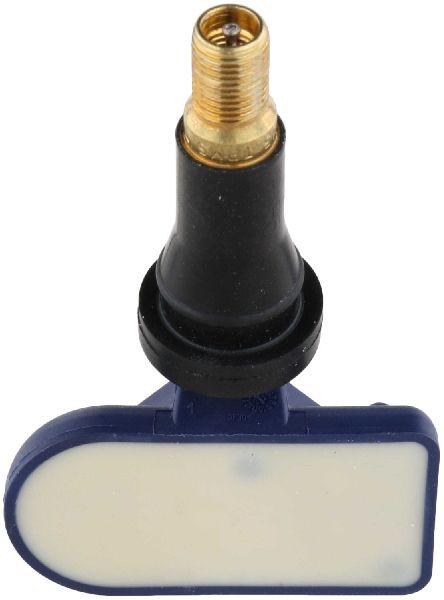
- Failed Left Rear TPMS Sensor 🔴 High Probability → Shop Tire Pressure Monitoring System (TPMS) Sensor TPMS sensors contain a non-replaceable battery with a finite lifespan, typically 7-10 years. As the 2015-2022 model years age, battery failure becomes the most common reason for this code.
How to confirm: Use a TPMS diagnostic tool to attempt to activate and read the sensor. If the tool cannot get a reading, or shows a 'low battery' or 'bad sensor' status, the sensor has failed. This is the most definitive test.
Typical fix: Replace the left rear TPMS sensor and perform the TPMS relearn procedure. This requires breaking down the tire 🎬 See how to reset tire pressure sensors with this tool. to access the sensor. A relearn tool (like the EL-50448 for GM) is required for modern Malibus.
Est. part cost: $25-$75 - Faulty Remote Control Door Lock Receiver (RCDLR) 🟡 Medium Probability → Shop Keyless Entry Receiver GM issued Technical Service Bulletin #16-NA-396 specifically identifying an internal issue with the RCDLR on 2016-2017 Malibus (and other models) that causes it to fail, triggering TPMS codes and key fob issues simultaneously. This is a widely known failure point.
How to confirm: This is the likely cause if you have code C0760 (or other TPMS codes) AND your key fob functions are intermittent or inoperative. A professional scan tool can check for communication issues with the RCDLR. If multiple TPMS codes (C0750, C0755, C0765) are present at once, the RCDLR is highly suspect.
Typical fix: Replace the RCDLR module. This part must be programmed to the vehicle by a dealership or a properly equipped independent shop using GM software. The module is typically located under the rear package shelf, accessible from the trunk or by removing interior trim.
Est. part cost: $80-$150 - Poor RCDLR Antenna Connection ⚪ Low Probability While less common than outright module failure, GM has noted in other bulletins (like #PI1085 for earlier models) that a disconnected or loose coaxial antenna cable to the RCDLR can cause poor signal reception from both TPMS sensors and key fobs.
How to confirm: Visually inspect the coaxial cable connections at the RCDLR module and its antenna amplifier, which is often located near the rear glass. This should be done before replacing the module.
Typical fix: Securely reconnect the loose antenna cable.
Est. part cost: $0
Rare But Worth Checking
- Radio Frequency Interference (RFI) from aftermarket devices like cheap phone chargers, dash cams, or LED lighting can disrupt the 315/433MHz signals the RCDLR needs to receive, causing intermittent TPMS and key fob issues. TSB PIC5650M mentions this as a possibility.
Diagnosis Steps
- Verify the tire pressure in the left rear tire with a quality manual gauge to rule out an actual low-pressure situation.
- Ask about symptoms: Is the key fob also working intermittently or not at all? Are other TPMS sensors showing errors? If yes to either, suspect the RCDLR first.
- Check for RFI: Unplug all aftermarket devices (phone chargers, dash cams, etc.) and re-test vehicle operation.
- Using a TPMS diagnostic tool, attempt to scan the left rear sensor. If it reads successfully with good battery life, the sensor is likely not the problem.
- If the TPMS tool cannot read the sensor, the sensor is the most likely culprit. Replace it.
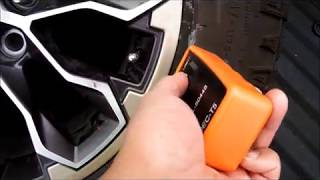
- If the sensor reads fine with the tool but the car won't recognize it, attempt the TPMS relearn procedure. This requires a tool like the EL-50448 for modern GM vehicles. 🎬 Watch: How to use the EL-50448 tool for a TPMS relearn.
- If the relearn procedure fails for one or more wheels, or if key fob issues are present, diagnose the RCDLR. The module is located under the rear parcel shelf. Check for power, ground, and secure antenna connections at the module before condemning it.
- If power, ground, and antenna connections are good, the RCDLR has likely failed internally and requires replacement and programming, per TSB #16-NA-396.
Parts You'll Likely Need
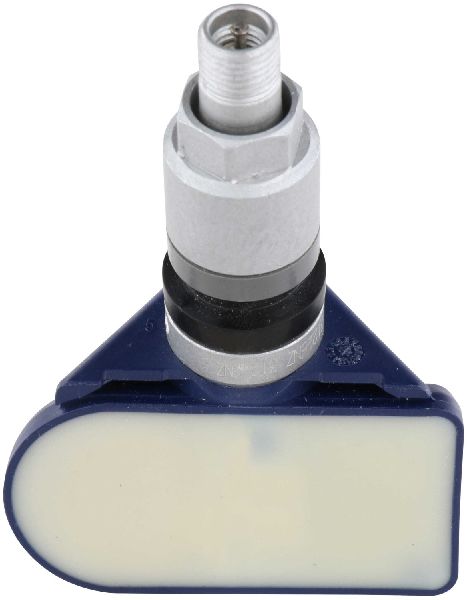
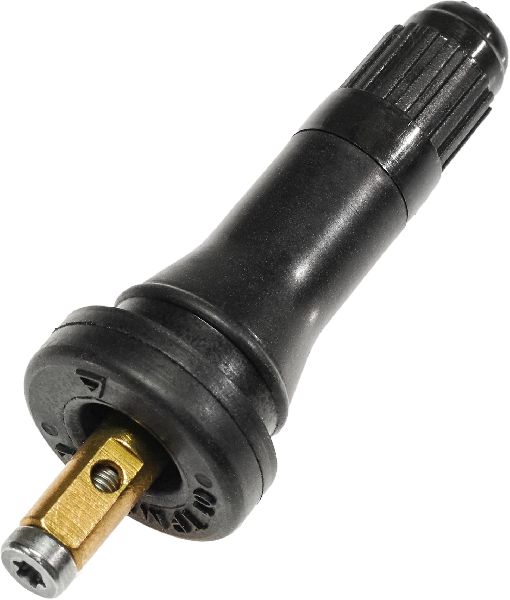
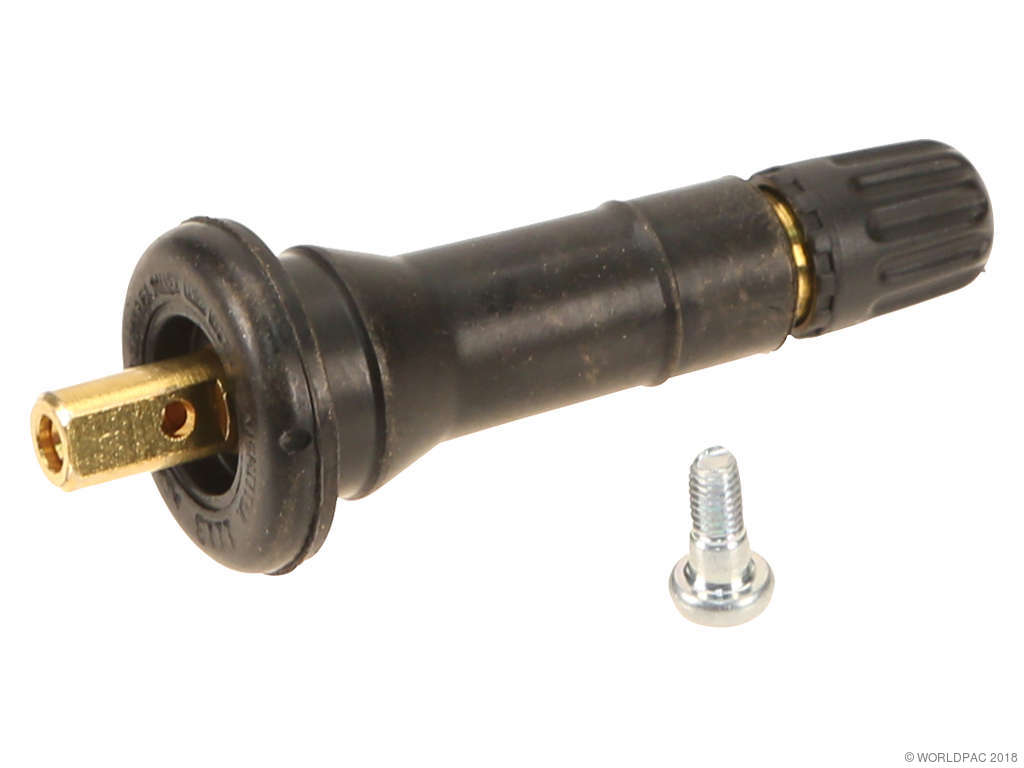
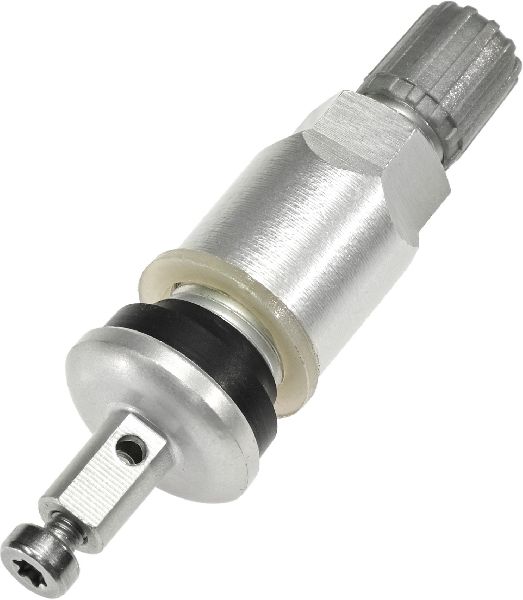
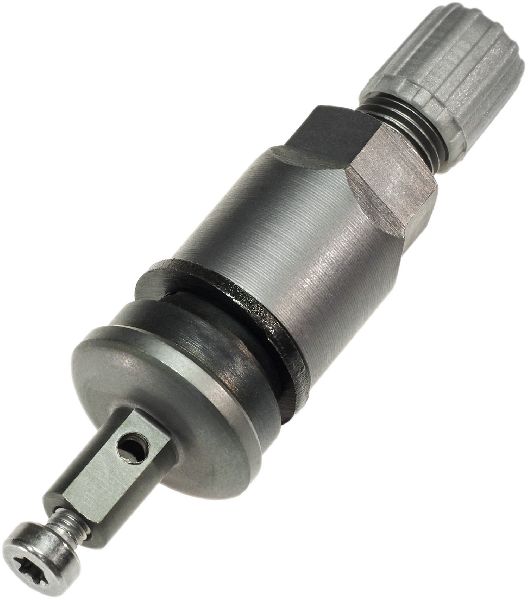
- Tire Pressure Monitoring System (TPMS) Sensor
(OEM #13598773, 13516164)— This is the most common failure point. The internal battery dies, requiring replacement of the entire sensor unit. Part number 13598773 is a 433MHz sensor widely used on these models. 13516164 is also listed for some model years. Always verify by VIN.
Trusted brands: ACDelco (GM Genuine), Schrader, VDO, Continental
OEM price range: $40-$75
Aftermarket price range: $25-$50 - Remote Control Door Lock Receiver (RCDLR)
(OEM #13595511, 84576539)— A known issue documented in TSB #16-NA-396 causes this module to fail, leading to TPMS codes and key fob problems. Part #13595511 is specified in the TSB. Newer part numbers like 84576539 may supersede older ones; always verify by VIN. Replacement requires programming.
Trusted brands: ACDelco (GM Genuine)
OEM price range: $80-$150
Related Codes That Often Appear With This One
- C0750 — Fault code for the Left Front TPMS sensor. Often appears with other TPMS codes when the RCDLR is failing.
- C0755 — Fault code for the Right Front TPMS sensor. Often appears with other TPMS codes when the RCDLR is failing.
- C0765 — Fault code for the Right Rear TPMS sensor. Often appears with other TPMS codes when the RCDLR is failing.
- B3055 — A security-related code ('No Remote Detected') that can appear alongside TPMS codes during no-start or start-stall conditions, as noted in TSB #PIC5650M. This strongly points to an RCDLR or RFI issue.
Technical Service Bulletins (TSBs) & Recalls
- 16-NA-396: Intermittent Operation of Key Fobs, Door Unlock Inoperative “No Remote Detected” Message with Possible TPM MIL. Points to a faulty RCDLR as the cause for TPMS codes and key fob issues.
- PIC5650M: Mentions that C0760 can be found with various security codes in no-start or start-stall situations, often related to RFI.
- PI1085: An earlier bulletin for other GM models that establishes the link between poor RKE (key fob) range and TPMS codes, pointing to the RCDLR.
Platform-Specific Known Issues
- TSB #16-NA-396: General Motors explicitly states that on 2016-2017 Malibus, symptoms like an inoperative key fob and TPMS codes (C0750, C0755, C0760, C0765) can be caused by an internal failure of the Remote Control Door Lock Receiver. The official fix is to replace the RCDLR module.
Hidden / Shadow Codes Worth Checking
- C0760 03: Left Rear Tire Pressure Sensor Low Voltage. This indicates the sensor is reporting its internal battery voltage is below the minimum threshold. (see via A professional scan tool like the GM GDS2 can read manufacturer-specific symptom bytes (the '03').)
- C0760 29: Left Rear Tire Pressure Sensor Too Few Pulses. The RCDLR is not receiving the expected number of radio frequency transmissions from the sensor. This is the specific symptom mentioned in TSB #16-NA-396. (see via A professional scan tool like the GM GDS2 can read manufacturer-specific symptom bytes (the '29').)
- C0760 39: Left Rear Tire Pressure Sensor Internal Malfunction. The sensor has performed a self-test and detected an internal hardware or software fault. (see via A professional scan tool like the GM GDS2 can read manufacturer-specific symptom bytes (the '39').)
- C0760 08: Transponder Status Error. This points to a failure in the immobilizer/key recognition function, which is also handled by the RCDLR, suggesting a module-level fault rather than a tire sensor issue. (see via A professional scan tool capable of reading GM-specific body codes and symptom bytes.)
Scan Tool Commands That Help
- GDS2 (GM): RCDLR Module Setup — This function is required after physically replacing the RCDLR. It is the first step in programming the new module to the vehicle before learning keys or TPMS sensors.
- GDS2 (GM): Theft Deterrent System Learn — This is the second step after RCDLR replacement. It involves a 10 or 30-minute automated procedure to pair the vehicle's immobilizer system with the new RCDLR.
- GDS2 (GM): Add/Replace Key Fobs — Located under 'Remote Control Door Lock Receiver -> Configure/Reset Functions', this command is used to program new or existing key fobs to the RCDLR without replacing the module itself.
- EL-50448 or similar: TPMS Relearn Procedure — Used after a tire rotation to make the vehicle recognize the new sensor positions, or after replacing a sensor. The vehicle is put into learn mode, and the tool is used to activate each sensor in sequence.
Wiring & Ground Locations
- RCDLR Module — On the rear package shelf (the panel behind the rear seats), accessible by removing the interior C-pillar trim and the shelf panel. On some models, it may be partially visible or reachable from inside the trunk, looking up.. This is the physical location of the receiver that processes the signal from the left rear TPMS sensor. A visual inspection for loose connections or water damage should be performed here before replacing the module.
- X-Connectors (e.g., X115) — Throughout the vehicle's wiring harnesses. GM diagrams label harness-to-harness connectors with an 'X' prefix.. A fault like C0760 can be caused by a communication breakdown. Knowing the connector convention helps trace circuits on a wiring diagram. TSB 21-NA-220 specifically identifies connector X115 in the engine harness as a potential point of high resistance for CAN bus circuits on 2019-2022 models.
Real Owner Repair Stories
- Reddit user in r/chevymalibu (2022 Chevrolet Malibu) — After a tire rotation, all four tire pressure readings were assigned to the wrong wheel positions on the driver information center.
❌ Tried (didn't work) Using the vehicle's built-in relearn mode without a tool.
✅ What actually fixed it The owner purchased a JDIAG EL-50448 TPMS relearn tool from Amazon for about $7. Following the procedure with the tool, they were able to successfully relearn the sensor positions in under 5 minutes, resolving the issue completely. - Chevy HHR Forum user (Chevrolet HHR (uses similar GM RCDLR architecture)) — Gradual weakening of remote start, door lock function, and tire pressure readings.
❌ Tried (didn't work) Going to the dealer for diagnosis.
✅ What actually fixed it The dealer diagnosed a bad RCDLR but stated the part was no longer available from GM. The user found an aftermarket part online, but the dealer refused to install and program it. The resolution path became finding an independent shop willing to program an aftermarket module, highlighting a common real-world challenge with this repair.
OEM Part Supersession History
13595511→13540045— Standard part revision by the manufacturer.
Heads up: Part 13595511 is the number specified in the original TSB for the RCDLR failure. When ordering, a dealer or parts supplier will automatically provide the superseding part, 13540045.
Model Year Variations Within This Range
- 2019-2022: These model years are specifically mentioned in TSB 21-NA-220 regarding potential high resistance on the CAN bus circuits between the EBCM and PSCM, which can cause widespread electrical issues that could be misdiagnosed as a single module failure.
Helpful Videos
We Have This Part in Stock

The information in this article is provided for general reference and educational purposes only. Vehicle specifications, procedures, and part compatibility can vary by production date, trim level, and region. Always consult your vehicle's factory service manual and verify part numbers before purchasing or performing repairs. Safety-critical components such as airbags, seat belts, and braking systems should be installed by a qualified professional.
- Chevrolet MALIBU:
- 🧭 Diagnostic Flowchart
- 🎬 Helpful Videos
- 🛍️ Shop This Part
- What's Unique About the 2015-2022 Chevrolet MALIBU
- Symptoms You May Notice
- Most Likely Causes
- Rare But Worth Checking
- Diagnosis Steps
- Parts You'll Likely Need
- Related Codes That Often Appear With This One
- Technical Service Bulletins (TSBs) & Recalls
- Platform-Specific Known Issues
- Hidden / Shadow Codes Worth Checking
- Scan Tool Commands That Help
- Wiring & Ground Locations
- Real Owner Repair Stories
- OEM Part Supersession History
- Model Year Variations Within This Range
- 🎟️ Get 5% Off