

C0760 on 2012-2019 Chevrolet Sonic: Left Rear TPMS Fault Causes and Fixes
Code C0760 on a Chevy Sonic indicates a fault with the left rear Tire Pressure Monitoring System (TPMS) sensor. The most common cause is a dead sensor battery, requiring sensor replacement. A new sensor costs between $25 and $60, and a TPMS relearn procedure is needed after installation. In some cases, the issue can be caused by radio interference from aftermarket accessories or a faulty receiver module (RCDLR).
- C0760 almost always means the left rear TPMS sensor has failed, most likely due to a dead battery.
- Before replacing any parts, unplug all aftermarket phone chargers, dash cams, and LED lights to rule out Radio Frequency Interference (RFI), a known issue per TSB PIC5650M.
- Replacement requires dismounting the tire and using a special tool (like the EL-50448) to perform a relearn procedure.
- If key fob issues occur at the same time, the problem may be the central receiver module (RCDLR) rather than the sensor itself.
What's Unique About the 2012-2019 Chevrolet SONIC
On the Chevrolet Sonic and its Gamma II platform mates (like the Chevy Cruze, Trax, and Buick Encore), the TPMS and remote keyless entry functions are handled by the same module, the Remote Control Door Lock Receiver (RCDLR). This integration is critical for diagnosis. A Technical Service Bulletin (TSB #PIC5650M) links C0760 with security and immobilizer codes (like B3055) that can cause a no-start or stalling condition. This TSB clarifies that the root cause is often not a faulty module, but Radio Frequency Interference (RFI) from aftermarket devices like phone chargers or LED lights jamming the RCDLR. Furthermore, another TSB (#16-NA-396, applicable to platform mates) identifies internal failure of the RCDLR itself as a cause for simultaneous TPMS and key fob problems.
Diagnostic Flowchart
Tap your situation to follow the diagnostic path that matches what you're seeing on this vehicle.
Symptoms You May Notice
- "Service Tire Monitor System" message on the driver information center (DIC).
- TPMS warning light is illuminated on the instrument cluster. It will often flash for approximately one minute before staying on solid, which specifically indicates a system malfunction rather than low tire pressure.
- The pressure reading for the left rear tire shows dashes (--) on the DIC.
- In rare cases, may be accompanied by a no-start or stalling condition and the security light, as noted in TSB #PIC5650M, especially if RFI is present.
- Replacing the wrong tire pressure sensor. Always confirm which sensor is faulty with a TPMS tool before replacement. The relearn procedure must be followed after tire rotations to ensure the positions are correct in the BCM.
- Replacing the BCM or RCDLR when the actual problem is a simple dead sensor battery or RFI. This is a costly mistake. Always rule out RFI from accessories first.
Most Likely Causes
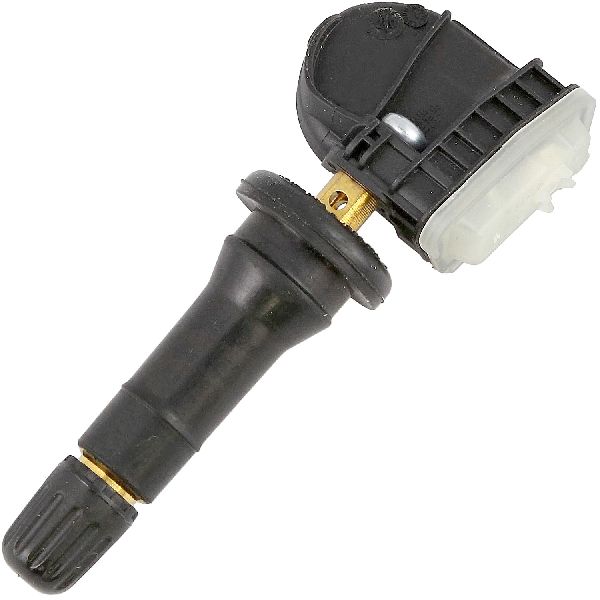
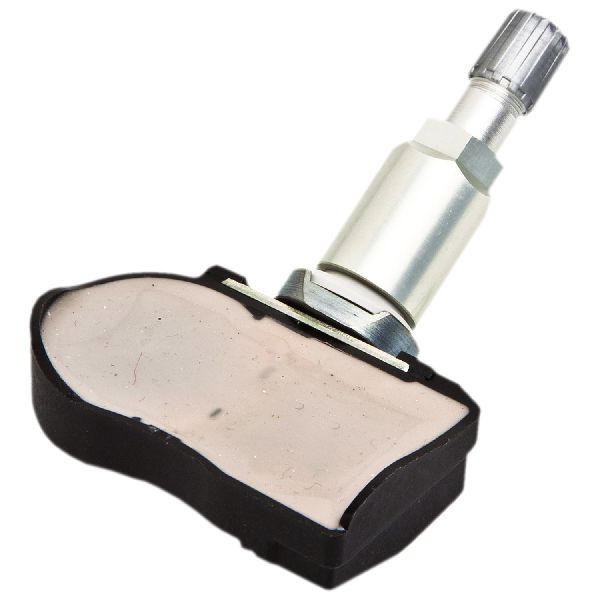
- Dead TPMS Sensor Battery 🔴 High Probability → Shop Tire Pressure Monitoring System (TPMS) Sensor TPMS sensor batteries have a finite lifespan. The OEM ACDelco sensors are rated to last up to 10 years, so vehicles in the 2012-2019 range are at an age where battery failure is the most common reason for a sensor to stop transmitting.
How to confirm: Use a TPMS diagnostic tool to attempt to 'wake up' or read the sensor. If the tool cannot get a response from the left rear sensor, or if it reads a 'Low Battery' status, the sensor has failed.
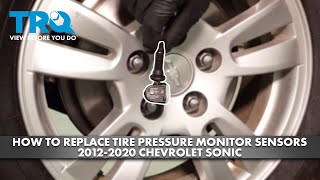
Typical fix: Replace the left rear TPMS sensor. The tire must be unmounted from the wheel to access the sensor. 🎬 Watch: Step-by-step guide to replacing the TPMS sensor A TPMS relearn procedure must be performed after replacement.
Est. part cost: $25-$60 - Damaged TPMS Sensor 🟡 Medium Probability → Shop Tire Pressure Monitoring System (TPMS) Sensor Sensors can be damaged during tire changes, from hitting potholes, or by using unapproved tire sealants that can clog the sensor's pressure port. A video from 1A Auto shows the sensor is located opposite the valve stem on the inside of the rim, where it can be broken if the tire bead is broken in the wrong spot.
How to confirm: Visual inspection of the sensor after dismounting the tire. Look for cracks in the housing or a broken valve stem.
Typical fix: Replace the damaged TPMS sensor and perform the relearn procedure.
Est. part cost: $25-$60
Rare But Worth Checking
- Radio Frequency (RF) Interference: Per TSB #PIC5650M, this is a significant cause of intermittent TPMS codes, key fob issues, and even no-start conditions. Aftermarket electronic devices (especially those plugged into the 12V outlet) like phone chargers, dash cams, and aftermarket LED lighting can emit RFI that 'jams' the RCDLR, preventing it from receiving the sensor's signal. Before replacing parts, unplug all non-factory devices and see if the issue resolves.
- Internal Failure of the Remote Control Door Lock Receiver (RCDLR): → Shop Keyless Entry Receiver This is a rare but important cause, especially if you also experience poor key fob range or intermittent operation along with multiple TPMS codes (C0750, C0755, C0765). TSB #16-NA-396, which applies to platform mates, indicates an internal fault in the RCDLR can cause these symptoms and requires module replacement.
Diagnosis Steps
- Verify the code with an OBD-II scanner capable of reading C-codes (chassis codes).
- Rule out RFI: Unplug ALL aftermarket accessories (phone chargers, dash cams, USB adapters, LED lights) and remove any toll passes from the vehicle. Clear the codes and drive to see if the C0760 code returns. This is a key step outlined in TSB PIC5650M.
- Use a TPMS diagnostic tool to try and activate the left rear sensor. If it fails to respond, the sensor is bad (likely dead battery) and needs replacement.
- If the sensor responds, check the sensor's battery status with the TPMS tool. A 'Low Battery' status confirms the need for replacement.
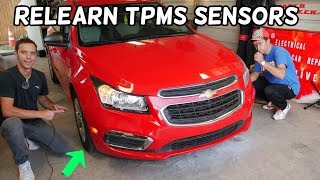
- If the sensor appears to be working, attempt the TPMS relearn procedure. This can sometimes resolve communication glitches. The procedure is initiated through the Driver Information Center (DIC) menu. 🎬 See how to perform the TPMS relearn procedure
- The relearn sequence is: Left Front, Right Front, Right Rear, then Left Rear. A horn chirp confirms each sensor is learned. A double chirp signals completion.
- If the relearn procedure fails specifically for the left rear sensor (i.e., the horn never chirps for that wheel), the sensor itself is faulty.
- If you are also experiencing key fob problems or no-start/stalling issues that persist after ruling out RFI, investigate the Remote Control Door Lock Receiver (RCDLR) for an internal fault, as suggested by TSB #16-NA-396.
Parts You'll Likely Need
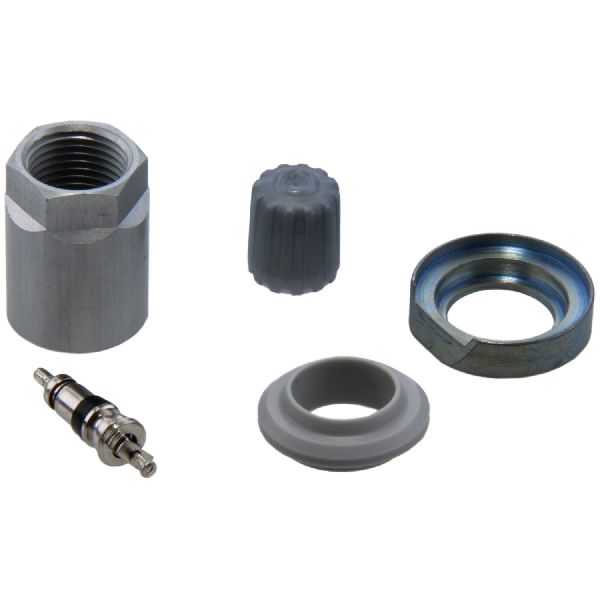
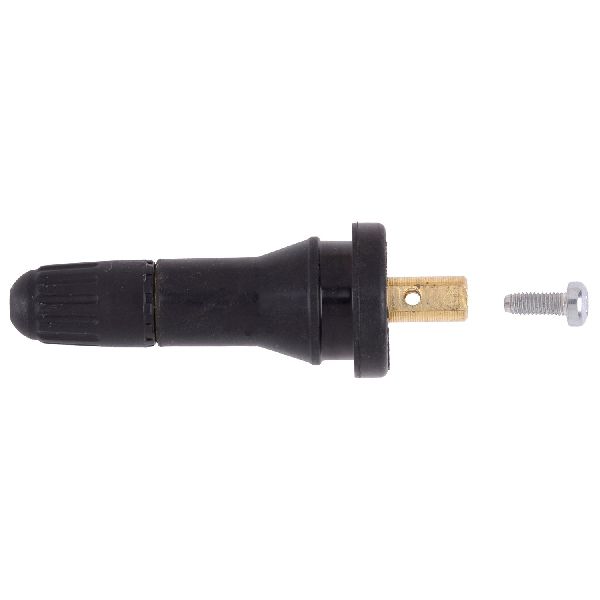
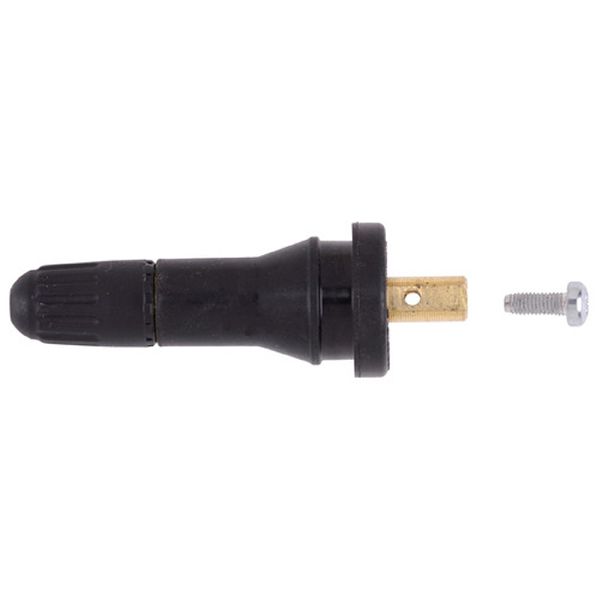
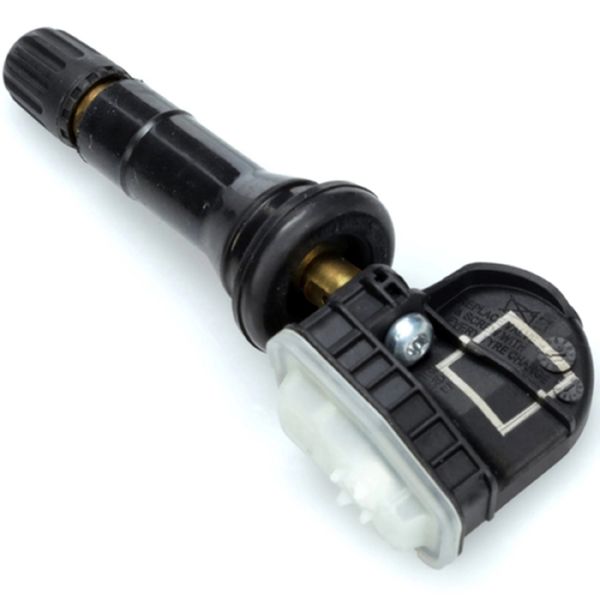
- Tire Pressure Monitoring System (TPMS) Sensor
(OEM #13598773 (superseded by 86363053))— This is the component that fails most often, usually due to its internal battery dying after 5-10 years of service. For the North American market, this is a 315 MHz sensor.
Trusted brands: ACDelco (OEM), Standard Motor Products, Schrader, Dorman, Bosch
OEM price range: $40-$70
Aftermarket price range: $25-$50 - TPMS Relearn Tool
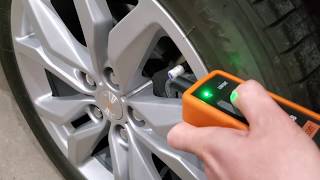
(OEM #EL-50448)— Required to make the vehicle learn the new sensor's unique ID after replacement. While some GM vehicles can relearn by letting air out of the tires, a tool is the most reliable and recommended method. 🎬 Watch: How to use the EL-50448 relearn tool
Trusted brands: ATEQ, Autel, VXDAS
OEM price range: $50-$80
Aftermarket price range: $15-$40
Related Codes That Often Appear With This One
- C0750 — Code for the Left Front TPMS sensor. It's common for sensor batteries to fail around the same time.
- C0755 — Code for the Right Front TPMS sensor. Multiple TPMS codes often indicate the sensors are all reaching the end of their service life, or a central issue like RFI or a faulty RCDLR.
- C0765 — Code for the Right Rear TPMS sensor. Seeing multiple TPMS codes points towards a common failure cause like age or a receiver problem.
- B3055, B3060, B3935 — These are security and body control module codes. According to TSB #PIC5650M, they can appear with C0760 in cases of a no-start or stalling condition, pointing to Radio Frequency Interference affecting the RCDLR.
Technical Service Bulletins (TSBs) & Recalls
- PIC5650M: Notes that C0760 can be found with various security-related DTCs in relation to a no-start or start/stall concern with the security light on. Attributes this to Radio Frequency Interference (RFI) from aftermarket devices like phone chargers and LED lights.
- 16-NA-396: (Issued for platform mates like Cruze/Verano but relevant) Links intermittent key fob operation and multiple TPMS codes (C0750, C0755, C0760, C0765) to an internal failure of the Remote Control Door Lock Receiver (RCDLR), recommending module replacement.
Platform-Specific Known Issues
- TSB #PIC5650M documents an issue where code C0760 can appear alongside security system codes (B3055, B3060, etc.) during a no-start or stall condition. The cause is identified as Radio Frequency Interference (RFI) from aftermarket accessories jamming the signal to the RCDLR.
- A related issue, identified in TSB #16-NA-396 for platform mates, is an internal failure of the RCDLR module itself, which can cause multiple TPMS codes and simultaneous loss of key fob functionality.
Mechanic-Grade Diagnostic Values
- RCDLR Module Power Supply — expected: Battery Positive Voltage (typically 12.6V KOEO, 13.5-14.5V engine running) at the Red/White wire on the RCDLR connector.. Failure: 0V or significantly low voltage indicates a wiring or fuse issue, not a failed module.
- RCDLR Module Ground — expected: Near 0V potential to chassis ground at the Black/White wire on the RCDLR connector.. Failure: Voltage reading above 0.1V indicates a poor ground connection, which can cause intermittent module operation.
Hidden / Shadow Codes Worth Checking
- C0760 with Symptom :29: Indicates 'Too Few Pulses'. This means the RCDLR is receiving an incomplete or corrupted data packet from the TPMS sensor. It points towards a weak sensor battery or significant radio interference rather than a completely dead sensor. (see via GM GDS2 (Global Diagnostic System 2) or an equivalent professional-grade scan tool that can read manufacturer symptom bytes.)
- C0760 with Symptom :08: Indicates 'Signal Invalid' or 'Bus Signal/Message Failure'. This means the signal received from the sensor is present but not plausible, or there's a communication issue on the vehicle's data network related to the module. (see via GM GDS2 (Global Diagnostic System 2) or an equivalent professional-grade scan tool.)
Scan Tool Commands That Help
- GDS2 / Tech2Win: RCDLR Data List — To check the reported battery status of each TPMS sensor (OK/Low) as seen by the receiver. This can confirm a low battery before dismounting a tire.
- GM Service Programming System (SPS/SPS2): RCDLR - Programming — This function is required after replacing the RCDLR module. It programs the new module with the vehicle's correct software and configuration. Failure to program will result in TPMS and key fob malfunction.
- GM Service Programming System (SPS/SPS2): IMMO Immobilizer Learn - Program Transponder or Remote Key (Add) — After a new RCDLR is installed and programmed, this function is used to teach the new module the unique IDs of the vehicle's key fobs.
Wiring & Ground Locations
- RCDLR (Remote Control Door Lock Receiver) — On the Chevy Sonic, the RCDLR is typically located high in the dashboard, often near the rearview mirror underneath the plastic trim on the windshield or in the small cubby above the radio.. This module is the central receiver for all TPMS sensor signals and key fob commands. Its location makes it susceptible to RFI from dash-mounted electronics. A failure or power/ground issue with this single module will cause TPMS and key fob problems.
- RCDLR Power/Ground Connector — The main connector on the RCDLR module. Power is typically a Red/White wire, and ground is a Black/White wire.. Before condemning the RCDLR, it's critical to verify it is receiving proper power and has a solid ground. A loss of either will cause a 'No Communication' state and set codes like C0760.
- G303 (or similar interior ground) — Interior ground points are located on the A-pillars and B-pillars behind trim panels. For example, on similar GM platforms, G303 is on the left side B-pillar. On the Sonic specifically, good chassis ground points have been identified by owners near the rear seat mounts and cargo hooks in the trunk area.. The RCDLR relies on a clean chassis ground. A loose or corroded interior ground point can cause intermittent and difficult-to-diagnose issues with the RCDLR, leading to TPMS faults.
Real Owner Repair Stories
- Reddit user @Tahtman (2017 Chevrolet Sonic Hatchback) — TPMS system slowly went out, followed by the remote keyless entry also failing.
❌ Tried (didn't work) The user correctly suspected the RCDLR module but was struggling to locate it to perform the replacement.
✅ What actually fixed it The user identified the issue as a faulty Remote Control Door Lock Receiver (RCDLR) and ordered the replacement part (GM# 13587439). The resolution was pending the physical location and installation of the new module. This story confirms the link between simultaneous TPMS and key fob failure pointing to the RCDLR.
OEM Part Supersession History
13598773→86363053— Standard part revision/update by the manufacturer.
Heads up: The North American market Chevy Sonic uses a 315 MHz frequency sensor. Some online listings for part number 13598773 incorrectly state 433 MHz, which is for other markets/vehicles. Ensure the replacement sensor is 315 MHz for a US/Canada-spec Sonic.13587439→Unknown— This is a common RCDLR part number for the Sonic.
Heads up: This module MUST be programmed to the vehicle using GM's Service Programming System (SPS) after installation. It is not a plug-and-play part. Failure to program will result in the key fobs not working and potential continued TPMS issues.
Helpful Videos
We Have This Part in Stock

The information in this article is provided for general reference and educational purposes only. Vehicle specifications, procedures, and part compatibility can vary by production date, trim level, and region. Always consult your vehicle's factory service manual and verify part numbers before purchasing or performing repairs. Safety-critical components such as airbags, seat belts, and braking systems should be installed by a qualified professional.
- Chevrolet SONIC:
- 🧭 Diagnostic Flowchart
- 🎬 Helpful Videos
- 🛍️ Shop This Part
- What's Unique About the 2012-2019 Chevrolet SONIC
- Symptoms You May Notice
- Most Likely Causes
- Rare But Worth Checking
- Diagnosis Steps
- Parts You'll Likely Need
- Related Codes That Often Appear With This One
- Technical Service Bulletins (TSBs) & Recalls
- Platform-Specific Known Issues
- Mechanic-Grade Diagnostic Values
- Hidden / Shadow Codes Worth Checking
- Scan Tool Commands That Help
- Wiring & Ground Locations
- Real Owner Repair Stories
- OEM Part Supersession History
- 🎟️ Get 5% Off