

C0760 on 2018-2025 GMC Terrain: TPMS Faults, No-Start Causes, and Fixes
Code C0760 on a 2018-2025 GMC Terrain indicates a fault with the Left Rear Tire Pressure Monitoring System (TPMS) sensor. While often just a dead sensor battery, it can also be linked to a faulty Remote Control Door Lock Receiver (RCDLR) or radio frequency interference, causing symptoms like a 'no start' condition or key fob issues.
- C0760 points to the left rear TPMS sensor, but the root cause may not be the sensor itself.
- If you experience key fob problems or a no-start condition along with the TPMS light, the problem is likely radio interference or a faulty RCDLR module.
- Before replacing any parts, remove all aftermarket electronics like phone chargers and dash cams to rule out RFI.
- Replacing a TPMS sensor requires dismounting the tire and using a special tool to program the new sensor to the vehicle.
- If the RCDLR is the cause, it must be replaced and programmed by a professional with the correct equipment.
What's Unique About the 2018-2025 Gmc TERRAIN
On this generation of GMC Terrain and its platform-mate, the Chevrolet Equinox, the Tire Pressure Monitoring System (TPMS) is deeply integrated with the keyless entry and vehicle security systems through the Remote Control Door Lock Receiver (RCDLR). This integration means a problem setting a simple TPMS code like C0760 can also manifest as severe issues like a 'No Remote Detected' message, intermittent no-start conditions, or a complete failure of the key fobs. This is highlighted in GM Technical Service Bulletin PIC5650M, which links TPMS codes directly to security light and no-start complaints due to radio frequency interference or module faults. Another TSB, 16-NA-061, explains that even a disconnected antenna coax cable for the RCDLR can cause the system to lose signal from the farthest sensors (like the left rear), leading to code C0760.
Diagnostic Flowchart
Tap your situation to follow the diagnostic path that matches what you're seeing on this vehicle.
Symptoms You May Notice
- "Service Tire Monitor System" message on the Driver Information Center (DIC).
- TPMS warning light is illuminated on the dashboard.
- DIC shows dashes (---) for the left rear tire pressure reading.
- Intermittent no-start or start-and-stall condition.
- Security light illuminated.
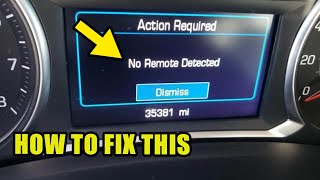
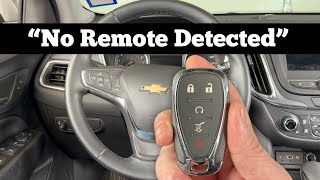
- "No Remote Detected" message when trying to start the vehicle.
- Key fob functions (lock, unlock, remote start) work poorly or not at all.
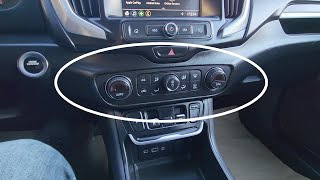
- Vehicle will only start if the key fob is placed in the transmitter pocket (located in the front cupholder). 🎬 Watch: How to start your vehicle with a dead key fob.
- Replacing the TPMS sensor when the actual fault is with the RCDLR or RFI. If key fob issues are also present, investigate the RCDLR and for interference first.
- Replacing the BCM when the RCDLR is the true cause. The RCDLR is the more common failure point for this specific set of symptoms.
- Replacing all four TPMS sensors when the issue is a central one like the RCDLR or its antenna connection.
Most Likely Causes
- Radio Frequency Interference (RFI) 🔴 High Probability Modern vehicles are susceptible to RFI from aftermarket electronics. GM has issued the PIC5650 series of bulletins specifically to address this, as cheap, unshielded electronics like phone chargers, dash cams, and LED lights can 'jam' the 315 MHz frequency used by the TPMS and key fob systems.
How to confirm: Remove all aftermarket electronic devices from the vehicle (unplug phone chargers, dash cams, LED light strips, toll passes) and see if the symptoms disappear. A technician can use a spectrum analyzer or a specific tool like the EL-52545 to detect interfering frequencies.
Typical fix: Identify and remove the source of the radio frequency interference. Replace low-quality aftermarket chargers or devices with higher-quality, properly shielded ones.
Est. part cost: $0 - Failed Left Rear TPMS Sensor 🔴 High Probability → Shop Tire Pressure Monitoring System (TPMS) Sensor TPMS sensors contain a non-replaceable battery with a finite lifespan, typically 5-10 years. As 2018 models are now in this age range, battery failure is a common maintenance item. A Reddit user with a 2018 Terrain noted needing to replace them at 104k miles.
How to confirm: A mechanic will use a TPMS activation tool to try and read the sensor. If the sensor does not respond, its battery is likely dead or the sensor has failed. A scan tool may also show a low battery status for the sensor. If one sensor has failed due to age, the others are likely near the end of their life as well.
Typical fix: Replace the left rear TPMS sensor and perform the TPMS relearn procedure. 🎬 See how to reset and clear the TPMS light yourself. It is often recommended to replace all four sensors at the same time, especially if they are original and the vehicle has high mileage.
Est. part cost: $30-$90 - Faulty Remote Control Door Lock Receiver (RCDLR) 🟡 Medium Probability → Shop Keyless Entry Receiver GM issued TSB 16-NA-396 for various models, including the 2018 Equinox (sister vehicle to the Terrain), for internal RCDLR issues causing both TPMS and key fob problems. This module is the central point for both systems, and its failure mimics the symptoms of RFI.
How to confirm: If C0760 is present along with other TPMS codes (C0750, C0755, C0765) and key fob/no-start issues persist after ruling out RFI, the RCDLR is the primary suspect. Diagnosis requires a scan tool to check for communication with the module and to see if it's receiving signals.
Typical fix: Replace the RCDLR module. This requires programming by a dealer or qualified shop with access to GM's software.
Est. part cost: $100-$250
Rare But Worth Checking
- Body Control Module (BCM) Fault: While less common than an RCDLR failure, the BCM is the central processor for these systems. A BCM fault can cause a wide range of electrical issues, including setting this code.
- Wiring Harness Damage or Disconnection: TSB 16-NA-061 points out that the coax cable for the RCDLR antenna can become disconnected at the module, at the antenna amplifier, or at the rear glass antenna itself. A disconnect closer to the module will cause more severe symptoms, potentially knocking out all TPMS and key fob functions.
- Worn TPMS Service Kit: Sometimes the sensor itself is fine, but the service kit (valve stem, grommet, nut) has corroded. This can cause a slow air leak, which keeps the TPMS light on, but it won't typically set a communication code like C0760 unless the leak is ignored and the tire pressure becomes critically low.
Diagnosis Steps
- Check for the presence of other DTCs. Note any codes related to other TPMS sensors or the keyless entry/security system.
- Question the driver about and inspect the vehicle for any aftermarket electronics (phone chargers, LED lights, dash cams, etc.). Unplug them all from their power sources to rule out Radio Frequency Interference (RFI).
- If key fob and starting issues are present, test if the vehicle starts with the fob in the transmitter pocket (front cupholder). If it does, this strongly points to an RFI or RCDLR issue.
- Using a TPMS tool, attempt to activate and read the left rear sensor. 🎬 Watch this video for expert tips on diagnosing TPMS light issues. If it fails to respond, the sensor itself is the most likely culprit.
- If the sensor responds but the code persists, check the RCDLR data with a professional scan tool to see if the signal is being received by the module.
- If multiple TPMS and security codes are present, follow the diagnostic procedure outlined in TSB 16-NA-396, which points toward RCDLR replacement after ruling out RFI.
- Inspect the RCDLR antenna connections. Per TSB 16-NA-061, check the coax cable connection at the RCDLR module, the antenna amplifier, and the rear glass antenna.
- If only C0760 is present and the sensor is confirmed good, inspect the wiring to the RCDLR/BCM for damage.
- If all other components are verified, the BCM may be at fault, which requires advanced diagnostics.
Parts You'll Likely Need
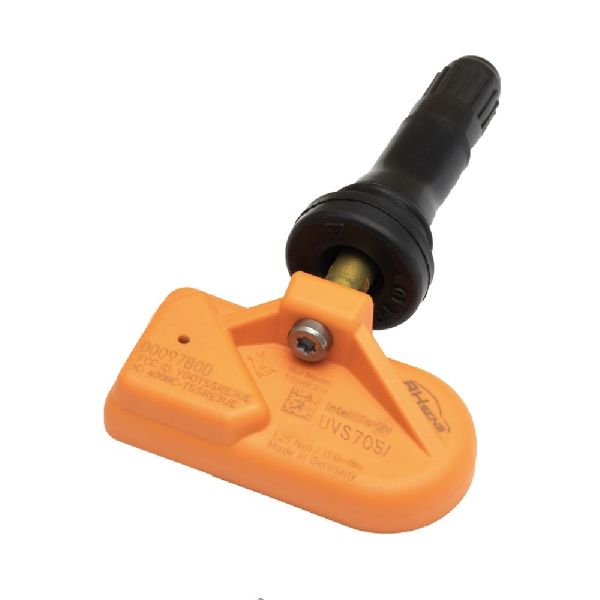
- Tire Pressure Monitoring System (TPMS) Sensor
(OEM #13540604)— The internal battery of the sensor is the most common failure point, with a limited service life of 5-10 years. This part operates on the 315 MHz frequency.
Trusted brands: ACDelco, Schrader, Bosch, HUF
OEM price range: $40-$95
Aftermarket price range: $30-$60 - Remote Control Door Lock Receiver (RCDLR)
(OEM #13595511)— This module is a known failure point that causes both TPMS and keyless entry/start issues simultaneously, as documented in TSB 16-NA-396. Note: Some parts databases show this part number has been superseded by 13540045. Always verify with a dealer using your VIN.
Trusted brands: ACDelco
OEM price range: $100-$250
Related Codes That Often Appear With This One
- C0750, C0755, C0765 — These are the corresponding TPMS fault codes for the other three wheels. When they appear together, it strongly points to a central receiver (RCDLR) issue, a disconnected RCDLR antenna, or widespread RFI rather than four simultaneously failed sensors.
- B3055, B3060, B3935 — These codes are related to the vehicle immobilizer and keyless entry system. Their presence alongside C0760 is a key indicator of RFI or a module fault, as described in TSB PIC5650M.
Technical Service Bulletins (TSBs) & Recalls
- PIC5650M: Diagnostic tip for intermittent no-start, security light, and keyless entry issues, which can be caused by RFI and may be accompanied by code C0760.
- 16-NA-396: Addresses intermittent key fob operation and TPMS lights (including C0760) due to an internal failure of the Remote Control Door Lock Receiver (RCDLR).
- 16-NA-061: Details how a disconnected RCDLR antenna or coax cable can cause TPMS and key fob issues, often affecting the sensors farthest from the receiver first.
Platform-Specific Known Issues
- GM Technical Service Bulletin PIC5650M directly links TPMS codes like C0760 to no-start/start-stall conditions and security lights, often caused by radio frequency interference from aftermarket devices like phone chargers and LED lights.
- GM Technical Service Bulletin 16-NA-396 identifies an internal fault in the Remote Control Door Lock Receiver (RCDLR) as a cause for simultaneous TPMS and key fob system failures on 2018 models.
- GM Technical Service Bulletin 16-NA-061 details how a disconnected RCDLR antenna can cause loss of signal from the farthest TPMS sensors (like the left rear) first, leading to a single code like C0760 before other TPMS codes appear.
Hidden / Shadow Codes Worth Checking
- C0760 03: Left Rear Tire Pressure Sensor Low Voltage. This symptom byte specifically indicates the sensor's internal battery is failing or has failed. (see via A professional scan tool capable of reading GM-specific symptom bytes, such as the GM GDS2 (Global Diagnostic System 2).)
- C0760 08: Left Rear Low Tire Pressure Sensor Signal Invalid. This means the RCDLR is receiving a signal, but the data is corrupted or nonsensical. This can point to significant Radio Frequency Interference (RFI) or an internal sensor fault. (see via A professional scan tool capable of reading GM-specific symptom bytes, such as the GM GDS2.)
- C0760 29: Left Rear Tire Pressure Sensor Too Few Pulses. The RCDLR is receiving an incomplete data packet from the sensor. This is a strong indicator of a weak sensor battery, RFI, or a fault in the RCDLR's receiver circuitry, rather than a completely dead sensor. (see via A professional scan tool capable of reading GM-specific symptom bytes, such as the GM GDS2.)
Scan Tool Commands That Help
- GDS2 (GM Global Diagnostic System 2): RCDLR Module Replacement/Setup — This function is mandatory after replacing the RCDLR. The new module must be programmed to the vehicle's VIN and configured using GM's Service Programming System (SPS). Failure to program the new module will result in it not functioning.
- GDS2 or TPMS Tool: TPMS Learn Mode — After replacing one or more TPMS sensors, or after rotating tires, this procedure must be performed to teach the RCDLR the new sensor IDs and their positions on the vehicle. On the 2018+ Terrain, this is initiated via the Driver Information Center (DIC) menu, then each sensor is activated with a TPMS tool in sequence (LF, RF, RR, LR).
Wiring & Ground Locations
- RCDLR Module — On the GMC Terrain and Chevrolet Equinox, the RCDLR is typically located in the rear of the vehicle, behind the driver's side cargo area trim panel.. This is the central receiving unit for signals from all TPMS sensors and key fobs. All wiring and the antenna connection for this module are critical. A loose connector or damaged wiring at this location can cause C0760 and other related codes.
- RCDLR Antenna — The RCDLR antenna is often a coaxial cable that runs from the module to an antenna element, which may be integrated into the rear quarter glass or rear window defroster grid.. A disconnected or damaged antenna cable is a common cause for weak signal reception, especially from the sensor farthest from the module (often the left rear or left front), leading to intermittent or persistent TPMS codes like C0760.
- Ground G303 / G304 — General Motors ground points in the '300' series are located in the rear seat area. G303 is typically on the left side B-pillar behind the trim, and G304 is on the right side B-pillar.. While not the direct ground for the RCDLR in all schematics, these are major body grounds in the rear of the vehicle. A loose or corroded ground at these locations can introduce electrical noise and a variety of strange electronic issues, including module communication problems.
Real Owner Repair Stories
- Wires 2 Wrenches on YouTube (2008 Chevrolet Silverado (similar GM electrical architecture)) — No start condition, wacked out Driver Information Center (DIC), and "Service TPMS Sensors" message.
❌ Tried (didn't work) Initial diagnosis was confusing due to multiple system failures.
✅ What actually fixed it The technician isolated the fault by unplugging connectors at the driver's side interior fuse panel. Unplugging the specific connector that powered the RCDLR circuit caused the no-start condition to cease (though it introduced TPMS and key fob codes). This confirmed the fault was on the RCDLR circuit, ultimately leading to the replacement of the RCDLR module to fix all issues.
OEM Part Supersession History
13595511→13540045— This is a common practice by manufacturers to consolidate parts, improve reliability, or change suppliers.
Heads up: The new part number, 13540045, is the correct service replacement for the original. Both original and replacement parts require mandatory programming with GM's Service Programming System (SPS) after installation. It is not a plug-and-play part.
Helpful Videos
We Have This Part in Stock

The information in this article is provided for general reference and educational purposes only. Vehicle specifications, procedures, and part compatibility can vary by production date, trim level, and region. Always consult your vehicle's factory service manual and verify part numbers before purchasing or performing repairs. Safety-critical components such as airbags, seat belts, and braking systems should be installed by a qualified professional.
- Gmc TERRAIN:
- 🧭 Diagnostic Flowchart
- 🎬 Helpful Videos
- 🛍️ Shop This Part
- What's Unique About the 2018-2025 Gmc TERRAIN
- Symptoms You May Notice
- Most Likely Causes
- Rare But Worth Checking
- Diagnosis Steps
- Parts You'll Likely Need
- Related Codes That Often Appear With This One
- Technical Service Bulletins (TSBs) & Recalls
- Platform-Specific Known Issues
- Hidden / Shadow Codes Worth Checking
- Scan Tool Commands That Help
- Wiring & Ground Locations
- Real Owner Repair Stories
- OEM Part Supersession History
- 🎟️ Get 5% Off