

C0760 on 2007-2014 GMC Yukon: Left Rear TPMS Fault Causes and Fixes
Code C0760 on a 2007-2014 GMC Yukon means there's a problem with the left rear Tire Pressure Monitoring System (TPMS) sensor. The most common cause is a dead battery inside the sensor, which requires replacing the entire sensor unit and performing a relearn procedure. Expect to pay $30-$70 for the part. If your key fobs are also malfunctioning, the Remote Control Door Lock Receiver (RCDLR) is the next most likely culprit.
- C0760 specifically identifies a fault with the left rear TPMS sensor.
- The most common cause is the sensor's internal battery dying due to age (7-10 year lifespan).
- If you also have problems with your key fobs, the Remote Control Door Lock Receiver (RCDLR) is the likely culprit, not the sensor.
- Replacing a sensor requires breaking the bead on the tire and performing a TPMS relearn procedure with a special tool.
- Always check tire pressures manually with a gauge until the TPMS system is repaired.
What's Unique About the 2007-2014 Gmc YUKON
The 2007-2014 GMC Yukon, part of the GMT900 platform, uses a direct TPMS system where the sensors communicate wirelessly with the Remote Control Door Lock Receiver (RCDLR). This module also handles key fob functions. A notable issue on this platform is that a failing RCDLR can cause both TPMS codes like C0760 and intermittent key fob problems simultaneously. Additionally, the provided TSB #PIC5650M links C0760 with security and no-start issues, suggesting that a broader module communication failure or even radio frequency interference can sometimes be the root cause, rather than just a simple sensor fault.
Diagnostic Flowchart
Tap your situation to follow the diagnostic path that matches what you're seeing on this vehicle.
Symptoms You May Notice
- "Service Tire Monitor System" message on the Driver Information Center (DIC).
- TPMS warning light is illuminated on the instrument cluster (may flash for one minute then stay solid, indicating a system fault).
- The DIC displays dashes (---) for the left rear tire pressure reading.
- Inability to complete the TPMS relearn procedure.
- If the RCDLR module is failing, you may also experience intermittent or total failure of key fobs (lock/unlock/remote start). Owners often report a progressively decreasing range on the key fob before it fails completely.
- Replacing the tire. The TPMS sensor is mounted to the wheel, not the tire. A new tire will not fix this code.
- Assuming the sensor is bad when the RCDLR is the actual cause, especially if key fob issues are also present.
- Replacing a sensor when the actual problem is RF interference from a newly installed aftermarket device.
Most Likely Causes
- Failed TPMS Sensor (Dead Battery) 🔴 High Probability → Shop Tire Pressure Monitoring System (TPMS) Sensor TPMS sensors contain non-replaceable lithium batteries with a finite lifespan of 7-10 years. For vehicles in the 2007-2014 range, battery failure is a very common age-related issue.
How to confirm: Use a TPMS activation tool to attempt to read the sensor. If the tool cannot get a reading or shows a low battery status, the sensor has failed. A scan tool can also directly query the RCDLR for sensor battery status or a history of 'Too Few Pulses'.
Typical fix: Replace the left rear TPMS sensor and perform the TPMS relearn procedure so the vehicle recognizes the new sensor ID.
Est. part cost: $25-$75 - Faulty Remote Control Door Lock Receiver (RCDLR) 🟡 Medium Probability → Shop Keyless Entry Receiver As documented in TSB #16-NA-396 (for later models, but relevant principle), the RCDLR module itself can fail internally, causing it to lose communication with one or more TPMS sensors and also affecting key fob operation. Forum discussions confirm this is a known failure point on GMT900 trucks.
How to confirm: If key fob functions are also inoperative or intermittent along with the C0760 code, the RCDLR is highly suspect. A professional scan tool (like a GM Tech 2) can check for communication issues with the RCDLR. Before replacing, some owners have had temporary success by pulling the fuse for the RCDLR (often labeled 'DSM') to reset it.
Typical fix: Replace the RCDLR module. This requires removing interior trim panels in the driver's side rear quarter panel area and programming the new module to the vehicle.
Est. part cost: $50-$150 - Damaged TPMS Sensor ⚪ Low Probability → Shop Tire Pressure Monitoring System (TPMS) Sensor Sensors can be physically damaged during tire mounting, dismounting, or from road hazards. The valve stem itself can also corrode and cause leaks, which while not a C0760 fault, often leads to sensor replacement.
How to confirm: Visual inspection of the sensor after dismounting the tire. If the sensor was working prior to recent tire service, this is a strong possibility.
Typical fix: Replace the damaged TPMS sensor and perform the relearn procedure.
Est. part cost: $25-$75
Rare But Worth Checking
- Radio Frequency (RF) Interference: Aftermarket electronic devices like dash cams, phone chargers, toll passes, or even cheap LED replacement bulbs can emit RF interference that disrupts the 315 MHz signal between the TPMS sensor and the RCDLR. TSB #PIC5650K specifically calls out this issue. Before replacing parts, try unplugging all aftermarket electronics to see if the code clears.
- Body Control Module (BCM) or Wiring Issue: As suggested by TSB #PIC5650M, if C0760 appears with security-related codes and no-start symptoms, the problem may lie in the BCM or the wiring between the BCM and RCDLR. One owner on a forum discovered a broken power wire to the RCDLR in the driver's side door jamb harness.
Diagnosis Steps
- Verify the tire pressure in the left rear tire is correct using a manual gauge.
- Use a TPMS activation tool to try and trigger the left rear sensor. If it fails to respond, the sensor is the most likely culprit (likely a dead battery).
- If the sensor responds to the tool, check for other symptoms like key fob issues (poor range, intermittent function, total failure). If present, suspect the RCDLR module.
- If multiple TPMS codes are present for other wheels, it's a strong indicator that the sensors are failing due to age.
- Unplug all aftermarket 12V accessories (phone chargers, dash cams, etc.) and remove any aftermarket LED bulbs to eliminate Radio Frequency Interference (RFI) as a cause.
- If no-start or security light symptoms are present, a full vehicle diagnostic scan is needed to check for communication errors between the BCM, RCDLR, and other modules as suggested by TSB #PIC5650M.
- Inspect the wiring and connectors to the RCDLR for any visible damage or corrosion. The module is located behind the interior trim in the driver's side rear quarter panel area.
- If a new sensor is installed, perform the TPMS relearn procedure. This can be done via the DIC menu, which then requires either a TPMS tool to activate each sensor or by letting air out of each tire in sequence until the horn chirps. The tool method is generally more reliable. 🎬 Watch: Step-by-step guide to the TPMS relearn procedure.
Parts You'll Likely Need
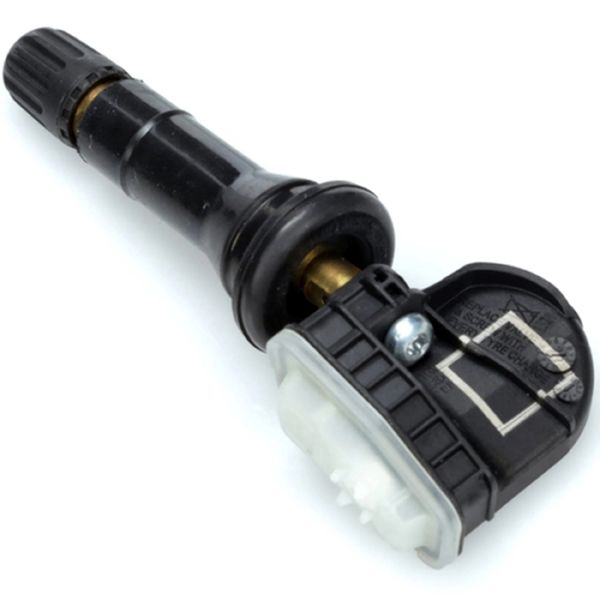
- Tire Pressure Monitoring System (TPMS) Sensor
(OEM #13598772)— This is the most common failure point. The internal battery dies, requiring replacement of the entire sensor unit. The sensors for this vehicle operate on a 315 MHz frequency.
Trusted brands: ACDelco GM Original Equipment, Dorman, Schrader, Bosch
OEM price range: $50-$90
Aftermarket price range: $25-$60 - Remote Control Door Lock Receiver (RCDLR)
(OEM #20803735)— This module can fail internally, causing a loss of communication with the TPMS sensors and key fobs. It is the second most likely cause if key fob issues are also present. This part number supersedes several previous numbers.
Trusted brands: ACDelco GM Original Equipment
OEM price range: $50-$150
Related Codes That Often Appear With This One
- C0750 — This code is for the Left Front TPMS sensor. It's common to see codes for multiple sensors when they are all of a similar age and their batteries are failing around the same time.
- C0755 — This code is for the Right Front TPMS sensor.
- C0765 — This code is for the Right Rear TPMS sensor.
- B3055, B3060, B3935 — These are security and key-related codes. According to TSB #PIC5650M, their presence with C0760 points towards a larger module or communication problem, potentially involving the BCM or RFI, especially if there are no-start or stalling issues.
Technical Service Bulletins (TSBs) & Recalls
- PIC5650M: Mentions that C0760 can be found with security codes (B3055, B3060, etc.) in cases of a no-start or start/stall condition with the security light on, pointing to a potential module communication issue or Radio Frequency Interference from aftermarket devices.
- 16-NA-396: Although for later models, it describes the failure of the RCDLR causi
Platform-Specific Known Issues
- The 'no-tool' relearn method, which involves deflating each tire until the horn honks, can be finicky on these trucks. Many owners and technicians report greater success using a dedicated TPMS activation tool.
- Simultaneous failure of TPMS and keyless entry is a strong indicator of a faulty RCDLR module or its associated wiring/fuse, a well-documented complaint in owner forums.
- While not directly causing C0760, some 5.3L engines in this platform have a known issue where the engine wiring harness can chafe on a stud behind the alternator, causing various intermittent electrical problems. This is worth noting if other strange electrical symptoms are present.
Mechanic-Grade Diagnostic Values
- TPMS Sensor Transmission — expected: A valid transmission signal should be received by the RCDLR at least once every 18 minutes while driving over 25 mph (40 km/h).. Failure: If a sensor does not transmit for 18 minutes, or sends an invalid signal (low battery), the code will set.
- Scan Tool 'Pressure Sensor Mode' Data Parameter — expected: The parameter should change from 'Wake' or 'Park' to 'Drive' or 'Rolling' when the vehicle is driven above 25 mph.. Failure: If the sensor mode does not change for the suspect wheel while driving, the sensor has likely failed internally.
Hidden / Shadow Codes Worth Checking
- C0760 00: Indicates a general failure of the Left Rear TPMS sensor, such as not transmitting for 18 minutes or having a low battery condition. (see via A professional scan tool like the GM Tech 2 or GDS2 that can read manufacturer-specific DTCs with symptom bytes.)
- C0760 08: Indicates the RCDLR is receiving an invalid signal from the Left Rear TPMS sensor. (see via A professional scan tool like the GM Tech 2 or GDS2.)
Scan Tool Commands That Help
- GM Tech 2: RCDLR Module Programming — When replacing the RCDLR module, the new unit must be programmed to the vehicle. This is typically done via a pass-thru method with TIS2000 or TIS2WEB software, selecting 'Replace and Reprogram ECU'.
- GM Tech 2: TPMS Learn Mode — To make the vehicle learn new sensor IDs after replacement. The Tech 2 can command the RCDLR to enter learn mode, after which a TPMS activation tool is used to trigger each sensor in sequence.
- GM Tech 2: RCDLR Data Display — To diagnose the system, a technician can view live data from the RCDLR, including individual sensor IDs, pressures, and the 'Pressure Sensor Mode' to see if sensors are transitioning from park to drive mode correctly.
- GM Tech 2: RCDLR Output Controls — To test the functionality of the RCDLR and its related components. The path is typically: Vehicle Control Systems > Computer/Integrating Systems > Special Functions > Remote Control Door Lock Receiver > Output Controls.
Wiring & Ground Locations
- RCDLR Module — Located in the driver's side rear D-pillar. Access requires opening the rear hatch and removing the upper and side interior trim panels.. This is the receiver for all TPMS and key fob signals. A loose connection, damaged wire, or internal failure of this module is a primary cause of C0760, especially if key fobs also malfunction.
- DSM Fuse — Located in the underhood fuse block. On some models, it is a 10-amp mini fuse.. This fuse provides power to the RCDLR. A blown DSM fuse will cause a loss of communication with the RCDLR, resulting in TPMS codes and inoperative key fobs. This fuse may also power other components like the heated seat module.
- RCDLR Antenna System — The system consists of the RCDLR, a coax cable, an antenna amplifier, and the antenna itself, which is often integrated into the right rear quarter glass.. A disconnected coax cable at the RCDLR, at the amplifier module, or at the glass antenna can cause weak or no signal reception from the TPMS sensors, leading to codes. The closer the disconnect is to the RCDLR, the more severe the symptoms.
- BCM Ground — A key ground for the Body Control Module (BCM) is located inside the cabin, behind the dash trim near the front left A-pillar speaker.. A poor BCM ground can cause a wide range of bizarre electrical issues, including communication problems with modules like the RCDLR, potentially contributing to TPMS faults.
Real Owner Repair Stories
- Tahoe Yukon Forum (2012 Suburban) — No communication with the keyless entry module (RCDLR) and no TPMS function. The 'DSM' fuse was blown.
❌ Tried (didn't work) Replacing the fuse worked temporarily, but the cause of the blown fuse was unknown. Turning on seat heaters did not immediately blow the new fuse.
✅ What actually fixed it The technician found shorted wires for the passenger side heated seat, located at the back of the seat. Leaning the seat back would intermittently cause the wires to short and blow the DSM fuse, which also powers the RCDLR. Repairing the shorted wires resolved the issue. - YouTube - Phillip Bailey (2017 GM 2500HD (Later model, but same principle)) — Keyless entry not working and a 'Service Tire Monitor System' message on the dash.
❌ Tried (didn't work) Attempting to relearn key fobs failed with a 'rejected by BCM' message.
✅ What actually fixed it A broken wire (yellow with green stripe) for the RCDLR was found under the driver's door rocker panel/sill plate. The wire had been cut or damaged by the plastic molding. Splicing and repairing the broken wire restored function to both the keyless entry and the TPMS.
OEM Part Supersession History
15287331, 15782376, 15807816, 15857831, 15946938, 25771044, 25808837, 25852909, 25855007, 25896497, 92201608→20803735— GM regularly updates service part designs to integrate new materials and technologies.
Heads up: While 20803735 is the correct service replacement, one forum user warned against using an 'upgraded' part number, suggesting it may cause issues. It is critical to use the specified OEM part or a direct supersession. A new RCDLR requires programming.
Model Year Variations Within This Range
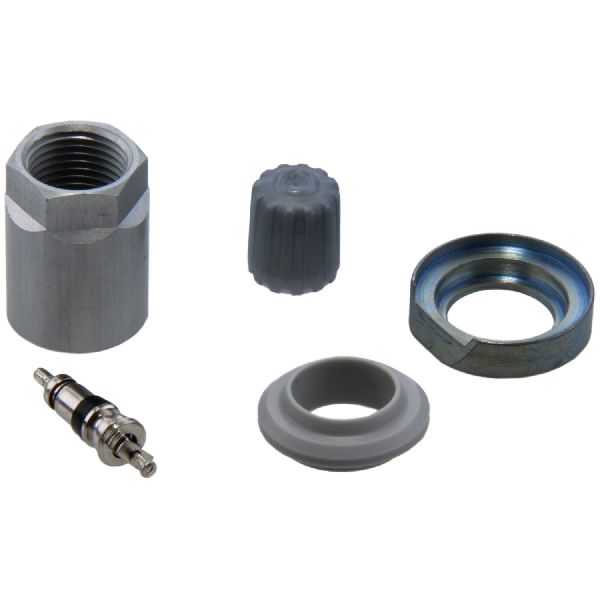
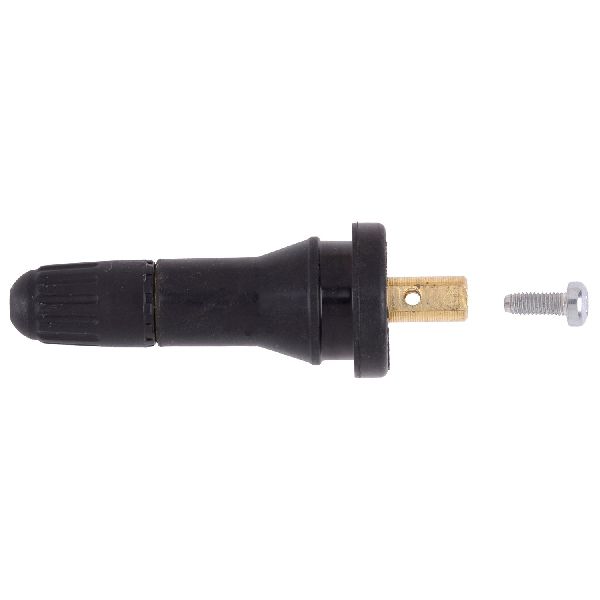
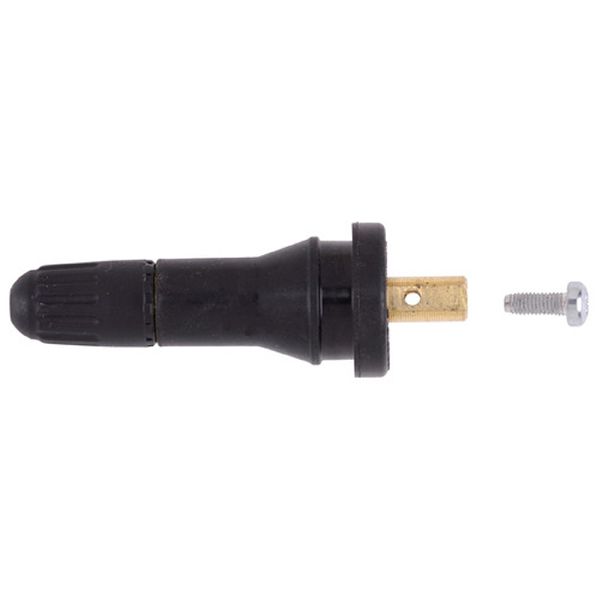
- 2007-2014: Early models in this generation (e.g., 2007) often came with TPMS sensors that had metal, clamp-in style valve stems. Later models and service replacements often use rubber, snap-in style valve stems. While the mounting style is different, the electronic function is the same (315 MHz), and they are generally interchangeable as long as the correct sensor for the vehicle's system is used.
Helpful Videos
We Have This Part in Stock


The information in this article is provided for general reference and educational purposes only. Vehicle specifications, procedures, and part compatibility can vary by production date, trim level, and region. Always consult your vehicle's factory service manual and verify part numbers before purchasing or performing repairs. Safety-critical components such as airbags, seat belts, and braking systems should be installed by a qualified professional.
- Gmc YUKON:
- 🧭 Diagnostic Flowchart
- 🎬 Helpful Videos
- 🛍️ Shop This Part
- What's Unique About the 2007-2014 Gmc YUKON
- Symptoms You May Notice
- Most Likely Causes
- Rare But Worth Checking
- Diagnosis Steps
- Parts You'll Likely Need
- Related Codes That Often Appear With This One
- Technical Service Bulletins (TSBs) & Recalls
- Platform-Specific Known Issues
- Mechanic-Grade Diagnostic Values
- Hidden / Shadow Codes Worth Checking
- Scan Tool Commands That Help
- Wiring & Ground Locations
- Real Owner Repair Stories
- OEM Part Supersession History
- Model Year Variations Within This Range
- 🎟️ Get 5% Off