

C0765 on 2016-2023 Buick Enclave: Right Rear TPMS Fault or Something More?
Code C0765 means a fault with the right rear tire pressure sensor. If your key fob also stopped working, the problem is likely a failed Remote Control Door Lock Receiver (RCDLR) module, a known GM issue. If the fob works fine, the sensor battery is probably dead. A new sensor (OEM P/N: 13516165) costs $30-$80, while an RCDLR module (OEM P/N: 13595511) is about $50-$150 plus mandatory dealer programming.
- C0765 points to the right rear TPMS sensor, but the root cause depends on other symptoms.
- If your key fob also stopped working, the problem is almost certainly the Remote Control Door Lock Receiver (RCDLR), not the sensor.
- If the key fob works fine, the TPMS sensor's battery has likely died and the sensor needs replacement.
- Replacing the RCDLR requires professional programming; it is not a simple swap.
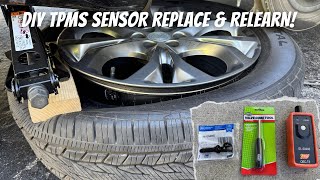
- Always perform the TPMS relearn procedure after replacing a sensor or rotating tires to ensure the system knows which sensor is in which location.
What's Unique About the 2016-2023 Buick ENCLAVE
On this generation of Buick Enclave and its GM platform mates (like the GMC Acadia and Chevy Traverse), C0765 is frequently a symptom of a failing Remote Control Door Lock Receiver (RCDLR), not just a bad tire sensor. This module processes signals from both the TPMS sensors and the key fobs. An internal failure in the RCDLR can cause it to stop receiving TPMS signals and, at the same time, disable all key fob functions, leading to a confusing set of symptoms including a "No Remote Detected" message and even a no-start condition. This widespread issue is documented in GM Technical Service Bulletin 16-NA-396, which explicitly links TPMS codes C0750, C0755, C0760, and C0765 to this RCDLR failure.
Diagnostic Flowchart
Tap your situation to follow the diagnostic path that matches what you're seeing on this vehicle.
Generation note: This range covers the end of the first generation (2016-2017) and the beginning of the second generation (2018-2023). The underlying TPMS architecture and the RCDLR failure mode are common across both. The RCDLR failure documented in TSB 16-NA-396 is prominent on 2016-2018 models, including the Enclave's platform-mates, the GMC Acadia and Chevrolet Traverse. Simple TPMS sensor battery failure is a common cause across all model years in this range as they age.
Symptoms You May Notice
- "Service Tire Monitor System" message in the Driver Information Center (DIC).
- TPMS warning light flashes for 60-90 seconds on startup, then remains illuminated.
- Tire pressure for the right rear tire displays as "--" on the DIC.
- Key fob functions (lock, unlock, remote start) are inoperative (if RCDLR is the cause).
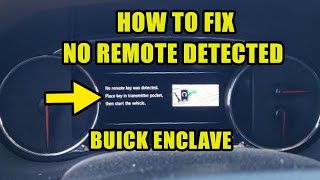
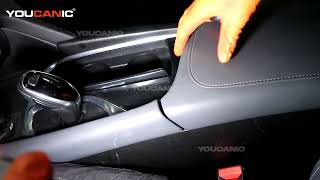
- "No Remote Detected" message 🎬 Watch: How to find the hidden key pocket to start your Enclave.on the DIC (if RCDLR is the cause).
- Passive entry system fails to respond.
- Replacing the TPMS sensor when the key fobs are also dead. In this case, the RCDLR is the actual root cause, and a new sensor will not fix the problem. This is a common mistake noted by owners on forums.
Most Likely Causes
- Failed Remote Control Door Lock Receiver (RCDLR) 🔴 High Probability → Shop Keyless Entry Receiver A known issue on many GM platforms of this era, documented in TSB 16-NA-396. The module handles both TPMS and key fob signals and is prone to internal failure. It is located in the rear of the vehicle, often behind the center rear headliner trim panel, making it susceptible to temperature fluctuations.
How to confirm: The most telling sign is the simultaneous failure of TPMS and all key fob functions. A professional scan tool may show C0765 with a specific symptom code ':29' (Too Few Pulses), which strongly points to the RCDLR as per TSB 16-NA-396.
Typical fix: Replace the RCDLR module. The new module must be professionally programmed to the vehicle using GM's Service Programming System (SPS) with the GDS2 software.
Est. part cost: $50 - $150 - Dead Battery in Right Rear TPMS Sensor 🟡 Medium Probability → Shop Tire Pressure Monitoring System (TPMS) Sensor TPMS sensor batteries have a finite lifespan of 5-10 years. Vehicles in the 2016-2023 range are now old enough for age-related battery failure to be a primary cause.
How to confirm: If key fobs work perfectly and only C0765 is present, the sensor is the likely culprit. A tire shop can use a TPMS activation tool to check if the sensor is transmitting a signal. If it doesn't respond, it has failed. A scan tool may show symptom code ':03' (Low Voltage).
Typical fix: Replace the right rear TPMS sensor and perform the TPMS relearn procedure.
Est. part cost: $30 - $80
Rare But Worth Checking
- Damaged TPMS Sensor: → Shop Tire Pressure Monitoring System (TPMS) Sensor The sensor can be physically damaged during tire installation or from a severe pothole impact.
- Radio Frequency (RF) Interference: Aftermarket electronic devices like dash cams, phone chargers, or CB radios can sometimes interfere with the low-power signal from the TPMS sensor.
- Disconnected RCDLR Antenna: As detailed in TSB 16-NA-061, the coax cable for the RCDLR antenna can become disconnected either at the module, the antenna amplifier, or the antenna itself (in the right rear glass). This can cause intermittent or complete loss of signal from one or more TPMS sensors and reduced key fob range.
Diagnosis Steps
- Verify the symptoms. Check if the 'Service Tire Monitor System' light is on and if the right rear tire pressure reads '--'.
- Test all key fob functions (lock, unlock, remote start). If they do not work, the RCDLR is the primary suspect.
- If key fobs work correctly, the issue is likely isolated to the sensor itself. Proceed to the next step.
- Use a TPMS activation tool at the right rear wheel to check if the sensor responds. If the tool cannot get a response, the sensor battery is dead or the sensor has failed.
- If the sensor responds to the tool but the code remains, the problem may be intermittent or related to the RCDLR's ability to receive the signal.
- For a definitive diagnosis, use a professional scan tool (GM GDS2) to read fault codes and symptom bytes from the RCDLR/BCM. Look for symptom codes like ':29' (Too Few Pulses), which points directly to an RCDLR issue as per TSB 16-NA-396.
- Inspect wiring and connectors at the RCDLR. Per TSB 16-NA-061, check the coax antenna connection at the module (located behind rear headliner trim), at the antenna amplifier, and at the rear glass.
- As a temporary measure, a battery disconnect and reconnect may reset the RCDLR and restore function temporarily, confirming the module is at fault.
Parts You'll Likely Need
- Remote Control Door Lock Receiver (RCDLR)
(OEM #13595511 (superseded by 13540045))— This module is a common failure point on GM vehicles, causing both TPMS and key fob issues. TSB #16-NA-396 identifies this as the fix when C0765 is present with key fob problems.
Trusted brands: ACDelco, GM Genuine
OEM price range: $80-$150
Aftermarket price range: $50-$100 - Tire Pressure Monitoring System (TPMS) Sensor
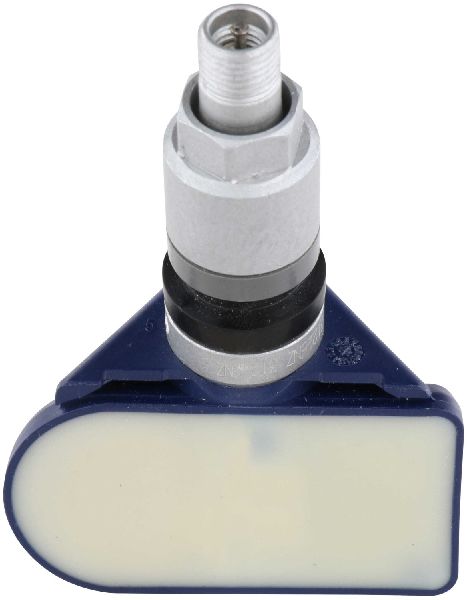
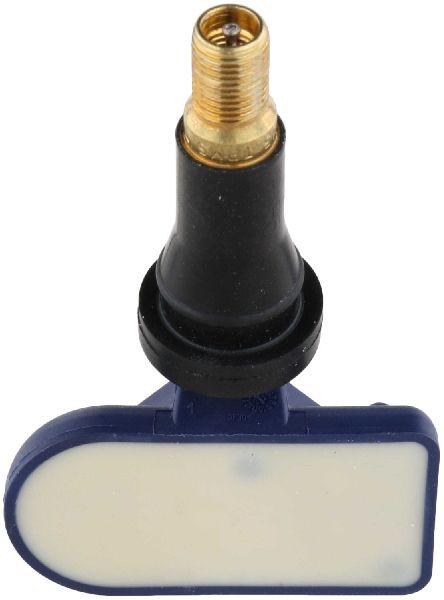
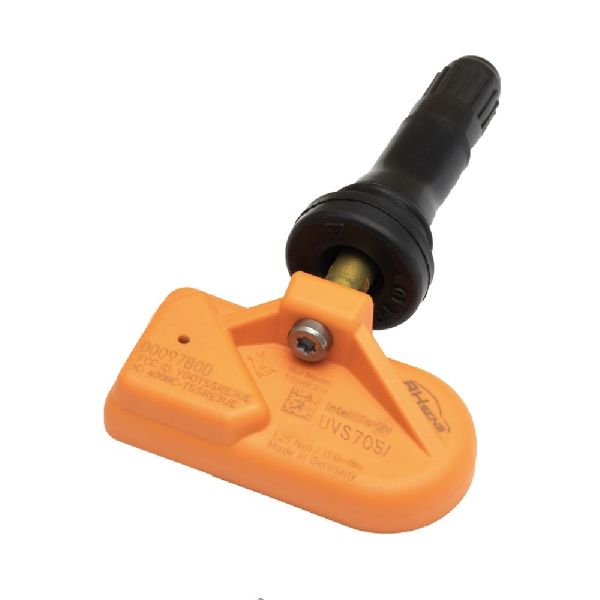
(OEM #13516165 (or 13598773 for some models))— The sensor's internal battery dies after 5-10 years, making it the most common cause when key fobs are working normally.
Trusted brands: Schrader, ACDelco, Autel, Dorman
OEM price range: $50-$80
Aftermarket price range: $30-$60
Related Codes That Often Appear With This One
- C0750 — Fault code for the Left Front TPMS sensor. Seeing multiple TPMS codes together (C0750, C0755, C0760, C0765) strongly points towards a central module failure, like the RCDLR, as noted in TSB 16-NA-396.
- C0755 — Fault code for the Right Front TPMS sensor. Seeing multiple TPMS codes together can point towards a central module failure, like the RCDLR.
- C0760 — Fault code for the Left Rear TPMS sensor. Seeing multiple TPMS codes together can point towards a central module failure, like the RCDLR.
- B3055 / B3060 — These are key-related security codes. Their presence alongside C0765 is a strong indicator that the RCDLR or another security-related module is the root cause, as mentioned in TSB #PIC5650M.
Technical Service Bulletins (TSBs) & Recalls
- PIC5650M: Mentions C0765 in a group of codes related to a no-start or start-stall condition with the security light on.
- 16-NA-396: Details the condition of intermittent key fob failure and TPMS codes caused by an internal RCDLR issue, and lists affected vehicles including the Enclave's platform mates. It specifies to look for symptom code ':29' (Too Few Pulses).
- 16-NA-061: Describes how a disconnected RCDLR antenna can cause TPMS codes and reduced key fob range, providing a diagnostic path before module replacement.
- PIC6227: An early bulletin acknowledging the RCDLR software abnormality and suggesting a battery disconnect to temporarily restore function while a permanent fix was developed.
Platform-Specific Known Issues
- RCDLR Module Failure: A known issue, documented in TSB #16-NA-396, involves an internal fault in the RCDLR causing intermittent loss of key fob functions and setting TPMS codes like C0765. The module is located in the rear headliner area.
- RCDLR Antenna Disconnection: TSB #16-NA-061 highlights that symptoms identical to a failed RCDLR can be caused by a disconnected antenna coax cable at the module, amplifier, or rear glass. This should be checked before replacing the module.
Mechanic-Grade Diagnostic Values
- DTC Condition for Setting — expected: Vehicle speed must be greater than 40 km/h (25 MPH).. Failure: The code C0765 sets when the RCDLR does not receive a transmission from the sensor for 18 consecutive minutes under the required speed condition.
Hidden / Shadow Codes Worth Checking
- C0765 :29: Too Few Pulses. This strongly indicates an internal fault within the Remote Control Door Lock Receiver (RCDLR) module. (see via GM GDS2, Tech2, or equivalent professional scan tool capable of reading manufacturer symptom codes.)
- C0765 :03: Low Voltage. This typically points to the TPMS sensor's internal battery nearing the end of its life. (see via GM GDS2 or equivalent professional scan tool.)
- C0765 :39: Internal Malfunction. This indicates the TPMS sensor itself has an internal fault, separate from its battery. (see via GM GDS2 or equivalent professional scan tool.)
- C0765 :08: Signal Invalid. The RCDLR is receiving a signal from the sensor, but the data is corrupted or not in the expected format. (see via GM GDS2 or equivalent professional scan tool.)
Scan Tool Commands That Help
- GM GDS2: Module Diagnostics -> Remote Control Door Lock Receiver -> Configure/Reset Functions -> Add/Replace Key Fobs — This path is used to put the RCDLR into learn mode when programming new key fobs after module replacement. It confirms communication with the module and is a necessary step for the repair.
- GM GDS2: Vehicle DTC Information -> Clear All DTCs — After a repair is completed (like replacing a sensor or RCDLR), this function is used to clear the C0765 code and other related codes from all modules to verify the fix.
Wiring & Ground Locations
- RCDLR Module — Located in the rear of the vehicle, mounted vertically behind the upper-most center trim panel of the headliner.. This is the physical location of the primary module that sets this code. Access is required for visual inspection of connectors, antenna cable, and for replacement.
- G402 (Potential) — On older Enclave models, this ground is located above the right rear wheel well.. The RCDLR is located in the rear of the vehicle. A poor ground connection in this vicinity could potentially cause intermittent electronic issues for the module. This location is from an older model but is a logical place to check for corrosion or loose connections.
OEM Part Supersession History
13595511→13540045— Standard part revision or replacement by manufacturer.
Heads up: When ordering, a dealer or parts supplier will automatically provide the superseding part number. Both parts serve the same function but the newer part may have internal revisions.
Model Year Variations Within This Range
- 2018-2023: Second-generation Enclaves feature a dedicated key transmitter pocket inside the center console armrest. If the vehicle displays 'No Remote Detected' due to a dead fob battery or RCDLR fault, placing the fob in this pocket allows the engine to be started.
- 2016-2023: The correct dealer-level diagnostic software for this entire vehicle range is the GM Global Diagnostic System 2 (GDS2), as it covers all models from 2013 and newer. The older Tech2/Tech2Win software is not appropriate for these model years.
- 2018-2020: A procedure exists to program a new key fob when all have been lost. It involves turning the physical key in the driver's door lock 5 times, followed by three 10-minute wait cycles, pressing the start button after each. This erases all old fobs and prepares the system to learn a new one placed in the transmitter pocket.
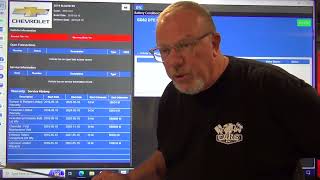
Helpful Videos
We Have This Part in Stock

The information in this article is provided for general reference and educational purposes only. Vehicle specifications, procedures, and part compatibility can vary by production date, trim level, and region. Always consult your vehicle's factory service manual and verify part numbers before purchasing or performing repairs. Safety-critical components such as airbags, seat belts, and braking systems should be installed by a qualified professional.
- Buick ENCLAVE:
- 🧭 Diagnostic Flowchart
- 🎬 Helpful Videos
- 🛍️ Shop This Part
- What's Unique About the 2016-2023 Buick ENCLAVE
- Symptoms You May Notice
- Most Likely Causes
- Rare But Worth Checking
- Diagnosis Steps
- Parts You'll Likely Need
- Related Codes That Often Appear With This One
- Technical Service Bulletins (TSBs) & Recalls
- Platform-Specific Known Issues
- Mechanic-Grade Diagnostic Values
- Hidden / Shadow Codes Worth Checking
- Scan Tool Commands That Help
- Wiring & Ground Locations
- OEM Part Supersession History
- Model Year Variations Within This Range
- 🎟️ Get 5% Off