

C0765 on 2007-2014 Cadillac Escalade: Right Rear TPMS Fault Causes and Fixes
Code C0765 on a 2007-2014 Escalade means the system isn't receiving a signal from the right rear tire pressure (TPMS) sensor. This is almost always due to a dead battery in the sensor, which has a 7-10 year lifespan. Replacement is required. Expect to pay $30-$80 for the part and another $50-$100 for a tire shop to install and program it, as tire dismounting is necessary.
- C0765 means the right rear TPMS sensor is not communicating with your Escalade.
- The most common cause by far is a dead battery inside the sensor, which is a normal wear item after 7-10 years.
- The fix is to replace the sensor inside the right rear tire and have a shop program the new one to your vehicle.
- While you can drive with this code, your vehicle will not warn you if the right rear tire becomes dangerously low on air.
- Unless you are also having problems with your key fobs, the problem is almost certainly the sensor itself and not a more complex control module issue.
What's Unique About the 2007-2014 Cadillac ESCALADE
For this generation of Escalade (GMT900 platform), the C0765 code is a very straightforward TPMS sensor fault. Unlike some other GM vehicles where this code is often a symptom of a failing Remote Control Door Lock Receiver (RCDLR) that also affects key fob operation, on the 2007-2014 Escalade, the primary cause is almost always the sensor in the wheel. However, GM Technical Service Bulletin (TSB) #PIC5650M does note that on some GM vehicles, TPMS codes can appear alongside security or starting issues, indicating a potential link in the vehicle's complex electronic systems, often due to radio frequency interference (RFI) from aftermarket devices.
Diagnostic Flowchart
Tap your situation to follow the diagnostic path that matches what you're seeing on this vehicle.
Symptoms You May Notice
- TPMS warning light illuminated on the instrument cluster (flashes for ~60 seconds on startup, then stays solid).
- "Service Tire Monitor System" message on the Driver Information Center (DIC).
- Inability to read the tire pressure for the right rear tire on the DIC (shows as "--").
- Horn will not chirp for the right rear tire during the TPMS relearn procedure.
- Replacing the Body Control Module (BCM) without first testing the TPMS sensor.
- Replacing other TPMS sensors when the code C0765 specifically points to the right rear location.
- Assuming the RCDLR is bad without checking for key fob issues. On this platform, a sensor-only fault is much more common.
Most Likely Causes
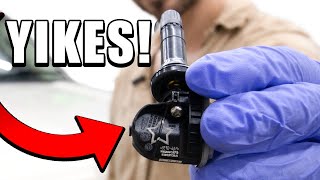
- Dead TPMS Sensor Battery 🔴 High Probability → Shop Tire Pressure Monitoring System (TPMS) Sensor TPMS sensors use small, non-replaceable batteries with a finite lifespan, typically 7-10 years. Vehicles in the 2007-2014 range are at or beyond the expected battery life for the original sensors. A low battery condition is a primary trigger for this DTC.
How to confirm: A professional tire shop can use a TPMS activation tool (like the EL-50448 for GM) to check if the sensor is transmitting a signal. If the tool gets no response, the battery is dead. A scan tool can also directly read the sensor battery status from the RCDLR data list.
Typical fix: Replace the right rear TPMS sensor. The entire sensor unit must be replaced as the battery is sealed inside. Perform the TPMS relearn procedure after replacement.
Est. part cost: $30-$80 - Failed TPMS Sensor 🟡 Medium Probability → Shop Tire Pressure Monitoring System (TPMS) Sensor Sensors can fail from internal electronic faults or physical damage from tire service, potholes, or corrosion of the valve stem assembly.
How to confirm: If a TPMS tool can activate the sensor but the vehicle still won't learn it or the code C0765 persists, the sensor may be transmitting invalid data. This points to an internal failure.
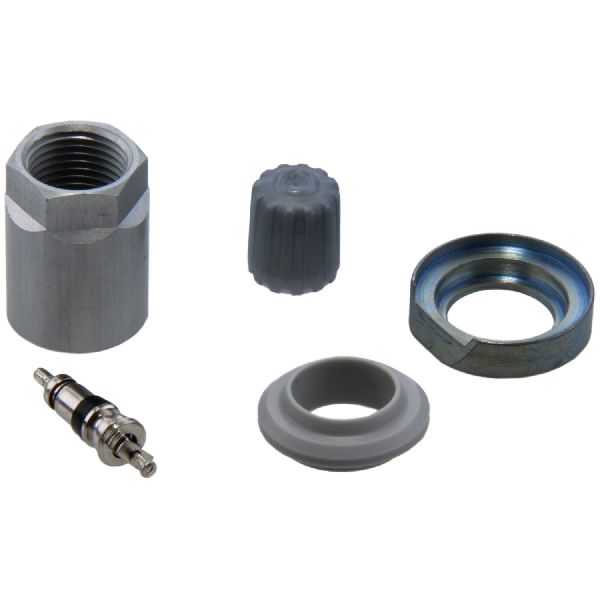
Typical fix: Replace the right rear TPMS sensor and perform the system relearn procedure. It is also best practice to replace the TPMS service kit (valve stem, core, nut, seals) at the same time.
Est. part cost: $30-$80
Rare But Worth Checking
- Remote Control Door Lock Receiver (RCDLR) Fault: → Shop Keyless Entry Receiver While this is a very common cause on other GM platforms (often accompanied by key fob issues), it is rare on the Escalade for this specific code. However, if you are also experiencing problems with your key fobs not working, the RCDLR should be investigated. A forum user on a related GMT900 platform found their RCDLR had lost its memory and required reprogramming with a bidirectional scan tool to resolve a similar issue. TSB 16-NA-396 also links RCDLR failure to TPMS codes on some GM models.
- Use of Unapproved Tire Sealant: Some aftermarket tire sealants or 'fix-a-flat' products can clog the pressure port on the TPMS sensor, causing it to fail or report incorrectly.
- Radio Frequency (RF) Interference: TSB PIC5650K warns that aftermarket electronics like cell phone chargers, USB power banks, and LED lighting can cause RF interference that 'jams' the signal from the TPMS sensor to the RCDLR, setting a fault code. If the problem is intermittent, try removing any aftermarket devices plugged into the vehicle's power outlets.
Diagnosis Steps
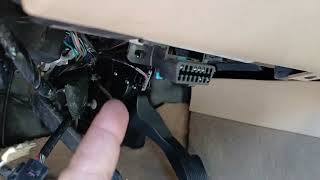
- Verify the TPMS warning light is on and use an OBD-II scanner capable of reading chassis codes to confirm C0765 is present. 🎬 See this quick guide to finding your Escalade's OBD2 port
- Check the tire pressures manually with a gauge to rule out an actual low-pressure situation.
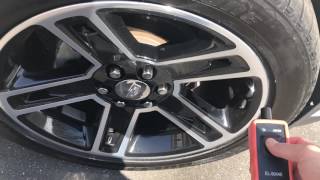
- Use a TPMS activation tool (e.g., GM EL-50448) at the right rear wheel to attempt to read the sensor's signal. This will test its battery and transmission function.
- If the sensor does not respond to the activation tool, the sensor has failed (most likely a dead battery) and needs to be replaced.
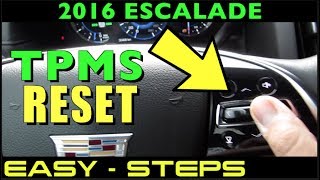
- If the sensor *does* respond to the tool but the code remains, attempt the vehicle's TPMS relearn procedure. For 2007-2014 models, this is often initiated by holding the lock and unlock buttons on the key fob simultaneously with the key in the 'ON' position until the horn chirps, then letting air out of each tire in sequence starting with the left front. 🎬 Watch: A demonstration of the TPMS relearn procedure
- If the relearn procedure fails for only the right rear sensor (the horn doesn't chirp), this confirms a faulty sensor that needs replacement.
- If multiple TPMS sensors are not responding or if key fob issues are also present, investigate for sources of Radio Frequency Interference (RFI) like phone chargers or aftermarket LEDs, as noted in TSB PIC5650K. If none are found, the Remote Control Door Lock Receiver (RCDLR) and its wiring should be inspected for damage or corrosion.
Parts You'll Likely Need
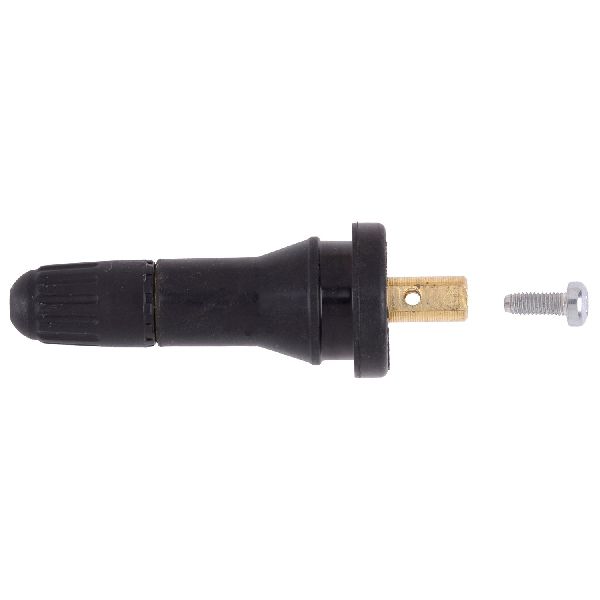
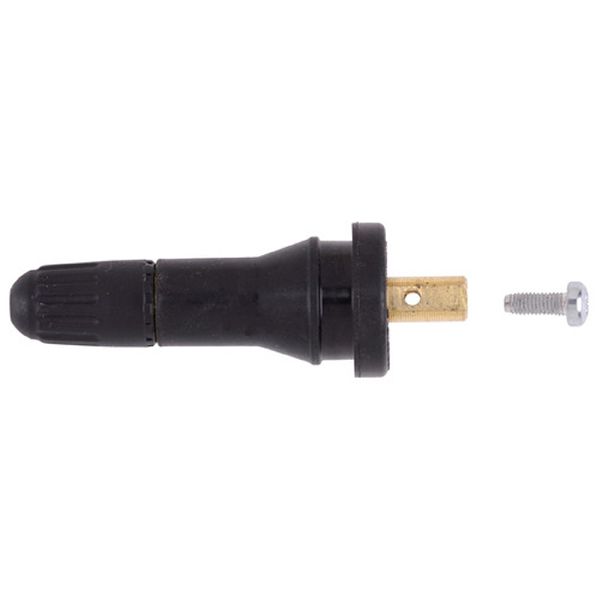
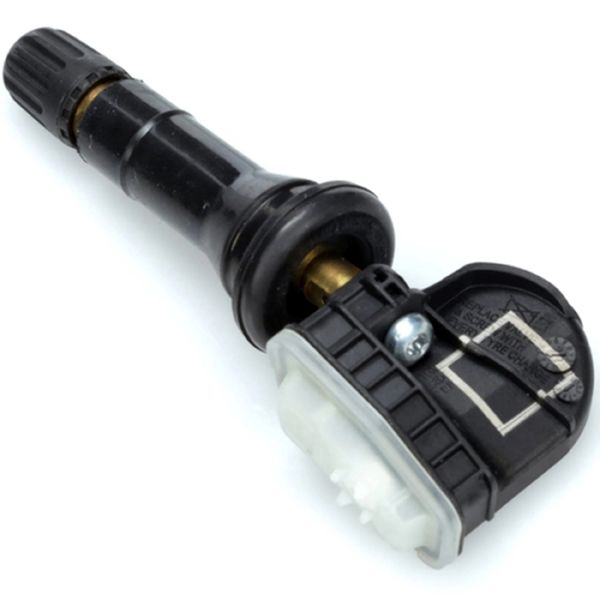
- Tire Pressure Monitoring System (TPMS) Sensor
(OEM #13586335)— This is the direct cause of the code in the vast majority of cases, typically due to the internal battery reaching the end of its service life. This part number is widely cited for this vehicle generation.
Trusted brands: ACDelco (OEM), Schrader, Standard Motor Products, Dorman, Continental
OEM price range: $50-$90
Aftermarket price range: $30-$60
Related Codes That Often Appear With This One
- C0750 — This code indicates a fault with the Left Front TPMS sensor. Seeing multiple TPMS codes at once can suggest a systemic issue or simply that multiple sensor batteries have died around the same time, which is common for vehicles of this age.
- C0755 — This code indicates a fault with the Right Front TPMS sensor. It's common for sensor batteries to fail near the same time.
- C0760 — This code indicates a fault with the Left Rear TPMS sensor. Seeing both rear sensor codes could point to a wiring issue in the rear of the vehicle, though simultaneous battery failure is more likely.
- B3055 / B3060 — As mentioned in TSB PIC5650M, these codes relate to the key and security system. Their appearance with C0765 could indicate a broader module or communication issue, possibly involving the RCDLR or significant RF interference.
Technical Service Bulletins (TSBs) & Recalls
- PIC5650M: Mentions C0765 in a list of DTCs that may be found with a no crank, no start, or start/stall concern, linking it potentially to the security system. The root cause is often Radio Frequency Interference.
- 16-NA-396: While not directly for the Escalade, this TSB is highly relevant as it describes how an internal RCDLR failure on other GM vehicles can cause TPMS codes C0750, C0755, C0760, and C0765, along with key fob inoperability.
- PIT5446: Discusses how a disconnected RCDLR antenna can cause TPMS codes and poor key fob range on the 2015+ models, which provides useful diagnostic context for the RCDLR system in general.
Platform-Specific Known Issues
- A Technical Service Bulletin (PIC5650M) notes that TPMS codes like C0765 can be found in conjunction with no-start or stalling conditions and security system codes (like B3055). This is often caused by Radio Frequency Interference from aftermarket accessories (phone chargers, LED lights) confusing the RCDLR.
- Corrosion of the valve stem assembly is common in harsh climates and can cause air leaks, triggering TPMS warnings. While this doesn't directly cause code C0765 (a communication fault), it's a related common failure point. It's recommended to replace the service kit (stem, core, seals) whenever a tire is dismounted.
Mechanic-Grade Diagnostic Values
- TPMS Sensor Frequency (North America) — expected: 315 MHz. Failure: Using a 433 MHz sensor will result in a no-communication fault.
- TPMS Sensor ID Format — expected: 7-8 character hexadecimal value (0-9, A-F).. Failure: An invalid or corrupted ID in the RCDLR memory can prevent a sensor from being learned.
- Scan Tool Live Data - Sensor Status — expected: A scan tool should show the status of each sensor (e.g., pressure, temperature, battery level). For C0765, the Right Rear sensor data will be missing or show a fault.. Failure: Parameter for RR sensor shows 'Not Responding' or 'Fault'.
Hidden / Shadow Codes Worth Checking
- C0765 00: Right Rear Tire Pressure Sensor - No signal/transmission received. This is the most common variant, often caused by a dead battery or a completely failed sensor. (see via GM Tech 2, GDS2, or other high-end bidirectional scan tool.)
- C0765 08: Right Rear Tire Pressure Sensor - Signal Invalid. The RCDLR is receiving a signal, but the data is corrupt, out of range, or doesn't make sense. This can point to an internal sensor fault rather than just a dead battery. (see via GM Tech 2, GDS2, or other high-end bidirectional scan tool.)
- C0765 29: Right Rear Tire Pressure Sensor - Too Few Pulses. The RCDLR is not receiving the expected number of transmissions from the sensor. TSBs for other GM vehicles link this specific sub-code to an internal RCDLR fault. (see via GM Tech 2, GDS2, or other high-end bidirectional scan tool.)
Scan Tool Commands That Help
- GDS2 / Tech 2: Module Diagnostics > RCDLR > Configuration/Reset Functions — This menu is used after replacing the RCDLR module to program it to the vehicle and perform the TPMS relearn procedure. It may also contain options to reset the module if it becomes unresponsive.
- GDS2 / Tech 2: RCDLR Data Display — To view live data from each TPMS sensor, including their unique ID, pressure, temperature, and battery status. This is critical for confirming if the RCDLR is receiving any signal at all from the right rear sensor.
- GDS2 / Tech 2: Tire Type/Pressure Selection — In rare cases of RCDLR memory corruption, the module may need to have the vehicle's tire type and placard pressures re-selected for the TPMS to function correctly, as noted in forum repairs.
Wiring & Ground Locations
- RCDLR (Remote Control Door Lock Receiver) — On GMT900 SUVs like the Escalade, the RCDLR is typically located behind the trim panel in the left rear (driver's side) D-pillar area.. This module receives the signals from all TPMS sensors and key fobs. A loose connection, damaged wiring, or a faulty module will cause TPMS codes and key fob issues.
- RCDLR Antenna — The antenna system consists of a coax cable running from the RCDLR to an antenna amplifier, which is connected to the antenna grid in the right rear quarter glass.. A disconnected or damaged coax cable at the RCDLR or the amplifier module can cause poor signal reception, leading to intermittent or persistent TPMS codes, often for the sensors furthest away from the receiver.
- G304 — Under the right front seat, bolted to the floor pan.. While not directly for the RCDLR, this is a major interior ground point. Poor grounds can cause unpredictable behavior in various electronic modules. Checking major grounds is a good practice when diagnosing strange electrical issues.
Real Owner Repair Stories
- Tahoe Yukon Forum user 'cnc-97' (2009 Cadillac Escalade ESV (Limo Conversion)) — TPMS system inoperative (likely showing dashes for all tires) and keyless entry fobs not working.
❌ Tried (didn't work) Pulling the 10-amp RCDLR fuse to reset it., Unplugging and reconnecting the original RCDLR module.
✅ What actually fixed it Replaced the RCDLR module with a used one from a 2011 Impala (Part No. 15857831 or a superseding number). The replacement module from a different vehicle platform worked after being installed and having the key fobs reprogrammed. The TPMS system began working immediately after. No dealer programming of the module itself was needed.
OEM Part Supersession History
13586335→13540600, 13598772— Standard part evolution and consolidation by GM.
Heads up: Part number 13586335 is widely listed and cross-references to many other numbers like 15922396, 20923680, and 22854866. It is crucial to ensure the replacement sensor operates at 315 MHz for North American Escalades.15857831 (RCDLR Module)→20863945 and others.— Module updates and revisions.
Heads up: As shown in a forum repair, newer RCDLR part numbers from other GM cars can be compatible with the Escalade, suggesting some interchangeability within the same era. However, official replacement should use the specified part for the vehicle's VIN.
Model Year Variations Within This Range
- 2012-2014: Some sources suggest that later models in this range (approx. 2012+) may be less likely to respond to the manual relearn procedure (letting air out of the tire) and more consistently require a TPMS activation tool (like the EL-50448) to trigger the sensor during the relearn process.
- 2007-2008: Early models in the generation are more likely to have the original TPMS sensors which are well past their battery life expectancy. The manual relearn procedure of deflating the tire is generally more effective on these earlier years compared to later ones.
Helpful Videos
We Have This Part in Stock


The information in this article is provided for general reference and educational purposes only. Vehicle specifications, procedures, and part compatibility can vary by production date, trim level, and region. Always consult your vehicle's factory service manual and verify part numbers before purchasing or performing repairs. Safety-critical components such as airbags, seat belts, and braking systems should be installed by a qualified professional.
- Cadillac ESCALADE:
- 🧭 Diagnostic Flowchart
- 🎬 Helpful Videos
- 🛍️ Shop This Part
- What's Unique About the 2007-2014 Cadillac ESCALADE
- Symptoms You May Notice
- Most Likely Causes
- Rare But Worth Checking
- Diagnosis Steps
- Parts You'll Likely Need
- Related Codes That Often Appear With This One
- Technical Service Bulletins (TSBs) & Recalls
- Platform-Specific Known Issues
- Mechanic-Grade Diagnostic Values
- Hidden / Shadow Codes Worth Checking
- Scan Tool Commands That Help
- Wiring & Ground Locations
- Real Owner Repair Stories
- OEM Part Supersession History
- Model Year Variations Within This Range
- 🎟️ Get 5% Off