

C0765 on 2007-2013 Cadillac Escalade EXT: Right Rear TPMS Fault Explained
Code C0765 on a 2007-2013 Escalade EXT indicates a problem with the right rear Tire Pressure Monitoring System (TPMS) sensor. The most common cause is a dead battery inside the sensor, which requires replacing the entire sensor unit. The fix involves replacing the sensor and performing a TPMS relearn procedure. In some cases, the fault may lie with the Remote Control Door Lock Receiver (RCDLR) module, which processes the sensor signals.
- Code C0765 on your Escalade EXT means there's a fault with the right rear TPMS sensor.
- The most likely cause is a dead battery in the sensor, which is a common issue for vehicles of this age.
- The fix involves replacing the sensor (which requires dismounting the tire) and performing a TPMS relearn procedure.
- While less common, check for key fob issues or if the system 'forgets' the sensors, as this could point to a problem with the RCDLR module needing reprogramming or replacement.
What's Unique About the 2007-2013 Cadillac ESCALADE EXT
The 2007-2013 Escalade EXT belongs to the GMT900 platform, where TPMS sensor failures are a very common maintenance item as the vehicles age and the sensor batteries die. What's unique is that the module responsible for reading the TPMS sensors, the Remote Control Door Lock Receiver (RCDLR), also handles key fob and vehicle security functions. As noted in GM Technical Service Bulletin PIC5650M, this can lead to confusing scenarios where TPMS codes like C0765 appear alongside security system codes and no-start or stalling conditions, even though the root cause might be related to the RCDLR or radio frequency interference. The RCDLR itself can also lose its programming, forgetting the tire type and pressure settings, which prevents it from recognizing learned sensors after an ignition cycle.
Diagnostic Flowchart
Tap your situation to follow the diagnostic path that matches what you're seeing on this vehicle.
Symptoms You May Notice
- TPMS warning light flashing for 60-90 seconds at startup, then staying on solid.
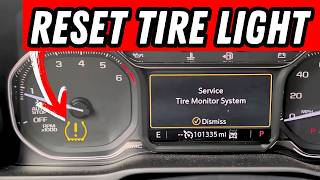
- "Service Tire Monitor System" message on the Driver Information Center (DIC).
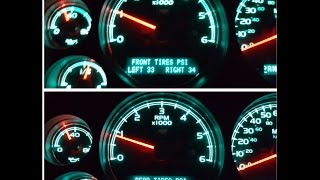
- The pressure reading for the right rear tire shows as "--" on the DIC.
- In rare cases, may be accompanied by a security light and a no-start or stalling condition, as noted in TSB PIC5650M.
- Key fobs may work intermittently or not at all if the RCDLR module is the root cause.
- Replacing the tire when the issue is the sensor inside.
- Assuming the Body Control Module (BCM) is faulty without first diagnosing the sensor and RCDLR.
- Replacing a sensor without performing the TPMS relearn procedure, which will prevent the new sensor from being recognized by the vehicle.
- Replacing the RCDLR module when it only needed to be reprogrammed. A user on TahoeYukonForum solved an issue where sensors would 'forget' after each ignition cycle by rewriting the tire type and pressure data to the RCDLR.
Most Likely Causes
- Dead TPMS Sensor Battery 🔴 High Probability → Shop Tire Pressure Monitoring System (TPMS) Sensor The non-replaceable lithium batteries inside the original sensors have a lifespan of 7-10 years. For vehicles in this 2007-2013 range, battery failure is the most frequent cause of C0765.
How to confirm: A professional tire shop can use a TPMS diagnostic tool to attempt to activate the sensor. If the tool cannot get a response or shows a low battery status, the sensor is dead.
Typical fix: Replace the right rear TPMS sensor and perform the TPMS relearn procedure.
Est. part cost: $35-$70 - Damaged TPMS Sensor 🟡 Medium Probability → Shop Tire Pressure Monitoring System (TPMS) Sensor Sensors can be easily damaged during tire replacement, especially by inexperienced technicians, or by hitting a significant pothole or road debris.
How to confirm: Visual inspection after dismounting the tire. If the sensor is physically broken, it has failed. Sometimes the damage is internal and not visible.
Typical fix: Replace the damaged TPMS sensor.
Est. part cost: $35-$70 - Faulty Remote Control Door Lock Receiver (RCDLR) ⚪ Low Probability → Shop Keyless Entry Receiver While less common than a sensor failure, the RCDLR is the module that receives signals from all TPMS sensors and key fobs. Its failure can mimic a sensor fault. TSB 16-NA-396 specifically notes that internal issues in the RCDLR can cause TPMS codes. In some cases, the module simply loses its memory and needs to be reprogrammed with tire type and pressure settings using a bi-directional scanner.
How to confirm: If replacing the sensor doesn't fix the code, or if you are also experiencing issues with key fobs not working, the RCDLR is a likely suspect. A dealer-level scan tool is needed for proper diagnosis or reprogramming.
Typical fix: Reprogram or replace the RCDLR module. Replacement requires programming by a dealer or qualified shop.
Est. part cost: $50-$150
Rare But Worth Checking
- Radio Frequency Interference (RFI): As mentioned in TSB PIC5650, aftermarket electronic devices like cell phone chargers, dash cams, or even some LED bulbs can interfere with the 315MHz TPMS signals, causing intermittent codes. Before replacing parts, try removing all non-factory electronic devices from the vehicle to see if the problem disappears.
- Corroded RCDLR Wiring or Ground: The RCDLR ground stud (G302) is located on the front passenger door sill area, a location prone to moisture from wet shoes or weather stripping leaks. Corrosion here can cause intermittent RCDLR function, leading to TPMS and key fob issues.
Diagnosis Steps
- Verify the code C0765 is present using an OBD-II scanner capable of reading Chassis (C) codes.
- Check the Driver Information Center (DIC) for the tire pressure display. Confirm that the Right Rear tire shows dashes ("--") instead of a pressure reading.
- Use a TPMS activation tool to try and read the sensor at the right rear wheel. If the tool gets no response or shows a low battery, the sensor is bad.
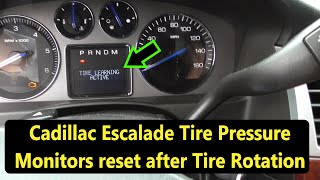
- If the sensor responds to the tool, attempt a TPMS relearn procedure. For the 2007-2013 Escalade, this is initiated by putting the key in the 'On' position and holding the lock and unlock buttons on the key fob until the horn chirps. Then, use the tool (or deflate/inflate the tire) at each wheel in sequence (LF, RF, RR, LR), waiting for a horn chirp at each.
- If the relearn procedure fails only at the right rear wheel, the sensor is confirmed to be faulty. If the entire relearn process fails, it may be because the one bad sensor prevents the full sequence from completing.
- If a new sensor is installed and the code persists, or if the system 'forgets' the sensors after turning the vehicle off, investigate the RCDLR. Use a bi-directional scanner to check if the RCDLR has lost its tire type/pressure programming.
- If key fob issues are also present, check for sources of Radio Frequency Interference and inspect the RCDLR wiring and ground point G302 at the passenger front door sill for corrosion.
Parts You'll Likely Need
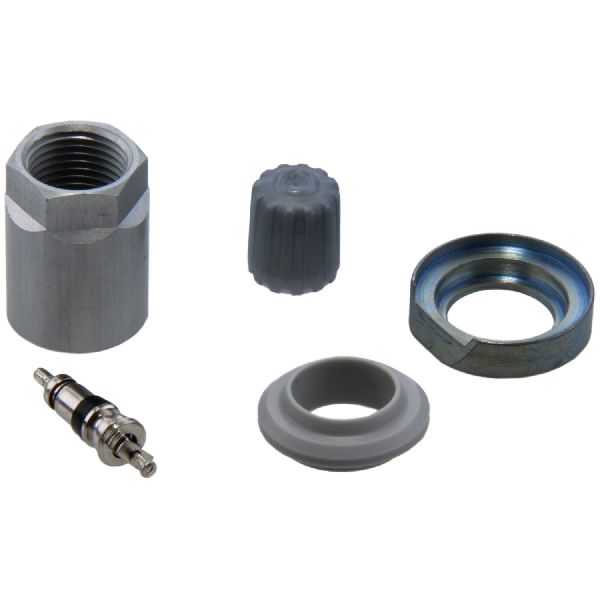
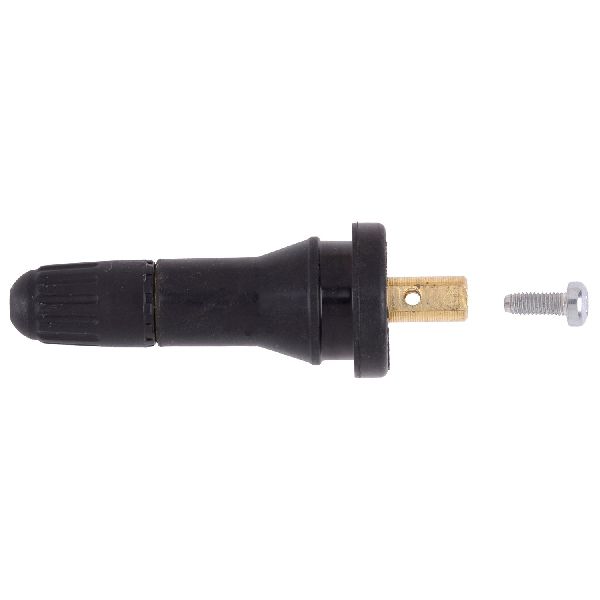
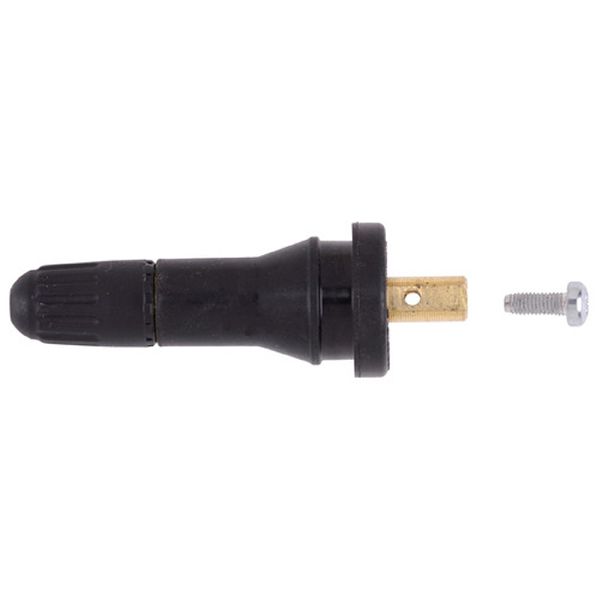
- Tire Pressure Monitoring System (TPMS) Sensor
(OEM #13598771 (Supersedes 13586335, 20923680, 22853741))— This is the most common failure point. The internal battery dies, requiring replacement of the whole unit. The 2007-2013 GMT900 platform uses a 315MHz sensor.
Trusted brands: ACDelco (OEM), Schrader (OEM Supplier), Dorman, Bosch
OEM price range: $50-$70
Aftermarket price range: $30-$50
Related Codes That Often Appear With This One
- C0750 — Fault in the Left Front TPMS sensor.
- C0755 — Fault in the Right Front TPMS sensor.
- C0760 — Fault in the Left Rear TPMS sensor.
- B3055 — Key not present. This code can appear with TPMS codes if the RCDLR module, which handles both systems, is malfunctioning or experiencing interference, as noted in TSB PIC5650M.
Technical Service Bulletins (TSBs) & Recalls
- PIC5650M: Addresses a no-start or stall concern with the security light coming on, which can be accompanied by various TPMS codes including C0765, often due to Radio Frequency Interference affecting the RCDLR.
- 16-NA-396: Details intermittent operation of key fobs and TPMS systems due to internal faults in the RCDLR, recommending replacement of the module.
Platform-Specific Known Issues
- The provided TSB #PIC5650M highlights a known issue where this TPMS code can be associated with security system warnings and no-start/stall conditions due to the shared functionality of the Remote Control Door Lock Receiver (RCDLR).
- The RCDLR module in these trucks is located behind the trim panel in the left rear of the cargo area (D-pillar), making it somewhat difficult to access for diagnosis or replacement.
- A known failure mode is the RCDLR losing its memory for tire type and placard pressure. This can cause the system to 'forget' the TPMS sensor IDs after an ignition cycle, even if the relearn procedure was successful. The fix is to rewrite this data using a bi-directional scan tool.
Mechanic-Grade Diagnostic Values
- TPMS Sensor Transmission Interval — expected: Transmits every 60 seconds when vehicle is in motion.. Failure: If the RCDLR does not receive a transmission from the sensor for 18 minutes while driving over 25 mph, it will set code C0765.
- RCDLR Scan Tool Data — expected: With a Tech 2 or GDS2, the data list for the RCDLR should show a 'Normal' or 'OK' status for the Right Rear TPMS sensor.. Failure: The status may show 'Fault' or a specific symptom code like ':29' (Too Few Pulses) will be present.
Hidden / Shadow Codes Worth Checking
- C0765 :29: Symptom code for 'Too Few Pulses'. This sub-code strongly indicates an internal fault within the Remote Control Door Lock Receiver (RCDLR), as it is not receiving the expected number of signal transmissions from the TPMS sensor. (see via GM Tech 2, GDS2, or other professional-grade scan tool capable of reading manufacturer-specific symptom codes.)
- C0765 :03: Symptom code for 'Low Voltage'. This typically points directly to the sensor's internal battery failing. (see via GM Tech 2, GDS2, or other professional-grade scan tool.)
Scan Tool Commands That Help
- GDS2 / Tech 2: RCDLR Module Setup — This function is required after replacing the RCDLR. It configures the new module to the vehicle's specific options before programming keys or TPMS sensors.
- GDS2 / Tech 2 (or capable bi-directional scanner): Tire Type/Pressure Programming — Used when the RCDLR has lost its memory, causing it to 'forget' learned sensors after an ignition cycle. This function rewrites the correct tire type (e.g., P-Metric) and placard pressure values to the module's memory, which can resolve the issue without replacing parts.
- GDS2 / Tech 2: Copy and Paste TPM Information — When replacing an RCDLR, this function can be used to extract all TPMS data (tire type and sensor IDs) from the old module *before* it is removed and then paste it into the new module after installation. This avoids the need to perform a separate relearn procedure.
Wiring & Ground Locations
- G302 — On the GMT900 platform, this ground is located under the right side of the passenger seat or on the passenger front door sill area.. The Pass 2 data mentioned this ground as being prone to corrosion. Its location near the passenger's feet makes it susceptible to moisture from wet shoes or leaks, which can cause intermittent RCDLR function, leading to TPMS and key fob issues.
- G402 — Located inside the driver's side C-Pillar.. This ground is in the same general vicinity as the RCDLR module (left rear D-pillar). A poor connection at G402 could potentially affect the RCDLR's operation.
- RCDLR Connector — The RCDLR module is located behind the trim panel on the driver's side D-pillar in the rear cargo area.. A loose connection at the module itself can cause a loss of signal from all sensors. The main connector is a 26-way plug containing pins for power, ground, and serial data communication.
Real Owner Repair Stories
- TahoeYukonForum.com user 'Fless' (2012 Chevrolet Tahoe LTZ) — TPMS sensors could be successfully learned using a relearn tool, and pressures would display correctly on the DIC. However, after turning the vehicle off and back on, all sensor readings would disappear and show '--'. Key fobs worked perfectly.
❌ Tried (didn't work) Multiple TPMS relearn procedures., Checking for BCM or Chassis codes (none found)., Suspecting the new Schrader multi-frequency sensors were programmed incorrectly.
✅ What actually fixed it The RCDLR module had lost its memory for tire type and pressure. Using a bi-directional Launch scanner, the user rewrote the tire type to 'P-metric' and the placard pressure to 36 PSI in the RCDLR's configuration. This permanently resolved the issue, and the sensors remained learned after ignition cycles. - TahoeYukonForum.com user (2008 GMC Yukon Denali) — One TPMS sensor (LR) was not reading. After a body shop attempted to recalibrate the system, all four sensors stopped displaying pressure ('--').
❌ Tried (didn't work) Attempting a TPMS relearn procedure with the known-bad sensor still in place. The procedure would fail at the last step (LR tire).
✅ What actually fixed it The entire relearn sequence must be completed successfully for any of the sensors to report their pressure. Because the left-rear sensor was dead, the relearn process could not finish, which caused the system to show no pressures for any tire. Replacing the single dead sensor allowed the full relearn procedure to complete, at which point all four sensors began displaying pressure correctly.
OEM Part Supersession History
13586335, 20923680, 22853741, 25920615→13598771— Standard part consolidation and minor revisions by the manufacturer.
Heads up: The OEM part 13598771 is a direct replacement. When using aftermarket programmable sensors (like Schrader EZ-sensor or Autel MX-Sensor), they must be programmed to mimic the GM protocol for this platform before installation. A pre-programmed aftermarket sensor for GM should work directly but always requires a relearn procedure.13598771→13540600— Further part number updates by GM.
Heads up: While 13540600 is a newer number, 13598771 is the most commonly referenced and correct part for the 2007-2013 generation.
Model Year Variations Within This Range
- 2012-2013: A specific GM Preliminary Information bulletin (PI1085) was issued for 2012-2013 models built between April 1, 2012, and May 1, 2013, for poor RKE range and TPMS codes, including C0765. The bulletin recommends replacing the RCDLR module (P/N 20863945) if poor RKE range is confirmed, suggesting a potentially faulty batch of modules was used during this period.
Helpful Videos
We Have This Part in Stock


The information in this article is provided for general reference and educational purposes only. Vehicle specifications, procedures, and part compatibility can vary by production date, trim level, and region. Always consult your vehicle's factory service manual and verify part numbers before purchasing or performing repairs. Safety-critical components such as airbags, seat belts, and braking systems should be installed by a qualified professional.
- Cadillac ESCALADE EXT:
- 🧭 Diagnostic Flowchart
- 🎬 Helpful Videos
- 🛍️ Shop This Part
- What's Unique About the 2007-2013 Cadillac ESCALADE EXT
- Symptoms You May Notice
- Most Likely Causes
- Rare But Worth Checking
- Diagnosis Steps
- Parts You'll Likely Need
- Related Codes That Often Appear With This One
- Technical Service Bulletins (TSBs) & Recalls
- Platform-Specific Known Issues
- Mechanic-Grade Diagnostic Values
- Hidden / Shadow Codes Worth Checking
- Scan Tool Commands That Help
- Wiring & Ground Locations
- Real Owner Repair Stories
- OEM Part Supersession History
- Model Year Variations Within This Range
- 🎟️ Get 5% Off