

C0765 on 2019-2025 Cadillac XT4: Right Rear TPMS Fault Causes and Fixes
Code C0765 indicates a fault with the right rear tire pressure sensor. However, on a Cadillac XT4, this code, especially if paired with key fob problems or a 'No Remote Detected' message, is very often caused by a failing Remote Control Door Lock Receiver (RCDLR) module, not the sensor itself. This is a widely documented issue in GM service bulletins. Replacing and programming the RCDLR is the common fix.
- Before buying a new TPMS sensor for a C0765 code, check your key fob. If it's acting up or you see a 'No Remote Detected' message, the RCDLR module is the most likely cause.
- C0765 specifically points to the right rear wheel's TPMS sensor.
- If only the sensor is bad, it's a straightforward replacement at a tire shop. A TPMS activation tool can confirm this.
- If the RCDLR module is the problem, the new part will need to be professionally programmed to work with your vehicle.
What's Unique About the 2019-2025 Cadillac XT4
On many modern GM vehicles, including the Cadillac XT4, the Tire Pressure Monitoring (TPM) system and the keyless entry/start system are linked. Both the TPMS sensors and the key fobs transmit their signals to a single module: the Remote Control Door Lock Receiver (RCDLR). A known failure point is the RCDLR itself, which can cause TPMS codes like C0765 to appear alongside symptoms like the key fob not working or a 'No Remote Detected' message on the dash. This is documented in GM Technical Service Bulletins 🎬 Watch: See how a failing RCDLR affects both TPMS and keyless entry., such as 16-NA-396, making it a critical platform-specific issue to be aware of before replacing the tire sensor.
Diagnostic Flowchart
Tap your situation to follow the diagnostic path that matches what you're seeing on this vehicle.
Symptoms You May Notice
- Tire pressure monitor system (TPMS) warning light is on or flashing
- Driver Information Center (DIC) shows dashes for the right rear tire pressure
- DIC displays a 'Service Tire Monitor System' message
- Key fob intermittently or completely stops working (lock, unlock, remote start)
- "No Remote Detected" message on the DIC
- No crank or start/stall condition, possibly with the security light on (as noted in TSB #PIC5650M)
- Passive entry system inoperative
- Replacing the TPMS sensor when the RCDLR is the actual fault. This is a common mistake because the code directly names the sensor. The key is to check for related key fob or starting issues, which point to the RCDLR.
Most Likely Causes
- Failing Remote Control Door Lock Receiver (RCDLR) 🔴 High Probability → Shop Keyless Entry Receiver This is a documented common failure point on many GM platforms. The RCDLR handles both TPMS and key fob signals, and its failure manifests as problems in both systems. TSB #PIC5650M and TSB #16-NA-396 directly link these symptoms to the module. The failure can be due to internal electronics or software abnormalities.
How to confirm: The strongest indicator is the simultaneous failure of key fob functions and the appearance of TPMS code C0765. A professional scan tool can check for communication with the RCDLR and may show specific symptom bytes, like ':29 – Too Few Pulses', which explicitly points to the module per TSB 16-NA-396.
Typical fix: Replace the Remote Control Door Lock Receiver (RCDLR) module and program the new module to the vehicle using GM's Global Diagnostic System 2 (GDS2) software.
Est. part cost: $50-$150 - Dead or Faulty Right Rear TPMS Sensor 🟡 Medium Probability → Shop Tire Pressure Monitoring System (TPMS) Sensor TPMS sensors are powered by small, non-serviceable batteries that have a finite lifespan, typically 7-10 years. A sensor failure due to a dead battery or internal fault is a common maintenance item as vehicles age.
How to confirm: If the key fobs are working perfectly and only the C0765 code is present, the sensor is the more likely culprit. A tire shop or technician can use a TPMS activation tool to test the sensor directly. If the tool cannot get a response, the sensor has failed.
Typical fix: Replace the right rear TPMS sensor and perform the TPMS relearn procedure. 🎬 Watch: How to reprogram and relearn TPMS on GM vehicles.
Est. part cost: $30-$75
Rare But Worth Checking
- Wiring or Connector Issue: A damaged wire or loose connection at the RCDLR module or its antenna could mimic a module failure. TSB PIT5446A and 16-NA-061 detail how a disconnected coax cable at the RCDLR, antenna amplifier, or the antenna itself (often in the right rear quarter glass) can cause these exact symptoms. This is worth checking before replacing the module.
- Radio Frequency (RF) Interference: Aftermarket electronic devices (like dash cams, phone chargers, or metallic window tint) can sometimes interfere with the low-power 433 MHz signals from the TPMS sensors, causing intermittent codes.
- Dead Key Fob Battery: → Shop Keyless Entry Transmitter While it won't cause a C0765 code, a dead key fob battery will cause 'No Remote Detected' symptoms. Before suspecting the RCDLR, it's wise to replace the CR2032 battery in the fob as a simple first step.
Diagnosis Steps
- Verify the symptoms. Do the key fobs work correctly? Are there any 'No Remote Detected' messages? If yes, the RCDLR is the primary suspect.
- As a simple first step, replace the CR2032 battery in your key fob to rule it out.
- If key fobs work perfectly, proceed with diagnosing the sensor. Use a TPMS activation tool to attempt to read the right rear sensor. If it fails to respond, the sensor is likely bad.
- If the sensor responds to the tool but the code persists, the issue is likely with the RCDLR or its wiring.
- Scan the vehicle with a professional scan tool capable of reading Body Control Module (BCM) and RCDLR data. Look for other related codes (C0750, C0755, C0760, B3101) and check communication status with the RCDLR.
- Inspect the wiring and coax antenna connector at the RCDLR module for any visible damage or corrosion. The module is typically located in the rear of the vehicle, often behind a trim panel near the C-pillar.
- If the RCDLR is suspected, replace the module. Note: The new module MUST be programmed to the vehicle using compatible diagnostic software (like GM's GDS2) to function correctly and learn the existing keys. A stable power supply is critical during programming.
Parts You'll Likely Need
- Remote Control Door Lock Receiver (RCDLR)
(OEM #84507649)— This module is a common failure point that causes C0765 along with key fob issues. It's often the root cause, not the sensor itself. Part number 84507649 is a common replacement for this platform, superseding older numbers.
Trusted brands: ACDelco, GM Genuine
OEM price range: $70-$150
Aftermarket price range: $50-$100 - Tire Pressure Monitoring System (TPMS) Sensor
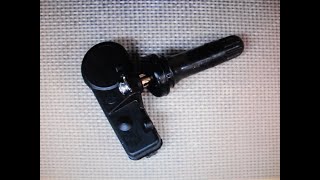
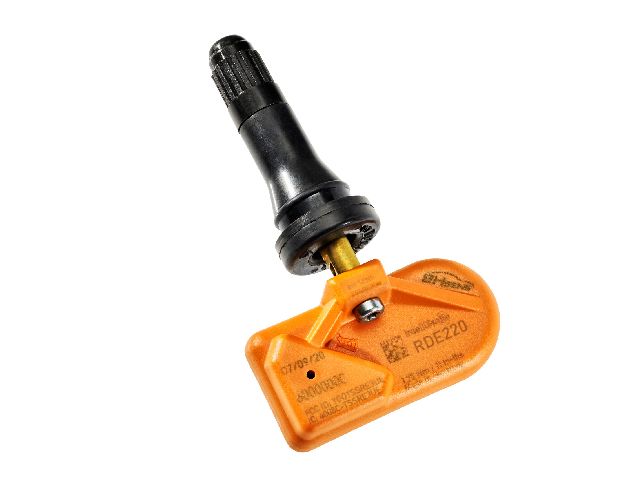
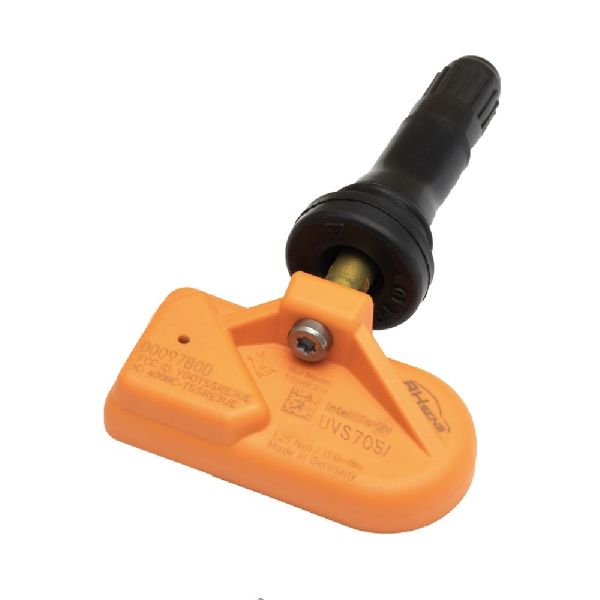
(OEM #84961888)— If the key fobs work and only C0765 is present, the sensor itself has likely failed due to a dead battery or damage. The XT4 uses a 433 MHz sensor. The OEM part number is often cross-referenced with 13516165.
Trusted brands: ACDelco, Schrader, Bosch, Huf
OEM price range: $50-$75
Aftermarket price range: $30-$60
Related Codes That Often Appear With This One
- C0750 — Fault with the Left Front TPMS sensor. Often set together with other TPMS codes when the RCDLR module is failing.
- C0755 — Fault with the Right Front TPMS sensor. Often set together with other TPMS codes when the RCDLR module is failing.
- C0760 — Fault with the Left Rear TPMS sensor. Often set together with other TPMS codes when the RCDLR module is failing.
- B3101 — A keyless entry system code that can appear with the RCDLR-related TPMS codes, as noted in TSB PIC6227.
- B3055 / B3060 / B3935 — These are security and key-related codes that can appear alongside C0765 when there is a no-start or security light issue, as referenced in TSB #PIC5650M, pointing towards a systemic problem.
Technical Service Bulletins (TSBs) & Recalls
- PIC5650M: Mentions C0765 in the context of a no crank or start/stall concern with the security light on, linking it with other security-related DTCs.
- 16-NA-396: Although for slightly older models, this TSB details the exact failure pattern of a faulty RCDLR causing TPMS codes (including C0750, C0755, C0760, C0765) and simultaneous key fob issues, which is highly relevant to this diagnosis.
- 16-NA-061 / PIT5446A: These bulletins describe how a poor or disconnected RCDLR antenna connection can cause identical symptoms (TPMS and key fob issues), and should be investigated before replacing the module itself.
- PIC6227: Notes that a software abnormality in the RCDLR can cause these symptoms and that a temporary fix can be a battery disconnect and reconnect to reset the module.
Platform-Specific Known Issues
- The link between TPMS codes and key fob/starting issues due to a faulty RCDLR is a well-documented issue across many GM vehicles of this era, including the Cadillac XT4 as noted in TSB #PIC5650M.
- For the XT4, if the key fob is not detected due to a dead fob battery or a faulty RCDLR, the emergency starting procedure is to place the fob in the front cup holder, which serves as the transmitter pocket.
Mechanic-Grade Diagnostic Values
- Key Fob Battery Voltage — expected: 3.0 Volts or higher. Failure: Less than 2.75 Volts. This can cause 'No Remote Detected' symptoms but will not cause a C0765 code.
- TPMS Sensor Transmission — expected: The RCDLR should receive a signal from each sensor periodically.. Failure: If a sensor does not transmit for 18 minutes while the vehicle is moving over 25 mph (40 km/h), the code will set.
Hidden / Shadow Codes Worth Checking
- C0765:29: Too Few Pulses. This is a critical symptom byte. TSB 16-NA-396 explicitly states that when this is present with TPMS codes, the cause is likely an internal failure of the RCDLR module. (see via GM GDS2 or other professional-grade scan tool capable of reading GM-specific symptom bytes.)
- C0765:03: Low Voltage / Voltage Below Threshold. This indicates the sensor itself may be failing, often due to a low internal battery. (see via GM GDS2 or other professional-grade scan tool.)
- C0765:39: Internal Malfunction. This symptom byte points directly to a failure within the TPMS sensor itself. (see via GM GDS2 or other professional-grade scan tool.)
Scan Tool Commands That Help
- GM GDS2: Module Diagnostics > Body Control Module > Data Display > Key Fob Status — To verify if the BCM/RCDLR is recognizing key fob button presses and to see the 'learned' status of each remote, which helps differentiate a fob problem from a receiver problem.
- GM GDS2: Module Diagnostics > Remote Control Door Lock Receiver > Control Functions — To perform bidirectional tests, such as commanding door locks to lock/unlock. If these commands work from the scan tool but not the fob, it points towards a signal reception issue (RCDLR, antenna) rather than a BCM or locking mechanism problem.
- GM GDS2: Tire Pressure Monitor Learn — This function is required after replacing a TPMS sensor or the RCDLR module to make the vehicle learn the new sensor IDs.
- GM GDS2: Remote Keyless Entry Transmitter Programming — Required after replacing the RCDLR module to program the existing key fobs to the new module. The scan tool guides the technician through the steps.
Wiring & Ground Locations
- K77 RCDLR Module — On the Cadillac XT4 and similar GM platforms, the RCDLR is typically located in the rear of the vehicle, often behind the passenger side (right side) rear quarter trim panel, near the C-pillar.. This is the central module for this fault. All diagnostic paths lead here. Knowing its location is critical for visual inspection of its connector and coax antenna cable, and for replacement.
- RCDLR Antenna System — The system consists of the RCDLR, a coax cable, an antenna amplifier, and the antenna itself, which is often integrated into the right rear quarter glass.. TSB 16-NA-061 highlights that a loose coax connection at the RCDLR, at the amplifier, or at the glass can cause the exact same symptoms as a failed RCDLR module. A disconnected coax at the RCDLR will cause all TPMS sensors to stop reporting and key fobs to have almost no range.
- G401 / G402 — These are common rear body ground points on GM vehicles, typically located in the rear cargo area or behind the bumper on the frame rails.. The RCDLR module requires a clean, solid ground connection to function properly. A corroded or loose rear body ground can cause intermittent and difficult-to-diagnose electronic issues, including RCDLR failure symptoms.
Real Owner Repair Stories
- YouTube video by Phillip Bailey (2017 GM 2500HD (similar GM electrical architecture)) — Keyless entry not working and a 'Service Tire Monitor System' message on the dash. All TPMS sensors were showing dashes.
❌ Tried (didn't work) Initial diagnosis focused on the TPMS sensors themselves.
✅ What actually fixed it The root cause was a failed Remote Control Door Lock Receiver (RCDLR). Both problems were resolved simultaneously by replacing the RCDLR module and reprogramming the key fobs to the new module. - Reddit user in r/Cadillac (2021 Cadillac XT4) — TPMS light was on with a reading of 23 psi, but a manual gauge showed 35 psi. The reading on the dash would not update.
❌ Tried (didn't work) Adding air to the tire.
✅ What actually fixed it The consensus from other users was a bad TPMS sensor in the wheel, which gets stuck on a reading or fails to transmit new data. The fix is to replace the specific sensor.
OEM Part Supersession History
13595511→84507649 (and others in between)— Part has been updated multiple times by GM to improve reliability and address internal failure issues noted in service bulletins.
Heads up: While multiple part numbers may have been used, 84507649 is a common, more recent replacement for many GM vehicles in this era. Always verify the correct part number for the specific vehicle's VIN before ordering.
Helpful Videos
We Have This Part in Stock

The information in this article is provided for general reference and educational purposes only. Vehicle specifications, procedures, and part compatibility can vary by production date, trim level, and region. Always consult your vehicle's factory service manual and verify part numbers before purchasing or performing repairs. Safety-critical components such as airbags, seat belts, and braking systems should be installed by a qualified professional.
- Cadillac XT4:
- 🧭 Diagnostic Flowchart
- 🎬 Helpful Videos
- 🛍️ Shop This Part
- What's Unique About the 2019-2025 Cadillac XT4
- Symptoms You May Notice
- Most Likely Causes
- Rare But Worth Checking
- Diagnosis Steps
- Parts You'll Likely Need
- Related Codes That Often Appear With This One
- Technical Service Bulletins (TSBs) & Recalls
- Platform-Specific Known Issues
- Mechanic-Grade Diagnostic Values
- Hidden / Shadow Codes Worth Checking
- Scan Tool Commands That Help
- Wiring & Ground Locations
- Real Owner Repair Stories
- OEM Part Supersession History
- 🎟️ Get 5% Off