

C0765 on 2007-2013 Chevrolet Avalanche: TPMS Fault Causes and Fixes
On a 2007-2013 Avalanche, code C0765 almost always means the battery in the right rear TPMS sensor has died. Given the vehicle's age, replacing the sensor is the most common fix. Expect to pay $40-$80 for the part and have a tire shop install it. However, if your key fobs also stop working, the issue is likely the Remote Control Door Lock Receiver (RCDLR) module, another common failure.
- C0765 means there is a problem with the right rear tire pressure sensor.
- The most likely cause on a 2007-2013 Avalanche is simply a dead battery in the original sensor.
- If your key fobs also stopped working, the problem is more likely the Remote Control Door Lock Receiver (RCDLR) module, not the sensor itself.
- Before replacing parts, unplug any aftermarket phone chargers or accessories to rule out radio interference.
- Replacing a sensor requires a tire shop to break down the tire, and a relearn procedure must be performed afterward.
What's Unique About the 2007-2013 Chevrolet AVALANCHE
The 2007-2013 Avalanche is built on the GMT900 platform, which integrates TPMS and key fob functions into a single module called the Remote Control Door Lock Receiver (RCDLR). While a dead sensor battery is the most frequent cause of C0765 due to the vehicle's age, a failing RCDLR is also a very common failure point that can trigger this code, often accompanied by key fobs ceasing to work. Additionally, these trucks can be sensitive to radio frequency interference from aftermarket electronics like phone chargers or LED lights, which can jam the RCDLR's signal and mimic a sensor fault.
Diagnostic Flowchart
Tap your situation to follow the diagnostic path that matches what you're seeing on this vehicle.
Symptoms You May Notice
- "Service Tire Monitor System" message on the Driver Information Center (DIC).
- TPMS warning light flashes for approximately one minute, then stays illuminated.
- Right rear tire pressure displays as "--" on the DIC.
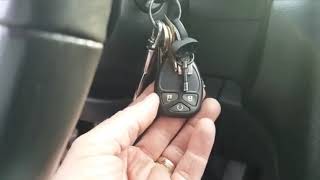
- If the RCDLR module is the cause, key fobs will not work for lock, unlock, or remote start.
- Poor remote keyless entry (RKE) range, requiring you to be very close to the vehicle.
- Replacing the Body Control Module (BCM) when the RCDLR is the actual cause. The RCDLR is a separate module that communicates with the BCM, and it is the component that directly receives the TPMS signals.
- Replacing only the TPMS sensor when the key fobs are also inoperative. The simultaneous failure of both systems strongly points to the RCDLR or RFI.
Most Likely Causes
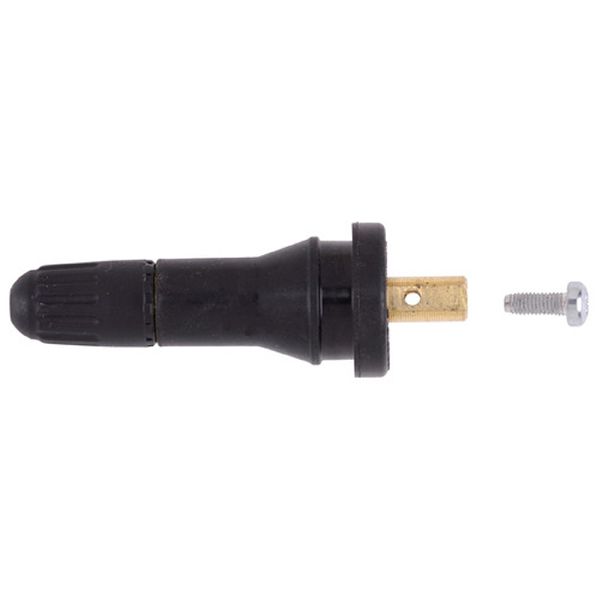
- Dead TPMS Sensor Battery 🔴 High Probability → Shop Tire Pressure Monitoring System (TPMS) Sensor The original sensors have a battery life of 5-10 years. Vehicles in this 2007-2013 range are now at an age where battery failure is expected and is the most common cause for a single-wheel TPMS code.
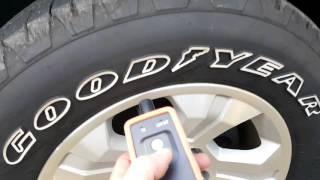
How to confirm: Use a TPMS activation tool (like an EL-50448 or equivalent) to attempt to read the sensor. If the tool gets no response, the battery is dead or the sensor has failed. A tire shop can perform this test in minutes.
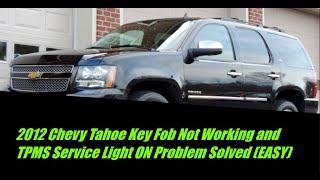
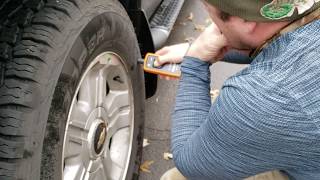
Typical fix: Replace the right rear TPMS sensor. It is often recommended to replace all four sensors at the same time, especially if they are original and you are getting new tires, as the others are likely to fail soon. A relearn procedure must be performed after replacement. 🎬 See how to use the EL-50448 tool on an Avalanche.
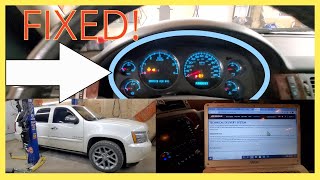
Est. part cost: $30-$80 - Failed Remote Control Door Lock Receiver (RCDLR) 🟡 Medium Probability → Shop Keyless Entry Receiver This module processes signals for both TPMS and key fobs. It's a known failure point on many GM vehicles of this era that can cause both systems to fail simultaneously. TSB 16-NA-396 specifically calls out this failure. 🎬 Watch: How to fix combined TPMS and remote entry issues.
How to confirm: The most obvious symptom is that your key fobs stop working at the same time the "Service Tire Monitor System" message appears. A scan tool may also show code C0765 with a symptom code of :29 (Too Few Pulses), which strongly points to a faulty RCDLR.
Typical fix: Replace the RCDLR module. The module is typically located behind the rear passenger-side C-pillar trim panel. The new module must be programmed to the vehicle by a dealer or a qualified shop with GM-compatible diagnostic software (like a Tech 2 or GDS2).
Est. part cost: $40-$100 - Radio Frequency Interference (RFI) ⚪ Low Probability The RCDLR operates on a radio frequency (315 MHz in North America) that can be 'jammed' by low-quality aftermarket electronics, especially phone chargers, dash cams, and LED lighting plugged into the vehicle's power outlets. GM has issued multiple versions of TSB PIC5650 to address this exact issue.
How to confirm: Unplug ALL aftermarket electronic devices from the vehicle's power ports (12V and USB). This includes phone chargers, dash cams, LED light strips, and any other non-factory device. Clear the codes (if possible) and drive to see if the fault returns. If the TPMS and key fob functions return to normal, one of the devices was the cause.
Typical fix: Remove or replace the interfering aftermarket device. If you must use such devices, choose high-quality, well-shielded ones.
Est. part cost: $0
Rare But Worth Checking
- Damaged Sensor: The sensor can be physically broken during a tire change or by a significant pothole impact. This is less common than battery failure but possible.
- Use of Unapproved Tire Sealant: Tire sealant or 'Fix-a-Flat' products can clog the pressure-sensing port on the TPMS sensor, causing it to report incorrectly or fail.
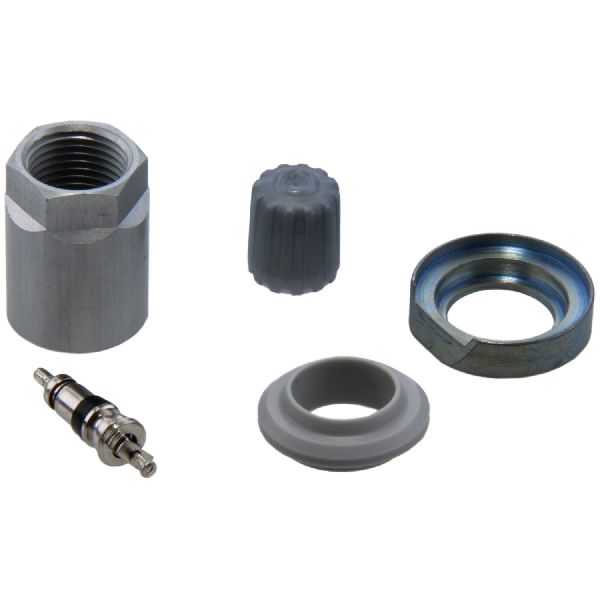
- Corroded/Failed TPMS Service Kit: The valve stem assembly, which includes rubber grommets and a retaining nut, can corrode and fail, causing an air leak. While this typically causes a low-pressure warning rather than a C0765 fault, severe corrosion could damage the sensor itself. It's recommended to replace these service kits whenever tires are replaced.
- RCDLR Antenna Connection Issue: As described in TSB 16-NA-061, the coaxial cable connecting the RCDLR to its antenna (located in the rear glass) can become disconnected, leading to poor signal reception and TPMS codes. This is more likely to affect sensors farther from the module first (like the front tires), but a complete disconnection can affect all sensors.
Diagnosis Steps
- Verify the complaint: Note the "Service Tire Monitor System" message and the TPMS light on the dash (flashing for 1 minute, then solid).
- Check Key Fob Function: Test the lock, unlock, and remote start functions of ALL your key fobs. If they do not work, the primary suspect is the RCDLR module or RFI.
- Isolate RFI (Crucial First Step): If key fobs are also inoperative, unplug ALL aftermarket devices (phone chargers, dash cams, LED lights, etc.). Test key fob function again. If it returns, one of the unplugged devices is the cause. This is a very common issue highlighted in GM TSB PIC5650.
- Scan for Codes: Use an OBD-II scanner to confirm C0765 is present. Note any other TPMS codes (C0750, C0755, C0760) or Body codes (B-prefix, U-prefix). The presence of codes for all four sensors points towards the RCDLR or RFI.
- Test the Sensor: If key fobs work normally, the problem is almost certainly the sensor itself. Use a TPMS activation tool (e.g., EL-50448) to try and read the right rear sensor. If it fails to respond, its battery is dead.
- Inspect the RCDLR Connections: If the RCDLR is suspected, a visual inspection of its connections and antenna cable for looseness or corrosion can be performed. The module is located behind the trim on the passenger side rear C-pillar.
- Perform Relearn Procedure: After replacing a sensor, a TPMS relearn procedure must be performed so the vehicle can recognize the new sensor's ID. This requires a specific relearn tool for this vehicle generation. 🎬 Watch: Step-by-step guide to the GM TPMS relearn procedure.
Parts You'll Likely Need
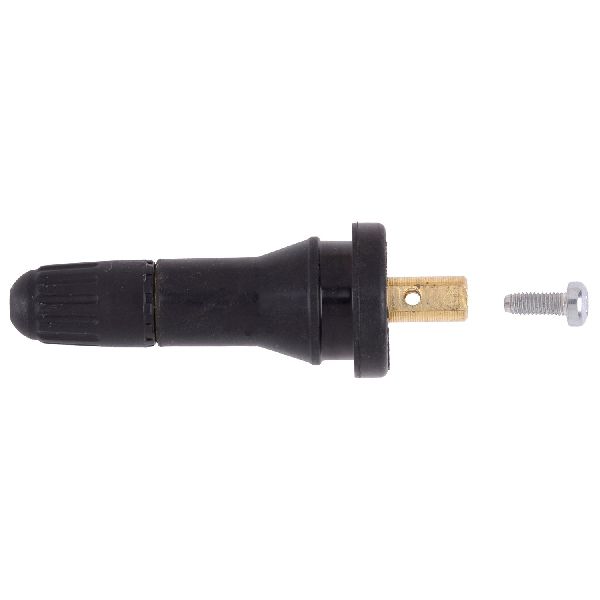
- Tire Pressure Monitoring System (TPMS) Sensor
(OEM #13598771)— This is the most common failure point, typically due to an expired internal battery with a 5-10 year lifespan. Part number 13598771 is a common OEM number for this generation.
Trusted brands: ACDelco, Schrader, Continental, Dorman
OEM price range: $50-$90
Aftermarket price range: $30-$60 - Remote Control Door Lock Receiver (RCDLR)
(OEM #20803735)— This module can fail, causing TPMS codes and simultaneous key fob inoperability. This is a well-documented issue. Part number 20803735 is the correct service part for the 2007-2013 Avalanche.
Trusted brands: ACDelco (GM Genuine), Dorman
OEM price range: $60-$120
Aftermarket price range: $40-$80
Related Codes That Often Appear With This One
- C0750 — Fault code for the Left Front TPMS sensor. It's common for multiple sensor batteries to fail around the same time, or for a failing RCDLR/RFI to cause faults for all sensors.
- C0755 — Fault code for the Right Front TPMS sensor. It's common for multiple sensor batteries to fail around the same time, or for a failing RCDLR/RFI to cause faults for all sensors.
- C0760 — Fault code for the Left Rear TPMS sensor. It's common for multiple sensor batteries to fail around the same time, or for a failing RCDLR/RFI to cause faults for all sensors.
- B3055 — A key-related security code that can appear alongside TPMS codes if there is Radio Frequency Interference or a failing RCDLR module, as noted in TSB PIC5650M.
- U0422 — A communication code indicating 'Invalid Data Received From Body Control Module'. A GMC Sierra owner reported this code appearing with all four TPMS codes when their RCDLR was failing, suggesting a communication breakdown between the RCDLR and BCM.
Technical Service Bulletins (TSBs) & Recalls
- PIC5650M: Mentions that C0765 can be set along with security codes (like B3055) due to Radio Frequency Interference from aftermarket devices causing a 'no start' or 'security light' concern.
- 16-NA-396: Directly addresses the simultaneous failure of key fobs and TPMS (logging C07xx codes). It identifies the cause as an internal failure of the RCDLR and instructs technicians to replace the module.
- PI1085: A preliminary bulletin for 2012-2013 models noting that poor RKE transmitter range accompanied by TPMS codes (including C0765) warrants replacement of the RCDLR module.
- 16-NA-061: Details how a disconnected RCDLR antenna or coax cable can cause TPMS codes and poor key fob range, advising inspection of these connections before replacing parts.
Platform-Specific Known Issues
- Owner Experience with RCDLR Failure: A user on a Corvette forum with a similar GM system experienced simultaneous failure of the TPMS and key fobs. The issue was resolved by replacing the RCDLR module, confirming that this is a common failure pattern across different GM vehicles that use this integrated module.
- Temporary Fix by Pulling the Fuse: Some owners on a Tahoe/Yukon forum reported temporarily fixing the inoperative TPMS and key fobs by pulling the fuse for the RCDLR, waiting a few seconds, and reinstalling it. The fuse is often labeled "DSM" in the interior fuse box. This suggests a software lock-up or sleep-mode issue with the module that a power cycle can temporarily resolve, though a permanent fix may require a software update or module replacement.
Hidden / Shadow Codes Worth Checking
- C0765 :29: Too Few Pulses. This symptom code, visible with a professional scan tool, strongly indicates an internal fault within the Remote Control Door Lock Receiver (RCDLR). It means the RCDLR is not receiving the expected number of signal transmissions from the sensor, often due to an internal module failure rather than a sensor failure. (see via GM Tech 2, GDS2, or other professional-grade scan tool capable of reading manufacturer-specific symptom codes.)
- C0765 :03: Low Voltage. This symptom code points to a voltage issue within the sensor's circuit, which is most commonly caused by the sensor's internal battery nearing the end of its life. (see via GM Tech 2, GDS2, or other professional-grade scan tool.)
- C0765 :39: Internal Malfunction. This symptom code indicates the sensor has self-diagnosed an internal failure, separate from its battery voltage. (see via GM Tech 2, GDS2, or other professional-grade scan tool.)
Scan Tool Commands That Help
- GDS2 (GM Global Diagnostic System 2): RCDLR - Key Fob Programming — After replacing the RCDLR module, this function is required to program the existing key fobs to the new module. The scan tool walks the user through the steps of pressing fob buttons to learn them.
- GDS2 (GM Global Diagnostic System 2): Body Control Module -> Output Controls -> All Doors Lock/Unlock — If key fobs are not working, this bidirectional command can test if the BCM can command the doors to lock and unlock via the data bus. If this works, it helps isolate the problem to the RF signal path (fob, RCDLR, antenna) rather than the BCM or door lock actuators.
- GDS2 (GM Global Diagnostic System 2): Module Diagnostics -> RCDLR -> Data Display — To check if the RCDLR is communicating with the rest of the vehicle. If you cannot access the RCDLR data display or get a 'No Communication' error, it points to a failed module, wiring, or power/ground issue to the module itself.
Wiring & Ground Locations
- RCDLR Module — Located behind the trim panel on the passenger side (right) rear C-pillar.. This is the physical location of the module that processes the signal from the TPMS sensor. Access is required for replacement, or to check its connector and antenna cable.
- G304 — On the right side B-pillar, behind the trim panel.. This is a primary ground point for components in the rear of the cabin. While not explicitly stated as the RCDLR's only ground, a poor connection here could cause erratic behavior or failure of the RCDLR module, leading to TPMS and key fob issues.
- RCDLR Antenna — The antenna is often integrated into the right rear quarter glass, connected to an amplifier, which then connects to the RCDLR via a coaxial cable.. A disconnected or damaged coaxial cable at the RCDLR, amplifier, or glass can cause a loss of signal from the TPMS sensors and key fobs, mimicking a failed RCDLR module. TSB 16-NA-061 advises checking these connections before replacing the module.
- "DSM" Fuse — In the fuse box on the left side of the instrument panel (driver's side dash).. This fuse provides power to the RCDLR (Remote Control Door Lock Receiver), which may also be labeled as the Driver Seat Module (DSM). Pulling this fuse for a few seconds can sometimes reset a 'locked-up' RCDLR, temporarily restoring TPMS and key fob function.
Real Owner Repair Stories
- Tahoe Yukon Forum user '5StarG3neral' (2012 Yukon XL SLT (GMT900 platform)) — All tire pressures not reading on the display ("Service Tire Pressure Monitor System" message) and key fobs stopped working at the same time.
❌ Tried (didn't work) Replacing the RCDLR module with a new one did not solve the problem; there was still no communication with the new module.
✅ What actually fixed it The root cause was broken wiring in the driver's side door jamb that supplied power to the RCDLR module. A mechanic ran a new power wire to the module and programmed it, which resolved all issues. - Tahoe Yukon Forum user 'R_Sharpe' (2007 Chevrolet Tahoe (GMT900 platform)) — Keyless entry and TPMS both stopped working simultaneously. Trying to enter "Relearn Remote Key" mode via the DIC would not work.
❌ Tried (didn't work) Replacing the key fob battery., Trying spare key fobs.
✅ What actually fixed it Following a TSB, the user pulled the fuse labeled "DSM" from the fuse box on the left side of the instrument panel, waited a few seconds, and reinstalled it. This power cycle restored both key fob and TPMS functionality, suggesting the RCDLR had gone into a sleep or error state.
OEM Part Supersession History
15946938, 25896497→20803735— Standard part evolution, integrating design updates and new materials/technologies.
Heads up: Part number 20803735 is the correct and current GM Genuine part for the entire 2007-2013 Avalanche model range and requires programming after installation.
Helpful Videos
We Have This Part in Stock


The information in this article is provided for general reference and educational purposes only. Vehicle specifications, procedures, and part compatibility can vary by production date, trim level, and region. Always consult your vehicle's factory service manual and verify part numbers before purchasing or performing repairs. Safety-critical components such as airbags, seat belts, and braking systems should be installed by a qualified professional.
- Chevrolet AVALANCHE:
- 🧭 Diagnostic Flowchart
- 🎬 Helpful Videos
- 🛍️ Shop This Part
- What's Unique About the 2007-2013 Chevrolet AVALANCHE
- Symptoms You May Notice
- Most Likely Causes
- Rare But Worth Checking
- Diagnosis Steps
- Parts You'll Likely Need
- Related Codes That Often Appear With This One
- Technical Service Bulletins (TSBs) & Recalls
- Platform-Specific Known Issues
- Hidden / Shadow Codes Worth Checking
- Scan Tool Commands That Help
- Wiring & Ground Locations
- Real Owner Repair Stories
- OEM Part Supersession History
- 🎟️ Get 5% Off