

C0765 on 2007-2014 Chevrolet Express 2500: TPMS Fault or Security Issue?
On a 2007-2014 Express 2500, C0765 means the right rear tire pressure sensor isn't communicating. If you only have a TPMS light, you need a new 315 MHz sensor (~$40). If your security light is also on or the van won't start, the problem is likely Radio Frequency Interference (RFI) from an aftermarket device (like a phone charger) or a bad Body Control Module (BCM), not the sensor. This is a well-documented issue in GM TSB PIC5650M.
- The first and most important step is to check your symptoms: is it just a TPMS light, or is the security light on as well?
- If only the TPMS light is on, you most likely need a new right rear tire sensor (315 MHz).
- If the security light is on or the van won't start, immediately suspect Radio Frequency Interference (RFI). Unplug all aftermarket devices before attempting any repairs.
- Do not replace the BCM unless RFI and a bad vehicle battery have been definitively ruled out.
What's Unique About the 2007-2014 Chevrolet EXPRESS 2500
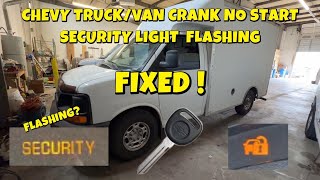
For the Express van and its GMC Savana platform-mate, C0765 is more complex than just a bad tire sensor. GM issued a Technical Service Bulletin (PIC5650M) that explicitly links this TPMS code to major security issues, including a no-start or start-and-stall condition with the security light on. This happens because the same module (RCDLR/BCM) and radio frequencies are used for both the TPMS and the vehicle's Passlock immobilizer/keyless entry system. Therefore, radio frequency interference or a module fault can trigger codes and symptoms across both systems simultaneously, a frequent complaint in owner forums.
Diagnostic Flowchart
Tap your situation to follow the diagnostic path that matches what you're seeing on this vehicle.
Symptoms You May Notice
- Flashing, then solid Tire Pressure Monitoring System (TPMS) warning light.
- "Service Tire Monitor System" message in the Driver Information Center (DIC).
- Security or theft deterrent system light illuminated or flashing on the dashboard.
- Engine will not crank (no start).
- Engine starts and immediately stalls (crank-stall).
- Key fob functions (remote lock/unlock) may be inoperative or work intermittently.
- Multiple, seemingly unrelated warning lights on the instrument cluster (e.g., ABS, Airbag).
- Replacing the TPMS sensor when the security light is on. If the security light is illuminated, the tire sensor is almost never the root cause. The problem lies within the shared security and remote-systems circuitry, most often RFI.
Most Likely Causes
- Failed Right Rear TPMS Sensor 🔴 High Probability → Shop Tire Pressure Monitoring System (TPMS) Sensor TPMS sensors have a finite battery life, typically 5-10 years. Vehicles in this year range are at the age where original sensor batteries are expected to fail.
How to confirm: This is the likely cause if C0765 is the ONLY code present and the only symptom is the TPMS light. A tire shop can use a TPMS activation tool to verify the sensor is not transmitting. A professional scan tool may show a symptom byte of ':03' (Low Voltage) or ':39' (Internal Malfunction).
Typical fix: Replace the right rear TPMS sensor and perform the TPMS relearn procedure using the DIC or a TPMS tool.
Est. part cost: $30-$70 - Radio Frequency Interference (RFI) 🟡 Medium Probability As documented in TSB PIC5650, the vehicle's RF-sensitive systems can be disrupted by aftermarket electronics. Owners on forums frequently report cheap USB phone chargers, dash cams, and aftermarket remote start systems as the source of the interference.
How to confirm: If security and key fob issues are present, temporarily remove ALL aftermarket plug-in devices (phone chargers, dash cams, LED lights, toll passes, etc.) from the vehicle. Clear codes and see if the symptoms disappear. A scan tool showing symptom code C0765:08 (Signal Invalid) can also point towards RFI.
Typical fix: Identify and permanently remove the aftermarket device causing the interference. Replace with a high-quality, shielded alternative if needed.
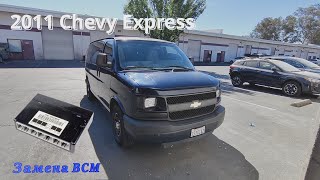
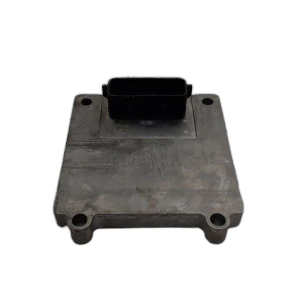
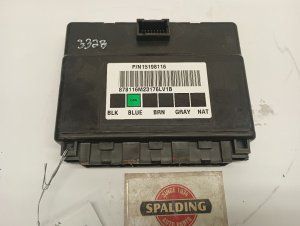
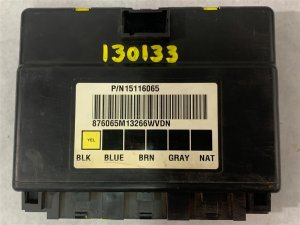
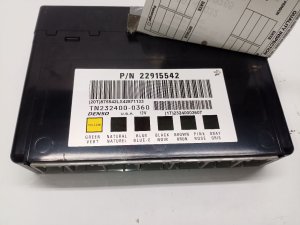
Est. part cost: $0 - Faulty Body Control Module (BCM) / Remote Control Door Lock Receiver (RCDLR) ⚪ Low Probability → Shop Keyless Entry Receiver The BCM is the central hub for TPMS and security signals, while the RCDLR is the receiver. An internal failure in either can cause communication loss. Water intrusion and corrosion at the BCM connectors are also potential issues.
How to confirm: This is suspected when C0765 appears with other TPMS codes (C0750, C0755, C0760) and security codes (B3055, B3060), and RFI has been ruled out. Requires a professional scan tool to test module communication. The BCM is located behind the driver's side knee bolster. The RCDLR is often under the top dash pad, behind the gauges. A symptom code of C0765:29 (Too Few Pulses) specifically points to an internal RCDLR failure. Check for corroded grounds at G301/G302 behind the driver's kick panel.
Typical fix: Replace the faulty module and program the new one to the vehicle. This must be done by a dealer or qualified shop with GM-specific software.
Est. part cost: $150-$400
Rare But Worth Checking
- Weak Vehicle Battery:
Diagnosis Steps
- Scan for all DTCs in all modules. Pay close attention to whether C0765 is alone or accompanied by other C-codes or any B-codes (Body) or U-codes (Communication). Note any security-related codes like B3055.
- Scenario A: C0765 is the only code, and the only symptom is a TPMS light. The cause is almost certainly a faulty right rear TPMS sensor. Use a TPMS tool to confirm the sensor has a dead battery or is not transmitting. Proceed to replace the sensor.
- Scenario B: C0765 is present with a security light, no-start condition, or other codes like B3055. Do NOT replace the tire sensor. This is a system-level problem.
- Check for RFI: Referencing TSB PIC5650M, the first and most critical step is to check for Radio Frequency Interference. Unplug and remove ALL aftermarket electronics: phone chargers (especially cheap ones), USB adapters, dash cams, aftermarket LED lights, and even large electronic key fobs from other cars.
- Clear the codes and attempt to start the vehicle with the interference sources removed. If the problem is resolved, re-introduce the devices one by one to find the culprit.
- Check Vehicle Battery: If RFI is ruled out, test the main vehicle battery. Voltage below 12.4V can cause unpredictable electronic issues. Charge or replace if necessary.
- Inspect BCM/RCDLR: If the problem persists, inspect the wiring and connectors at the Body Control Module (BCM), located behind the driver's side knee bolster area. Check for good power and ground connections and any signs of corrosion or moisture. Inspect the RCDLR under the dash pad if accessible. Pay special attention to grounds G301 and G302, located behind the driver's side kick panel, as they are critical for the BCM.
- Professional Diagnosis: If wiring is good, the BCM/RCDLR itself is the primary suspect. This diagnosis should be confirmed by a professional with a high-end scan tool (like a GM Tech 2 or MDI) that can monitor module data and communication status.
Parts You'll Likely Need
- Tire Pressure Monitoring System (TPMS) Sensor (315 MHz)
(OEM #13598771 (Supersedes 13586335, 25920615))— This is the fix if C0765 appears alone. The sensor's internal battery has likely died. Ensure the replacement is the correct 315 MHz frequency for this vehicle.
Trusted brands: ACDelco, Schrader, Dorman
OEM price range: $50-$90
Aftermarket price range: $30-$60 - Body Control Module (BCM) — This is a potential fix if C0765 appears with security issues and RFI has been ruled out. It's the central computer for both systems. Part number is VIN-specific and must be programmed by a dealer or specialist.
Trusted brands: ACDelco
OEM price range: $250-$400
Aftermarket price range: $150-$300
Related Codes That Often Appear With This One
- B3055 — Indicates a problem with the key transponder. Often appears with C0765 due to RFI or a BCM fault as described in TSB PIC5650M.
- C0750, C0755, C0760 — These are the corresponding codes for the other three tire pressure sensors. If all four codes appear together, it strongly suggests a fault with the central receiver (BCM/RCDLR) or a massive RFI source, rather than four simultaneously failed sensors.
- U0140 — This code means 'Lost Communication With Body Control Module'. It's a strong indicator that the BCM itself has failed or has a major power/ground issue, which would explain the C0765 code as a secondary symptom.
Technical Service Bulletins (TSBs) & Recalls
- PIC5650M: Lists C0765 with security codes (B3055, etc.) and no-start/stall symptoms, pointing to Radio Frequency Interference as a primary diagnostic path before replacing any parts.
Platform-Specific Known Issues
- Per GM TSB PIC5650M, this vehicle is highly susceptible to Radio Frequency Interference from common aftermarket devices plugged into the 12V outlets, which can cause simultaneous TPMS and security system faults, including no-start conditions.
- Owners frequently report that the GM Passlock security system can be triggered by this RFI, leading to a crank-no-start or start-and-stall condition that is often misdiagnosed as a bad fuel pump or ignition switch.
Mechanic-Grade Diagnostic Values
- Class 2 Serial Data Bus Voltage — expected: Nominal 7.0 Volts, toggling. Failure: A steady voltage close to battery positive (short to power) or 0V (short to ground) indicates a wiring or module fault on the communication bus.
- RCDLR Module Voltage (at module connector) — expected: Should be stable and close to battery voltage (ideally >12.45V).. Failure: A significant voltage drop (e.g., more than 0.3V-0.5V) between the battery and the module's power pin can cause erratic operation.
- Passlock Sensor Power (Red/White wire to Black wire) — expected: 9.0 Volts or higher with key in ON or CRANK position.. Failure: Low voltage indicates a power supply issue to the sensor in the ignition lock cylinder.
- Passlock Sensor Signal (Yellow wire) — expected: 4.7-5.0 Volts with key at ON, then drops to a specific voltage as key is rotated.. Failure: No voltage or no drop during key rotation indicates a faulty sensor or signal wire.
Hidden / Shadow Codes Worth Checking
- C0765:00: Indicates a general fault or loss of communication. Often set when the sensor doesn't transmit for an extended period (e.g., 18 minutes), which can be due to a dead battery. (see via GM-specific scan tool (e.g., Tech 2, GDS2).)
- C0765:03: Indicates the battery within the TPMS sensor itself is failing. (see via GM-specific scan tool (e.g., Tech 2, GDS2).)
- C0765:08: Indicates the signal from the TPMS sensor is invalid. This can be caused by Radio Frequency Interference (RFI) or an internal sensor fault. (see via GM-specific scan tool (e.g., Tech 2, GDS2).)
- C0765:29: Indicates 'Too Few Pulses' have been received from the sensor. This symptom code specifically points to an internal failure of the Remote Control Door Lock Receiver (RCDLR) module. (see via GM-specific scan tool (e.g., Tech 2, GDS2).)
- C0765:39: Indicates an 'Internal Malfunction' within the TPMS sensor itself. (see via GM-specific scan tool (e.g., Tech 2, GDS2).)
Scan Tool Commands That Help
- GDS2 / Tech 2: Read DTC with Symptom Byte — Use this to differentiate between a bad sensor battery (:03), a bad RCDLR module (:29), or potential RFI (:08), which is critical for accurate diagnosis before replacing parts.
- GDS2 / Tech 2: Module Programming / Setup — This function is required after replacing the Body Control Module (BCM) or Remote Control Door Lock Receiver (RCDLR) to configure the new module to the vehicle's VIN and options.
- TPMS Activation Tool (e.g., Autel, Schrader): TPMS Relearn Procedure — Required after replacing a sensor. On base model vans without DIC buttons or RKE, a tool may be the only way to put the vehicle into learn mode.
Wiring & Ground Locations
- G302 / G301 — Behind the driver's side kick panel.. These are primary grounds for the Body Control Module (BCM). Corrosion or looseness here due to water leaks down the A-pillar can cause a loss of communication with the BCM, triggering U-codes and a host of seemingly unrelated body/security faults like C0765.
- G304 — Behind the right (passenger's side) kick panel.. This is another major body ground point. While G301/G302 are more directly tied to the BCM, checking all major cabin grounds is good practice when chasing intermittent electrical issues.
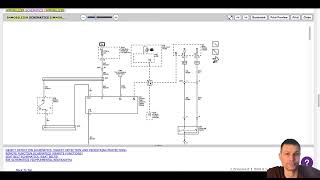
- BCM Connectors (X1, X2, etc.) — The BCM is located behind the driver's side knee bolster.. The Class 2 Serial Data wire, which the RCDLR uses to communicate TPMS and security info to the BCM, runs through these connectors. A poor pin fit or corrosion can interrupt this communication. Pinout diagrams are available in service manuals for testing.
- RCDLR Connector — Typically located under the center of the upper dash pad, near the windshield.. This is the direct connection to the receiver for both TPMS and key fob signals. Checking for stable power and a clean ground at this connector is essential if the RCDLR is suspected to be faulty.
OEM Part Supersession History
13586335, 25920615→13598771— Part consolidation and design updates.
Heads up: The ACDelco 13598771 sensor is listed as 'Programmed' and does not require pre-programming with a tool before installation. However, it does require the vehicle's standard OE relearn procedure to be performed after it is installed in the wheel.
Model Year Variations Within This Range
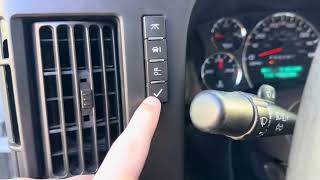
- 2007-2014: The TPMS relearn procedure may differ based on the vehicle's option package. Models with a Driver Information Center (DIC) and Remote Keyless Entry (RKE) can typically enter learn mode through the DIC menus or by holding the lock/unlock buttons on the fob. However, base/fleet models without these options may not have a manual way to initiate the relearn mode and will require a TPMS activation tool or a professional scan tool to complete the procedure.
Helpful Videos
We Have This Part in Stock

The information in this article is provided for general reference and educational purposes only. Vehicle specifications, procedures, and part compatibility can vary by production date, trim level, and region. Always consult your vehicle's factory service manual and verify part numbers before purchasing or performing repairs. Safety-critical components such as airbags, seat belts, and braking systems should be installed by a qualified professional.
- Chevrolet EXPRESS 2500:
- 🧭 Diagnostic Flowchart
- 🎬 Helpful Videos
- 🛍️ Shop This Part
- What's Unique About the 2007-2014 Chevrolet EXPRESS 2500
- Symptoms You May Notice
- Most Likely Causes
- Rare But Worth Checking
- Diagnosis Steps
- Parts You'll Likely Need
- Related Codes That Often Appear With This One
- Technical Service Bulletins (TSBs) & Recalls
- Platform-Specific Known Issues
- Mechanic-Grade Diagnostic Values
- Hidden / Shadow Codes Worth Checking
- Scan Tool Commands That Help
- Wiring & Ground Locations
- OEM Part Supersession History
- Model Year Variations Within This Range
- 🎟️ Get 5% Off