

C0765 on 2015-2022 Chevrolet Express 2500: TPMS, Security, & No-Start Issues Explained
On your Express van, code C0765 points to the right-rear tire pressure (TPMS) sensor. However, it's often a symptom of a wider issue with the Remote Control Door Lock Receiver (RCDLR) or radio frequency interference. If your key fob is also acting up or the security light is on, the problem is likely not the TPMS sensor itself. Check for aftermarket chargers or devices first, as they are a very common cause of this specific issue on these vans.
- C0765 means a problem with the right rear tire pressure sensor, but the cause may not be the sensor itself.
- Before buying parts, unplug all aftermarket phone chargers, dash cams, or other electronic devices and re-test.
- If you also have a security light on or your key fob is not working, the problem is very likely RFI or the RCDLR module, not the TPMS sensor.
- A flashing TPMS light that turns solid indicates a system fault (like this code), not just low tire pressure.
- Replacing a TPMS sensor requires a tire shop to break the bead, and the new sensor must be 'relearned' to the vehicle.
What's Unique About the 2015-2022 Chevrolet EXPRESS 2500
On GM vans like the Express and its platform-mate the GMC Savana, the RCDLR module is a central hub for various wireless functions, including TPMS, keyless entry, and the immobilizer system. A GM Technical Service Bulletin (TSB PIC5650) directly links this TPMS code (C0765) to no-start conditions and security lights. This is because radio frequency interference from common aftermarket devices (like phone chargers, LED lights, or even toll passes) can 'jam' the RCDLR, preventing it from hearing both the TPMS sensor and the key fob, leading to a confusing mix of symptoms. The RCDLR is typically located under the top of the dashboard, near the instrument cluster, making it susceptible to interference from devices plugged into the dash outlets.
Diagnostic Flowchart
Tap your situation to follow the diagnostic path that matches what you're seeing on this vehicle.
Symptoms You May Notice
- "Service Tire Monitor System" message on the driver information center
- TPMS warning light flashes for a minute and then stays on solid
- Security or theft-deterrent light is illuminated on the dash
- Intermittent no-crank, no-start, or a start-then-stall condition
- Key fob (Remote Keyless Entry - RKE) works poorly or not at all
- "No Fob Detected" message (for models with push-button start)
- Tire pressure readings on the dash show as dashes "--" for one or more tires
- Immediately replacing the TPMS sensor without checking for RFI or other symptoms. If the key fob is also acting up, the problem is almost certainly not the TPMS sensor itself.
- Replacing the battery without addressing an underlying RFI issue, leading to the problem returning.
Most Likely Causes
- Radio Frequency Interference (RFI) 🔴 High Probability As documented in multiple versions of GM TSB PIC5650, the vehicle's RCDLR is highly sensitive to RFI from aftermarket devices. The TSB specifically lists items like cell phone chargers, USB power banks, aftermarket LED lights, and toll passes as potential sources of interference that can 'jam' the 315 MHz, 433 MHz, and 125 kHz frequencies used by the TPMS and keyless entry systems.
How to confirm: Remove all non-factory electronic devices from the vehicle, especially anything plugged into the 12V outlets (phone chargers, dash cams, etc.). Clear the codes and see if the problem disappears. The issue may be intermittent and hard to duplicate, often requiring the specific interfering device to be active.
Typical fix: Identify and remove the source of the interference. Advise the customer on using higher-quality, properly shielded electronic accessories. 🎬 Watch: How cell phone chargers interfere with TPMS signals In some cases, a poor quality wireless phone charger itself can be the culprit.
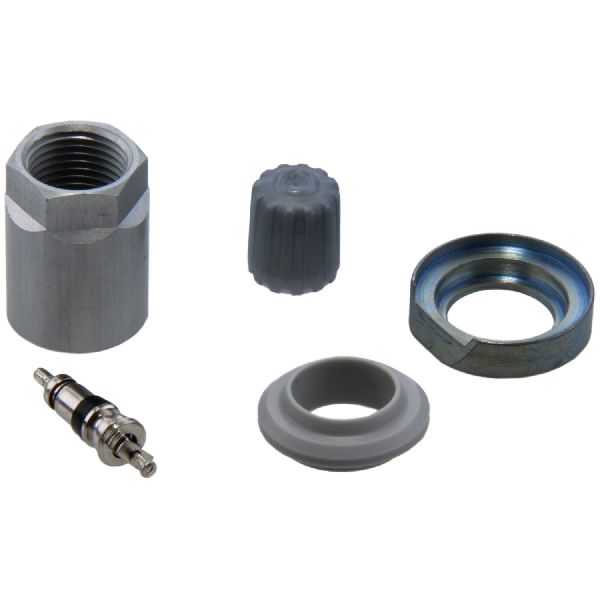
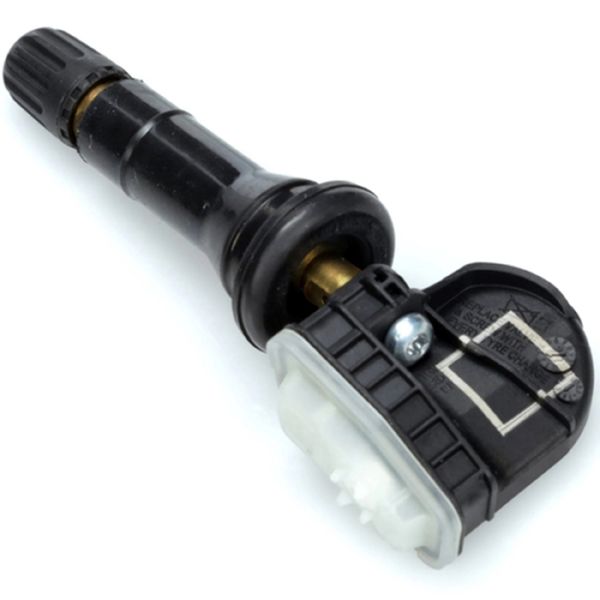
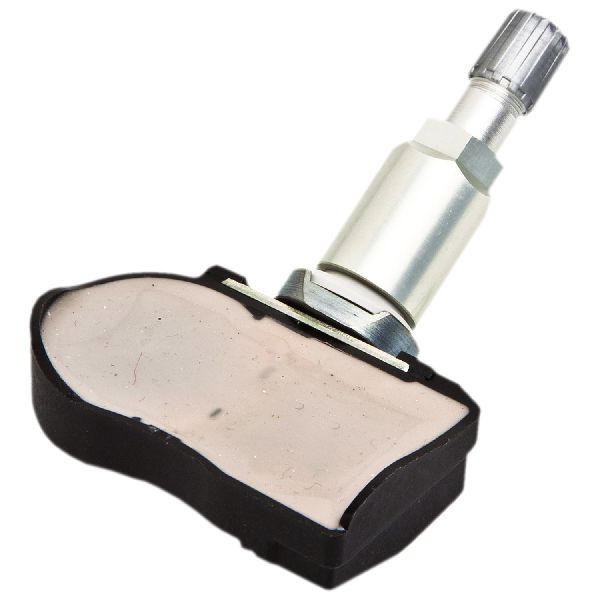
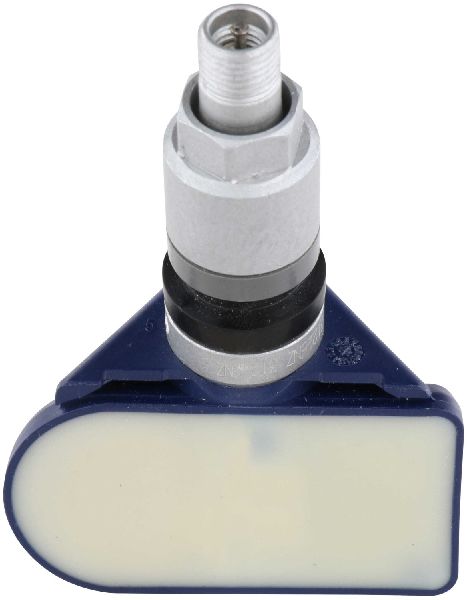
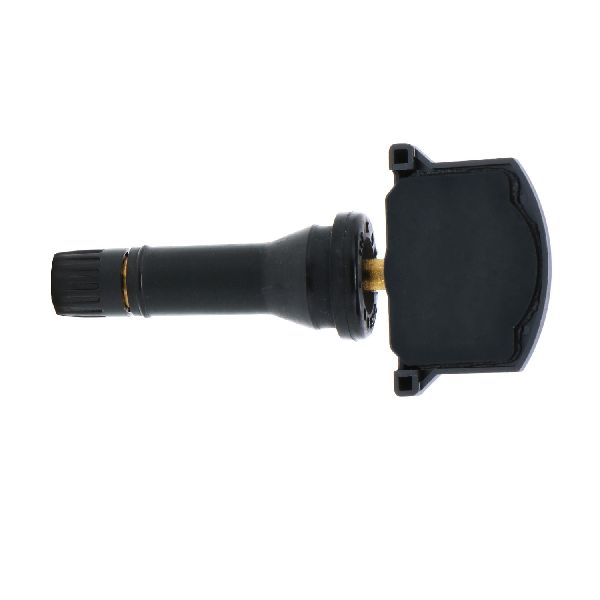
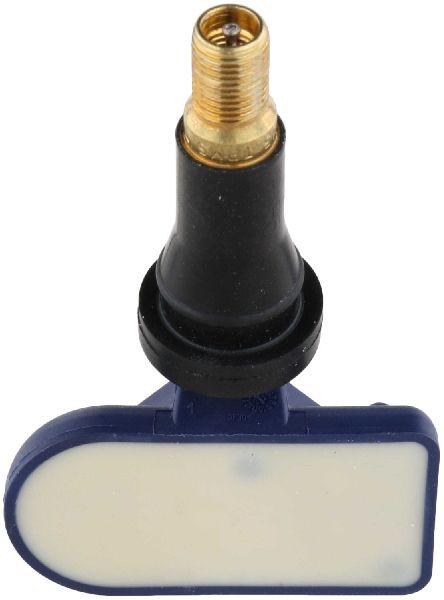
Est. part cost: $0 - Failed Right Rear TPMS Sensor 🟡 Medium Probability → Shop Tire Pressure Monitoring System (TPMS) Sensor TPMS sensors contain non-replaceable batteries that fail after 5-10 years. Physical damage during tire service is also common. Given the vehicle age range, battery failure is a strong possibility.
How to confirm: Use a TPMS diagnostic tool (like an Autel or VXDIAG EL-50448) to attempt to activate the right rear sensor. If it fails to respond, its battery is likely dead or the sensor is damaged. A professional scan tool may also show a 'low battery' status for the sensor.
Typical fix: Replace the right rear TPMS sensor and perform the TPMS relearn procedure. This typically requires tire removal or at least breaking the bead.
Est. part cost: $30-$80 - Failing Remote Control Door Lock Receiver (RCDLR) ⚪ Low Probability → Shop Keyless Entry Receiver While less common than RFI or a bad sensor, the module itself can fail internally. A recall for some 2018 models involved reprogramming the RCDLR for TPMS issues. A Reddit user with an '08 Express described replacing the receiver after a Tech2 scanner confirmed no response from the original module.
How to confirm: This is a process-of-elimination diagnosis. If there is no RFI, the TPMS sensor is confirmed to be good, and all wiring is intact, the RCDLR is the likely suspect. A dealer-level scan tool (like a Tech2) is needed to check for communication with the module. A forum user on Chevroletforum.com noted the RCDLR is located under the top dash pad above the gauges.
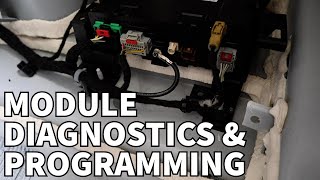
Typical fix: Replace the RCDLR module. The new module must be programmed to the vehicle using specialized equipment like GM's SPS (Service Programming System).
Est. part cost: $50-$150
Rare But Worth Checking
- Wiring or Connector Issue: The RCDLR is typically located in the headliner or behind an interior trim panel, often under the main dash pad in the Express. TSB 16-NA-061 notes that a damaged or disconnected coax cable between the RCDLR, its antenna amplifier, and the antenna in the rear glass can cause these exact symptoms. A disconnect closer to the RCDLR will cause more severe issues.
- Security System Relearn Required: In some cases, particularly after a battery disconnect or if a no-start condition is the primary symptom, the vehicle's Passlock/immobilizer system may need to be reset. This can sometimes be done with a "30-minute relearn procedure" that involves cycling the key in the ignition without a scan tool. 🎬 See this walkthrough for fixing a security light no-start
Diagnosis Steps
- Question the driver about any aftermarket electronics used in the vehicle (phone chargers, dash cams, LED lights, USB power banks, toll passes etc.).
- Check for other symptoms. Does the key fob work correctly? Is the security light on? If yes, suspect RFI or an RCDLR issue as the primary cause, not the sensor.
- Remove ALL aftermarket electronic devices from the vehicle. Unplug everything from the 12V and USB ports.
- Clear all DTCs with a scan tool. Drive the vehicle above 25 mph for several minutes to see if the code returns.
- If the code returns with no devices present, use a TPMS tool to check the status of the right rear sensor. Check for battery life and signal output.
- If the sensor is confirmed bad, replace it, and perform the TPMS relearn procedure as specified in the owner's manual or using a relearn tool.
- If the sensor is good but the code persists, inspect the wiring and coax cable connector at the RCDLR module. On the Express, this is typically located under the top dash pad, above and behind the instrument cluster.
- If a no-start condition is present with a security light, attempt the 30-minute key relearn procedure before replacing parts.
- If all other possibilities are exhausted, the RCDLR module itself is the likely point of failure and may need replacement and programming by a dealer or qualified shop.
Parts You'll Likely Need
- Tire Pressure Monitoring System (TPMS) Sensor
(OEM #13598771)— If RFI is ruled out, the most common part failure is the sensor itself, usually due to an expired internal battery after 5-10 years of service.
Trusted brands: ACDelco, Schrader, Standard Motor Products
OEM price range: $40-$70
Aftermarket price range: $25-$50 - Remote Control Door Lock Receiver (RCDLR)
(OEM #20863945)— This module is the root cause if the sensor is good and RFI is not present. It processes signals from both TPMS and key fobs. Part number 20863945 supersedes 20818271 and is listed for later model year Express vans. Note that older vans in this generation may use a different part number, such as 20803735. This part requires programming.
Trusted brands: ACDelco
OEM price range: $50-$150
Aftermarket price range: $40-$100
Related Codes That Often Appear With This One
- C0750 — Relates to the Left Front TPMS sensor, often set for the same RFI or RCDLR fault reasons.
- C0755 — Relates to the Right Front TPMS sensor, often set for the same RFI or RCDLR fault reasons.
- C0760 — Relates to the Left Rear TPMS sensor, often set for the same RFI or RCDLR fault reasons.
- B3055 — Relates to the vehicle immobilizer key. TSB PIC5650 lists this code as appearing with C0765 when RFI is the cause.
- B3060 — Relates to the security system. TSB PIC5650 lists this code as appearing with C0765 when RFI is the cause.
- B3935 — Transponder Authentication Failed. Also listed in TSB PIC5650 as a code that can accompany C0765 due to RFI.
Technical Service Bulletins (TSBs) & Recalls
- PIC5650M / PIC5650K: Details how aftermarket devices (phone chargers, LED lights, toll passes) can cause Radio Frequency Interference (RFI), leading to a combination of TPMS codes (including C0765), security system codes (B3055, B3060, B3935), and no-start conditions.
Platform-Specific Known Issues
- Per GM TSB PIC5650M, this vehicle is susceptible to radio frequency interference from aftermarket devices, which can cause C0765 along with no-start conditions and a security light.
- A user on Chevroletforum.com confirmed the RCDLR location on a 2014/2015 Express 2500 is under the top plate of the dash, requiring removal of the dash bezel and A-pillar trim for access.
Mechanic-Grade Diagnostic Values
- Power and Ground at RCDLR Connector — expected: On similar GM truck platforms, technicians test for 12V+ on a Red/White wire and continuity to ground on a Black or Black/White wire at the RCDLR connector with the key on.. Failure: Absence of 12V+ power or a high resistance to ground indicates a wiring or fuse issue, not a failed module.
- TPMS Sensor Activation Check — expected: Using a TPMS tool, a healthy sensor should respond and the tool should display the sensor's unique 8-digit ID, its pressure reading, and signal strength.. Failure: If the tool cannot elicit a response from the sensor, the sensor's internal battery is dead or the sensor has failed.
Hidden / Shadow Codes Worth Checking
- Symptom Code :29: This sub-code means 'Too Few Pulses' and indicates the RCDLR is not receiving the expected number of signal transmissions from the TPMS sensor. GM TSB #16-NA-396 explicitly states that when C0765 is accompanied by symptom code 29, the cause is likely an internal fault within the Remote Control Door Lock Receiver (RCDLR). (see via Visible using a dealer-level scan tool like a GM MDI with GDS2 software.)
Scan Tool Commands That Help
- GM GDS2 (Global Diagnostic System 2): Module Diagnostics -> Remote Control Door Lock Receiver -> Configuration/Reset Functions — This function is required after replacing the RCDLR. The new module must be programmed to the vehicle's BCM and existing keys/sensors for it to operate. Failure to program a new RCDLR will result in it not functioning.
- GM GDS2 (Global Diagnostic System 2): Data Bus Diagnostic Tool — If the RCDLR is not communicating at all, this tool can be used to check the health of the specific data bus it resides on. It helps determine if the fault is with the module itself or the communication network.
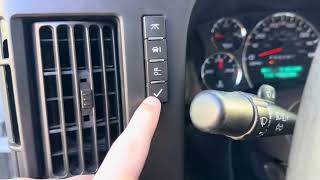
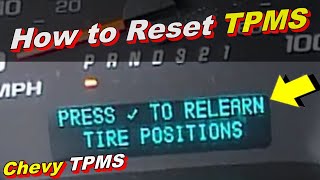
- TPMS Relearn Tool (e.g., EL-50448): Sensor Activation / TPMS Relearn — Used after replacing a TPMS sensor or rotating tires. The vehicle must be put into learn mode via the DIC, then the tool is used to activate each sensor in sequence (starting with Left Front) to teach the vehicle their new positions.
Wiring & Ground Locations
- RCDLR Antenna Coaxial Cable — Runs from the RCDLR module (under the dash pad in the Express) to an antenna amplifier and then to an antenna, which is often integrated into one of the vehicle's glass panels (typically the right rear on other GM models).. Per TSB 16-NA-061, a poor connection or complete disconnect at the module, amplifier, or antenna can cause TPMS codes and key fob issues. A full disconnect at the RCDLR module itself will cause all TPMS sensors to stop reporting.
- G103 (Example Ground) — On some GM platforms, G103 is located on the cowl in the engine compartment, above the brake booster.. This ground point is known to service the BCM and RCDLR on some GM vehicles. While not confirmed specifically for the Express, checking major cowl and instrument panel grounds (G1xx, G2xx series) is a critical step if a wiring issue is suspected.
Real Owner Repair Stories
- YouTube channel "Raymond's Wrenching" (2011 Chevrolet Silverado (similar platform/architecture)) — Key fobs did not work, scan tool showed 'No Communication' with the RCDLR module.
❌ Tried (didn't work) Initially assumed the RCDLR module itself had failed and ordered a replacement.
✅ What actually fixed it Before installing the new module, the technician tested for power and ground at the connector. He found 0 volts on the Red/White power wire. After tracing the harness from the underhood fuse block, he discovered a broken power wire inside the harness loom. Repairing the broken wire restored power and communication to the original RCDLR, fixing the problem without needing the new part.
OEM Part Supersession History
20818271→20863945— Standard part revision and consolidation by the manufacturer.20788666→20863945— Standard part revision and consolidation by the manufacturer.
Helpful Videos
We Have This Part in Stock

The information in this article is provided for general reference and educational purposes only. Vehicle specifications, procedures, and part compatibility can vary by production date, trim level, and region. Always consult your vehicle's factory service manual and verify part numbers before purchasing or performing repairs. Safety-critical components such as airbags, seat belts, and braking systems should be installed by a qualified professional.
- Chevrolet EXPRESS 2500:
- 🧭 Diagnostic Flowchart
- 🎬 Helpful Videos
- 🛍️ Shop This Part
- What's Unique About the 2015-2022 Chevrolet EXPRESS 2500
- Symptoms You May Notice
- Most Likely Causes
- Rare But Worth Checking
- Diagnosis Steps
- Parts You'll Likely Need
- Related Codes That Often Appear With This One
- Technical Service Bulletins (TSBs) & Recalls
- Platform-Specific Known Issues
- Mechanic-Grade Diagnostic Values
- Hidden / Shadow Codes Worth Checking
- Scan Tool Commands That Help
- Wiring & Ground Locations
- Real Owner Repair Stories
- OEM Part Supersession History
- 🎟️ Get 5% Off