

C0765 on 2007-2014 Chevrolet Express 3500: TPMS Fault or Security System Failure?
Code C0765 on a Chevy Express 3500 typically means the Right Rear Tire Pressure Sensor has failed. However, if you also have a security light on or the van won't start, it points to a deeper electrical issue mentioned in GM TSB #PIC5650M, often caused by Radio Frequency Interference (RFI) or a faulty control module.
- C0765 usually points to the right rear TPMS sensor, which likely needs replacement due to a dead battery.
- **Crucially**, check for other symptoms. If the van has starting problems or the security light is on, the problem is more likely a failed control module (like the BCM or RCDLR), not the sensor.
- Always perform a full system scan. The presence of other codes, especially B-codes (security) or multiple C-codes (TPMS), is the biggest clue to diagnosing the problem correctly.
- Replacing a control module like the BCM or RCDLR requires special programming tools; this is not a simple plug-and-play repair.
What's Unique About the 2007-2014 Chevrolet EXPRESS 3500
On these GM vans, the Tire Pressure Monitoring System (TPMS) and the keyless entry system are managed by the same module, the Remote Control Door Lock Receiver (RCDLR), which is also referred to as the Tire Pressure Monitoring System Receiver. A failure in this module, the Body Control Module (BCM), or even radio frequency interference can create a cascade of seemingly unrelated trouble codes. While on many cars C0765 is a straightforward TPMS sensor issue, on the Express it's crucial to check for other symptoms like starting problems, security lights, or key fob issues, as this can point to a central module or interference problem instead of just a bad sensor in the wheel.
Diagnostic Flowchart
Tap your situation to follow the diagnostic path that matches what you're seeing on this vehicle.
Symptoms You May Notice
- "Service Tire Monitor System" message on the driver information center (DIC).
- TPMS warning light is flashing or stays on solid.
- The pressure reading for the right rear tire shows dashes (--) on the DIC.
- Security light is illuminated on the instrument cluster.
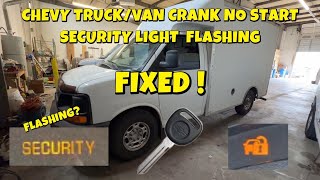
- Engine will not start (cranks but does not fire). 🎬 Watch: Troubleshooting a crank-no-start with a flashing security light.
- Engine starts and immediately stalls.
- Key fobs may not work to lock or unlock the doors (if the RCDLR module is the cause).
- Poor or no range from the keyless entry (RKE) remote.
- Replacing only the TPMS sensor when the root cause is a faulty BCM or RCDLR. If starting issues or security codes are present, the sensor is almost never the actual problem.
- Replacing the BCM when the RCDLR is the actual point of failure. Since the RCDLR receives the signal first, it should be diagnosed before the BCM if both TPMS and key fob issues are present.
- Ignoring Radio Frequency Interference (RFI) from aftermarket accessories. TSB PIC5650K highlights this as a common cause of intermittent, hard-to-diagnose issues.
Most Likely Causes
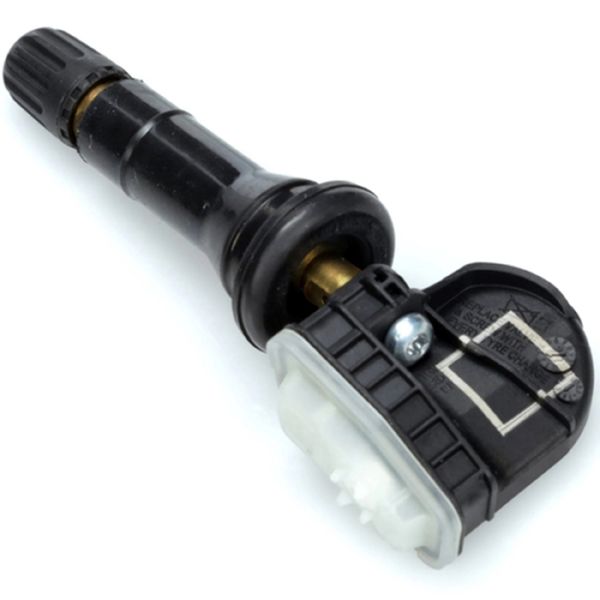
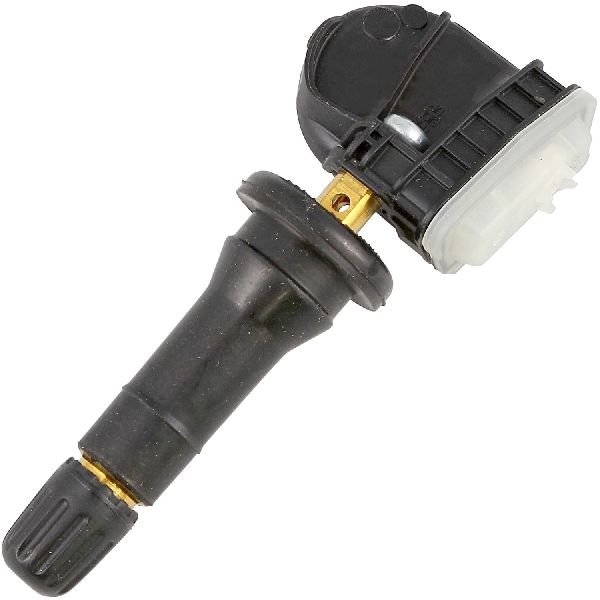
- Dead or Faulty Right Rear TPMS Sensor 🔴 High Probability → Shop Tire Pressure Monitoring System (TPMS) Sensor TPMS sensors use non-rechargeable batteries that have a typical lifespan of 7-10 years. Vehicles in this year range are at or beyond the expected life of the original sensors.
How to confirm: Use a TPMS activation tool (like an EL-50448 for GM) to try and read the sensor. If the tool cannot get a signal, the sensor is dead. This is the likely cause if C0765 is the only code present and there are no starting issues.
Typical fix: Replace the right rear TPMS sensor and perform the TPMS relearn procedure.
Est. part cost: $25-$75 - Failed Remote Control Door Lock Receiver (RCDLR) or Body Control Module (BCM) 🟡 Medium Probability → Shop Keyless Entry Receiver As referenced in TSBs, internal failure of control modules can cause communication breakdowns on the vehicle's data network, leading to multiple codes. The RCDLR is responsible for both key fob and TPMS signals, making it a common point of failure for both systems.
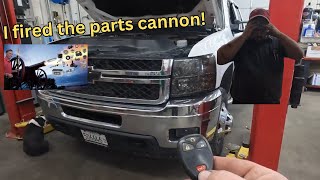
How to confirm: This is the likely cause if C0765 is present with security codes (like B3055, B3060), other TPMS codes (C0750, C0755, C0760), and/or starting issues. A professional scan tool is needed to check for communication with the RCDLR/BCM. The RCDLR is often located under the top dashboard panel 🎬 See how to diagnose RCDLR communication and key fob issues., behind the instrument cluster.
Typical fix: Replace the failed module (most often the RCDLR). The new module must be programmed to the vehicle using a dealer-level scan tool.
Est. part cost: $50-$250 - Radio Frequency Interference (RFI) ⚪ Low Probability TSB PIC5650K specifically calls out aftermarket electronics like cell phone chargers, USB power banks, and LED lighting as potential sources of RFI that can 'jam' the 315 MHz frequency used by the TPMS and keyless entry systems.
How to confirm: If the issue is intermittent, remove all aftermarket plug-in devices (chargers, dash cams, etc.) from the vehicle. Also, remove any non-factory keys or access cards from the keychain. If the symptoms disappear, one of the removed items was the cause. The problem will return when the device is plugged back in.
Typical fix: Remove or replace the offending aftermarket device with a higher-quality, better-shielded version.
Est. part cost: $0-$50 - Wiring or Connector Issue ⚪ Low Probability Wiring for the RCDLR/BCM is located inside the vehicle and generally well-protected, but damage can still occur, especially during unrelated repairs like stereo installation. The BCM is located behind the right side of the knee bolster.
How to confirm: Visually inspect the wiring and connectors at the BCM and RCDLR for damage, corrosion, or loose pins. Use a multimeter to check for power, ground, and data line integrity.
Typical fix: Repair the damaged section of the wiring harness or clean/replace the faulty connector.
Est. part cost: $5-$50
Diagnosis Steps
- Perform a full vehicle scan with a tool that can read all modules (BCM, RCDLR, EBCM, ECM, etc.). Note any symptom bytes associated with the C-codes.
- Analyze the codes. If C0765 is the only code present, proceed to step 3. If it is accompanied by security B-codes (like B3055) or other TPMS codes, skip to step 4.
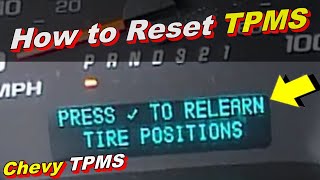
- For an isolated C0765 code, use a TPMS tool to attempt to activate and read the right rear sensor. If it fails to respond, its battery is likely dead. Replace the sensor, then perform the TPMS relearn procedure. 🎬 Watch: Step-by-step Chevy Express TPMS relearn procedure tutorial.
- If multiple codes are present (especially security or communication codes), suspect a wider system issue. Check for sources of Radio Frequency Interference (RFI) per TSB PIC5650K. Unplug all aftermarket chargers, LED lights, and other devices. Remove extra fobs/cards from the key ring. Retest. If the problem is gone, the RFI was the cause.
- If RFI is ruled out, check for other symptoms: Does the key fob work? Does the security light come on? Does the engine start and stall?
- Locate the Remote Control Door Lock Receiver (RCDLR), typically under the top dash pad above the gauges, and the Body Control Module (BCM), behind the right knee bolster. Inspect their connectors for corrosion or damage.
- Using a multimeter and wiring diagram, verify the modules have proper battery voltage, a solid ground connection (such as G304 behind the right kick panel), and intact data lines.
- If power, ground, and wiring are good but communication is absent and multiple related codes are stored, the RCDLR has likely failed. Replace the RCDLR and perform the necessary programming with a dealer-level scan tool (Tech2/GDS2).
Parts You'll Likely Need
- Tire Pressure Monitoring System (TPMS) Sensor
(OEM #13598771 (May be superseded by 13540600))— This is the most common fix when C0765 appears alone, as the sensor battery has a finite life of about 10 years.
Trusted brands: ACDelco, Schrader, Autel
OEM price range: $40-$80
Aftermarket price range: $25-$50 - Remote Control Door Lock Receiver (RCDLR)
(OEM #25974373 (Replaces 25782061, 25824324, 25920951))— This module reads the TPMS and key fob signals. Its failure can cause C0765 along with other TPMS codes and key fob issues. It is also called the 'Tire Pressure Monitoring System Receiver'. Replacement requires programming.
Trusted brands: ACDelco (GM Genuine)
OEM price range: $70-$150
Aftermarket price range: $50-$100
Related Codes That Often Appear With This One
- B3055 — Indicates a problem with the vehicle immobilizer key. Its presence with C0765 points to a wider BCM or security system issue as noted in TSB #PIC5650M.
- B3060 — An immobilizer system code related to the transponder. Like B3055, it suggests a central module fault when seen with C0765.
- C0750, C0755, C0760 — These are the corresponding TPMS fault codes for the other three wheels (Left Front, Right Front, Left Rear). If multiple TPMS codes appear at once, a failure of the common receiver (RCDLR) or RFI is more likely than all sensors failing simultaneously.
Technical Service Bulletins (TSBs) & Recalls
- PIC5650M (and revisions like G, K): Mentions that C0765 can be found with various security and communication codes (B3055, B3060, etc.) during a no-start or start-stall concern. Crucially, it points to Radio Frequency Interference (RFI) from aftermarket accessories as a primary diagnostic step before replacing parts.
Platform-Specific Known Issues
- Per TSB #PIC5650M and its successors, a no-start or start-stall condition with the security light on can be associated with code C0765. Before replacing modules, the bulletin strongly advises checking for Radio Frequency Interference (RFI) from aftermarket devices like phone chargers, LED lights, or even toll passes.
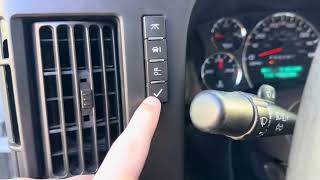
- On some work vans without power options or DIC buttons, owners report being unable to enter the TPMS relearn mode without a scan tool or a dedicated TPMS tool, which can complicate diagnostics after a battery change or sensor replacement.
Hidden / Shadow Codes Worth Checking
- C0765 00: Indicates a general fault or loss of communication with the Right Rear TPMS sensor. This is often set when the sensor does not transmit for an extended period (e.g., 18 minutes above 25 mph), which is a classic symptom of a dead battery. (see via GM-specific scan tool like a Tech 2 or a modern tool with GDS2 software.)
- C0765 08: Indicates the signal from the Right Rear TPMS sensor is invalid. This can be set due to RF interference or an internal sensor fault. (see via GM-specific scan tool like a Tech 2 or a modern tool with GDS2 software.)
Scan Tool Commands That Help
- GDS2/Tech2: Module Setup (for RCDLR) — This function is required after installing a new Remote Control Door Lock Receiver (RCDLR) to integrate it into the vehicle's systems before programming keys or TPMS sensors.
- GDS2/Tech2: Theft Deterrent System Learn — After replacing the RCDLR, the vehicle's immobilizer system must be re-synced. This involves a 10 or 30-minute procedure initiated by the scan tool.
- GDS2/Tech2: TPM Sensor Learn — After replacing the RCDLR or any TPMS sensor, this function is used to program the unique ID of each sensor to its specific position on the vehicle.
Wiring & Ground Locations
- G304 — Located behind the right kick panel, near the passenger's feet area.. This is a major body ground point for components in the right side of the instrument panel. A loose or corroded G304 can cause intermittent communication issues for the BCM and RCDLR, mimicking a module failure.
- RCDLR Connector — The RCDLR is located under the center of the upper instrument panel trim pad (the top part of the dashboard).. Checking for battery voltage, ground, and the serial data line integrity at this connector is a key diagnostic step. A poor connection here will cut off all TPMS and key fob signals.
Real Owner Repair Stories
- Reddit user @greaseyknight2 (Chevrolet Express Van (year not specified, but within a similar technological generation)) — A no-start condition that was difficult to trace.
❌ Tried (didn't work) Extensive diagnosis, including tearing the whole dash out.
✅ What actually fixed it The root cause was traced to the airbag module under the seat, which had failed due to chemicals from a carpet cleaning business pooling underneath it. Unplugging the failed module allowed the vehicle to start, indicating it was corrupting the vehicle's data bus, a similar failure pattern to a faulty RCDLR or BCM.
OEM Part Supersession History
25782061, 25824324, 25920951→25974373— Part consolidation and design updates by the manufacturer.
Heads up: The final part number, 25974373, is the correct service replacement for the listed predecessors. Using an older number from a salvage yard may work but is not recommended. This part requires programming after installation.
Model Year Variations Within This Range
- 2013-2014: For vehicles from 2013 onwards, the GDS2 (Global Diagnostic System 2) software is the primary dealer tool, whereas earlier models (2007-2013) can be fully serviced with the older Tech2/Tech2Win tool. While functions are similar, the software interface and connection process differ.
- 2007-2014 (Work Vans): Base model work vans without a Driver Information Center (DIC) or keyless entry may not have the buttons needed to initiate the TPMS relearn procedure manually. For these models, a TPMS tool (like the EL-50448) is not optional but required to make the vehicle learn new sensor positions after a replacement or tire rotation.
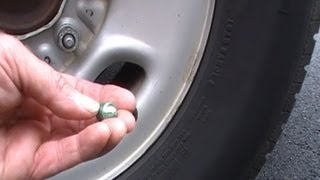
Helpful Videos
We Have This Part in Stock


The information in this article is provided for general reference and educational purposes only. Vehicle specifications, procedures, and part compatibility can vary by production date, trim level, and region. Always consult your vehicle's factory service manual and verify part numbers before purchasing or performing repairs. Safety-critical components such as airbags, seat belts, and braking systems should be installed by a qualified professional.
- Chevrolet EXPRESS 3500:
- 🧭 Diagnostic Flowchart
- 🎬 Helpful Videos
- 🛍️ Shop This Part
- What's Unique About the 2007-2014 Chevrolet EXPRESS 3500
- Symptoms You May Notice
- Most Likely Causes
- Diagnosis Steps
- Parts You'll Likely Need
- Related Codes That Often Appear With This One
- Technical Service Bulletins (TSBs) & Recalls
- Platform-Specific Known Issues
- Hidden / Shadow Codes Worth Checking
- Scan Tool Commands That Help
- Wiring & Ground Locations
- Real Owner Repair Stories
- OEM Part Supersession History
- Model Year Variations Within This Range
- 🎟️ Get 5% Off