

C0765 on 2007-2014 Chevrolet Impala: Right Rear TPMS Fault Causes and Fixes
Code C0765 on a Chevy Impala indicates a problem with the right rear tire pressure sensor. If your key fob also stopped working, the cause is likely a failed Remote Control Door Lock Receiver (RCDLR) module. If the key fob works, the tire sensor itself has probably failed due to a dead battery.
- C0765 means there's a fault with the right rear tire pressure sensor.
- First, check your key fob. If it's not working, the problem is almost certainly the Remote Control Door Lock Receiver (RCDLR) module, not the sensor itself.
- If the key fob works fine, the right rear TPMS sensor has likely failed, usually due to an expired internal battery.
- Replacing a TPMS sensor requires a tire shop to dismount the tire.
- Any new TPMS sensor or RCDLR module will need to be electronically programmed or 'relearned' to the vehicle.
What's Unique About the 2007-2014 Chevrolet IMPALA
On this generation of Impala and other GM vehicles, the TPMS sensors communicate with the Remote Control Door Lock Receiver (RCDLR), the same module that receives signals from your key fobs. Because of this shared module, a failing RCDLR can cause both TPMS codes (like C0765) and a complete loss of key fob functionality, a connection documented in GM Technical Service Bulletin 16-NA-396. This can be confusing, as drivers may experience a car that won't respond to the remote and has a tire pressure light on, leading them to suspect a complex electrical issue when it's often this single, known-to-fail module. The RCDLR is located under the defroster grill panel on the upper center of the instrument panel for the 9th generation Impala.
Diagnostic Flowchart
Tap your situation to follow the diagnostic path that matches what you're seeing on this vehicle.
Generation note: This range covers the ninth generation (2007-2013) and the tenth generation (2014). The 2014 model year also included the Impala Limited, a continuation of the 9th generation sold to fleets. The RCDLR failure is a well-documented issue on the 9th generation W-body platform. While the 10th generation (Epsilon II platform) also uses an RCDLR, part numbers differ, and the failure pattern is less commonly reported in the same way. TSB 16-NA-396 applies to many GM vehicles from this era, including the 2014-2018 Impala (VIN 1).
Symptoms You May Notice
- TPMS warning light is on
- "Service Tire Monitor System" message on the DIC
- DIC shows dashes (--) for the right rear tire pressure
- Key fobs do not work (for lock, unlock, remote start) - points to RCDLR failure
- "No Remote Detected" message when trying to start the car - points to RCDLR failure
- Significantly reduced range for key fob operation before total failure.
- Replacing only the TPMS sensor when the key fobs are also inoperative. The true cause in this case is almost always the RCDLR module.
- Replacing the Body Control Module (BCM) before confirming the RCDLR is functioning correctly.
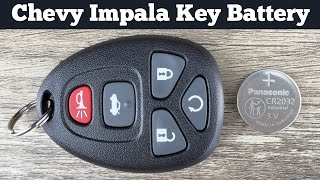
- Replacing key fob batteries repeatedly when the issue is poor signal reception at the RCDLR module. 🎬 Watch: How to properly replace your Impala key fob battery.
Most Likely Causes
- Failed Right Rear TPMS Sensor 🔴 High Probability → Shop Tire Pressure Monitoring System (TPMS) Sensor The internal, non-replaceable batteries in TPMS sensors have a finite lifespan of 7-10 years, and vehicles in this year range are reaching or have passed that age.
How to confirm: If key fobs work normally, this is the most likely cause. Use a TPMS activation tool to try and read the sensor. If the tool gets no response, the sensor is dead.
Typical fix: Replace the right rear TPMS sensor. The new sensor must be 'relearned' to the vehicle using the vehicle's relearn procedure or a TPMS tool.
Est. part cost: $25-$70 - Failed Remote Control Door Lock Receiver (RCDLR) 🟡 Medium Probability → Shop Keyless Entry Receiver This module is a known failure point on many GM vehicles of this era, as documented in TSB PI1085 for 2012-2013 models and TSB 16-NA-396 for later models. Forum discussions among Impala and other GM owners confirm this is a common repair.
How to confirm: This is the prime suspect if your key fobs stopped working at the same time the TPMS light came on. Often, codes for all four sensors (C0750, C0755, C0760, C0765) will be stored.
Typical fix: Replace the RCDLR module. The new module must be programmed to the vehicle using a GM-specific scan tool (Tech2/GDS2) and the key fobs must be relearned.
Est. part cost: $40-$100
Rare But Worth Checking
- Wiring Harness Damage: Damage to the wiring or connector leading to the RCDLR can mimic a failed module. This is uncommon but worth inspecting if a new RCDLR doesn't solve the issue. A user on a Camaro forum noted a loose connector under the dash caused similar intermittent issues.
- Body Control Module (BCM) Fault: → Shop Body Control Module The BCM processes the information from the RCDLR. While rare, an internal BCM fault can cause a variety of issues, including TPMS problems. This should only be considered after ruling out the sensor and RCDLR.
- Aftermarket Window Tint: Some metallic window tints can interfere with the radio frequency signals from the TPMS sensors and key fobs to the RCDLR, causing intermittent communication issues.
- Disconnected RCDLR Antenna Coax Cable: As detailed in TSB 16-NA-061, the coax cable for the RCDLR antenna can become disconnected at the RCDLR module, at the antenna amplifier module, or where the amplifier meets the rear glass antenna. A disconnect at the RCDLR itself will cause the most severe symptoms, including loss of all TPMS signals and extremely poor key fob range.
Diagnosis Steps
- Verify the symptoms. Check if the key fobs are working. If they are not, or their range is severely diminished, the RCDLR is the primary suspect.
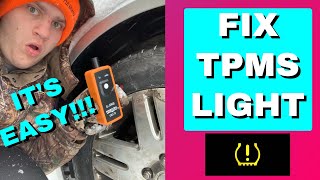
- If key fobs work, focus on the right rear wheel. Use a TPMS activation tool to attempt to 'wake up' the sensor. If it does not respond, the sensor battery is dead or the sensor has failed.
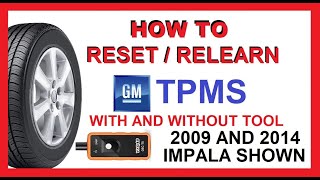
- If the sensor responds to the tool, attempt a TPMS relearn procedure. 🎬 See this quick walkthrough on resetting your GM tire pressure system. For many GM vehicles, this involves putting the car in learn mode via the DIC or by holding the lock/unlock buttons on the fob, then letting air out of each tire in sequence until the horn chirps. If the relearn fails only for the right rear position, the sensor is faulty.
- If you suspect an RCDLR failure (due to key fob issues), scan for codes in the BCM. The presence of codes for all four tires (C0750, C0755, C0760, C0765) is a strong confirmation.
- Before replacing the RCDLR, inspect its connector and wiring for any visible damage or corrosion. The module is typically located under the center of the dashboard's defroster grill. Also inspect the RCDLR antenna coax cable connections as per TSB 16-NA-061.
- If the RCDLR is replaced, it must be programmed to the vehicle using a compatible scan tool with GM software (GDS2/Tech2Win). After programming, the key fobs and TPMS sensors must be relearned to the new module.
Parts You'll Likely Need
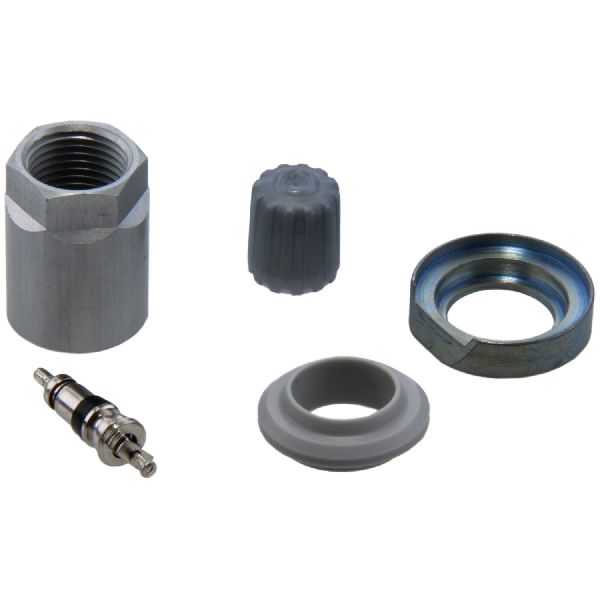
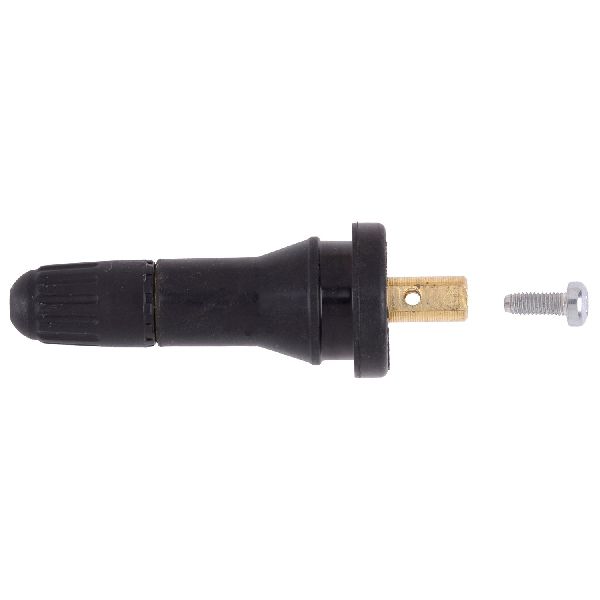
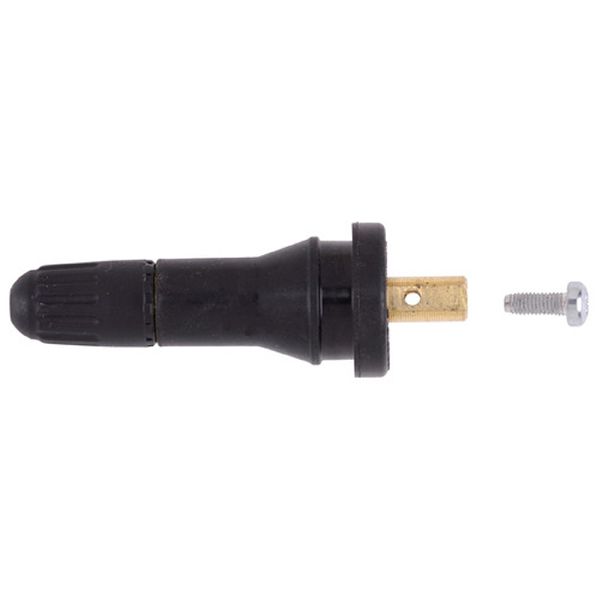
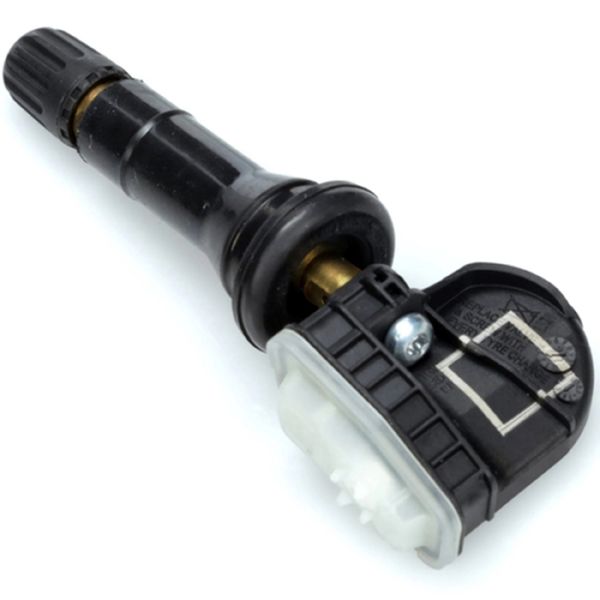
- Tire Pressure Monitoring System (TPMS) Sensor
(OEM #13586335)— This is the most common fix when only code C0765 is present. The sensor's internal battery has a limited lifespan of 7-10 years.
Trusted brands: ACDelco, Schrader, Dorman
OEM price range: $40-$70
Aftermarket price range: $25-$50 - Remote Control Door Lock Receiver (RCDLR)
(OEM #25974998 (superseded by newer numbers like 13595511 depending on specific year/options))— This is the likely fix if TPMS codes are present and key fobs are not working. It's a known failure point on this platform.
Trusted brands: ACDelco
OEM price range: $60-$100
Aftermarket price range: $40-$80
Related Codes That Often Appear With This One
- C0750 — Fault code for the Left Front TPMS sensor. If seen with C0765 and other sensor codes, it strongly points to a central issue like a failed RCDLR module.
- C0755 — Fault code for the Right Front TPMS sensor. Its presence alongside C0765 suggests a system-wide failure, likely the RCDLR.
- C0760 — Fault code for the Left Rear TPMS sensor. Seeing multiple TPMS codes together is a key indicator of an RCDLR failure rather than multiple simultaneous sensor failures.
- B3055 / B3060 — These are vehicle security/immobilizer codes. As noted in TSB PIC5650M, they can appear alongside TPMS codes when the RCDLR fails, as it is involved in the key recognition and security handshake.
Technical Service Bulletins (TSBs) & Recalls
- PIC5650M: Mentions that C0765 can be found with other security and communication codes during a no-start or stall condition with the security light on.
- 16-NA-396: Addresses intermittent loss of key fob function and TPMS warnings (including C0765), identifying the cause as an internal failure of the Remote Control Door Lock Receiver and advising its replacement.
- PI1085: Specifically calls out poor remote transmitter range and TPMS codes (including C0765) on 2012-2013 Impalas, recommending replacement of the RCDLR module.
- 16-NA-061: Details how a disconnected RCDLR antenna coax cable can cause TPMS and RKE issues, providing an alternative diagnosis to a failed module.
Platform-Specific Known Issues
- A known issue, documented in TSB 16-NA-396, involves internal failure of the RCDLR module, causing simultaneous failure of the TPMS and keyless entry systems.
- TSB PIC5650M notes that C0765 can be present along with security codes (like B3055) during a no-start or stall condition, which is also linked to the RCDLR's role in vehicle security.
- The RCDLR module on the 9th generation Impala is located under the instrument panel defroster grill, which requires some interior trim removal to access.
Hidden / Shadow Codes Worth Checking
- C0765 00: Indicates a generic fault with the Right Rear Low Tire Pressure Sensor, often set when the sensor doesn't transmit for 18 minutes or has a low battery. (see via GM Tech 2 or GDS2 Scan Tool)
- C0765 08: Signal Invalid. This suggests the RCDLR is receiving a signal, but the data is corrupt or not plausible. (see via GM Tech 2 or GDS2 Scan Tool)
- C0765 29: Too Few Pulses. This symptom code strongly points towards a faulty RCDLR, as it indicates the receiver is not detecting the expected number of transmissions from the sensor. This is a key indicator mentioned in related TSBs for other GM vehicles. (see via GM Tech 2 or GDS2 Scan Tool)
Scan Tool Commands That Help
- GDS2: Module Diagnostics -> Remote Control Door Lock Receiver -> Configuration/Reset Functions — This menu is used after replacing the RCDLR. It contains the functions to set up the new module and perform the 'Add/Replace Key Fobs' procedure to relearn the transmitters to the new module.
- Tech 2 / GDS2: RCDLR Setup — This is a specific setup procedure required after a new RCDLR is installed to ensure it communicates correctly with the vehicle's other modules, particularly the BCM and Theft Deterrent Module.
- Tech 2 / GDS2: Theft Deterrent System Learn — After replacing and setting up the RCDLR, a theft relearn procedure (either 10-minute or 30-minute) is necessary to synchronize the immobilizer system with the new module, allowing the vehicle to start.
- Tech 2 / GDS2: Tire Pressure Monitor Learn — This is the final step after RCDLR replacement. It forces the newly installed and programmed RCDLR to learn the unique ID of each of the four TPMS sensors on the vehicle.
Wiring & Ground Locations
- G302 — On the floor, to the right of the front passenger's seat, under the carpet/trim.. This is a major interior ground point for various components and modules on the passenger side of the vehicle. A poor connection at G302 could potentially cause intermittent issues with modules in this area, although it is not the direct ground for the RCDLR itself.
- RCDLR Connector — On the RCDLR module, located under the center of the instrument panel defroster grill.. This is the primary connection point for the RCDLR. Technicians must check for power (Pin 8, PNK wire), Ground (Pin 5, BLK/WHT wire), and Low Speed GMLAN Serial Data (Pin 6, TAN wire) at this connector to verify the module has what it needs to operate before condemning the module itself.
Real Owner Repair Stories
- impalaforums.com user (2012 Chevrolet Impala) — TPMS light on with 'Service Tire Monitor System' message, and both key fobs completely stopped working simultaneously.
❌ Tried (didn't work) Replacing batteries in both key fobs.
✅ What actually fixed it The owner took the vehicle to a dealer who diagnosed a failed RCDLR. The RCDLR module was replaced and programmed, which resolved both the TPMS warning and restored full function to the key fobs.
OEM Part Supersession History
25974998→20863945, then 13595511, then 13540045— Standard part evolution for design improvements, reliability updates, or manufacturing changes.
Heads up: It is critical to verify the correct part number for your specific vehicle's VIN using a GM parts catalog before ordering, as there can be subtle differences in programming or antenna connections between revisions.
Model Year Variations Within This Range
- 2012-2013: GM issued Preliminary Information bulletin PI1085 specifically for vehicles built between April 1, 2012, and May 1, 2013, that experienced poor RKE range and TPMS codes, including C0765. The bulletin directly recommended replacing the RCDLR module with part number 20863945, indicating a known batch of faulty modules during this production window.
Helpful Videos
We Have This Part in Stock


The information in this article is provided for general reference and educational purposes only. Vehicle specifications, procedures, and part compatibility can vary by production date, trim level, and region. Always consult your vehicle's factory service manual and verify part numbers before purchasing or performing repairs. Safety-critical components such as airbags, seat belts, and braking systems should be installed by a qualified professional.
- Chevrolet IMPALA:
- 🧭 Diagnostic Flowchart
- 🎬 Helpful Videos
- 🛍️ Shop This Part
- What's Unique About the 2007-2014 Chevrolet IMPALA
- Symptoms You May Notice
- Most Likely Causes
- Rare But Worth Checking
- Diagnosis Steps
- Parts You'll Likely Need
- Related Codes That Often Appear With This One
- Technical Service Bulletins (TSBs) & Recalls
- Platform-Specific Known Issues
- Hidden / Shadow Codes Worth Checking
- Scan Tool Commands That Help
- Wiring & Ground Locations
- Real Owner Repair Stories
- OEM Part Supersession History
- Model Year Variations Within This Range
- 🎟️ Get 5% Off