

C0765 on 2007-2014 Chevrolet Tahoe: Right Rear TPMS Fault Causes and Fixes
Code C0765 on a 2007-2014 Tahoe means the Right Rear Tire Pressure Monitoring System (TPMS) sensor is not communicating. The most likely cause is a dead sensor battery, requiring a new sensor (~$25-$60). If your key fobs also stopped working, the issue is likely the Remote Control Door Lock Receiver (RCDLR) module, a known issue on this platform. A temporary fix is often just pulling the 'DSM' fuse to reset it.
- C0765 means the right rear tire pressure sensor isn't sending a signal.
- If your key fobs also stopped working, the problem is almost certainly the Remote Control Door Lock Receiver (RCDLR) module, not the sensor. Try pulling the 'DSM' fuse first.
- If only the TPMS light is on, the sensor itself has likely failed due to a dead battery. Given the vehicle's age, it's wise to consider replacing all four sensors at once.
- After replacing a sensor, you must perform a TPMS relearn procedure, which can be done with a TPMS tool or by letting air out of the tires in a specific sequence.
What's Unique About the 2007-2014 Chevrolet TAHOE
On this generation of Tahoe (GMT900 platform), the TPMS sensors and the key fobs both communicate with the same module: the Remote Control Door Lock Receiver (RCDLR). Therefore, a failure of this single module can cause both the TPMS light to come on (with codes like C0765) and the key fobs to stop working simultaneously. Owners have frequently reported an issue where this module goes into a 'sleep' mode, and a temporary fix can be as simple as pulling its fuse to reset it. This issue is common across the entire GMT900 lineup, including the GMC Yukon, Cadillac Escalade, and Chevrolet Silverado.
Diagnostic Flowchart
Tap your situation to follow the diagnostic path that matches what you're seeing on this vehicle.
Symptoms You May Notice
- "Service Tire Monitor System" message on the Driver Information Center (DIC).
- The TPMS warning light on the instrument cluster flashes for about a minute and then stays on solid.
- Tire pressure reading for the right rear tire shows dashes (--) on the DIC.
- Key fobs may not work (if the RCDLR module is the cause).
- Inability to program new key fobs or TPMS sensors.
- Replacing the Body Control Module (BCM) when the fault is with the much cheaper TPMS sensor or RCDLR.
- Replacing only one TPMS sensor when multiple are failing. If one sensor's battery has died, the others are likely near the end of their life as well. It is often cost-effective to replace all four at once.
- Replacing the RCDLR module without checking its fuse ('DSM') first. Many owners have fixed the issue for free simply by pulling and re-inserting the fuse. 🎬 Watch: How to fix TPMS and remote issues with a fuse reset.
Most Likely Causes
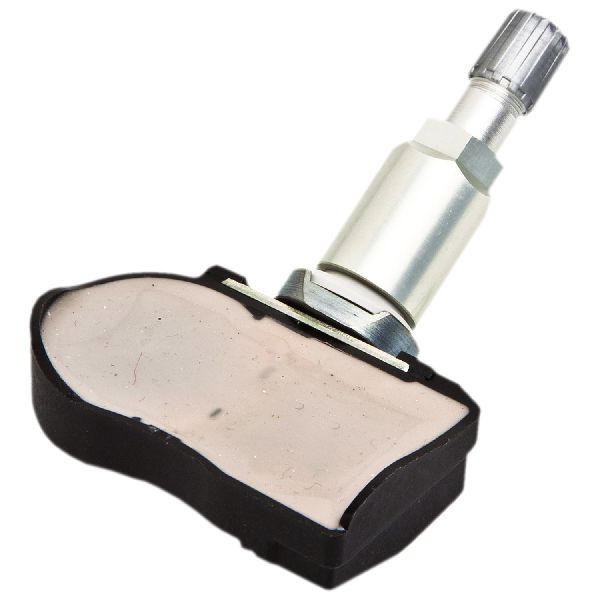
- Dead or Failing Right Rear TPMS Sensor 🔴 High Probability → Shop Tire Pressure Monitoring System (TPMS) Sensor The internal, non-replaceable batteries in TPMS sensors have a finite lifespan, typically 7-10 years. Vehicles in the 2007-2014 range are at or beyond the expected life of the original sensors.
How to confirm: Use a TPMS activation tool (like an Autel TS508 or similar) to try and read the sensor. If the tool cannot get a response, the sensor is dead. A scan tool may also show a specific sub-code like '03' for low voltage or '39' for internal malfunction. This is the most likely cause if your key fobs are still working perfectly.
Typical fix: Replace the right rear TPMS sensor. The tire must be unmounted from the wheel to access the sensor. After replacement, a TPMS relearn procedure must be performed using the vehicle's DIC and/or a TPMS tool.
Est. part cost: $25-$75 - Failed Remote Control Door Lock Receiver (RCDLR) 🟡 Medium Probability → Shop Keyless Entry Receiver This module is known to fail or enter a non-responsive 'sleep' state on this platform, affecting both TPMS and keyless entry functions. The issue was common enough that a software update was released to address the 'sleep' issue, though many vehicles never received it.
How to confirm: The most telling symptom is the simultaneous failure of the TPMS system (often with multiple sensor codes) and all key fobs. As a first step, try pulling the 10A fuse labeled 'DSM' in the interior fuse panel (driver's side dash) for 30-60 seconds to reset the module. If this temporarily restores function, the RCDLR is confirmed as the problem. A professional scan tool may also show 'No Communication' with the RCDLR.
Typical fix: If a fuse pull reset doesn't provide a lasting fix, the RCDLR module must be replaced. The new module is located in the driver's side D-pillar, behind the trim panel near the rear hatch. The new module requires programming to the vehicle with a GM-specific scan tool (like a Tech 2 or MDI with GDS2 software).
Est. part cost: $40-$100 - Poor RCDLR Antenna Connection ⚪ Low Probability Connections can become loose or corroded over time. A TSB for later models (16-NA-061) highlights this as a cause for identical symptoms, suggesting its relevance here. The antenna is a coaxial cable running to the rear glass.
How to confirm: Inspect the coaxial antenna cable connection at the RCDLR module (in the driver's D-pillar) and at the antenna amplifier, which is typically located near the rear glass. TSB 16-NA-061 notes that a disconnect at the RCDLR will kill all functions, while a disconnect further away at the amplifier may only cause intermittent issues with the sensors farthest from the module.
Typical fix: Securely reconnect the coaxial antenna cable at the RCDLR module or antenna amplifier.
Est. part cost: $0
Rare But Worth Checking
- Broken Power Wire to RCDLR:
- Radio Frequency Interference (RFI):
Diagnosis Steps
- Check for other symptoms. Do your key fobs work? If not, suspect the RCDLR module first. Try pulling the 10A 'DSM' fuse in the left instrument panel fuse box for 60 seconds and reinstalling it to reset the module.
- If key fobs work, the issue is likely isolated to the TPMS sensor. Use a TPMS activation tool to test the right rear sensor. If it fails to respond, the sensor is bad.
- If you do not have a TPMS tool, initiate the vehicle's TPMS relearn mode. For most Tahoes in this range, turn the key to 'ON' (engine off) and hold the lock and unlock buttons on the key fob for five seconds until the horn chirps.
- Attempt to trigger the right rear sensor by letting air out of the tire for 5-10 seconds or using a TPMS tool. If the horn does not chirp to confirm the sensor is learned (while it does for other tires), the sensor is faulty.
- If multiple TPMS sensors are not responding and the key fobs are dead, inspect the RCDLR module and its coaxial antenna connection in the driver-side D-pillar for loose connections.
- If a new RCDLR is installed, it must be programmed to the vehicle using a compatible scan tool with pass-thru capabilities (like GM MDI/GDS2). The programming procedure is outlined in the service manual and involves learning the new module to the vehicle's VIN and then learning the existing TPMS sensors and key fobs to the new module.
Parts You'll Likely Need
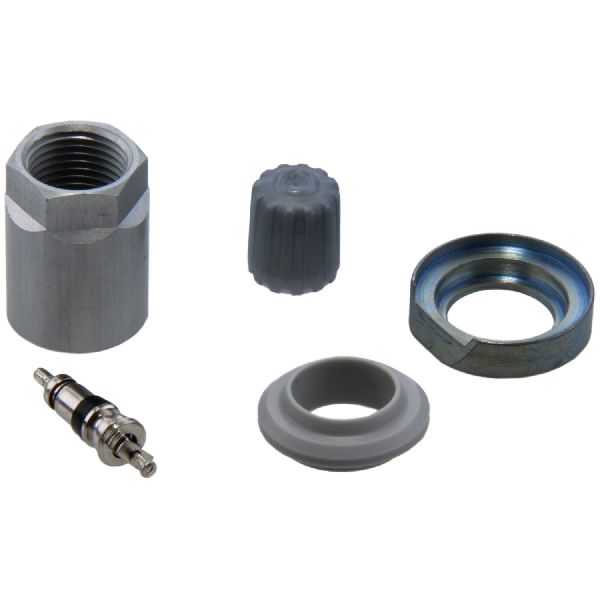
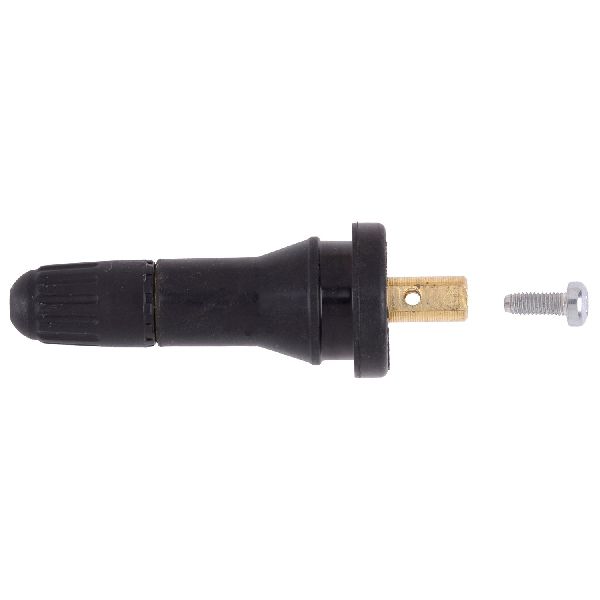
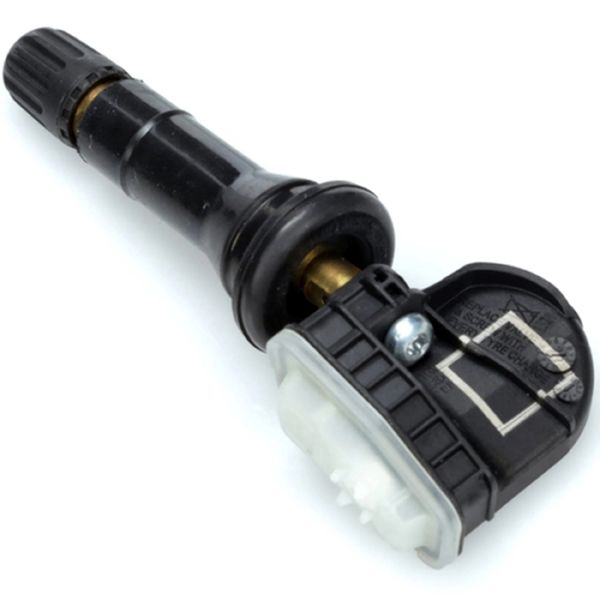
- Tire Pressure Monitoring System (TPMS) Sensor
(OEM #13598771)— This is the most common failure point due to battery life. The OEM part is made by Schrader. This part number has many supersessions and cross-references, including 13586335, 22853741, and 20923680.
Trusted brands: ACDelco (Original GM Equipment), Schrader (OEM manufacturer), Continental, Autel
OEM price range: $50-$75
Aftermarket price range: $25-$50 - Remote Control Door Lock Receiver (RCDLR)
(OEM #25974393, 22731608 (check by VIN))— This module fails or 'sleeps' on this platform, causing loss of communication with both TPMS sensors and key fobs. It's the likely cause if keyless entry also fails. Part numbers vary by year and options, always verify with VIN. A used part from a similar vehicle may work but still requires programming.
Trusted brands: ACDelco (Original GM Equipment)
OEM price range: $60-$100
Aftermarket price range: $40-$70
Related Codes That Often Appear With This One
- C0750 — Relates to the Left Front TPMS sensor. Often appears with other TPMS codes if there is a systemic issue like a failing RCDLR or antenna problem.
- C0755 — Relates to the Right Front TPMS sensor. Seeing multiple TPMS codes together points towards the RCDLR or its antenna connection rather than an individual sensor.
- C0760 — Relates to the Left Rear TPMS sensor. If all four sensor codes (C0750, C0755, C0760, C0765) are present, the RCDLR is the primary suspect.
Technical Service Bulletins (TSBs) & Recalls
- PIC5650M: Mentions C0765 in a list of codes related to no-start or stall conditions with the security light on, which points to the RCDLR's dual function in security and TPMS. It also warns against RFI from aftermarket devices.
- 16-NA-061: Although for 2015+ models, it provides a highly relevant diagnosis for TPMS codes and key fob issues, blaming a poor or disconnected RCDLR antenna connection. It details how a disconnect at the RCDLR kills all signals, while a disconnect at the antenna amplifier causes intermittent issues.
- 16-NA-396: While for different GM models, this TSB is relevant as it explicitly states that TPMS codes C0750-C0765 accompanied by symptom code :29 ('Too Few Pulses') are caused by an internal failure of the RCDLR, mandating its replacement.
Platform-Specific Known Issues
- RCDLR 'Sleep Mode' and DSM Fuse Pull: A widely reported issue on Tahoe/Yukon forums involves the RCDLR module entering a 'sleep' state, causing both TPMS and key fob functions to stop working. A common temporary fix is to pull the fuse labeled 'DSM' (a 10A fuse) from the interior fuse box on the driver's side of the instrument panel for 30-60 seconds. This resets the module and often restores full functionality. If the problem reoccurs, a dealer software update or module replacement is the permanent solution.
Mechanic-Grade Diagnostic Values
- RCDLR Power and Ground Connector Voltage — expected: With the key on, backprobing the connector should show Battery Voltage (approx. 12V) on the Red/White wire and a good ground (near 0V) on the Black/White wire.. Failure: No voltage on the Red/White wire indicates a break in the power feed from the DSM fuse. Voltage present but no communication points to a faulty module.
Hidden / Shadow Codes Worth Checking
- C0765 with Symptom Byte :29: The symptom code ':29' translates to 'Too Few Pulses'. According to GM TSB 16-NA-396, when this is seen with TPMS codes, it points to an internal failure of the Remote Control Door Lock Receiver (RCDLR) not receiving the expected signal transmissions. (see via Requires a dealer-level scan tool like a GM Tech 2 or a modern equivalent running GDS2 software.)
- C0765 with Symptom Byte :08: The symptom code ':08' indicates 'Signal Invalid'. This means the RCDLR is receiving a signal, but the data is corrupt, nonsensical, or not in the expected format. (see via Visible on a professional scan tool like a Tech 2 or GDS2.)
Scan Tool Commands That Help
- GM Tech 2 / GDS2: Module Replacement: 'Replace and Reprogram ECU' — This is the initial function required when installing a new RCDLR. It flashes the module with the correct firmware for the vehicle's VIN and options.
- GM Tech 2 / GDS2: Module Setup: 'RCDLR Setup' — After programming the new module, this function configures it to the vehicle.
- GM Tech 2 / GDS2: Security: 'Theft Deterrent System Learn' — This procedure is necessary after RCDLR replacement to sync the new module with the vehicle's immobilizer system. It can be a 10 or 30-minute procedure.
- GM Tech 2 / GDS2: Special Functions: 'TPM Sensor Learn' — This is the final step after RCDLR replacement to program the unique IDs of the four existing tire pressure sensors into the new module.
Wiring & Ground Locations
- RCDLR Main Connector — At the RCDLR module, located in the driver's side D-pillar, behind the rear trim panel.. This connector provides power and ground to the module. A diagnostic test for voltage at the Red/White (power) and Black/White (ground) wires is critical before condemning the module. Lack of power here is a known failure point.
- RCDLR Coaxial Antenna Connector — A separate coaxial cable plugs into the RCDLR module.. A loose or disconnected antenna cable at the RCDLR will cause a total loss of signal from all TPMS sensors and key fobs, setting codes like C0765 and mimicking a dead module.
- DSM Fuse — A 10A fuse located in the instrument panel fuse box on the driver's side of the dashboard.. This fuse supplies power to the RCDLR. Pulling and re-inserting it is a common diagnostic step to reset a 'sleeping' module. A blown fuse or broken wire from this fuse will cause the RCDLR to be completely inoperative.
Real Owner Repair Stories
- Tahoe Yukon Forum user 'R_Sharpe' (2007 Chevrolet Tahoe) — Keyless entry and TPMS system both stopped working simultaneously.
❌ Tried (didn't work) Initially none, the user went straight to online research.
✅ What actually fixed it The user found a TSB advising to pull the 'DSM' fuse in the left instrument panel fuse box. After pulling the fuse and reinstalling it, all functions were restored. The cause was the RCDLR module going into a 'sleep' state. - YouTube channel 'Raymond's Auto Repair' (2011 Chevrolet Silverado (shares GMT900 platform and RCDLR)) — Key fobs did not work. Scan tool showed 'Loss of communications with the remote function actuator' (RCDLR).
❌ Tried (didn't work) A new RCDLR module was ordered based on the 'no communication' code, but not installed.
✅ What actually fixed it Before installing the new part, a voltage test at the module connector found no power on the red/white wire. The 'DSM' fuse was good and had power. The technician found a break in the power wire between the fuse panel and the RCDLR module. Repairing the wire restored communication and fixed the issue without needing the new module.
"I Checked Everything" — The Actual Cause
- While not a smoke test, a relevant pattern is when a 'No Communication' code with the RCDLR leads to ordering a new module, but the actual fault is a broken power wire leading to it. A technician confirmed this on a 2011 Silverado by testing for 12V at the RCDLR's red/white wire and finding none, despite the fuse being good. The fix was repairing the wire, not replacing the module.
OEM Part Supersession History
13586335, 22853741, 20923680→13598771— Standard part consolidation and minor revisions by GM over the years.
Heads up: These 315MHz sensors are largely interchangeable for the 2007-2014 Tahoe, but it is always best practice to replace all four with the same brand/part number to ensure consistent performance and battery life.25974393 (Pass 2 PN)→20803735 (example of another common PN)— GM frequently updates part numbers. For example, PN 20803735 replaces over ten previous numbers including 15857831 and 25896497.
Heads up: Crucially, different RCDLRs exist for vehicles with and without Passive Entry Passive Start (PEPS). Installing the wrong type will cause intermittent or partial failure. Always verify the correct part number against the vehicle's VIN and RPO codes.
Model Year Variations Within This Range
- 2007-2008: Early models were most prone to the RCDLR 'sleep' issue that could be temporarily fixed by pulling the 'DSM' fuse. A dealer-installed software update was the permanent fix, but many vehicles may not have received it.
- 2009+: Beginning in 2009, the 4-speed automatic transmission was replaced by a 6-speed automatic. While not directly related to code C0765, it is a significant mechanical change within the generation.
- 2010+: Minor interior updates were made, including a revised instrument cluster with more information in the DIC and updated front door panels. A USB port for the radio also became available.
Helpful Videos
We Have This Part in Stock


The information in this article is provided for general reference and educational purposes only. Vehicle specifications, procedures, and part compatibility can vary by production date, trim level, and region. Always consult your vehicle's factory service manual and verify part numbers before purchasing or performing repairs. Safety-critical components such as airbags, seat belts, and braking systems should be installed by a qualified professional.
- Chevrolet TAHOE:
- 🧭 Diagnostic Flowchart
- 🎬 Helpful Videos
- 🛍️ Shop This Part
- What's Unique About the 2007-2014 Chevrolet TAHOE
- Symptoms You May Notice
- Most Likely Causes
- Rare But Worth Checking
- Diagnosis Steps
- Parts You'll Likely Need
- Related Codes That Often Appear With This One
- Technical Service Bulletins (TSBs) & Recalls
- Platform-Specific Known Issues
- Mechanic-Grade Diagnostic Values
- Hidden / Shadow Codes Worth Checking
- Scan Tool Commands That Help
- Wiring & Ground Locations
- Real Owner Repair Stories
- "I Checked Everything" — The Actual Cause
- OEM Part Supersession History
- Model Year Variations Within This Range
- 🎟️ Get 5% Off