

C0765 on 2011-2018 Chevrolet Volt: TPMS Code, Key Fob Fixes, and RCDLR Issues
On a 2011-2018 Chevy Volt, code C0765, for the right rear tire pressure sensor, is most often caused by a failed Remote Control Door Lock Receiver (RCDLR), not the sensor itself. This usually happens along with key fob failure. The fix is to replace and program the RCDLR, costing around $200-$450 at a shop.
- Code C0765 on a Chevy Volt is a strong indicator of a failing Remote Control Door Lock Receiver (RCDLR), especially if your key fob has also stopped working.
- Do not immediately replace the tire pressure sensor. First, check your key fob's function. If it's also dead, the RCDLR is the problem.
- Replacing the RCDLR is not a simple swap; the new module must be professionally programmed to your vehicle.
- If your key fob works fine and only C0765 is present, then the TPMS sensor in the right rear tire is the likely culprit, probably due to a dead battery.
What's Unique About the 2011-2018 Chevrolet VOLT
What's unique to the Volt and other GM vehicles of this era is that a simple tire pressure sensor code (C0765) is often not about the tire sensor at all. The true culprit is commonly the Remote Control Door Lock Receiver (RCDLR), which processes signals for both the TPMS and the keyless entry system. This leads to a confusing set of symptoms where the key fobs stop working at the same time the TPMS light comes on. This specific failure pattern is so common that GM issued Technical Service Bulletin #16-NA-396 to guide technicians to replace the RCDLR instead of mistakenly chasing individual TPMS sensors. A professional scan tool may also show symptom code :29 ('Too Few Pulses') alongside the C07xx codes, which is a definitive sign of internal RCDLR failure according to the TSB.
Diagnostic Flowchart
Tap your situation to follow the diagnostic path that matches what you're seeing on this vehicle.
Generation note: This issue affects both the first generation (2011-2015) and second generation (2016-2019) Chevrolet Volt. TSB #16-NA-396 specifically calls out the 2016-2017 Volt, while TSB #PIC5650M and PI1085 apply to earlier models, indicating the RCDLR-related failure is a known issue across the entire 2011-2018 range.
Symptoms You May Notice
- Tire Pressure Monitor (TPM) indicator light is illuminated or flashing.
- "Service Tire Monitor System" message on the Driver Information Center (DIC).
- Key fob functions are inoperative (lock, unlock, remote start, panic).
- "No Remote Detected" message on the DIC.
- Tire pressure display shows dashes (--) for the right rear or multiple tires.
- Intermittent no-crank or no-start condition with the security light on.
- Passive entry system fails to respond.
- Replacing the TPMS sensor when the key fob is also not working. The simultaneous failure points directly to the RCDLR module, and a new sensor will not fix the problem.
Most Likely Causes
- Failed Remote Control Door Lock Receiver (RCDLR) 🔴 High Probability → Shop Keyless Entry Receiver This is a well-documented failure on this GM platform, as cited in TSB #16-NA-396. The module internally fails, causing it to lose communication with both TPMS sensors and key fobs. This issue is widespread across many GM models from the same era.
How to confirm: The most telling sign is the simultaneous failure of TPMS and all key fob functions. If codes for all four tire sensors (C0750, C0755, C0760, C0765) are present, especially with symptom code :29 ("Too Few Pulses") on a professional scan tool, the RCDLR is almost certainly the cause.
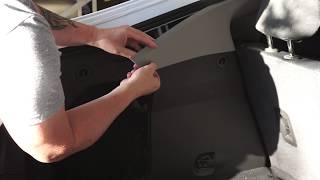
Typical fix: Replace the RCDLR module and have it programmed to the vehicle. The module is located behind the rear passenger-side interior C-pillar trim panel. 🎬 Watch: This walkthrough shows how to access and replace the RCDLR.
Est. part cost: $40-$100 - Failed or Dead TPMS Sensor 🟡 Medium Probability → Shop Tire Pressure Monitoring System (TPMS) Sensor TPMS sensor batteries have a finite lifespan, typically 7-10 years. For a 2017 Volt, owners began reporting sensor failures around 2022, which is a typical 5-year lifespan. For earlier models in this range, battery failure is very common.
How to confirm: If the key fob is working normally and only the single C0765 code is present, the sensor itself is the likely culprit. A tire shop can use a TPMS activation tool to check if the sensor is transmitting a signal. If it doesn't respond, it has failed.
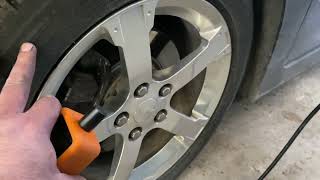
Typical fix: Replace the right rear TPMS sensor and perform the TPMS relearn procedure. 🎬 See how to perform a TPMS relearn on your Volt. Owners report paying around $60 per sensor installed at tire chains like Costco, a fraction of dealer quotes.
Est. part cost: $25-$70
Rare But Worth Checking
- Weak 12V Auxiliary Battery: A failing 12V battery in a Volt can cause a wide range of seemingly unrelated electronic issues, including communication faults with various modules like the RCDLR or BCM. If you have multiple odd electrical symptoms, it's worth testing the 12V battery's health before replacing modules.
- Loose RCDLR Antenna Connection: GM TSB 16-NA-061 points out that a poor or disconnected coaxial antenna cable for the RCDLR can cause identical symptoms, including TPMS codes and poor key fob range. Before replacing the RCDLR module, it is worth inspecting the cable connections at the module itself, the antenna amplifier, and where the antenna meets the rear glass.
Diagnosis Steps
- Check Key Fob Function: Attempt to lock, unlock, and remote start the vehicle. If the fob is dead or has extremely poor range, this strongly points to the RCDLR system.
- Scan for All Codes: Use an OBD-II scanner capable of reading Chassis (C) and Body (B) codes. Check for other TPMS codes (C0750, C0755, C0760). Multiple TPMS codes make an RCDLR failure more likely. A professional scan tool can check for the critical symptom code :29.
- Check 12V Battery Health: Ensure the 12V auxiliary battery (located in the trunk) is fully charged and healthy. A weak battery can cause numerous electrical faults in a Volt.
- Test the TPMS Sensor: If the key fob works perfectly, take the vehicle to a tire shop. They can use a TPMS tool to test if the right rear sensor is transmitting. If it's not, the sensor battery is likely dead.
- Inspect RCDLR Antenna Connections: Per TSB 16-NA-061, before replacing the module, inspect the coaxial antenna connections at the RCDLR (behind rear passenger trim), the antenna amplifier, and the rear glass. A loose connection can mimic a failed module.
- Confirm RCDLR Failure: If the fob does not work and multiple TPMS codes are present (especially with symptom :29), the RCDLR has most likely failed per TSB #16-NA-396 and needs replacement and programming.
Parts You'll Likely Need
- Remote Control Door Lock Receiver (RCDLR)
(OEM #13597910)— This is the most common cause of C0765 when key fob functions also fail, as documented in GM TSB 16-NA-396. This part number supersedes older versions like 13510984 and 13583332.
Trusted brands: ACDelco, GM Genuine
OEM price range: $40-$70
Aftermarket price range: $30-$60 - Tire Pressure Monitoring System (TPMS) Sensor
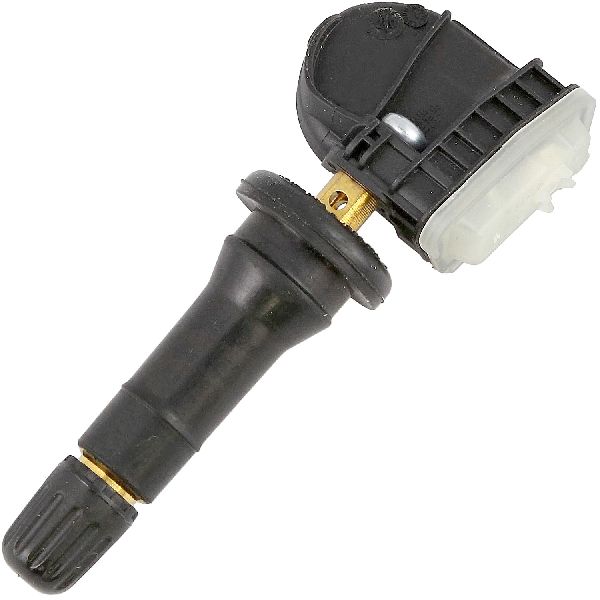
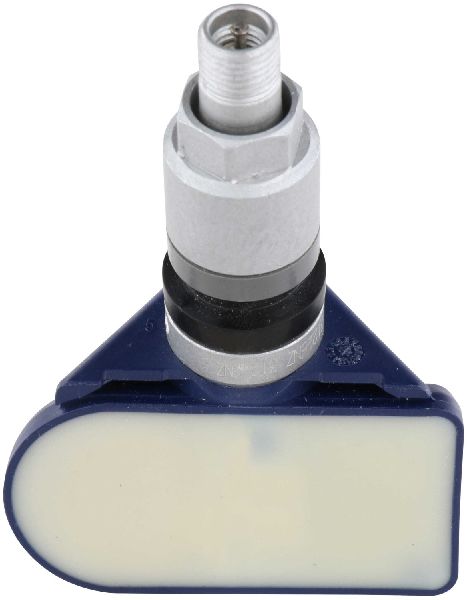
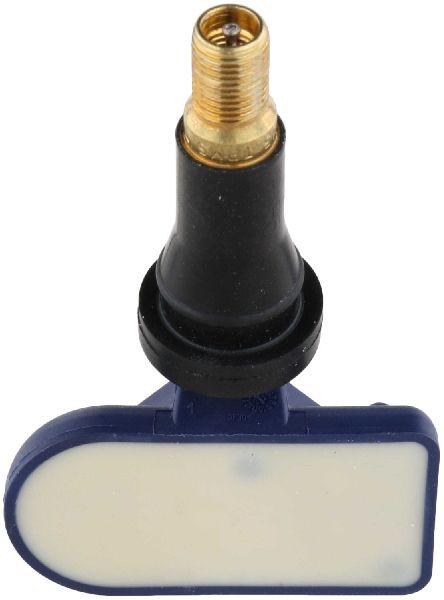
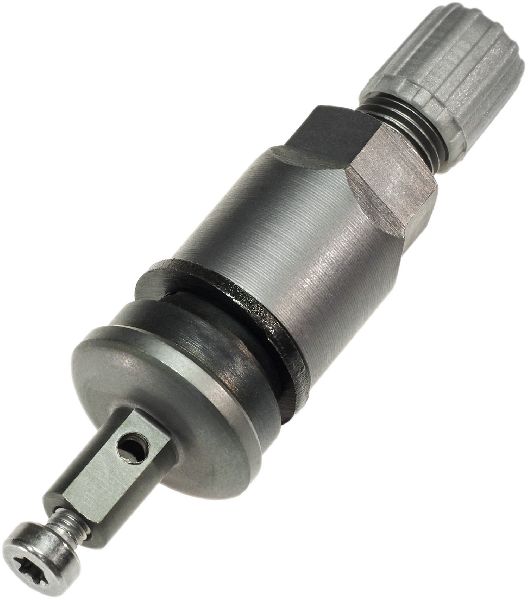
(OEM #13540601)— If only C0765 is set and the key fob works, the sensor itself has likely failed, usually due to an expired battery after 5-10 years.
Trusted brands: Schrader, ACDelco, Dorman, Bosch
OEM price range: $40-$70
Aftermarket price range: $25-$50
Related Codes That Often Appear With This One
- C0750 — Relates to the Left Front TPMS sensor. Often appears with other TPMS codes when the RCDLR fails.
- C0755 — Relates to the Right Front TPMS sensor. Often appears with other TPMS codes when the RCDLR fails.
- C0760 — Relates to the Left Rear TPMS sensor. Often appears with other TPMS codes when the RCDLR fails.
- B3055 — A key-related code that can be set alongside TPMS codes when there are issues with the RCDLR and vehicle security system, as noted in TSB PIC5650M.
Technical Service Bulletins (TSBs) & Recalls
- 16-NA-396: Links intermittent key fob operation, 'No Remote Detected' messages, and TPMS codes C0750, C0755, C0760, and C0765 (with symptom :29) to an internal failure of the Remote Control Door Lock Receiver (RCDLR).
- PIC5650M: Connects a group of codes including C0765 to no-start or start/stall conditions with the security light on, pointing to a broader security system issue involving the RCDLR.
- 16-NA-061: Describes how a poor or disconnected RCDLR antenna connection can cause TPMS codes and key fob issues, providing a diagnostic path to check before replacing the module.
Platform-Specific Known Issues
- The Chevrolet Volt is part of a large family of GM vehicles where the RCDLR is a known failure point, causing simultaneous TPMS and keyless entry problems. This is documented in TSB 16-NA-396. See the 'platform_mates' section for a detailed list of affected vehicles.
Hidden / Shadow Codes Worth Checking
- :29: Too Few Pulses. This symptom byte, when seen with C07xx codes, is a strong indicator of an internal RCDLR module failure as noted in TSB 16-NA-396. (see via GM GDS2 or other professional scan tool capable of reading manufacturer-specific symptom codes.)
- :08: Bus Signal/Message Failure. This indicates a communication problem on the bus, which could be related to the RCDLR or its wiring. (see via GM GDS2 or other professional scan tool capable of reading manufacturer-specific symptom codes.)
Scan Tool Commands That Help
- GM GDS2: Module Diagnostics -> Remote Control Door Lock Receiver -> Configuration/Reset Functions — This path is used after physically replacing the RCDLR. It allows the technician to perform the necessary setup and programming for the new module to communicate with the vehicle.
- GM GDS2: Add/Replace Key Fobs — After installing a new RCDLR, this function is used to program the existing key fobs to the new module. The GDS2 will place the module in learn mode, and the fobs are then programmed one by one.
- GM Service Programming System (SPS): K9-Remote Control Door Lock Receiver Programming — This is the top-level programming event required when replacing the RCDLR. It loads the correct software and calibration files into the new module based on the vehicle's VIN. This requires an online subscription.
- TPMS Activation Tool (e.g., EL-46079): Tire Pressure Indicator Sensor Learn — After replacing the RCDLR and programming it, or after replacing an individual TPMS sensor, this procedure is necessary to teach the RCDLR the unique ID of each sensor and its position on the vehicle.
Wiring & Ground Locations
- RCDLR Module — Located behind the passenger side rear C-pillar trim panel.. This is the central module that fails, causing code C0765 and simultaneous key fob issues. Access is required for replacement and to check its direct connections.
- RCDLR Antenna System — Consists of four parts: the RCDLR module, a coax cable, an antenna amplifier module, and the antenna itself integrated into the right rear glass.. TSB 16-NA-061 states that a loose connection at any of the three connection points (RCDLR to coax, coax to amplifier, amplifier to glass) can cause the exact same symptoms as a failed RCDLR module. Inspecting these connections is a critical diagnostic step before replacing the module.
- G303 / G304 — G303 is on the left (driver's) side B-pillar behind the trim panel. G304 is on the right (passenger's) side B-pillar behind the trim panel.. These are the primary body grounds in the rear of the passenger compartment. A poor connection at G304 could potentially affect the RCDLR, which is located nearby. While not a common cause, checking ground integrity is good practice for any electronic module issue.
Real Owner Repair Stories
- gm-volt.com forum user (2012 Chevrolet Volt) — GPS, Bluetooth, and clock stopped working correctly. The clock would reset to 12:00 on every startup.
❌ Tried (didn't work) Replacing the 12V battery temporarily fixed some issues but the clock and Bluetooth problem remained.
✅ What actually fixed it The owner diagnosed a failed Vehicle Communication Interface Module (VCIM), which integrates these functions. A replacement VCIM sourced from a 2012 Chevy Camaro (same part) was installed, which resolved the Bluetooth, GPS, and clock issues. This highlights how module failures can cause seemingly unrelated electronic symptoms. - VXdiagshop.com blog post (2012 Chevrolet Volt (manufactured late 2011)) — Needed to replace the Denso navigation head unit.
✅ What actually fixed it The owner successfully replaced the radio head unit with a used one from eBay. They used a VXDIAG VCX Nano GM tool with a $40 GM SPS (Service Programming System) subscription to reprogram the replacement radio to the car's VIN. This confirms that DIY module replacement is possible with the right tools and a short-term subscription to GM's online service.
OEM Part Supersession History
13583332→13510984, then 13597910— Part revision and consolidation by GM.
Heads up: The latest part number, 13597910, is the correct service replacement for the entire 2011-2018 range and is specified in TSBs. Using older stock is not recommended.
Model Year Variations Within This Range
- 2011-2015 (Gen 1) vs 2016-2018 (Gen 2): While the RCDLR failure is common to both generations, the interior trim and specific module locations may have slight differences. Gen 1 has capacitive touch controls on the center stack, while Gen 2 has physical buttons. The diagnostic procedure remains the same: check for simultaneous TPMS and key fob failure, then inspect the RCDLR and its antenna system.
- 2011-2013: Early Gen 1 Volts (2011-2013) featured a motorized charge port door, a feature deleted in later models. This is unrelated to the C0765 code but is a notable variation in the vehicle's electronics and body hardware.
Helpful Videos
We Have This Part in Stock

The information in this article is provided for general reference and educational purposes only. Vehicle specifications, procedures, and part compatibility can vary by production date, trim level, and region. Always consult your vehicle's factory service manual and verify part numbers before purchasing or performing repairs. Safety-critical components such as airbags, seat belts, and braking systems should be installed by a qualified professional.
- Chevrolet VOLT:
- 🧭 Diagnostic Flowchart
- 🎬 Helpful Videos
- 🛍️ Shop This Part
- What's Unique About the 2011-2018 Chevrolet VOLT
- Symptoms You May Notice
- Most Likely Causes
- Rare But Worth Checking
- Diagnosis Steps
- Parts You'll Likely Need
- Related Codes That Often Appear With This One
- Technical Service Bulletins (TSBs) & Recalls
- Platform-Specific Known Issues
- Hidden / Shadow Codes Worth Checking
- Scan Tool Commands That Help
- Wiring & Ground Locations
- Real Owner Repair Stories
- OEM Part Supersession History
- Model Year Variations Within This Range
- 🎟️ Get 5% Off