

C0765 on 2007-2014 GMC Acadia: Right Rear TPMS Fault Causes and Fixes
On a 2007-2014 GMC Acadia, code C0765 points to a fault with the right rear tire pressure sensor. The two most common causes are a dead battery in the sensor itself or a failed Remote Control Door Lock Receiver (RCDLR) module, which also disables key fob functions. A single sensor costs ~$50, while an RCDLR replacement can be $200-$400.
- C0765 on a GMC Acadia means there's a fault with the right rear tire pressure sensor.
- Before buying parts, check your key fobs. If they are also dead, the problem is almost certainly the Remote Control Door Lock Receiver (RCDLR) module, not the sensor itself.
- If only the TPMS light is on and key fobs work, the most likely cause is a dead battery in the 5-10 year old sensor in the right rear wheel.
- Replacing a sensor requires a tire shop to break the bead, and a TPMS relearn tool is needed afterward.
- Replacing the RCDLR requires programming by a dealer or a well-equipped independent shop.
What's Unique About the 2007-2014 Gmc ACADIA
On the GMC Acadia and its platform mates (Buick Enclave, Chevrolet Traverse, Saturn Outlook), the TPMS sensors do not communicate directly with the main computer. They send radio frequency signals to the Remote Control Door Lock Receiver (RCDLR), the same module that receives signals from your key fob. This is why a failing RCDLR module is a very common cause for C0765 and other TPMS codes, often presenting with the simultaneous failure of all key fobs. The RCDLR is typically located behind the trim panel in the driver's side rear quarter panel area.
Diagnostic Flowchart
Tap your situation to follow the diagnostic path that matches what you're seeing on this vehicle.
Symptoms You May Notice
- "Service Tire Monitor System" message on the Driver Information Center (DIC).
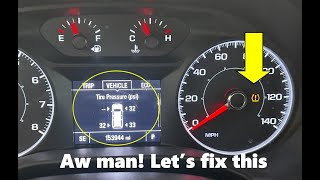
- TPMS warning light is on (may flash for a minute at startup, then stay solid).
- Key fobs do not work (no lock, unlock, or remote start) if the RCDLR is the cause.
- "No Remote Detected" message on the DIC.
- In rare cases related to immobilizer function, a no-start or start-stall condition with the security light on.
- Inability to complete the TPMS relearn procedure, especially for the front tires if the RCDLR is failing, as the rear tires are closer to the module.
- Significantly reduced key fob range, requiring you to be very close to the vehicle for it to work.
- Replacing the TPMS sensor when the RCDLR has failed. If your key fobs are also dead, the sensor is likely not the root cause. Wasting money on a sensor and tire service won't fix the problem.
- Replacing the BCM. The BCM is rarely the cause; diagnosis should always start with the sensors and the RCDLR module.
- Replacing key fob batteries. While a dead fob battery is a common issue, it will not cause a C0765 code to appear. If both happen simultaneously, the RCDLR is the link.
Most Likely Causes
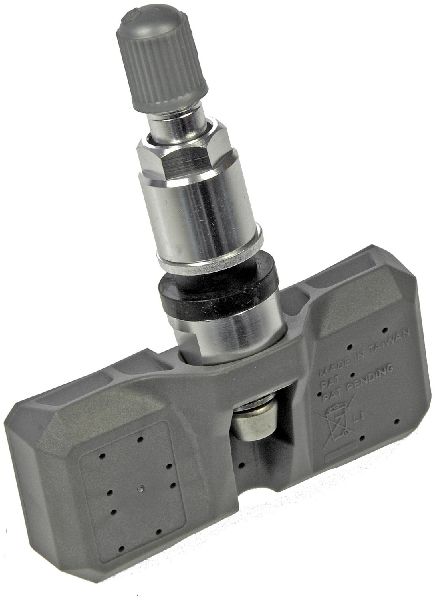
- Failed Right Rear TPMS Sensor 🔴 High Probability → Shop Tire Pressure Monitoring System (TPMS) Sensor The non-rechargeable battery inside the sensor has a finite lifespan of 5-10 years. Vehicles in this year range are at or beyond the end of that expected life.
How to confirm: If key fobs work normally but C0765 is set, the sensor is the most likely cause. A TPMS diagnostic tool will show the sensor is not transmitting or has a low battery status.
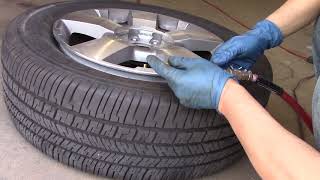
Typical fix: Replace the right rear TPMS sensor. The tire must be unseated from the wheel to access it. 🎬 See this walkthrough on replacing a 2011 GMC Acadia TPMS sensor A TPMS relearn procedure must be performed after replacement. 🎬 Watch: How to perform the GMC Acadia TPMS relearn process
Est. part cost: $30-$80 - Failed Remote Control Door Lock Receiver (RCDLR) 🔴 High Probability → Shop Keyless Entry Receiver This is a documented failure point on this GM platform, as noted in TSB 16-NA-396. The module handles both TPMS and key fob signals, and internal failure is common.
How to confirm: The most obvious symptom is C0765 (and often other TPMS codes like C0750, C0755, C0760) appearing at the same time all key fobs stop working. A professional scan tool may show code C0765 with a ":29 – Too Few Pulses" sub-code, which specifically points to this failure.
Typical fix: Replace the RCDLR module. The new module must be programmed to the vehicle's BCM and have the key fobs relearned by a dealer or shop with the correct software. The module is located behind the driver's side rear quarter panel trim.
Est. part cost: $70-$150 - TPMS Relearn Not Performed After Tire Rotation 🟡 Medium Probability Many service shops rotate tires but neglect to perform the TPMS relearn procedure, causing the BCM to expect the sensor's signal from the wrong corner of the vehicle.
How to confirm: The "Service Tire Monitor System" message appeared immediately after a tire rotation service. The system may report low pressure on one tire, but a manual gauge shows a different tire is low.
Typical fix: Perform the TPMS relearn procedure using the vehicle's DIC menu and a TPMS activation tool, or have a tire shop do it. 🎬 Watch: A quick guide to the TPMS relearn on GM vehicles
Est. part cost: $0-$25
Rare But Worth Checking
- Wiring or Connector Issue: Damage or corrosion to the wiring or connectors for the RCDLR module can cause communication loss, mimicking a failed module. This is particularly noted in TSB 16-NA-061, which points to disconnected antenna coax cables. In some cases, broken wires in the driver's door jamb have been found to cut power to the module. This should be checked before replacing the RCDLR.
- Body Control Module (BCM) Fault: → Shop Body Control Module In very rare instances, the BCM itself can be the source of the communication error, but all other more common causes should be ruled out first. A BCM replacement is significantly more expensive than other fixes.
Diagnosis Steps
- Check for other symptoms: Do your key fobs work? Is their range severely limited? If not, suspect the RCDLR module.
- Verify tire pressure: Use a manual gauge to ensure all tires are inflated to the pressure listed on the driver's door jamb sticker. This rules out an actual low-pressure situation.
- Attempt TPMS Relearn: Use the vehicle's DIC to enter the relearn mode. If the process fails at the right rear wheel, it points to a bad sensor. If it fails for all wheels or just the front wheels, it could be the RCDLR (which is in the rear) or a faulty TPMS tool.
- Scan with a TPMS Tool: A dedicated TPMS tool can attempt to read the sensor directly. It will confirm if the sensor is transmitting, its battery status, and pressure reading. No signal or a low battery status confirms a bad sensor.
- Scan for TSB-related codes: A professional scan tool can check for sub-codes like ':29' on C0765, which strongly indicates a failed RCDLR as per TSB 16-NA-396.
- Inspect RCDLR Wiring: If the RCDLR is suspected, inspect its connector and wiring for any visible damage or corrosion before replacing the module. Check for 12V power at the harness. Also, check the antenna coax cable connections per TSB 16-NA-061.
- Replace the likely component: Based on the symptoms and scan results, replace either the TPMS sensor or the RCDLR module.
- Program new components: A new TPMS sensor requires a relearn procedure. A new RCDLR requires programming to the vehicle by a professional.
Parts You'll Likely Need
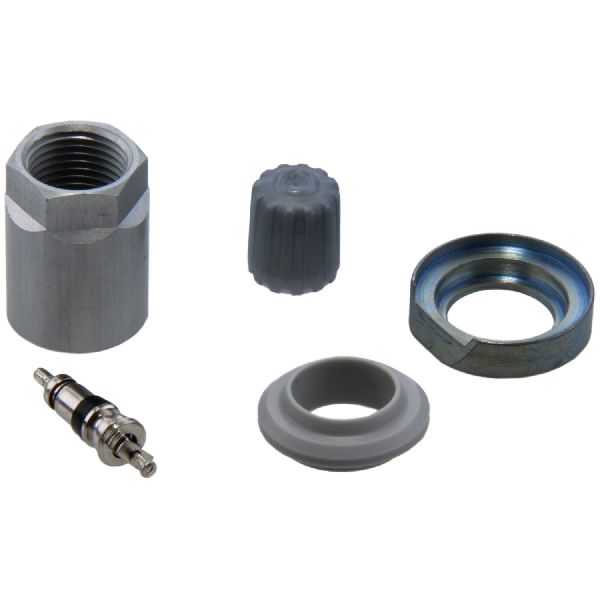
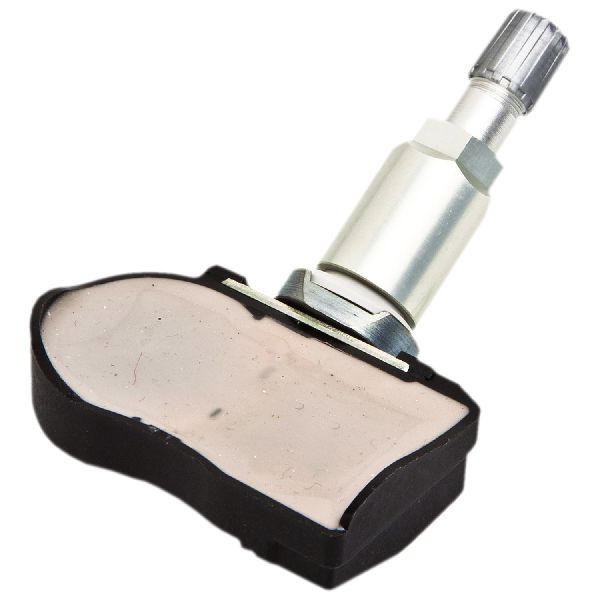
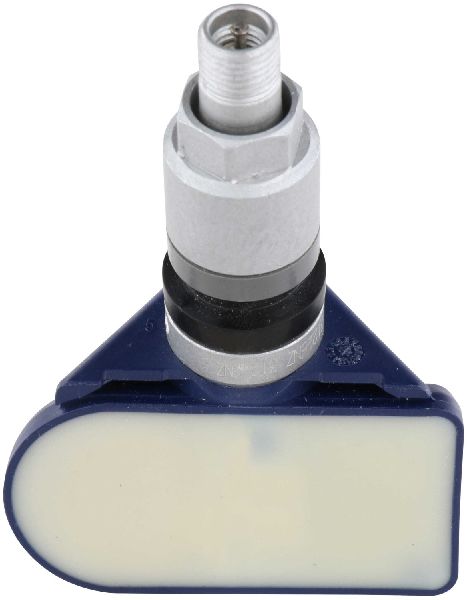
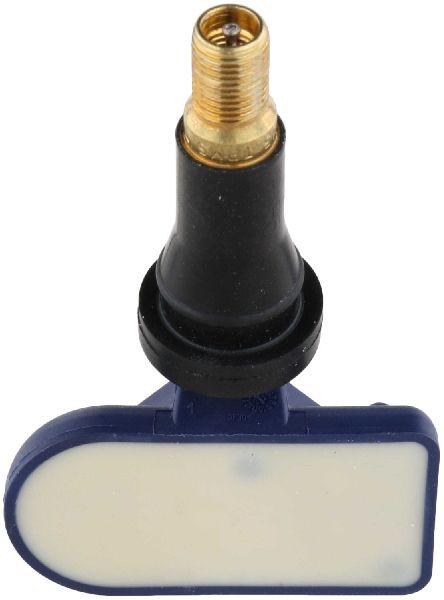
- Tire Pressure Monitoring System (TPMS) Sensor
(OEM #13586335 (superseded by 13598773, 22853740, among others))— The internal battery dies after 5-10 years, making this a common replacement part for a single-wheel TPMS fault.
Trusted brands: ACDelco, Schrader, Dorman, Continental
OEM price range: $50-$90
Aftermarket price range: $30-$60 - Remote Control Door Lock Receiver (RCDLR)
(OEM #22888716 (superseded by 13595511 as per TSB 16-NA-396))— This module is a known failure point that causes TPMS codes and key fob issues simultaneously.
Trusted brands: ACDelco, GM Genuine
OEM price range: $70-$150
Aftermarket price range: N/A
Related Codes That Often Appear With This One
- C0750 — Left Front TPMS sensor fault. Often set together if the RCDLR module fails or if all sensors are original and failing around the same time.
- C0755 — Right Front TPMS sensor fault. Often set together if the RCDLR module fails.
- C0760 — Left Rear TPMS sensor fault. Often set together if the RCDLR module fails.,
- B3055 — Problem with the key transponder. Set when the RCDLR fails, as it's part of the immobilizer system.
- B3935 — Transponder circuit malfunction. Also related to RCDLR and immobilizer function.
Technical Service Bulletins (TSBs) & Recalls
- PIC5650M: Mentions C0765 in a list of codes related to no-start/stall conditions and the security light.
- 16-NA-396: Directly identifies the RCDLR as the cause for C0765 (and other TPMS codes) when key fobs also fail, especially with a ':29' symptom byte.
- 16-NA-061: Details how a disconnected RCDLR antenna coax cable can mimic a failed module, causing TPMS and key fob issues.
- PI1085: Points to a faulty RCDLR in 2012-2013 models built in a specific timeframe that exhibit poor key fob range and TPMS codes.
Platform-Specific Known Issues
- As documented in GM TSB #16-NA-396, intermittent loss of key fob functions accompanied by TPMS codes C0750, C0755, C0760, or C0765 is often caused by an internal failure of the Remote Control Door Lock Receiver (RCDLR). The recommended fix is to replace the module with the updated part number.
- TSB #PIC5650M notes that C0765 can be found along with other codes during a no-start or start-stall condition with the security light on, linking the TPMS/RCDLR system to the vehicle's immobilizer.
- TSB #16-NA-061 describes how a poor or disconnected RCDLR antenna connection can cause the same symptoms (Service Tire Monitor, no fob function) and should be checked before replacing the module itself.
Hidden / Shadow Codes Worth Checking
- C0765 :29: Too Few Pulses. This symptom code specifically indicates the RCDLR is not receiving the expected number of signal transmissions from the sensor. TSB #16-NA-396 states this points to an internal RCDLR failure. (see via GM GDS2 or Tech2 professional scan tool.)
- C0765 :39: Internal Malfunction. This symptom code points directly to an internal failure of the TPMS sensor itself. (see via GM GDS2 or Tech2 professional scan tool.)
- C0765 :03: Low Voltage. This symptom code indicates the TPMS sensor's battery is low or it has a voltage-related fault. (see via GM GDS2 or Tech2 professional scan tool.)
Scan Tool Commands That Help
- GDS2/Tech2: Module Diagnostics > Remote Control Door Lock Receiver > Configuration/Reset Functions — This path is used to perform the mandatory programming and setup of a new RCDLR module after it has been physically installed.
- GDS2/Tech2: BCM Data Display > Tire Pressure Sensor Hit Rate — To verify the success rate of sensor signal reception by the RCDLR. A low hit rate can indicate RF interference or a failing antenna system, even if the sensor and RCDLR are good.
- GDS2/Tech2: BCM Data Display > Tire Pressure Sensor Rolling Count — To check if the sensor is transmitting properly. A low or non-increasing count suggests a problem with the sensor itself.
Wiring & Ground Locations
- RCDLR Antenna System — Consists of a coax cable from the RCDLR (driver rear quarter panel) to an Antenna Amplifier Module, which then connects to the antenna grid in the right rear quarter glass.. A disconnect at the RCDLR, the coax-to-amplifier connection, or the amplifier-to-glass connection can cause loss of signal from one or more TPMS sensors, mimicking a failed RCDLR or sensor. This is a critical check before replacing expensive modules.
Real Owner Repair Stories
- Commonly reported on AcadiaForum.net and TraverseForum.com (2009-2012 GMC Acadia / Chevrolet Traverse / Buick Enclave) — The "Service Tire Monitor System" light came on, with dashes for tire pressures on the DIC. Simultaneously, all key fobs stopped working completely (no lock, unlock, or remote start).
❌ Tried (didn't work) Replacing the batteries in both key fobs., Attempting the TPMS relearn procedure, which would not initiate or complete., In some cases, replacing the right rear TPMS sensor (C0765) which did not solve the key fob issue or the TPMS light.
✅ What actually fixed it Replacing the Remote Control Door Lock Receiver (RCDLR) module located in the driver's side rear quarter panel. The new module had to be programmed by a dealership or a well-equipped independent shop using GM's GDS2 software, which resolved both the TPMS and key fob problems instantly.
"I Checked Everything" — The Actual Cause
- A technician may diagnose a faulty RCDLR because both TPMS and key fobs are inoperative. After replacing and programming a new RCDLR, the problem persists. The actual cause, as outlined in TSB 16-NA-061, was a disconnected antenna coax cable at the RCDLR or at the antenna amplifier module near the rear glass. The module was working perfectly, but it couldn't receive a signal. The symptoms vary based on where the disconnect occurs; a disconnect far from the module might only cause the front sensors to drop out, while a disconnect at the module itself will cause all sensors and fobs to fail.
OEM Part Supersession History
22888716→13595511— Internal improvements to address the common failure causing TPMS and key fob issues, as noted in TSB 16-NA-396.N/A (for specific builds)→20863945— Designated replacement part in TSB PI1085 for 2012-2013 models built between April 2012 and May 2013 to fix poor RKE range and TPMS faults.
Heads up: This part is specifically called out for a narrow build window, suggesting it may address a specific manufacturing defect from that period.
Model Year Variations Within This Range
- 2012-2013 (built Apr 2012 - May 2013): These specific model years are called out in TSB PI1085 for having a high incidence of poor remote transmitter range and TPMS faults (including C0765) that are resolved by replacing the RCDLR. This suggests a potentially faulty batch of modules was used during this production window.
Helpful Videos
We Have This Part in Stock


The information in this article is provided for general reference and educational purposes only. Vehicle specifications, procedures, and part compatibility can vary by production date, trim level, and region. Always consult your vehicle's factory service manual and verify part numbers before purchasing or performing repairs. Safety-critical components such as airbags, seat belts, and braking systems should be installed by a qualified professional.
- Gmc ACADIA:
- 🧭 Diagnostic Flowchart
- 🎬 Helpful Videos
- 🛍️ Shop This Part
- What's Unique About the 2007-2014 Gmc ACADIA
- Symptoms You May Notice
- Most Likely Causes
- Rare But Worth Checking
- Diagnosis Steps
- Parts You'll Likely Need
- Related Codes That Often Appear With This One
- Technical Service Bulletins (TSBs) & Recalls
- Platform-Specific Known Issues
- Hidden / Shadow Codes Worth Checking
- Scan Tool Commands That Help
- Wiring & Ground Locations
- Real Owner Repair Stories
- "I Checked Everything" — The Actual Cause
- OEM Part Supersession History
- Model Year Variations Within This Range
- 🎟️ Get 5% Off