

C0775 on 2016-2023 Buick Envision: Low Tire Pressure & System Faults Explained
Code C0775 on a Buick Envision most often indicates a problem with the Tire Pressure Monitoring System (TPMS), such as a faulty sensor or an incomplete relearn procedure. The most common fix is to replace a failed TPMS sensor, which has a battery life of 5-10 years. In rare cases, this code can appear alongside serious issues like engine stalling due to radio frequency interference from aftermarket accessories, as noted in GM Technical Service Bulletin PIC5650M.
- C0775 on your Envision means there is a fault in the Tire Pressure Monitoring System, not just a low tire.
- The most likely cause is a dead battery in one of the TPMS sensors, especially on 2016-2018 models.
- Before any expensive repairs, unplug all aftermarket phone chargers and accessories, as they are a known cause of this code and more serious stalling issues on GM vehicles.
- The code can also be set by an incomplete TPMS relearn procedure after a tire rotation.
- Replacing a sensor is not a simple DIY job as it requires a tire machine to dismount the tire from the wheel.
What's Unique About the 2016-2023 Buick ENVISION
What's unusual for the Envision and other GM platforms is the documented link between this simple TPMS code and critical vehicle functions. Technical Service Bulletin PIC5650M describes a scenario where C0775 appears with security system codes and a no-start or stall condition. This is typically caused by radio frequency interference (RFI) from aftermarket electronic devices (like phone chargers, dash cams, or cheap LED lights) that jam the 315 MHz or 433 MHz signals used by both the TPMS and the keyless entry/immobilizer systems. This turns a seemingly straightforward tire-related code into a complex diagnostic challenge involving the Remote Control Door Lock Receiver (RCDLR), which processes signals for both systems.
Diagnostic Flowchart
Tap your situation to follow the diagnostic path that matches what you're seeing on this vehicle.
Generation note: The 2016-2023 range covers two generations of the Buick Envision: the first (2016-2020) and the second (2021-2023). Both generations use a direct TPMS system with sensors in each wheel, and the meaning of code C0775 is the same for both. The potential for radio frequency interference mentioned in TSBs applies across these model years and many other GM vehicles.
Symptoms You May Notice
- Service Tire Monitor System message on the dashboard.
- TPMS warning light is on or flashing.
- Tire pressure readings on the driver information center show dashes (---) instead of numbers.
- In rare cases, engine may stall or fail to start.
- In rare cases, the security/theft warning light may be illuminated.
- Keyless entry system may work poorly or not at all.
- "No Fob Detected" message may appear on the driver information center.
- Replacing the Body Control Module (BCM) without first checking for Radio Frequency Interference. The TSB strongly advises checking for RFI from aftermarket accessories before replacing any modules.
- Replacing TPMS sensors when the issue is an incomplete relearn procedure. Always attempt the relearn procedure first after a tire service before buying new parts.
Most Likely Causes
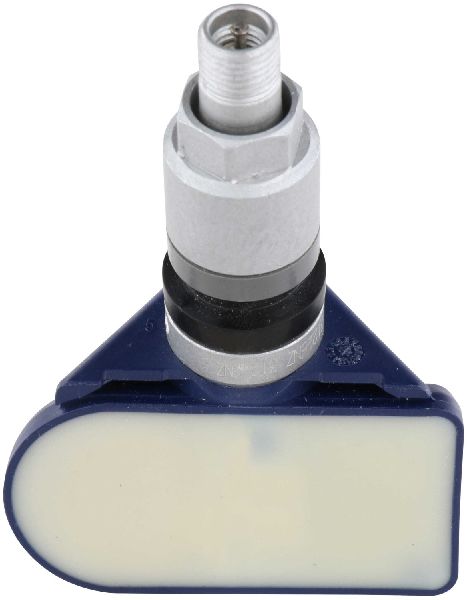
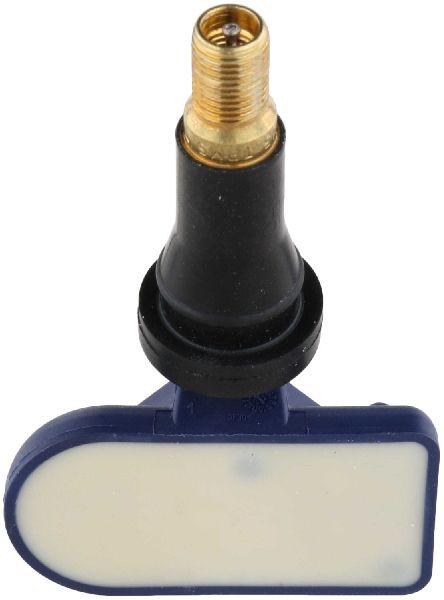
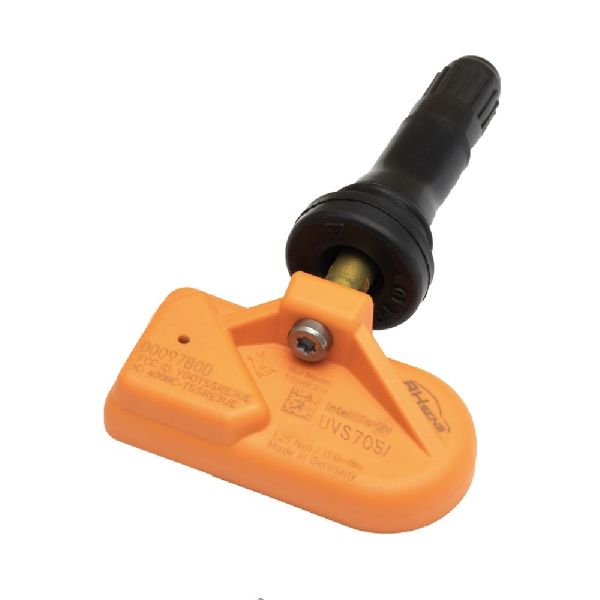
- Failed or Failing TPMS Sensor 🔴 High Probability → Shop Tire Pressure Monitoring System (TPMS) Sensor The batteries inside TPMS sensors have a finite lifespan, typically 5-10 years. The earliest vehicles in this range (2016-2017) are now at an age where original sensor batteries are expected to fail.
How to confirm: A professional tire shop or a DIYer with a TPMS diagnostic tool can scan each sensor to check its battery level, pressure reading, and signal output. A sensor that doesn't respond or shows a low battery status needs replacement.
Typical fix: Replace the faulty TPMS sensor and perform the TPMS relearn procedure. The tire must be dismounted from the wheel 🎬 Watch: How to install a new TPMS sensor at home. to access the sensor.
Est. part cost: $25-$60 per sensor - Improper or Incomplete TPMS Relearn Procedure 🟡 Medium Probability This occurs after tire rotations or sensor replacements if the relearn procedure is interrupted or not performed. If the process is cancelled after the first sensor is learned, the system invalidates all sensor IDs in the RCDLR's memory and sets code C0775.
How to confirm: This is the likely cause if the light appeared immediately after a tire service. The fix is to perform the relearn procedure again from the start.
Typical fix: Perform the TPMS relearn procedure using either the vehicle's driver information center prompts 🎬 Watch: How to perform a GM TPMS relearn without special tools. or a dedicated TPMS tool.
Est. part cost: $0 - Low Tire Pressure ⚪ Low Probability While C0775 is a system fault code, it can sometimes accompany other codes (like C0750, C0755, etc.) that are triggered by one or more genuinely low tires. However, C0775 by itself points to a system-level problem, not just low air.
How to confirm: Use a quality tire pressure gauge to check the pressure in all four tires and compare it to the specification on the driver's door jamb sticker.
Typical fix: Inflate the tires to the correct pressure. If the light returns, look for a leak or a system fault.
Est. part cost: $0
Rare But Worth Checking
- Radio Frequency Interference (RFI): As detailed in GM TSB PIC5650M, aftermarket devices like phone chargers, USB power banks, dash cams, and cheap LED interior lights can emit radio frequencies that jam the 315 MHz or 433 MHz TPMS and keyless entry systems, causing C0775 and other codes. Unplugging all aftermarket devices is a critical, though often overlooked, diagnostic step. The interference can also come from external sources like toll passes or building access cards.
- Body Control Module (BCM) or Remote Control Door Lock Receiver (RCDLR) Fault: → Shop Keyless Entry Receiver The BCM and RCDLR work together to control the TPMS, keyless entry, and security systems. In very rare instances where RFI is not the cause, a failing module could generate codes across these unrelated systems simultaneously. Diagnosis should always rule out RFI before module replacement is considered.
Diagnosis Steps
- Check the air pressure in all four tires with a reliable gauge to rule out a simple low-pressure condition.
- Unplug ALL aftermarket devices from the vehicle (phone chargers, dash cams, USB adapters, LED lights, etc.) to eliminate potential Radio Frequency Interference. Also remove any non-factory items from the key ring.
- Attempt the TPMS relearn procedure. This can often be initiated through the Driver Information Center (DIC) and may require letting air out of each tire in sequence or using a simple TPMS activation tool. The sequence is typically: Left Front, Right Front, Right Rear, Left Rear. A horn chirp confirms each sensor is learned.
- If the relearn fails or the code returns, use a TPMS diagnostic tool to test each sensor individually. This will identify a sensor with a dead battery or internal fault.
- If a sensor is identified as faulty, replace it. This requires breaking down the tire and wheel assembly. 🎬 See this step-by-step DIY guide for replacing a TPMS sensor.
- After replacing a sensor, perform the TPMS relearn procedure again.
- If all sensors are working and the code persists along with other codes (especially B-codes for the security system), the vehicle should be professionally diagnosed for a BCM, RCDLR, or wiring harness issue, after thoroughly ruling out RFI per TSB PIC5650M.
Parts You'll Likely Need
- Tire Pressure Monitoring System (TPMS) Sensor
(OEM #13598772, 13586335, 13540604, 84413352)— This is the most common point of failure. The internal, non-replaceable battery lasts 5-10 years, and failure is common on older models in this year range. Part numbers can vary by specific year and trim; 13598772 is a common 315MHz sensor for early models, while 84413352 is listed for 2021-2023 models. Always verify with VIN.
Trusted brands: ACDelco, Schrader, Continental/VDO, Huf, Autel
OEM price range: $40-$70
Aftermarket price range: $25-$50
Related Codes That Often Appear With This One
- C0750, C0755, C0760, C0765 — These codes correspond to faults with the individual TPMS sensors (Left Front, Right Front, Left Rear, Right Rear). They often appear with C0775 when there is a system-wide issue, multiple sensor failures, or during an RFI event.
- B3055, B3060, B3935 — These are security and key-related codes. According to TSB PIC5650M, they can be set alongside C0775 when Radio Frequency Interference is disrupting both the TPMS and the vehicle's immobilizer/keyless entry system.
Technical Service Bulletins (TSBs) & Recalls
- PIC5650M: Investigates a stall concern with security light and various DTCs, including C0775, often caused by Radio Frequency Interference.
- PIC5650K / PIC5650J: Revisions of the original TSB, providing updated diagnostic advice and emphasizing the need to check for RFI at 315 MHz, 433 MHz, and 125 kHz before replacing parts.
Platform-Specific Known Issues
- TSB PIC5650M (and its revisions like PIC5650K/J) documents a specific issue where this TPMS code appears in conjunction with a no-start/stall condition and security system codes. The cause is identified as radio frequency interference from aftermarket electronics jamming the vehicle's receivers.
- A Reddit user with a platform-mate (Chevy Equinox) reported their TPMS read low despite correct pressure, which was resolved by a dealer relearn, indicating potential calibration sensitivity.
Scan Tool Commands That Help
- GDS2 / Tech2 / Professional Scan Tool: TPMS Learn Mode Activation — To initiate the stationary relearn procedure required after tire rotation or sensor replacement. This is the professional equivalent of using the key fob or DIC method to put the vehicle into learning mode.
- ThinkDiag2 / Similar Bidirectional Scan Tool: Battery Sensor Module Reset — After replacing the vehicle's 12V battery. Failing to reset or calibrate the battery monitoring system can lead to various electrical issues due to incorrect charging strategies, which may contribute to seemingly unrelated fault codes.
Wiring & Ground Locations
- OBD-II Port — Located below the dashboard to the left of the steering wheel, sometimes behind a small change drawer.. This is the primary connection point for a scan tool (like GDS2) to communicate with the BCM and RCDLR to read fault codes, view live data, and initiate diagnostic commands like the TPMS relearn mode.
- CAN Bus at OBD-II Port — Within the OBD-II connector.. For advanced diagnostics, these pins are used to check for network communication issues. A fault on the CAN bus can prevent the RCDLR from communicating properly, causing TPMS and keyless entry faults. Key pins include Pin 1 (Single Wire CAN), Pin 6 (CAN High), and Pin 14 (CAN Low).
- Instrument Panel Fuse Block — For 2016-2019 models, it is located inside the glove compartment. For models after 2019, it is on the passenger side of the dashboard, accessible when the door is open.. This fuse block contains fuses for various interior modules, including potentially the RCDLR or BCM. Checking for blown fuses here is a basic but critical step in diagnosing electrical faults.
- Rear Compartment Fuse Block — Located in the rear hatch area, behind a panel on the left (driver's) side.. This fuse block powers additional vehicle modules. A loss of power or a short in a circuit fed by this block could potentially cause network-wide communication issues affecting the TPMS.
Real Owner Repair Stories
- Reddit user vampdivascar (2017 Buick Envision) — Key fob would not open the car, vehicle would not start, battery kept dying despite being replaced. The navigation screen had also previously died.
❌ Tried (didn't work) Replacing the car battery., Replacing the key fob battery.
✅ What actually fixed it The root cause was a "low voltage" issue created by a faulty side detection module (for the blind spot indicators). A dealership technician stated that when one module on the communication network fails, it can stop other modules from 'talking' to each other, leading to a cascading failure that can prevent the car from starting. They could not even diagnose the main BCM until the faulty side detection module was replaced for $750.
When the Usual Fixes Don't Work
- While the TSBs and common causes point heavily towards RFI, TPMS sensors, or the RCDLR/BCM, a real-world repair on a 2017 Envision showed that a complete no-start and key-fob failure condition can be caused by a faulty side detection (blind spot) module. The failure of this seemingly unrelated module disrupted the entire vehicle communication network, preventing other critical modules from functioning. This highlights that for complex electrical symptoms appearing with C0775, a full vehicle network test is crucial before replacing expensive primary modules like the BCM.
OEM Part Supersession History
13598772→86363052— Standard part revision and consolidation by the manufacturer.
Heads up: The new part number is the direct replacement. Using old stock of the original part number is acceptable, but the superseded number is what dealers will now provide.
Model Year Variations Within This Range
- 2016-2019 vs 2020-2023: The location of the instrument panel fuse block differs. On earlier models (up to 2019), it is found inside the glove compartment. On later models, it is located on the side of the dashboard, accessible only when the passenger door is open.
Helpful Videos
We Have This Part in Stock

The information in this article is provided for general reference and educational purposes only. Vehicle specifications, procedures, and part compatibility can vary by production date, trim level, and region. Always consult your vehicle's factory service manual and verify part numbers before purchasing or performing repairs. Safety-critical components such as airbags, seat belts, and braking systems should be installed by a qualified professional.
- Buick ENVISION:
- 🧭 Diagnostic Flowchart
- 🎬 Helpful Videos
- 🛍️ Shop This Part
- What's Unique About the 2016-2023 Buick ENVISION
- Symptoms You May Notice
- Most Likely Causes
- Rare But Worth Checking
- Diagnosis Steps
- Parts You'll Likely Need
- Related Codes That Often Appear With This One
- Technical Service Bulletins (TSBs) & Recalls
- Platform-Specific Known Issues
- Scan Tool Commands That Help
- Wiring & Ground Locations
- Real Owner Repair Stories
- When the Usual Fixes Don't Work
- OEM Part Supersession History
- Model Year Variations Within This Range
- 🎟️ Get 5% Off