

C0775 on 2015-2022 Cadillac Escalade ESV: Meaning, Causes, and Fixes
On this Cadillac, code C0775, while technically a TPMS code, almost always appears due to Radio Frequency Interference (RFI) that disrupts the keyless entry and anti-theft systems, causing a no-start or stall. The most common cause is an aftermarket device like a cheap phone charger or LED light; removing the device often solves the problem instantly.
- Code C0775 on a 2015-2022 Escalade is most likely a symptom of a larger electrical issue, not a simple TPMS sensor failure.
- The root cause is almost always Radio Frequency Interference (RFI) from an aftermarket device like a phone charger, dash cam, or LED light.
- Symptoms include the engine stalling or not starting, with the security light and a "Service Tire Monitor" message displayed.
- Before seeking professional repair, the first and most effective step is to unplug all aftermarket accessories from the vehicle's power ports.
- Do not replace any parts, especially TPMS sensors, until you have ruled out RFI as the cause.
What's Unique About the 2015-2022 Cadillac ESCALADE ESV
The 2015-2022 Escalade ESV is built on the GM K2XX platform, which it shares with the Chevrolet Tahoe, Chevrolet Suburban, and GMC Yukon. This platform's architecture relies heavily on radio frequency communication for its keyless entry, push-button start, and TPMS. These systems operate on similar frequencies (315 MHz). As documented extensively in GM Technical Service Bulletin PIC5650M and its later revisions, these vehicles are highly susceptible to RFI from aftermarket electronics. [⭐] This interference can 'jam' the signal between the key fob and the vehicle, leading the Body Control Module (BCM) to believe a theft is in progress, which can cause a stall, a no-start, and trigger a cascade of seemingly unrelated fault codes, including C0775.
Diagnostic Flowchart
Tap your situation to follow the diagnostic path that matches what you're seeing on this vehicle.
Symptoms You May Notice
- Engine will not crank or start.
- Engine starts and then immediately stalls.
- Security or anti-theft light is illuminated on the dashboard.
- "No Fob Detected" or "No Remote Detected" message on the driver information center.
- "Service Tire Pressure Monitor" message appears.
- "Service Anti-Theft Deterrent System" message appears.
- Keyless entry (RKE) has poor range or does not work.
- Remote start works, but the engine dies when the brake is pressed to take over.
- Replacing the TPMS sensor. While C0775 points to the TPMS, mechanics not aware of TSB PIC5650M may replace the sensor when the true cause is RFI affecting the security system.
- Replacing the battery or starter. A no-start condition might lead someone to suspect the battery or starter, but the presence of the security light and this specific code cluster points to an anti-theft system issue.
- Reprogramming key fobs. While the symptoms suggest a key fob issue, the problem is typically not the fob itself but rather the interference blocking its signal.
Most Likely Causes
- Radio Frequency Interference (RFI) from Aftermarket Devices 🔴 High Probability As detailed in GM TSB PIC5650M, the vehicle's sensitive radio receivers for keyless entry and TPMS are easily overwhelmed by 'noisy' aftermarket electronics, particularly those plugged into the 12V accessory ports. [⭐]
How to confirm: Unplug all aftermarket devices from the 12V and USB ports (e.g., phone chargers, dash cams, LED lights, radar detectors). Remove any non-factory items from the key fob ring (e.g., other vehicle fobs, gate access cards). If the problem disappears, one of the removed items was the cause. Forum users frequently identify cheap, multi-port USB chargers as the culprit.
Typical fix: Remove the offending aftermarket device permanently. Replace with a high-quality, certified (e.g., UL, CE) device if needed.
Est. part cost: $0
Rare But Worth Checking
- Faulty TPMS Sensor: → Shop Tire Pressure Monitoring System (TPMS) Sensor While RFI is the most common trigger for this code cluster, an actual faulty TPMS sensor can still occur. This is more likely if C0775 appears by itself without any security-related codes or no-start/stall symptoms.
- Failed TPMS Relearn Procedure: If the tires were recently rotated or a sensor was replaced, a failed or incomplete relearn procedure can set C0775. This would typically be accompanied by a flashing TPMS light and a 'Service Tire Monitor' message, but not the no-start/stall symptoms. 🎬 Watch: How to perform a quick TPMS relearn procedure.
- Faulty Body Control Module (BCM) or Remote Control Door Lock Receiver (RCDLR): → Shop Keyless Entry Receiver In very rare cases where all RFI sources have been eliminated and the issue persists, the module responsible for interpreting the key fob and sensor signals may have an internal fault or have lost its programming. One owner reported a fix where the dealer had to use a scan tool to rewrite the tire type and pressure settings to the RCDLR, which had lost its memory. This is a last-resort diagnosis.
- Low Vehicle Battery: A weak main vehicle battery can cause a host of unpredictable electronic issues, including communication failures between modules that could potentially trigger this code cluster upon a failed start attempt.
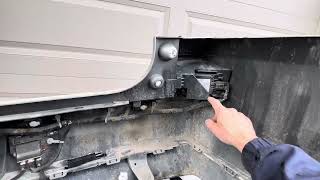
- Disconnected RCDLR Antenna or Coax Cable: Technical Service Bulletin 16-NA-061 describes how the antenna system for the RCDLR can become disconnected at one of three points: the antenna amplifier at the rear glass, the coax cable at the amplifier, or the coax cable at the RCDLR itself. 🎬 See how to replace the keyless remote antenna receiver. A disconnect at the RCDLR will cause the most severe symptoms, including a 'Service Tire Monitor System' message with dashes for all tire pressures and a 'No Fob Detected' message.
Diagnosis Steps
- Check for other DTCs. The presence of codes like B3055, B3060, and other C07xx codes is a strong indicator of the RFI issue described in TSB PIC5650M. [⭐]
- Question the driver about any aftermarket accessories. Ask specifically about phone chargers, dash cams, aftermarket LED lighting, and anything plugged into the 12V or USB ports. [⭐]
- Perform a vehicle inspection for RFI sources. Unplug everything from the power and data ports. Check for aftermarket LED bulbs, especially in the dome or cargo lights.
- Isolate the key fob. Remove all other keys, fobs, and access cards from the keychain.
- Attempt to start the vehicle. If the vehicle starts and runs normally with all accessories unplugged, the issue is RFI. Re-introduce devices one by one to identify the specific culprit.
- If the vehicle still won't start, place the key fob in the designated transmitter pocket. For the 2015-2020 Escalade, this pocket is located at the front of the center console storage area. Placing the fob here allows the car's immobilizer to read it directly, bypassing the RFI. The engine should now start.
- If no RFI sources are found and the problem persists, proceed with standard diagnostics for the TPMS and anti-theft systems, which may require a professional scan tool to check module communication and programming.
Parts You'll Likely Need
- No parts typically needed — The most common fix is removing an aftermarket electronic device that is causing radio frequency interference. No parts replacement is usually required.
OEM price range: $0
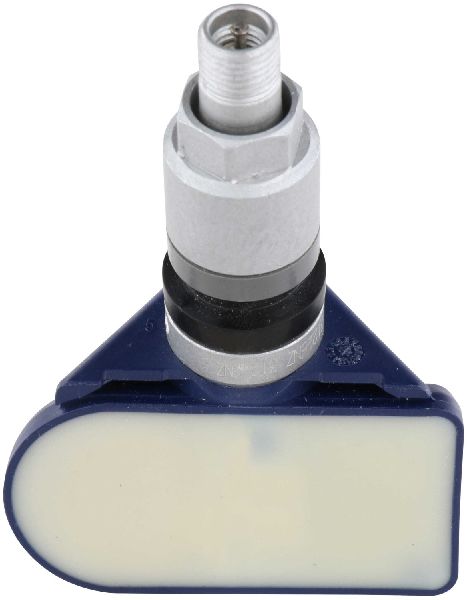
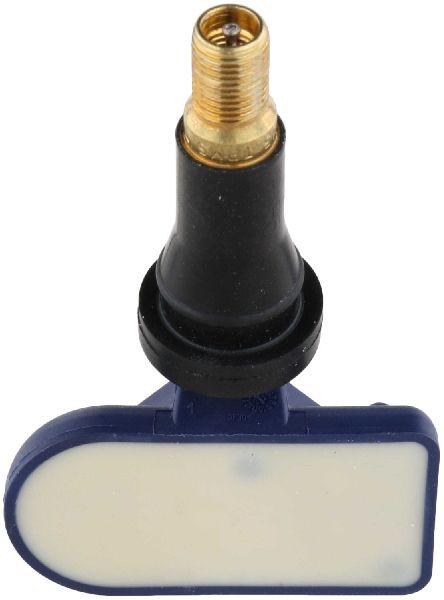
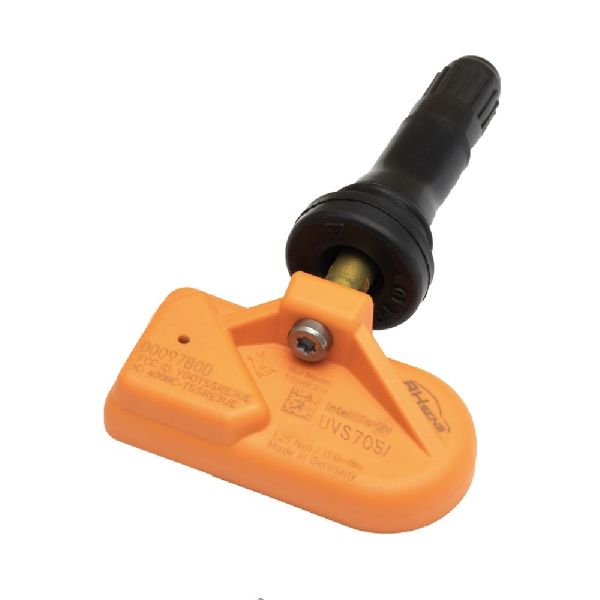
Aftermarket price range: $0 - Tire Pressure Monitoring System (TPMS) Sensor
(OEM #13598771, superseded by 13540600)— Only needed in the rare case that C0775 is set by itself and is caused by an actual sensor failure, not RFI. This part operates at 315 MHz. Part number 13598771 is often superseded by 13516164 or 13540600.
Trusted brands: ACDelco (GM Genuine), Schrader
OEM price range: $50-$80
Aftermarket price range: $30-$60
Related Codes That Often Appear With This One
- B3055 — Indicates the Body Control Module (BCM) did not receive a valid signal from the key fob's transponder, often due to RFI. [⭐]
- B3060 — Indicates an uncalibrated or mismatched immobilizer key, also a common result of RFI disrupting communication. [⭐]
- B3935 — A general transponder key system fault, triggered by the same RFI event. [⭐]
- C0750, C0755, C0760, C0765 — These are codes for the individual TPMS sensors (LF, RF, LR, RR). They are often set alongside C0775 when RFI disrupts the entire TPMS system communication.
Technical Service Bulletins (TSBs) & Recalls
- PIC5650M: Diagnostic Tip - Security Light on Intermittently / No Crank/No Start or Start Stall / Keyless Access Vehicle. This TSB is the primary source for understanding that C0775 is often a symptom of RFI affecting the security system.
- 16-NA-061: Service Tire Monitor System Message, Key Fob Poor Range, or “No Fob Detected” Message. This TSB identifies a disconnected RCDLR antenna system as a hardware-based cause for the same family of symptoms.
Platform-Specific Known Issues
- TSB PIC5650M (and subsequent revisions): This is the key document for this issue. It explicitly states that a combination of symptoms including no-start/stall, security light, and DTCs B3055, B3060, B3935, C0750, C0755, C0760, C0765, and/or C0775 is very likely caused by RFI from aftermarket devices. The bulletin strongly advises against replacing any parts before thoroughly checking for and removing these devices. [⭐]
- TSB 16-NA-061: This bulletin addresses symptoms of poor key fob range, 'No Fob Detected' messages, and TPMS codes (C0750, C0755, C0760, C0765). It points to a disconnected antenna or coax cable for the Remote Control Door Lock Receiver (RCDLR) as a potential cause, separate from aftermarket RFI. It provides diagnostic steps based on which part of the antenna system is disconnected.
Hidden / Shadow Codes Worth Checking
- Symptom Byte: While not a hidden code, GM service literature often refers to a 'symptom byte' associated with a DTC. For C0775, a common symptom byte is '00', indicating the BCM has not learned the tire pressure sensors. This is often seen on a new BCM/RCDLR before the relearn procedure is performed. (see via A professional GM-specific scan tool like GDS2 (Global Diagnostic System 2) or a high-end aftermarket scanner can display symptom bytes along with the main DTC.)
Scan Tool Commands That Help
- GDS2 (or equivalent professional scanner): BCM Data Display: 'Key Fob Status' — When diagnosing a no-start or poor RKE range, a technician can use this function to see if the BCM is receiving a signal from the key fob at all. If the status is 'Inactive' or 'Not Detected' while pressing the fob button, it confirms a communication breakdown, which could be RFI, a bad fob, or a faulty RCDLR.
- GDS2 (or equivalent professional scanner): TPMS Relearn Procedure — This command initiates the vehicle's TPMS learn mode. It is required after replacing a sensor, rotating tires, or replacing the RCDLR or BCM. While it can be initiated without a scan tool, using the tool is the professional method.
Wiring & Ground Locations
- Remote Control Door Lock Receiver (RCDLR) — On K2XX platform SUVs like the Escalade, the RCDLR is typically located in the rear of the vehicle, often behind the driver's side D-pillar trim panel. Its antenna is integrated into the right rear quarter glass.. The RCDLR is the central receiver for both the key fobs and the TPMS sensors. All related codes (C0775, B3055, etc.) and symptoms trace back to this module's inability to receive signals, whether due to RFI, internal failure, or wiring issues.
- RCDLR Power and Ground — On similar GM platforms, the RCDLR receives battery positive voltage from a fuse in the instrument panel fuse box and is grounded at a ground stud, such as G302, located under the passenger side front door sill trim. A corroded power wire under the sill plate has been confirmed as a cause of RCDLR failure.. Loss of power or a poor ground to the RCDLR will cause it to stop functioning, creating the exact cluster of TPMS and security codes (including C0775) associated with the RFI issue. Checking for 12V at the module's power pin is a critical diagnostic step if RFI is not the cause.
- G1xx, G2xx, G3xx, G4xx Series Grounds — GM uses a standardized naming convention for grounds: G1xx grounds are in the engine bay, G2xx are in the front passenger cabin/dash area, G3xx are in the rear passenger area, and G4xx are in the cargo/rear area. Key grounds for the BCM are often near the A-pillars (G200/G201).. Poor ground connections for the BCM or related modules can cause a wide range of bizarre electronic issues, including the communication faults that trigger C0775 and the associated security codes. Cleaning and securing main body and module grounds is a valid, though advanced, troubleshooting step.
Real Owner Repair Stories
- YouTube channel 'Phillip Bailey' (2017 GM 2500HD (K2XX Platform)) — Keyless entry not working and a 'Service Tire Monitor System' message on the dash.
❌ Tried (didn't work) Attempting to reprogram key fobs failed., Initial scan tool data checks were inconclusive.
✅ What actually fixed it The technician found a corroded power wire for the Remote Control Door Lock Receiver (RCDLR) located in the wiring channel under the driver's side sill plate. Repairing this corroded wire restored power to the module and fixed both the keyless entry and TPMS issues simultaneously. - YouTube channel 'GQ Auto Diagnostics' (2012 Chevy Tahoe (Previous Generation, but similar RCDLR function)) — Service TPMS light was on, remote key fob did not work, and TPMS sensors would not relearn.
❌ Tried (didn't work) Attempting to use a TPMS relearn tool failed., Testing the key fob showed it was transmitting a signal.
✅ What actually fixed it The technician diagnosed a faulty Remote Control Door Lock Receiver (RCDLR). The module was receiving signals intermittently and only at very close range to its location in the rear pillar. Replacing the RCDLR module resolved all symptoms.
OEM Part Supersession History
13598771→13516164, 13540600— Standard part evolution and supplier changes for the 315MHz TPMS sensor.
Heads up: While these part numbers are generally interchangeable for the specified vehicle range, it is critical to ensure the replacement sensor operates at 315MHz. Some aftermarket or incorrect OEM parts may be 433MHz, which will not work with the North American-spec RCDLR.
Model Year Variations Within This Range
- 2021-2022: The 2021 model year marked a major redesign (start of the fifth generation), moving to a new electrical architecture. While the fundamental TPMS and RKE systems still use an RCDLR, the infotainment, dash, and BCM are completely different. The pre-2021 models use an 8-inch CUE system, while the 2021+ models feature a 38-inch curved OLED display. This can affect diagnostic paths and module locations, though the underlying cause of RFI for C0775 remains prevalent.
Helpful Videos
We Have This Part in Stock

The information in this article is provided for general reference and educational purposes only. Vehicle specifications, procedures, and part compatibility can vary by production date, trim level, and region. Always consult your vehicle's factory service manual and verify part numbers before purchasing or performing repairs. Safety-critical components such as airbags, seat belts, and braking systems should be installed by a qualified professional.
- Cadillac ESCALADE ESV:
- 🧭 Diagnostic Flowchart
- 🎬 Helpful Videos
- 🛍️ Shop This Part
- What's Unique About the 2015-2022 Cadillac ESCALADE ESV
- Symptoms You May Notice
- Most Likely Causes
- Rare But Worth Checking
- Diagnosis Steps
- Parts You'll Likely Need
- Related Codes That Often Appear With This One
- Technical Service Bulletins (TSBs) & Recalls
- Platform-Specific Known Issues
- Hidden / Shadow Codes Worth Checking
- Scan Tool Commands That Help
- Wiring & Ground Locations
- Real Owner Repair Stories
- OEM Part Supersession History
- Model Year Variations Within This Range
- 🎟️ Get 5% Off