

C0775 on 2007-2013 Chevrolet Avalanche: TPMS Faults and Fixes
Code C0775 on a 2007-2013 Chevy Avalanche typically indicates a fault with a Tire Pressure Monitoring System (TPMS) sensor or that the system's learn procedure was interrupted. Most often, the battery in one of the sensors has died, requiring a new sensor and a relearn procedure. In rare cases, it can be caused by radio frequency interference from aftermarket electronics.
- C0775 most often means a TPMS relearn procedure was started but not finished correctly.
- The second most likely cause is one or more dead TPMS sensor batteries, a very common issue for vehicles of this age.
- Before replacing any parts, try performing the TPMS relearn procedure with a proper tool.
- If you also have strange electrical issues like a stalling engine or security light, unplug all aftermarket chargers and accessories before seeking professional diagnosis, as per TSB PIC5650M.
What's Unique About the 2007-2013 Chevrolet AVALANCHE
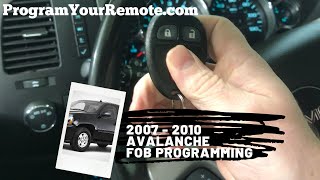
The 2007-2013 Avalanche, along with its GMT900 platform mates, uses a direct TPMS system where the Remote Control Door Lock Receiver (RCDLR) acts as the control module for both key fobs and tire pressure sensors. 🎬 Watch: How to program a new key fob. This integration is key. A highly unusual but well-documented issue, detailed in GM Technical Service Bulletin PIC5650M, shows that C0775 can appear alongside security and anti-theft codes (like B3055) during a stall or no-start condition. This rare scenario is caused by radio frequency interference (RFI) from cheap or poorly shielded aftermarket devices like phone chargers, LED lights, or even some dash cams, which can jam the RCDLR's 315 MHz frequency and disrupt communication with both the key fob and TPMS sensors.
Diagnostic Flowchart
Tap your situation to follow the diagnostic path that matches what you're seeing on this vehicle.
Symptoms You May Notice
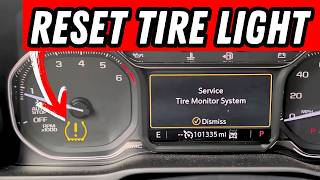
- "Service Tire Monitor System" message on the Driver Information Center (DIC).
- The TPMS warning light (a symbol of a tire with an exclamation mark) flashes for about a minute and then stays illuminated on the dashboard.
- The DIC displays dashes (--) instead of pressure readings for one or more tires.
- Inability to complete the TPMS relearn procedure; the horn may not chirp when attempting to program a sensor.
- In rare RFI cases, may be accompanied by a security light, no-start/stall condition, and key fobs not working.
- Replacing the Body Control Module (BCM) when the issue is a simple sensor, a failed relearn, or an RFI problem.
- Replacing a single TPMS sensor when the actual problem is a faulty RCDLR or an interrupted relearn procedure.
- Assuming the code means a tire is low on air; this code points to a system fault, not tire pressure itself. The DIC will show dashes (--) for a system fault, not a low number.
- Believing the relearn tool is broken when the issue is a dead sensor in one wheel preventing the sequence from completing.
Most Likely Causes
- Failed TPMS Relearn Procedure 🔴 High Probability The relearn mode will automatically time out and set C0775 if it's not completed within a few minutes of starting, or if the ignition is turned off before all four sensors are learned. This often happens after a tire rotation if the owner is unaware a relearn is needed.
How to confirm: The code appears immediately after attempting a tire rotation or sensor replacement. Re-attempting the relearn procedure successfully will clear the code.
Typical fix: Perform the TPMS relearn procedure again, ensuring all steps are completed in the correct sequence without interruption. This can be done with a relearn tool or, on some models, by letting air out of each tire in sequence.
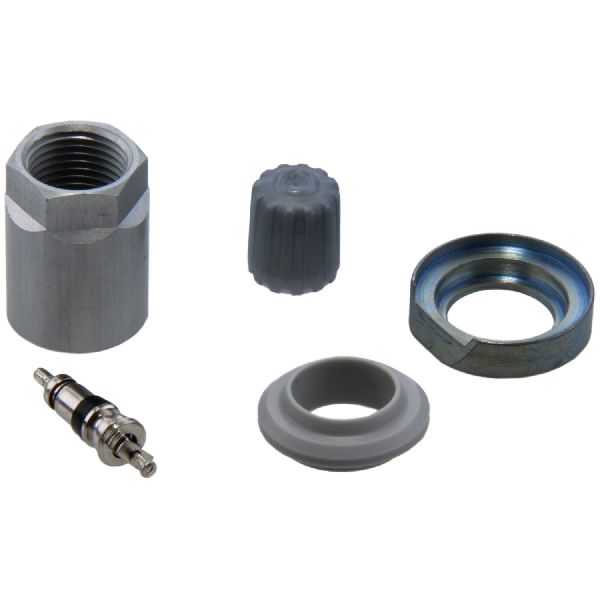
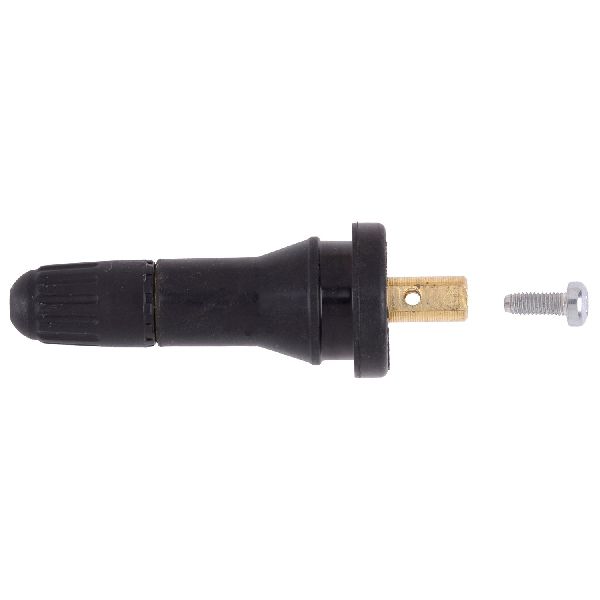
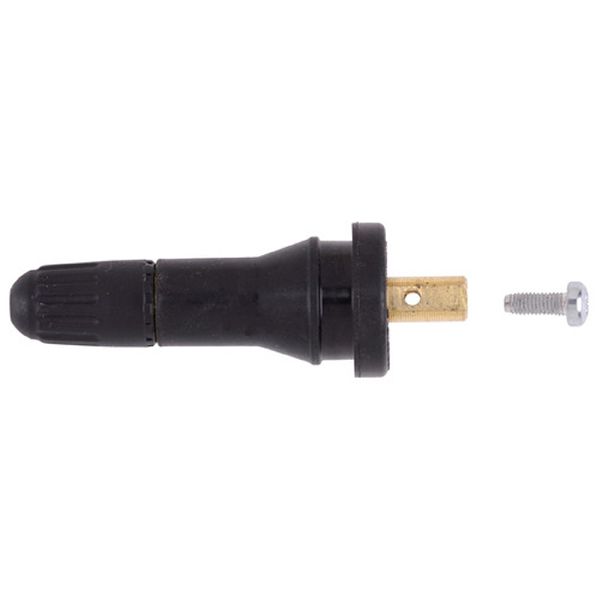
Est. part cost: $0-$20 (if a relearn tool is needed) - Dead or Failing TPMS Sensor Battery 🔴 High Probability → Shop Tire Pressure Monitoring System (TPMS) Sensor The sensors have a non-replaceable battery with a finite life, typically 5-10 years. Vehicles in this 2007-2013 range are now well past the original battery lifespan, making battery failure the most common root cause of TPMS issues.
How to confirm: Use a TPMS activation tool to try and 'wake up' each sensor. A sensor that does not respond or shows a low battery status has failed. Often, a single dead sensor will prevent the entire system from relearning.
Typical fix: Replace the faulty TPMS sensor. It is highly recommended to replace all four at once if they are original, as the others are likely to fail soon. This is most cost-effective to do during a tire replacement to save on labor.
Est. part cost: $25-$60 per sensor - Faulty Remote Control Door Lock Receiver (RCDLR) ⚪ Low Probability → Shop Keyless Entry Receiver The RCDLR serves as the brain for the TPMS. While uncommon, a failure in this module can prevent it from learning or recognizing any of the sensors, even if the sensors themselves are good.
How to confirm: If all four known-good sensors cannot be learned, there are no signs of RFI, and the relearn procedure is performed correctly, the RCDLR is the primary suspect. This often requires advanced diagnostics with a dealer-level scan tool to check module communication.
Typical fix: Replace and reprogram the RCDLR module. This typically must be done at a dealership or a well-equipped independent shop.
Est. part cost: $80-$200
Rare But Worth Checking
- Radio Frequency Interference (RFI): As detailed in TSB PIC5650M, cheap aftermarket electronics like USB phone chargers, LED interior/exterior lights, or even some dash cams can emit radio signals that 'jam' the 315MHz frequency used by the RCDLR. This can cause C0775 along with bizarre, seemingly unrelated issues like key fobs not working and anti-theft system activation. The fix is often as simple as unplugging the offending device.
Diagnosis Steps
- Verify the code C0775 is present using an OBD-II scanner capable of reading Chassis (C) codes.
- Inspect the vehicle for any aftermarket plug-in devices (phone chargers, dash cams, LED lights, etc.) and unplug all of them to rule out RFI. This is a critical first step due to TSB PIC5650M.
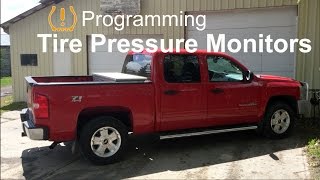
- Attempt the TPMS relearn procedure. For the 2007-2013 Avalanche, turn the key to 'ON' (engine off), then press and hold the lock and unlock buttons on the key fob simultaneously until the horn chirps twice. The DIC will show 'Tire Learning Active'.
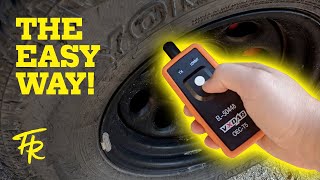
- Using a TPMS relearn tool (like the EL-50448), start at the Left Front tire. Hold the tool against the tire's sidewall near the valve stem and press the button. The horn will chirp once.
- Proceed in order: Right Front, Right Rear, Left Rear, waiting for the horn chirp at each wheel. A double chirp at the end confirms success.
- If the relearn fails at a specific wheel (no horn chirp), that sensor is likely dead. Use the TPMS tool to check its battery status and signal output. A sensor that doesn't respond needs to be replaced.
- If the relearn fails but all sensors seem to respond to the tool, try the alternate 'air-release' method: after initiating learn mode, let air out of each tire in sequence for 5-10 seconds until the horn chirps. Remember to re-inflate tires afterward.
- If all sensors are confirmed good and both relearn methods fail with no RFI sources present, the RCDLR module or its wiring/connectors should be inspected. This may require professional diagnosis.
Parts You'll Likely Need
- TPMS Sensor
(OEM #13598773)— The internal battery is the most common failure point, with a lifespan of 5-10 years. For this vehicle range, they are all at or beyond their service life. The original part number may have been 15922396 or 20923680, which was superseded by 13586335, and later by 13598773. All are typically 315MHz sensors for the North American market.
Trusted brands: ACDelco (GM OE), Schrader (Often the OEM manufacturer), Continental/VDO, Dorman
OEM price range: $40-$70
Aftermarket price range: $25-$50 - TPMS Relearn Tool
(OEM #EL-50448)— GM vehicles of this era require a dedicated, low-cost tool to trigger each sensor during the relearn procedure. While some models allow for a manual relearn by deflating tires, the tool is faster, easier, and avoids the need to re-inflate tires.
Trusted brands: VXDAS, JDIAG, OEC-T5
OEM price range: $10-$25
Aftermarket price range: $10-$25
Related Codes That Often Appear With This One
- C0750, C0755, C0760, C0765 — These codes indicate a fault with a specific sensor (LF, RF, LR, RR respectively). They often appear when one or more sensor batteries are dying or if the RCDLR cannot receive a signal from a specific location.
- B3055, B3060, B3935 — In the rare case of severe Radio Frequency Interference, these key fob and security system codes may appear alongside C0775, as noted in TSB PIC5650M. This points directly to an external device jamming the RCDLR.
Technical Service Bulletins (TSBs) & Recalls
- PIC5650M: Diagnostic Tip - Security Light on Interm
Platform-Specific Known Issues
- TSB PIC5650M: Radio Frequency Interference: This GM bulletin is critical for diagnosing C0775. It documents a condition where aftermarket electronics (especially cheap USB chargers or LED lights) can jam the RCDLR, causing C0775 to set along with security/anti-theft codes (B3055, etc.), leading to a stall or no-start. The fix is to identify and remove the source of the interference.
- Owner Experience: Chasing a Single Failing Sensor: A user on ChevroletForum.com shared a frustrating experience where a single new sensor (both aftermarket and AC Delco) would repeatedly fail to stay learned after a 10-minute drive. After replacing the sensor three times and visiting two shops, the issue persisted with the front left wheel position, which would get stuck in 'learn' mode. This highlights how a single faulty sensor or a localized reception issue can mimic a more complex problem and resist simple fixes.
Mechanic-Grade Diagnostic Values
- TPMS Sensor Transmission Frequency — expected: 315 MHz. Failure: No signal or incorrect frequency detected by a TPMS tool. Note: Some export models may use 433 MHz, but North American models use 315 MHz.
- TPMS Sensor Battery Life — expected: 5-10 years. Failure: A TPMS tool indicates a 'Low Battery' status, or the sensor fails to activate at all. Given the vehicle age, original sensors are at the end of their life.
Scan Tool Commands That Help
- Tech2 / GDS2: Module Setup > RCDLR — This function is required when replacing the Remote Control Door Lock Receiver (RCDLR). The new module must be programmed to the vehicle.
- Tech2 / GDS2: Special Functions > Tire Pressure Monitor — Used to view live data from the TPMS sensors, including individual sensor IDs, pressure, and battery status, which helps in diagnosing a single faulty sensor without relying solely on an activation tool.
Wiring & Ground Locations
- RCDLR Module — On similar GM trucks and SUVs of this era (e.g., Equinox), the RCDLR is often located behind the rear passenger side C-pillar interior trim panel. While not specific to the Avalanche, this is a common location for this module on GM SUVs.. A loose antenna connection or a damaged module/connector at this location can prevent the vehicle from receiving signals from the TPMS sensors and key fobs, directly causing code C0775.
- Instrument Panel Fuse Block — Located on the driver's side of the instrument panel, accessible when the driver's door is open.. The RCDLR is powered by a fuse in this panel (often labeled RDO/S'BAND/VICS or similar). A blown fuse will disable the module entirely.
Real Owner Repair Stories
- Reddit user on r/Silverado (GMT900-platform truck) — After a tire rotation at a GM dealership, none of the TPMS sensors were reading on the DIC.
❌ Tried (didn't work) The dealership attempted and failed to reprogram the sensors to their new positions.
✅ What actually fixed it The owner took the truck to an independent tire shop (Big-O), which successfully reprogrammed the sensors for free, resolving the issue. This indicates the sensors were not faulty, but the initial relearn procedure was performed incorrectly or failed.
OEM Part Supersession History
15922396, 20923680→13586335, which was later superseded by 13598773.— Standard part evolution and consolidation by GM.
Heads up: While many part numbers are interchangeable, it is critical to use a 315MHz sensor for North American market vehicles. Some online listings for 13598773 show a 433MHz frequency, which is for export models and will not work.
Model Year Variations Within This Range
- 2007-2013: The method to initiate the TPMS learn mode can vary based on trim level. Higher trims use the key fob (lock/unlock buttons) or DIC controls. Base models without a key fob or full DIC may require using the instrument cluster's trip/reset button to find and activate the 'Tire Learning Active' mode.
Helpful Videos


We Have This Part in Stock


The information in this article is provided for general reference and educational purposes only. Vehicle specifications, procedures, and part compatibility can vary by production date, trim level, and region. Always consult your vehicle's factory service manual and verify part numbers before purchasing or performing repairs. Safety-critical components such as airbags, seat belts, and braking systems should be installed by a qualified professional.
- Chevrolet AVALANCHE:
- 🧭 Diagnostic Flowchart
- 🎬 Helpful Videos
- 🛍️ Shop This Part
- What's Unique About the 2007-2013 Chevrolet AVALANCHE
- Symptoms You May Notice
- Most Likely Causes
- Rare But Worth Checking
- Diagnosis Steps
- Parts You'll Likely Need
- Related Codes That Often Appear With This One
- Technical Service Bulletins (TSBs) & Recalls
- Platform-Specific Known Issues
- Mechanic-Grade Diagnostic Values
- Scan Tool Commands That Help
- Wiring & Ground Locations
- Real Owner Repair Stories
- OEM Part Supersession History
- Model Year Variations Within This Range
- 🎟️ Get 5% Off