

C0775 on 2007-2014 Chevrolet Suburban: TPMS Not Learned Fixes
Code C0775 on a 2007-2014 Suburban most often means a Tire Pressure Monitoring System (TPMS) sensor has failed or the system has lost its programming. The most common fix is replacing the faulty sensor, which often has a dead battery. Expect to pay $50-$150 for the part and another $50-$100 for shop labor to mount and program it.
- C0775 means the TPMS system needs to be relearned, most likely because a sensor has failed.
- The most common cause on a 2007-2014 Suburban is a dead battery in one of the original TPMS sensors.
- If your key fobs also stopped working, the problem is more likely the Remote Control Door Lock Receiver (RCDLR) module, not the individual sensors.
- Replacement of a sensor requires breaking down the tire and using a special tool to program the new sensor to the vehicle.
- To save on future labor costs, it is wise to replace all four TPMS sensors if the vehicle is over 8-10 years old.
What's Unique About the 2007-2014 Chevrolet SUBURBAN
On this generation of Suburban (GMT900 platform), the Tire Pressure Monitoring System (TPMS) is integrated with the Remote Control Door Lock Receiver (RCDLR). This single module receives signals from both the TPMS sensors and the key fobs. A problem with the RCDLR module, its power supply, or its antenna can cause both TPMS codes (like C0775) and key fob issues to appear simultaneously. While the most common cause of C0775 is a single failed sensor, owners should be aware that if key fobs also stop working, the RCDLR module is a likely culprit. This module is typically located in the driver's side rear D-pillar, behind the interior trim panel.
Diagnostic Flowchart
Tap your situation to follow the diagnostic path that matches what you're seeing on this vehicle.
Symptoms You May Notice
- "Service Tire Monitor System" message on the Driver Information Center (DIC).
- The TPMS warning light is illuminated on the dashboard (may blink for one minute on startup, then stay solid).
- One or more tire pressure readings on the DIC show dashes (--) instead of a pressure value.
- Inability to complete the TPMS relearn procedure; the horn does not chirp when activating a sensor.
- Keyless entry fobs stop working or have severely reduced range at the same time the TPMS light comes on.
- Replacing the Body Control Module (BCM) when the issue is a simple sensor or the RCDLR. The RCDLR is a separate module from the BCM.
- Assuming the TPMS system is faulty when the only issue is that the tires have been rotated and the sensor positions just need to be relearned.
- Replacing sensors when the root cause is a faulty RCDLR, especially if key fobs are also inoperative.
Most Likely Causes
- Dead TPMS Sensor Battery 🔴 High Probability → Shop Tire Pressure Monitoring System (TPMS) Sensor The non-replaceable lithium batteries inside the original sensors have a lifespan of 5-10 years. For vehicles in this 2007-2014 year range, battery failure is extremely common due to age.
How to confirm: A professional tire shop or a DIYer with a TPMS tool (like an EL-50448) can attempt to 'wake up' or read the sensor. If the sensor does not respond or transmit its ID, its battery is dead or the sensor has failed.
Typical fix: Replace the failed TPMS sensor. It is often recommended to replace all four sensors at the same time, especially if they are original, to avoid future repeat repairs.
Est. part cost: $40-$80 per sensor - Failed TPMS Relearn Procedure 🟡 Medium Probability The relearn procedure will be initiated but will not complete if one or more sensors fail to activate, which sets code C0775. This is often a symptom of a dead sensor battery. The procedure can also time out or be cancelled if the ignition is turned off.
How to confirm: Attempt the relearn procedure again. If it fails repeatedly on the same wheel, that specific sensor is likely faulty. If it fails randomly, the issue may be with the RCDLR or radio frequency interference.
Typical fix: Re-attempt the relearn procedure using a TPMS activation tool (e.g., EL-50448). If a sensor is bad, it must be replaced before the procedure can be completed successfully.
Est. part cost: $0 if successful, otherwise cost of sensor - Faulty Remote Control Door Lock Receiver (RCDLR) ⚪ Low Probability → Shop Keyless Entry Receiver The RCDLR acts as the single receiver for both the key fobs and the TPMS sensors. A failure in this module, its antenna connection, or its power supply can prevent TPMS signals from being received, often causing key fob failure at the same time.
How to confirm: This is a likely cause if you experience simultaneous failure of the TPMS system and all keyless entry remotes. A professional scan tool can check for communication with the RCDLR. A visual inspection of the module and its antenna connection in the driver's side D-pillar is also recommended.
Typical fix: Diagnose and replace the RCDLR module. A new module requires programming to the vehicle's VIN by a dealership or a properly equipped independent shop using a tool like a Tech 2.
Est. part cost: $70-$150 for the module
Rare But Worth Checking
- Radio Frequency Interference (RFI): TSB PIC5650K (and its predecessors) notes that C0775 can appear with other codes due to RFI from aftermarket devices like phone chargers, LED lights, or even toll passes. These devices can 'jam' the 315 MHz or 433 MHz signals used by the TPMS and key fobs, causing intermittent failures. The fix is to remove the offending device.
- Broken Wiring to RCDLR: In some cases, the RCDLR module itself is fine, but the power or ground wire leading to it is broken. One owner on the Tahoe Yukon Forum reported this issue, where a new module didn't fix the problem until a broken power wire was found and repaired.
Diagnosis Steps
- Verify tire pressures manually with a gauge to rule out an actual low tire.
- Check for simultaneous issues. Do the keyless entry fobs work? If not, suspect the RCDLR module or its wiring/antenna.
- Use a TPMS diagnostic tool (like the EL-50448) to attempt to read the data from all four sensors. Note any sensor that fails to respond. A non-responsive sensor is the most common cause and typically requires replacement.
- If all sensors respond, initiate the TPMS relearn procedure. Turn the key to 'ON' (engine off), then either use the DIC menu to select the relearn option or hold the lock and unlock buttons on the key fob until the horn chirps twice.
- Using the TPMS tool, activate the sensors in order: Left Front, Right Front, Right Rear, Left Rear. The horn will chirp after each 🎬 See a step-by-step walkthrough of the TPMS programming process. successful activation. A double chirp at the end signals success.
- If the relearn procedure fails and key fobs are also not working, inspect the Remote Control Door Lock Receiver (RCDLR) and its coaxial antenna connection. It is located behind the interior trim in the driver's side rear D-pillar.
- If RFI is suspected per TSB PIC5650K, remove all aftermarket electronics (phone chargers, dash cams, LED bulbs) and try the relearn procedure again.
- If the vehicle exhibits stalling and security light issues, a full vehicle network diagnostic by a professional is required to address the complex electrical fault described in TSB PIC5650.
Parts You'll Likely Need
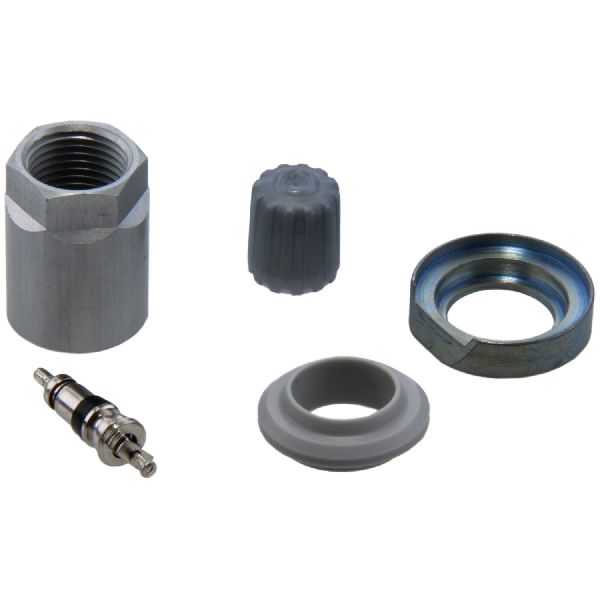
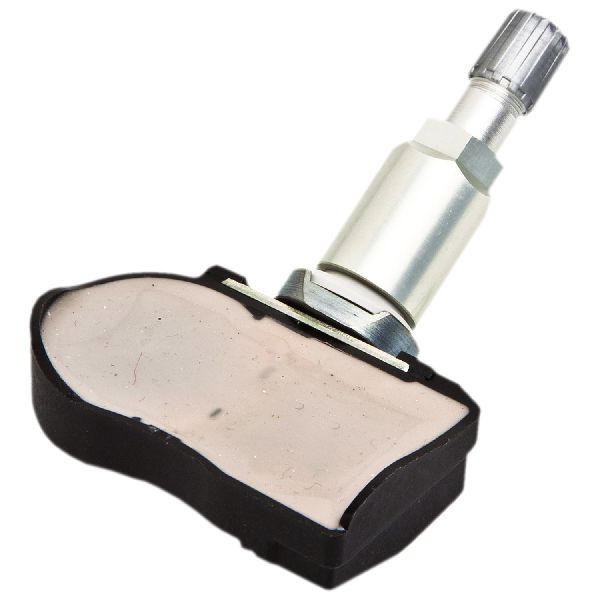
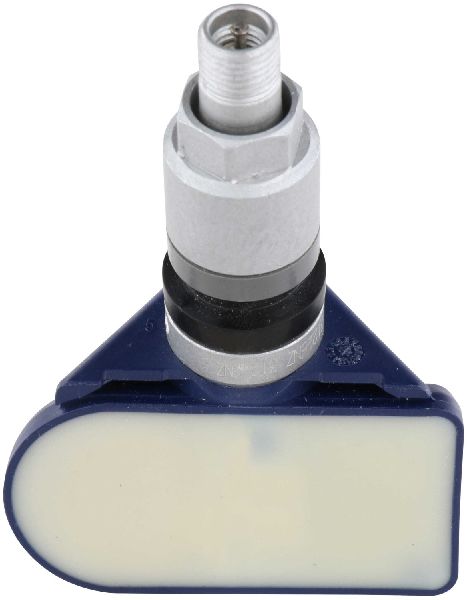
- Tire Pressure Monitoring System (TPMS) Sensor
(OEM #13598771 (supersedes 13586335, 20923680))— This is the most common failure point. The internal battery dies after 5-10 years, requiring replacement of the entire sensor unit.
Trusted brands: ACDelco, Schrader, Continental
OEM price range: $50-$90
Aftermarket price range: $30-$60 - Remote Control Door Lock Receiver (RCDLR)
(OEM #20803735 (supersedes multiple previous numbers including 15287331, 15807816, 25896497))— This module receives signals from both the TPMS sensors and key fobs. A failure here can cause C0775, especially if accompanied by keyless entry problems. Requires programming after installation.
Trusted brands: ACDelco (GM Genuine)
OEM price range: $70-$150
Aftermarket price range: $50-$100 - TPMS Relearn Tool
(OEM #EL-50448)— A simple, affordable tool required to activate the sensors in sequence to complete the relearn procedure after sensor replacement or tire rotation.
Trusted brands: ACDelco, VXDAS, Various aftermarket
OEM price range: $50-$70
Aftermarket price range: $10-$25
Related Codes That Often Appear With This One
- C0750, C0755, C0760, C0765 — These codes indicate a fault or low battery with a specific sensor (LF, RF, LR, RR respectively). C0775 often appears with one of these if a single sensor fails and prevents the relearn process from completing.
- B3055, B3060 — As noted in TSB PIC5650K, these security-related codes can appear with C0775 during a complex electrical failure or RFI issue involving the vehicle's immobilizer and keyless entry systems.
Technical Service Bulletins (TSBs) & Recalls
- PIC5650K: The latest version of a long-running diagnostic tip. It explains that C0775, along with security and key fob codes, can be caused by Radio Frequency Interference (RFI) from aftermarket electronics like phone chargers or LED lights.
- 16-NA-061: Details how a disconnected RCDLR antenna causes loss of TPMS and key fob signals, providing a valuable diagnostic path even though it's for the 2015+ generation which uses a similar system design.
Platform-Specific Known Issues
- Shared RCDLR/TPMS Module Failure: A well-documented issue on GMT900 trucks where the RCDLR module fails, causing both the key fobs and the TPMS to stop working simultaneously. Owners on Tahoe Yukon Forum frequently report this dual failure, pointing to the RCDLR in the driver's rear pillar as the culprit.
- RCDLR Antenna Connection (TSB 16-NA-061): While written for the next generation, TSB 16-NA-061 details how a poor or disconnected coaxial antenna cable at the RCDLR can cause intermittent or total loss of TPMS and key fob signals. The symptoms described—losing sensors farthest from the receiver first, or total signal loss if disconnected at the module—are identical to issues reported on 2007-2014 models. Checking this connection is a key diagnostic step.
Mechanic-Grade Diagnostic Values
- RCDLR Power Supply Voltage — expected: Should be equal to battery voltage (approx. 12.4V with engine off).. Failure: A reading of 0V indicates a broken power wire or blown fuse. A significant voltage drop (e.g., below 12V when battery is at 12.4V) suggests high resistance in the circuit.
- RCDLR Ground Circuit — expected: Less than 0.1V between the ground pin on the RCDLR connector and a known good chassis ground.. Failure: Voltage reading higher than 0.1V indicates a poor ground connection, which can cause intermittent module operation.
Scan Tool Commands That Help
- Tech 2 / GDS2: Setup New RCDLR — This function is required after replacing the Remote Control Door Lock Receiver (RCDLR). It programs the new module to the vehicle's BCM and theft deterrent system before learning key fobs and TPMS sensors.
- Tech 2 / GDS2: TPM Sensor Learn — This function initiates the TPMS relearn procedure after replacing sensors or the RCDLR. It allows the vehicle to learn the new sensor IDs and their positions.
Wiring & Ground Locations
- RCDLR Module — Located behind the interior trim panel in the driver's side rear D-pillar, often near the rear speaker.. This is the central receiver for both TPMS and key fob signals. Physical access is required to test wiring or replace the module.
- RCDLR Power Fuse — In the instrument panel fuse block (inside the cabin, typically driver's side), the fuse is often labeled 'DSM' (Driver Seat Module) or a similar variant that also powers the RCDLR.. A blown fuse will cause a total loss of communication with the RCDLR, resulting in C0775 and inoperative key fobs. This should be checked before replacing the module.
- G401 / G402 — These are common ground points located in the rear of the vehicle, often on the D-pillar near the liftgate latch or behind the rear trim panels.. The RCDLR relies on a clean ground connection. Corrosion or looseness at these rear ground points can cause intermittent or complete failure of the RCDLR, leading to C0775.
- RCDLR Connector — The electrical connector plugging directly into the RCDLR module.. The power (often a red/white wire) and ground (often black) pins must be tested here to confirm the module is receiving power before condemning it.
Real Owner Repair Stories
- YouTube channel 'Raymond Beachy' (2011 Chevrolet Silverado (GMT900 platform)) — No communication with the RCDLR, key fobs not working.
❌ Tried (didn't work) Initially misdiagnosed as a bad RCDLR module and a new one was ordered.
✅ What actually fixed it Upon testing, there was no power at the RCDLR connector. The technician found a broken red/white power wire in the wiring harness running under the driver's side door sill plate. Repairing the broken wire restored power to the module and fixed the issue without needing to replace the RCDLR. - YouTube channel 'DanielJaegerFilms' (Buick LaCrosse (similar GM TPMS/RCDLR logic)) — Service TPMS message, key fobs not working unless held right next to the driver's rear pillar. TPMS relearn would only work for the rear tires.
❌ Tried (didn't work) Testing the TPMS sensors and key fob battery, which were both confirmed to be good.
✅ What actually fixed it The symptoms pointed to a weak RCDLR that could only receive signals from very close proximity. The owner diagnosed a failing RCDLR because the system worked only when the transmitter (fob or sensor) was right next to the receiver module in the rear pillar. Replacing the RCDLR was the confirmed fix. - Chevrolet Forum user 'pdh901' (GMT900 Truck/SUV) — Keyless entry stopped working and all four tire pressure sensors failed at the same time.
❌ Tried (didn't work) Changing the key fob battery., Physically replacing the RCDLR module. After replacement, the key fob still could not be reprogrammed.
✅ What actually fixed it The user was informed that the new RCDLR module required programming by a dealer with a proprietary scan tool. The physical part swap is not enough; the module must be electronically configured to the vehicle's CAN bus system.
OEM Part Supersession History
15287331, 15782376, 15807816, 15857831, 15946938, 25771044, 25808837, 25852909, 25855007, 25896497→20803735— GM consolidated numerous older part numbers for the RCDLR on various platforms into a single replacement part.
Heads up: While the new part is the correct replacement, it always requires programming with a Tech 2 or equivalent scan tool to function. It is not a plug-and-play part.
Model Year Variations Within This Range
- 2007: TPMS was not a mandatory standard feature on all 2007 models, though many were equipped with it. It became federally mandated and therefore standard on all 2008 and newer models.
Helpful Videos
We Have This Part in Stock


The information in this article is provided for general reference and educational purposes only. Vehicle specifications, procedures, and part compatibility can vary by production date, trim level, and region. Always consult your vehicle's factory service manual and verify part numbers before purchasing or performing repairs. Safety-critical components such as airbags, seat belts, and braking systems should be installed by a qualified professional.
- Chevrolet SUBURBAN:
- 🧭 Diagnostic Flowchart
- 🎬 Helpful Videos
- 🛍️ Shop This Part
- What's Unique About the 2007-2014 Chevrolet SUBURBAN
- Symptoms You May Notice
- Most Likely Causes
- Rare But Worth Checking
- Diagnosis Steps
- Parts You'll Likely Need
- Related Codes That Often Appear With This One
- Technical Service Bulletins (TSBs) & Recalls
- Platform-Specific Known Issues
- Mechanic-Grade Diagnostic Values
- Scan Tool Commands That Help
- Wiring & Ground Locations
- Real Owner Repair Stories
- OEM Part Supersession History
- Model Year Variations Within This Range
- 🎟️ Get 5% Off