

GMC Yukon C0775: TPMS Fault or Stalling from RF Interference? (2007-2014)
On its own, C0775 usually just means your tire sensors need to be relearned after a tire rotation. However, if your Yukon is also stalling or won't start, the problem is almost certainly radio interference from a cheap phone charger or other aftermarket device plugged into your truck, as noted in GM TSB PIC5650M.
- If your Yukon has a C0775 code AND is stalling or not starting, the first step is to unplug EVERY aftermarket device from your power outlets.
- This code is a classic example of a 'symptom code'. It's often set as a side effect of a different root problem (RFI).
- Do NOT replace the BCM, TPMS sensors, or any other expensive parts to fix a stalling issue until you have proven that there is no radio frequency interference.
- If you only have a 'Service Tire Monitor' light and no other symptoms, you likely just need to perform a simple TPMS relearn procedure.
What's Unique About the 2007-2014 Gmc YUKON
On this generation of GMC Yukon and its GMT900 platform mates, the TPMS, keyless entry (RKE), and vehicle immobilizer systems all use the Remote Control Door Lock Receiver (RCDLR) to receive 315 MHz radio signals. These critical systems are highly susceptible to being 'jammed' by radio frequency interference (RFI) from cheap, poorly-shielded aftermarket electronics like phone chargers, dash cams, or LED lights. This RFI can prevent the immobilizer from authenticating the key, leading to a stall or no-start condition, and setting C0775 as collateral damage because the RCDLR is too busy processing noise to hear the TPMS sensors. This is a well-documented issue covered in TSB PIC5650M and discussed extensively in owner forums.
Diagnostic Flowchart
Tap your situation to follow the diagnostic path that matches what you're seeing on this vehicle.
Symptoms You May Notice
- Service Tire Monitor System message on the Driver Information Center (DIC)
- TPMS warning light flashes for one minute and then stays on solid
- Engine stalls immediately after starting
- Intermittent no-crank or no-start condition
- Security warning light illuminated on the instrument cluster
- Poor range or function from the keyless entry (RKE) fob
- Tire pressure readings on DIC show as '--' for all or some tires
- Replacing TPMS sensors when the cause is RFI.
- Replacing the Body Control Module (BCM) when the cause is RFI.
- Replacing the ignition switch or fuel pump to address stalling, without first checking for RFI and associated codes like C0775, B3055, or B3060.
Most Likely Causes
- Radio Frequency Interference (RFI) from Aftermarket Devices 🔴 High Probability As detailed in GM TSB PIC5650M, the vehicle's Remote Control Door Lock Receiver (RCDLR) is sensitive to interference from poorly made electronics that emit radio noise, jamming the key fob, immobilizer, and TPMS signals.
How to confirm: If experiencing stalling or no-start symptoms, unplug ALL aftermarket devices from the 12V outlets and USB ports (especially phone chargers, dash cams, and FM transmitters). Also, turn off any aftermarket LED lighting. If the problem is resolved, one of the devices was the cause.
Typical fix: Identify and remove the offending device from the vehicle. High-quality, well-shielded chargers are less likely to cause this issue.
Est. part cost: $0 - TPMS Relearn Procedure Not Performed 🟡 Medium Probability This is a standard procedure required after tire rotations 🎬 See this walkthrough for relearning TPMS tire positions. or sensor replacement that is often forgotten or performed incorrectly.
How to confirm: The code appears after rotating tires, replacing a TPMS sensor, or replacing the BCM/RCDLR, but the vehicle has no stalling or starting issues.
Typical fix: Perform the TPMS sensor relearn procedure using the vehicle's DIC and either a TPMS activation tool or by deflating each tire in sequence.
Est. part cost: $0-$20 - Faulty or Dead TPMS Sensor ⚪ Low Probability → Shop Tire Pressure Monitoring System (TPMS) Sensor TPMS sensor batteries have a finite life, typically 7-10 years. Vehicles in this year range are at an age where battery failure is common.
How to confirm: A TPMS diagnostic tool shows one or more sensors is not transmitting or has a low battery. Often, the relearn procedure will fail to register a specific tire. This would typically be accompanied by a sensor-specific code (C0750, C0755, etc.).
Typical fix: Replace the faulty TPMS sensor and perform the relearn procedure.
Est. part cost: $30-$70 per sensor
Rare But Worth Checking
- Failing Body Control Module (BCM): While possible, this is highly unlikely to be the cause if stalling/no-start symptoms are present. The RFI issue is far more common and should be ruled out first.
- Failing Remote Control Door Lock Receiver (RCDLR): → Shop Keyless Entry Receiver In some cases, the RCDLR module itself can fail. Symptoms are identical to RFI (no key fob function, no TPMS readings), but they persist even with all aftermarket electronics removed. A user on TahoeYukonForum reported solving a similar issue where the RCDLR lost its memory and had to be reprogrammed with a bi-directional scan tool.
Diagnosis Steps
- Scan for all DTCs in all modules. Note if any immobilizer codes (B3055, B3060, B3935) are present along with C0775.
- Question the symptoms. Is there ONLY a 'Service Tire Monitor' message, OR is the vehicle stalling/not starting and the key fob is not working?
- IF STALLING/NO-START: Immediately inspect for and unplug ALL aftermarket devices (phone chargers, dash cams, USB hubs, LED bulbs, etc.). Remove any large RFID devices from the key ring.
- Attempt to start and run the vehicle after removing all devices. If the problem is gone, you have found the cause. Reintroduce devices one by one to isolate the offender.
- IF ONLY TPMS LIGHT IS ON: The sensors simply need to be relearned.
- Initiate the TPMS relearn mode. On most models, turn the key to 'ON' (do not start) and press and hold the lock and unlock buttons on the key fob until the horn chirps and the DIC displays 'TIRE LEARNING ACTIVE'.
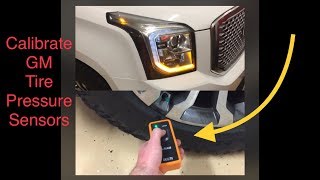
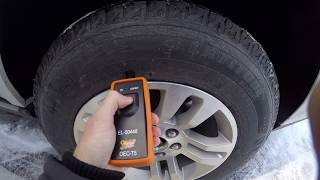
- Method 1 (With Tool): Use a TPMS activation tool (like an EL-50448) on the driver's front tire until the horn chirps. The turn signal will indicate the next tire to program (clockwise: RF, RR, LR). Repeat for all tires.
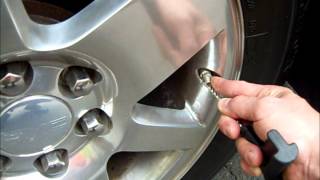
- Method 2 (Without Tool): 🎬 Watch: How to reset TPMS sensors without using a tool. Instead of a tool, let air out of the driver's front tire for 10-30 seconds until the horn chirps. This can take a while. Proceed clockwise to the other tires as indicated by the turn signals.
- Once the procedure is complete, the horn will chirp twice. Adjust tire pressures back to the specification on the door jamb sticker.
- If the relearn procedure fails for a specific wheel, suspect a dead or faulty TPMS sensor in that wheel.
Parts You'll Likely Need
- No Parts Needed - RFI Removal — For the most serious symptoms (stalling/no-start), the most common fix is simply removing the aftermarket device causing radio interference.
OEM price range: $0
Aftermarket price range: $0 - TPMS Relearn Tool
(OEM #EL-50448)— Required to easily and quickly force the sensors to transmit during the relearn procedure. It's much faster and more reliable than deflating tires.
Trusted brands: ACDelco, VXDAS, JDIAG, KINGBOLEN
OEM price range: $50-$80
Aftermarket price range: $10-$25 - Tire Pressure Monitoring System (TPMS) Sensor
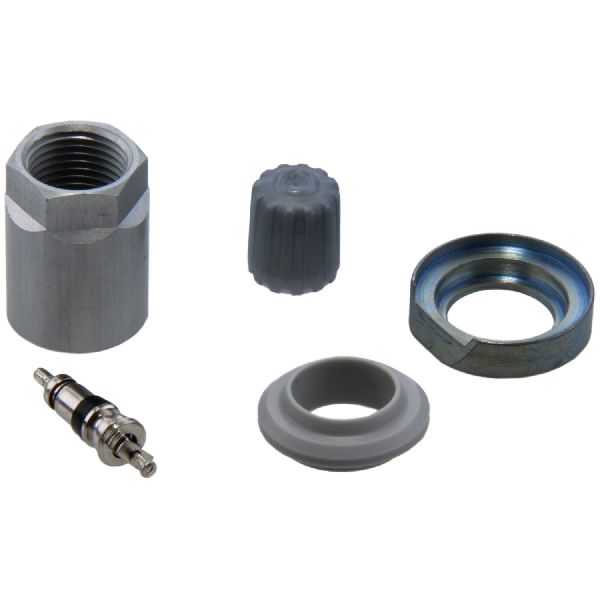
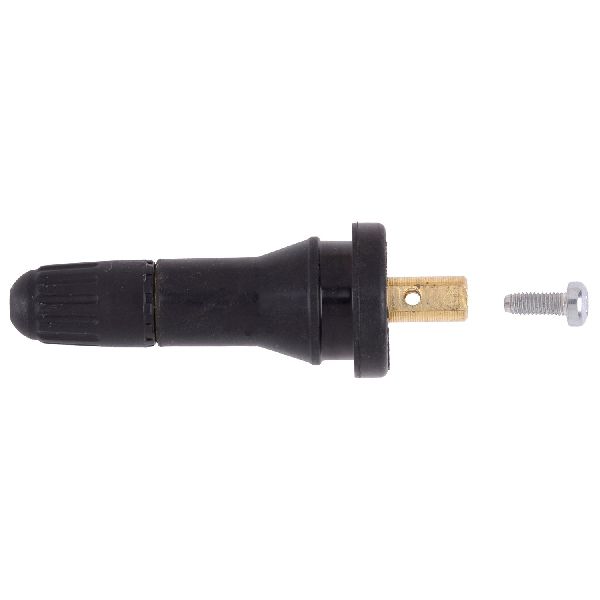
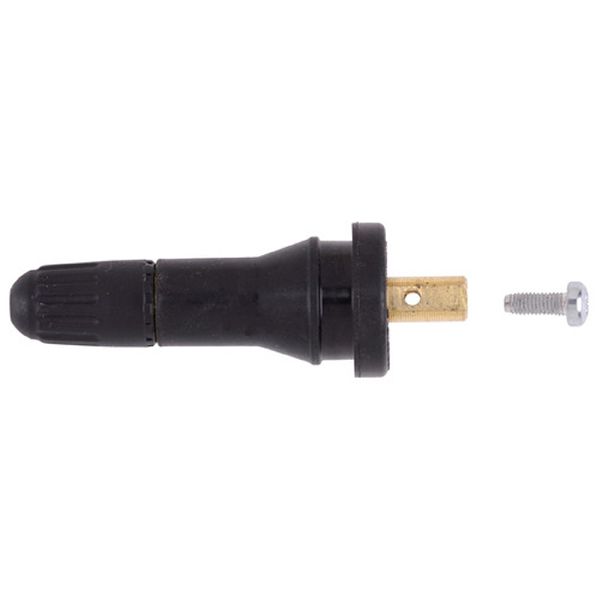
(OEM #15922396)— If the relearn procedure fails for a specific wheel, that sensor is likely dead (battery failure) and needs to be replaced. This part number is widely cross-referenced.
Trusted brands: ACDelco (OEM), Schrader (OEM Supplier), Continental, Huf
OEM price range: $50-$80
Aftermarket price range: $25-$60
Related Codes That Often Appear With This One
- B3055 — No Transponder Modulation. This means the security system can't detect the key's transponder chip at all, often due to RFI jamming the RCDLR.
- B3060 — Unprogrammed Transponder Key. The system detects a key but doesn't recognize its code. This can also be caused by RFI.
- B3935 — Transponder Authentication Error. Another code indicating a failure in the key verification process, often set due to RFI.
- C0750 — Left Front Tire Pressure Sensor code, often seen with C0775.
- C0755 — Right Front Tire Pressure Sensor code, often seen with C0775.
- C0760 — Left Rear Tire Pressure Sensor code, often seen with C0775.
- C0765 — Right Rear Tire Pressure Sensor code, often seen with C0775.
Technical Service Bulletins (TSBs) & Recalls
- PIC5650M (and newer revisions) - Addresses intermittent no-start/stall and security light issues caused by radio frequency interference from aftermarket devices, which can also set C0775 and other related codes. This is the primary document for the stalling issue.
Platform-Specific Known Issues
- As documented in TSB PIC5650M, these vehicles are highly prone to intermittent no-start, stalling, and security light issues caused by radio frequency interference from aftermarket electronics. This is the most critical vehicle-specific issue related to code C0775.
- The issue is not the charger itself, but the radio 'noise' it emits. A user on a Tahoe/Yukon forum might complain their phone isn't charging, but the underlying issue could be RFI that also triggers the C0775 code and stalling.
Mechanic-Grade Diagnostic Values
- RCDLR Power Supply — expected: Battery Positive Voltage (B+). Failure: 0V or significantly lower than battery voltage indicates a broken wire or blown fuse (DSM 10A fuse in I/P fuse block).
- RCDLR Ground — expected: Near 0V potential to chassis ground.. Failure: High resistance or voltage reading indicates a bad ground connection (G401/G402).
Scan Tool Commands That Help
- Tech 2 / GDS2: Setup New RCDLR — This function is required after installing a new RCDLR module to integrate it with the vehicle's other systems before programming keys or TPMS sensors.
- Tech 2 / GDS2: Theft Deterrent System Learn — After replacing the RCDLR, this 10 or 30-minute procedure is mandatory to sync the vehicle's anti-theft system and keys with the new module.
- Tech 2 / GDS2: TPM Sensor Learn — This is the final step after RCDLR replacement to program the individual tire sensor IDs and positions to the new module.
- Tech 2 / GDS2 with J-46079: Simulated Sensor Learning — To definitively test the RCDLR, this special tool simulates known-good sensor signals. If the scan tool doesn't see the IDs sent by the tool, the RCDLR is confirmed faulty.
Wiring & Ground Locations
- RCDLR Module — Located in the rear of the vehicle, behind the trim panel in the upper driver's side D-pillar, near the liftgate hinge.. This is the central receiver for TPMS, key fob, and immobilizer signals. All diagnosis of the shared system centers on this component. Physical access is required to check its connections or replace it.
- RCDLR Antenna System — A coaxial cable runs from the RCDLR to an antenna amplifier, which connects to an antenna grid in the right rear quarter glass.. A loose or disconnected coax cable at the RCDLR, amplifier, or glass can cause intermittent or total signal loss, setting TPMS codes and disabling key fobs, as noted in TSB 16-NA-061.
- G401 / G402 — Primary chassis ground points located in the rear of the vehicle. G402 is specifically on the left rear corner of the frame or D-pillar.. The RCDLR relies on these grounds. A poor connection at G401 or G402 can cause intermittent RCDLR failure, leading to C0775 and other related RF communication issues.
- RCDLR Connector — At the RCDLR module itself.. Pin 1 is Battery Positive Voltage, Pin 2 is the Low Speed LAN data line, and Pin 4 is Ground. Verifying power and ground at these pins is a primary electrical diagnostic step.
Real Owner Repair Stories
- Tahoe Yukon Forum user 'Joseph Garcia' (2007 Yukon XL Denali) — Service Tire Monitor System message, multiple TPMS codes, and the TPMS relearn procedure would fail immediately on the first step (left front tire).
❌ Tried (didn't work) Initial diagnosis suggested a faulty RCDLR because the relearn process wouldn't even begin.
✅ What actually fixed it The right rear wheel speed sensor was faulty. Despite the failure appearing to be at the left front during the relearn, and scan tools not pointing to a specific sensor, replacing the bad right rear sensor allowed the relearn procedure to complete successfully. - YouTube channel 'Raymond's World' (2011 Chevrolet Silverado (same platform/system)) — Key fobs not working, no communication with the RCDLR module on a scan tool.
❌ Tried (didn't work) Initially ordering a new RCDLR module, assuming the module itself had failed.
✅ What actually fixed it There was no power at the RCDLR connector. The red/white power wire was found to be broken/corroded inside the wiring harness running along the driver's side door sill. Repairing the broken wire restored power and communication to the module.
OEM Part Supersession History
15287331, 15782376, 15807816, 15857831, 15946938, 25771044, 25808837, 25852909, 25855007, 25896497→20803735— Standard part evolution and consolidation by GM.
Heads up: A forum user warned against using an 'upgraded' part number that claims to work, as it may cause programming issues. It is critical to use the correct, specified part number for the vehicle's VIN and options. A new RCDLR requires programming with a Tech 2 or GDS2.15922396→13586335, 13598771, 20923680, 22853741, etc.— Part number changes by the OEM (GM) and OEM supplier (Schrader).
Heads up: While many part numbers are interchangeable for the 315MHz TPMS sensor, it is always best to verify fitment by VIN. All sensors for this platform operate at 315 MHz.
Helpful Videos


We Have This Part in Stock


The information in this article is provided for general reference and educational purposes only. Vehicle specifications, procedures, and part compatibility can vary by production date, trim level, and region. Always consult your vehicle's factory service manual and verify part numbers before purchasing or performing repairs. Safety-critical components such as airbags, seat belts, and braking systems should be installed by a qualified professional.
- Gmc YUKON:
- 🧭 Diagnostic Flowchart
- 🎬 Helpful Videos
- 🛍️ Shop This Part
- What's Unique About the 2007-2014 Gmc YUKON
- Symptoms You May Notice
- Most Likely Causes
- Rare But Worth Checking
- Diagnosis Steps
- Parts You'll Likely Need
- Related Codes That Often Appear With This One
- Technical Service Bulletins (TSBs) & Recalls
- Platform-Specific Known Issues
- Mechanic-Grade Diagnostic Values
- Scan Tool Commands That Help
- Wiring & Ground Locations
- Real Owner Repair Stories
- OEM Part Supersession History
- 🎟️ Get 5% Off