

C0800 on 2010-2017 Chevrolet Equinox: Power Steering and StabiliTrak Faults Explained
Code C0800 on a 2010-2017 Equinox usually means a control module has low voltage. Before replacing expensive parts, check for a weak battery and inspect the X411 connector near the fuel tank for corrosion, a common issue documented in GM Technical Service Bulletin #PIT5427B. This connector is a known weak point on both the Equinox and its platform-mate, the GMC Terrain.
- C0800 on a 2010-2017 Equinox means a control module, usually for power steering, has low voltage.
- The most common cause is not the module itself, but a corroded X411 connector under the rear of the vehicle, as per GM TSB PIT5427B.
- Always perform a proper load test on the battery before beginning complex wiring diagnostics, as a weak battery is another frequent cause.
- The GMC Terrain shares this exact chassis and problem, making its repair stories and diagnostics directly applicable.
What's Unique About the 2010-2017 Chevrolet EQUINOX

The second-generation Equinox (and its sibling, the GMC Terrain) is particularly susceptible to electrical issues caused by a poorly located chassis connector. A wiring harness connector known as X411, situated under the rear of the vehicle behind and to the left of the fuel tank, is prone to water intrusion and corrosion. This single point of failure can disrupt the high-speed CAN bus communication and power to multiple modules, including those for power steering, ABS, and stability control, making it a primary suspect for code C0800 on this platform.
Diagnostic Flowchart

Tap your situation to follow the diagnostic path that matches what you're seeing on this vehicle.
Symptoms You May Notice

- "Service Power Steering" message on the instrument panel
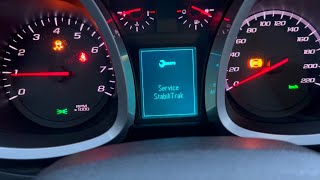
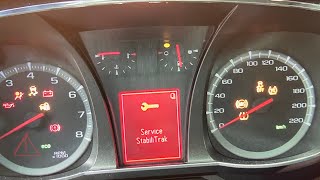
- "Service StabiliTrak", "Se 🎬 Watch this diagnostic walkthrough for StabiliTrak and steering warnings.rvice ABS", or "Service AWD" messages
- Steering becomes heavy or difficult (loss of power assist)
- ABS and Traction Control warning lights are illuminated
- Slow or difficult engine cranking
- Door locks cycling erratically
- Temporary loss of engine power
- Replacing the Power Steering Rack or Pump when the issue is purely electrical.
- Replacing the Power Steering Control Module (PSCM) before verifying its power, ground circuits, and the integrity of the X411 connector 🎬 See how a corroded connector causes these specific fault codes. are intact.
Most Likely Causes

- Corroded X411 Connector 🔴 High Probability The X411 connector is located under the rear of the vehicle behind the fuel tank, an area exposed to road salt, water, and debris, leading to corrosion of the pins and wires.
How to confirm: Visually inspect the X411 connector for green or white corrosion, swollen pins, or water damage. This is explicitly called out in GM TSB #PIT5427B and its revisions. The connector is located behind and to the left of the fuel tank.
Typical fix: Clean or replace the corroded terminals and the connector housing. In many cases, a pigtail connector must be spliced in. Apply dielectric grease to the new connector to prevent future moisture intrusion.
Est. part cost: $20-$100 - Weak or Failing Battery 🟡 Medium Probability → Shop Vehicle Battery
How to confirm: Perform a battery load test. A simple voltage check is insufficient; the battery must be tested under load to verify its health. Many auto parts stores offer this service for free. A reading below 9.6V during cranking or below 12.4V at rest indicates a weak battery. Several owners have confirmed that simply replacing an old battery resolved the issue.
Typical fix: Replace the vehicle's 12V battery.
Est. part cost: $150-$250 - Failing Alternator ⚪ Low Probability → Shop Alternator
How to confirm: With the engine running, check the voltage at the battery terminals. A healthy alternator should produce between 13.5 and 14.5 volts. If the voltage is low, high, or erratic, the alternator is likely failing.
Typical fix: Replace the alternator.
Est. part cost: $200-$450 - Blown 80A Mega Fuse for Power Steering ⚪ Low Probability This fuse can blow after a jump-start attempt if the cables are connected incorrectly. It is the main fuse for the electric power steering motor.
How to confirm: Locate the under-hood fuse box. The 80A mega fuse is a large, bolted-in fuse. Visually inspect it for a break in the internal link. Test for continuity across its terminals.
Typical fix: Replace the 80A mega fuse.
Est. part cost: $10-$20
Rare But Worth Checking
- Faulty Power Steering Control Module (PSCM): → Shop Power Steering Control Module While possible, the module itself is less likely to fail than the wiring providing its power. All wiring, connectors (especially X411), fuses, and power sources should be thoroughly checked before condemning the module. Replacement often requires programming with specialized tools.
- Poor Ground Connection: A loose or corroded ground strap, particularly the main chassis or power steering grounds, can cause intermittent low voltage issues. On other GM vehicles, issues with ground connections have been known to cause a C0800 code.
Diagnosis Steps
- Read all stored Diagnostic Trouble Codes (DTCs) from all modules. Note any communication codes (U-codes) or other chassis codes (C-codes), paying close attention to any with a '-03' suffix indicating low voltage.
- Test the 12V battery using a digital load tester to ensure it is in good health. A simple voltage check is not enough.
- With the engine running, measure the alternator output voltage at the battery. It should be stable and between 13.5-14.5V.
- Inspect the 80A Mega Fuse in the under-hood fuse block that supplies power to the Electric Power Steering system. Check if it's blown, especially if the problems started after a jump start. 🎬 Watch how to check the mega fuse after a jump start.
- If the battery, alternator, and fuse are good, the next step is to inspect the X411 connector. Locate it under the vehicle, to the left of and behind the fuel tank.
- Disconnect X411 and carefully inspect both halves for any signs of green or white corrosion, bent or swollen pins, or water damage. Pay close attention to the larger gauge wires which supply power.
- If corrosion is found, repair or replace the affected terminals and the connector itself. Pigtail kits are available. Ensure a weatherproof seal on the new connector by using dielectric grease.
- If the X411 connector is clean, check the main power and ground connections at the battery, chassis, and directly at the Power Steering Control Module (PSCM) for tightness and corrosion.
- Only after confirming all wiring and power sources are good should you consider replacing the PSCM. Note that a replacement module will require SPS programming by a dealer or a well-equipped independent shop.
Parts You'll Likely Need
- Wiring Harness Connector (X411) — This specific connector is a known failure point for corrosion, as documented by GM in a TSB. Repair often requires a new connector pigtail to be spliced in.
Trusted brands: ACDelco, Dorman
OEM price range: $40-$80
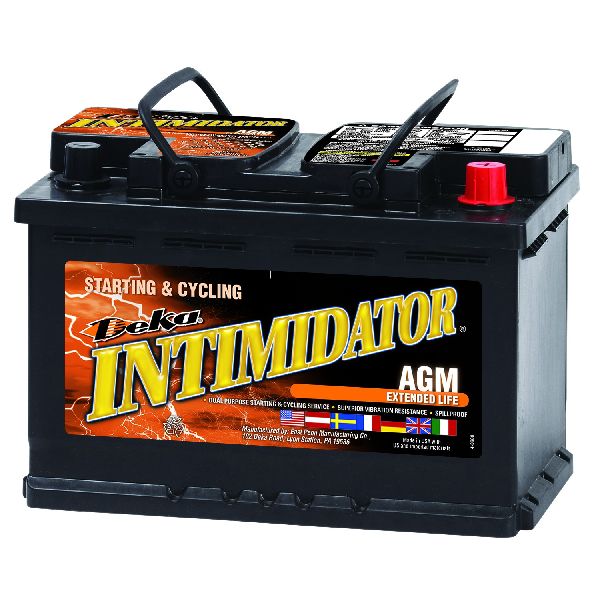
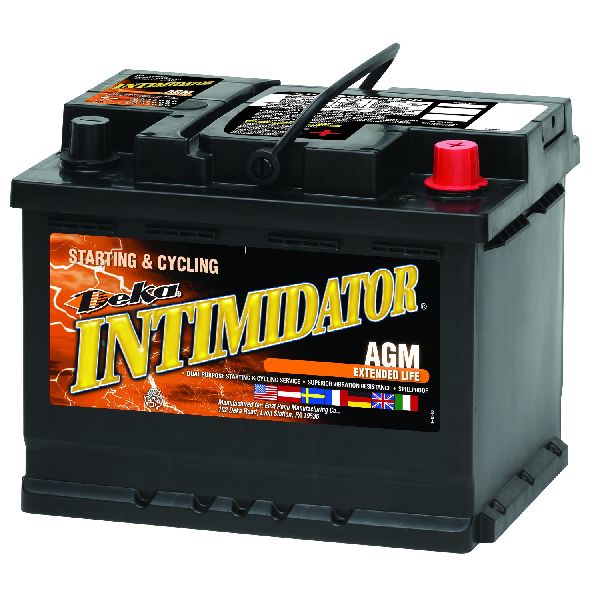
Aftermarket price range: $20-$50 - AGM Battery — A weak battery is a common trigger for low voltage codes like C0800. Multiple owners have reported fixing the issue by simply replacing the battery.
Trusted brands: ACDelco, DieHard, Interstate
OEM price range: $200-$300
Aftermarket price range: $150-$250 - Power Steering Control Module Connector
(OEM #ACDelco PT2373 (example))— In some cases, the corrosion or damage may be at the module itself, not the X411 chassis connector. This pigtail allows for repair without replacing the entire harness.
Trusted brands: ACDelco, Carquest
OEM price range: $60-$90
Aftermarket price range: $40-$70
Related Codes That Often Appear With This One
- U0121 — Lost Communication With Anti-Lock Brake System (ABS) Control Module. This often appears with C0800 because the corroded X411 connector affects the communication lines for multiple modules.
- C0710 — Steering Position Signal. This can be set when the Power Steering Control Module is malfunctioning or has bad power, as noted in TSB #PIT5427B.
- U0100 — Lost Communication With ECM/PCM. Like U0121, this points to a network disruption, often caused by the X411 connector issue.
- B1325 — Device Power Circuit Voltage Below Threshold. This is a general low voltage code that often accompanies C0800, pointing towards a battery or charging system problem.
Technical Service Bulletins (TSBs) & Recalls
- PIT5427B: Service Suspension Control, or Hard Steering. Points to inspecting the X411 connector for damage or corrosion as a likely cause for C0800 and other related codes.
- PIT5427A: An earlier version of the same TSB covering 2010-2016 models, confirming the X411 connector as the culprit for a host of electrical maladies.
Platform-Specific Known Issues
- Technical Service Bulletin PIT5427B specifically identifies corrosion in the X411 connector as the cause for C0800 and a wide range of other communication and chassis codes, leading to messages like "Service StabiliTrak" and "Service Power Steering".
- A video on a 2014 GMC Terrain with identical symptoms (loss of power steering, StabiliTrak lights, cycling door locks) traced the intermittent electrical fault through the vehicle's wiring, highlighting the shared nature of this problem.
Mechanic-Grade Diagnostic Values
- System voltage at the control module (EBCM or PSCM) — expected: 9.0 - 17.0 Volts. Failure: A voltage below 9.0V or above 17.0V for more than a few seconds will set code C0800.
- Parasitic battery draw after all modules have gone to sleep (approx. 30-45 mins) — expected: Less than 50 milliamps (0.050A). Failure: A sustained draw above 50mA indicates a module is not sleeping or there is a short, which can drain the battery and cause low voltage codes.
- CAN Bus High and Low line voltage (Key On, Engine Off) — expected: CAN High (Pin 6 at DLC): ~2.7V; CAN Low (Pin 14 at DLC): ~2.3V.. Failure: Voltages that are stuck high, low, or match each other indicate a bus communication problem, often related to wiring issues (like at X411).
- Voltage test at the EBCM connector — expected: 9-17 Volts. Failure: If voltage is out of range, there is high resistance or an open in the power or ground circuits.
Hidden / Shadow Codes Worth Checking
- C0800-03: Device Power 1 Circuit Voltage Below Threshold. This is the most common sub-code and explicitly points to a low voltage condition (less than 9V for approx. 5 seconds) at the reporting module, often the PSCM or EBCM. (see via A professional scan tool like the GM GDS2 or equivalent will display these sub-codes, which are not always visible on basic OBD-II readers.)
Scan Tool Commands That Help
- GM GDS2 (Global Diagnostic System 2): Power Steering Control Module Programming/Setup — This is required after replacing the Power Steering Control Module (PSCM) or the entire steering rack assembly. The process involves multiple steps: Programming (installs software), Configuration (tells the module about vehicle options), and Setup (calibrates sensors).
- GM GDS2 (Global Diagnostic System 2): Steering Angle Sensor Calibration — If the steering wheel was moved while the steering column was disconnected, or after a wheel alignment or rack replacement. An uncalibrated sensor can cause StabiliTrak warnings and other chassis codes alongside C0800.
- GM GDS2 (Global Diagnostic System 2): Vehicle DTC Information (Full Scan) — As the first step in diagnosis. This queries all modules on the vehicle's network to see which ones are reporting codes or are not communicating, which can help pinpoint a network-wide issue (like X411) versus a single module problem.
Wiring & Ground Locations

- X411 — Under the rear of the vehicle, located behind and to the left of the fuel tank.. This is the most critical connector to check. It is a large, multi-wire chassis harness connector that is highly susceptible to corrosion from road salt and water, causing a loss of power and communication to the PSCM, ABS, and other rear-mounted modules.
- G103 — At the left rear of the engine compartment on the cowl, above the brake booster.. This ground point serves multiple critical modules, including the Body Control Module (BCM), Instrument Panel Cluster (IPC), and the Data Link Connector (DLC). A poor connection here can cause widespread electrical issues.
- G301 — Located on the floor behind the right rear passenger seat track.. Provides a ground path for components in the rear of the vehicle. While not directly tied to the PSCM, poor grounds in the general area can cause voltage drops and strange behavior in nearby modules.
- Engine Block Ground (V6) — On the back side of the engine block; there are typically three small ground wires bundled together.. A loose or corroded main engine ground can cause the starter to seek a ground path through smaller, sensitive circuits, leading to voltage fluctuations and module damage.
- Loose Engine Bay Ground — On the firewall, behind the A/C compressor.. In one documented case, a loose ground bolt at this location after an engine replacement was the sole cause of a no-start condition accompanied by a 'Service Stabilitrak' message, mimicking the symptoms of C0800.
Real Owner Repair Stories
- YouTube user documenting a 2010 Equinox repair (2010 Chevrolet Equinox) — No start, 'Service Stabilitrak' message on the dash, multiple electrical issues.
❌ Tried (didn't work) Replacing the transmission (used), Replacing the engine (used), Replacing the starter
✅ What actually fixed it The mechanic who installed the replacement engine had failed to fully tighten a ground wire bolt located on the firewall behind the A/C compressor. Tightening this single bolt resolved all issues. - CorvetteForum user '70stingray14' (2014 Chevrolet Corvette (illustrates a common GM ground issue)) — Code C0800, Stabilitrak system 'freaking out', Brake and ABS lights on.
❌ Tried (didn't work) Replacing the battery, Replacing the alternator
✅ What actually fixed it The user had installed an aftermarket oil catch can. The bracket for the catch can was mounted using a primary steering system ground bolt, and corrosion had developed at the connection. The final fix was moving the catch can bracket to a different location and cleaning the original ground point. - YouTube user 'Repairs & Reviews' (2014 Chevrolet Malibu (illustrates a related code and fix)) — C0800, no power steering, steering angle sensor errors after replacing steering rack with a used unit.
❌ Tried (didn't work) Checking power and ground wires to the module (they were good).
✅ What actually fixed it The steering angle sensor was not properly centered with the road wheels. The scan tool showed the sensor at 0 degrees while the wheels were physically turned. This discrepancy caused the StabiliTrak system to disable power steering. The final fix was to physically straighten the wheels and then use a scan tool to perform a steering angle sensor calibration/re-learn procedure.
OEM Part Supersession History
23412215, 84059834, 84073904, 84228166, 84346954→84446361— Standard part evolution, likely for improved reliability or manufacturing changes.
Heads up: When replacing the Power Steering Control Module (PSCM), it is critical to use the latest part number. Also, note that if communication cannot be established with the original module to extract its data, a brand new module may not be programmable, requiring replacement of the entire steering rack assembly.
Model Year Variations Within This Range
- 2010-2017: While the core hardware is similar, GM released software updates for the Power Steering Control Module (PSCM) and Electronic Brake Control Module (EBCM). In some cases, a C0800 code accompanied by other steering-related DTCs could be resolved by reprogramming the modules to the latest calibration, rather than replacing parts.
Helpful Videos

We Have This Part in Stock


The information in this article is provided for general reference and educational purposes only. Vehicle specifications, procedures, and part compatibility can vary by production date, trim level, and region. Always consult your vehicle's factory service manual and verify part numbers before purchasing or performing repairs. Safety-critical components such as airbags, seat belts, and braking systems should be installed by a qualified professional.
- Chevrolet EQUINOX:
- 🧭 Diagnostic Flowchart
- 🎬 Helpful Videos
- 🛍️ Shop This Part
- What's Unique About the 2010-2017 Chevrolet EQUINOX
- Symptoms You May Notice
- Most Likely Causes
- Rare But Worth Checking
- Diagnosis Steps
- Parts You'll Likely Need
- Related Codes That Often Appear With This One
- Technical Service Bulletins (TSBs) & Recalls
- Platform-Specific Known Issues
- Mechanic-Grade Diagnostic Values
- Hidden / Shadow Codes Worth Checking
- Scan Tool Commands That Help
- Wiring & Ground Locations
- Real Owner Repair Stories
- OEM Part Supersession History
- Model Year Variations Within This Range
- 🎟️ Get 5% Off