

C0800 on 2014-2016 GMC Sierra 1500: Control Module Power Circuit Fault Guide
On a 2014-2016 Sierra, code C0800 almost always points to a poor Body Control Module (BCM) ground at location G218 under the driver's side dash. The dash insulation mat gets trapped under the ground nut, causing a bad connection, a flaw documented in GM TSB PIT5405C. The fix is often free, requiring only labor to access and clean the ground point by trimming the insulation.
- C0800 on a 2014-2016 Sierra means a control module is getting improper voltage.
- Before replacing any parts, inspect the BCM ground stud (G218) under the driver's side dash. This is the most common cause.
- The fix is often as simple as trimming away an interfering insulation mat and tightening a 10mm nut.
- Symptoms are often widespread and seemingly unrelated, from flickering lights to a no-start condition.
- Always test the battery with a proper load tester before suspecting more complex issues.
What's Unique About the 2014-2016 Gmc SIERRA 1500
This generation of GMC Sierra and its sibling, the Chevy Silverado, are built on GM's K2XX platform. These vehicles are known for a specific manufacturing flaw where the sound-deadening insulation mat on the front dash is often improperly installed and gets trapped under the main ground stud for the Body Control Module (BCM), known as G218. This creates a poor ground connection that leads to a wide range of bizarre electrical issues and sets code C0800, even when the battery and alternator are perfectly healthy. This issue is so common that GM issued multiple Technical Service Bulletins, such as PIT5405C, to guide technicians directly to this fix.
Diagnostic Flowchart
Tap your situation to follow the diagnostic path that matches what you're seeing on this vehicle.
Symptoms You May Notice
- Intermittent flickering of headlights and dash lights
- Instrument cluster, radio, or HVAC display going blank or resetting
- Engine stalling, especially at low speeds or while turning the steering wheel
- No-start or slow-crank condition
- "Service StabiliTrak", "Service Power Steering", or "Hood Ajar" messages appearing on the dash
- Reduced or complete loss of power steering assist
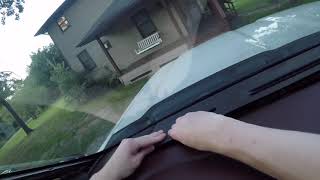
- Erratic behavior of power door locks or dome lights (may flash when shifting into reverse) 🎬 See how this ground fault causes flickering and power loss.
- Wipers continue to run after being turned off, then park in the incorrect position
- Alarm sounds randomly when locking doors
- Replacing the alternator when the battery or a poor ground is the actual cause.
- Replacing the Body Control Module (BCM) before thoroughly inspecting, cleaning, and securing the G218 ground connection.
- Replacing the battery without first checking for the G218 ground issue, leading to the problem recurring.
Most Likely Causes
- Poor Body Control Module (BCM) Ground at G218 🔴 High Probability → Shop Body Control Module A known manufacturing defect where the dash insulator mat gets trapped between the ground wire's eyelet and the body stud, preventing a secure connection. This is the primary focus of GM TSB #PIT5405C and later revisions.
How to confirm: Visually inspect the G218 ground stud, located under the driver's side dash, behind the plastic trim near the A-pillar and speaker. Check if the 10mm nut is loose or if the black, fibrous insulation mat is pinched underneath the ground wire's ring terminal.
Typical fix: Remove the driver's side A-pillar trim and side dash panel. Locate the G218 stud. Remove the 10mm nut, pull the ground wire(s) off the stud, use a utility knife to trim away the interfering insulation mat, clean the metal contact surfaces, and securely retighten the nut. 🎬 Watch: Step-by-step guide to fixing the G218 ground issue.
Est. part cost: $0 - Weak or Failing Battery 🟡 Medium Probability → Shop Vehicle Battery Modern trucks have a high electrical demand. A battery that is nearing the end of its life may provide enough voltage to start the truck but can drop below the BCM's 9-volt threshold under load, triggering the code.
How to confirm: Perform a battery load test using a digital battery tester. A simple voltage check is insufficient. Many auto parts stores offer this service for free. TSB 18-NA-161 also outlines a specific battery test procedure.
Typical fix: Replace the vehicle's battery. An AGM (Absorbent Glass Mat) battery is often recommended for these vehicles.
Est. part cost: $150-$300 - Loose or Corroded Battery Terminals/Cables ⚪ Low Probability → Shop Vehicle Battery
How to confirm: Inspect the positive and negative battery terminals for corrosion and ensure the clamps are tight. TSB #PIT5405C notes that the battery posts should protrude 1-2mm above the clamps for a proper connection and the clamp nuts torqued to 7 Nm (62 lb-in). Check the negative cable's connection to the engine block for tightness (45 Nm or 33 ft-lb).
Typical fix: Clean the battery posts and terminals with a wire brush. Tighten all connections to the manufacturer's specified torque.
Est. part cost: $5-$10
Rare But Worth Checking
- Failing Alternator: → Shop Alternator An alternator producing unstable, low, or excessively high voltage can trigger this code. Have the charging system tested to confirm its output is stable and within the 13.5-14.8 volt range while the engine is running.
- Shorted Starter B+ Cable: → Shop Starter Motor TSB #PIT5405C also mentions a possibility of the main battery cable shorting against the starter motor's heat shield due to being mis-installed or the shield being loose, causing voltage fluctuations.
- Faulty Negative Battery Cable: → Shop Vehicle Battery Some owners and TSB 18-NA-161 have reported that the negative battery cable itself can fail internally, causing high resistance. A voltage drop test across the cable while cranking the engine can confirm this; a drop above 200mV indicates a problem.
- Faulty Body Control Module (BCM): → Shop Body Control Module If all power and ground circuits, including G218, are confirmed to be perfect through visual inspection and voltage drop testing, the BCM itself may have an internal fault. This is a last resort. Replacement BCMs often require programming by a dealer or specialized shop. Common part numbers include 13594764 and 13506935.
Diagnosis Steps
- Scan the vehicle for all Diagnostic Trouble Codes (DTCs). A cluster of 'U' (communication) codes alongside C0800 strongly points to a systemic power/ground issue like G218.
- Perform a comprehensive battery and charging system test. The battery must pass a load test, not just a simple voltage check. Ensure alternator output is stable.
- If the battery/alternator are good, proceed to inspect the BCM ground G218. This is the most likely cause.
- To access G218, first remove the driver's side A-pillar grab handle (usually two 10mm bolts under plastic covers).
- Using a plastic trim removal tool, carefully pry off the dash-side trim panel that was covered by the door.
- Carefully pull up and away the large plastic dash trim piece that runs along the base of the windshield. It is held by clips.
- Locate the G218 ground stud under the dash, typically to the left of the driver's side speaker. It will be a metal stud with one or more ground wires attached by a 10mm nut.
- Confirm if the fibrous dash insulation mat is trapped under the ground wire eyelet(s).
- If the mat is trapped, remove the 10mm nut, pull the ground wire(s) off, and use a utility knife to cut a clearance square in the mat around the stud. Scrape the body surface clean to ensure a good metal-to-metal contact.
- Reinstall the ground wire(s) and securely tighten the 10mm nut. Reassemble the dash trim in reverse order.
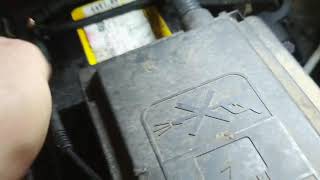
- If G218 is clean, perform voltage drop tests on the main battery cables as per TSB 18-NA-161. A drop over 100mV on the positive side or 200mV on the negative side during cranking indicates a bad cable. 🎬 Watch: How to replace a faulty negative battery cable.
Parts You'll Likely Need
- No parts needed — The most common fix is repairing the existing G218 ground connection, which only requires labor and basic tools.
OEM price range: $0
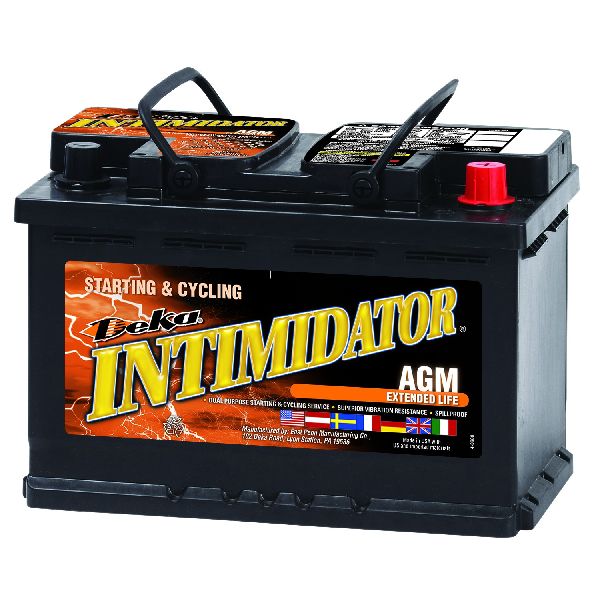
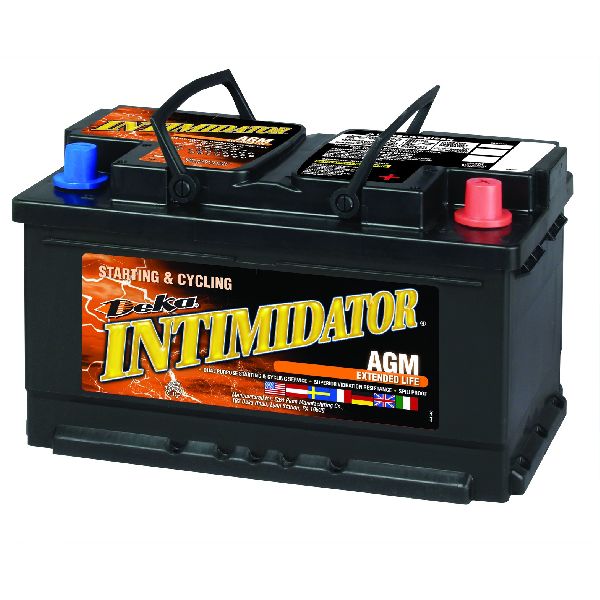
Aftermarket price range: $0 - AGM Battery — If the battery fails a load test, it is the source of the low voltage condition. These trucks have high electrical demands, making a quality AGM battery a good investment.
Trusted brands: ACDelco, DieHard, Duralast
OEM price range: $250-$350
Aftermarket price range: $180-$300 - Body Control Module (BCM)
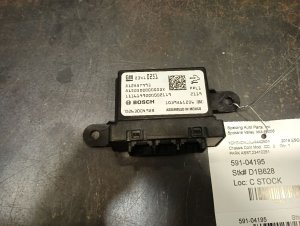
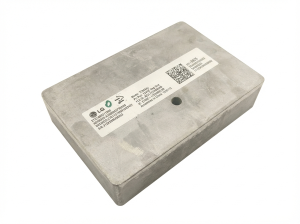
(OEM #13594764, 13506935)— Extremely rare cause. Only to be replaced after all power, ground, and wiring issues have been definitively ruled out. Requires programming.
Trusted brands: ACDelco (GM Genuine)
OEM price range: $150-$250
Aftermarket price range: $100-$200
Related Codes That Often Appear With This One
- U0073 — Control Module Communication Bus 'A' Off
- U0100 — Lost Communication With ECM/PCM 'A'
- U0121 — Lost Communication With Anti-Lock Brake System (ABS) Control Module
- U0140 — Lost Communication With Body Control Module
- C0710 — Steering Position Signal
- C0544 — Power Steering Control Module related code, often appears with steering issues.
Technical Service Bulletins (TSBs) & Recalls
- PIT5405C (Jan 2017): 'Steering Jerks Or Kicks Back / Reduced Power Steering Assist / Engine Stall / No Start /
Platform-Specific Known Issues
- Technical Service Bulletin PIT5405C directly addresses a wide range of electrical issues, including DTC C0800, on 2014-2017 GM trucks and SUVs. It explicitly calls out a poor BCM ground at G218 as a primary cause, often due to the dash insulator mat being trapped under the ground terminal.
- TSB 18-NA-161 provides detailed procedures for testing battery cables via voltage drop tests, identifying another potential source of low voltage to the vehicle's modules.
Mechanic-Grade Diagnostic Values
- BCM Operating Voltage — expected: 9.5V - 17V. Failure: Voltage reading below 9.5V or above 17V for more than 5 seconds.
- Negative Battery Cable Voltage Drop (Cranking) — expected: < 200mV. Failure: A reading greater than 200mV indicates high resistance in the cable or its connections.
- Positive Battery Cable Voltage Drop (Cranking) — expected: < 100mV. Failure: A reading greater than 100mV indicates high resistance in the cable or its connections.
- Battery Cable Clamp Nut Torque — expected: 7 Nm (62 lb-in). Failure: Loose clamps can cause intermittent voltage drops.
- Negative Battery Cable to Engine Block Nut Torque — expected: 45 Nm (33 ft-lb). Failure: A loose ground connection at the engine block can cause widespread electrical issues.
- G218 Ground Nut Torque — expected: 9 Nm (80 lb-in). Failure: A loose nut at G218 is a primary cause of the fault.
Hidden / Shadow Codes Worth Checking
- C0800 03: Device Power Circuit Voltage Below Threshold. This specifically indicates the module's power supply dropped too low. (see via Professional scan tools like GM GDS2 or high-end aftermarket scanners.)
- C0800 07: Device Power Circuit Voltage Above Threshold. This indicates the module's power supply was too high, often pointing to an alternator/regulator issue. (see via Professional scan tools like GM GDS2 or high-end aftermarket scanners.)
- C0800 0F: Control Module Power Circuit - Signal Erratic. This points to an unstable or fluctuating power supply. (see via Professional scan tools like GM GDS2 or high-end aftermarket scanners.)
Scan Tool Commands That Help
- GM GDS2 (or equivalent): BCM Data Display -> BCM Voltage Status — To monitor the BCM's interpretation of system voltage in real-time. It should read 'Normal'. If it shows 'Low' or 'High', it confirms the condition that sets DTC C0800.
- GM GDS2 (or equivalent): BCM Data Display -> Cranking Voltage — To observe the voltage received by the BCM during engine cranking. A significant drop here, even with a good battery, points towards a high-resistance connection like G218 or a faulty battery cable.
Wiring & Ground Locations
- G218 — Under the driver's side dash, to the left of the speaker, near the A-pillar. It's a metal stud on the body with one or more ground wires secured by a 10mm nut.. This is the primary ground for the Body Control Module (BCM). A poor connection here due to trapped insulation is the most common cause of C0800 and related electrical faults on this platform.
- BCM Connector X1 — One of the main multi-pin connectors on the Body Control Module.. Pin 14 (Pink wire) is a primary Ignition 1 Voltage feed. Testing for stable voltage at this pin can help determine if the fault is upstream of the BCM.
- BCM Connector X5 — A large, 25-pin connector on the Body Control Module.. Pin 25 (Black wire) is a primary ground circuit for the BCM. Performing a voltage drop test between this pin and a known good chassis ground can definitively confirm the integrity of the ground path, including G218.
- Mega Fuse Block — Attached to the positive battery terminal, under a plastic cover.. This block houses a 175A main fuse that protects major vehicle circuits. A loose connection or an internally fractured fuse can cause intermittent, system-wide power loss that mimics a bad ground or battery.
Real Owner Repair Stories
- YouTube user comment on a G218 fix video (2014-2018 GMC Sierra/Chevy Silverado) — Truck would randomly die, flickering lights, various warning messages.
❌ Tried (didn't work) Hours of online research trying to diagnose the problem.
✅ What actually fixed it Following a video guide to access the G218 ground, pulling back the insulation, and tightening the nut fixed all the electrical issues in 30 minutes. - YouTube video from channel 'electrical junky' (2017 Chevy Silverado) — Slow crank/no start, battery drain overnight, code C0800 stored.
❌ Tried (didn't work) Replacing the battery., Having the battery and alternator load tested (both passed).
✅ What actually fixed it The confirmed fix, based on Identifix data and TSB 18-NA-161, was replacing the negative battery cable, which had developed high internal resistance. - YouTube video from channel 'GM Electrical Issue SOLVED' (GM Truck (model year similar to 2014-2016)) — Complete no-start, no lights on the dash, as if the battery was removed.
❌ Tried (didn't work) Replacing the battery.
✅ What actually fixed it The 175A Mega Fuse on the positive battery terminal was corroded and had failed. Replacing the fuse restored all power.
When the Usual Fixes Don't Work
- While the G218 ground is the most frequent culprit for C0800, a significant number of owners have performed the fix only to have the problem persist. In many of these cases, the ultimate solution was the replacement of the negative battery cable. The cable can develop high internal resistance that is not visible and may not be obvious with a simple continuity test, but fails under load (cranking). This is documented in TSB 18-NA-161 and confirmed by multiple owner repair stories. Therefore, if cleaning G218 does not resolve the issue, a voltage drop test of the negative battery cable should be the immediate next step before considering more expensive parts like the BCM.
OEM Part Supersession History
13594764→13536772 (and others)— Part revision and consolidation by the manufacturer.
Heads up: Replacement BCMs must be programmed (cloned) with the original module's data. Installing a used or new blank BCM will result in a no-start condition due to the anti-theft system and incorrect vehicle configuration.23164977, 23235510, 23247668→84109460— Supersession for the negative battery cable assembly.
Model Year Variations Within This Range
- 2014-2016: The core K2XX electrical architecture and the G218 ground design flaw are consistent across this entire range. While infotainment options changed in 2016 (e.g., introduction of Apple CarPlay), the fundamental cause and repair for code C0800 remain the same.
Helpful Videos


Used OEM Parts in Stock
New Aftermarket Parts Available


The information in this article is provided for general reference and educational purposes only. Vehicle specifications, procedures, and part compatibility can vary by production date, trim level, and region. Always consult your vehicle's factory service manual and verify part numbers before purchasing or performing repairs. Safety-critical components such as airbags, seat belts, and braking systems should be installed by a qualified professional.
- Gmc SIERRA 1500:
- 🧭 Diagnostic Flowchart
- 🎬 Helpful Videos
- 🛍️ Shop This Part
- What's Unique About the 2014-2016 Gmc SIERRA 1500
- Symptoms You May Notice
- Most Likely Causes
- Rare But Worth Checking
- Diagnosis Steps
- Parts You'll Likely Need
- Related Codes That Often Appear With This One
- Technical Service Bulletins (TSBs) & Recalls
- Platform-Specific Known Issues
- Mechanic-Grade Diagnostic Values
- Hidden / Shadow Codes Worth Checking
- Scan Tool Commands That Help
- Wiring & Ground Locations
- Real Owner Repair Stories
- When the Usual Fixes Don't Work
- OEM Part Supersession History
- Model Year Variations Within This Range
- 🎟️ Get 5% Off