

C0800 on 2015-2017 GMC Yukon: Causes and Fixes for Low Device Voltage
On a 2015-2017 GMC Yukon, code C0800 is most often caused by a poor Body Control Module (BCM) ground at location G218. The front dash insulator mat can get trapped under the ground terminal, causing a bad connection. This is a well-documented issue in GM TSBs and is usually a no-cost fix requiring only labor to access, clean, and secure the ground connection located in the driver's side footwell.
- Code C0800 on a 2015-2017 Yukon almost always points to a bad ground connection, not a bad part.
- Before buying any parts, inspect the G218 ground terminal inside the driver's side footwell for a trapped dash insulator mat.
- This issue will often cause a large number of other communication (U-prefix) codes to appear at the same time.
- The fix is typically free, requiring only basic tools to access, clean, and tighten the ground connection.
- Always check simple things first, like the main battery terminals, before assuming a more complex problem.
What's Unique About the 2015-2017 Gmc YUKON

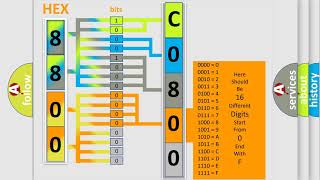
The 2015-2017 Yukon and its GM K2XX platform siblings are known for a specific manufacturing defect that triggers this code. Technical Service Bulletins (TSBs) #PIT5405C and its successor #18-NA-161 directly state that the front dash insulator mat can become trapped between the BCM ground terminal (G218) and the chassis during assembly. This creates a high-resistance ground connection, leading to a host of bizarre electrical issues and setting code C0800 along with a 🎬 Watch: A short explanation of the C0800-03 fault code. 'network storm' of other communication codes.
Diagnostic Flowchart

Tap your situation to follow the diagnostic path that matches what you're seeing on this vehicle.
Symptoms You May Notice

- "Service Power Steering" or "Power Steering Drive With Care" message on the dash.
- Sudden loss of power steering assist, making the wheel very hard to turn, often during turns.
- "Service Stabilitrak" message.
- Instrument Panel Cluster (IPC) going blank or flickering.
- Radio/infotainment screen flickering or going blank.
- Engine stalling, particularly during low-speed turns.
- A multitude of other trouble codes stored in various modules, especially U-series (communication) codes.
- Slow cranking or a dead battery, especially in cold weather.
- Door locks cycling or alarm sounding unexpectedly when locking doors.
- Replacing the Body Control Module (BCM)
- Replacing the Power Steering Rack or Power Steering Control Module (PSCM).
- Replacing the battery or alternator without proper testing of the grounds first.
Most Likely Causes

- Poor Body Control Module (BCM) Ground at G218 🔴 High Probability → Shop Body Control Module A known manufacturing issue documented in GM Technical Service Bulletins #PIT5405C and #18-NA-161 where the dash insulator mat gets trapped under the ground terminal during assembly.
How to confirm: Visually inspect the G218 ground location. It is on the driver's side inside the cabin, to the left of the brake pedal, behind the carpet and kick panel, sometimes described near the left front dash defroster deflector. Check if the black foam insulation material is pinched under the ground nut and terminal ring. The nut may also be loose or cross-threaded.
Typical fix: Disconnect the battery. Remove the driver's side kick panel and pull back the carpet. Remove the ground nut (typically 10mm), pull the insulation material away from the stud, and trim it back so it cannot interfere again. Thoroughly clean the terminal ring, the stud, and the chassis surface with a wire brush to ensure bright metal-to-metal contact. Securely re-fasten the ground nut and reassemble the trim.
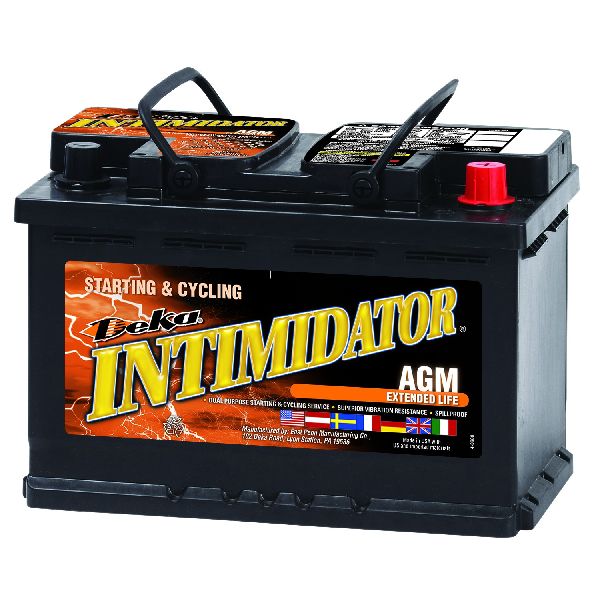
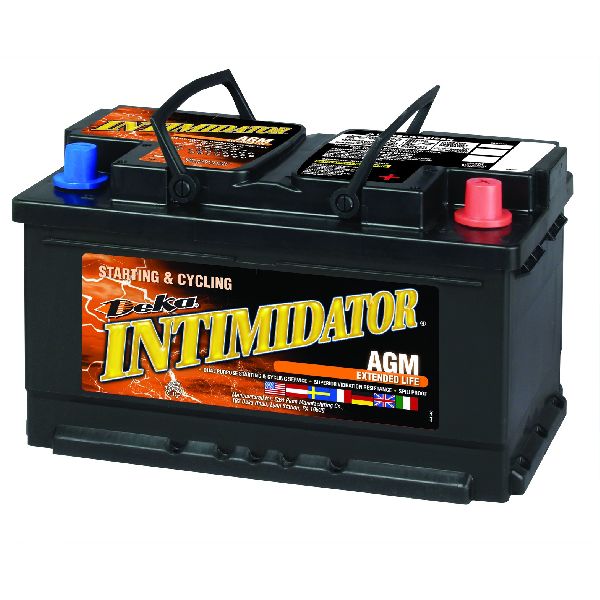
Est. part cost: $0 - Loose or Corroded Battery Terminals/Cables 🟡 Medium Probability → Shop Vehicle Battery Vibration and time can loosen any vehicle's battery connections. TSB #PIT5405C specifically calls out checking battery cable connections, including the negative cable's connection to the engine block (torque to 45 Nm / 33 ft lb) and the positive/negative terminal nuts (torque to 7 Nm / 62 lb in). Some owners have fixed issues by replacing the entire negative battery cable assembly.
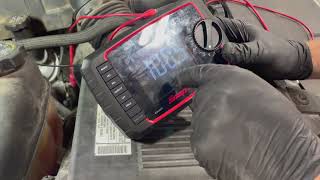
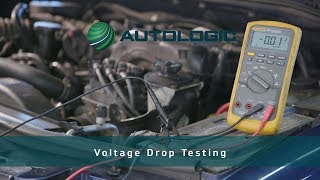
How to confirm: Attempt to twist the battery terminals by hand; any movement indicates they are loose. Visually inspect for white or blue-green corrosion. Perform a voltage drop test on the main power and ground cables to check for high resistance. A voltage drop of more than 200 mV on the negative cable or 100 mV on the positive cable while cranking indicates a bad cable.
Typical fix: Disconnect the battery (negative first). Clean the posts and terminals with a battery terminal brush. Reconnect and tighten all terminals to the correct torque specifications. If a voltage drop test fails, replace the faulty cable (e.g., ACDelco 20776808).
Est. part cost: $5-$60 - Failing Battery or Alternator ⚪ Low Probability → Shop Alternator
How to confirm: Test the battery with a multimeter; it should read ~12.4-12.6V when the engine is off. With the engine running, the alternator should produce a voltage of ~13.7-14.7V. Most auto parts stores can perform a comprehensive load test on the battery and charging system for free, which is more reliable than a simple voltage check.
Typical fix: Replace the failing battery or alternator.
Est. part cost: $150-$600
Rare But Worth Checking
- Faulty Seat Memory Control Module (SMCM): A separate GM document (#20-NA-100) mentions that in cold temperatures (below 40°F), a faulty SMCM can repeatedly wake up the vehicle's communication network, causing a parasitic battery drain. This can lead to a low battery state of charge and potentially set low voltage codes like C0800.
- Damaged Wiring Harness: While less common, chafed or broken wires leading to the BCM or another affected module can cause a voltage drop. TSB PIT5405C also mentions checking for a shorted B+ battery cable at the starter solenoid.
- Faulty Negative Battery Cable: → Shop Vehicle Battery In some documented cases on platform-mate vehicles, even if the connections appear tight and clean, the negative battery cable itself can develop high internal resistance. Replacing the cable assembly has been a confirmed fix. This is often missed because a simple visual inspection or continuity test will pass; it requires a loaded voltage drop test to identify.
Diagnosis Steps
- Scan the vehicle for all stored Diagnostic Trouble Codes (DTCs). Note if C0800 is accompanied by a large number of U-codes, which strongly points to the G218 ground issue.
- Check the battery state of charge and the charging system. A healthy battery should be above 12.4 volts with the engine off. The alternator should charge between 13.7 and 14.7 volts with the engine running. Have the battery and charging system load tested.
- Locate the G218 ground point. On these trucks, it's inside the cabin on the driver's side. You will need to remove the door sill plate and the driver's side kick panel. Pull back the carpet near the firewall, to the left of the brake pedal.
- Visually inspect the ground stud. You will see several wires coming to a single ring terminal. Check if the black, foam-like dash insulator mat is trapped underneath the ground terminal ring.
- Using a 10mm socket, remove the nut securing the ground wires.
- Carefully trim away the insulator mat from the stud to prevent it from interfering in the future.
- Thoroughly clean the ground terminal ring, the mounting stud, and the chassis surface with a wire brush or sandpaper to ensure a bright, bare metal-to-metal contact.
- Securely reinstall the ground terminal and nut. Ensure it is tight.
- Inspect and tighten the battery terminals to spec (7 Nm / 62 lb in) and the main engine ground strap (45 Nm / 33 ft lb) as per TSB PIT5405C.
- If the issue persists, perform a loaded voltage drop test on the main battery cables as per TSB 18-NA-161. With the fuel system disabled, crank the engine and measure the voltage between the negative battery post and the engine block. A reading over 200 mV indicates a faulty negative cable. Then test between the positive post and the main fuse block stud; a reading over 100 mV indicates a faulty positive cable.
- Clear all DTCs and perform a test drive, paying special attention to low-speed turns, to see if the codes or symptoms return.
Parts You'll Likely Need
- No Parts Required — The most common fix is cleaning and re-securing the existing G218 ground connection, which only requires labor and basic cleaning supplies.
OEM price range: $0
Aftermarket price range: $0 - Ground Nut/Bolt
(OEM #11609619)— In case the original 10mm nut for the G218 ground stud is lost or damaged during removal.
Trusted brands: GM Genuine
OEM price range: $5-$9
Aftermarket price range: $2-$5 - Negative Battery Cable
(OEM #20776808)— A less common but confirmed fix if the original cable has high internal resistance, even with clean terminals. This fault is often missed by visual inspection and requires a voltage drop test to confirm.
Trusted brands: ACDelco GM Genuine Parts
OEM price range: $45-$80
Aftermarket price range: $30-$60
Related Codes That Often Appear With This One
- U0073, U0100, U0101, U0121, U0126, U0140 — These are all loss of communication codes with various modules (Main Bus, ECM, TCM, ABS, BCM, etc.). They are frequently set alongside C0800 because the root cause is an electrical ground issue affecting the BCM, which is a central hub for vehicle communication networks.
- C0544 — Steering Angle Sensor (SAS) Signal Not Possible. This code often appears with C0800 when the Power Steering Control Module is affected by the low voltage condition.
- P0513 — Incorrect Immobilizer Key. The BCM is integral to the anti-theft system, and a poor ground can cause it to fail to recognize a valid key.
- B127B, B2605, B3600, C0710, U0428, U0452, U1510 — This is a further list of various body, chassis, and communication codes listed in TSB PIT5405C that can be triggered by the G218 ground fault, creating a 'network storm' of seemingly unrelated issues.
Technical Service Bulletins (TSBs) & Recalls
- PIT5405C (Jan 2017): The most frequently cited bulletin. It lists C0800 among two dozen other codes caused by a poor BCM ground at G218 due to a trapped dash insulator mat. It also advises checking battery cables and starter connections.
- 18-NA-161 (Sep 2020): This bulletin supersedes and replaces PIT5405C, containing the same diagnostic information about the G218 ground, but updated for newer model years.
- PIT5405B (Aug 2016): An earlier version of the same bulletin, also identifying the G218 ground and trapped insulator mat as the root cause.
- 20-NA-100 (June 2020): A Preliminary Information bulletin describing a parasitic battery drain in cold weather caused by the Seat Memory Control Module (SMCM) waking the network, which can lead to low voltage codes.
Platform-Specific Known Issues
- GM Technical Service Bulletin #18-NA-161 (which supersedes PIT5405C) is the primary document identifying the front dash insulator mat getting trapped under the G218 ground terminal as the root cause for C0800 and numerous other electrical fault codes.
Mechanic-Grade Diagnostic Values
- Negative Battery Cable Voltage Drop (while cranking) — expected: < 200 mV. Failure: A reading greater than 200 mV indicates excessive internal resistance and a faulty cable.
- Positive Battery Cable Voltage Drop (to fuse block, while cranking) — expected: < 100 mV. Failure: A reading greater than 100 mV indicates excessive resistance in the positive cable or its connections.
- C0800-03 Fault Setting Threshold — expected: > 9.0 Volts. Failure: A control module detects its own system voltage is less than approximately 9.0 Volts for about 5 seconds.
- General Ground Connection Voltage Drop (loaded) — expected: < 0.10 V (100 mV). Failure: A reading higher than 0.10V indicates a poor ground connection.
Hidden / Shadow Codes Worth Checking
- C0800-03: Device Power 1 Circuit Voltage Below Threshold. This is the most common variant, specifically indicating the module's power supply has dropped too low. (see via Most professional scan tools will display this suffix code.)
- C0800-0F: Device Power 1 Circuit - Signal Erratic. This indicates the voltage supply is unstable or fluctuating rapidly, rather than just being consistently low. (see via Most professional scan tools will display this suffix code.)
Scan Tool Commands That Help
- GDS2 (Global Diagnostic System 2): Data Bus Diagnostic Tool — When C0800 is accompanied by a 'network storm' of U-series (communication) codes, this tool can be used to analyze the vehicle's data bus. It helps identify which specific control modules are not communicating, narrowing down the search for the source of the electrical fault (e.g., if modules sharing a power or ground circuit with the BCM are also offline).
Wiring & Ground Locations
- G218 — Inside the driver's side cabin, behind the A-pillar trim/kick panel, near the speaker. Some diagrams place it near the 'left front dash defroster deflector'.. This is the primary ground for the Body Control Module (BCM). A poor connection here, often due to a trapped dash insulator mat, is the number one cause of code C0800 on this platform.
- BCM Power Inputs — At the various multi-pin connectors on the Body Control Module. For example, some diagrams show Battery Positive Voltage on pins 2, 3, and 4 of connector X1, and Ignition Voltage on pins 14 and 21 of the same connector.. The C0800 code is set when the BCM detects low voltage on one of its own power circuits. Testing voltage at these pins can confirm if the module itself is receiving low voltage, though this is usually a secondary step after checking the main grounds and cables.
- X183 / X133 — Main power and ground 2-way connector for the electric power steering rack.. TSB PIT5405C lists a loose connection at this connector as a possible cause for the symptoms associated with C0800, especially loss of power steering assist.
- Engine Block Ground — The main negative battery cable connection point on the engine block.. This is the primary ground point for the entire engine and charging system. TSBs specify ensuring this connection is tight and torqued to 45 Nm (33 ft lb). High resistance here can cause system-wide voltage issues.
Real Owner Repair Stories
- Reddit user 'bryberg' in r/Chevy (2016 Chevrolet Silverado 1500) — Randomly the dash will go black and the steering locks up, a 'Stabilitrak' message flashes for a second, and then everything returns to normal.
❌ Tried (didn't work) The owner suspected a recent software update for a brake system recall was the cause.
✅ What actually fixed it The confirmed cause was a bad negative battery cable. The technician commenting on the post stated they have replaced many for this exact issue and that it can be diagnosed by measuring the voltage drop of the cable while cranking; anything over 200mV indicates a bad cable. They specifically cited TSB 18-NA-161 as the relevant document.
"I Checked Everything" — The Actual Cause
- A very common diagnostic trap for this code is when the battery tests good, the G218 ground is inspected and found to be clean and tight, and all visible connections appear fine, yet the problem persists. The actual cause is often high internal resistance within the negative battery cable itself. The cable can appear perfectly normal externally, but it fails under load. This hidden failure can only be reliably identified by performing a loaded voltage drop test as specified in GM TSB 18-NA-161, where a reading of over 200mV while cranking confirms the cable is faulty and needs replacement.
Model Year Variations Within This Range
- 2015-2016 vs 2017+: In 2017, the 'air conditioned' seats were renamed to 'vented seats' due to a design change that some owners feel made them less effective. This is unrelated to the C0800 fault but is a known model year difference.
- 2015: The 2015 model year was a transition year for the transmission. Early 2015 models came with a 6-speed automatic, while mid-year 2015.5 and later models received a new 8-speed automatic. This does not directly affect the C0800 diagnosis.
Helpful Videos




We Have This Part in Stock



The information in this article is provided for general reference and educational purposes only. Vehicle specifications, procedures, and part compatibility can vary by production date, trim level, and region. Always consult your vehicle's factory service manual and verify part numbers before purchasing or performing repairs. Safety-critical components such as airbags, seat belts, and braking systems should be installed by a qualified professional.
- Gmc YUKON:
- 🧭 Diagnostic Flowchart
- 🎬 Helpful Videos
- 🛍️ Shop This Part
- What's Unique About the 2015-2017 Gmc YUKON
- Symptoms You May Notice
- Most Likely Causes
- Rare But Worth Checking
- Diagnosis Steps
- Parts You'll Likely Need
- Related Codes That Often Appear With This One
- Technical Service Bulletins (TSBs) & Recalls
- Platform-Specific Known Issues
- Mechanic-Grade Diagnostic Values
- Hidden / Shadow Codes Worth Checking
- Scan Tool Commands That Help
- Wiring & Ground Locations
- Real Owner Repair Stories
- "I Checked Everything" — The Actual Cause
- Model Year Variations Within This Range
- 🎟️ Get 5% Off