

OBD-II Code C0870: Control Module Voltage Problem
What C0870 means, why it triggers, and how to fix it
- Code C0870 indicates a 5-volt reference circuit failure, most commonly caused by a faulty Brake Pedal Position (BPP) sensor that disables ABS and stability control.
- On 2007-2021 GM trucks, a C0870 code paired with a 'Service StabiliTrak' warning usually requires a $25-$100 BPP sensor replacement and a scan tool recalibration.
- Do not replace a $500+ control module without first performing a voltage drop test to rule out wiring shorts or a $5 broken connector clip.
- Subaru owners with 2015-2018 models should check TSB 06-87-22R for a free dealership fix covering cracked Electronic Parking Brake connectors before paying for diagnostics.
- Replacing a BPP sensor requires a bidirectional scan tool to perform the mandatory 'BPP Relearn Procedure'; skipping this step triggers a new C0278 code.
What Does C0870 Mean?
Code C0870 indicates a control module, such as the Body Control Module (BCM) or Electronic Brake Control Module (EBCM), detected incorrect voltage from a sensor circuit. The module sends a 5-volt reference signal to various sensors; this code sets when the return voltage is too high (short to power) or too low (short to ground). It most frequently points to a failed Brake Pedal Position (BPP) sensor circuit, but also triggers from faults in the electronic parking brake system.
Technical definition: The SAE/OBD-II definition is "Device Voltage Reference Output 1 Circuit Voltage Below Threshold" (sub-code 03) or "Above Threshold" (sub-code 07). This means the BCM or EBCM detected its 5-volt reference circuit shorted to ground (< 0.5V) or to battery voltage (> 5.2V) for at least 0.5 seconds.
Can I Drive With C0870?
Yes, But With Caution. Yes, but drive cautiously. Your vehicle's Anti-lock Brake System (ABS) and Electronic Stability Control (ESC/StabiliTrak) are disabled, drastically increasing stopping distances and the risk of losing control on slippery surfaces. If the fault affects your brake lights, the risk of a rear-end collision is high. In worst-case scenarios involving electronic parking brake failure, the rear wheels lock, rendering the vehicle immobile and requiring a $100-$300 tow.
Common Causes
- Faulty Brake Pedal Position (BPP) Sensor (Very Common) — The sensor reporting brake pedal travel fails internally, sending incorrect voltage back to the control module. On GM vehicles, this sensor contains two separate internal potentiometers that report to both the BCM and ECM, making it a frequent failure point.
- Damaged, Corroded, or Loose Wiring/Connectors (Very Common) — The wiring harness leading to the BPP sensor or EBCM suffers damage from foot movement, moisture, or vibration. A short to ground or power in this wiring triggers C0870.
- Engine Harness Chafing Against Vehicle Components (Common) — On GM trucks, the engine wiring harness routes too close to sharp metal brackets or suspension components. Vibrations cause the harness to rub through the insulation, exposing wires and creating a short.
- Cracked Electronic Parking Brake (EPB) Connector (Common) — On 2015-2018 Subarus, the plastic locking tab on the EPB actuator's electrical connector at the rear wheel becomes brittle and breaks. The loose connector causes an intermittent signal loss.
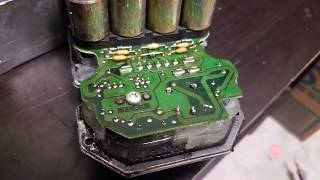
- Internal Electronic Parking Brake (EPB) Module Failure (Less Common) — On vehicles like the Hyundai Santa Fe, the entire EPB module fails internally. The motor burns out or the circuit board malfunctions, causing a complete loss of EPB function and potentially locking the rear wheels. 🎬 See how to fix a locked Hyundai EPB module
- Failing Electronic Brake Control Module (EBCM) (Less Common) — On C5/C6 Corvettes, internal EBCM solder joints crack over time. This causes communication and voltage errors that trigger C0870 and disable ABS and traction control.
- Failing Body Control Module (BCM) (Rare) — If the BCM's internal circuits fail, it misinterprets a good signal or fails to send the correct 5V reference voltage.
- Low Battery Voltage or Bad Ground (Rare) — A weak battery or poor chassis ground causes widespread voltage fluctuations, confusing sensitive modules and triggering voltage-related codes.
Symptoms
- Service StabiliTrak / Traction Control / ESC Light On — The computer disables these safety systems because it receives untrustworthy signals from the brake sensor.
- ABS Light On — The Anti-lock Braking System light illuminates alongside the traction control light, as they share the same control module.
- Brake Lights Malfunctioning — The brake lights stay on constantly (draining the battery), fail to illuminate, or only activate when the pedal is pressed heavily.
- Cannot Shift Out of Park — The vehicle loses the signal confirming the brake pedal is pressed, locking the automatic shifter in Park.
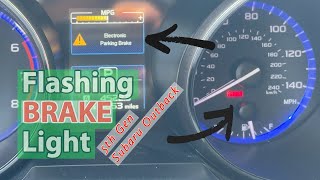
- Brake Warning Light Flashing — A flashing brake warning light appears, often accompanied by 'Park Brake Malfunction' messages.
- Electronic Parking Brake (EPB) Stuck — The EPB switch fails to engage or disengage. In severe cases, the parking brake locks the rear wheels.
Diagnostic Flowchart
Tap your situation to follow the diagnostic path that matches what you're seeing on this code.
Common Fixes & Costs
- Replacing the Brake Pedal Position (BPP) Sensor
— Parts: $25-$100, Labor: $75-$150, ~1.0 hr book time
(DIY)
Chevy Silverado / GMC Sierra (2007-2018): OEM GM 13583374, 13597422 (Alt: ACDelco 13583374, Dorman 699-215) - Repairing Damaged Wiring or Connectors — Parts: $10-$30, Labor: $125-$300, ~1.5 hr book time (Intermediate)
- Installing Retaining Clip on EPB Connector (Subaru)
— Parts: $5, Labor: $0 (Covered by warranty extension), ~0.5 hr book time
(DIY)
Subaru Outback/Legacy/WRX (2015-2018): OEM X9904AL110 (Alt: N/A) - Replacing the Electronic Parking Brake (EPB) Module
— Parts: $220-$450 (aftermarket), Labor: $250-$500, ~3.0 hr book time
(Professional)
Hyundai Santa Fe (2013-2018): OEM Hyundai 59700-B8800 (Alt: Various (match OEM number)) - Replacing the Body Control Module (BCM)
— Parts: $300-$700, Labor: $200-$450, ~2.5 hr book time
(Professional)
Chevy Silverado / GMC Sierra (2018-2022): OEM GM 13528941, 13534086 (Alt: N/A)
Used vs. New Parts: Buying Guide
When a used part is worth it: Buy used for high-cost electronic modules (BCM/EPB) only if the vehicle is older than 10 years and the budget is tight.
Donor-vehicle mileage cap: roughly under 80000 miles for the part to have meaningful remaining life.
Donor quality checklist:
- Verify the part number matches exactly.
- Ensure the seller offers VIN-programming prior to shipping for BCMs.
- Avoid parts from flood-damaged or rust-belt vehicles.
- Require a minimum 90-day warranty.
Decision logic:
- If The part is a simple sensor (e.g., BPP sensor) → Buy new. The $50 savings isn't worth the risk of premature failure.
- If The part is a complex module (BCM) requiring programming → Buy a new OEM part or a pre-programmed remanufactured unit. Used salvage yard parts require expensive dealer programming.
- If The part is an EPB actuator → Buy a new aftermarket unit. They offer better longevity than used OEM parts at a similar price point.
Warranty tradeoff: Used parts carry 30-90 day warranties covering only the part. New aftermarket parts offer 1-year warranties. New OEM parts offer 1-2 year warranties but cost the most.
Worst-case if a used part fails: $500-$1500 if a used module fails, requiring repeat labor and a second replacement part.
What Happens If You Wait — Timeline
- Immediate: Code sets. ABS, Traction Control, and Stability Control warning lights illuminate. Safety systems are disabled. (MPG impact: 0%% · Added cost: $0)
- 1-4 weeks: Driving risk increases. Wheels lock during panic stops. If brake lights are stuck on, the battery drains completely, requiring replacement. (MPG impact: 0%% · Added cost: $150 - $250)
- 1-6 months: The vehicle fails state safety inspections. Intermittent wiring faults worsen, placing electrical stress on the control module. (MPG impact: 0%% · Added cost: $50 - $150)
- 6+ months: Ignored EPB faults cause the module motor to burn out entirely, locking the rear wheels and stranding the vehicle. (MPG impact: 0%% · Added cost: $1,000 - $3,000)
Cost of Not Fixing It
- Immediate: Disabled ABS and Stability Control drastically increase collision risk during emergency maneuvers. (Added cost: Cost of an accident.)
- 0-3 months: Stuck brake lights drain the battery, requiring replacement. EPB failure immobilizes the vehicle, requiring a tow. (Added cost: $250-$600)
- 3+ months: Continued operation with intermittent EPB faults burns out the EPB module motor, forcing an expensive assembly replacement. (Added cost: $1000-$3000)
Diagnosis Steps
- Read the Trouble Codes
Use an OBD-II scanner capable of reading chassis ('C') codes to confirm C0870. Note sub-codes like C0870-03 (short to ground) or C0870-07 (short to power) to direct your testing.
Tools: OBD-II Scanner with ABS capability (Beginner) - Perform a Visual Inspection
Inspect the wiring around the brake pedal and BPP sensor for frayed wires. Check the engine harness for chafing on brackets. Inspect rear wheel EPB connectors for broken plastic tabs.
Tools: Flashlight (Beginner) - Test Brake Light Function
Press and release the brake pedal while observing the taillights. If they stay on constantly, flicker, or fail to illuminate, the BPP sensor circuit is faulty.
Tools: Assistant or reflective surface (Beginner) - Analyze Scan Tool Live Data
Navigate to the BCM data display and monitor 'BPP Sensor (Voltage)'. With the pedal released, voltage should be steady (e.g., ~1.0V). Press the pedal; voltage must increase smoothly to over 4.0V. Jumps or dropouts indicate a failed sensor.
Tools: Advanced Scan Tool (Intermediate) - Test BPP Sensor Voltage Manually
Back-probe the BPP sensor connector. Verify a steady 5V reference wire and a 0V ground wire. Test the signal wire while pressing the pedal to confirm the voltage sweeps smoothly from ~1.0V to >4.0V.
Tools: Multimeter, Back-probe pins (Intermediate) - Check for Wiring Shorts
Disconnect the BPP sensor and BCM. Test the signal wire for continuity to chassis ground (should be infinite resistance). Turn the key on and test the signal wire for voltage (should be 0V).
Tools: Multimeter (Advanced) - Perform a Voltage Drop Test
Test the ground circuit by connecting the multimeter between the sensor ground wire and battery negative. Activate the circuit. A reading above 0.1V indicates excessive resistance requiring wire repair.
Tools: Multimeter (Advanced) - Test the Control Module
If the sensor and wiring test perfectly, the BCM or EBCM is faulty. Confirm the module receives the correct signal but still sets the code before condemning it.
Tools: Advanced Scan Tool, Multimeter (Advanced)
When This Code Triggers (Freeze-Frame Conditions)
- Battery Voltage: 9-16V (The code sets if voltage is outside this range or if a short is detected within a sensor circuit.)
- Time to Trigger: 0.5 seconds (The module must see the voltage out of range (<0.5V or >5.2V) for this duration to set the code.)
- Vehicle Speed: Any (The 5V reference circuit is continuously monitored from key-on to highway speeds.)
Related Codes
- C0800 — Indicates the control module has a bad main power supply. Fix C0800 before diagnosing the 5V sensor circuit for C0870.
- C0561 — An informational code meaning stability control was disabled due to invalid data. C0870 is the root cause; C0561 is the effect.
- C0278 — Means 'Brake Pedal Position Sensor Not Calibrated'. Appears if a BPP sensor is replaced without performing the scan tool relearn procedure.
- C0265 — Indicates an ABS pump motor circuit fault. Often appears with C0870 when the EBCM fails entirely.
Climate & Environmental Factors
- High Humidity & Heavy Rain: Moisture penetrates worn wire insulation and unsealed connectors, causing corrosion and short circuits that trigger C0870.
- Cold Weather & Road Salt: Corrosive road salt destroys exposed wiring and ground points. Cold temperatures make plastic connector tabs brittle and prone to snapping.
How to Talk to a Mechanic About This Code
Say this: "I have an ABS/StabiliTrak light and a C0870 code. I'd like you to focus the diagnosis on testing the 5-volt reference circuit, the brake pedal position sensor, and its wiring before quoting a new control module."
This directs the technician to the cheapest point of failure first and requires them to prove the simple parts are good before jumping to an expensive module replacement.
Avoid saying:
- 'My ABS light is on, can you just fix it?'
- 'I think I need a new computer, how much is that?'
- 'Just do whatever you think is necessary.'
Questions to ask before authorizing the repair:
- Did you test the 5-volt reference and ground at the sensor connector? What were the readings?
- What was the sensor's signal voltage with the pedal up and down? Was it smooth?
- Can you show me the damaged wire or the failed test result for the sensor?
- Does this repair require a calibration procedure, and is that included in the quote?
Where to Take It: Dealer vs Independent vs Chain
- Dealer:
Required for warranty work and module programming. For out-of-warranty diagnosis, use an independent shop.
Best for: Vehicles under warranty., Known TSBs or warranty extensions (Subaru EPB connector)., Complex BCM/EBCM replacements requiring proprietary programming software.
Downsides: Highest labor rates and part costs., Quick to replace entire assemblies rather than perform cheaper wiring repairs. (Typical cost: +50% vs. baseline) - Independent Shop:
Best fit for most C0870 scenarios. Ideal for tracing electrical faults without defaulting to expensive module replacements.
Best for: Out-of-warranty vehicles, especially GM trucks., Diagnosing wiring faults or replacing common sensors., Owners wanting a diagnosis-first approach.
Downsides: Diagnostic skill varies; look for ASE certifications., May lack dealer-level tools for programming brand new modules. (Typical cost: +0% vs. baseline) - Chain Shop:
AVOID. This code requires electrical diagnostic skill not found at most chain shops.
Best for: Simple maintenance like oil changes or tires.
Downsides: Technicians lack experience with complex electrical diagnostics., High risk of misdiagnosis and unnecessary parts sales. (Typical cost: -10% vs. baseline)
When to Walk Away From the Repair
If the estimated repair cost exceeds 50% of the car's private-party value, seriously consider replacing the vehicle.
- Car worth $15000, fix is $450: Fix it. This is a routine repair cost well below the threshold.
- Car worth $4000, fix is $2200: Walk away. The repair is 55% of the car's value. It is not economical to sink this much money into an older car.
- Car worth $8000, fix is $3500: Borderline. Get a second opinion. If the engine and transmission are excellent, it might be worth fixing. Otherwise, walk away.
What Scan Tool You Need for This Code
Minimum: A scanner that reads and clears Chassis (C) codes for the ABS system. Basic engine-only readers cannot see C0870.
A $20 code reader only communicates with the Engine Control Module. C0870 is stored in the BCM or EBCM, requiring ABS capabilities.
Budget: BlueDriver Pro Bluetooth Scanner (~$100) — Reads and clears ABS codes. Displays live data from the BCM, allowing you to watch the BPP sensor voltage in real-time.
Mid-range: Foxwell NT630 Plus / Innova 5610 (~$150-350) — Offers bidirectional control to perform the mandatory 'BPP Relearn' after replacing a sensor. Commands the ABS pump for brake bleeding.
Professional: Autel MaxiCOM MK808 / Launch X431 (~$450-1200) — Provides OE-level diagnostics, bidirectional controls, and ECU coding for module replacements. Essential for programming a new BCM.
How to Clear the Code After You Fix It
- Fix the underlying electrical fault.
- Use an OBD-II scan tool to clear the Chassis (C) codes.
- If a BPP sensor was replaced, perform the 'BPP Relearn/Calibration' procedure with a bidirectional scan tool.
- Perform a complete drive cycle to ensure the code does not return.
Drive cycle (~20 minutes): Cold start the engine. Idle for 3 minutes with A/C on. Accelerate to 55 mph at half-throttle and hold for 5 minutes. Coast down to 20 mph without braking. Repeat acceleration.
Readiness monitors affected: Chassis codes do not directly affect emissions readiness monitors., However, related engine codes for sensor data correlation prevent emissions monitors from setting.
Before emissions retest: drive at least 50 miles to fully set monitors.
Watch out for:
- Clearing the code without fixing the short causes it to return immediately.
- Replacing the BPP sensor without performing the scan tool calibration triggers a new C0278 code.
- Disconnecting the battery resets emissions monitors, causing an automatic smog test failure.
Will This Fail Emissions / State Inspection?
Yes — this code typically fails an OBD-II emissions inspection.
- California: An ABS light alone does not cause a smog failure. You fail only if the Check Engine Light is also on or monitors are incomplete.
- New York: An illuminated ABS or red BRAKE warning light causes an automatic safety inspection failure.
- Texas: You fail the safety inspection if the red Brake warning light is on. The amber ABS light alone is not a cause for rejection.
Most Commonly Affected Vehicles
- Chevrolet Silverado / Tahoe / Suburban (2007-2021) — Extremely common. Triggers 'Service StabiliTrak' due to a faulty BPP sensor or chafed engine wiring harness.
- GMC Sierra / Yukon (2007-2021) — Shares the Silverado platform and suffers identical BPP sensor and wiring failures.
- Subaru Outback / Legacy / WRX (2015-2018) — Prone to brittle EPB connectors at the rear wheels. Covered by a 15-year warranty extension (TSB 06-87-22R).
- Hyundai Santa Fe (2013-2019) — Known for complete EPB module failures that lock the rear wheels, requiring expensive assembly replacement.
- Chevrolet Corvette (1997-2013) — Faulty EBCM internal solder joints disable ABS and Active Handling. Mail-in repair services are the best fix.
Manufacturer-Specific Notes
- General Motors: C0870 is synonymous with the 'Service StabiliTrak' message. Check TSB 21-NA-149 regarding engine harness chafing on 2019+ trucks.
- Subaru: Brake warnings on 2015-2018 models are usually caused by a broken EPB connector. TSB 06-87-22R makes this a free dealer repair.
- Ford: Triggers 'Service AdvanceTrac'. While C0870 occurs, faults in wheel speed sensors or damaged tone rings are more common culprits.
Real Owner Stories
2017 GMC Sierra owner fixes 'Service StabiliTrak' and malfunctioning brake lights by testing the BPP sensor circuit.
A 2017 GMC Sierra displayed 'Service StabiliTrak' warnings alongside codes C0870, U0073, and C0277. The brake lights only illuminated when the pedal was depressed past 50%.
Outcome: By back-probing the connector, the owner found erratic signal voltage changes as the pedal was pressed. Replacing the $40 BPP sensor and performing a scan tool relearn fixed all codes and restored brake light function.
Lesson: Never assume a control module has failed without testing the sensor circuit first. On GM trucks, test both circuits within the BPP sensor to isolate the fault.
2016 Subaru Outback owner resolves flashing EPB lights for free using a known Technical Service Bulletin.
The owner noticed the electronic parking brake (EPB) warning light flashing on the dashboard, indicating a system malfunction.
Outcome: The owner took the vehicle to a dealership. Because Subaru extended the warranty for this specific defect to 15 years/unlimited mileage, the dealer installed the required retaining clip at no cost.
Lesson: Always check for TSBs and warranty extensions. Subaru owners with EPB warnings should visit a dealer for this free fix before attempting DIY repairs.
C5 Corvette owner avoids a $1,600 EBCM replacement by using a $250 mail-in repair service.
A 2001 Corvette illuminated ABS and Traction Control lights with 'Service Active Handling' messages. Code C0870 pointed to the Electronic Brake Control Module (EBCM).
Outcome: The owner removed the EBCM and sent it to an online module repair service. For $250, the service re-soldered the cracked internal relay contacts and returned the unit, permanently clearing the codes.
Lesson: C5/C6 Corvette EBCM failures are notorious but repairable. Use a mail-in rebuild service or attempt a DIY solder repair instead of buying a costly new module.
2014 Hyundai Santa Fe owner saves $1,500 by sourcing an aftermarket EPB module after the rear wheels locked.
The Santa Fe displayed an EPB warning and the rear wheels locked completely. The dealership diagnosed a burnt-out EPB module and quoted $3,000 AUD for replacement.
Outcome: The owner purchased the aftermarket module and paid an independent shop $300 in labor to install and calibrate it, saving over $1,500 compared to the dealer quote.
Lesson: If a Hyundai EPB module fails catastrophically, source an aftermarket replacement online. Dealership markups on this specific assembly are exceptionally high.
How to Prevent This Code From Triggering
- Perform undercarriage washes in winter. (Every 14 days in salt-belt states.) — Road salt destroys wiring insulation and connector pins. Washing the undercarriage removes corrosive brine before it causes electrical shorts.
- Apply dielectric grease to exposed connectors. (During any brake or suspension service.) — Dielectric grease waterproofs connectors (like EPB or wheel speed sensors), preventing moisture from corroding the metal pins.
- Secure loose engine wiring harnesses. (During any under-hood inspection.) — Vibrations cause loose harnesses to chafe against sharp metal brackets. Zip-tie harnesses away from moving parts to prevent shorts.
Frequently Asked Questions
What are common misdiagnosis mistakes for C0870?
The biggest mistake is replacing a $500 control module before inspecting the wiring. Technicians often condemn the module when the real fault is a $5 broken connector clip or a chafed wire.
What do the C0870 sub-codes 03 and 07 mean?
C0870-03 means 'Voltage Below Threshold,' indicating a short to ground or broken wire. C0870-07 means 'Voltage Above Threshold,' indicating a short to power. These sub-codes tell you exactly what type of electrical fault to look for.
My parking brake is stuck on and I have an ABS light. Is this related?
Yes. On vehicles with electronic parking brakes, an internal module failure locks the rear wheels and triggers voltage-related codes like C0870.
What is the difference between StabiliTrak and Traction Control?
Traction control prevents wheel spin during acceleration. StabiliTrak prevents skidding during turns by applying individual brakes. C0870 disables both systems.
Can I just clear the C0870 code?
You can clear it, but it returns immediately if the electrical short or failed sensor hasn't been fixed.
Can disconnecting the battery reset the 'Service StabiliTrak' light?
No. Disconnecting the battery clears temporary glitches but cannot fix a hard fault like a broken wire. The light returns as soon as the module runs its self-test.
Can a bad battery cause a C0870 code?
Yes. A failing battery causing system voltage to drop below 9 volts triggers various voltage-related codes. Test older batteries before starting complex diagnostics.
Why did the code appear after I replaced my ABS module?
New control modules must be programmed to your vehicle's VIN. Without this programming, the module cannot communicate, triggering C0870.
What is a 'BPP Relearn' and when is it needed?
After replacing a Brake Pedal Position sensor, you must perform a relearn procedure using a scan tool. This teaches the module the sensor's baseline voltage. Skipping this step causes C0870 to persist.
Key Takeaways
- Code C0870 indicates a 5-volt reference circuit failure, most commonly caused by a faulty Brake Pedal Position (BPP) sensor that disables ABS and stability control.
- On 2007-2021 GM trucks, a C0870 code paired with a 'Service StabiliTrak' warning usually requires a $25-$100 BPP sensor replacement and a scan tool recalibration.
- Do not replace a $500+ control module without first performing a voltage drop test to rule out wiring shorts or a $5 broken connector clip.
- Subaru owners with 2015-2018 models should check TSB 06-87-22R for a free dealership fix covering cracked Electronic Parking Brake connectors before paying for diagnostics.
- Replacing a BPP sensor requires a bidirectional scan tool to perform the mandatory 'BPP Relearn Procedure'; skipping this step triggers a new C0278 code.
Helpful Videos

Shop the Parts Behind C0870
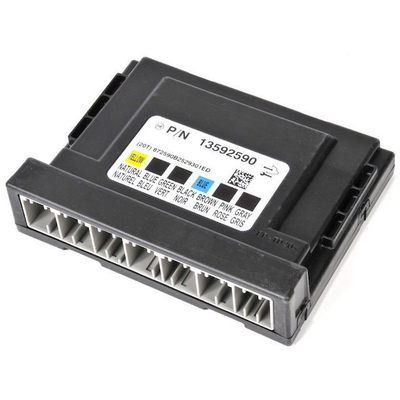
Below are the parts most often responsible for code C0870, ranked by how frequently each one is the actual culprit (per the diagnosis above). Tap any to see what we have for your vehicle.

The information in this article is provided for general reference and educational purposes only. Vehicle specifications, procedures, and part compatibility can vary by production date, trim level, and region. Always consult your vehicle's factory service manual and verify part numbers before purchasing or performing repairs. Safety-critical components such as airbags, seat belts, and braking systems should be installed by a qualified professional.
- 🧭 Diagnostic Flowchart
- 🎬 Helpful Videos
- 🛍️ Shop This Part
- What Does C0870 Mean?
- Can I Drive With C0870?
- Common Causes
- Symptoms
- Common Fixes & Costs
- Used vs. New Parts: Buying Guide
- What Happens If You Wait — Timeline
- Cost of Not Fixing It
- Diagnosis Steps
- When This Code Triggers (Freeze-Frame Conditions)
- Related Codes
- Climate & Environmental Factors
- How to Talk to a Mechanic About This Code
- Where to Take It: Dealer vs Independent vs Chain
- When to Walk Away From the Repair
- What Scan Tool You Need for This Code
- How to Clear the Code After You Fix It
- Will This Fail Emissions / State Inspection?
- Most Commonly Affected Vehicles
- Manufacturer-Specific Notes
- Real Owner Stories
- 2017 GMC Sierra owner fixes 'Service StabiliTrak' and malfunctioning brake lights by testing the BPP sensor circuit.
- 2016 Subaru Outback owner resolves flashing EPB lights for free using a known Technical Service Bulletin.
- C5 Corvette owner avoids a $1,600 EBCM replacement by using a $250 mail-in repair service.
- 2014 Hyundai Santa Fe owner saves $1,500 by sourcing an aftermarket EPB module after the rear wheels locked.
- How to Prevent This Code From Triggering
- Frequently Asked Questions
- What are common misdiagnosis mistakes for C0870?
- What do the C0870 sub-codes 03 and 07 mean?
- My parking brake is stuck on and I have an ABS light. Is this related?
- What is the difference between StabiliTrak and Traction Control?
- Can I just clear the C0870 code?
- Can disconnecting the battery reset the 'Service StabiliTrak' light?
- Can a bad battery cause a C0870 code?
- Why did the code appear after I replaced my ABS module?
- What is a 'BPP Relearn' and when is it needed?
- Key Takeaways
- 🎟️ Get 5% Off