

OBD-II Code C0900: Control Module Power Circuit Malfunction
What C0900 means, why it triggers, and how to fix it
- Code C0900 indicates a system-wide overvoltage condition (typically above 16 volts), not a failure of the brake module itself.
- A failing alternator voltage regulator is the most common cause, requiring an immediate alternator replacement costing $400 to $950.
- On GM vehicles from 2007-2014, inspect the 175-amp Mega Fuse for arcing before replacing any parts, as this $20 fix resolves many C0900 codes.
- Stop driving the vehicle immediately if the dashboard voltage gauge reads above 15V to prevent permanent damage to the battery and expensive electronic modules.
What Does C0900 Mean?

Your car's computer detected that a key control module, usually the Electronic Brake Control Module (EBCM), is receiving dangerously high voltage. To protect itself from damage, the module shuts down, disabling your anti-lock brakes and stability control.
Technical definition: The SAE/ISO definition is "Control Module Power Circuit Malfunction." It sets when a control module detects system voltage above a specified threshold (typically 16-17 volts) for a short duration. On GM vehicles, the trigger is voltage above 16V for 100 milliseconds or 17V for 0.72 seconds. This shutdown prevents permanent electrical damage.
Can I Drive With C0900?
Yes, But With Caution. You can drive, but critical safety systems like ABS and traction control are disabled. However, driving with an overcharging alternator is highly risky. Excess voltage (over 15V) permanently damages the battery and destroys sensitive electronic modules, leading to $500 to $2,000+ in additional repairs. Address this immediately to avoid cascading electrical failures.
Common Causes

- Failing Alternator (Very Common) — The voltage regulator inside the alternator fails and sends excessive voltage (overcharging) into the car's electrical system. This is the primary cause of code C0900.
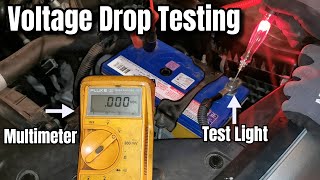
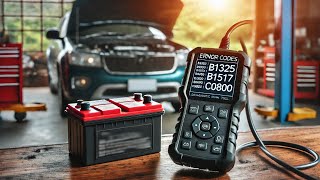
- Loose or Corroded Battery Cables and Grounds (Common) — Poor connections at the battery terminals or a corroded engine-to-chassis ground strap cause 🎬 Watch: Testing for voltage drop on corroded battery cables. erratic voltage spikes and drops, triggering the code.
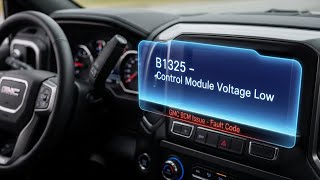
- Loose or Arcing Mega Fuse (GM Specific) (Common) — On GM trucks and SUVs, the main 175-amp fuse connections loosen and arc. This creates system-wide voltage instability, triggering C0900 and B1325 codes. 🎬 See how B1325 causes dash issues on GM trucks.
- Defective Battery (Less Common) — An internally shorted battery causes unstable voltage in the electrical system, leading to both high and low voltage codes.
- Improper Jump-Start or Battery Charging (Less Common) — Connecting jumper cables incorrectly or using an unregulated, high-output battery charger creates a voltage spike that temporarily triggers this code.
- Damaged Wiring or Connectors (Less Common) — Frayed or shorted wires leading to the EBCM or the alternator's pigtail connector cause incorrect voltage readings and overcharging.
- Improperly Installed Aftermarket Accessories (Rare) — Poorly wired high-power accessories like audio amplifiers introduce voltage irregularities and trigger this code.
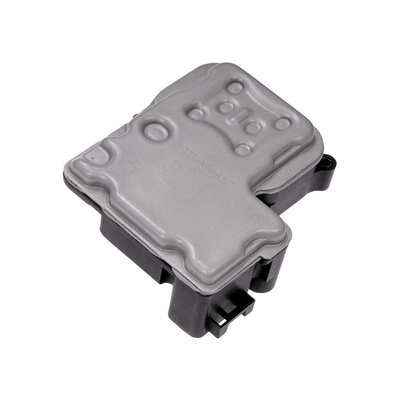
- Faulty Electronic Brake Control Module (EBCM) (Rare) — The module itself fails internally and misreads the voltage. Suspect this only after verifying the charging system is flawless.
Symptoms

- ABS and Traction Control Lights On — The EBCM shuts down to protect itself, disabling the anti-lock braking and stability control systems simultaneously.
- Voltage Gauge Reading High (>15V) — The instrument cluster voltmeter reads unusually high or fluctuates erratically, confirming a charging system overvoltage.
- Intermittent Electrical Issues — Dashboard lights flicker, headlights burn overly bright, the radio resets, or door locks cycle on their own.
- Sudden Loss of Power or Stalling — The vehicle briefly loses all power, stalls, or fails to start, often accompanied by a "Battery Low" message.
- Burning Smell or Swollen Battery — A rotten egg smell from the battery or a swollen battery case indicates severe overcharging and boiling electrolyte.
Diagnostic Flowchart

Tap your situation to follow the diagnostic path that matches what you're seeing on this code.
Common Fixes & Costs
- Replace Alternator — Parts: $250-$600, Labor: $150-$350, ~1.5 hr book time (Intermediate)
- Clean or Replace Battery Terminals/Cables — Parts: $15-$150, Labor: $50-$200, ~1.0 hr book time (DIY)
- Repair Damaged Wiring or Mega Fuse — Parts: $15-$100, Labor: $100-$300, ~1.5 hr book time (Intermediate)
- Replace Battery — Parts: $150-$300, Labor: $30-$100, ~0.5 hr book time (DIY)
- Replace EBCM (ABS Module) — Parts: $900-$1,200, Labor: $150-$300, ~2.0 hr book time (Professional)
- Repair or Rebuild EBCM — Parts: $0, Labor: $250-$600, ~2.5 hr book time (Professional)
DIY vs Professional
- Replace Alternator — Beginner: False
- Clean or Replace Battery Terminals/Cables — Beginner: True
- Replace Battery — Beginner: True
- Replace EBCM (ABS Module) — Beginner: False
Used vs. New Parts: Buying Guide
When a used part is worth it: A used OEM alternator from a low-mileage vehicle is a good value if the budget is tight and the part is easy to access.
Donor-vehicle mileage cap: roughly under 70000 miles for the part to have meaningful remaining life.
Donor quality checklist:
- Verify the part number matches exactly.
- Inspect for physical damage or corrosion.
- Prefer sellers offering a 30-90 day warranty.
Decision logic:
- If The vehicle is a daily driver and reliability is critical → Buy a new OEM or high-quality remanufactured alternator.
- If The budget is tight and you are performing the labor yourself → A used OEM alternator is a reasonable risk.
- If The alternator is difficult to access → Buy the best quality new part to avoid paying labor twice.
Warranty tradeoff: Used parts have a 30-90 day warranty. Remanufactured parts offer 1-year to limited lifetime warranties.
Worst-case if a used part fails: $300-$800 if a used part fails prematurely, requiring repeat labor.
What Happens If You Wait — Timeline
- 0-1 week: Code C0900 sets, ABS/Traction Control lights illuminate. Voltage gauge reads >15V. Headlights flicker. (MPG impact: 0%% · Added cost: $0)
- 1-4 weeks: Sustained overcharging damages the battery. It swells or emits a rotten egg smell. Bulbs burn out. (MPG impact: 0-1%% · Added cost: $200-$500)
- 1-3 months: Sensitive electronic modules (BCM, radio) fail due to high voltage. The vehicle stalls intermittently. (MPG impact: 1-3%% · Added cost: $500-$2,500)
- 3+ months: Catastrophic failure. The PCM/ECU is damaged or wiring melts. The car becomes unreliable and unsafe. (MPG impact: N/A% · Added cost: $2,500-$5,000+)
Cost of Not Fixing It
- Short-Term (Days to Weeks): Continued overcharging destroys the battery, causing it to overheat and swell. Bulbs burn out prematurely. (Added cost: $200-$500)
- Medium-Term (Weeks to Months): Sensitive electronics like the Body Control Module (BCM) and instrument cluster are permanently damaged. (Added cost: $500-$2500+)
- Long-Term (Months): Catastrophic failure of multiple electronic modules and potential wiring harness damage. Repair costs exceed vehicle value. (Added cost: $2000-$5000+)
Diagnosis Steps
- Check Battery & Charging Voltage
With the engine off, check battery voltage (should be ~12.6V). Start the engine. Voltage should rise to 13.7-14.7V. A reading consistently above 15V proves the alternator is overcharging and must be replaced.
Tools: Multimeter (Beginner) - Scan for Other Codes
Check if other modules report high voltage codes (B1325, P0563) or communication codes (U0100). Multiple modules with voltage codes confirm a systemic charging problem, not a single module failure.
Tools: OBD-II Scanner (Beginner) - Inspect Battery Terminals and Cables
Turn off the vehicle. Verify battery terminals are tight and free of corrosion. Trace the main positive and negative cables to ensure secure fastening to the starter, fuse box, and chassis ground.
Tools: Wrench set, wire brush (Beginner) - Inspect Main Fuses and Grounds (GM Specific)
On GM trucks/SUVs, locate the underhood fuse box. Inspect the main 175-amp "Mega Fuse" for arcing (black marks) or burning. Inspect the main engine-to-chassis ground strap for breakage.
Tools: Basic hand tools, flashlight (Intermediate) - Voltage Drop Test on Battery Cables
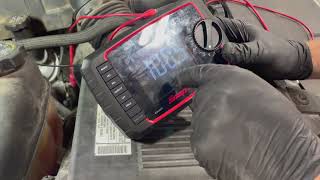
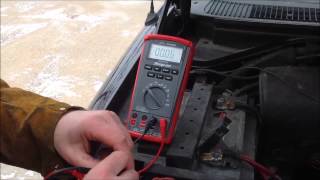
With the engine running and accessories on, connect a multimeter between the alternator housing and negative battery post. Repeat for the alternator B+ stud and positive battery post. A drop exceeding 0.2V on either side indicates excessive cable resistance requiring repair.
Tools: Multimeter with long leads (Intermediate) - Scan Tool Live Data Analysis
Access the EBCM live data stream. Compare the 'System Voltage' PID to the voltage measured directly at the battery. A discrepancy >0.5V points to a wiring issue specific to the EBCM circuit.
Tools: Advanced OBD-II Scanner (Advanced) - Alternator Ripple Pattern Test
Connect an oscilloscope to the alternator B+ terminal and ground. AC voltage (ripple) must be under 200mV. Erratic spikes prove a failing voltage regulator or bad diode.
Tools: Oscilloscope (Professional) - Inspect EBCM Wiring
If charging and battery systems are flawless, visually inspect the EBCM wiring harness and connector for physical damage, corrosion, or loose pins.
Tools: Flashlight, inspection mirror (Advanced)
When This Code Triggers (Freeze-Frame Conditions)
- System Voltage: > 16.0 Volts (The primary trigger; voltage exceeded the module's safe operating threshold.)
- Engine RPM: 1200-2500 RPM (Occurs during normal driving or fast idle.)
- Vehicle Speed: Any (Occurs at any speed.)
- Time: 0.1 to 0.7 seconds (The high voltage condition only needs to be present briefly to set the code.)
Related Codes
- C0899 — Means "Device Voltage Low." Seeing C0900 and C0899 together proves an unstable power supply. Focus on loose battery cables or bad grounds causing erratic fluctuations.
- B1325 — Generic code for "Device Power Circuit Voltage." Finding B1325 alongside C0900 confirms a vehicle-wide voltage problem, pointing directly to the alternator or main battery cables.
- P0562 / P0563 — Powertrain codes for "System Voltage Low/High." P0563 is the PCM's equivalent of C0900. Both codes present guarantee an over-voltage condition requiring alternator diagnosis.
- U0100 — Means "Lost Communication with ECM/PCM." Extreme voltage fluctuations disrupt the CAN bus network. Fix the root electrical problem first, and U-codes usually resolve themselves.
Climate & Environmental Factors
- High Humidity / Road Salt: Accelerates corrosion on battery terminals and engine ground straps. This creates high resistance, leading to unstable voltage and triggering C0900.
- Extreme Cold: Reduces battery efficiency and exposes weak alternators. Hard cold starts cause momentary voltage spikes that set a history code for C0900.
How to Talk to a Mechanic About This Code
Say this: "I have an ABS light on and my scanner shows code C0900. I'm also seeing symptoms like flickering lights. Please check the alternator's output voltage and perform voltage drop tests on the main battery and ground cables before checking anything else."
This directs the technician to perform fundamental charging system tests first, preventing them from jumping to a costly and incorrect module diagnosis.
Avoid saying:
- 'My ABS light is on, can you fix it?'
- 'I have a C0900 code, I think I need a new ABS module.'
- 'Just do whatever it takes to fix the light.'
Questions to ask before authorizing the repair:
- What was the exact charging voltage you measured at the battery terminals while the engine was running?
- What were the voltage drop readings on the positive and negative cables?
- If recommending an alternator, is it new OEM, remanufactured, or aftermarket, and what is the warranty?
- For my GM vehicle, did you inspect the 175-amp Mega Fuse for signs of arcing?
Where to Take It: Dealer vs Independent vs Chain
- Dealer:
Overkill for this common charging system fault unless the vehicle is under warranty.
Best for: Vehicles still under warranty., Complex electrical issues requiring manufacturer-specific diagnostic flowcharts.
Downsides: Significantly higher labor rates and parts costs., May replace modules rather than performing detailed wiring diagnosis. (Typical cost: +50% vs. baseline) - Independent Shop:
Best fit. A reputable independent shop is perfectly equipped to diagnose and repair the root causes of C0900.
Best for: Out-of-warranty vehicles., Diagnosing fundamental electrical issues like alternators and cables.
Downsides: Quality varies. Find a shop with ASE-certified technicians specializing in electrical systems. (Typical cost: +0% vs. baseline) - Chain Shop:
Avoid for diagnosing C0900. They are likely to misdiagnose a bad ground or wiring issue.
Best for: Simple parts replacement like batteries.
Downsides: Technician skill varies dramatically., Unlikely to perform in-depth diagnostics like voltage drop tests. (Typical cost: -10% vs. baseline)
When to Walk Away From the Repair
If the estimated repair cost exceeds 50% of the car's current private-party value, seriously consider selling or trading in the vehicle.
- Car worth $12000, fix is $900: Fix it. The repair cost is well below the 50% threshold.
- Car worth $4500, fix is $900: Likely fix it. Makes financial sense if the car is otherwise reliable.
- Car worth $3000, fix is $2200: Walk away. The repair cost approaches the car's total value.
What Scan Tool You Need for This Code
Minimum: A scanner that reads Chassis (C) and Body (B) codes and displays live data, specifically the 'System Voltage' PID.
A basic $20 code reader only shows 'P' codes and misses the C0900 code stored in the ABS module.
Budget: BlueDriver Pro or MUCAR BT200 (~$100) — Reads codes from all vehicle modules and graphs live voltage data to confirm overcharging.
Mid-range: Foxwell NT630 Plus or Autel AL619 (~$150) — Offers full system diagnostics and special functions like ABS auto-bleed.
Professional: Autel MaxiCOM MK808S or Innova 5610 (~$400-600) — Offers bidirectional controls to command specific modules, necessary if a new EBCM requires programming.
Rent vs buy: Renting is a good option for a one-time check. Buying a budget pick like BlueDriver is a worthwhile investment for future DIY work.
How to Clear the Code After You Fix It
- Disconnect battery during repair to ensure safety.
- After reassembly, reconnect battery.
- Use an OBD-II scan tool to clear the C0900 code and related codes.
- Perform a drive cycle to allow vehicle systems to reset.
Drive cycle (~20 minutes): 1. Cold start and idle for 2-3 minutes with electrical loads on. 2. Drive at a steady 55 mph for 3-5 minutes. 3. Accelerate to 60 mph and coast down to 20 mph without braking. 4. Perform stop-and-go city driving.
Readiness monitors affected: Disconnecting the battery resets all emissions readiness monitors to 'incomplete'.
Before emissions retest: drive at least 50 miles to fully set monitors.
Watch out for:
- Clearing the code without fixing the overcharging alternator causes the code to return immediately.
- Forgetting to disconnect the battery before working on the alternator leads to dangerous short circuits.
- Failing to complete a full drive cycle leaves emissions monitors unready for a smog test.
Will This Fail Emissions / State Inspection?
No — by itself this code doesn't fail OBD inspection (but it can keep readiness monitors from setting, which causes a separate fail).
- California: An active ABS light does not fail a smog check. However, disconnecting the battery resets OBD-II readiness monitors, requiring a 50-100 mile drive cycle before testing.
- New York: An illuminated ABS light fails the safety inspection portion. The vehicle will not receive a sticker until repaired.
- Texas: An illuminated ABS light fails the annual safety inspection, preventing legal registration.
Most Commonly Affected Vehicles
- Chevrolet Silverado, Tahoe, Suburban, Avalanche (2007-2014) — GM service bulletin PIT4816E links C0900 to arcing at the 175-amp mega fuse or high resistance in battery cables.
- GMC Sierra, Yukon, Yukon XL (2007-2014) — Shares the platform and electrical system with Chevy. Prone to identical failures of the mega fuse and battery cables.
- Cadillac Escalade (2007-2014) — Covered under GM service bulletin PIT4816E for C0900 and associated intermittent electrical problems.
- Ford F-150 (2004-2014) — Experiences intermittent electrical issues and module communication loss due to failing alternators or bad grounds.
- Chevrolet Malibu (2008-2012) — Frequently reports this code due to alternator failure or wiring issues in the charging circuit.
- Honda CR-V, Accord, Odyssey (2003-2012) — Illuminates ABS, VSA, and battery lights simultaneously when the alternator fails, producing symptoms identical to a C0900 fault.
- Subaru Outback, Legacy, Forester (2010-2019) — A failing alternator causes a cascade of warning lights, including flashing brake and solid VDC lights, responding to voltage irregularities.
- Chevrolet Corvette (2005-2013) — Highly sensitive to voltage changes. Weak batteries cause a flood of history codes, including chassis codes related to voltage.
Manufacturer-Specific Notes
- General Motors (Chevrolet, GMC, Cadillac): TSB PIT4816E links C0900 to electrical problems like no-starts and flickering lights. It advises inspecting the 175-amp mega fuse for arcing and performing voltage drop tests on battery cables.
- Chevrolet: The C0900 00 sub-code defines as "Lost Communication with Rear Active Stabilizer ECU." The root cause remains a power supply or wiring problem to that module, not a CAN bus failure.
- Chevrolet/GMC (Diesel Trucks): A history code C0900 sets if the engine is revved hard immediately after a cold start. This momentary voltage spike requires no repairs if it doesn't recur.
- Ford: Severe voltage irregularities from a failing alternator mimic a PCM failure, causing stalling and erratic shifting. Verify charging systems before condemning the PCM.
Real Owner Stories
2012 Chevrolet Silverado with intermittent power loss
While driving, the truck lost all power for a split second. Dash lights flashed, door locks cycled, and the Traction Control light stayed on.
What they tried:
- Took it to a dealership, which pulled code C0900.
Outcome: The dealership replaced the battery cables. Another owner fixed a similar issue by adding a heavy-gauge ground wire from the battery to the body.
Lesson: Intermittent electrical freak-outs signal a bad ground or high resistance in a main power cable. Inspect and test main battery cables before suspecting expensive modules.
2010 GMC Yukon with C0900 and other electrical codes
Owner experienced flickering lights and the HVAC defaulting to hot. The dealer found codes C0900 and B1325.
What they tried:
- Technician followed GM Technical Service Bulletin PIT4816E.
- Inspected the 175-amp Mega Fuse.
Outcome: The technician found arcing on the Mega Fuse terminals. Replacing the fuse and torquing fasteners resolved all issues.
Lesson: On 2007-2014 GM trucks, the Mega Fuse is a known failure point matching C0900 symptoms. Inspect this component before replacing the alternator.
2010 Chevy Tahoe with C0900 and C0899 after a road trip
The ABS light illuminated and the transmission felt sluggish. A scan revealed C0900 (High Voltage) and C0899 (Low Voltage).
What they tried:
- Checked transmission fluid.
- Considered replacing the ABS sensor.
Outcome: Forum members advised that simultaneous high and low voltage codes point to an unstable power supply. The root cause was a failing alternator causing wild voltage fluctuations.
Lesson: High and low voltage codes together indicate a systemic charging or grounding issue, not an isolated module failure.
Car is dead after an incorrect jump-start
After accidentally connecting jumper cables backwards, the car had no power.
What they tried:
- Assumed the main computer (PCM) was fried.
Outcome: A large main fuse (175-amp Mega Fuse) blew to protect the electronics. Replacing this inexpensive fuse restored all power.
Lesson: If your vehicle is dead after a reverse polarity event, test the main fuse for continuity before ordering expensive computers.
How to Prevent This Code From Triggering
- Clean battery terminals and cable ends. (Every 6-12 months.) — Removes corrosion that creates high resistance, preventing voltage drops and spikes.
- Inspect and clean main ground connections. (Every 2-3 years.) — Ensures a solid path for electrical current, preventing voltage instability.
- Check serpentine belt tension and condition. (During routine service intervals.) — Prevents the belt from slipping on the alternator pulley, ensuring consistent charging output.
- Avoid installing high-draw accessories without upgrading the system. (When considering modifications.) — Prevents overloading the stock alternator, which causes premature failure.
Frequently Asked Questions
I replaced the alternator and battery, but C0900 came back. What now?
The fault is almost certainly in the connections between them. Re-check that the battery terminals are pristine and tight, and perform a voltage drop test on the main cables. On GM vehicles, inspect the 175-amp Mega Fuse for arcing, a known cause of recurring voltage codes.
What is a 'Mega Fuse' and why is it important for code C0900?
A Mega Fuse is a high-amperage fuse (often 175-amp on GM trucks) protecting the vehicle's electrical system. Loose bolts on this fuse cause microscopic arcing, creating high resistance and erratic voltage spikes. GM specifically calls for inspecting this fuse to resolve C0900.
Why did C0900 appear right after I replaced my battery?
The battery terminals are likely not tight enough, causing voltage spikes. Alternatively, the old battery failed due to an overcharging alternator, meaning the underlying problem remains. Test the alternator output immediately to prevent damaging the new battery.
Can I just clear the C0900 code?
You can clear the code, but it returns immediately if the high voltage condition persists. The module re-triggers the code as a self-preservation measure. Clearing it is only useful to verify if a one-time event, like an improper jump-start, caused the fault.
Is it safe to drive with the ABS and Traction Control lights on?
Your primary hydraulic brakes will function, but anti-lock brakes and stability control are disabled. Your wheels can lock up during a hard stop, increasing stopping distance. Drive with extreme caution and increased following distance until repaired.
My battery is new, so why am I getting this code?
A faulty alternator overcharges the system and triggers this code regardless of battery age. Loose battery connections or bad ground wires missed during installation also cause voltage spikes. The problem originates from the power source or wiring, not the battery itself.
Why is this code a 'C' code and not a 'P' code?
'C' codes relate to Chassis systems, including brakes, steering, and suspension. Because the Electronic Brake Control Module (EBCM) detects the overvoltage and shuts down, it stores the code. 'P' codes are reserved for Powertrain issues like engine and transmission faults.
Key Takeaways
- Code C0900 indicates a system-wide overvoltage condition (typically above 16 volts), not a failure of the brake module itself.
- A failing alternator voltage regulator is the most common cause, requiring an immediate alternator replacement costing $400 to $950.
- On GM vehicles from 2007-2014, inspect the 175-amp Mega Fuse for arcing before replacing any parts, as this $20 fix resolves many C0900 codes.
- Stop driving the vehicle immediately if the dashboard voltage gauge reads above 15V to prevent permanent damage to the battery and expensive electronic modules.
Helpful Videos




Shop the Parts Behind C0900
Below are the parts most often responsible for code C0900, ranked by how frequently each one is the actual culprit (per the diagnosis above). Tap any to see what we have for your vehicle.




The information in this article is provided for general reference and educational purposes only. Vehicle specifications, procedures, and part compatibility can vary by production date, trim level, and region. Always consult your vehicle's factory service manual and verify part numbers before purchasing or performing repairs. Safety-critical components such as airbags, seat belts, and braking systems should be installed by a qualified professional.
- 🧭 Diagnostic Flowchart
- 🎬 Helpful Videos
- 🛍️ Shop This Part
- What Does C0900 Mean?
- Can I Drive With C0900?
- Common Causes
- Symptoms
- Common Fixes & Costs
- DIY vs Professional
- Used vs. New Parts: Buying Guide
- What Happens If You Wait — Timeline
- Cost of Not Fixing It
- Diagnosis Steps
- When This Code Triggers (Freeze-Frame Conditions)
- Related Codes
- Climate & Environmental Factors
- How to Talk to a Mechanic About This Code
- Where to Take It: Dealer vs Independent vs Chain
- When to Walk Away From the Repair
- What Scan Tool You Need for This Code
- How to Clear the Code After You Fix It
- Will This Fail Emissions / State Inspection?
- Most Commonly Affected Vehicles
- Manufacturer-Specific Notes
- Real Owner Stories
- 2012 Chevrolet Silverado with intermittent power loss
- 2010 GMC Yukon with C0900 and other electrical codes
- 2010 Chevy Tahoe with C0900 and C0899 after a road trip
- Car is dead after an incorrect jump-start
- How to Prevent This Code From Triggering
- Frequently Asked Questions
- I replaced the alternator and battery, but C0900 came back. What now?
- What is a 'Mega Fuse' and why is it important for code C0900?
- Why did C0900 appear right after I replaced my battery?
- Can I just clear the C0900 code?
- Is it safe to drive with the ABS and Traction Control lights on?
- My battery is new, so why am I getting this code?
- Why is this code a 'C' code and not a 'P' code?
- Key Takeaways
- 🎟️ Get 5% Off