

Ultimate Guide to OBD-II Code C1010: System Voltage & Communication Malfunction
What C1010 means, why it triggers, and how to fix it for good
- Code C1010 triggers when the ABS or chassis control module detects system voltage dropping below 11.5V or loses communication.
- Test your battery and alternator first; a weak battery or a corroded $15 ground strap causes this code in over 70% of cases.
- Driving with C1010 disables your ABS and traction control, increasing emergency stopping distances by up to 20% on wet roads.
- Ford owners must use an advanced scanner to read the 2-digit suffix (like C1010:13), which often pinpoints a 4WD vacuum leak rather than an electrical fault.
- Never replace a $500+ ABS module without performing a voltage drop test on its power and ground circuits to rule out high resistance.
What Does C1010 Mean?
Code C1010 is a manufacturer-specific chassis code indicating a control module—usually the Anti-lock Brake System (ABS)—detects a power supply or communication failure. The exact definition varies by brand, but it almost always points to low system voltage. Modules typically set this code when voltage drops below 11.0V to 11.5V.
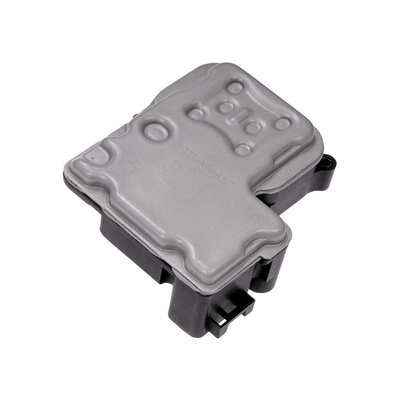
Technical definition: SAE/ISO does not provide a universal standard for C1010. Mercedes-Benz defines it as 'Battery Voltage Low'. Ford requires a 2-digit suffix for diagnosis, such as 'Output Speed Sensor Circuit Low Voltage' (C1010-11) or 'Constant Vacuum Hublock Solenoid: Circuit Open' (C1010:13). General Motors uses it for Brake Pressure Modulator Valve (BPMV) faults.
Can I Drive With C1010?
Yes, But With Caution. You can drive, but we do not recommend it for extended periods. The code disables critical safety systems like the Anti-lock Braking System (ABS) and Traction Control. Your wheels will lock up and skid during hard braking, significantly increasing stopping distances. Ignoring the underlying electrical fault also risks a complete no-start condition, leaving you stranded.
Common Causes
- Weak or Failing Battery (Very Common) — A battery failing to provide stable voltage is the primary trigger. Modules set this fault when voltage drops below 11.5V, often before you notice starting issues.
- Loose or Corroded Battery Terminals/Ground Straps (Very Common) — Poor connections at the battery posts or main chassis grounds create high resistance. This mimics a weak battery and causes severe voltage drops under load.
- Failing Alternator or Charging System (Common) — An alternator failing to recharge the battery lowers overall system voltage. A healthy charging system must provide 13.5V to 14.8V while the engine runs.
- Damaged Wiring or Blown Fuses (Common) — A blown 'maxi' fuse or a short in the ABS wiring harness severs power or communication. Inspect the main ABS fuses first.
- Failed ABS Control Module (Less Common) — The module fails internally due to cracked solder joints from vibration and heat. This is a documented flaw on 2000-2008 Jaguar and Land Rover models.
- Vacuum Leak in 4WD System (Ford Trucks) (Less Common) — On Ford 4x4 trucks, code C1010:13 indicates a vacuum leak in the Pulse Vacuum Hublock system. Brittle vacuum lines or faulty hub seals prevent 4WD engagement.
- Faulty Brake Light Switch (Rare) — A malfunctioning brake light switch sends implausible signals to the ABS module, triggering communication faults.
- Incorrect or Unregistered Battery (Modern Vehicles) (Rare) — European vehicles require 'registering' a new battery with the computer. Skipping this forces the alternator to use an incorrect charging profile, causing chronic undercharging.
- Parasitic Electrical Drain (Rare) — An aftermarket accessory or faulty module failing to shut down drains the battery overnight, triggering C1010 upon startup.
Symptoms
- ABS and Traction Control Lights On — The ABS module reports the code and immediately disables anti-lock and stability functions. Standard hydraulic braking usually feels normal.
- Slow Engine Crank or No-Start Condition — If a weak battery or failing alternator causes the code, the vehicle will eventually struggle to start.
- Erratic Instrument Cluster Behavior — Systemic low voltage causes flickering dash lights, sweeping gauges, and random warning lights.
- Hard Brake Pedal or Increased Stopping Distance — If the code stems from a Brake Pressure Modulator Valve (BPMV) failure, you lose power assist, making the brake pedal extremely stiff.
- 4WD or Drivetrain Warning Light On — Ford trucks display this light when the code links to a four-wheel-drive vacuum fault (e.g., C1010:13).
Diagnostic Flowchart
Tap your situation to follow the diagnostic path that matches what you're seeing on this code.
Common Fixes & Costs
- Replace Vehicle Battery — Parts: $150-$400, Labor: $50-$150, ~0.75 hr book time (DIY)
- Clean or Replace Battery Terminals and Ground Straps — Parts: $10-$50, Labor: $50-$100, ~0.8 hr book time (DIY)
- Replace Alternator — Parts: $200-$600, Labor: $150-$300, ~2.0 hr book time (Intermediate)
- Replace or Rebuild ABS Control Module — Parts: $200-$800 (rebuilt), $500-$2,500+ (new), Labor: $150-$400, ~2.5 hr book time (Professional)
- Repair 4WD Vacuum System (Ford) — Parts: $20-$150, Labor: $100-$300, ~1.5 hr book time (Intermediate)
- Replace Brake Pressure Modulator Valve (GM) — Parts: $300-$850, Labor: $200-$450, ~3.0 hr book time (Professional)
Used vs. New Parts: Buying Guide
When a used part is worth it: A used ABS module is a budget-friendly option for older vehicles where a new part is cost-prohibitive. It only makes sense if you have access to a mechanic with the proper tools to program the used module to your car's VIN.
Donor-vehicle mileage cap: roughly under 100000 miles for the part to have meaningful remaining life.
Donor quality checklist:
- Verify the part number matches your original module exactly.
- Purchase from a reputable seller offering at least a 90-day warranty.
- Inquire about the donor vehicle's reason for being scrapped (accident damage is better than electrical failure).
Decision logic:
- If The failure is internal and the module is removable from the hydraulic unit → send original module for rebuild — most cost-effective, no programming needed.
- If Vehicle is less than 10 years old and a new OEM part is available for < $1000 → buy new for maximum reliability and warranty.
- If Budget is the primary concern and you have confirmed a shop can program a used unit → a used part is acceptable, but factor in programming costs ($150-$300).
Warranty tradeoff: Used parts typically have a 30-90 day part-only warranty. Rebuilt units often come with a 1-year to lifetime warranty. New OEM parts carry a 1-2 year warranty.
Worst-case if a used part fails: $300-$600 if a used part is dead on arrival, covering repeat labor and programming fees.
What Happens If You Wait — Timeline
- 0-1 month: ABS and traction control lights illuminate. The underlying issue is likely a weak battery or poor connection, but the car still starts and drives. (MPG impact: 0%% · Added cost: $0)
- 1-4 months: The car becomes harder to start. The alternator constantly works at maximum capacity to charge the failing battery, increasing its wear. (MPG impact: 0-2%% · Added cost: $50-$150)
- 4-8 months: The starter motor begins to fail. Attempting to crank the engine with low voltage forces the starter to draw excessive current, overheating its windings. (MPG impact: 2-5%% · Added cost: $300-$600)
- 8+ months: Cascading failures occur. The overworked alternator fails completely. The car stalls while driving, leading to a dangerous loss of power. (MPG impact: N/A (Vehicle is inoperable)% · Added cost: $800-$1500+)
Cost of Not Fixing It
- Immediate: Loss of ABS, traction control, and stability control. Increased risk of skidding and loss of control during emergency braking or in slippery conditions. (Added cost: N/A)
- 0-3 months: Risk of being stranded. The underlying electrical fault will eventually lead to a no-start condition, requiring a tow and emergency diagnosis. (Added cost: $200-$400)
- 3-12 months: Premature failure of other electrical components. Consistently low voltage forces the alternator and starter motor to work harder, leading to early failure. (Added cost: $500-$1500+)
Diagnosis Steps
- Read All Fault Codes from All Modules
Use an advanced OBD-II scanner capable of reading manufacturer-specific codes from all vehicle modules. C1010 is often accompanied by other codes that pinpoint the root cause. For Fords, reading the 2-digit suffix is mandatory.
Tools: Advanced OBD-II Scanner (Beginner) - Test Battery and Charging System
With the engine off, use a multimeter to measure voltage at the battery posts. A healthy battery reads 12.4V-12.7V. Start the engine; the voltage must rise to 13.5V-14.8V. If it doesn't, the alternator is faulty. Perform a load test to confirm battery health.
Tools: Digital Multimeter, Battery Load Tester (Beginner) - Inspect Battery Terminals and Grounds
Visually inspect the battery terminals and main engine/chassis ground cables. Look for white or green corrosion, loose connections, or physical damage. Ensure all connections are tight and clean to bare metal.
Tools: Wrench set, wire brush, battery terminal cleaner (Beginner) - Pro Tip: Perform a Voltage Drop Test on Power and Ground Circuits
Set your multimeter to DC Volts. Place the red lead on the negative battery post and the black lead on the ABS module's metal casing. With the key on, the reading must be less than 0.1V. A higher reading indicates a poor ground connection. Perform a similar test on the power side; the drop must not exceed 0.2V across a wire.
Tools: Digital Multimeter, Vehicle Wiring Diagram (Advanced) - Inspect Fuses and Wiring
Locate the ABS fuses in the fuse box. Use a multimeter to test for continuity, as hairline cracks are invisible. Trace the wiring harness to the ABS module, looking for chafing or corrosion at connector plugs.
Tools: Owner's manual, flashlight, multimeter (Intermediate) - Perform a Parasitic Draw Test
If the battery repeatedly discharges, connect a multimeter in series with the negative battery cable to measure current draw while the vehicle is off. A draw over 50 milliamps is excessive. Systematically pull fuses to isolate the draining circuit.
Tools: Digital Multimeter (with 10A function), Fuse Puller (Advanced) - Diagnose Specific System (e.g., Ford 4WD)
For a Ford truck with C1010:13, use a hand-held vacuum pump to test the lines running from the solenoid to the front wheel hubs. Apply 15-20 inHg of vacuum and ensure it holds for 1 minute. If it leaks, use a smoke machine to pinpoint the cracked line or bad seal.
Tools: Hand-held vacuum pump, smoke machine (Advanced) - Pro Tip: Scope Test Wheel Speed Sensors
Connect an oscilloscope to the wheel speed sensor signal wire. Spin the wheel by hand to verify a clean, consistent square or sine wave. A noisy pattern indicates a bad sensor or damaged tone ring causing communication issues.
Tools: Oscilloscope, Jack and Jack Stands (Advanced)
When This Code Triggers (Freeze-Frame Conditions)
- Module Voltage: 9.5V - 11.0V (The code sets the moment voltage supplied to the module drops below its operational threshold.)
- Vehicle Speed: 0 mph (Occurs during engine cranking, when the starter motor draw causes a significant voltage drop across the system.)
- Engine RPM: 0 or > 800 RPM (Triggers before the engine starts (during a failed crank) or while driving if the alternator fails and system voltage degrades.)
- Time Since Start: 0-1 seconds (Logs immediately upon key-on or during the startup sequence, indicating a pre-existing low voltage state.)
Related Codes
- P0562 — Generic powertrain code for 'System Voltage Low'. If present with C1010, it confirms a vehicle-wide problem (battery or alternator). If only C1010 is present, the voltage problem is isolated to the ABS module's specific circuit.
- U0121 — 'Lost Communication With ABS Control Module'. If logged by other modules while the ABS module has C1010 stored, it confirms the ABS module is offline due to its internal power fault.
- C1095 — 'ABS Hydraulic Pump Motor Circuit Failure'. Common on Ford and Jaguar vehicles, often caused by the same internal ABS module fault (bad solder joints) that triggers C1010.
- C1011 — On Mercedes-Benz, C1011 ('ASR/ETS/ESP Circuit Open or Shorted') often appears with C1010. The low voltage from C1010 causes the communication fault of C1011.
Climate & Environmental Factors
- Cold Weather: Cold weather reduces a battery's chemical efficiency, lowering its available voltage. A weak battery functions adequately in warm weather but fails to provide necessary voltage once temperatures drop, triggering the code. Cold also makes plastic vacuum lines brittle.
- High Humidity / Heavy Rain: Moisture accelerates the corrosion of battery terminals, ground points, and electrical connectors. This creates high resistance and voltage drops. Water intrusion into a cracked ABS module connector causes a direct short circuit.
- High Altitude: Altitude has no direct impact on the electrical faults that cause code C1010.
How to Talk to a Mechanic About This Code
Say this: "I have an ABS light on and a C1010 code. I'd like to schedule a diagnostic. Since this is often a voltage issue, please start by testing the battery, alternator, and checking the main ground connections before diagnosing the ABS module itself."
This signals to the shop that you understand the most common causes. It directs them to perform the cheapest diagnostic steps first, preventing them from immediately quoting an expensive ABS module replacement.
Avoid saying:
- 'My ABS light is on, can you fix it?'
- 'Just do whatever it takes to get the light off.'
- 'I think I need a new ABS computer.'
Questions to ask before authorizing the repair:
- What was the battery's voltage, both with the engine off and running?
- Did you perform a voltage drop test on the ABS module's power and ground circuits? What were the readings?
- If you are recommending an ABS module replacement, can you confirm the module is receiving proper voltage and ground?
- What is the warranty on the recommended parts and labor?
Where to Take It: Dealer vs Independent vs Chain
- Dealer:
Best for: Vehicles under warranty, Complex cases on modern European cars that require battery registration or module programming, If the code requires a manufacturer-specific suffix to be read (like on many Fords)
Downsides: Highest labor rates, Defaults to replacing an entire module assembly when a cheaper repair is possible (Typical cost: +50% vs. baseline) - Independent Shop:
Best fit for most scenarios. An experienced independent mechanic easily diagnoses the common power supply issues that cause C1010, saving you money.
Best for: Out-of-warranty vehicles, Diagnosing and fixing common causes like batteries, alternators, and ground straps, Shops with ASE-certified technicians specializing in electrical diagnostics
Downsides: Lacks expensive, dealer-level programming tools for the newest models, Quality varies significantly between shops (Typical cost: +0% vs. baseline) - Chain Shop:
Acceptable for a free battery test to start, but AVOID for the full diagnosis. Their limited diagnostic capabilities make them likely to misdiagnose the issue.
Best for: Free or low-cost battery and alternator testing
Downsides: Technicians lack advanced electrical diagnostic skills, High pressure to sell parts leads to misdiagnosis (Typical cost: -10% vs. baseline)
When to Walk Away From the Repair
If the estimated repair cost for the C1010 fault exceeds 40-50% of your car's private-party value, it's time to pause and evaluate.
- Car worth $4000, fix is $2000: Walk away. A $2,000 repair on a $4,000 car is rarely a good investment, especially for a non-essential system like ABS.
- Car worth $15000, fix is $800: Fix it. The repair cost is a small fraction of the vehicle's value and restores a key safety feature.
- Car worth $2500, fix is $1500: Walk away. The repair cost is 60% of the car's value. Consider selling or scrapping the vehicle.
What Scan Tool You Need for This Code
Minimum: A code reader that reads and clears ABS (C-prefix) codes. A basic engine-only (P-prefix) scanner is not sufficient.
A standard $20 OBD-II reader will not see the C1010 code at all, as it only communicates with the engine control module.
Budget: Maddox MR10 or Autel AutoLink AL619 (~$90) — Reads and clears ABS trouble codes. Displays live data like module voltage, which is crucial for diagnosing C1010.
Mid-range: BlueDriver Pro or Foxwell NT630 Plus (~$100-150) — Reads and clears ABS codes, provides repair reports, and graphs live data. The Foxwell adds bidirectional controls to test ABS motors.
Professional: Autel MaxiCOM MK808 or XTOOL D7 (~$450-1200) — Provides full bidirectional control to perform ABS automated bleeding. Performs module programming and battery registration.
Rent vs buy: If you just need the code, auto parts stores scan ABS codes for free. If you plan to diagnose and fix it yourself, buying a midrange scanner pays for itself after one use.
How to Clear the Code After You Fix It
- Reconnect battery (if disconnected for repair)
- Use an OBD-II scan tool to clear the C1010 fault code from the ABS module
- Perform an ABS functional test or drive cycle to verify the repair
Drive cycle (~20 minutes): Start the engine and let it idle for 2 minutes. Drive the vehicle in both city and highway conditions, ensuring speed exceeds 40 mph for at least 5 minutes. Perform several normal stops from various speeds. The ABS light must remain off. For some systems, a single hard stop on a safe road to activate the ABS completes the self-test.
Readiness monitors affected: Not applicable for C-codes
Before emissions retest: drive at least 50 miles to fully set monitors.
Watch out for:
- Clearing the code without fixing the underlying voltage issue results in the code returning immediately.
- Forgetting to perform the drive cycle leaves the ABS system in a 'not ready' state.
- If a P0562 (System Voltage Low) code was present, disconnecting the battery resets engine readiness monitors, requiring a longer drive cycle before an emissions test.
Will This Fail Emissions / State Inspection?
No — by itself this code doesn't fail OBD inspection (but it can keep readiness monitors from setting, which causes a separate fail).
- California: An ABS light alone will not fail the smog test. However, if a related powertrain code like P0562 causes the Check Engine Light to illuminate, it is an automatic failure.
- New York: An illuminated ABS light is currently an advisory and not grounds for rejection. A Check Engine Light is an automatic failure.
- Texas: An illuminated ABS warning light is specifically noted as NOT a cause for rejection in the safety inspection. Check Engine Lights will cause a failure in emissions counties.
Most Commonly Affected Vehicles
- Mercedes-Benz Various (C-Class, E-Class, ML-Class) (2000-2020) — C1010 almost always means 'Battery Voltage Low'. Diagnosis must start with the battery and charging system. For 2015+ models, using the correct AGM battery and performing a battery registration is critical to prevent recurring codes.
- Ford F-Series Super Duty (F-250, F-350) (2011-2016) — Prone to setting C1010 with a suffix, most commonly C1010:13, related to a vacuum leak in the front hub locking mechanism for the 4WD system. Vacuum lines become brittle and crack.
- Chevrolet / GMC Silverado, Sierra, Express, Savana (2003-2017) — C1010 indicates a fault with the Brake Pressure Modulator Valve (BPMV) or its internal ground. TSBs highlight grounding issues on the frame rail beneath the driver's door that cause this code.
- Jaguar X-Type, XJ8, XK8 (2000-2008) — Frequently sets this code due to internal ABS module failure. The common cause is cracked solder joints on the module's circuit board. Repairing the module is a highly cost-effective fix.
- Land Rover Discovery, Range Rover (2000-2010) — Similar to Jaguar, this code frequently points to issues within the ABS module or its power supply due to internal solder joint failure.
- Hyundai / Kia Various (Elantra, Sonata, etc.) (2005-2020) — Points to a general ABS module or power supply fault. Diagnosis must begin with checking battery voltage and the main ABS fuse.
- Nissan Various (Titan, Sentra, Cube) (2008-2020) — Often related to the ABS actuator and electric unit control, pointing towards an internal module failure or a power supply issue.
- Volvo Various (XC70, V70, S60) (2000-2015) — C1010 variants point to a faulty relay in the Central Electronic Module (CEM) that supplies power to the Brake Control Module (BCM), causing a 'Brake Failure' message.
Manufacturer-Specific Notes
- Mercedes-Benz: C1010 is almost exclusively a 'Battery Voltage Low' warning. Diagnosis must start with the battery and alternator. A replacement battery often requires registration to the vehicle with a scan tool to inform the Battery Management System.
- Ford: The meaning of C1010 depends on a 2-digit suffix readable only by advanced scan tools. For Super Duty trucks, C1010:13 points to a vacuum leak for the 4WD hubs, caused by brittle plastic lines or bad seals at the steering knuckle.
- General Motors (Chevrolet/GMC): Often relates to an internal failure or poor ground for the Brake Pressure Modulator Valve (BPMV). Before replacing the module, check the dedicated ground wire on the frame rail directly below the driver-side door for corrosion.
- Jaguar / Land Rover: C1010 is a strong indicator of an internal failure of the ABS control module. Solder joints for the main power and ground pins fail frequently. Rebuilding the module is significantly cheaper than a new unit.
Real Owner Stories
2014 Ford F-250 with C1010:13
The 'Check 4x4' light came on, and the four-wheel drive would not engage. A scan revealed code C1010:13, indicating a 'Continuous Vacuum Hublock (CVH) Solenoid: Circuit Open'.
Outcome: The root cause was a leak in the vacuum lines running to the front hubs. The plastic lines had become brittle and cracked. Replacing the damaged vacuum line section resolved the leak and restored 4WD function.
Lesson: For Ford's C1010:13 code, don't immediately replace expensive components. The most common failure is a simple vacuum leak in the plastic lines or hub seals, which you can test with a hand-held vacuum pump.
2016 Mercedes-Benz C300 with C1010
The ABS and traction control lights appeared, and the auto start/stop feature stopped working. A scan showed code C1010, pointing to low battery voltage.
Outcome: The owner purchased a compatible AGM battery for $300 and replaced it themselves. The C1010 code cleared, warning lights vanished, and auto start/stop resumed working.
Lesson: On modern German vehicles, low voltage codes are common as the battery ages. Replacing the battery is the correct fix, but be aware the vehicle's computer may need a battery registration to adjust its charging strategy.
2006 Jaguar X-Type with C1010 and C1095
ABS, traction control, and cruise control became inoperative. A scan showed codes C1010 and C1095 (ABS Hydraulic Pump Motor Circuit Failure).
Outcome: The owner sent the module to a specialized electronics repair service for $250. The service repaired cracked solder joints on the circuit board. After reinstalling the rebuilt module, all codes cleared.
Lesson: When C1010 pairs with codes pointing to a specific module failure, the module itself is the culprit. Rebuilding the original module is a highly cost-effective repair that avoids expensive VIN programming.
How to Prevent This Code From Triggering
- Periodically Test Battery Voltage (Every 6 months) — Using a multimeter to check battery voltage provides an early warning of a weakening battery or charging system issue.
- Clean Battery Terminals and Ground Connections (Annually or whenever corrosion is visible) — Corrosion creates electrical resistance, causing voltage drops that trigger C1010. Cleaning these points ensures a solid, low-resistance path for current.
- Replace Battery Proactively (Every 3-5 years) — Replacing the battery proactively, especially before winter, prevents low-voltage codes and no-start situations caused by age-related degradation.
- Ensure Regular, Longer Drives (At least once a week) — Short trips under 20 minutes do not allow the alternator to fully recharge the battery. Longer drives maintain the battery's state of charge.
- Minimize Parasitic Drain (Daily habit) — Unplugging accessories like phone chargers and dash cams prevents continuous drains that slowly discharge the battery overnight.
Frequently Asked Questions
Can a bad fuse cause code C1010?
Yes. A blown fuse supplying power to the ABS module causes this code. Always check the large 'maxi' fuses in the under-hood fuse box before attempting complex diagnostics.
My battery is new, so why am I getting a C1010 voltage code?
First, modern European vehicles require you to 'register' the new battery; otherwise, the system will not charge it correctly. Second, loose terminals or a corroded ground strap create high resistance that mimics a dead battery. Finally, a failing alternator will quickly drain even a brand-new battery.
What is the most common misdiagnosis for C1010?
The most expensive mistake is replacing the ABS module without testing the battery, connections, and charging system. Because C1010 is a voltage code, a weak battery or bad ground is the true cause in most cases. Always rule out simple power supply issues first.
Can aftermarket accessories cause C1010?
Yes. Improperly installed aftermarket electronics like remote starters or dash cams cause parasitic battery drains. This leads to low voltage conditions that trigger a C1010 code upon startup.
Is it safe to clear the C1010 code?
You can clear the code with a scanner, but it returns immediately if you do not fix the underlying electrical fault. Clearing the code does not restore ABS or Traction Control functions.
Why did my ABS and Traction Control lights come on together?
Traction and Stability Control systems rely on the ABS module and wheel speed sensors. When the ABS module detects a critical fault like C1010, it shuts down and automatically disables these linked safety systems.
How much does it cost to diagnose a C1010 code?
Repair shops charge a diagnostic fee ranging from $75 to $170, covering the first hour of labor. This provides enough time to test the battery, charging system, and scan for manufacturer-specific codes.
Can washing my car or heavy rain cause the C1010 code?
Yes. Water intrusion into a damaged wire or a cracked ABS module connector causes a short circuit. This triggers the C1010 code intermittently during or after wet conditions.
Key Takeaways
- Code C1010 triggers when the ABS or chassis control module detects system voltage dropping below 11.5V or loses communication.
- Test your battery and alternator first; a weak battery or a corroded $15 ground strap causes this code in over 70% of cases.
- Driving with C1010 disables your ABS and traction control, increasing emergency stopping distances by up to 20% on wet roads.
- Ford owners must use an advanced scanner to read the 2-digit suffix (like C1010:13), which often pinpoints a 4WD vacuum leak rather than an electrical fault.
- Never replace a $500+ ABS module without performing a voltage drop test on its power and ground circuits to rule out high resistance.
Helpful Videos

Shop the Parts Behind C1010
Below are the parts most often responsible for code C1010, ranked by how frequently each one is the actual culprit (per the diagnosis above). Tap any to see what we have for your vehicle.



The information in this article is provided for general reference and educational purposes only. Vehicle specifications, procedures, and part compatibility can vary by production date, trim level, and region. Always consult your vehicle's factory service manual and verify part numbers before purchasing or performing repairs. Safety-critical components such as airbags, seat belts, and braking systems should be installed by a qualified professional.
- 🧭 Diagnostic Flowchart
- 🎬 Helpful Videos
- 🛍️ Shop This Part
- What Does C1010 Mean?
- Can I Drive With C1010?
- Common Causes
- Symptoms
- Common Fixes & Costs
- Used vs. New Parts: Buying Guide
- What Happens If You Wait — Timeline
- Cost of Not Fixing It
- Diagnosis Steps
- When This Code Triggers (Freeze-Frame Conditions)
- Related Codes
- Climate & Environmental Factors
- How to Talk to a Mechanic About This Code
- Where to Take It: Dealer vs Independent vs Chain
- When to Walk Away From the Repair
- What Scan Tool You Need for This Code
- How to Clear the Code After You Fix It
- Will This Fail Emissions / State Inspection?
- Most Commonly Affected Vehicles
- Manufacturer-Specific Notes
- Real Owner Stories
- 2014 Ford F-250 with C1010:13
- 2016 Mercedes-Benz C300 with C1010
- 2006 Jaguar X-Type with C1010 and C1095
- How to Prevent This Code From Triggering
- Frequently Asked Questions
- Can a bad fuse cause code C1010?
- My battery is new, so why am I getting a C1010 voltage code?
- What is the most common misdiagnosis for C1010?
- Can aftermarket accessories cause C1010?
- Is it safe to clear the C1010 code?
- Why did my ABS and Traction Control lights come on together?
- How much does it cost to diagnose a C1010 code?
- Can washing my car or heavy rain cause the C1010 code?
- Key Takeaways
- 🎟️ Get 5% Off