

OBD-II Code C1015: Right Front Wheel Speed Sensor Circuit Malfunction
The Ultimate 2026 Guide to What C1015 Means, Why It Triggers, and How to Fix It
- Code C1015 disables your ABS and traction control by flagging a complete electrical failure in the right front wheel speed sensor circuit.
- Replacing the $30-$120 right front wheel speed sensor resolves this code in over 50% of cases, though damaged wiring or a failing wheel bearing are frequent secondary culprits.
- Driving with an active C1015 code increases emergency stopping distances by up to 25% on wet pavement due to the disabled anti-lock braking system.
- Testing the sensor connector for a 5V to 12V reference voltage before buying parts prevents wasting money on a sensor when the actual fault lies in the wiring harness.
- Always check manufacturer technical service bulletins, as a C1015 on 2009-2012 Ford Escape Hybrids actually indicates a failed electric brake vacuum pump rather than a wheel sensor.
What Does C1015 Mean?

Code C1015 means your vehicle's Anti-lock Brake System (ABS) control module detects a complete electrical failure in the right front wheel speed sensor circuit. This sensor reports the rotational speed of the right front wheel to the vehicle's computers. When the signal is lost, the ABS module disables safety functions like traction and stability control and illuminates dashboard warning lights to alert the driver.
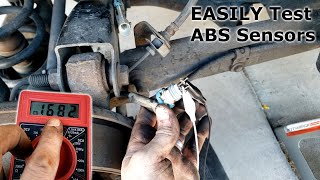
Technical definition: The official SAE/ISO definition for C1015 is "Right Front Wheel Speed Sensor Circuit Malfunction." The ABS module detects an open circuit (a break in the wiring), a short to ground, a short to voltage, or another electrical abnormality in the right front sensor, its wiring, or connector. Some vehicles monitor specific voltage thresholds; a signal below 0.3V is interpreted as an open circuit, while a signal above 1.4V indicates a short. Diagnostic methods depend entirely on whether the vehicle uses a passive (produces AC voltage) or active 🎬 See how to test sensor resistance and AC voltage output. (requires DC voltage to produce a digital signal) sensor.
Can I Drive With C1015?
Yes, But With Caution. Yes, but with caution. Your Anti-lock Braking System (ABS), Traction Control (TCS), and Electronic Stability Control (ESC) are disabled. Your wheels will lock during a panic stop, increasing stopping distances by 25% or more on slippery surfaces like gravel or rain-soaked pavement. You lose the critical ability to steer while braking hard in an emergency. Continued driving poses a safety risk and causes other systems relying on wheel speed data to malfunction. If the main red 'BRAKE' warning light is also on, do not drive; this indicates a severe failure in the base braking system.
Common Causes

- Defective Right Front Wheel Speed Sensor (Very Common) — The most frequent culprit. The sensor fails internally over time due to heat cycles, moisture, and vibration, or corrosion forms on its magnetic tip, blocking a clear reading.
- Damaged Wiring Harness or Connectors (Common) — Routed near the spinning axle, the wiring is highly susceptible to road debris, chafing, or breaking from constant suspension flex. Connectors fill with water or road salt, causing corrosion and short circuits.
- Failing Wheel Hub Bearing Assembly (Common) — Modern vehicles integrate the tone ring and sensor into the wheel hub bearing. A worn bearing introduces excessive wobble, changing the air gap between the sensor and ring and creating an erratic signal.
- Damaged Tone Ring or Incorrect Air Gap (Common) — The sensor reads a toothed or magnetic tone ring. If this ring cracks, loses teeth, or rust buildup on the mounting surface pushes the sensor too far away, the sensor cannot generate a clean signal.
- Poor Quality Aftermarket Sensor (Less Common) — Cheap aftermarket sensors are often defective out of the box. If C1015 returns immediately after replacement, the new part is the prime suspect.
- Faulty ABS Control Module (Rare) — The ABS control module's internal driver circuit can burn out. This is highly likely if multiple wheel speed sensor codes appear alongside a C2200 internal module fault.
- Electrical Noise/Interference (Rare) — Improperly routed accessory wiring or a failing alternator produces AC ripple voltage, inducing noise into the low-voltage sensor circuit and setting a false code.
Symptoms

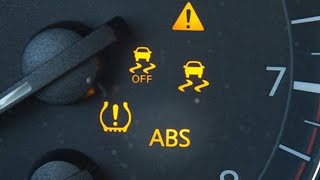
- ABS and Traction Control Warning Lights Illuminated — The amber 'ABS' light and the Electronic Stability Control (ESC/ESP) or Traction Control System (TCS) warning lights will illuminate and stay on.
- ABS and Traction Control are Inoperative — The ABS system does not activate (no pedal pulsation) during hard braking, allowing wheels to lock and skid. Traction control will not intervene to prevent wheel spin on slippery surfaces.
- Brake Pedal Pulsates at Low Speeds — An erratic sensor sends a jumpy signal, tricking the ABS module into thinking a wheel is locking up during low-speed braking, causing unwanted ABS pump activation and a pulsating pedal.
- Grinding or Humming Noise from Wheel Area — If the root cause is a failing wheel bearing, you hear a humming, rumbling, or grinding noise coming from the right front corner that changes with speed or when turning.
- Right Front Wheel Speed Reads 0 MPH on Scanner (scan-tool only — no driver-felt sign) — When viewing live data on an ABS-capable scan tool, the right front wheel speed shows 0 MPH while the other three wheels report speed accurately as the vehicle moves.
Diagnostic Flowchart
Tap your situation to follow the diagnostic path that matches what you're seeing on this code.
Common Fixes & Costs
- Replace the Right Front Wheel Speed Sensor — Parts: $30-$120, Labor: $100-$180, ~1.2 hr book time (DIY)
- Repair Damaged Wiring or Connector — Parts: $10-$50, Labor: $100-$250, ~1.5 hr book time (Intermediate)
- Replace the Right Front Wheel Hub Bearing Assembly — Parts: $150-$350, Labor: $200-$400, ~2.5 hr book time (Intermediate)
- Clean the Tone Ring and Sensor Mounting Surface — Parts: $5, Labor: $75-$150, ~1 hr book time (DIY)
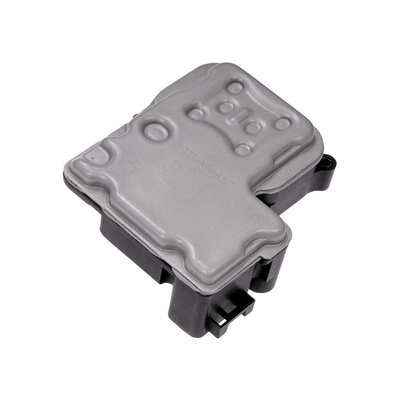
- Replace the ABS Control Module — Parts: $300-$1200, Labor: $150-$300, ~1.8 hr book time (Professional)
DIY vs Professional
- Replace the Right Front Wheel Speed Sensor — Beginner: True
- Repair Damaged Wiring or Connector — Beginner: False
- Replace the Right Front Wheel Hub Bearing Assembly — Beginner: False
- Clean the Tone Ring and Sensor Mounting Surface — Beginner: True
- Replace the ABS Control Module — Beginner: False
Used vs. New Parts: Buying Guide
When a used part is worth it: For a simple bolt-on wheel speed sensor, a used OEM part from a low-mileage vehicle is a cost-effective option. For a wheel hub bearing assembly, buying used is strongly discouraged as it is a major wear item.
Donor-vehicle mileage cap: roughly under 60000 miles for the part to have meaningful remaining life.
Donor quality checklist:
- Verify the part number matches exactly.
- For sensors, inspect the wiring for any brittleness or damage.
- Avoid buying used wheel hub assemblies entirely; the risk of premature failure and repeat labor costs is too high.
Decision logic:
- If The part is a wheel hub bearing assembly → Always buy new from a reputable brand (OEM, Timken, SKF, MOOG). The labor cost to replace it is too high to risk a used part.
- If The part is a bolt-on sensor and the vehicle is high-mileage → A used OEM sensor is a reasonable choice to save money, but a new aftermarket sensor often provides a better warranty for a similar price.
- If The part is an ABS module → A used module from a guaranteed-compatible donor vehicle is a viable option, but may still require programming. A professionally remanufactured unit with a warranty is often a safer bet.
Warranty tradeoff: Used parts typically have a 30-90 day warranty at best. New aftermarket parts often carry a 1-year to limited lifetime warranty. New OEM parts carry a 1-year warranty.
Worst-case if a used part fails: $300-$600 if a used hub or sensor fails shortly after installation, requiring a second repair job.
What Happens If You Wait — Timeline
- 0-2 weeks: Initial fault occurs. The ABS and traction control lights illuminate on the dashboard. The systems are disabled, but there are no other drivability symptoms. The root cause is likely a failed sensor or broken wire. (Added cost: $0)
- 2 weeks - 3 months (if cause is bearing): If the root cause is a failing wheel bearing, a faint humming or growling noise begins. It is most noticeable at speeds above 30 mph and changes pitch when turning. The bearing wear is minor but accelerating. (Added cost: $0-$50)
- 3-6 months (if cause is bearing): The bearing noise becomes a loud grinding or rumbling. Wheel play (wobble) is now detectable and causes vibrations in the steering wheel. The excessive heat and movement damages the wheel hub and steering knuckle. (Added cost: $300-$1100)
- 6+ months (if cause is bearing): Catastrophic failure of the wheel bearing. The wheel seizes completely or detaches from the vehicle, causing a total loss of control. This destroys the bearing, hub, knuckle, axle shaft, brake caliper, and rotor. (Added cost: $1500-$3500+)
Cost of Not Fixing It
- Immediate: Loss of ABS, traction control, and stability control, leading to a significant safety risk, especially in emergency maneuvers or poor weather. (Added cost: N/A)
- 1-6 months: If the underlying cause is a bad wheel bearing, continued driving leads to complete bearing failure. This causes the wheel to wobble severely or detach from the vehicle, resulting in a loss of control and extensive damage to the suspension. (Added cost: $800-$2500)
- 6+ months: Continued driving on a failed wheel bearing causes catastrophic failure. Uneven tire wear results from the disabled traction systems or a bad bearing, requiring premature tire replacement. (Added cost: $200-$1000+)
Diagnosis Steps
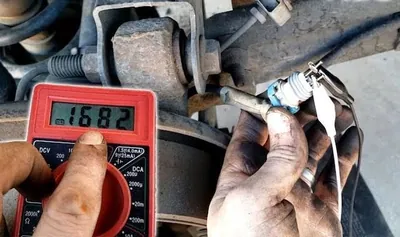
- Confirm the Code with an ABS-Capable Scanner
Use an OBD-II scanner that accesses the ABS module. Confirm C1015 is active. View live data to monitor the speed of all four wheels. With a C1015 fault, the right front wheel typically shows 0 MPH while the others register speed. Normal readings show all sensors reporting within 1-2 MPH of each other.
Tools: ABS-capable OBD-II Scanner (Beginner) - Perform a Detailed Visual Inspection
Safely raise the vehicle's front right corner and remove the wheel. Visually trace the sensor's wiring from the wheel hub up into the engine bay. Look for chafing, melting, stretched wires, or broken connector clips. Inspect the connector pins for corrosion, moisture, or being bent.
Tools: Jack, Jack Stands, Lug Wrench, Flashlight (Beginner) - Inspect the Tone Ring and Wheel Bearing
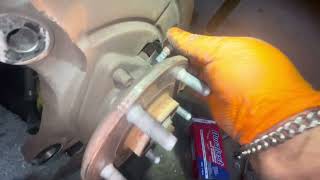
Inspect the tone ring on the CV axle or integrated into the hub. Look for cracks, missing teeth, and heavy rust buildup. Clean it with brake cleaner and a wire brush. Grasp the hub assembly at the top and bottom and try to rock it. Any perceptible play indicates a worn wheel bearing is the likely cause.
Tools: Flashlight, Brake Cleaner, Wire Brush (Intermediate) - Check for Reference Voltage at the Sensor Connector
Disconnect the sensor and turn the ignition to the 'ON' position. Set a multimeter to DC Volts. Probe the two terminals on the harness-side connector. You should see a supply voltage (often 5V, 10V, or 12V depending on the manufacturer). No voltage points to a wiring issue or a problem with the ABS module.
Tools: Multimeter (Intermediate) - Test a Passive Sensor's Internal Resistance
For older, 2-wire passive sensors: With the sensor disconnected, switch your multimeter to Ohms. Measure the resistance across the two pins on the sensor. The required value ranges from 1,000 to 2,500 Ohms depending on the manufacturer. An 'OL' (open circuit) or 0 Ohm (short circuit) reading definitively indicates a failed sensor. Note: Modern 'active' sensors cannot be tested for resistance.
Tools: Multimeter (Intermediate) - ADVANCED: Test a Passive Sensor's AC Voltage Output
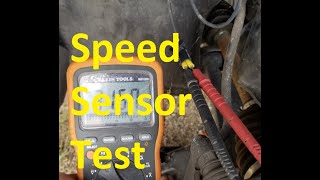
For passive sensors: Reconnect the sensor, set your multimeter to AC Volts, and back-probe the two sensor wires. Spin the wheel by hand at a steady pace (one revolution per second). A healthy passive sensor generates a small alternating current. Look for a reading of at least 100mV (0.1V). No voltage indicates a bad sensor or an excessive air gap.
Tools: Multimeter with Back-Probes (Advanced) - Check for Shorts to Ground
Keep the sensor unplugged. Set your multimeter to Ohms. Test each of the two wires in the harness-side connector for continuity to a clean chassis ground. Both should read 'OL' or infinite resistance. A low resistance reading indicates that wire is shorted to ground somewhere in the harness.
Tools: Multimeter (Advanced) - ADVANCED: Perform a Voltage Drop Test
With everything connected and the ignition on, back-probe the ground wire at the sensor connector with the red multimeter lead and touch the black lead to the negative battery terminal. A reading above 100mV (0.1V) indicates a poor ground connection. Do the same for the power wire (red lead at sensor, black lead at positive battery terminal); a reading above 500mV (0.5V) indicates high resistance in the power feed.
Tools: Multimeter with Back-Probes (Advanced) - PROFESSIONAL: Analyze the Waveform with an Oscilloscope
Back-probe the sensor's signal and ground wires. As you spin the wheel, a good 'active' sensor produces a clean square wave pattern. A 'passive' sensor produces a sine wave. A missing, erratic, or distorted pattern definitively confirms a problem with the sensor, tone ring, or air gap.
Tools: Automotive Oscilloscope, Back-Probes (Professional)
When This Code Triggers (Freeze-Frame Conditions)
- Vehicle Speed: 15-45 mph (The fault is often detected during initial acceleration from a stop or during city driving speeds as the module compares wheel speeds.)
- Steering Angle: 0-15 degrees (An intermittent fault triggers during slight turns if a worn wheel bearing flexes the components.)
- Brake Pedal Status: Not Applied (The C1015 circuit fault is a continuous monitor; it is typically set while driving normally, not necessarily during a braking event.)
- System Voltage: 12.5-14.5V (The code sets during normal operating voltage. Low system voltage triggers other codes.)
Related Codes
- C101C — Means 'Right Front Wheel Speed Sensor Signal Erratic Performance.' It points to a mechanical issue. C1015 means the signal is GONE, while C101C means the signal is PRESENT but noisy. A failing wheel bearing or damaged tone ring causes C101C.
- C1014 — The identical fault but for the 'Left Front Wheel Speed Sensor Circuit.' Seeing C1014 and C1015 together is a red flag for a damaged wiring harness affecting both sides or a faulty ABS module.
- C2200 — Means 'Anti-Lock Brake Module Internal Failure'. If C2200 is present with C1015, the ABS module itself is the prime suspect. The module reports a sensor fault because its own internal processing failed.
- U0121 — Means 'Lost Communication With Anti-Lock Brake System (ABS) Control Module.' This is a network code. If you see U0121, fix the ABS module's power, ground, or network connection first. The C1015 is a secondary code that cannot be trusted until communication is restored.
Climate & Environmental Factors
- Road Salt and Humidity: A primary contributor to C1015 failures in winter climates. Salt and moisture accelerate corrosion, seizing the sensor in its bore and rotting harness connectors, leading to open circuits.
- Cold Weather: Freezing temperatures make the plastic insulation on the sensor's wiring harness brittle. Constant flexing from suspension travel causes the insulation to crack, exposing the copper wire to the elements.
- Off-Roading / Debris: Mud and water pack into connectors, and rocks directly impact and sever the wiring harness, which is routed in a vulnerable position near the suspension.
How to Talk to a Mechanic About This Code
Say this: "I have an ABS light on and my scanner is showing a C1015 code for the right front wheel speed sensor circuit. I'd like to schedule a diagnostic to confirm if the fault is the sensor itself, the wiring, the wheel hub bearing, or something else. Please check for wiring damage and wheel bearing play before recommending a part."
This signals to the shop that you understand the code has multiple possible causes. It directs them to perform a thorough diagnosis rather than simply replacing the most common part (the sensor), which saves you money if the actual problem is a cheap wiring fix or a more expensive hub replacement.
Avoid saying:
- 'My ABS light is on, can you look at it?'
- 'Just replace the right front ABS sensor.'
- 'Fix whatever you think is wrong.'
Questions to ask before authorizing the repair:
- What were the results of the wiring continuity and voltage tests?
- Did you check for play in the wheel bearing? Was there any?
- If you are recommending a new hub assembly, what evidence points to the hub instead of just the sensor?
- Can you show me the damaged wire or corroded connector?
- What is the warranty on the recommended parts and the labor for this repair?
Where to Take It: Dealer vs Independent vs Chain
- Dealer:
A safe but expensive choice. Best if you suspect a complex issue or are not cost-sensitive.
Best for: Vehicles still under warranty, Vehicles with known manufacturer-specific quirks or TSBs for C1015 (e.g., Ford Escape Hybrid), Complex electrical issues where a module replacement and programming are suspected
Downsides: Highest labor rates and part costs., Defaults to replacing a complete (and expensive) hub assembly when only a sensor or wiring repair is needed. (Typical cost: +50% vs. baseline) - Independent Shop:
Best fit for most situations. A good independent shop has seen this common code many times and diagnoses it efficiently without the dealership price tag.
Best for: Most out-of-warranty vehicles., Diagnosing common causes like a bad sensor, wiring, or wheel bearing., Owners looking for the best balance of expertise and cost.
Downsides: Quality and diagnostic skill vary greatly. Look for shops with ASE-certified technicians and positive reviews for electrical or brake work. (Typical cost: +0% vs. baseline) - Chain Shop:
Use with caution. Acceptable if you've already diagnosed a simple sensor failure, but risky for comprehensive diagnosis. Avoid if you suspect a wiring or bearing issue.
Best for: Simple, obvious fixes where you are certain only the sensor needs replacement.
Downsides: Technician skill varies dramatically., High pressure to upsell., Lacks the advanced diagnostic tools or experience to trace wiring faults or module issues, leading to misdiagnosis. (Typical cost: -10% vs. baseline)
When to Walk Away From the Repair
If the total estimated repair cost for the C1015 fault (and any other known issues) exceeds 50% of the vehicle's current private-party value, it's time to seriously consider selling or trading it in.
- Car worth $3500, fix is $1800: Walk away. The repair cost is over 50% of the car's value. It's not economically sound to invest this much into an older vehicle for this type of repair.
- Car worth $15000, fix is $750: Fix it. The repair cost is only 5% of the vehicle's value and is essential for safety.
- Car worth $5000, fix is $450: Fix it. At less than 10% of the car's value, this is a routine repair that preserves the safety and functionality of the vehicle.
What Scan Tool You Need for This Code
Minimum: A scanner that can read and clear Anti-lock Brake System (ABS) codes and display live ABS data streams.
A standard $20 engine-only code reader is useless for C1015. It cannot communicate with the ABS module. You need a tool that displays the live wheel speed data from all four sensors simultaneously. Watching the data while driving is the #1 diagnostic step to confirm which sensor is failing.
Budget: BlueDriver Bluetooth Pro (~$119) — Reads and clears ABS codes, and displays live data for all wheel speed sensors on your smartphone, which is sufficient for basic diagnosis of this code.
Mid-range: Foxwell NT630 Plus / Autel AutoLink AL619 (~$120-200) — These are dedicated handheld units with a screen. They provide robust ABS/SRS code reading and live data graphing. The NT630 Plus also offers some bidirectional control for ABS bleeding, which is useful if you need to replace the ABS module.
Professional: Autel MaxiCOM MK808 / Foxwell NT680 Pro (~$450-600) — These professional-level tablet scanners offer full system diagnostics, advanced live data graphing, and bidirectional controls. They perform ABS module-specific tests, view detailed freeze-frame data, and help diagnose complex wiring or module communication issues.
Rent vs buy: For a one-time fix, auto parts stores like O'Reilly Auto Parts offer free loaner scan tools capable of reading ABS codes. Call your local store to confirm their tool's capability. If you plan to do your own maintenance regularly, buying a budget or midrange pick is a worthwhile investment.
How to Clear the Code After You Fix It
- Ensure the new sensor/wiring is securely connected.
- Clear the codes using an ABS-capable OBD-II scan tool.
- Perform a short test drive.
Drive cycle (~5 minutes): After clearing the code, drive the vehicle above 15 mph for a few minutes. The ABS module continuously checks the sensors. If the repair was successful, the ABS light extinguishes on its own and will not return.
Readiness monitors affected: This is an ABS code and does not directly affect engine-related emissions readiness monitors.
Watch out for:
- Forgetting to clear the code with a scanner leaves the light on temporarily, even if the repair is good.
- If the light returns immediately, it indicates the root cause was not fixed (e.g., the problem is in the wiring, not the sensor) or the replacement part is faulty.
Will This Fail Emissions / State Inspection?
No — by itself this code doesn't fail OBD inspection (but it can keep readiness monitors from setting, which causes a separate fail).
- California: An illuminated ABS light will NOT cause a failure of the emissions-only Smog Check. However, for revived salvage vehicles requiring a full 'Brake and Lamp Inspection', a functional ABS system is required.
- New York: An illuminated ABS light is a cause for failure during the annual safety inspection. The system must be functional.
- Texas: An illuminated ABS light is NOT a cause for rejection in the annual safety inspection. However, if the main red 'BRAKE' warning light is also on, the vehicle will fail.
Most Commonly Affected Vehicles
- Jeep Wrangler (JK), Grand Cherokee, Liberty (KJ), Compass (2007-2018) — Extremely common. On JK Wranglers, the wiring harness is notoriously prone to damage from suspension flex. A worn wheel bearing causing an air gap issue is also a very frequent root cause.
- Dodge / Chrysler Ram 1500/2500, Grand Caravan, Town & Country, Journey (2008-2020) — Widespread issue. On Grand Caravans, the sensor often seizes in the steering knuckle due to corrosion, breaking during removal. Ram trucks are prone to wiring damage from exposure.
- Chevrolet / GMC Silverado, Sierra, Malibu, Equinox (2007-2018) — On Silverado/Sierra trucks from 2014-2018, a poor ground for the EBCM (ABS module) on the frame rail is a known cause. For the Equinox, the failure is often the entire wheel hub bearing assembly.
- Ford Escape Hybrid, F-150, Fusion (2009-2014) — On 2009-2012 Escape Hybrids, C1015 uniquely points to a failed electric brake vacuum pump, not the wheel sensor. On F-150s, wiring damage near the wheel well is a common cause.
- Hyundai Sonata, Elantra, Santa Fe (2011-2020) — These models have a high incidence of wheel speed sensor failures due to internal electronics failing rather than external damage.
- Nissan Qashqai, X-Trail, Rogue, Micra (2010-2019) — Frequently cited for ABS sensor circuit faults. Corrosion in the sensor connector is a common point of failure in regions with heavy road salt usage.
- Mitsubishi Lancer, Outlander (2007-2017) — Manufacturer TSBs indicate that CAN bus communication errors sometimes set a false C1015 code. Check for U-codes and diagnose the network before replacing parts.
- Suzuki Grand Vitara, SX4 (2006-2014) — C1015 is sometimes triggered by 'Invalid Data Received From Gear Shift Control Module', pointing to a data communication issue rather than a simple sensor circuit fault.
Manufacturer-Specific Notes
- Jeep/Dodge/Chrysler: On Jeep Wrangler (JK) and Grand Cherokee models, an intermittent C1015 that triggers during sharp turns or over bumps is a classic symptom of a worn wheel bearing causing the air gap to fluctuate. Technicians often replace the hub assembly as a first step instead of just the sensor.
- Ford: For 2009-2012 Escape and Mariner Hybrids, C1015 frequently indicates a failure of the electric brake vacuum pump, which has its own diagnostic procedure, and is unrelated to the wheel speed sensor. On other Fords, check for suffixes like '-7A' or '-7B' that point to specific failure types.
- General Motors (GM): On many Silverado, Sierra, and Suburban models, the main ground point for the Electronic Brake Control Module (EBCM), located on the frame rail under the driver's door, is prone to corrosion. Cleaning this ground connection (typically G103 or G104) is a primary diagnostic step.
- Mitsubishi: A Technical Service Bulletin (TSB-15-35-003) for models like the Lancer and Outlander warns that Controller Area Network (CAN) bus errors cause the ABS module to incorrectly set a C1015 code. Resolve any CAN system DTCs (U-codes) before proceeding with ABS circuit diagnosis.
Real Owner Stories
2013 Jeep Wrangler JK at 76K miles
ABS and Traction Control lights came on intermittently, specifically when making a sharp left turn. Lights went out after driving straight.
What they tried:
- Scanned codes, found C1015 and U140A.
- Suspected the wheel bearing based on forum advice.
- Replaced the right front wheel speed sensor first, but the problem persisted.
Outcome: The owner replaced the entire right front wheel hub assembly, which includes a new bearing and sensor. This permanently fixed the issue.
Lesson: For Jeep Wranglers, an intermittent C1015 that appears during turns is a classic sign of a worn wheel bearing causing an air gap issue, not just a bad sensor. Replacing the hub assembly is the correct fix.
2007 Jeep JK with persistent C1015
ABS/ESP lights were constantly on with code C1015. The code could not be reset.
What they tried:
- Replaced the right front wheel speed sensor.
- Had a shop replace the same sensor again.
- Replaced the entire right front hub assembly.
- Checked ABS fuses.
Outcome: The issue was traced to a faulty wiring harness between the sensor and the ABS module. Repairing the damaged section of the wire cleared the code.
Lesson: If replacing the sensor and hub assembly doesn't fix a persistent C1015, perform a detailed inspection and electrical testing of the wiring harness itself.
2017 Chevy Equinox with grinding noise
ABS light came on, accompanied by a grinding noise from the front right wheel that got louder with speed.
What they tried:
- Visual inspection showed no obvious damage to the sensor wiring.
- Scan tool confirmed code C1015 and live data showed the right front wheel speed at 0 MPH.
Outcome: The owner replaced the right front wheel hub bearing assembly. This resolved the noise and the C1015 code.
Lesson: A grinding noise that changes with vehicle speed is a major clue. When it occurs with a C1015 code, the wheel hub bearing is the most likely culprit.
2016 Jeep Wrangler after brake work
Immediately after replacing the front brake calipers, the ABS and traction control lights began to illuminate intermittently, setting code C1015.
What they tried:
- The owner suspected the wiring was disturbed during the caliper replacement.
Outcome: The sensor wire was stretched and the connector was not fully reseated during the brake job. Re-seating the connector resolved the issue.
Lesson: If a C1015 code appears immediately after a brake or suspension job, re-inspect the work. It is highly probable the sensor or its wiring was inadvertently damaged or disconnected.
How to Prevent This Code From Triggering
- Apply Dielectric Grease to Connectors (During any brake or suspension work) — When the sensor connector is unplugged, apply a small amount of dielectric grease to the seal. This blocks moisture and road salt from entering the connector, preventing corrosion and pin rot.
- Inspect and Clean During Brake Service (Every time you replace brake pads or rotors) — While the wheel and caliper are off, visually inspect the sensor wiring for chafing and clean the sensor tip and tone ring of accumulated metallic brake dust or rust with brake cleaner.
- Secure and Protect Wiring (Once, or after off-road use) — Ensure the sensor wire is properly secured in all its factory clips. For off-road vehicles, add a protective sleeve like braided wrap to guard the vulnerable sections of the harness against impacts.
- Address Failing Wheel Bearings Promptly (As soon as symptoms appear) — If you hear a humming or grinding noise from a wheel, get it diagnosed immediately. A failing wheel bearing eventually destroys the integrated sensor/tone ring and triggers a C1015 code.
Frequently Asked Questions
Can I just replace the sensor to fix code C1015?
While replacing the right front wheel speed sensor is the most common fix, it is not guaranteed. The fault could also be in the wiring, the connector, the tone ring, or the wheel bearing itself. A proper diagnosis prevents wasting money on unneeded parts.
Do I need to reset the code after the repair?
Most vehicles have a self-clearing function for this code. After the repair, driving the vehicle for a few minutes above 15 mph allows the ABS module to see the valid signal, and the warning lights turn off on their own. If they don't, clear the code manually with a scanner.
Can a bad alignment cause code C1015?
No, a bad alignment itself will not cause a C1015 circuit fault. However, if the traction control light stays on after fixing the C1015 and clearing the codes, it may be because the steering angle sensor needs to be recalibrated during a wheel alignment.
What does it mean if the ABS light is intermittent?
An intermittent light suggests a marginal failure, like a wire breaking over bumps or a wheel bearing with excessive play. These faults are hardest to find and often require testing with an oscilloscope while driving.
Why did the code appear right after I replaced my brake calipers?
This happens if the sensor or its wiring was disturbed or damaged during the brake job. The wire may have been stretched, the connector not fully seated, or the sensor itself bumped and cracked. Re-inspect the area around the new caliper.
Can I pass a state inspection with the ABS light on?
In most jurisdictions with safety inspections, an illuminated ABS warning light results in an immediate failure. The ABS system is considered a key safety feature and must be fully functional.
Is there a fuse for the wheel speed sensor?
Individual wheel speed sensors do not have dedicated fuses. The entire ABS module is protected by large fuses in the main fuse box. If a fuse blows, the entire ABS system goes offline, triggering a U-code for lost communication, not a single sensor code.
Key Takeaways
- Code C1015 disables your ABS and traction control by flagging a complete electrical failure in the right front wheel speed sensor circuit.
- Replacing the $30-$120 right front wheel speed sensor resolves this code in over 50% of cases, though damaged wiring or a failing wheel bearing are frequent secondary culprits.
- Driving with an active C1015 code increases emergency stopping distances by up to 25% on wet pavement due to the disabled anti-lock braking system.
- Testing the sensor connector for a 5V to 12V reference voltage before buying parts prevents wasting money on a sensor when the actual fault lies in the wiring harness.
- Always check manufacturer technical service bulletins, as a C1015 on 2009-2012 Ford Escape Hybrids actually indicates a failed electric brake vacuum pump rather than a wheel sensor.
Helpful Videos
Shop the Parts Behind C1015
Below are the parts most often responsible for code C1015, ranked by how frequently each one is the actual culprit (per the diagnosis above). Tap any to see what we have for your vehicle.



The information in this article is provided for general reference and educational purposes only. Vehicle specifications, procedures, and part compatibility can vary by production date, trim level, and region. Always consult your vehicle's factory service manual and verify part numbers before purchasing or performing repairs. Safety-critical components such as airbags, seat belts, and braking systems should be installed by a qualified professional.
- 🧭 Diagnostic Flowchart
- 🎬 Helpful Videos
- 🛍️ Shop This Part
- What Does C1015 Mean?
- Can I Drive With C1015?
- Common Causes
- Symptoms
- Common Fixes & Costs
- DIY vs Professional
- Used vs. New Parts: Buying Guide
- What Happens If You Wait — Timeline
- Cost of Not Fixing It
- Diagnosis Steps
- When This Code Triggers (Freeze-Frame Conditions)
- Related Codes
- Climate & Environmental Factors
- How to Talk to a Mechanic About This Code
- Where to Take It: Dealer vs Independent vs Chain
- When to Walk Away From the Repair
- What Scan Tool You Need for This Code
- How to Clear the Code After You Fix It
- Will This Fail Emissions / State Inspection?
- Most Commonly Affected Vehicles
- Manufacturer-Specific Notes
- Real Owner Stories
- 2013 Jeep Wrangler JK at 76K miles
- 2007 Jeep JK with persistent C1015
- 2017 Chevy Equinox with grinding noise
- 2016 Jeep Wrangler after brake work
- How to Prevent This Code From Triggering
- Frequently Asked Questions
- Can I just replace the sensor to fix code C1015?
- Do I need to reset the code after the repair?
- Can a bad alignment cause code C1015?
- What does it mean if the ABS light is intermittent?
- Why did the code appear right after I replaced my brake calipers?
- Can I pass a state inspection with the ABS light on?
- Is there a fuse for the wheel speed sensor?
- Key Takeaways
- 🎟️ Get 5% Off