

OBD-II Code C1024: Steering System & Communication Fault
What C1024 means, why it triggers, and how to fix it
- Code C1024 instantly disables your ABS and Electronic Stability Control, increasing your risk of skidding during emergency stops.
- Over 50% of C1024 codes trigger because the Steering Angle Sensor lost its zero-point calibration after a wheel alignment or battery swap, requiring a $100-$200 scan tool reset rather than a new part.
- Manufacturer definitions vary wildly: Suzuki models usually need a Steering Angle Sensor fix, while Mercedes-Benz vehicles typically suffer from a CAN bus communication failure.
- You cannot diagnose or clear this code with a basic $20 code reader; you need a bi-directional scanner capable of reading Chassis (C) codes and performing a Steering Angle Sensor calibration.
- Always test your battery voltage and check for manufacturer software updates before spending $300 or more on a replacement sensor or clock spring.
What Does C1024 Mean?
The C1024 code signifies your car's main computer detected a critical problem in the chassis control system. It usually points to an invalid Steering Angle Sensor (SAS) signal or a communication breakdown between safety modules like the ABS and engine computer. This fault disables safety systems that rely on steering input data.
Technical definition: The official SAE/ISO definition for C1024 varies significantly by manufacturer. Common definitions include: 'Steering Angle Sensor Circuit Performance/Failure' (Suzuki), 'Left Rear Wheel Speed Sensor Circuit Fault', or 'CAN Communication With Engine Control Module Interrupted' (Mercedes-Benz). This guide focuses on the most frequent causes across all definitions.
Can I Drive With C1024?
Yes, But With Caution. Yes, but with extreme caution. Your Anti-lock Braking System (ABS) and Electronic Stability Control (ESC) are disabled. This significantly increases the risk of skidding during hard braking or sharp turns, as you lose the computerized assistance that prevents wheel lock-up and maintains vehicle control. Studies show ABS shortens stopping distances on wet and dry pavement, while ESC relies on the sensor this code implicates. Your normal hydraulic brakes still function, but you must allow for longer stopping distances and avoid sudden maneuvers, especially in adverse weather.
Common Causes
- Needs Steering Angle Sensor (SAS) Recalibration (Very Common) — After a wheel alignment, battery replacement, or suspension repair, the sensor loses its 'zero' point. If a technician physically straightens the steering wheel without using a scan tool to reset the SAS, the car thinks it is turning when going straight. It requires a reset with a capable scan tool.
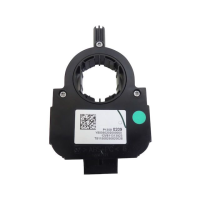
- Faulty Steering Angle Sensor (SAS) (Very Common) — The sensor that tells the computer how much and in which direction you are turning the steering wheel failed internally. This is a primary hardware cause of code C1024.
- Faulty Clock Spring / Steering Column Module (Common) — On many vehicles, the Steering Angle Sensor is integrated into the clock spring assembly. The internal ribbon cables of the clock spring break, causing a loss of signal from the SAS and illuminating the airbag light.
- Damaged Wiring or Corroded Connectors (Common) — Wires leading to the steering angle sensor, wheel speed sensors, or the main ABS module short out or corrode, interrupting the signal. This is the primary culprit for CAN communication-related definitions of C1024, especially in areas with heavy road salt usage.
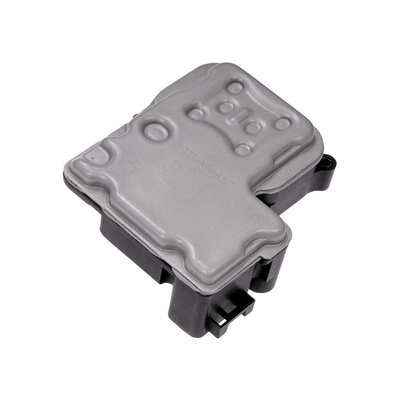
- Faulty ABS/ESP Control Module (Less Common) — The control module that manages the ABS and stability systems fails internally, causing communication errors or misinterpreting sensor data.
- Cracked or Dirty ABS Tone Ring (Less Common) — The notched ring on the axle that the wheel speed sensor reads cracks, rusts, or accumulates debris, causing an incorrect speed reading. This is a known issue on Ford Transit models.
- Low Battery Voltage or Poor Grounds (Rare) — A weak battery causes unpredictable electrical problems and communication errors between modules, triggering a C1024 code as a secondary fault. A poor ground connection for the ABS/ESP module causes identical issues.
- ESP Module Software Glitch (Rare) — On certain models, particularly Suzuki, a known software glitch causes the ESP module to be overly sensitive and set a C1024 code. A dealer-level software update fixes this.
Symptoms
- Traction Control (ESC/ESP) Light On — The Electronic Stability Control/Program light illuminates, often showing a car with squiggly lines behind it.
- ABS Light On — The Anti-lock Braking System warning light illuminates on your dashboard.
- Unstable or Stiff Steering — Vehicles with electric power steering feel heavier, less responsive, or inconsistent.
- Disabled Cruise Control — The cruise control system refuses to engage because it relies on data from the disabled stability systems.
- Car goes into 'Limp Mode' — On vehicles where C1024 indicates a CAN communication fault (like Mercedes-Benz), the vehicle enters a reduced power mode to protect the engine and transmission.
- Gear Indicator Lights Malfunction — On certain Mercedes-Benz models, a C1024 communication fault causes the gear position indicator lights on the dashboard to stop working intermittently.
Diagnostic Flowchart
Tap your situation to follow the diagnostic path that matches what you're seeing on this code.
Common Fixes & Costs
- Steering Angle Sensor Recalibration — Parts: $0, Labor: $100-$200, ~0.5 hr book time (Professional)
- Replace Steering Angle Sensor
— Parts: $100-$400, Labor: $150-$300, ~1.5 hr book time
(Professional)
: OEM 37440-64J10 (Alt: {"brand": "Various", "part_number": "37440-64J"})
: OEM A2129007914 (Alt: {"brand": "VEMO", "part_number": "V30-72-0750"}) - Replace Clock Spring Assembly (incl. SAS)
— Parts: $150-$500, Labor: $150-$300, ~1.8 hr book time
(Professional)
: OEM 83196AJ04A (Alt: {"brand": "Dorman", "part_number": "Varies by year"}) - Replace ABS Wheel Speed Sensor — Parts: $50-$150, Labor: $100-$200, ~1 hr book time (DIY)
- Repair or Replace ABS Control Module — Parts: $200-$700 (Repair) or $900-$2500 (New), Labor: $150-$400, ~2.5 hr book time (Professional)
Used vs. New Parts: Buying Guide
When a used part is worth it: For a Steering Angle Sensor or Clock Spring assembly, buying used is strongly discouraged. These parts have delicate, moving internal components that wear out. The risk of receiving a damaged part is too high.
Donor-vehicle mileage cap: roughly under 20000 miles for the part to have meaningful remaining life.
Donor quality checklist:
- Only consider from a very low-mileage vehicle wrecked for non-frontal reasons.
- Ensure the part number is an exact match.
- The clock spring must be locked in the centered position for shipping and installation.
Decision logic:
- If The part is a Clock Spring or integrated Steering Angle Sensor → Buy new OEM or a high-quality aftermarket part. The labor to replace it is significant, and you do not want to do the job twice.
- If The part is an external component like an ABS Control Module or a wiring pigtail → A used part from a reputable recycler with a good warranty is a cost-effective option, provided part numbers match exactly.
Warranty tradeoff: Used parts typically have a 30-90 day warranty covering the part only. New aftermarket parts offer 1-year to limited lifetime warranties. New OEM parts carry a 1-2 year warranty.
Worst-case if a used part fails: $400-$800 if a used clock spring/SAS fails after installation, requiring repeat labor costs.
What Happens If You Wait — Timeline
- Immediate: Code is set, ABS and ESC/Traction Control warning lights illuminate. ABS and stability control systems are disabled. (MPG impact: 0%% · Added cost: $0, but immediate and significant safety risk. Stopping distances increase, and the risk of losing control in an emergency maneuver is much higher.)
- 1-6 months: If the root cause is a bad alignment, uneven tire wear begins. You notice the car pulling to one side or the steering wheel being off-center. (MPG impact: 1-3% due to increased rolling resistance from misalignment.% · Added cost: $300-$800 in premature tire replacement if the alignment issue is not corrected.)
- 6-12+ months: If the root cause is a failing clock spring, the internal wires continue to fatigue. This leads to intermittent or total failure of the horn, steering wheel controls, and eventually the driver's side airbag circuit. (MPG impact: 0%% · Added cost: Critical loss of safety when the airbag becomes non-functional.)
- Long-term: Continued driving with a misaligned vehicle puts extra strain on suspension components like ball joints and wheel bearings, leading to premature failure. (MPG impact: Up to 5% from severe alignment issues.% · Added cost: $500-$1500+ for replacing worn-out suspension parts and tires.)
Cost of Not Fixing It
- Immediate: Significantly increased risk of accident. ABS and ESC are disabled, leading to longer stopping distances and potential loss of control in emergency maneuvers. (Added cost: Potential for total vehicle loss and injury.)
- 0-6 months: If the code stems from a poor alignment, expect accelerated and uneven tire wear, particularly on the front tires. (Added cost: $300-$800 for a new pair of tires.)
- 6+ months: Continued driving with a faulty clock spring leads to the eventual failure of the driver's side airbag circuit, a critical safety failure. (Added cost: Compromised safety and potential for other steering column electrical failures.)
Diagnosis Steps
- Read All System Codes
Use an advanced OBD-II scanner that reads Chassis (C) and Network (U) codes from all modules (ABS, ESP, ECM). Note all codes present, as C1024 is often accompanied by others that pinpoint the problem area (e.g., C1075, U0100).
Tools: Advanced OBD-II Scanner (Beginner) - Check Steering Angle Sensor Live Data
View the live data for the Steering Angle Sensor. With the car on level ground and the steering wheel perfectly straight, the sensor must read 0 degrees (within +/- 2.5 degrees). If it is off, doesn't change smoothly when you turn the wheel, or is stuck at a fixed value, the sensor or its calibration is the issue.
Tools: Advanced OBD-II Scanner (Beginner) - Attempt Steering Angle Sensor Recalibration
Use the scanner's service function to recalibrate the SAS. Follow the on-screen procedure, which involves centering the steering wheel and confirming the reset. This is a required step after an alignment and often fixes the code entirely.
Tools: Advanced OBD-II Scanner (Intermediate) - Perform a Battery Load Test
Use a multimeter to confirm at least 12.4V with the engine off. Have a helper crank the engine while you watch the voltage. It must not drop below 10.0V. A drop below this indicates a weak battery causing spurious communication codes.
Tools: Multimeter (Beginner) - Visually Inspect Wiring and Connectors
Inspect the wiring going to the steering column (for the SAS) and at each wheel hub (for the wheel speed sensors). Check for damage, corrosion, or loose connections. On Mercedes-Benz, inspect the CAN bus wiring harness and connectors at the ECM and ABS module.
Tools: Flashlight, Mirror (Intermediate) - Inspect Wheel Speed Sensors and Tone Rings
If other codes for wheel speed sensors are present, remove each wheel and inspect the sensor and the tone ring it reads. Clean brake dust from the sensor tip and check the tone ring for cracks or missing teeth.
Tools: Jack and Jack Stands, Socket Set, Brake Cleaner (Intermediate) - PRO TIP: Scope the Steering Angle Sensor Signal
Use an oscilloscope to back-probe the signal wires of the SAS. Most SAS sensors use two signal lines that produce opposing square wave patterns as the wheel turns. The pattern must be clean, with no dropouts. A noisy or missing signal confirms a faulty sensor or wiring.
Tools: Oscilloscope, Wiring Diagram (Professional) - PRO TIP: Test CAN Bus Resistance
For network-related C1024 codes, disconnect the battery. Measure the resistance between the CAN High and CAN Low pins at the OBD-II port (typically pins 6 and 14). A healthy network reads approximately 60 ohms. A reading of 120 ohms indicates a break in the wiring; 0 ohms indicates a short.
Tools: Multimeter, Vehicle Wiring Diagram (Professional) - ADVANCED: Test Active Wheel Speed Sensor Output
Active (2 or 3-wire) sensors require power. With the key on, back-probe the sensor's connector. Confirm battery voltage (or 5V reference) and ground. The signal wire must produce a square wave when the wheel turns, best viewed with an oscilloscope. If power and ground are present but the signal is absent, the sensor is faulty.
Tools: Multimeter, Oscilloscope, Wiring Diagram (Advanced) - ADVANCED: Test Passive Wheel Speed Sensor Output
Disconnect the passive (2-wire) sensor and set a multimeter to Ohms. A healthy sensor has a resistance between 800-1700 ohms. Next, set the multimeter to AC Volts. Spin the wheel by hand; the sensor must generate a small AC voltage (over 100mV) that increases with speed. No voltage indicates a failed sensor.
Tools: Multimeter, Jack and Jack Stands (Advanced)
When This Code Triggers (Freeze-Frame Conditions)
- System State: Key-On or Engine Running (Fault is detected during the initial self-test immediately after starting the car.)
- Vehicle Speed: 0-15 mph (Triggers during low-speed turns, like pulling out of a parking spot, if the SAS signal is irrational or lost.)
- Steering Angle: > 5 degrees (while Vehicle Speed > 0) (Sets when the ABS module sees a conflict, such as the steering angle sensor reporting a turn but the wheel speed sensors showing no difference in speed.)
- Battery Voltage: 11.5V - 14.5V (Typically sets when battery voltage is normal, ruling out a low voltage condition as the primary cause, though a voltage drop during cranking sometimes triggers communication faults.)
Related Codes
- C1025 — On Mercedes-Benz vehicles, C1025 ('CAN Communication BAS communication with ESP control unit faulty') often appears with C1024. If both are present, it confirms a network-level fault. Test the CAN bus wiring and module connections.
- C1075 — On Suzuki vehicles, C1075 means 'Steering Angle Sensor Calibration Incomplete'. If present with C1024, it's a definitive sign the issue is SAS calibration. Attempt recalibration first.
- C1261 — On Hyundai and Kia vehicles, C1261 ('Steering Angle Sensor Not Calibrated') is the direct equivalent of a calibration-related C1024 fault. Perform the SAS calibration procedure with a compatible scan tool.
- U-prefix codes (e.g., U0100, U0121) — Any 'U' code indicates a network communication problem. If U0100 or U0121 appears with C1024, the U-code takes diagnostic priority. The problem is likely a wiring harness, gateway module, or power/ground issue.
Climate & Environmental Factors
- Road Salt / High Humidity: Regions using road salt in winter see a higher incidence of C1024 codes related to wiring and sensor corrosion. Saltwater is highly conductive and penetrates connectors, causing shorts or high resistance in wheel speed sensor circuits and CAN bus harnesses.
- Extreme Cold: Extreme cold causes older, brittle plastic wiring insulation to crack, creating an entry point for moisture. It also affects battery voltage during cranking, leading to spurious communication codes on sensitive modules.
How to Talk to a Mechanic About This Code
Say this: "I have a C1024 code and the ABS/ESC lights are on. I'd like to schedule a diagnostic. Can you please check if the issue is the steering angle sensor's calibration before recommending a replacement part? I'd also like to know if my vehicle has any available software updates for the ESP or ABS module."
This signals you know the common causes are calibration or software-related, not just a bad part. It directs the technician to perform the cheapest and most frequent fixes first, preventing an immediate upsell to an expensive sensor replacement.
Avoid saying:
- 'My traction control light is on, can you just fix it?'
- 'I think I need a new steering sensor.'
- 'Just do whatever it takes to turn the light off.'
Questions to ask before authorizing the repair:
- Did the code appear after recent work like a wheel alignment or battery change?
- Can you show me the live data from the steering angle sensor? What does it read when the wheels are straight?
- Did you try to perform a steering angle sensor recalibration, and did it complete successfully?
- If you are recommending a part replacement, what was the specific failure you found during diagnosis (e.g., no signal from sensor, internal fault)?
- Does the quoted price include the mandatory post-replacement calibration?
Where to Take It: Dealer vs Independent vs Chain
- Dealer:
Recommended if you suspect a software glitch or have a complex European brand known for network issues. Also the best choice if the car is under warranty.
Best for: Vehicles under warranty., Manufacturer-specific quirks, like Suzuki software updates or Mercedes CAN bus issues., Complex electronic diagnostics where access to factory service information is critical.
Downsides: Highest labor rates, often 1.5-2x more than independent shops., Defaults to replacing an entire assembly (like a clock spring) instead of a smaller component. (Typical cost: +50% vs. baseline) - Independent Shop:
Best fit for most common scenarios, provided you vet the shop. Ask them specifically if they have the equipment to perform a steering angle sensor calibration on your make and model.
Best for: Out-of-warranty vehicles where cost is a major factor., Common C1024 causes like post-alignment recalibration or replacing a known-bad sensor.
Downsides: Shop quality and diagnostic tool capability vary widely. You must verify they have a modern, bi-directional scanner that can perform SAS calibration for your specific vehicle., Lacks access to the latest manufacturer software updates. (Typical cost: +0% vs. baseline) - Chain Shop:
Use with caution. Acceptable for a wheel alignment if you confirm beforehand they will complete the SAS calibration. AVOID for initial diagnosis of the C1024 code itself.
Best for: Wheel alignments, but you must insist they perform the SAS reset., Simple, related part swaps like an ABS wheel speed sensor.
Downsides: Technician skill varies dramatically; they lack the advanced diagnostic training for this code., Often lack the specific bi-directional scanners needed for calibration on all makes/models. (Typical cost: -10% vs. baseline)
When to Walk Away From the Repair
If the estimated repair cost exceeds 50% of the car's private-party value, you should seriously consider selling the car as-is or trading it in.
- Car worth $5000, fix is $2500: Walk away. The repair cost is at the 50% threshold. It's not economically sound to invest this much into an older vehicle, especially since other age-related repairs are likely.
- Car worth $15000, fix is $750: Fix it. The repair cost is only 5% of the vehicle's value and restores critical safety functions, preserving the car's worth.
- Car worth $3000, fix is $600: Borderline. This is 20% of the car's value. Get a second opinion to ensure it's not a cheaper fix like recalibration ($150) before proceeding. If the $600 repair is firm, it's likely worth doing to restore safety and make the car sellable.
What Scan Tool You Need for This Code
Minimum: A scanner that reads and clears Chassis (C) codes and performs Steering Angle Sensor (SAS) calibration/reset.
A basic $20-$50 code reader only reads Powertrain (P) codes and will not see the C1024 code at all. To diagnose and fix this issue, you need a tool that communicates with the ABS/ESP module and commands a special function (recalibration).
Budget: LAUNCH Creader CRP123X (~$130) — Reads and clears Engine, Transmission, ABS, and SRS codes. Crucially, it includes SAS reset/calibration as one of its service functions, making it a powerful budget option for this specific code.
Mid-range: Foxwell NT510 Elite (~$180) — Provides OE-level diagnostics for a single chosen car make. It reads live data from the steering angle sensor, reads/clears C-codes, and performs the SAS calibration procedure. It's a very popular and effective tool for DIYers focused on one brand.
Professional: Autel MaxiCOM MK808 / MK900BT (~$500-700) — Full bi-directional control. Not only does it perform SAS calibration with guided on-screen steps, but it also actuates other components in the ABS system for deeper diagnosis. It covers a vast range of vehicles and supports advanced functions needed for complex network issues.
Rent vs buy: AutoZone's free 'Loan-A-Tool' program typically only includes basic code readers, not the bi-directional scanners needed for SAS calibration. If this is a one-time fix, your most cost-effective option is to pay a shop the ~$150 diagnostic/calibration fee. Buy one of these scanners only if you plan to do your own advanced maintenance and diagnostics regularly.
How to Clear the Code After You Fix It
- Perform required calibration (e.g., Steering Angle Sensor calibration) using a bi-directional scan tool.
- Use the scan tool to clear the C1024 code from the ABS/ESP control module.
- Turn the ignition off for 30 seconds, then restart the vehicle to confirm the warning lights remain off.
Drive cycle (~15 minutes): Drive for 10-15 minutes, including several left and right turns at various speeds, to ensure the ABS/ESC system functions correctly and the code does not reappear. Ensure the steering wheel is perfectly centered when driving straight.
Readiness monitors affected: This is a Chassis (C) code and does not affect engine emissions readiness monitors.
Watch out for:
- Disconnecting the battery will not clear this code and often causes it by erasing calibration memory.
- The code returns instantly if the underlying issue (e.g., failed calibration) is not resolved.
- Basic code readers that only clear Powertrain (P) codes cannot access or clear this ABS module code.
Will This Fail Emissions / State Inspection?
No — by itself this code doesn't fail OBD inspection (but it can keep readiness monitors from setting, which causes a separate fail).
- California: This code does not cause a failure of the emissions 'smog' check itself, but the illuminated ABS/Brake warning light causes a failure of mandatory safety inspections in states that require them.
- New York: An illuminated ABS warning light is cause for a safety inspection failure. The vehicle will not pass its annual inspection with this code active.
- Texas: During the annual safety inspection, the ABS lamp is checked. If the light is on or does not function correctly, the vehicle fails the inspection.
Most Commonly Affected Vehicles
- Suzuki Ertiga, Grand Vitara, SX4 (2006-2023) — Very common for C1024 to indicate a 'Steering Angle Sensor Circuit Performance' issue. Often resolved with an ESP module software update or recalibration before sensor replacement is considered.
- Mercedes-Benz Various (C-Class, E-Class, ML-Class) (2001-2015) — C1024 often means 'CAN Communication With Engine Control Module Interrupted', pointing to a network problem, faulty ECM, or wiring issue rather than a specific sensor. Diagnosis must focus on CAN bus integrity.
- Subaru Outback, Crosstrek, Forester, Impreza (2010-2020) — Frequently appears after a clock spring replacement or suspension work. Proper alignment and scan tool calibration are critical to resolve the code.
- Hyundai / Kia Elantra, Tucson, Sportage, Sorento (2012-2020) — These makes often store a related code, C1261 (Steering Angle Sensor Not Calibrated), for the same issue. It almost always requires a scan tool to perform the SAS calibration procedure.
- BMW Various (3-Series, X-Series) (2005-2016) — The 'trifecta' of ABS, brake, and traction control lights is commonly caused by a loss of SAS calibration after suspension work or an alignment. Recalibration with a BMW-specific tool resolves the issue.
- Ford Transit (2015-2024) — Prone to issues with the rear ABS tone rings cracking or accumulating debris, which triggers chassis codes like C1024. Visual inspection of the rear axle tone rings is a key diagnostic step.
- Toyota Rumion, Corolla (2018-2024) — This code appears after minor impacts or suspension work that throws off the steering alignment, requiring a 'zero point calibration' with a capable scan tool.
- Jeep / Chrysler / Dodge Wrangler, Grand Cherokee, Charger (2007-2018) — Commonly occurs after installing a suspension lift kit or larger tires. If the steering wheel is not perfectly centered before SAS recalibration, the code persists.
Manufacturer-Specific Notes
- Suzuki: The C1024 code is extremely common and almost always relates to the Steering Angle Sensor. Before replacing the sensor, check for an ESP module software update, as this is a known fix that addresses over-sensitivity.
- Mercedes-Benz: The code usually points to a CAN bus communication failure, not a sensor. Diagnosis must involve checking the entire network's integrity, especially looking for water intrusion near floorboard CAN distributors.
- Subaru: Manual recalibration procedures (turning the wheel lock-to-lock) rarely work. Resolving this code after a repair almost always requires a specific scan tool to perform the electronic SAS calibration.
- Jeep: After installing a lift kit, the steering wheel must be mechanically centered by adjusting the drag link *before* attempting an electronic SAS recalibration. If off by more than a few degrees, calibration fails.
Real Owner Stories
2015 Subaru Outback at 150,000 miles
ABS and Traction Control lights appeared immediately after the owner performed suspension work that involved disconnecting the steering shaft.
Outcome: A standard wheel alignment did not fix the issue. The owner had to return to a shop with a capable scan tool to perform a specific 'VDC Midpoint reset' and Steering Angle Sensor recalibration. This cleared the codes.
Lesson: On many modern cars, disconnecting steering or suspension components triggers this code. The fix is not just a mechanical alignment but a mandatory electronic recalibration.
2013 Mercedes-Benz C250 (W204)
Car had a no-crank, no-start condition. The instrument cluster was dead, but the car would sometimes start and drive. Code C1024 was present along with no communication with the Transmission Control Module (TCM).
Outcome: The root cause was corrosion in the CAN bus connectors and distributors located in the vehicle's floor. After drying out the area and cleaning the corroded CAN bus hardware, all modules began communicating correctly.
Lesson: On Mercedes-Benz, C1024 often points to a network (CAN bus) failure, not a sensor. Intermittent and widespread electrical issues are classic signs of water damage causing corrosion on the CAN bus wiring.
2018 Suzuki Ertiga with ESP light on
The ESP warning light came on, and a scan revealed code C1024 for 'Steering Angle Sensor Circuit Performance'. The vehicle drove normally.
Outcome: Instead of replacing the part, the shop performed an ESP module software update. This resolved the over-sensitivity of the sensor monitoring and cleared the code permanently.
Lesson: Always check for manufacturer-specific quirks. For many Suzuki models, C1024 is a known software glitch fixed with a module update, saving hundreds of dollars on an unnecessary sensor replacement.
2009 Jeep Wrangler with 2.5-inch lift kit
After installing a lift kit and larger tires, the traction control light intermittently flashed during turns, and the vehicle handled poorly.
Outcome: The core issue was altered steering geometry. The fix required mechanically re-centering the steering wheel by adjusting the drag link, followed by an electronic recalibration of the Steering Angle Sensor.
Lesson: On modified vehicles, C1024 is common. The fix is a two-step process: mechanically adjust suspension components to center the steering, then perform the electronic SAS recalibration.
How to Prevent This Code From Triggering
- Request SAS recalibration after every wheel alignment (During any alignment service) — Ensures the car's computer knows the true 'straight-ahead' position of the steering wheel, preventing conflicts between what the SAS reports and what the wheel speed sensors report.
- Periodically clean and protect under-vehicle wiring connectors (Once per year, especially in rust-belt regions) — Applying dielectric grease to the seals of connectors for wheel speed sensors and the ABS module prevents moisture and road salt from causing corrosion.
- Regularly inspect and clear sunroof drains (Every 6-12 months) — On many vehicles, clogged sunroof drains cause water to overflow into the cabin footwells, where critical CAN bus wiring and control modules are located.
- Perform regular battery health checks (Annually) — A weak battery that drops below 10V during cranking causes voltage spikes and drops that corrupt communications between modules, leading to spurious codes.
Frequently Asked Questions
What are the most common misdiagnosis mistakes for C1024?
The most common mistake is immediately replacing the Steering Angle Sensor without attempting recalibration first. Many times, the code triggers from a lost calibration after a wheel alignment or battery disconnect. Another pitfall is ignoring CAN bus wiring problems or available software updates.
My C1024 code appeared right after I replaced my clock spring. Is the new part bad?
Not necessarily. The new clock spring assembly likely needs electronic recalibration with a professional scan tool to set its zero point. Before assuming the part is faulty, perform the mandatory SAS calibration procedure.
Can I clear code C1024 by disconnecting the battery?
No. Disconnecting the battery often causes this code by erasing the sensor's calibration memory. The code lives in the ABS/ESP module's non-volatile memory and requires a scan tool to clear.
What is a steering angle sensor and what does it do?
It is a sensor located in the steering column that measures the exact angle and direction you turn the wheel. This data is critical for safety systems like Electronic Stability Control (ESC) to function. Without it, the car cannot correct skids.
Can a bad wheel alignment cause the C1024 code?
Yes. If a technician physically changes the steering wheel's position during an alignment without resetting the SAS, the car thinks it is turning while driving straight. This conflict triggers the code and disables stability control.
Why did the C1024 light come on after I replaced my battery?
Disconnecting the battery erases the volatile memory in various modules, including the steering angle sensor's calibration data. The system forgets the 'straight-ahead' position. You must recalibrate it with a scan tool to fix the error.
Is it safe to drive with the ABS and ESC lights on?
Your normal hydraulic brakes still work, but you lack anti-lock or stability control assistance in an emergency. You must allow for longer stopping distances and avoid sudden maneuvers, especially in wet conditions. Address this promptly to restore critical safety features.
Can I fix code C1024 myself?
Simple visual inspections of wiring or wheel speed sensors are DIY-friendly. However, the most common fix—SAS recalibration—requires an advanced, bi-directional OBD-II scanner. If you don't own a $150+ scanner, you must take it to a shop.
Key Takeaways
- Code C1024 instantly disables your ABS and Electronic Stability Control, increasing your risk of skidding during emergency stops.
- Over 50% of C1024 codes trigger because the Steering Angle Sensor lost its zero-point calibration after a wheel alignment or battery swap, requiring a $100-$200 scan tool reset rather than a new part.
- Manufacturer definitions vary wildly: Suzuki models usually need a Steering Angle Sensor fix, while Mercedes-Benz vehicles typically suffer from a CAN bus communication failure.
- You cannot diagnose or clear this code with a basic $20 code reader; you need a bi-directional scanner capable of reading Chassis (C) codes and performing a Steering Angle Sensor calibration.
- Always test your battery voltage and check for manufacturer software updates before spending $300 or more on a replacement sensor or clock spring.
Shop the Parts Behind C1024
Below are the parts most often responsible for code C1024, ranked by how frequently each one is the actual culprit (per the diagnosis above). Tap any to see what we have for your vehicle.



The information in this article is provided for general reference and educational purposes only. Vehicle specifications, procedures, and part compatibility can vary by production date, trim level, and region. Always consult your vehicle's factory service manual and verify part numbers before purchasing or performing repairs. Safety-critical components such as airbags, seat belts, and braking systems should be installed by a qualified professional.
- 🧭 Diagnostic Flowchart
- 🛍️ Shop This Part
- What Does C1024 Mean?
- Can I Drive With C1024?
- Common Causes
- Symptoms
- Common Fixes & Costs
- Used vs. New Parts: Buying Guide
- What Happens If You Wait — Timeline
- Cost of Not Fixing It
- Diagnosis Steps
- When This Code Triggers (Freeze-Frame Conditions)
- Related Codes
- Climate & Environmental Factors
- How to Talk to a Mechanic About This Code
- Where to Take It: Dealer vs Independent vs Chain
- When to Walk Away From the Repair
- What Scan Tool You Need for This Code
- How to Clear the Code After You Fix It
- Will This Fail Emissions / State Inspection?
- Most Commonly Affected Vehicles
- Manufacturer-Specific Notes
- Real Owner Stories
- 2015 Subaru Outback at 150,000 miles
- 2013 Mercedes-Benz C250 (W204)
- 2018 Suzuki Ertiga with ESP light on
- 2009 Jeep Wrangler with 2.5-inch lift kit
- How to Prevent This Code From Triggering
- Frequently Asked Questions
- What are the most common misdiagnosis mistakes for C1024?
- My C1024 code appeared right after I replaced my clock spring. Is the new part bad?
- Can I clear code C1024 by disconnecting the battery?
- What is a steering angle sensor and what does it do?
- Can a bad wheel alignment cause the C1024 code?
- Why did the C1024 light come on after I replaced my battery?
- Is it safe to drive with the ABS and ESC lights on?
- Can I fix code C1024 myself?
- Key Takeaways
- 🎟️ Get 5% Off