

OBD-II Code C1041: Left Front Wheel Speed Signal Problem
What C1041 means, why it triggers, and how to fix it
- Code C1041 disables your ABS, traction control, and stability control because the computer lost the left front wheel speed signal.
- Over 70% of C1041 triggers stem from mechanical issues like a failing wheel bearing, a cracked tone ring, or metallic debris blocking the magnetic sensor.
- View live ABS scanner data while driving under 15 mph to confirm if the left front sensor reads zero or drops out before buying replacement parts.
- Check for manufacturer-specific flaws: GM and Honda vehicles suffer from rust jacking under the sensor mount, while 2011-2017 Kia/Hyundai models frequently crack their CV axle tone rings.
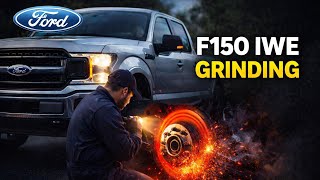
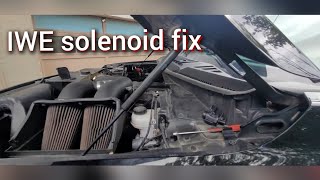
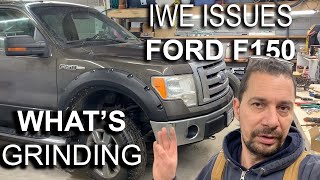
- Ford F-150 owners must test the IWE vacuum system; a $30 failed check valve causes partial hub engagement that grinds the tone ring to dust.
What Does C1041 Mean?
Code C1041 means the ABS Module detects an erratic, implausible, or missing signal from the left front wheel speed sensor. Because the computer cannot accurately determine the wheel's speed, it disables ABS, traction control, and stability control as a safety precaution.
Technical definition: The SAE/OBD-II definition is "Left Front Wheel Speed Circuit Malfunction" or "Left Front Tone Wheel Performance". This indicates the ABS module detected periodic signal drops or an implausible frequency from the left front wheel speed sensor while the vehicle is in motion.
Can I Drive With C1041?
Yes, But With Caution. Yes, but with caution. Your Anti-lock Braking System (ABS), Traction Control, and Stability Control are disabled. This increases the risk of skidding during emergency stops or on slick surfaces. Unexpected ABS activation at low speeds also increases stopping distance. Repair the vehicle immediately to restore these critical safety systems.
Common Causes
- Debris on Sensor or Tone Ring (Very Common) — Metallic brake dust, rust, or road grime accumulates on the magnetic tip of the sensor or clogs the tone ring teeth, physically blocking the signal.
- Failing or Loose Wheel Bearing (Common) — A worn wheel bearing allows excessive play in the wheel hub. This wobble increases the critical air gap between the sensor and the tone ring, causing signal dropouts.
- Faulty Wheel Speed Sensor (Common) — The sensor fails internally due to age, heat, or moisture. The flexible wire pigtail also breaks from repeated suspension movement.
- Rust Buildup Under Sensor Mount (GM & Honda) (Common) — Rust forms on the steering knuckle directly under the sensor mount. This layer of rust physically pushes the sensor away from the tone ring, increasing the air gap.
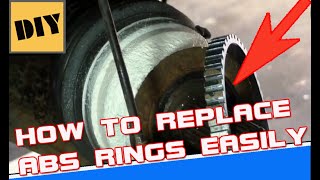
- Damaged, Cracked, or Corroded Tone Ring (Common) — The tone ring cracks, loses teeth, or corrodes. On 2011-2017 Kia/Hyundai models, rust builds up underneath the press-fit tone ring on the CV axle, forcing it to crack open.
- Damaged Wiring Harness (Less Common) — Wires are damaged by improper routing, animal chews, or corrosion at connector junctions, leading to an open or shorted circuit.
- Sensor Damaged During Prior Repair (Less Common) — If a technician replaces a wheel bearing without removing the seized ABS sensor first, the tip of the sensor is crushed during installation. Accidental disturbance of a magnetic encoder seal also ruins the signal.
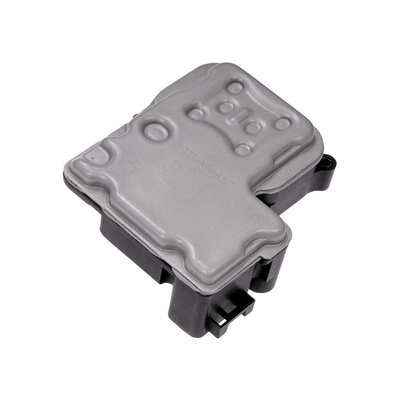
- Faulty ABS Control Module (Rare) — The ABS computer itself fails to process the signal. This is the most expensive and least likely cause; exhaust all other possibilities first.
Symptoms
- ABS Light On — The primary symptom is the illumination of the 'ABS' warning light on the dashboard.
- Traction/Stability Control Light On — The 'Traction Control' or 'StabiliTrak' light illuminates alongside the ABS light, as these systems rely on the same wheel speed data.
- Brake Pedal Pulsing or Grinding at Low Speeds — The ABS incorrectly activates when braking gently at low speeds. The erratic signal tricks the module into thinking a wheel is locking up.
- Cruise Control Inoperative — Cruise control is disabled when the vehicle's computer cannot accurately verify the speed of all four wheels.
- Grinding/Clicking from Front Wheel (Ford IWE) — On Ford F-150s, a grinding noise caused by a failing IWE vacuum system damages the hub and tone ring over time.
- Erratic Wheel Speed on Scanner (scan-tool only — no driver-felt sign) — When viewing live data, the left front wheel speed reads differently than the other three, drops to zero, or shows erratic spikes.
Diagnostic Flowchart
Tap your situation to follow the diagnostic path that matches what you're seeing on this code.
Common Fixes & Costs
- Clean Sensor and Tone Ring — Parts: $0-$20, Labor: $100-$150, ~0.8 hr book time (DIY)
- Replace Wheel Speed Sensor — Parts: $40-$150, Labor: $100-$200, ~1.1 hr book time (DIY)
- Replace Wheel Hub Bearing Assembly — Parts: $150-$400, Labor: $150-$300, ~2.5 hr book time (Intermediate)
- Repair Ford IWE Vacuum System — Parts: $30-$150, Labor: $150-$300, ~1.5 hr book time (Intermediate)
- Replace ABS Control Module — Parts: $500-$1200, Labor: $150-$300, ~1.8 hr book time (Professional)
DIY vs Professional
- Clean Sensor and Tone Ring — Beginner: Yes
Tools: Jack, jack stands, lug wrench, basic socket set, brake cleaner, wire brush. - Replace Wheel Speed Sensor — Beginner: Yes
Tools: Jack, jack stands, lug wrench, socket set, torque wrench, wire brush/file. - Replace Wheel Hub Bearing Assembly — Beginner: No
Tools: Large axle nut socket, breaker bar, high-torque impact wrench, precise torque wrench, hydraulic press (for press-in bearings). - Repair Ford IWE Vacuum System — Beginner: No
Tools: Vacuum pump with gauge, jack, jack stands, basic hand tools. - Replace ABS Control Module — Beginner: No
Tools: Professional-grade bidirectional scan tool, socket set, brake bleeder.
Used vs. New Parts: Buying Guide
When a used part is worth it: Buying used wheel speed sensors or hub bearings is strongly discouraged. The labor cost is significant, and these are wear items. A used ABS Control Module is acceptable if guaranteed functional.
Donor-vehicle mileage cap: roughly under 20000 miles for the part to have meaningful remaining life.
Donor quality checklist:
- Only consider 'new old stock' (NOS) or parts from an extremely low-mileage wreck.
- Avoid parts from vehicles in the 'Rust Belt'.
- Ensure the part number matches exactly.
Decision logic:
- If The part is a wheel speed sensor or wheel hub bearing. → Always buy new from a reputable OEM or aftermarket brand (e.g., Timken, MOOG, Bosch). The risk of premature failure is too high.
- If The part is an ABS Control Module. → A used module from a guaranteed-functional donor vehicle is a cost-effective option.
Warranty tradeoff: Used parts typically have a 30-90 day warranty that does not cover labor. New aftermarket parts offer 1-year to lifetime warranties.
Worst-case if a used part fails: $400-$800 if a used hub or sensor fails post-installation, requiring a second part purchase and repeat labor charges.
What Happens If You Wait — Timeline
- 0-2 Weeks: ABS/Traction Control lights illuminate. Safety systems are disabled. Unwanted ABS activation (grinding) at low speeds occurs on some vehicles. (MPG impact: 0%% · Added cost: $0)
- 2 Weeks - 3 Months (If caused by a bad bearing): A faint humming or growling noise begins above 30 mph, changing pitch when turning. Excessive bearing play consistently triggers the C1041 code. (MPG impact: 0-1%% · Added cost: $0)
- 3 - 6 Months (If caused by a bad bearing): The bearing noise becomes a loud roaring. A vibration is felt in the steering wheel. The wobbling rotor causes uneven brake pad wear and a pulsating pedal. (MPG impact: 1-3%% · Added cost: $150-$300)
- 6+ Months (If caused by a bad bearing): Catastrophic failure. The bearing seizes, locking the wheel, or disintegrates, allowing the wheel to detach. This destroys the steering knuckle and CV axle. (MPG impact: N/A% · Added cost: $800 - $2500+)
Cost of Not Fixing It
- Immediate: Loss of ABS, traction control, and stability control. This increases the risk of skidding, loss of control, and longer stopping distances in emergencies. (Added cost: N/A)
- Weeks to Months: If caused by a bad wheel bearing, continued driving leads to complete bearing failure, damaging the wheel hub, steering knuckle, and CV axle. (Added cost: $800 - $2500+)
- Ongoing: An erratic signal causes unwanted ABS activation at low speeds, increasing brake pad and rotor wear. On Ford F-150s, ignoring IWE grinding destroys the front hub assemblies. (Added cost: $300 - $1200)
Diagnosis Steps
- Read Live Data with a Scan Tool
Use an OBD-II scanner to graph live ABS data for all four wheels while driving under 15 mph. A good signal shows identical speeds. The 'Left Front' reading will jump, lag, or drop to zero.
Tools: OBD-II Scanner with ABS live data capability (Beginner) - Visual Inspection of Sensor, Wire, and Tone Ring
Raise the vehicle and remove the left front wheel. Inspect the sensor for cracks. Follow the wiring harness, checking for cuts or chafing. Inspect the tone ring for heavy rust, missing teeth, or cracks.
Tools: Jack, jack stands, lug wrench, flashlight (Intermediate) - Check for Wheel Bearing Play
Grasp the wheel at the 12 and 6 o'clock positions and attempt to wiggle it in and out. Any perceptible play or clunking indicates a failed wheel bearing, which alters the sensor air gap.
Tools: Jack, jack stands (Intermediate) - Clean Sensor and Tone Ring
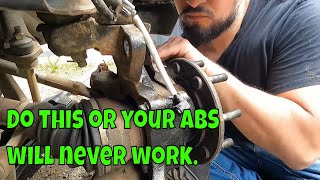
Remove the wheel speed sensor. Wipe the magnetic tip clean. Use brake cleaner and a brush to thoroughly clean the teeth of the tone ring. If the sensor is seized, use penetrating oil and twist gently.
Tools: Socket set, brake cleaner, wire brush, penetrating oil (Intermediate) - Test Circuit Integrity with Signal Swapping (Pro Tip)
Disconnect the left and right front sensors. Use jumper wires to connect the known-good right front sensor to the left front vehicle harness. If the scanner's 'Left Front' reading is now steady, the wiring and ABS module are good, confirming the original left front sensor/hub is faulty.
Tools: Jumper wires, OBD-II Scanner with live data (Professional) - Test Bias Voltage and Signal (Active Sensors)
For modern two-wire active sensors: Back-probe the signal and ground wires with the key on. One wire should have a reference voltage (5V or 12V). Spin the wheel; the voltage should toggle between two levels (e.g., 0.7V and 1.4V). No reference voltage indicates a wiring/module problem.
Tools: Multimeter with back-probe pins (Advanced) - Test Sensor Resistance (Passive Sensors)
For older passive sensors: Disconnect the sensor and measure resistance across its two pins. Compare the reading to the working right front sensor (should be within 10%). Infinity (OL) indicates a broken wire; 0 Ohms indicates a short.
Tools: Multimeter (Advanced) - Check Tire Pressure and Size
Ensure all tires are inflated to the door jamb sticker pressure and are the same size. A significantly mismatched tire rotates at a different speed and confuses the ABS module.
Tools: Tire pressure gauge (Beginner)
When This Code Triggers (Freeze-Frame Conditions)
- Vehicle Speed: 15-45 mph (The code sets when the vehicle exceeds a speed threshold (often 12-25 mph) as the ABS module performs its self-test and compares wheel speeds.)
- Wheel Speed Variance: > 15% (The fault logs when the left front wheel speed signal deviates significantly from the other three wheels or shows periodic dropouts.)
- Brake Pedal Status: Off (The code often occurs during steady-state driving without brake application, providing a clean baseline for comparing wheel speeds.)
- System Voltage: 11.5V - 14.5V (The code reliably sets when the charging system functions normally, ruling out low voltage as the primary cause.)
Related Codes
- C100A — Means 'Left Front Wheel Speed Sensor Circuit.' Points directly to an electrical fault like a broken wire or internal short. If present with C1041, diagnose the electrical circuit first.
- C1042, C1043, C1044 — Identical codes for the Right Front, Left Rear, and Right Rear wheels. If multiple codes are present, suspect a systemic issue like mismatched tire sizes or a failing alternator.
- C1011 — Means 'Left Front Wheel Speed Sensor Erratic Performance.' Functionally identical to C1041 and points to the same set of causes.
- U0121 — Means 'Lost Communication With ABS Control Module.' Indicates a problem with the ABS module itself or its power/ground supply, preventing it from processing sensor signals.
Climate & Environmental Factors
- Road Salt / Cold Climates: Salt accelerates corrosion, causing 'rust jacking' under the sensor mount (common on GM/Honda), seizing the sensor in the steering knuckle, and cracking tone rings due to rust expansion underneath them (common on Kia/Hyundai).
- High Humidity / Heavy Rain: Moisture corrodes the tone ring, sensor mounting surfaces, and electrical connectors. Water intrusion into a cracked sensor or compromised wiring harness shorts the circuit.
- High Heat: Prolonged exposure to high ambient and braking heat degrades the sensor's internal electronics and makes the wiring pigtail brittle, leading to cracks.
How to Talk to a Mechanic About This Code
Say this: "I have an ABS light on, and my scanner shows code C1041 for the left front wheel speed signal. Can you check the live data from all four wheel speed sensors to confirm the fault, and perform a physical inspection of the sensor, wiring, tone ring, and check for wheel bearing play?"
This directs the shop to perform a logical diagnostic process rather than just replacing the sensor. Mentioning 'live data' and 'wheel bearing play' prevents them from selling you a sensor when the real problem is a more expensive hub assembly.
Avoid saying:
- 'My ABS light is on, can you fix it?'
- 'I think I need a new speed sensor.'
- 'Just do whatever it takes to turn the light off.'
Questions to ask before authorizing the repair:
- What did the live data from the left front sensor show compared to the other three wheels?
- Did you find any play in the wheel bearing? Was there any visible damage to the tone ring or wiring?
- If the sensor needs replacement, does the estimate include cleaning the mounting surface on the knuckle?
- What is the warranty on the parts and labor?
Where to Take It: Dealer vs Independent vs Chain
- Dealer:
Recommended only if the vehicle is under warranty or if other shops failed to fix the issue.
Best for: Vehicles still under warranty, Complex, manufacturer-specific issues like Ford's IWE system, Repairs requiring module programming
Downsides: Highest labor rates, Defaults to replacing an entire assembly (e.g., CV axle) when only a smaller component (tone ring) failed (Typical cost: +50% vs. baseline) - Independent Shop:
Best fit for most C1041 repairs. An experienced independent mechanic diagnoses and fixes the vast majority of wheel speed sensor issues efficiently.
Best for: Out-of-warranty vehicles, Common C1041 causes like a bad bearing, sensor, or wiring issue
Downsides: Quality and diagnostic capabilities vary. Look for ASE-certified technicians., May lack specialty tools for programming new ABS modules. (Typical cost: +0% vs. baseline) - Chain Shop:
Use with caution. Acceptable if you are 100% certain the fix is a simple sensor swap. AVOID for initial diagnosis.
Best for: Simple, clear-cut sensor replacements where the diagnosis is already certain.
Downsides: Technician skill varies greatly., Lacks advanced diagnostic tools to differentiate between a sensor, bearing, or module fault., Incentivized to upsell. (Typical cost: -10% vs. baseline)
When to Walk Away From the Repair
If the estimated repair cost exceeds 40-50% of the car's private-party value, consider selling or trading it in.
- Car worth $4000, fix is $2000: Walk away. The repair cost is 50% of the car's value.
- Car worth $12000, fix is $650: Fix it. The repair is well below the threshold and restores a critical safety system.
- Car worth $2500, fix is $1500: Walk away. The repair cost is 60% of the vehicle's value.
What Scan Tool You Need for This Code
Minimum: An OBD-II reader that accesses the ABS module and displays live data for all four wheel speed sensors.
A basic $20 engine code reader cannot communicate with the ABS module. You MUST see and graph the live speed signal from each wheel to identify the failing one.
Budget: BlueDriver Pro (~$100) — Connects to your smartphone via Bluetooth to read/clear ABS codes and graph live data from all four wheel speed sensors.
Mid-range: Foxwell NT630 Plus (~$160) — A dedicated handheld unit that reads/clears ABS codes, shows live data, and adds bidirectional controls for 'ABS auto bleed' procedures.
Professional: Autel MaxiCOM MK808 (~$450) — Offers full bidirectional control for ABS system tests, advanced service functions, and diagnoses nearly all vehicle modules.
Rent vs buy: Auto parts stores read engine codes for free but often cannot read ABS codes. Buying a budget-friendly ABS-capable scanner is a smart investment.
How to Clear the Code After You Fix It
- Use a compatible OBD-II scan tool to erase the C1041 fault code from the ABS module.
- Cycle the ignition off, then on.
- Perform the ABS drive cycle to allow the system to self-test and confirm the repair.
Drive cycle (~10 minutes): Drive the vehicle in a straight line and accelerate to at least 25 mph. The ABS light turns off if the repair was successful. Some models require a few minutes of mixed driving, including gentle turns, for all readiness monitors to set.
Readiness monitors affected: This is an ABS code and does not directly affect emissions-related readiness monitors.
Watch out for:
- A basic code reader that only clears engine codes cannot erase C1041 from the ABS module.
- Disconnecting the battery does not reliably clear ABS codes on modern vehicles.
- The code returns immediately upon the first drive if the underlying mechanical or electrical fault is not fixed.
Will This Fail Emissions / State Inspection?
No — by itself this code doesn't fail OBD inspection (but it can keep readiness monitors from setting, which causes a separate fail).
- California: An illuminated ABS light does NOT cause a vehicle to fail a smog check. The inspection only concerns emissions systems and the Check Engine Light.
- New York: An illuminated ABS warning light IS grounds for failure of the annual safety inspection.
- Texas: An illuminated ABS light is NOT a cause for rejection during the safety inspection. Safety inspections are being phased out for most non-commercial vehicles in 2025.
Most Commonly Affected Vehicles
- Chevrolet Silverado / Suburban / Tahoe (1999-2007) — Highly prone to rust jacking, where corrosion builds up on the knuckle underneath the sensor, pushing it away from the tone ring.
- GMC Sierra / Yukon (1999-2007) — Shares the same platform and common rust-related sensor gap issue as equivalent Chevrolet trucks.
- Dodge Grand Caravan / Chrysler Town & Country (2008-2020) — Known for issues with the tone wheel and sensors seizing in the hub due to corrosion, requiring the old sensor to be drilled out.
- Jeep Wrangler (JK) (2007-2018) — Off-road use increases the likelihood of wiring damage, debris contamination, and impact damage to the sensor or tone ring.
- Ford F-150 (2004-2020) — The IWE 4WD system is a frequent cause. Vacuum leaks cause partial hub engagement, creating a grinding noise that destroys the tone ring.
- Honda Accord / Civic / CR-V (2003-2012) — Prone to rust buildup under the sensor's mounting point, increasing the air gap. Sensors are notoriously difficult to remove without breaking.
- Subaru Forester / Outback / Impreza (2003-2018) — Can suffer from corrosion in main harness connectors located inside the cabin, such as under the rear seat or in the kick panel.
- Kia / Hyundai Sportage / Tucson / Sonata / Santa Fe (2011-2017) — Well-known for a specific issue where rust forms on the CV axle shaft underneath the press-fit tone ring, causing the ring to expand and crack.
Manufacturer-Specific Notes
- General Motors (Chevy, GMC): The most common cause is rust buildup on the steering knuckle's sensor mounting surface. The fix requires grinding the mounting surface perfectly flat to restore the correct air gap.
- Dodge / Chrysler / Jeep: Factory service information titles this code 'Left Front Tone Wheel Performance,' emphasizing that inspection should focus on the tone ring itself for cracks or debris.
- Ford: On F-150s, C1041 is often a secondary effect of a failing IWE (4x4 hub lock) system. A vacuum leak causes the hub to grind, destroying the tone ring on the wheel bearing.
- Honda: The ABS module stops communicating with a scan tool at speeds above ~15 mph if a wheel speed sensor fault is active. To observe live data, drive slowly or spin wheels on a lift.
- Kia / Hyundai: A well-documented issue involves the tone ring on the CV axle cracking due to rust buildup underneath it. Aftermarket companies sell replacement tone rings to avoid replacing the entire CV axle.
Real Owner Stories
2010 Ford F-150 Lariat with intermittent grinding
A grinding noise started during light acceleration. A shop replaced the driver's side wheel bearing and IWE actuator, but the grinding and C1041 code continued.
What they tried:
- Spent $600 on a new hub and actuator at a shop.
- Unplugged the IWE solenoid to engage the hubs manually.
Outcome: The owner spent significant money on parts that didn't fix the core problem. A methodical diagnosis of the entire IWE vacuum system (solenoid, check valve, lines) was required.
Lesson: On a Ford F-150, a grinding noise is a massive clue. Insist on a full IWE vacuum system diagnosis first; a $30 check valve is often the real cause, not the expensive hub.
2011 Honda CR-V with ABS/Traction lights after a repair
ABS and Traction Control lights illuminated immediately after a shop replaced the front wheel bearing.
What they tried:
- Sought advice online before returning to the shop.
Outcome: A Honda mechanic confirmed the shop either installed the new bearing backward (magnetic encoder facing away from the sensor), damaged the sensor during removal, or failed to clean rust from the mounting surface.
Lesson: If an ABS light appears immediately after a wheel bearing or suspension repair, the shop caused it. Return immediately and demand they correct their work.
2006 Dodge 3500 with ABS errors after new hub install
After installing new Timken hub assemblies, the owner received code C1041. The electrical plug on the new hubs didn't match the truck's harness perfectly, so the owner modified it.
What they tried:
- Modified the connector plug to force it to fit.
Outcome: Timken support revealed a mid-year 2006 design change. The truck used a 2005-style magnetic sensor, but the new hub used a 2006-style HAL effect sensor. They were electrically incompatible. The fix required swapping the old sensors into the new hubs.
Lesson: Part numbers are critical during model year changeovers. If a new part's connector doesn't match perfectly, do not modify it. Verify the part number against the vehicle's build date.
How to Prevent This Code From Triggering
- Periodic Undercarriage Cleaning (Quarterly, or after driving in heavy salt/mud) — Pressure washing the steering knuckles and hub assemblies removes corrosive salt. This prevents rust from seizing the sensor and stops 'rust jacking' on GM/Honda models.
- Inspect Sensor Wires During Tire Rotations (Every 5,000-7,500 miles) — Visually inspect the ABS sensor wire for chafing, cracking, or animal chews. Ensure the wire is secured in its clips and not rubbing against suspension components.
- Address IWE System on Ford Trucks (Annually) — Proactively replacing the $30 check valve and inspecting vacuum lines prevents the vacuum loss that leads to grinding and eventual hub/tone ring destruction.
- Use a Torque Wrench on Lug Nuts (Every time wheels are installed) — Unevenly tightened lug nuts warp the brake rotor and put uneven stress on the hub assembly, accelerating wear and causing premature bearing failure.
Frequently Asked Questions
Can I just replace the sensor to fix code C1041?
While a faulty sensor is a common cause, issues like debris on the tone ring, a bad wheel bearing, or rust buildup under the sensor are more frequent. Diagnosing the problem before replacing parts saves time and money.
Why would the C1041 code return after replacing the sensor and bearing?
The issue is likely in the wiring harness, a corroded connector, or you used an incompatible aftermarket sensor. On GM/Honda vehicles, failing to clean the rust from the sensor mounting surface causes the code to return immediately.
What are common mistakes when fixing C1041?
The most frequent mistake is damaging a new sensor during wheel bearing installation by not removing it from the knuckle first. Another is failing to clean rust off the sensor's mounting surface. For hub replacements, installing a magnetic encoder bearing backwards is a common error.
Can a bad alignment cause a C1041 code?
Not directly. However, the root cause of a bad alignment—such as a worn wheel bearing or damaged suspension component—also damages the tone ring or increases the sensor air gap. Additionally, a technician can accidentally damage the sensor wire during an alignment.
What does a C1041 oscilloscope pattern look like?
A good sensor produces a clean, consistent waveform. For older passive sensors, this is a sine wave; for modern active sensors, it's a square wave. A faulty signal shows dropouts, 'hairy' noise, or an erratic, inconsistent pattern.
Why does my brake pedal grind at low speeds?
This happens when the faulty sensor sends an erratic signal, tricking the ABS computer into thinking that wheel is locking up. The ABS system tries to 'help' by rapidly pulsing the brake pressure to that wheel. You feel this as a grinding noise or a pulsing sensation in the pedal.
Will clearing the code make the light go away?
Clearing the code with a scanner turns the light off temporarily. However, the ABS module performs a self-test as soon as you start driving. It detects the faulty signal again, and the code and warning lights immediately return.
Why did my ABS light come on right after getting an alignment?
This is a common complaint. The technician likely stressed or damaged the wheel speed sensor wire while adjusting the tie rods. On some cars, failing to recalibrate the steering angle sensor after an alignment also causes stability system-related faults.
Key Takeaways
- Code C1041 disables your ABS, traction control, and stability control because the computer lost the left front wheel speed signal.
- Over 70% of C1041 triggers stem from mechanical issues like a failing wheel bearing, a cracked tone ring, or metallic debris blocking the magnetic sensor.
- View live ABS scanner data while driving under 15 mph to confirm if the left front sensor reads zero or drops out before buying replacement parts.
- Check for manufacturer-specific flaws: GM and Honda vehicles suffer from rust jacking under the sensor mount, while 2011-2017 Kia/Hyundai models frequently crack their CV axle tone rings.
- Ford F-150 owners must test the IWE vacuum system; a $30 failed check valve causes partial hub engagement that grinds the tone ring to dust.
Helpful Videos
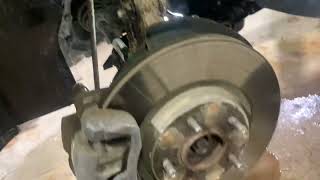
Shop the Parts Behind C1041
Below are the parts most often responsible for code C1041, ranked by how frequently each one is the actual culprit (per the diagnosis above). Tap any to see what we have for your vehicle.




The information in this article is provided for general reference and educational purposes only. Vehicle specifications, procedures, and part compatibility can vary by production date, trim level, and region. Always consult your vehicle's factory service manual and verify part numbers before purchasing or performing repairs. Safety-critical components such as airbags, seat belts, and braking systems should be installed by a qualified professional.
- 🧭 Diagnostic Flowchart
- 🎬 Helpful Videos
- 🛍️ Shop This Part
- What Does C1041 Mean?
- Can I Drive With C1041?
- Common Causes
- Symptoms
- Common Fixes & Costs
- DIY vs Professional
- Used vs. New Parts: Buying Guide
- What Happens If You Wait — Timeline
- Cost of Not Fixing It
- Diagnosis Steps
- When This Code Triggers (Freeze-Frame Conditions)
- Related Codes
- Climate & Environmental Factors
- How to Talk to a Mechanic About This Code
- Where to Take It: Dealer vs Independent vs Chain
- When to Walk Away From the Repair
- What Scan Tool You Need for This Code
- How to Clear the Code After You Fix It
- Will This Fail Emissions / State Inspection?
- Most Commonly Affected Vehicles
- Manufacturer-Specific Notes
- Real Owner Stories
- 2010 Ford F-150 Lariat with intermittent grinding
- 2011 Honda CR-V with ABS/Traction lights after a repair
- 2006 Dodge 3500 with ABS errors after new hub install
- How to Prevent This Code From Triggering
- Frequently Asked Questions
- Can I just replace the sensor to fix code C1041?
- Why would the C1041 code return after replacing the sensor and bearing?
- What are common mistakes when fixing C1041?
- Can a bad alignment cause a C1041 code?
- What does a C1041 oscilloscope pattern look like?
- Why does my brake pedal grind at low speeds?
- Will clearing the code make the light go away?
- Why did my ABS light come on right after getting an alignment?
- Key Takeaways
- 🎟️ Get 5% Off