

C1047 on 2015-2019 Ford Edge: Right Front ABS Fault Causes and Fixes
Code C1047 on a Ford Edge indicates a problem in the Anti-lock Brake System (ABS) at the right front wheel. The most common causes are a faulty wheel speed sensor, a damaged tone ring on the wheel bearing or CV axle, or wiring issues. Expect to pay $30-$80 for a new sensor.
- C1047 means there's a fault in the ABS system concerning the right front wheel.
- Do not drive aggressively or in hazardous conditions, as your ABS is likely disabled.
- The most likely cause is a bad right front wheel speed sensor, which is a relatively inexpensive and accessible part.
- Before replacing parts, inspect the wiring, sensor, and tone ring for visible damage or debris.
- Due to the safety-critical nature of the ABS, professional diagnosis is recommended if you are not comfortable performing these checks.
What's Unique About the 2015-2019 Ford EDGE
On the Ford Edge, like many modern vehicles, the ABS and traction control systems are highly integrated. The components responsible for this code—the wheel speed sensor and its corresponding tone ring—are common failure points that can trigger a cascade of warning lights, including ABS and AdvanceTrac service messages. While the code points to a hydraulic timing issue, it's often triggered by a faulty signal from the wheel speed sensor, which is the primary input the ABS module uses to make decisions. It's important to note that the TSB SSM 47791, which mentions a connector C1047, is for engine cooling issues on F-150s and other models and is not related to this ABS trouble code on a Ford Edge; the matching number is a coincidence.
Diagnostic Flowchart
Tap your situation to follow the diagnostic path that matches what you're seeing on this vehicle.
Generation note: The 2015-2019 Ford Edge is part of the second generation (2015-2024). The causes and fixes for this code are generally consistent across this generation and its platform mates like the Lincoln MKX/Nautilus.
Symptoms You May Notice
- ABS warning light is on
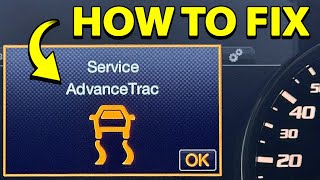
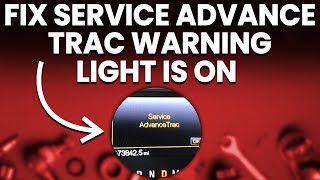
- Traction control or AdvanceTrac warning light is on
- Brakes may feel different or lock up during hard braking
- A grinding or pulsing sensation from the ABS pump may be absent during a panic stop
- Steering may feel loose or the vehicle may pull to one side
- Replacing the brake caliper or brake lines, as the code mentions 'pressure', when the issue is typically with the sensor or its inputs.
- Replacing the wheel speed sensor when the actual fault is a cracked or corroded tone ring on the wheel bearing or CV axle.
Most Likely Causes
- Faulty Right Front Wheel Speed Sensor 🔴 High Probability → Shop ABS Wheel Speed Sensor Wheel speed sensors are exposed to harsh conditions (water, dirt, heat) and are a common failure item on most vehicles, including the Edge.
How to confirm: Use a scan tool to monitor live data from the right front wheel speed sensor while driving. The reading should be smooth and match the other wheels. If it's erratic, drops to zero, or is absent, the sensor is likely bad.
Typical fix: Replace the right front wheel speed sensor. This is a bolt-on part located on the steering knuckle. 🎬 Watch: How to replace the ABS speed sensor on your Edge.
Est. part cost: $30-$80 - Damaged or Contaminated Tone Ring 🟡 Medium Probability The tone ring (or magnetic encoder) is often integrated into the wheel bearing or the CV axle shaft. Corrosion can cause it to crack or swell, or metallic debris can accumulate on it, leading to a poor signal.
How to confirm: Visually inspect the tone ring for cracks, rust buildup, missing teeth, or metallic debris. This requires removing the wheel and the wheel speed sensor for a clear view. In a repair on a platform-mate Lincoln MKX, the tone ring on the CV axle was the confirmed failure point after a sensor replacement didn't fix the issue.
Typical fix: If the tone ring is part of the wheel bearing/hub assembly, the entire assembly must be replaced. 🎬 See this detailed walkthrough for replacing the wheel bearing and hub. If it's on the axle shaft, the shaft may need replacement.
Est. part cost: $150-$300 for a hub assembly - Wiring Harness or Connector Issue 🟡 Medium Probability The wiring to the wheel speed sensor flexes with the suspension and steering and can become damaged, frayed, or corroded over time, especially at the connector.
How to confirm: Visually inspect the wiring harness from the sensor to the main chassis connector. Check for breaks, chafing, or corrosion in the connector pins. Use a multimeter to check for continuity and proper voltage.
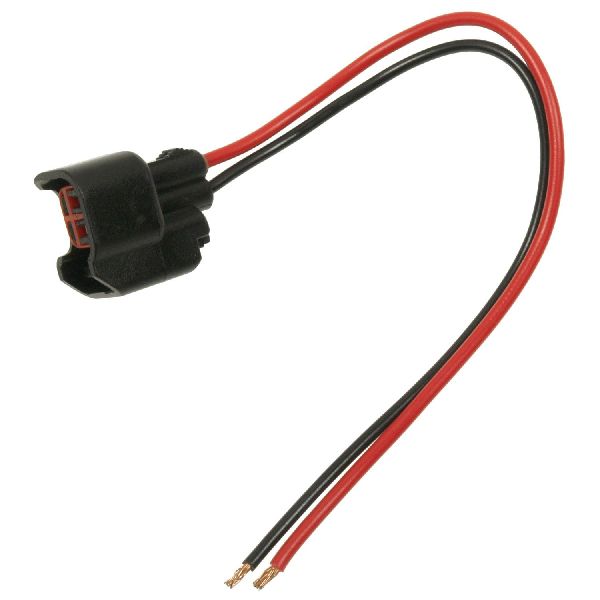
Typical fix: Repair the damaged section of wire or replace the pigtail connector.
Est. part cost: $15-$50 for a pigtail - Failing Right Front Wheel Bearing ⚪ Low Probability A worn wheel bearing can introduce excessive play or 'wobble'. This changes the air gap between the speed sensor and the tone ring, causing an inconsistent signal. Wheel bearings are a known failure item on the Edge platform.
How to confirm: With the vehicle raised, check for play in the wheel by grabbing it at the top and bottom (12 and 6 o'clock) and trying to rock it. A humming or grinding noise while driving that changes when turning is also a strong indicator.
Typical fix: Replace the right front wheel bearing and hub assembly.
Est. part cost: $150-$300
Rare But Worth Checking
- Faulty ABS Module: → Shop ABS Control Module While less common, the ABS module itself can fail internally. This is usually considered after all other possibilities (sensor, tone ring, wiring) have been definitively ruled out. Replacement may require programming the new module to the vehicle's VIN using software like FORScan. 🎬 Watch: How to program a new ABS module using FORScan.
- ABS Module Software Issue: → Shop ABS Control Module TSB SSM 49091 notes that some 2019-2020 Edge vehicles may experience false traction control events due to a software issue in the ABS module, which could potentially be related to sensor timing codes. A dealer may need to update the module software.
Diagnosis Steps
- Connect an advanced OBD-II scanner capable of reading ABS codes to confirm C1047 is present and to check for other DTCs.
- Check for any other ABS or powertrain codes. Codes related to the wheel speed sensor circuit (like C0034) are a strong clue.
- Use the scanner's live data function to monitor the speed of all four wheels while driving. Confirm that the right front wheel speed reading is erratic, drops out, or does not match the others. Note: The vehicle may need to be driven above 25 mph (40 km/h) for the fault condition to be met.
- If the signal is bad, raise and secure the vehicle. Visually inspect the right front wheel speed sensor and its wiring for any obvious damage, corrosion, or loose connections.
- Remove the wheel speed sensor (typically an 8mm bolt) and inspect the tone ring on the hub/axle for cracks, damage, or heavy rust/debris.
- Check the wheel bearing for any play or roughness when spun by hand. A humming or growling noise is a key symptom.
- If the sensor, tone ring, and bearing appear okay, use a multimeter to test the sensor's circuit for continuity and voltage back to the ABS module connector.
- If all wiring and external components test good, the fault may lie within the ABS module itself. After replacement, the ABS light may not extinguish until the module senses all four wheels spinning above 7.5 mph (12 km/h).
- If the ABS module is replaced, it may require programming and calibration using dealer tools or advanced diagnostic software like FORScan.
Parts You'll Likely Need
- Right Front Wheel Speed Sensor
(OEM #J2GZ-2C204-D)— This is the most frequent failure point for code C1047, as it provides the primary signal used by the ABS module to monitor wheel activity.
Trusted brands: Motorcraft, Bosch, Delphi, NTK
OEM price range: $60-$100
Aftermarket price range: $30-$80 - Right Front Wheel Bearing and Hub Assembly
(OEM #Motorcraft: HUB-421, Ford: K2GZ-1109-A)— This part is replaced if the integrated tone ring is damaged or if the bearing itself has failed, causing an incorrect sensor gap. The tone ring is integral to the assembly.
Trusted brands: Motorcraft, Timken, SKF, MOOG
OEM price range: $250-$400
Aftermarket price range: $150-$300
Related Codes That Often Appear With This One
- C0034 — This code often means 'Right Front Wheel Speed Sensor Circuit'. It can appear with C1047 because a fault in the sensor circuit is a primary cause of the pressure phase timing error.
- C1236 — This code indicates 'Left Rear Wheel Speed Sensor Input Missing' in some contexts, but a similar code for the right front wheel (C1234) could appear. It points directly to a lack of signal from the sensor, which would cause C1047.
- U3000 — This code can indicate 'Control Module: Internal Electronic Failure'. It may appear in the ABS module if it has an internal fault, which is a rare but possible cause of C1047. A user on fordedgeforum.com resolved this by replacing the ABS module.
Technical Service Bulletins (TSBs) & Recalls
- SSM 49091: Some 2019-2020 Edge/Nautilus vehicles may exhibit a false traction control or yaw control event. This may be due to software in the anti-lock braking system (ABS) module.
- 22N02 S1: Relates to a recall/replacement program for the front brake flexible hoses on certain 2015-2019 Edge an
Platform-Specific Known Issues
- ABS Module Software Glitches: → Shop ABS Control Module TSB SSM 49091 was issued for some 2019-2020 Edge and Nautilus models for false traction control or yaw control events that may be caused by software in the ABS module. While not mentioning C1047 directly, it highlights that the module's software can be a source of system faults, which could be a rare cause for this code.
Mechanic-Grade Diagnostic Values
- Wheel Speed Sensor Resistance — expected: 1200 - 2700 ohms. Failure: A reading below 1200 ohms or above 2700 ohms indicates a faulty sensor. Other sources suggest a general range of 800-2000 ohms.
- Wheel Speed Sensor AC Voltage Output — expected: Minimum of 0.2 Volts AC (200 mV). Failure: A reading less than 0.2 VAC while rotating the wheel by hand (at about one-half revolution per second) suggests a problem with the sensor or the air gap to the tone ring.
Scan Tool Commands That Help
- FORScan, Ford IDS, or equivalent advanced scanner: IVD (Interactive Vehicle Dynamics) Initialization Sequence — This calibration procedure is required after replacing the ABS module or certain stability control sensors (yaw rate, lateral accelerometer). It resets the learned values for the steering angle sensor's center position and other inputs, and failure to perform it can result in a C1998 'Module Calibration Error' code.
- FORScan, Ford IDS, or equivalent advanced scanner: ABS Module Self-Test — This is a bidirectional command used to instruct the ABS module to perform an internal check of its own circuits and the connected components like solenoids and the pump motor. It can help confirm if the module itself is capable of functioning before diving into extensive wiring or sensor diagnostics.
Wiring & Ground Locations
- Main Chassis Ground Stud — On the driver's side firewall in the engine bay, to the right of the battery.. A poor ground connection at this primary point can cause a host of intermittent electronic issues, including erratic behavior from the ABS module.
- Front Frame Rail Grounds — Two ground points are located on the front frame rails, one on each side, which become easily accessible after removing the front bumper cover.. These grounds serve the main forward wiring harness, which includes circuits for the ABS system. Corrosion or looseness here can lead to ABS faults.
- Hidden ABS Fuse Box — Located directly underneath the main under-hood fuse box (Power Distribution Box). The main box must be unclipped and lifted up to access the secondary fuse panel below.. This box contains the high-amperage fuses for the ABS pump motor (e.g., Fuse #87, 60A) and ABS valves (e.g., Fuse #69, 30A). A blown fuse here will disable the system and could be missed during standard diagnosis, leading to an incorrect conclusion that the ABS module has failed.
- Front Wheel Speed Sensor Connector — The 2-pin connector (pigtail) for the front wheel speed sensor typically has an 18-gauge wire and is about 7-8 inches long.. This connector is a common point of failure due to exposure and movement. Knowing the wire gauge is helpful for making a durable repair if the pigtail itself is not being replaced.
Real Owner Repair Stories
- YouTube channel 'K Diagnostics DO' (2007 Ford Edge 3.5L (Gen 1, but with identical diagnostic logic)) — ABS and traction control lights were on.
❌ Tried (didn't work) The technician first confirmed the codes (C1175, C1236 - Left Rear Wheel Speed Sensor faults) with a scan tool.
✅ What actually fixed it After using a multimeter to confirm the wiring circuit from the sensor to the module was good, the technician inspected the sensor and found it was defective. Replacing the left rear wheel speed sensor and cleaning metallic debris from the magnetic encoder ring on the bearing resolved the issue and extinguished the warning lights.
Model Year Variations Within This Range
- 2019+: The 2019 model year marked a significant mid-cycle refresh which included making the Ford Co-Pilot360 suite of driver-assist features standard. This means systems like Pre-Collision Assist with Automatic Emergency Braking and Post-Collision Braking, which rely heavily on the ABS module and wheel speed sensor inputs, are present on all vehicles. This increased software integration could introduce more complex diagnostic scenarios compared to 2015-2018 models, where a fault might be software-related rather than purely a hardware failure.
Helpful Videos
We Have This Part in Stock


The information in this article is provided for general reference and educational purposes only. Vehicle specifications, procedures, and part compatibility can vary by production date, trim level, and region. Always consult your vehicle's factory service manual and verify part numbers before purchasing or performing repairs. Safety-critical components such as airbags, seat belts, and braking systems should be installed by a qualified professional.
- Ford EDGE:
- 🧭 Diagnostic Flowchart
- 🎬 Helpful Videos
- 🛍️ Shop This Part
- What's Unique About the 2015-2019 Ford EDGE
- Symptoms You May Notice
- Most Likely Causes
- Rare But Worth Checking
- Diagnosis Steps
- Parts You'll Likely Need
- Related Codes That Often Appear With This One
- Technical Service Bulletins (TSBs) & Recalls
- Platform-Specific Known Issues
- Mechanic-Grade Diagnostic Values
- Scan Tool Commands That Help
- Wiring & Ground Locations
- Real Owner Repair Stories
- Model Year Variations Within This Range
- 🎟️ Get 5% Off