

OBD-II Code C1048: Left Rear Wheel ABS Malfunction
What C1048 means, why it triggers, and how to fix it
- Code C1048 isolates the fault to the left rear wheel, specifically targeting the wheel speed sensor, its wiring harness, or the tone ring.
- Driving with C1048 disables ABS, traction control, and cruise control, increasing emergency stopping distances by up to 20%.
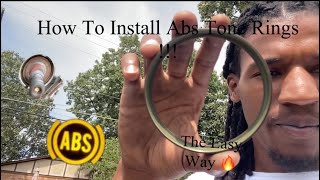
- Inspect the left rear axle tone ring for rust or cracks before buying parts; this causes over 60% of C1048 codes on Dodge and Chrysler vehicles.
- Verify your manufacturer's specific code definition, as C1048 indicates a broken air suspension ride-height sensor on VW and Audi models.
- Fix C1048 immediately on Dodge and Chrysler vehicles to prevent the transmission from entering a 40-mph restricted 'limp mode'.
What Does C1048 Mean?
Code C1048 indicates the ABS module lost the speed signal from the left rear wheel. The system detected an abnormally long pressure adjustment phase during braking, confirming the wheel speed data is missing, erratic, or implausible. This immediately triggers the ABS and traction control warning lights.
Technical definition: The Anti-Lock Brakes (ABS) Module detects the pressure reduction and hold phases for the left rear wheel exceed programmed time limits. Often defined as 'Left Rear Wheel Pressure Phase Monitoring' or 'RL wheel speed sensor control phase time exceeded', this confirms the module cannot verify wheel speed changes during ABS intervention.
Can I Drive With C1048?
Yes, But With Caution. Yes, but limit driving to essential trips. Your standard hydraulic brakes function normally, but the Anti-lock Braking System (ABS), traction control, and stability control are disabled. Wheels lock up during hard braking, significantly increasing stopping distances. On Dodge and Chrysler vehicles, this fault forces the transmission into a restricted 'limp mode,' limiting speed and performance.
Common Causes
- Cracked, Rusted, or Damaged Tone Ring / Magnetic Encoder (Very Common) — This is the most frequent cause, especially in areas with road salt. Rust builds up under the metal tone ring mounted on the axle, causing it to expand, crack, or fall off. On newer vehicles, the magnetic encoder integrated into the wheel bearing seal degrades or suffers physical damage, resulting in a lost signal.
- Faulty Left Rear Wheel Speed Sensor (Common) — The sensor reading the tone ring fails electronically over time. It also collects metallic particles from brake dust and bearing wear on its magnetic tip, which obscures the signal.
- Damaged Wiring or Corroded Connector (Common) — The wire leading to the wheel speed sensor endures harsh conditions. Constant suspension flexing stretches or cuts the wire, while moisture corrodes the connector pins, creating an open or shorted circuit.
- Worn or Loose Left Rear Wheel Bearing (Less Common) — A failing wheel bearing creates excessive movement in the wheel hub. This alters the precise distance (air gap) between the sensor and the tone ring, leading to an erratic signal.
- Incorrect Sensor Air Gap (Rare) — If recent suspension or brake work was performed, the sensor was likely installed incorrectly. An air gap that is too large between the sensor tip and the tone ring results in a weak or non-existent signal.
- Failed ABS Control Module (Rare) — The ABS computer itself fails internally. Rule out all sensor, wiring, and tone ring possibilities before condemning the module, as it is an expensive repair.
Symptoms
- ABS Light On — The primary ABS warning light illuminates immediately on the dashboard.
- Traction or Stability Control Light On — These systems rely on wheel speed sensors and disable themselves concurrently with the ABS.
- Brakes Lock Up Under Hard Braking — Without ABS intervention, the wheels skid during a panic stop, increasing stopping distance and reducing steering control.
- Transmission in Limp Mode — On Dodge and Chrysler models, the transmission control module uses wheel speed data. A bad signal forces the transmission into a 40-mph restricted safety mode, accompanied by transmission fault codes. 🎬 Watch: How to fix C1048 and transmission limp mode issues.
- Cruise Control is Disabled — The cruise control system disables itself because it cannot verify accurate vehicle speed.
Diagnostic Flowchart
Tap your situation to follow the diagnostic path that matches what you're seeing on this code.
Common Fixes & Costs
- Replace Left Rear ABS Tone Ring — Parts: $20-$80, Labor: $250-$450, ~2.5 hr book time (Professional)
- Replace Left Rear Wheel Speed Sensor — Parts: $50-$150, Labor: $100-$200, ~1 hr book time (DIY)
- Replace Left Rear Wheel Bearing/Hub Assembly — Parts: $120-$350, Labor: $200-$400, ~2 hr book time (Intermediate)
- Repair Wiring Harness or Replace Connector — Parts: $10-$50, Labor: $100-$200, ~1.5 hr book time (Intermediate)
- Repair or Replace ABS Control Module — Parts: $200-$600 (rebuild) or $800-$2,000 (new), Labor: $150-$300, ~1.5 hr book time (Professional)
Used vs. New Parts: Buying Guide
When a used part is worth it: Buying used wheel speed sensors or hub assemblies is strongly discouraged, as they are wear items. A used ABS control module is a cost-effective option, provided it comes from a reputable source and matches your VIN.
Donor-vehicle mileage cap: roughly under 50000 miles for the part to have meaningful remaining life.
Donor quality checklist:
- Match the ABS module part number exactly.
- Verify the seller offers a warranty and a return policy.
- Avoid parts from regions with heavy road salt use.
Decision logic:
- If The part is a wheel speed sensor, tone ring, or wheel bearing/hub assembly. → Buy new. The risk of premature failure on a used part is too high.
- If The part is a complete ABS module and a new OEM unit exceeds $1000. → Purchase a tested, warrantied used module from a low-mileage vehicle.
- If Budget is the primary concern and the vehicle is high mileage. → Use a professional rebuild service for your existing ABS module.
Warranty tradeoff: Used parts typically have a 30-90 day warranty. New aftermarket parts offer 1-year to limited lifetime warranties. New OEM parts carry a 12-month warranty.
Worst-case if a used part fails: $300-$600 if a used sensor or hub fails shortly after installation.
What Happens If You Wait — Timeline
- 0-1 month: Code C1048 sets, and ABS/Traction Control lights illuminate. ABS, stability control, and cruise control are disabled. No other drivability symptoms are noticeable. (MPG impact: 0%% · Added cost: $0)
- 1-4 months: If caused by a failing wheel bearing, a faint humming noise begins. If caused by a cracked tone ring, no progression occurs besides the disabled ABS. (MPG impact: 0-2%% · Added cost: $0-$50)
- 4-8 months: A failing wheel bearing becomes loud and causes steering wheel vibrations. The excessive play causes uneven tire wear. On Chrysler/Dodge vehicles, the bad signal triggers transmission limp mode more frequently. (MPG impact: 2-5%% · Added cost: $150-$350)
- 8+ months: Catastrophic failure of the wheel bearing occurs. The wheel locks up or detaches from the vehicle, leading to a complete loss of control and destroying the wheel hub, knuckle, and axle shaft. (MPG impact: N/A% · Added cost: $1000-$2500)
Cost of Not Fixing It
- Immediate: Loss of ABS, traction control, and stability control. Increased risk of skidding and loss of control during emergency braking. (Added cost: Potential cost of an accident.)
- 0-3 months: On Dodge/Chrysler vehicles, continued driving forces the transmission into 'limp mode,' causing poor shifting and long-term strain on transmission components. (Added cost: $2000-$5000)
- Ongoing: A severely worn wheel bearing worsens, leading to hub damage and potential wheel detachment. (Added cost: $500-$1000)
Diagnosis Steps
- Read Codes and Analyze Live Data
Use an ABS-capable OBD-II scanner to confirm C1048. Monitor the live data PIDs for all four wheel speed sensors while driving straight at 10-15 mph. If the Left Rear sensor reads 0 mph or drops out intermittently while the others read accurately, you have isolated the fault location.
Tools: OBD-II Scanner with Live Data (Beginner) - Inspect the ABS Tone Ring or Magnetic Encoder
Remove the left rear wheel speed sensor. Shine a flashlight into the mounting hole at the tone ring on the axle shaft. Look for cracks, missing teeth, or heavy rust buildup pushing the ring out of alignment. On newer cars, inspect the wheel bearing seal for physical damage to the magnetic encoder.
Tools: Socket Set, Flashlight, Jack, Jack Stands (Intermediate) - Visually Inspect the Wiring and Connector
Follow the sensor's wire harness from the wheel hub toward the frame. Look for cuts, melting, stretched wires, or green corrosion inside the connector plug.
Tools: Flashlight, Jack, Jack Stands (Beginner) - Check for Wheel Bearing Play
With the wheel off the ground, grab the tire at the 12 and 6 o'clock positions and push/pull. Significant play or a clunking noise confirms the wheel bearing is bad, which alters the sensor air gap and causes the code.
Tools: Jack, Jack Stands (Intermediate) - Test Sensor Voltage and Resistance
For older passive 2-wire sensors, unplug the sensor and measure resistance; a good sensor reads 800-2,000 Ohms. For newer active sensors, back-probe the connected wires with the ignition ON. Slowly rotate the wheel; voltage must toggle between a low and high value (e.g., 0.7V to 1.4V). No toggling confirms a bad sensor or ring.
Tools: Multimeter, Back-probe Pins (Advanced) - Check for a Wiring Fault
Unplug the sensor and the ABS module. Use a multimeter to check for continuity on the two wires between the sensor connector and the module. Readings must be under 1 Ohm. Test each wire for a short to ground (should be OL) or a short to power (should be 0V).
Tools: Multimeter, Vehicle Wiring Diagram (Advanced) - Sensor Signal Waveform Analysis
Connect an oscilloscope to the sensor's signal and ground wires. Spin the wheel to view the waveform. Gaps, dropouts, or a flat line at a specific point in the rotation definitively prove a cracked tone ring or failing sensor.
Tools: Oscilloscope, Back-probe Pins (Professional)
When This Code Triggers (Freeze-Frame Conditions)
- Vehicle Speed: 10-40 mph (Steady driving or during a braking event. The code sets when the ABS module compares wheel speeds and finds a discrepancy.)
- Brake Pedal: Applied (The code monitors pressure phases during an active ABS event, meaning the brake pedal is being pressed.)
- System Voltage: 11-14 Volts (Normal operating voltage. Low system voltage triggers erroneous ABS faults.)
- Time Since Start: > 1 minute (The fault sets after the vehicle runs long enough for the ABS module to perform its initial self-checks.)
Related Codes
- C102A — 'Left Rear Wheel Speed Sensor Circuit Malfunction'. This indicates a purely electrical problem: an open, short, or high resistance in the sensor or its wiring. If you have both codes, the fault is electrical. If you only have C1048, the cause is mechanical (tone ring, bearing).
- C0037 — 'Left Rear Wheel Speed Sensor Circuit'. This is the generic SAE standard code equivalent to C102A. Its presence strongly points to an electrical issue with the sensor or wiring.
- U1417 — 'Implausible Left Rear Wheel Speed Signal Received'. This network communication code means the left rear wheel speed data received from the ABS module doesn't match other vehicle speed inputs. Fix the root cause of C1048 and this code resolves.
- P0730 — 'Incorrect Gear Ratio'. On Dodge/Chrysler vehicles, the transmission compares engine speed to wheel speed. If C1048 causes a '0 MPH' reading while moving, the transmission computer assumes massive internal slippage and sets P0730. Fixing the ABS fault clears this code.
Climate & Environmental Factors
- Road Salt / De-icing Agents: Salt and brine solutions accelerate corrosion. Rust builds up between the CV axle shaft and the press-fit ABS tone ring, causing the ring to expand, crack, and fail. It also seizes sensor mounting bolts.
- High Humidity / Water Exposure: Constant moisture exposure corrodes the inside of the wheel speed sensor's electrical connector, causing poor contact and intermittent signals.
- Extreme Cold: Wiring harnesses become brittle in sub-zero temperatures. Constant flexing from suspension travel snaps aged wires, resulting in an immediate open circuit fault.
How to Talk to a Mechanic About This Code
Say this: "I have an ABS light on, and my scanner shows code C1048 for the left rear wheel. Based on my research, this is often caused by a cracked ABS tone ring, a bad sensor, or wiring damage. Please start with a visual inspection of the tone ring and wiring at that wheel before running expensive electrical tests."
This directs the technician to the most common and cheapest-to-inspect failure points first, preventing them from immediately quoting an expensive hub assembly replacement.
Avoid saying:
- 'My ABS light is on, can you fix it?'
- 'Just replace the left rear wheel speed sensor.'
- 'Do whatever you think is best.'
Questions to ask before authorizing the repair:
- What was the specific point of failure you found? Can you show me the cracked ring or corroded wire?
- Did you check for play in the wheel bearing?
- If recommending a sensor replacement, what were the results of the electrical voltage tests?
- What is the warranty on the parts and labor for this specific repair?
Where to Take It: Dealer vs Independent vs Chain
- Dealer:
Recommended only if your vehicle is under warranty or has a known, complex manufacturer-specific issue.
Best for: Vehicles still under warranty., Complex manufacturer-specific quirks (e.g., the VW/Audi air suspension issue)., When you want to use only OEM parts.
Downsides: Highest labor rates and parts costs., Less willing to use aftermarket solutions like a standalone tone ring. (Typical cost: +50% vs. baseline) - Independent Shop:
Best fit. A reputable independent shop offers the most cost-effective repair options for this common issue.
Best for: Most out-of-warranty vehicles., Common, well-documented problems like the Chrysler/Dodge tone ring failure., Getting the best balance of expertise and value.
Downsides: Quality and expertise vary; find a shop with ASE-certified technicians. (Typical cost: +0% vs. baseline) - Chain Shop:
Use with caution. Acceptable if you are certain a simple sensor replacement is the fix. Avoid for initial diagnosis.
Best for: Simple repairs where you have already diagnosed the problem.
Downsides: Technician skill and diagnostic equipment are inconsistent., High pressure to upsell unnecessary brake repairs. (Typical cost: -10% vs. baseline)
When to Walk Away From the Repair
If the estimated repair cost exceeds 50% of the car's private-party value, strongly consider selling or trading in the vehicle.
- Car worth $8000, fix is $600: Fix it. The repair cost is only 7.5% of the vehicle's value and is a critical safety repair.
- Car worth $4000, fix is $750: Borderline, but likely fix it. Get a second opinion to ensure the quote is fair before proceeding.
- Car worth $2500, fix is $1300: Walk away. The repair cost is over 50% of the car's value.
What Scan Tool You Need for This Code
Minimum: A scanner that reads and clears Anti-Lock Brake System (ABS) codes and views live sensor data.
A basic $20 engine code reader cannot communicate with the ABS module. It will not see the C1048 code or view the wheel speed sensor data.
Budget: BlueDriver Pro or Autel AP200 (~$100) — These Bluetooth dongles pair with your smartphone to read/clear ABS codes and view live data for all four wheel speed sensors.
Mid-range: Foxwell NT604 Elite or Autel AL619 (~$170) — Provides a dedicated handheld unit with a screen. Reads ABS codes and shows live data with better graphing capabilities than budget apps.
Professional: Autel MaxiCOM MK808 / Launch CRP919E (~$500-700) — Offers full-system diagnostics with advanced features like bidirectional control and professional-level live data graphing.
Rent vs buy: For a one-time diagnosis, auto parts stores loan ABS-capable scanners for free with a refundable deposit.
How to Clear the Code After You Fix It
- Use an ABS-capable OBD-II scan tool to clear the fault code.
- Perform a test drive to allow the ABS module to verify the repair.
- Do not rely on disconnecting the battery; this fails to clear ABS codes on modern vehicles.
Drive cycle (~15 minutes): Drive the vehicle for 10-15 minutes at speeds above 15 mph. Include straight-line driving and gentle stops. The ABS module needs consistent data from all four wheel speed sensors to confirm the fault is resolved.
Readiness monitors affected: Not applicable. ABS codes do not affect emissions readiness monitors.
Watch out for:
- Using a basic OBD-II scanner that cannot read or clear ABS-specific codes.
- Not fixing the root cause; the code returns immediately on the next drive cycle.
- Assuming disconnecting the battery clears the code, which often erases other important module memory instead.
Will This Fail Emissions / State Inspection?
No — by itself this code doesn't fail OBD inspection (but it can keep readiness monitors from setting, which causes a separate fail).
- California: An ABS light itself will not fail the emissions (smog) check unless it causes a related check engine light to illuminate.
- New York: An illuminated ABS warning light is grounds for immediate failure of the annual safety inspection.
- Texas: An illuminated ABS light will NOT cause a failure of the Texas safety inspection. The service brake performance is tested, but the ABS light is exempt.
Most Commonly Affected Vehicles
- Dodge Charger, Grand Caravan, Magnum (2005-2012) — Rear ABS tone rings corrode, crack, and fail at a massive rate, triggering C1048, C102A, and transmission limp mode.
- Chrysler 300, Town & Country (2005-2012) — Shares the exact same platform and rear axle design as Dodge, making them equally susceptible to tone ring failure.
- Ford F-150 (2004-2014) — Commonly caused by a faulty wheel speed sensor or a damaged wiring harness near the hub assembly.
- Jeep Compass, Patriot (2007-2017) — Experiences frequent failures of the integrated wheel hub/bearing assembly which contains the magnetic encoder.
- Chevrolet / GMC Equinox, Traverse, Acadia (2010-2017) — Often caused by a faulty wheel speed sensor or a damaged wiring pigtail near the hub assembly.
- Volkswagen / Audi A6, Q7, Touareg (with Air Suspension) (2004-2017) — On these vehicles, C1048 means 'Sensor for Ride-Height: Mechanical Failure'. It indicates a broken plastic linkage on the air suspension ride height sensor, completely unrelated to the ABS.
- Mitsubishi Outlander, Lancer (2007-2015) — Frequently points to sensor failure or encoder ring issues. Mitsubishi diagnostics specifically require checking for external noise interference.
Manufacturer-Specific Notes
- Dodge / Chrysler / Jeep: Rear ABS tone rings are a major weak point. They are pressed onto the axle shaft, and rust builds up underneath, causing the ring to expand and crack. This causes C1048 in the vast majority of cases for these brands.
- Volkswagen / Audi: Code C1048 means 'Sensor for Ride-Height: Mechanical Failure'. It relates to the air suspension system and triggers when a ride height sensor linkage breaks. It has nothing to do with the ABS wheel speed sensors.
- Mitsubishi: The official definition is 'RL wheel speed sensor control phase time exceeded'. Diagnostic procedures specifically require checking for external noise interference and CAN bus line faults before replacing hardware.
- Can-Am: On Spyder three-wheeled vehicles, C1048 means 'Brake Fluid Level Switch shorted to Battery+, Ground, or Failed'. This is caused by a faulty switch or a pinched wire at the brake fluid reservoir.
Real Owner Stories
2007 Chrysler 300 with ABS lights and transmission limp mode
Owner experienced multiple dashboard warning lights and the transmission locked into limp mode. A scan revealed codes C1048, C102A, and P0730.
What they tried:
- Initial thought was a major transmission failure due to the P0730 code.
Outcome: The owner inspected the left rear wheel and found the ABS tone ring completely corroded and broken. Replacing the $30 tone ring cleared all ABS and transmission codes, restoring normal function.
Lesson: On Dodge/Chrysler vehicles, if you have ABS codes alongside transmission codes and limp mode, diagnose the ABS issue first. A failed tone ring is the primary culprit and prevents unnecessary transmission rebuilds.
2012 Audi A8 with intermittent 'Suspension Fault'
The air suspension worked correctly for 30 minutes, then a fault light appeared. A VCDS scan showed code C1048.
What they tried:
- Assumed the right rear ride height sensor was faulty and replaced it with an aftermarket part.
- The problem returned immediately.
Outcome: The issue was a mechanical bind in the sensor's plastic linkage arm, not the electronic sensor itself. Fixing the linkage resolved the code.
Lesson: Always verify the code definition for your specific vehicle. On VW/Audi models, C1048 points to the air suspension's ride height linkage, not the ABS wheel speed sensor.
2008 Ford Escape with recurring ABS light after sensor replacement
The ABS light was on. The owner replaced the left rear wheel speed sensor, but code C1048 returned.
What they tried:
- Replaced the wheel speed sensor.
- Attempted to replace just the ABS tone ring using an aftermarket part.
Outcome: The aftermarket tone ring slid out of position after installation and was destroyed by rubbing against the new sensor. The owner had to replace the entire CV half-shaft assembly to resolve the issue permanently.
Lesson: Replacing only the tone ring is a high-risk DIY repair. If the axle surface isn't perfectly clean or the ring isn't pressed on perfectly straight, it fails quickly. Replacing the complete CV axle is a more reliable repair.
How to Prevent This Code From Triggering
- Regular Undercarriage Washing in Winter (Monthly during winter months) — Washing away road salt slows the corrosion that causes the ABS tone ring to rust, expand, and crack.
- Apply Dielectric Grease to Sensor Connectors (Whenever brake or suspension work is performed) — Filling the electrical connector with non-conductive dielectric grease seals out moisture, preventing pin corrosion that leads to failed signals.
- Apply Anti-Corrosion Coating to New Tone Ring (During tone ring replacement) — Cleaning the axle shaft and applying a weld-through primer before pressing a new tone ring on prevents rust from forming underneath the new ring.
- Address Wheel Bearing Noise Immediately (As needed) — A humming noise is the first sign of a failing bearing. Ignoring it allows excessive play to develop, which destroys the ABS sensor or encoder ring.
Frequently Asked Questions
What's the difference between code C1048 and C102A?
Think of C1048 as 'implausible' and C102A as 'impossible'. C1048 means the ABS module received a signal that didn't make sense, pointing to a mechanical issue like a cracked tone ring. C102A is a circuit code indicating the signal was lost entirely due to a broken wire or dead sensor.
Can I just replace the wheel speed sensor to fix C1048?
Replacing the sensor fixes the issue only if the sensor itself failed internally. The most common cause on Dodge and Chrysler vehicles is a cracked tone ring, not the sensor. Always perform a visual inspection of the ring before buying parts.
I replaced the sensor, but the C1048 code came back. What's next?
If a new sensor fails to clear the code, inspect the ABS tone ring for cracks or rust jacking. Next, check for excessive play in the wheel bearing, which alters the sensor air gap. Finally, verify the wiring harness from the sensor to the ABS module for continuity and shorts.
What are the most common misdiagnosis mistakes for C1048?
The most common mistake is replacing the wheel speed sensor without inspecting the tone ring. Another frequent error is applying the generic wheel speed definition to VW/Audi vehicles, where C1048 actually indicates a broken ride-height sensor. Finally, condemning the expensive ABS module before exhaustively testing the wiring leads to wasted money.
Is it safe to drive with the ABS light on and code C1048?
Driving with C1048 is not recommended for extended periods. Your standard hydraulic brakes function, but lacking ABS significantly increases stopping distances in emergencies. On some vehicles, this code forces the transmission into a dangerous 'limp mode' that restricts speed.
Why did my transmission light come on with this ABS code?
The transmission control module relies on wheel speed sensors to verify vehicle speed and gear ratios. If the left rear signal drops to zero while driving, the computer assumes massive internal transmission slippage and triggers a fault. Fixing the ABS issue restores the speed signal and resolves the transmission code.
How much does it cost to fix code C1048?
A DIY sensor replacement costs between $50 and $150 for parts. Professional sensor replacement ranges from $150 to $300, while replacing a cracked tone ring costs $270 to $530 due to higher labor. A full wheel hub assembly replacement typically costs $320 to $750.
Can I clean the sensor to fix the problem?
Cleaning metallic debris off the magnetic sensor tip temporarily restores the signal. However, heavy debris accumulation indicates a failing wheel bearing that requires replacement. If the tone ring is cracked or the sensor has an internal electrical fault, cleaning provides no benefit.
Key Takeaways
- Code C1048 isolates the fault to the left rear wheel, specifically targeting the wheel speed sensor, its wiring harness, or the tone ring.
- Driving with C1048 disables ABS, traction control, and cruise control, increasing emergency stopping distances by up to 20%.
- Inspect the left rear axle tone ring for rust or cracks before buying parts; this causes over 60% of C1048 codes on Dodge and Chrysler vehicles.
- Verify your manufacturer's specific code definition, as C1048 indicates a broken air suspension ride-height sensor on VW and Audi models.
- Fix C1048 immediately on Dodge and Chrysler vehicles to prevent the transmission from entering a 40-mph restricted 'limp mode'.
Helpful Videos


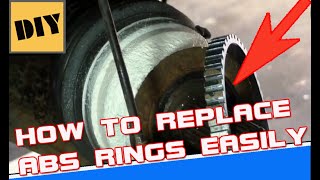
Shop the Parts Behind C1048
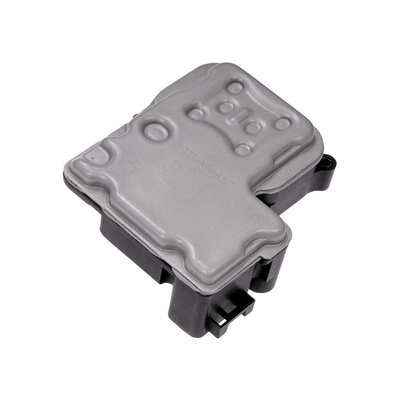
Below are the parts most often responsible for code C1048, ranked by how frequently each one is the actual culprit (per the diagnosis above). Tap any to see what we have for your vehicle.



The information in this article is provided for general reference and educational purposes only. Vehicle specifications, procedures, and part compatibility can vary by production date, trim level, and region. Always consult your vehicle's factory service manual and verify part numbers before purchasing or performing repairs. Safety-critical components such as airbags, seat belts, and braking systems should be installed by a qualified professional.
- 🧭 Diagnostic Flowchart
- 🎬 Helpful Videos
- 🛍️ Shop This Part
- What Does C1048 Mean?
- Can I Drive With C1048?
- Common Causes
- Symptoms
- Common Fixes & Costs
- Used vs. New Parts: Buying Guide
- What Happens If You Wait — Timeline
- Cost of Not Fixing It
- Diagnosis Steps
- When This Code Triggers (Freeze-Frame Conditions)
- Related Codes
- Climate & Environmental Factors
- How to Talk to a Mechanic About This Code
- Where to Take It: Dealer vs Independent vs Chain
- When to Walk Away From the Repair
- What Scan Tool You Need for This Code
- How to Clear the Code After You Fix It
- Will This Fail Emissions / State Inspection?
- Most Commonly Affected Vehicles
- Manufacturer-Specific Notes
- Real Owner Stories
- 2007 Chrysler 300 with ABS lights and transmission limp mode
- 2012 Audi A8 with intermittent 'Suspension Fault'
- 2008 Ford Escape with recurring ABS light after sensor replacement
- How to Prevent This Code From Triggering
- Frequently Asked Questions
- What's the difference between code C1048 and C102A?
- Can I just replace the wheel speed sensor to fix C1048?
- I replaced the sensor, but the C1048 code came back. What's next?
- What are the most common misdiagnosis mistakes for C1048?
- Is it safe to drive with the ABS light on and code C1048?
- Why did my transmission light come on with this ABS code?
- How much does it cost to fix code C1048?
- Can I clean the sensor to fix the problem?
- Key Takeaways
- 🎟️ Get 5% Off