

OBD-II Code C1049: Left Front Wheel Speed Sensor Circuit Malfunction
The Ultimate 2026 Guide to Diagnosing and Fixing C1049
- Code C1049 specifically targets the left front wheel speed sensor circuit, except on Mitsubishi vehicles where it indicates a right rear wheel fault.
- Driving with C1049 disables your ABS and traction control, increasing stopping distances and the risk of skidding in wet or icy conditions.
- Always check the left front wheel bearing for play and inspect the wiring harness for physical breaks before spending $50-$150 on a new sensor.
- Use a scan tool with ABS live data capabilities to confirm the left front wheel reads 0 mph while driving before replacing any parts.
What Does C1049 Mean?
Code C1049 signifies the vehicle's Anti-lock Brake System (ABS) control module detects a fault in the electrical circuit for the left front wheel speed sensor. This sensor continuously reports the rotational speed of the left front wheel to the computer. This data is fundamental for modern safety systems like ABS, traction control, and stability control. When the signal is lost or erratic, the module shuts these systems down and triggers the dashboard warning lights.
Technical definition: While the specific SAE/ISO definition for C1049 varies by manufacturer, it most commonly indicates a fault in the left front wheel speed sensor circuit. On Ford, GM, and Chrysler vehicles, it translates to 'Left Front Wheel Speed Sensor Circuit Failure' or 'Left Front Wheel Speed Sensor Signal Erratic'. However, on many Mitsubishi models (like the Outlander and Lancer), C1049 refers to a fault with the Right Rear wheel, defined as 'RR wheel speed sensor control phase time exceeded'. This guide primarily addresses the common 'Left Front' interpretation but notes Mitsubishi-specific details where applicable.
Can I Drive With C1049?
Yes, But With Caution. Yes, but drive with extreme caution. The C1049 code indicates your Anti-lock Braking System (ABS), Traction Control (TCS), and Electronic Stability Control (ESC) are disabled. Your standard hydraulic brakes function normally, but in a panic stop, your wheels lock up, increasing stopping distances and causing a loss of steering control. The risk of losing control is significantly higher on wet, icy, or loose surfaces. Continued driving does not harm other components, but the compromised safety systems make prompt repair critical.
Common Causes
- Failed Left Front Wheel Speed Sensor (Very Common) — The sensor itself is the most frequent culprit. Mounted at the wheel hub, it is exposed to water, road salt, dirt, and extreme temperatures, leading to internal electrical failure over time.
- Damaged Wiring Harness or Connector (Common) — The wiring harness between the sensor and the ABS module is highly vulnerable. Road debris severs it, constant suspension movement causes wires to fatigue and break internally, and moisture corrodes the connector pins, disrupting the signal.
- Failing Wheel Hub Bearing Assembly (Common) — In many modern vehicles, the tone ring is integrated into the wheel hub bearing. A worn bearing introduces excessive play or 'wobble', altering the precise gap between the tone ring and the sensor, leading to an erratic or lost signal.
- Damaged or Contaminated ABS Tone Ring (Less Common) — The sensor reads a toothed or magnetic ring on the axle or wheel hub. If this ring cracks, loses teeth, or is covered in metallic debris, the sensor cannot generate a clean signal. In salt-belt regions, rust builds up under the ring ('rust jacking'), deforming it until it strikes the sensor.
- Improper Installation or Swapped Connectors (Uncommon) — If the sensor was recently replaced, an excessive air gap between the sensor tip and the tone ring results in a weak signal. Additionally, accidentally plugging the left and right wheel speed sensor harnesses into the wrong sensors causes the ABS module to detect illogical readings and set a fault.
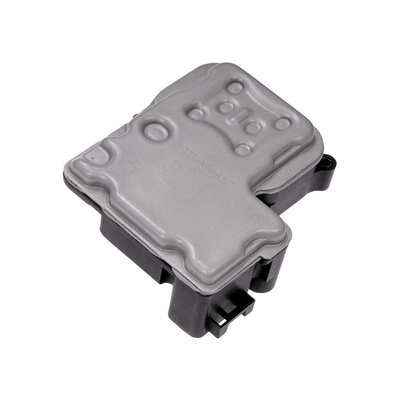
- Failed ABS Control Module (Rare) — An internal fault in the ABS control module's circuitry prevents it from correctly processing the signal from a perfectly good sensor and wiring. This is the most expensive repair and requires professional diagnosis.
Symptoms
- ABS and Traction/Stability Warning Lights Illuminated — The 'ABS', Traction Control (TCS), and Stability Control (ESC/VSC) warning lights illuminate and remain on constantly.
- Safety Systems Disabled — During a panic stop, the wheels lock and skid. When accelerating on a slippery surface, the wheels spin freely. Features like hill-start assist are also disabled.
- Brake Pedal Pulsation or Grinding at Low Speeds — A failing sensor sends erratic signals at low speeds, tricking the ABS module into thinking a wheel is locking up. This activates the ABS hydraulic pump unnecessarily, creating a pulsing or grinding feeling in the brake pedal just before stopping.
- Erratic Speedometer or Cruise Control Issues — On vehicles where the left front wheel speed sensor data drives the speedometer, a fault causes the speedometer to behave erratically or drop to zero. It also prevents cruise control from engaging.
Diagnostic Flowchart
Tap your situation to follow the diagnostic path that matches what you're seeing on this code.
Common Fixes & Costs
- Replace Left Front Wheel Speed Sensor
— Parts: $50-$150, Labor: $100-$150, ~1.2 hr book time
(DIY)
Jeep Wrangler (2007-2018): OEM Mopar: 68003281AF (Alt: Duralast: SU10069, NTK: AB0107)
Ford F-150 (2009-2014): OEM Motorcraft: 9L3Z-2C204-A (Alt: Bosch: 0986594567, Standard Motor Products: ALS1981)
Chevrolet Silverado 1500 (2007-2013): OEM ACDelco: 84356647 (Alt: Duralast: SU14305, NTK: AB1796) - Repair Damaged Wiring or Connector
— Parts: $10-$50, Labor: $120-$250, ~1.5 hr book time
(Intermediate)
Universal: OEM N/A (Alt: Dorman, Standard Motor Products (SMP) Pigtails) - Replace Wheel Hub Bearing Assembly
— Parts: $120-$400, Labor: $150-$450, ~2.5 hr book time
(Intermediate)
Jeep Wrangler (2007-2018): OEM Mopar: 52060398AE (Alt: MOOG: 513272, Timken: HA590242)
Ford F-150 (2009-2010, 4WD): OEM Motorcraft: HUB-357 (Alt: MOOG: 515119, Timken: HA590319)
Chevrolet Silverado 1500 (2007-2013, 4WD): OEM ACDelco: 84459706 (Alt: MOOG: 515096, Timken: HA590243) - Clean Tone Ring / Sensor Mounting Surface — Parts: $5, Labor: $50-$100, ~0.8 hr book time (DIY)
- Replace ABS Control Module — Parts: $800-$2800, Labor: $150-$250, ~1.8 hr book time (Professional)
DIY vs Professional
- Replace Left Front Wheel Speed Sensor 🟢 Beginner
Tools: Jack, jack stands, socket set, wrenches, torque wrench, wire brush. - Repair Damaged Wiring or Connector 🟢 Beginner
Tools: Digital multimeter, wire strippers, wire crimpers, heat shrink tubing, soldering iron, vehicle wiring diagram. - Replace Wheel Hub Bearing Assembly 🟢 Beginner
Tools: Jack, jack stands, large socket for axle nut, breaker bar, torque wrench capable of high torque values (150+ ft-lbs), hub puller. - Replace ABS Control Module 🟢 Beginner
Tools: Socket set, trim removal tools, OEM-level diagnostic scan tool for programming/calibration.
Used vs. New Parts: Buying Guide
When a used part is worth it: For a standalone wheel speed sensor, buying new is mandatory due to low cost and high exposure to wear. Buying a complete, used wheel hub assembly from a low-mileage, accident-damaged vehicle is a cost-effective option if the OEM part is very expensive.
Donor-vehicle mileage cap: roughly under 50000 miles for the part to have meaningful remaining life.
Donor quality checklist:
- Verify the donor vehicle's mileage; lower is always better for a wear item like a bearing.
- Avoid parts from rust-belt regions, as corrosion destroys both the bearing and the integrated sensor.
- Ensure the part number matches exactly. Hub assemblies are specific to drivetrain (2WD vs 4WD) and model year.
- Inspect the used hub for any signs of play, roughness when turning, or damage to the sensor connector.
Decision logic:
- If The required part is a standalone sensor → Always buy new. The cost savings of a used sensor are not worth the risk and repeated labor.
- If The required part is a complete wheel hub assembly and the vehicle has high mileage (>120k) → A new aftermarket assembly from a reputable brand (e.g., Timken, MOOG, SKF) is the best balance of cost and longevity.
- If The required part is a very expensive OEM hub assembly on a newer, low-mileage vehicle → A used OEM hub from a low-mileage wreck is a viable option.
Warranty tradeoff: Used parts typically have a 30-90 day warranty. New aftermarket parts come with a 1-year to limited lifetime warranty. New OEM parts carry a 1-2 year warranty.
Worst-case if a used part fails: $250-500 if a used hub assembly fails prematurely, requiring a second replacement part and repeat labor costs.
What Happens If You Wait — Timeline
- 0-1 month: ABS and Traction Control lights are constantly on. Safety systems are disabled. Your standard brakes work normally. (MPG impact: 0%% · Added cost: $0. The primary cost is the significantly increased risk of an accident in an emergency braking situation.)
- 1-6 months: Continued operation without safety systems. An erratic sensor signal causes the ABS pump to activate unnecessarily at low speeds, creating a grinding noise. (MPG impact: 0%% · Added cost: $0-$50 in potential failed state safety inspection fees.)
- 6-12 months: If the root cause is a bad wheel bearing, it worsens. A noisy wheel bearing becomes louder and eventually fails completely, potentially leading to wheel separation. (MPG impact: 0-2% (from dragging brake due to bad bearing)% · Added cost: $500-$1000. Ignoring a bad bearing damages the steering knuckle or axle, turning a $300 hub replacement into a major repair.)
- 12+ months: If the fault is in the wiring, moisture intrusion at a small break point leads to advanced corrosion, requiring a full harness replacement instead of a simple wire repair. (MPG impact: 0%% · Added cost: $250-$600 for extensive wiring harness replacement.)
Cost of Not Fixing It
- Immediate: Loss of ABS, traction control, and stability control. Increased risk of losing control and longer stopping distances during emergency braking. (Added cost: Increased risk of an accident, ranging from an insurance deductible to a total loss.)
- 1-6 months: An erratic sensor causes the ABS pump to activate unnecessarily at low speeds, causing premature wear on the ABS hydraulic unit over an extended period. (Added cost: Negligible, unless the ABS pump is damaged, which is a rare but expensive repair ($1000+).)
- 6+ months: Continued operation without safety systems guarantees a failed state safety inspection. On vehicles where the speedometer is affected, you risk traffic citations. (Added cost: Cost of a failed inspection, plus potential fines for speeding.)
Diagnosis Steps
- Analyze Live Data with a Scan Tool
Connect an OBD-II scanner capable of reading ABS live data. View the data stream for all four wheel speed sensors while driving slowly in a straight line (5-10 mph). The Left Front (LF) reading must be smooth and match the Right Front (RF) wheel. If the LF reading is zero, erratic, or significantly different, the fault is confirmed in that corner.
Tools: Advanced OBD-II Scan Tool (Intermediate) - Visual Inspection of Sensor and Wiring
Safely raise and support the front left of the vehicle. Inspect the wheel speed sensor mounted on the wheel hub. Follow its wire harness, looking for cuts, chafing, melting, or impact marks. Ensure the connector is securely plugged in and free of internal green corrosion.
Tools: Jack, Jack Stands, Flashlight (Beginner) - Check for Wheel Bearing Play
With the wheel off the ground, grasp the tire at the 12 and 6 o'clock positions. Attempt to rock the wheel in and out. Any noticeable play or clunking noise confirms a worn wheel bearing, which causes this code by allowing the integrated tone ring to wobble.
Tools: Jack, Jack Stands (Intermediate) - Inspect the ABS Tone Ring and Air Gap
Locate the tone ring on the CV axle or the back of the wheel hub. Rotate the wheel and inspect the ring for cracks, missing teeth, or heavy rust. Look for 'rust jacking' where corrosion pushes the ring outwards. Use a non-magnetic feeler gauge to verify the air gap between the sensor and ring is within spec (typically 0.4 mm to 1.3 mm).
Tools: Flashlight, Brake Cleaner, Rag, Non-Magnetic Feeler Gauge (Intermediate) - [PRO TIP] Test Passive Sensor with a Multimeter
For 2-wire passive (inductive) sensors, disconnect the sensor and set your multimeter to Ohms. A good sensor shows 800-2500 Ohms; an open circuit (OL) or short (0 Ohms) means it is dead. Next, set the meter to AC Volts. Reconnect the probes and spin the wheel by hand. You must see a small AC voltage (100mV to 700mV) that increases with speed. No voltage indicates a dead sensor or a tone ring issue.
Tools: Digital Multimeter (Advanced) - [PRO TIP] Test Active Sensor with a Multimeter
For 2-wire active (Hall-effect) sensors, DO NOT perform a resistance test. Back-probe the sensor's wires with the connector plugged in and ignition ON. One wire shows a reference voltage (5V or 12V). Set the meter to a low DC voltage scale. As you slowly spin the wheel, the voltage toggles between two values (e.g., 0.7V and 1.4V). A static voltage indicates a failed sensor or magnetic encoder ring.
Tools: Digital Multimeter, Back-probe Pins (Advanced) - Test Wiring Harness Continuity
If the sensor tests good but live data is bad, the wiring is at fault. Disconnect the harness from the sensor and the ABS module. Using a multimeter set to Ohms, check the continuity of the two wires individually from end to end. A reading of 'OL' indicates a broken wire. Check for a short to ground by testing continuity between each wire and the chassis; it must read 'OL'.
Tools: Digital Multimeter, Vehicle-Specific Wiring Diagram (Professional) - [ADVANCED] Analyze Waveform with an Oscilloscope
The definitive test. Back-probe the sensor's signal and ground wires. For a passive sensor, look for a classic sine wave. For an active sensor, look for a clean digital square wave. Dropouts, missing sections, or a 'noisy' pattern indicate a problem with the sensor, tone ring, or wiring. A flat line confirms no signal.
Tools: Oscilloscope, Back-probe Pins (Professional)
When This Code Triggers (Freeze-Frame Conditions)
- Vehicle Speed: 10-25 mph (The fault registers during the initial self-test as the vehicle begins to move. The ABS module expects a signal from all wheels and sets the code when the LF signal is missing.)
- Brake Pedal Status: Off (The code frequently sets during normal driving without any brake application, as the ABS module continuously monitors wheel speeds.)
- Time Since Engine Start: < 2 minutes (Codes are set shortly after starting the vehicle and beginning to drive, as soon as the wheel rotation speed exceeds a minimum threshold.)
Related Codes
- C1054 — This is the direct equivalent code for the Right Front wheel speed sensor. Seeing C1049 and C1054 together suggests a problem affecting the front axle, like a damaged wiring harness common to both sides.
- C1064 / C1074 — These codes point to the Left Rear and Right Rear wheel speed sensors. If you have C1049 plus one of these, it points strongly to a central issue like the ABS module or its power/ground supply.
- U0121 — This code means 'Lost Communication With ABS Control Module'. The U-code is a higher priority. If you see U0121, you must diagnose why the ABS module is offline before diagnosing individual sensor codes.
- C0035 — This is a generic SAE-standard code for 'Left Front Wheel Speed Sensor Circuit'. Some vehicles store this code instead of the manufacturer-specific C1049. The diagnostic process is identical.
Climate & Environmental Factors
- Road Salt / Corrosion: This is a primary contributor to C1049 failures in 'Rust Belt' regions. Salt accelerates the corrosion of wiring connectors and causes rust to build up under the tone ring ('rust jacking'), deforming it until it destroys the sensor.
- Water and Humidity: High humidity, driving through deep water, or pressure washing the wheel wells forces moisture into connectors or cracks in the wire insulation, causing shorts or open circuits.
- Extreme Cold: In very cold temperatures, plastic wiring insulation and connector housings become brittle and crack during suspension movement, exposing the copper wire to corrosion.
How to Talk to a Mechanic About This Code
Say this: "I have an ABS light on and my scanner is showing a C1049 code. I'd like to book a diagnostic appointment to confirm the cause. I suspect it's the left front wheel speed sensor, its wiring, or the hub, but I'd like you to verify before replacing any parts."
This signals that you are an informed customer. It states the specific code, shows you understand the likely causes, and directs the shop to perform a proper diagnosis rather than just replacing parts.
Avoid saying:
- 'My ABS light is on, can you fix it?' (This is too vague and invites expensive guesses).
- 'Just replace the left front wheel speed sensor.' (Don't order a specific repair without a confirmed diagnosis; the problem is often the wiring or the hub).
- 'Do whatever you think is best.' (This gives up all control and leads to upselling).
Questions to ask before authorizing the repair:
- What was the result of the diagnostic? Did you see a '0 mph' reading or an erratic signal from the left front wheel on the live data scanner?
- Did you perform a visual inspection of the wiring harness and the tone ring? Were there any visible signs of damage, corrosion, or a loose bearing?
- Can you show me the damaged part after it's removed?
- What is the total 'out the door' price, including parts, labor, and any diagnostic fees?
- What is the warranty on the parts and the labor for this specific repair?
Where to Take It: Dealer vs Independent vs Chain
- Dealer:
Good for complex cases or warranty work, but overkill for a common sensor or wiring fault.
Best for: Vehicles still under warranty., Complex, intermittent electrical issues where manufacturer-specific knowledge is key., Known manufacturer-specific quirks (like the GM ground issue or Mitsubishi code definition).
Downsides: Highest labor rates, typically 1.5-2x more than independent shops., Defaults to replacing a larger, more expensive assembly (e.g., entire hub) when a smaller repair suffices. (Typical cost: +50% vs. baseline) - Independent Shop:
Best fit for most situations. A competent independent shop handles a C1049 diagnosis and repair efficiently and cost-effectively.
Best for: Out-of-warranty vehicles where cost is a factor., Most C1049 cases, as it is a common and well-understood fault., Building a long-term relationship with a trusted mechanic.
Downsides: Quality and diagnostic capabilities vary greatly. Vet shops by checking for ASE certifications., Lacks the specialized tools required for programming a new ABS module if that is the ultimate failure. (Typical cost: +0% vs. baseline) - Chain Shop:
Use with caution. Acceptable if you need a simple sensor replacement, but avoid them for the initial diagnosis of an intermittent or complex ABS fault.
Best for: Simple, straightforward repairs if you have already self-diagnosed a bad sensor.
Downsides: Technician skill and experience is inconsistent., Business model encourages upselling unnecessary services (e.g., selling a full brake job for an ABS light)., Less equipped for in-depth electrical diagnosis beyond reading the code and replacing the most obvious part. (Typical cost: -10% vs. baseline)
When to Walk Away From the Repair
If the estimated repair cost exceeds 40-50% of the car's private-party value, seriously consider selling or trading in the vehicle instead of repairing it.
- Car worth $5000, fix is $350: Fix it. This repair cost is well below the threshold and restores a critical safety feature.
- Car worth $4000, fix is $2200: Walk away. The repair is for a failed ABS control module, and the cost is over 50% of the car's value. This is not a sound investment.
- Car worth $8000, fix is $850: Borderline - get a second opinion. The fix requires a new wheel hub assembly. Ensure the diagnosis is correct and that a cheaper wiring or sensor issue wasn't missed.
What Scan Tool You Need for This Code
Minimum: A scan tool that reads and clears Anti-lock Braking System (ABS) codes and displays live data for all four wheel speed sensors.
A basic $20 engine code reader will NOT see ABS codes like C1049. You need a tool that accesses the ABS module. Without live data, you cannot watch the wheel speed sensor readings in real-time to see if the signal is dead or erratic.
Budget: BlueDriver Pro (~$119) — Connects to your smartphone via Bluetooth. It reads and clears ABS codes and graphs the live data from all four wheel speed sensors so you can visually confirm the fault at the left front wheel.
Mid-range: Foxwell NT680 Pro / Autel MaxiCOM MK808 (~$250-400) — Handheld, all-in-one units that provide full system diagnostics, including deep ABS analysis and live data. They include service functions like ABS brake bleeding, which is useful if the repair involves the hydraulic system.
Professional: XTOOL D7 / Autel MaxiPRO MP900 BT (~$450-700) — Provides professional-level diagnostics with bi-directional control. For C1049, this allows a technician to command the ABS pump motor to test its function. These tools are required for programming a new ABS module.
Rent vs buy: Auto parts stores scan codes for free, but their tools often cannot read ABS codes or provide live data. For C1049, owning a tool with ABS live data capability is the best value for a DIYer, allowing proper diagnosis before buying parts.
How to Clear the Code After You Fix It
- Use an OBD-II scan tool with ABS capability to clear the fault codes from the ABS module.
- Perform a short test drive to confirm the fix.
- Disconnecting the battery does not reliably clear ABS codes on modern vehicles.
Drive cycle (~10 minutes): After clearing the code, start the vehicle and drive it in a straight line, accelerating to at least 20 mph. The ABS module performs a self-test upon startup and initial movement. If the repair was successful, the ABS light remains off.
Readiness monitors affected: This code does not affect emissions-related readiness monitors.
Watch out for:
- Using a basic code reader that cannot access the ABS module fails to clear the code.
- The code returns immediately upon the first test drive if the underlying fault is not repaired.
- Forgetting to clear the code after the repair leaves the light on until manually erased.
Will This Fail Emissions / State Inspection?
No — by itself this code doesn't fail OBD inspection (but it can keep readiness monitors from setting, which causes a separate fail).
- California: An illuminated ABS light won't cause a failure of the emissions-specific Smog Check, but it fails the broader vehicle safety inspection required for revived salvage vehicles.
- New York: The NYS safety inspection requires all dashboard warning lights, including the ABS light, to function correctly and not be illuminated. An active ABS light is an automatic failure.
- Texas: An illuminated ABS warning light is NOT a cause for rejection during the safety inspection. However, an illuminated primary 'Brake' warning light is a failure.
Most Commonly Affected Vehicles
- Jeep Wrangler (JK), Compass, Patriot (2007-2018) — Wiring harnesses are easily damaged during off-roading or normal suspension articulation. On Compass/Patriot models, the metal clip holding the sensor rusts and fails, allowing the sensor to fall out of position.
- Ford F-150, Explorer (2004-2014) — Failure of the wheel hub bearing which contains the tone ring is a very common cause. Later models in this range also suffer from direct sensor and wiring failures.
- Chevrolet / GMC Silverado, Sierra, Tahoe, Suburban (2007-2013) — Corrosion is a major factor. The sensor itself, its connector, and the main ground connection for the EBCM (Electronic Brake Control Module) are all known failure points.
- Dodge / Chrysler Grand Caravan, Town & Country, Journey (2008-2016) — The wiring harness routing to the front wheel speed sensors is a known weak point. Wires break internally near the connector or where the harness clips to the suspension.
- Honda / Acura Accord, Civic, CR-V, TSX (2003-2012) — A similar code (VSA 13-01) points to the same 'LF Wheel Speed Sensor' malfunction. The cause is almost always a failed sensor or a break in the wiring harness in the wheel well.
- Volkswagen / Audi Golf, Jetta, A3 (2009-2015) — A faulty wheel speed sensor is a very common failure that causes a trifecta of ABS, traction control (ESC), and TPMS warning lights.
- Hyundai / Kia Sonata, Optima, Sportage (2011-2020) — Many wheel speed sensor codes on these models are ultimately caused by a failed wheel bearing assembly, which contains the magnetic encoder ring.
- Mitsubishi Outlander, Lancer (2007-2015) — CRITICAL: On these vehicles, C1049 almost always refers to the Right Rear wheel speed sensor. The fault is commonly caused by a failing wheel bearing/hub assembly.
Manufacturer-Specific Notes
- Mitsubishi: Mitsubishi assigns C1049 to the Right Rear wheel speed sensor circuit. The definition is 'RR wheel speed sensor control phase time exceeded'. Always trust the scanner's text description and begin diagnosis on the right rear wheel.
- Jeep / Chrysler / Dodge: On the Jeep Compass/Patriot, the sheet metal clip that holds the rear speed sensor into the knuckle rusts and breaks. This allows the sensor to pop out of place, creating a large air gap and triggering a fault.
- Ford: On many F-150s and Explorers, the ABS tone ring is an integral part of the wheel hub bearing assembly. A failing wheel bearing triggers a wheel speed sensor code. The only fix is replacing the entire hub assembly.
- Nissan: A similar code, B1049, is common on Nissans. This is a Body code, not a Chassis code. B1049 means 'Driver Airbag Module Open' and is caused by a failed clock spring. Do not confuse these two codes.
- General Motors: On 2007-2013 trucks and SUVs, intermittent ABS/Stabilitrak lights are traced to poor ground connections. The primary EBCM ground point is on the frame rail below the driver's door. Cleaning this ground resolves many strange electrical issues.
Real Owner Stories
2011 Dodge Grand Caravan at 115K miles - Intermittent ABS/TCS Lights
ABS and Traction Control lights illuminated intermittently, especially after hitting bumps or making sharp turns. Code C1049 was stored.
Outcome: Found an internal break in the wire inside the insulation, a common failure point due to suspension movement. Repaired the broken wire using a solder sleeve and heat shrink tubing for under $10. The code cleared permanently.
Lesson: For intermittent codes, always perform a 'wiggle test' on the wiring harness before buying parts. Internal wire breaks are common where the harness flexes.
2010 Ford F-150 4x4 at 140K miles - ABS Light with Grinding Noise
ABS light illuminated, accompanied by a grinding noise and pedal pulsation from the front left wheel at low speeds.
Outcome: The front left wheel hub bearing had excessive play. The worn bearing caused the integrated tone ring to wobble, sending an erratic signal. Replacing the entire wheel hub assembly ($250) fixed the C1049 code and the grinding noise.
Lesson: Low-speed grinding or pedal pulsation alongside a C1049 code strongly indicates a worn wheel bearing. Always check for wheel play before replacing the sensor.
2008 Chevy Silverado in Salt Belt - Chronic Intermittent ABS Light
Owner dealt with an intermittent C1049 code for months. Sensor and hub replacements yielded no change.
Outcome: Cleaned the primary ground connection for the Electronic Brake Control Module (EBCM) located on the frame rail under the driver's door. Sanding the frame and eyelet to bare metal permanently resolved the code for $0.
Lesson: For persistent electrical faults that defy parts replacement, investigate common TSBs and clean the primary ground points for the affected module.
How to Prevent This Code From Triggering
- Apply dielectric grease to the connector seal (Whenever the sensor is disconnected for service) — Applying non-conductive dielectric grease to the rubber seal keeps moisture and road salt out of the connection, preventing corrosion and signal loss.
- Clean sensor mounting surface during brake service (Every 30-50K miles or during brake pad replacement) — Corrosion builds up on the hub surface where the sensor mounts. This 'rust jacking' pushes the sensor away from the tone ring. Cleaning the surface to bare metal prevents this.
- Inspect and secure wiring harness (During every oil change or tire rotation) — The sensor wire is vulnerable. Visually inspect the harness for rubbing or broken clips. Ensure it is securely fastened away from moving suspension parts.
Frequently Asked Questions
Can I just clear the C1049 code and keep driving?
You can clear the code, but it is a 'hard fault' and returns almost immediately. The ABS module performs a self-test when you start driving. Once it confirms the left front sensor signal is missing, the warning lights return within the first minute.
How much does it cost to fix code C1049?
The cost varies by the root cause. A standalone sensor replacement costs $150-$300 for parts and labor, while repairing damaged wiring runs $120-$250. Replacing a complete wheel hub bearing assembly ranges from $270 to $850.
Is it safe to drive with the ABS light on?
Your primary hydraulic brakes still stop the car safely under normal conditions. However, your advanced safety systems (ABS, Traction Control) are disabled. In an emergency stop, your wheels lock up, causing a loss of steering control.
What is the most common cause of C1049?
The single most common cause is the failure of the wheel speed sensor itself due to its exposed location. The second most common cause is physical damage to the sensor's wiring harness from road debris or suspension movement.
Why did my scanner say C1049 is for the 'Right Rear' wheel?
On many Mitsubishi models, C1049 is specifically defined as a fault with the Right Rear (RR) wheel speed sensor. If you drive a Mitsubishi, begin your diagnosis on the right rear wheel, not the left front.
Do I need to replace wheel speed sensors in pairs?
No, you do not need to replace wheel speed sensors in pairs. They are not wear items that degrade at the same rate. Only replace the specific sensor diagnosed as faulty.
Will a C1049 code fail my state inspection?
In jurisdictions with vehicle safety inspections, an illuminated ABS warning light constitutes an automatic failure. However, rules vary; Texas passes vehicles with an ABS light, but New York fails them.
Key Takeaways
- Code C1049 specifically targets the left front wheel speed sensor circuit, except on Mitsubishi vehicles where it indicates a right rear wheel fault.
- Driving with C1049 disables your ABS and traction control, increasing stopping distances and the risk of skidding in wet or icy conditions.
- Always check the left front wheel bearing for play and inspect the wiring harness for physical breaks before spending $50-$150 on a new sensor.
- Use a scan tool with ABS live data capabilities to confirm the left front wheel reads 0 mph while driving before replacing any parts.
Shop the Parts Behind C1049
Below are the parts most often responsible for code C1049, ranked by how frequently each one is the actual culprit (per the diagnosis above). Tap any to see what we have for your vehicle.



The information in this article is provided for general reference and educational purposes only. Vehicle specifications, procedures, and part compatibility can vary by production date, trim level, and region. Always consult your vehicle's factory service manual and verify part numbers before purchasing or performing repairs. Safety-critical components such as airbags, seat belts, and braking systems should be installed by a qualified professional.
- 🧭 Diagnostic Flowchart
- 🛍️ Shop This Part
- What Does C1049 Mean?
- Can I Drive With C1049?
- Common Causes
- Symptoms
- Common Fixes & Costs
- DIY vs Professional
- Used vs. New Parts: Buying Guide
- What Happens If You Wait — Timeline
- Cost of Not Fixing It
- Diagnosis Steps
- When This Code Triggers (Freeze-Frame Conditions)
- Related Codes
- Climate & Environmental Factors
- How to Talk to a Mechanic About This Code
- Where to Take It: Dealer vs Independent vs Chain
- When to Walk Away From the Repair
- What Scan Tool You Need for This Code
- How to Clear the Code After You Fix It
- Will This Fail Emissions / State Inspection?
- Most Commonly Affected Vehicles
- Manufacturer-Specific Notes
- Real Owner Stories
- 2011 Dodge Grand Caravan at 115K miles - Intermittent ABS/TCS Lights
- 2010 Ford F-150 4x4 at 140K miles - ABS Light with Grinding Noise
- 2008 Chevy Silverado in Salt Belt - Chronic Intermittent ABS Light
- How to Prevent This Code From Triggering
- Frequently Asked Questions
- Can I just clear the C1049 code and keep driving?
- How much does it cost to fix code C1049?
- Is it safe to drive with the ABS light on?
- What is the most common cause of C1049?
- Why did my scanner say C1049 is for the 'Right Rear' wheel?
- Do I need to replace wheel speed sensors in pairs?
- Will a C1049 code fail my state inspection?
- Key Takeaways
- 🎟️ Get 5% Off