

OBD-II Code C1062: Anti-Lock Brake System (ABS) Pump Motor Problem
What C1062 means, why it triggers, and how to fix it
- 1. Code C1062 indicates a critical electrical failure in the ABS pump motor circuit, disabling your anti-lock brakes and stability control.
- 2. Always check the dedicated 30A to 60A ABS pump fuse and test the module's ground connection before replacing expensive parts.
- 3. Rebuilding your original ABS module costs $300–$600 total and avoids the $150+ dealer programming fee required for new or used replacements.
- 4. If you own a 2011–2021 Hyundai, Kia, or Nissan, check your VIN for active recalls immediately; this code often flags a brake fluid leak that causes engine fires.
What Does C1062 Mean?
Trouble code C1062 signifies the Electronic Brake Control Module (EBCM) detected a critical electrical fault in the anti-lock brake pump motor circuit. This pump rapidly modulates brake pressure to prevent wheel lock-up during sudden stops. When triggered, the ABS, Traction Control (TCS), and Electronic Stability Control (ESC) systems disable as a fail-safe, illuminating their dashboard warning lights.
Technical definition: The SAE/ISO definition for C1062 points to a malfunction within the Anti-Lock Brake System (ABS) hydraulic pump motor circuit. GM, Nissan, and Hyundai log this as the generic C0110 'Pump Motor Circuit Malfunction'. Alfa Romeo uses C1062 for a 'Left Front Discharge Valve' fault, while Suzuki specifies 'ABS Pump Motor Circuit Failure'. All definitions target the exact same hydraulic and electronic control components.
Can I Drive With C1062?
Yes, But With Caution. Yes, but with extreme caution. Your standard hydraulic brakes function, but the anti-lock (ABS), traction control, and stability control safety systems are disabled. This increases stopping distances by up to 37% on wet surfaces and creates a high risk of skidding during hard braking. Repair this promptly to restore critical safety functions.
Common Causes
- Blown ABS Pump Fuse (Common) — The ABS pump motor requires a dedicated high-amperage fuse (typically 30A to 60A). If this fuse blows, the pump loses all power. A blown fuse often indicates a seized pump motor drawing excessive current.
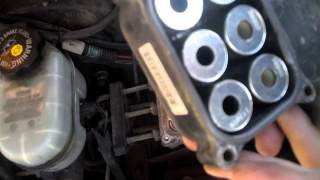
- Failed ABS Control Module (EBCM) (Very Common) — The electronic module controlling the pump motor fails internally. This happens due to cracked solder joints on the circuit board or a failed internal power relay from years of vibration and heat cycles. 🎬 Watch: How to rebuild your EBCM at home to fix internal faults.
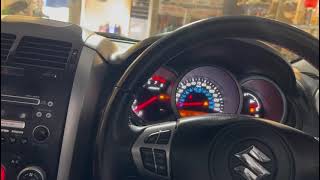
- Faulty ABS Pump Motor (Very Common) — The electric motor driving the hydraulic pump burns out. This occurs due to worn internal brushes, a short in the windings, or seizure from lack of use. This is the primary cause on Suzuki models with the ATE MK61 unit. 🎬 See this troubleshooting guide for Suzuki ABS pump motor circuit failure.
- Corroded Wiring or Poor Ground Connection (Common) — Moisture intrusion causes corrosion at the main ABS connector or the chassis ground point. This creates high electrical resistance, preventing the pump motor from receiving the necessary amperage to operate.
- Brake Fluid Leak into Electronics (Rare) — On specific Nissan, Hyundai, and Kia models, a known defect causes the ABS actuator to leak brake fluid internally onto the electronic circuit board. This creates an electrical short, triggering the code and posing a severe fire risk.
- Low System Voltage (Rare) — A weak battery causes system voltage to drop below 10.5V during the ABS module's startup self-test, triggering a false circuit code.
- Internal Valve Sticking (Rare) — Contaminated brake fluid causes the solenoid valves inside the hydraulic block to stick. The pump strains against this blockage, triggering a circuit performance fault.
- Software/Firmware Glitch (Rare) — The ABS module's software contains bugs that incorrectly flag a hardware fault. Manufacturers issue Technical Service Bulletins (TSBs) with software updates to resolve this, notably on 2009-2010 Volkswagens.
Symptoms
- ABS Warning Light is On — The dashboard warning light with 'ABS' illuminates and stays on permanently.
- Traction Control and Stability Control Lights are On — A fault in the ABS pump circuit disables all related driver aids, illuminating the TCS, VDC, SLIP, StabiliTrak, or ESP warning lights.
- Wheels Lock Up During Hard Braking — During an emergency stop, the wheels lock up and the vehicle skids. You will not feel the characteristic pulsing from the brake pedal.
- Pump Motor Runs Continuously — A short circuit in the control module causes the ABS pump motor to run constantly, even with the ignition off, creating a buzzing sound and draining the battery.
Diagnostic Flowchart
Tap your situation to follow the diagnostic path that matches what you're seeing on this code.
Common Fixes & Costs
- Replace Blown ABS Fuse — Parts: $5-$20, Labor: $0, ~0.2 hr book time (DIY)
- Repair Damaged Wiring or Clean Ground Connection — Parts: $10-$50, Labor: $150-$300, ~1.5 hr book time (Intermediate)
- Have the Original ABS Module Rebuilt — Parts: $150-$350, Labor: $150-$300, ~2.0 hr book time (Professional)
- Replace with a Used ABS Module/Pump Assembly — Parts: $150-$400, Labor: $250-$500, ~2.5 hr book time (Professional)
- Replace with a New ABS Module and Pump Assembly
— Parts: $800-$2000, Labor: $250-$500, ~2.5 hr book time
(Professional)
Suzuki Grand Vitara (2005-2015): OEM Varies by VIN (e.g., 56110-77K0). (Alt: Rebuild services highly recommended over new.)
Chevrolet Silverado (2007-2013): OEM GM 25802686, GM 20896914. (Alt: Dorman (Remanufactured), Cardone (Remanufactured).)
Used vs. New Parts: Buying Guide
When a used part is worth it: A used ABS module/pump assembly is a viable budget option for older vehicles where a new part is cost-prohibitive. It makes sense only if you find a tested part with a warranty and budget for dealer programming.
Donor-vehicle mileage cap: roughly under 100000 miles for the part to have meaningful remaining life.
Donor quality checklist:
- Verify the part number matches exactly.
- Purchase from a seller offering a 90-day minimum warranty.
- Inspect the electrical connector for any signs of corrosion.
Decision logic:
- If Your original module can be rebuilt → Choose rebuilding. It is cost-effective and avoids VIN programming fees.
- If Vehicle is under warranty or subject to a recall → Use a new OEM part from the dealer. The repair is free.
- If Budget is the primary concern and rebuilding is not an option → A warrantied used part is a reasonable choice, but budget $100-$250 for professional programming.
Warranty tradeoff: Used parts carry a 30-90 day warranty. Rebuilt modules offer a 1-year to lifetime warranty. New OEM parts carry a 1-2 year warranty.
Worst-case if a used part fails: $300-$600 for repeat labor and VIN programming if a used part fails.
What Happens If You Wait — Timeline
- Immediate: Code C1062 sets. ABS, Traction Control, and Stability Control disable. (MPG impact: 0%% · Added cost: $0. The primary cost is a significant decrease in vehicle safety.)
- 1 day - 1 week: If the cause is a shorted module, the ABS pump motor runs constantly, completely draining the battery. (MPG impact: 0%% · Added cost: $150-$400 for a new battery and towing.)
- Months: For recall-affected Hyundai, Kia, and Nissan vehicles, an ignored ABS light caused by an internal fluid leak leads to an engine compartment fire. (MPG impact: 0%% · Added cost: $15,000+ for total vehicle loss.)
Cost of Not Fixing It
- Immediate: Loss of ABS, traction control, and stability control. Increased risk of skidding and loss of control in emergency braking or slippery conditions. (Added cost: Potential cost of an accident.)
- Days to Weeks: If the failure causes the ABS pump to run continuously, it drains and ruins the vehicle's battery. (Added cost: $150-$400 for a new battery and towing.)
- Months: On recall-affected models (Hyundai, Kia, Nissan), an unrepaired internal leak causes an electrical short, creating a significant risk of an engine compartment fire. (Added cost: Total loss of the vehicle.)
Diagnosis Steps
- Inspect the ABS Fuses
Locate the fuse boxes using your owner's manual. Inspect the large 30A-60A fuse for the ABS pump motor and the smaller 5A-10A fuse for the control module. Visually and electrically verify they are intact.
Tools: Fuse puller, multimeter (Beginner) - Visually Inspect the ABS Module and Wiring
Locate the ABS module. Scrutinize the main electrical connector for green corrosion, pushed-out pins, or moisture. Follow the wiring harness to check for chafing, melting, or physical damage.
Tools: Flashlight (Beginner) - Check Power and Ground at the Module Connector
Unplug the ABS connector. Using a wiring diagram, identify the main power and ground pins. Verify constant battery voltage (12.6V+) at the power pin. Use a test light connected to battery positive to probe the ground pin; it must illuminate brightly to confirm a solid ground.
Tools: Multimeter, test light, vehicle-specific wiring diagram (Intermediate) - Activate the Pump with a Bi-Directional Scan Tool
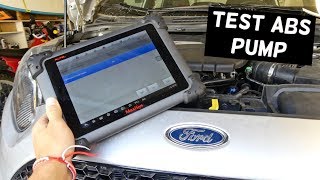
Connect a bi-directional scan tool and command the ABS pump motor to turn on. If you hear nothing despite confirming good power and ground, the pump motor or the control module has failed internally.
Tools: Bi-directional OBD-II scan tool (Advanced) - Perform a Voltage Drop Test
Reconnect the ABS module. Back-probe the main power wire with a multimeter. Command the ABS pump to run using the scan tool. The voltage must not drop more than 1.0V from battery voltage. A larger drop indicates high resistance in the wiring.
Tools: Bi-directional scan tool, multimeter with back-probe adapters (Advanced) - Test the Pump Motor Resistance
If the module is separate from the pump, unplug the motor. Measure the resistance across the motor's two pins. The reading must be between 0.5 and 5.0 ohms. An infinite reading (OL) means the motor is open; zero ohms means a dead short.
Tools: Multimeter, vehicle-specific wiring diagram (Advanced)
When This Code Triggers (Freeze-Frame Conditions)
- System Voltage: 11.5V-14.5V (The code sets immediately upon startup if a hard electrical fault exists.)
- Vehicle Speed: 0-10 mph (The ABS module performs a self-test when the ignition turns on and again at low speed (around 6-10 mph). The code sets if the pump motor check fails.)
- Ignition Status: On/Run (The fault is detected during the Power-On Self-Test (POST) sequence.)
- ABS/TCS/ESC Status: Inactive (The fault logs when the system attempts to initialize, before any ABS or traction control event occurs.)
Related Codes
- C0110 — The generic SAE code for 'Pump Motor Circuit Malfunction.' Used by GM, Nissan, and Hyundai. Treat C0110 and C1062 as the exact same fault.
- C1095 — Ford's specific code for 'ABS Hydraulic Pump Motor Circuit Failure.' The causes, symptoms, and repairs are identical to C1062.
- C1061 — Often seen with C1062 on Suzuki vehicles. C1061 is an intermittent performance fault, while C1062 indicates a hard failure. The diagnostic procedure is identical.
- BCM-0070 — Volvo's specific code for 'Pump Motor Supply Voltage Faulty Signal'. It is the direct equivalent of C1062.
Climate & Environmental Factors
- High Humidity: Condensation accelerates corrosion on ABS module connectors and ground points, leading to high resistance or open circuits.
- Cold Weather: Extreme cold causes circuit boards to contract. This stress forces existing micro-cracks in the module's solder joints to open completely, resulting in immediate electrical failure.
- Road Salt: Corrosive salty spray attacks the ABS module's housing, connectors, and exposed chassis ground points, significantly increasing electrical failures.
How to Talk to a Mechanic About This Code
Say this: "I have an ABS light and a C1062 code. Before replacing the whole ABS module, please test the high-amperage pump fuse, check for a solid ground connection, and perform a voltage drop test on the main power wire to the module."
This directs the shop to check simple, inexpensive failure points first, preventing them from immediately quoting a full ABS assembly replacement.
Avoid saying:
- 'Just fix my ABS light.'
- 'My brakes feel weird, can you look at it?'
- 'Do whatever you think is best.'
Questions to ask before authorizing the repair:
- Did you check the main ABS pump fuse and was it blown?
- What were the results of the voltage and ground tests at the module connector?
- If the module needs replacement, is rebuilding my original unit an option to avoid programming costs?
Where to Take It: Dealer vs Independent vs Chain
- Dealer:
Recommended. The best choice if your vehicle is under recall for a fire risk. Also the most reliable option for post-warranty work due to programming requirements.
Best for: Vehicles under warranty or subject to a safety recall (critical for affected Hyundai, Kia, Nissan models)., Complex diagnostics requiring manufacturer-specific programming.
Downsides: Highest labor rates., More likely to recommend full component replacement over rebuilding. (Typical cost: +50% vs. baseline) - Independent Shop:
Best Fit. A well-regarded independent shop with strong electrical diagnostic skills offers the best balance of expertise and value.
Best for: Out-of-warranty vehicles where cost is a major factor., Owners who want to use rebuilt or warrantied used parts.
Downsides: May lack the latest tools for module programming, requiring a separate trip to the dealer. (Typical cost: +0% vs. baseline) - Chain Shop:
Avoid. The complex electrical diagnosis required is beyond the scope of most chain shops.
Best for: Simple, routine maintenance like oil changes.
Downsides: Technicians lack specialized electrical diagnostic training for complex codes., High pressure to upsell leads to misdiagnosis. (Typical cost: -10% vs. baseline)
When to Walk Away From the Repair
If the estimated repair cost exceeds 50% of your car's private-party value, consider not fixing it.
- Car worth $3000, fix is $2200: Walk Away. The repair cost is over 70% of the car's value. Sell as a 'mechanic's special'.
- Car worth $10000, fix is $950: Fix It. The repair is less than 10% of the car's value and restores a critical safety system.
- Car worth $5000, fix is $2000: Borderline. The cost is 40% of the car's value. Explore using a rebuilt module to lower the cost before deciding.
What Scan Tool You Need for This Code
Minimum: A scan tool with bi-directional control for the ABS system. This is required to command the ABS pump motor on/off and perform the 'ABS service bleed' procedure.
A basic $20 code reader cannot communicate with the ABS module to activate the pump or perform a service bleed, making it useless for diagnosing or repairing C1062.
Budget: BlueDriver Pro (~$99) — Reads and clears ABS codes. It lacks the critical bi-directional control to activate the ABS pump or perform a service bleed.
Mid-range: Foxwell NT630 Plus (~$150) — Reads/clears ABS codes and offers bi-directional control to perform ABS 'active tests' and the 'ABS auto bleed' function for many makes.
Professional: Autel MaxiCOM MK808BT (~$459) — Offers full OE-level diagnostics, comprehensive bi-directional control, and all service functions including ABS bleeding.
Rent vs buy: Auto parts store loaner tools are basic code readers; they do not have the bi-directional capability needed. You must buy a capable scanner or pay for a professional diagnosis.
How to Clear the Code After You Fix It
- Fix the underlying electrical or mechanical fault.
- Use an OBD-II scan tool with ABS capabilities to clear the code.
- Cycle the ignition off, then on.
- Drive the vehicle above 10 mph to allow the ABS module to complete its self-test and confirm the repair.
Drive cycle (~5 minutes): Start the vehicle and drive a short distance, exceeding 10 mph. The ABS light must turn off after its initial bulb check and remain off.
Watch out for:
- Using a basic code reader that cannot access or clear ABS-specific codes.
- The code returns immediately upon the next self-test if the root cause is not fixed.
Will This Fail Emissions / State Inspection?
No — by itself this code doesn't fail OBD inspection (but it can keep readiness monitors from setting, which causes a separate fail).
- California: An illuminated ABS light does NOT cause a failure of the emissions-only Smog Check.
- New York: An illuminated ABS warning light IS grounds for failure of the annual safety inspection.
- Texas: An illuminated ABS light does NOT cause a failure of the safety inspection.
Most Commonly Affected Vehicles
- Suzuki Grand Vitara, Alto, Swift (2005-2015) — Logs C1061 and/or C1062 due to the failure of the pump motor within the ATE MK61 ABS unit. Rebuilding the unit is the standard fix.
- Chevrolet / GMC Traverse, Acadia, Equinox, Silverado (2002-2025) — Prone to ABS module failures, logging the generic code C0110.
- Nissan Maxima, Murano, Pathfinder (2007-2019) — Logs C0110 or C1111. Major recalls (e.g., NHTSA 18V-601) exist for ABS actuators leaking fluid onto the circuit board, creating a fire risk.
- Ford F-150, Explorer, Fusion (1999-2014) — Appears as code C1095. The electronic control module is a well-documented failure point.
- Hyundai / Kia Santa Fe, Elantra, Sorento (2011-2021) — Subject to massive recalls (e.g., NHTSA 22V-056) for ABS modules that short circuit and cause fires. Owners are advised to park outdoors until repaired.
- Volkswagen Jetta, Golf, Passat (2009-2014) — NHTSA Recall 16V-913 addressed 2009-2010 models for modules failing due to cracked internal solder joints.
- Volvo S60, V70, S80, XC90 (2000-2010) — Appears as code BCM-0070. Points to a failure in the ABS control module's electronics requiring a rebuild.
- Alfa Romeo Various (2000-2010) — C1062 points specifically to a 'discharge valve' within the ABS hydraulic unit, requiring replacement or rebuild of the assembly.
Manufacturer-Specific Notes
- Suzuki: C1062 or C1061 almost always means the pump motor inside the ATE MK61 ABS hydraulic unit failed. On the main connector, the four largest pins are the power and ground feeds for the motor and module.
- Nissan: Uses C0110. A major safety issue exists on Murano, Maxima, and Pathfinder models where the ABS actuator leaks brake fluid onto the internal circuit board, creating a fire risk. Nissan advises parking outdoors if the ABS light stays on for more than 10 seconds after startup.
- Hyundai / Kia: Uses C0110. Millions of vehicles are recalled for ABS modules that short circuit and cause fires, even when parked. The interim fix installs a new multi-fuse to cut power capacity to the module.
- Volkswagen: Faults are due to cracked solder joints on the module's internal power controller. NHTSA Recall 16V-913 provides a software update to better detect the fault; if the module fails the new check, it is replaced under recall.
How to Prevent This Code From Triggering
- Flush brake fluid every 2-3 years or 30,000 miles. (Every 2-3 years) — Brake fluid absorbs moisture. This moisture causes internal corrosion of sensitive ABS components like valves and the pump motor, leading to seizure.
- Test and maintain the battery. (Annually) — A weak battery causes voltage to drop during the ABS startup self-test, triggering false electrical fault codes.
- Periodically engage the ABS system. (A few times per year) — Performing a safe, intentional hard stop on a clear, empty road forces the pump to activate, keeping it lubricated and preventing seizure from lack of use.
Frequently Asked Questions
Is it safe to drive with the C1062 code?
Your regular brakes still stop the car, but driving is unsafe long-term because your ABS, traction control, and stability control are disabled. This significantly increases your risk of skidding and losing control during emergency stops or on slippery roads. Repair the system immediately to restore these critical safety features.
What is the most common misdiagnosis for code C1062?
Technicians often mistakenly replace the entire expensive ABS pump assembly without checking the basics. Always rule out a blown 40-60A fuse, a corroded ground wire, or high resistance in the power feed wire using a voltage drop test first.
Can I use a second-hand ABS module to save money?
Yes, but it is not a simple plug-and-play repair. A used ABS module must be professionally programmed to your car's Vehicle Identification Number (VIN) to communicate with other computers. Without this $100-$250 programming step, the replacement module will not function.
Is it better to replace the ABS module or have it rebuilt?
Rebuilding your original unit is the most cost-effective and reliable option. It costs significantly less than a new part and reinforces known weak points on the circuit board. Crucially, a rebuilt original unit retains your vehicle's programming, saving you hundreds of dollars in dealer coding fees.
Will clearing the code fix the problem?
No. Code C1062 indicates a hard electrical or mechanical fault in the ABS system. The vehicle's computer runs a self-check every time you start the car, and the code returns instantly as soon as the test fails.
What is the difference between the ABS pump and the ABS module?
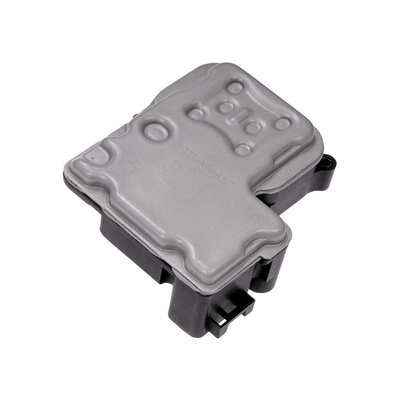
The ABS assembly consists of two bolted-together components. The 'pump' is the mechanical hydraulic unit containing valves and the motor that modulates brake fluid pressure. The 'module' (EBCM) is the electronic computer brain that controls the pump, and it is usually the part that fails.
Why does my ABS pump run all the time, even when the car is off?
This is a classic symptom of a short-circuited ABS control module sending constant power to the pump motor. This drains your battery rapidly and creates a fire risk. Disconnect the battery immediately and replace or rebuild the ABS module.
Can I fix a C1062 myself?
A DIYer can confidently check fuses, inspect wiring, and test for basic power and ground. However, replacing the ABS hydraulic unit requires opening brake lines and using a bi-directional scan tool to perform an automated 'service bleed'. Stop DIYing and consult a professional if the hydraulic unit requires replacement.
Key Takeaways
- 1. Code C1062 indicates a critical electrical failure in the ABS pump motor circuit, disabling your anti-lock brakes and stability control.
- 2. Always check the dedicated 30A to 60A ABS pump fuse and test the module's ground connection before replacing expensive parts.
- 3. Rebuilding your original ABS module costs $300–$600 total and avoids the $150+ dealer programming fee required for new or used replacements.
- 4. If you own a 2011–2021 Hyundai, Kia, or Nissan, check your VIN for active recalls immediately; this code often flags a brake fluid leak that causes engine fires.
Helpful Videos
Shop the Parts Behind C1062
Below are the parts most often responsible for code C1062, ranked by how frequently each one is the actual culprit (per the diagnosis above). Tap any to see what we have for your vehicle.


The information in this article is provided for general reference and educational purposes only. Vehicle specifications, procedures, and part compatibility can vary by production date, trim level, and region. Always consult your vehicle's factory service manual and verify part numbers before purchasing or performing repairs. Safety-critical components such as airbags, seat belts, and braking systems should be installed by a qualified professional.
- 🧭 Diagnostic Flowchart
- 🎬 Helpful Videos
- 🛍️ Shop This Part
- What Does C1062 Mean?
- Can I Drive With C1062?
- Common Causes
- Symptoms
- Common Fixes & Costs
- Used vs. New Parts: Buying Guide
- What Happens If You Wait — Timeline
- Cost of Not Fixing It
- Diagnosis Steps
- When This Code Triggers (Freeze-Frame Conditions)
- Related Codes
- Climate & Environmental Factors
- How to Talk to a Mechanic About This Code
- Where to Take It: Dealer vs Independent vs Chain
- When to Walk Away From the Repair
- What Scan Tool You Need for This Code
- How to Clear the Code After You Fix It
- Will This Fail Emissions / State Inspection?
- Most Commonly Affected Vehicles
- Manufacturer-Specific Notes
- How to Prevent This Code From Triggering
- Frequently Asked Questions
- Is it safe to drive with the C1062 code?
- What is the most common misdiagnosis for code C1062?
- Can I use a second-hand ABS module to save money?
- Is it better to replace the ABS module or have it rebuilt?
- Will clearing the code fix the problem?
- What is the difference between the ABS pump and the ABS module?
- Why does my ABS pump run all the time, even when the car is off?
- Can I fix a C1062 myself?
- Key Takeaways
- 🎟️ Get 5% Off