

C1064 on 2017-2019 Lincoln Continental: Not a Code, But a Connector You Need to Know
On a 2017-2019 Lincoln Continental, C1064 is not a diagnostic trouble code but the name of an electrical connector. If you're searching for C1064, you are likely dealing with engine cooling-related fault codes (like P0117 or P0128) caused by a bad connection or damaged wiring at this specific connector, as noted in Lincoln TSB SSM 47791.
- C1064 is a connector name on a Lincoln, not a fault code.
- This issue is documented in Lincoln TSB SSM 47791.
- The most likely cause of related Check Engine Lights is a loose connector or damaged wire, not a bad sensor.
- For the Continental, inspect the wiring between inline connectors C1016 and C1168 specifically.
- Commonly associated fault codes include P0117, P0118, and P0128.
What's Unique About the 2017-2019 Lincoln CONTINENTAL
The confusion around C1064 is specific to how Ford and Lincoln label their wiring diagrams and TSBs. While other manufacturers may use C1064 as an actual chassis trouble code, on the Continental and related Ford platforms, it's simply a map reference for a physical part. The key takeaway for this platform is that cooling system fault codes (P0117, P0118, P0128) may originate from a simple wiring or connector issue rather than a failed sensor. The TSB for this issue covers several vehicles that share powertrains with the Continental, including the Ford Edge, Fusion, and Lincoln MKX/Nautilus.
Diagnostic Flowchart
Tap your situation to follow the diagnostic path that matches what you're seeing on this vehicle.
Symptoms You May Notice
- Check Engine Light is on
- Engine temperature gauge reading inaccurately (too high or too low)
- Engine running rough or hesitating
- Cooling fans running constantly or not at all
- Reduced fuel economy
- Hard starting
- Heater not blowing very hot air.
- Replacing the Engine Coolant Temperature (ECT) sensor without first checking the connector and wiring. The TSB specifically warns that the sensor is often not the root cause.
- Replacing the thermostat for a P0128 code without first investigating the ECT sensor circuit, as a false temperature reading can incorrectly trigger this code.
Most Likely Causes
- Engine Coolant Temperature (ECT) Sensor Connector Not Fully Seated 🔴 High Probability → Shop Engine Wiring Harness As identified in TSB SSM 47791, a loose connection between the ECT sensor and its harness (connector C1064) is a known issue across multiple Ford/Lincoln platforms.
How to confirm: Locate the ECT sensor, typically found near the thermostat housing. Visually inspect its electrical connector. Gently tug on the connector to ensure it is fully seated and the locking tab is engaged. Disconnect and reconnect it to be certain, checking for any pin damage or corrosion.
Typical fix: Ensure the connector is clean, free of corrosion, and securely plugged into the ECT sensor. Applying a small amount of dielectric grease can help protect the connection.
Est. part cost: $0-$10 - Damaged Wiring Between Connectors C1016 and C1168 🟡 Medium Probability TSB SSM 47791 specifically calls out potential wiring damage between connectors C1016 and C1168 for the Continental and its platform mates (Edge, Fusion, MKX). This is the most likely area for a wiring fault on this specific vehicle.
How to confirm: Perform a continuity test on the wires running to and from the ECT sensor connector. Visually inspect the harness for any signs of chafing, melting, or breaks, particularly around the specified inline connectors C1016 and C1168.
Typical fix: Repair the damaged section of wire using a quality butt connector with heat shrink or by soldering and sealing the connection. In severe cases, a connector pigtail or harness section may need to be replaced.
Est. part cost: $5-$50 - Failed Engine Coolant Temperature (ECT) Sensor ⚪ Low Probability → Shop Engine Coolant Temperature Sensor While sensors can fail, the TSB explicitly advises against replacing the ECT sensor until wiring and connection issues have been ruled out. The wiring is the more common failure point on this platform.
How to confirm: After confirming the wiring and connector are good, you can test the sensor's resistance with a multimeter. At an ambient temperature of 68°F (20°C), the resistance should typically be between 2,000 and 3,000 ohms. Comparing its reading on a scan tool to a known good temperature can also help.
Typical fix: Replace the ECT sensor.
Est. part cost: $25-$75
Diagnosis Steps
- Scan for Codes: Read all diagnostic trouble codes. If you see codes like P0117, P0118, P0128, or P130D, proceed with this guide.
- Locate the ECT Sensor: Find the Engine Coolant Temperature sensor on your engine. Its location can vary based on the specific engine (2.7L, 3.0L, or 3.7L) but is generally near the thermostat housing. 🎬 Watch: Step-by-step guide to replacing the coolant temperature sensor. On the 2.7L and 3.0L EcoBoost engines, it is located under the intake manifold.
- Inspect the Connector (C1064): Check the electrical connector going to the ECT sensor. Ensure it is plugged in securely and the locking tab is engaged.
- Disconnect and Inspect Pins: Disconnect the connector and inspect the pins on both the sensor and the connector side for corrosion, moisture, or damage. Clean if necessary.
- Inspect the Wiring Harness: Following the guidance of TSB SSM 47791, carefully inspect the wiring harness leading from the ECT sensor. Pay close attention to the areas around inline connectors C1016 and C1168 for any signs of chafing, breaks, or heat damage.
- Perform a Continuity Test: If no visual damage is found, use a multimeter to check for continuity and shorts in the signal and ground wires between the PCM and the ECT sensor connector.
- Test the ECT Sensor: Only after confirming the wiring is intact should you test the sensor itself. A faulty sensor is the least likely cause according to the manufacturer TSB.
- Repair and Clear Codes: Once the fault (loose connector, broken wire) is found and repaired, clear the diagnostic trouble codes and perform a drive cycle to ensure the problem is resolved.
Parts You'll Likely Need
- Engine Coolant Temperature (ECT) Sensor Connector Pigtail
(OEM #Motorcraft WPT-966 (Verify connector shape))— If the connector itself or the wiring immediately attached to it is damaged, a new pigtail is the standard repair. WPT-966 is a common 2-cavity connector pigtail used by Ford, but visual verification is recommended.
Trusted brands: Motorcraft, Dorman
OEM price range: $30-$50
Aftermarket price range: $15-$30 - Engine Coolant Temperature (ECT) Sensor
(OEM #FT4Z-12A648-B (for 2.7L/3.0L))— This part should only be replaced after verifying the connector and wiring are in good condition, as it is the least likely cause of the issue. [SSM 47791] Part number FT4Z-12A648-B is specified for the 2.7L and 3.0L engines in the Continental.
Trusted brands: Motorcraft, Bosch, Delphi
OEM price range: $40-$75
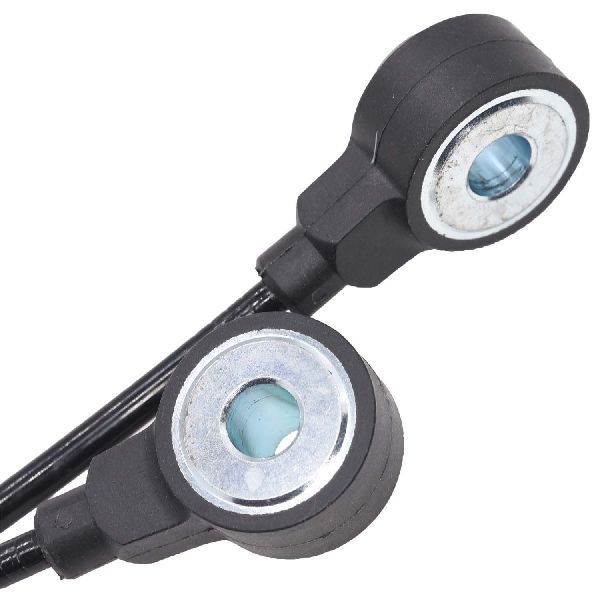
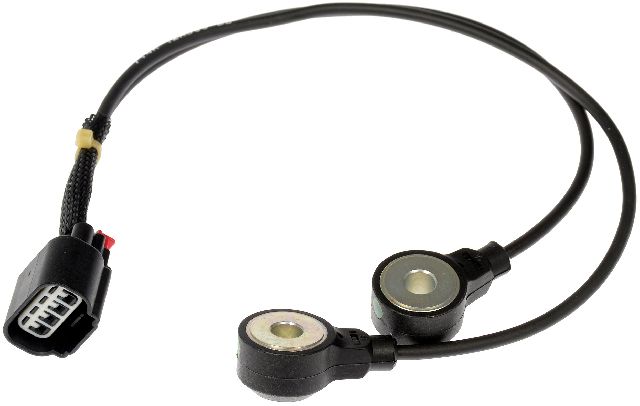
Aftermarket price range: $25-$50 - Knock Sensor Wiring Harness (2.7L/3.0L)
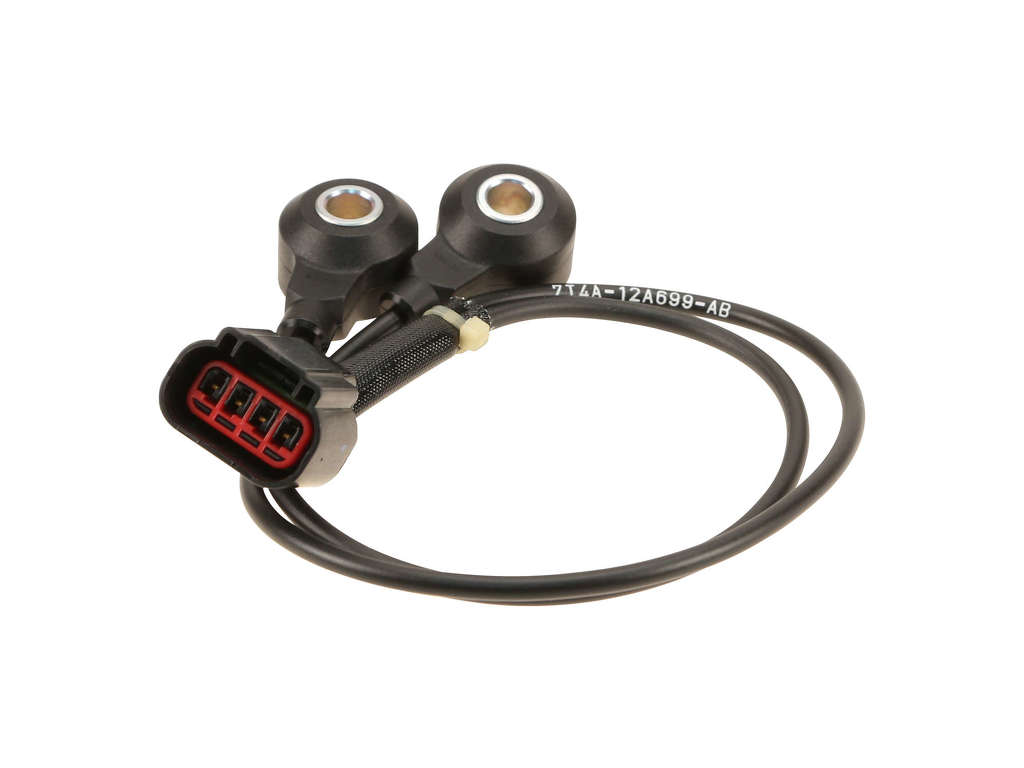
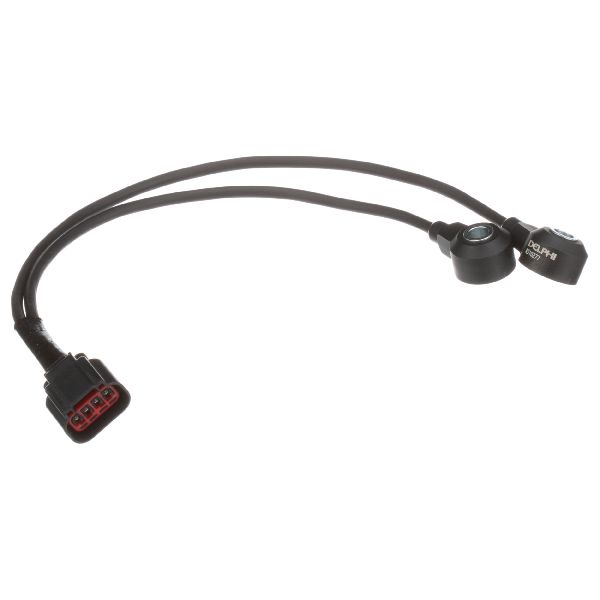
(OEM #12A699 (Base Part Number))— TSB SSM 48991 indicates that for the 2.7L EcoBoost, the ECT sensor wiring is integrated with the knock sensor harness. A fault in this harness is a common cause, and Ford's recommended repair is to replace both the ECT sensor and this harness together.
Trusted brands: Ford
OEM price range: $50-$100
Related Codes That Often Appear With This One
- P0117 — Indicates ECT Sensor Circuit Low Input, which can be caused by a short in the wiring related to connectors C1016/C1168.
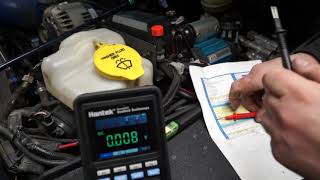
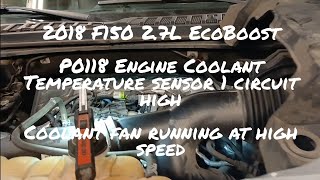
- P0118 — Indicates ECT Sensor Circuit High Input, often caused by an open circuit or a disconnected C1064 connector. 🎬 Watch: Diagnosing high voltage signals and P0118 circuit faults.
- P0128 — Indicates Coolant Thermostat (Coolant Temperature Below Thermostat Regulating Temperature), which the PCM can trigger if it receives an irrational signal from the ECT sensor due to a wiring fault.
- P130D — This is a manufacturer-specific code also mentioned in TSB SSM 47791 as being related to this wiring issue.
- P0330 — Indicates a Knock Sensor circuit malfunction. TSB SSM 48991 notes that the ECT and knock sensor wiring are integrated on the 2.7L engine, and a fault in this shared harness can set both ECT and knock sensor codes simultaneously. 🎬 See how shared harness faults trigger multiple engine codes.
- P1299 — Indicates Cylinder Head Overtemperature Protection is active. This can be triggered by a legitimate overheat or a false signal from a faulty ECT circuit, as noted in TSB SSM 48991.
Technical Service Bulletins (TSBs) & Recalls
- SSM 47791: Warns that ECT-related codes (P0117, P0118, P0128, P130D) may be due to a connector or wiring issue, and that the ECT sensor itself should not be replaced unless wiring is confirmed to be intact. It specifically identifies the wiring between connectors C1016 and C1168 as the area of concern for the Continental.
- SSM 48991: For 2.7L EcoBoost engines, this TSB expands on the issue, noting that codes P0116, P0117, P0118, P0128, P0330, and P1299 may be caused by a fault in the integrated ECT and knock sensor wiring harness. The official repair is to replace both the ECT sensor (12A648) and the knock sensor harness (12A699).
Platform-Specific Known Issues
- TSB SSM 47791 explicitly notes that for Continental vehicles, a poor connection or damaged wiring between connectors C1016 and C1168 (which are part of the circuit involving C1064) can trigger various ECT-related trouble codes. [SSM 47791]
- On the related Ford Edge with the 2.7L EcoBoost, similar TSBs (like SSM 48991) also point to issues with the ECT sensor and its integrated wiring harness, reinforcing that this is a known weak point on this family of engines.
Mechanic-Grade Diagnostic Values
- ECT Sensor Resistance (Cold Engine) — expected: ~37k Ω at 68°F (20°C). Some sources indicate a range of 2000-3000 Ω.. Failure: A reading of infinite resistance (open circuit) or near-zero resistance (short circuit).
- ECT Sensor Resistance (Hot Engine) — expected: ~2,000 Ω at 212°F (100°C).. Failure: Resistance does not decrease smoothly as the engine warms up.
- ECT Signal Wire Voltage (Key On, Engine Cold) — expected: High voltage, typically 3.0V - 4.5V. The PCM supplies a 5V reference.. Failure: Voltage is stuck near 5V (indicates open circuit) or near 0V (indicates short to ground).
- ECT Signal Wire Voltage (Key On, Engine Hot) — expected: Low voltage, typically 0.5V - 1.0V.. Failure: Voltage does not drop as the engine warms, or drops below 0.14V (which can trigger P0117).
Scan Tool Commands That Help
- Ford IDS (Integrated Diagnostic System): Live Data Monitoring (ECT PID) — To observe the ECT reading in real-time as the engine warms up. The temperature should climb steadily without erratic jumps or dropouts, and should correlate with the ambient temperature after a cold soak. This is the primary method for diagnosing sensor performance.
- Ford IDS (Integrated Diagnostic System): Output State Control (Cooling Fan) — If symptoms include fans running constantly or not at all, a technician can use IDS to command the cooling fans on and off. This verifies if the PCM and fan control circuits are working, helping to isolate the fault to the sensor input side of the system.
Wiring & Ground Locations
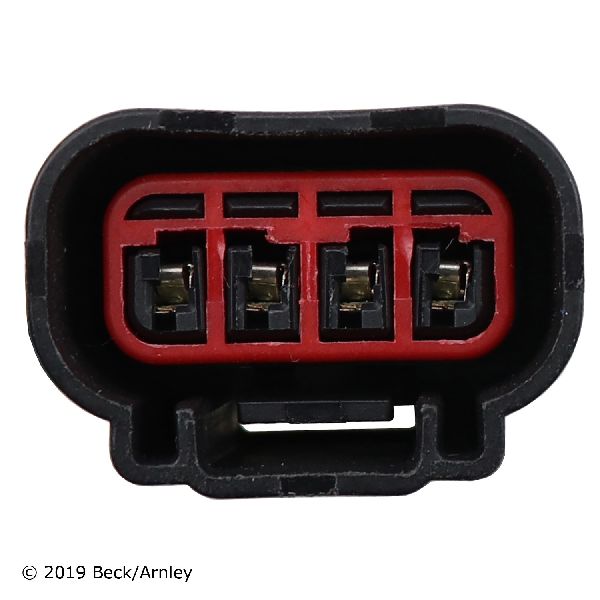
- C1064 / C1016 — This is the 2-pin electrical connector that plugs directly into the Engine Coolant Temperature (ECT) sensor. On 2.7L/3.0L engines, the sensor is located under the intake manifold.. This is the primary connection point. TSBs identify it as a common failure point due to not being fully seated, corrosion, or damaged pins.
- C1168 — This is an inline harness connector located in the wiring between the ECT sensor (C1016) and the Powertrain Control Module (PCM).. TSB SSM 47791 specifically calls out the wiring between C1016 and C1168 as a potential location for chafing, breaks, or shorts that can cause ECT-related codes.
- 12A699 Harness — On 2.7L/3.0L engines, this is a sub-harness that runs in the engine valley, under the intake manifold, and contains the wiring for both the ECT sensor and the knock sensor.. TSB SSM 48991 identifies this entire harness as a common failure point. An internal short or open in this harness can cause codes for both the ECT and knock sensor, and the official fix is to replace the harness and sensor together.
- G104 — A major chassis ground point located on the left front of the engine compartment.. While not the specific ground for the ECT sensor's reference circuit (which is provided by the PCM), a poor main ground at G104 can introduce electrical noise and voltage stability issues across the entire engine management system, potentially causing erroneous sensor readings.
Real Owner Repair Stories
- Ford Edge Forum user (2016 Ford Edge Sport 2.7L EcoBoost (platform-mate to Continental)) — Engine Coolant Over Temperature warning light illuminated, temperature gauge behaving erratically, and cooling fans running constantly.
❌ Tried (didn't work) Initial diagnosis was leaning towards a simple sensor or thermostat replacement.
✅ What actually fixed it The owner was provided with wiring diagrams for the ECT circuit, including the locations of connectors C1016 and C1168. The final fix was inspecting and repairing the wiring within this specific circuit as highlighted by the Ford TSBs, rather than just replacing parts.
OEM Part Supersession History
FT4Z-12A648-A, DY-1298→FT4Z-12A648-B— Standard part revision for improved reliability or manufacturing process change.
Model Year Variations Within This Range
- 2018-2020 (F-150 example): For the F-150 with the 2.7L EcoBoost, Ford released TSB 21-2168 and an ECT relocation kit (ML3Z-14A411-H). This kit moves the sensor from its difficult-to-access location under the intake to an upper heater hose. While not officially for the Continental, it shows Ford's acknowledgement of the serviceability issue and provides a potential repair path for technicians facing a failed sensor or harness in that location.
Helpful Videos



We Have This Part in Stock


The information in this article is provided for general reference and educational purposes only. Vehicle specifications, procedures, and part compatibility can vary by production date, trim level, and region. Always consult your vehicle's factory service manual and verify part numbers before purchasing or performing repairs. Safety-critical components such as airbags, seat belts, and braking systems should be installed by a qualified professional.
- Lincoln CONTINENTAL:
- 🧭 Diagnostic Flowchart
- 🎬 Helpful Videos
- 🛍️ Shop This Part
- What's Unique About the 2017-2019 Lincoln CONTINENTAL
- Symptoms You May Notice
- Most Likely Causes
- Diagnosis Steps
- Parts You'll Likely Need
- Related Codes That Often Appear With This One
- Technical Service Bulletins (TSBs) & Recalls
- Platform-Specific Known Issues
- Mechanic-Grade Diagnostic Values
- Scan Tool Commands That Help
- Wiring & Ground Locations
- Real Owner Repair Stories
- OEM Part Supersession History
- Model Year Variations Within This Range
- 🎟️ Get 5% Off