

Understanding Code C1064 on a 2016-2018 Lincoln MKX: A Case of Mistaken Identity
C1064 is not a valid diagnostic trouble code (DTC) for a 2016-2018 Lincoln MKX. It is the name of an electrical connector. If you have seen 'C1064' mentioned, it was likely in reference to a wiring issue that causes other codes, such as those related to the Engine Coolant Temperature (ECT) sensor.
- C1064 is not a trouble code for a Lincoln MKX; it is the name of an electrical connector on a Ford F-150.
- The source of this confusion is TSB #SSM 47791, which discusses wiring issues across multiple Ford/Lincoln vehicles.
- If you have an engine-cooling-related issue on your MKX (like a sudden overheat warning), the actual problem may be damaged wiring between connectors C1016 and C1168, as described in the TSB.
- A key symptom is the temperature gauge reading full hot on a cold engine, which points to an electrical fault.
- Diagnose the actual codes stored in your vehicle's computer instead of focusing on C1064.
- According to the TSB, inspect wiring between connectors C1016 and C1168 before replacing any sensors.
What's Unique About the 2016-2018 Lincoln MKX
The Lincoln MKX platform is central to understanding this issue. The confusion stems directly from TSB #SSM 47791, which addresses potential wiring damage between specific connectors. For the Edge/MKX/Nautilus family, the bulletin points to wiring between connectors C1016 and C1168. The mention of C1064 in that same TSB is specific to the Ford F-150. Therefore, if you are working on an MKX, C1064 is not the connector you should be looking for; the issue described in the TSB would be related to a different part of the harness.
Diagnostic Flowchart
Tap your situation to follow the diagnostic path that matches what you're seeing on this vehicle.
Symptoms You May Notice
- No symptoms are directly associated with 'C1064' as it is not a fault code.
- If the underlying issue is what the TSB describes, you may experience symptoms related to a faulty Engine Coolant Temperature (ECT) sensor, such as:
- Check Engine Light illuminated with codes like P130D.
- Temperature gauge suddenly reading full hot, even on a cold engine.
- Inaccurate or erratic temperature gauge readings.
- Engine performance issues or cooling fans running constantly.
- An 'Engine Coolant Over Temperature' warning message on the instrument cluster, even when the engine is cold.
- Searching for parts or fixes related to an ABS code, as C1064 is used for ABS systems on other vehicle makes like Dodge.
- Replacing the Engine Coolant Temperature (ECT) sensor without first inspecting the wiring harness. TSB #SSM 47791 specifically warns against this, as the sensor is often not the root cause.
Most Likely Causes
- Misinterpretation of Technical Service Bulletin (TSB) 🔴 High Probability TSB #SSM 47791 mentions 'C1064' as a connector name for the F-150 in the same document that discusses the MKX, leading to confusion.
How to confirm: Verify that your scanner is not displaying C1064. If you read about this code online, cross-reference the source to see if it mentions TSB #SSM 47791.
Typical fix: Disregard C1064 and diagnose the actual trouble codes stored in the vehicle's modules. - Damaged Wiring Harness 🔴 High Probability Per TSB #SSM 47791, the wiring harness between connectors C1016 and C1168 is susceptible to damage. While the TSB does not state a precise reason, this is often due to harness routing that allows it to chafe against another component from engine vibration over time.
How to confirm: Visually inspect the wiring harness in the specified area for any signs of chafing, breaks, or corrosion. Use a multimeter to check for continuity and shorts on the relevant wires between the connectors.
Typical fix: Repair the damaged section of wire using approved methods, such as butt splices with adhesive-lined heat shrink tubing to ensure a durable, weather-proof seal.
Est. part cost: $5-$50
Diagnosis Steps
- Confirm that C1064 is not actually present as a DTC by scanning the vehicle with a high-quality OBD-II scanner capable of reading manufacturer-specific codes.
- Identify the actual DTCs stored in the Powertrain Control Module (PCM) or other modules.
- If codes related to the Engine Coolant Temperature (ECT) sensor (like P130D) are present, refer to TSB #SSM 47791.
- Verify if the temperature gauge reads full hot immediately after a cold start. If so, this strongly suggests an electrical fault (sensor or wiring) rather than an actual engine overheat condition, aligning with the issue described in TSB SSM 47791.
- Following the TSB guidance for an MKX, locate and inspect the wiring harness and connection points between connectors C1016 and C1168 for damage, corrosion, or poor seating.
- If damage is found, perform a wire repair using butt connectors and heat-shrink tubing. If the connector housing itself is damaged, it will need to be replaced with a new pigtail. 🎬 Watch: A pro's guide to rebuilding and repairing electrical connectors.
- Do NOT replace the ECT sensor unless wiring issues have been completely ruled out, as per the TSB's recommendation.
Parts You'll Likely Need
- Wiring Repair Supplies — The actual issue suggested by the TSB is damaged wiring, which requires wire, butt splices, and adhesive-lined heat shrink tubing to repair properly, not a specific component replacement.
Trusted brands: Motorcraft (for wire splices and tubing), 3M (for electrical tape and connectors)
OEM price range: $20-$60
Aftermarket price range: $5-$25 - ECT Sensor Connector Pigtail
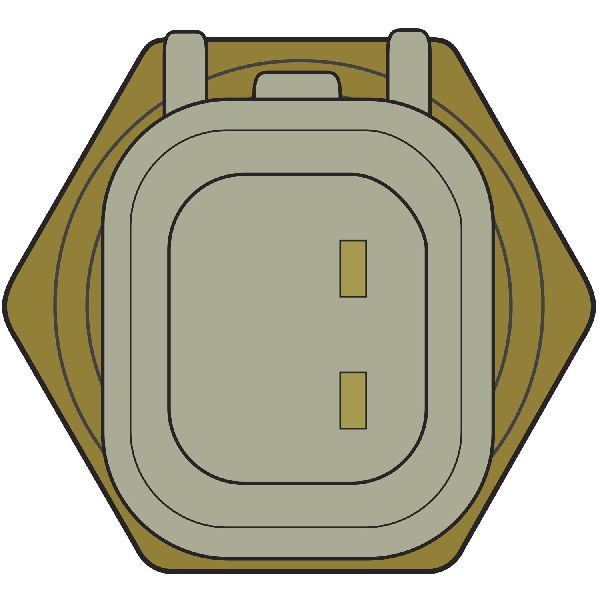
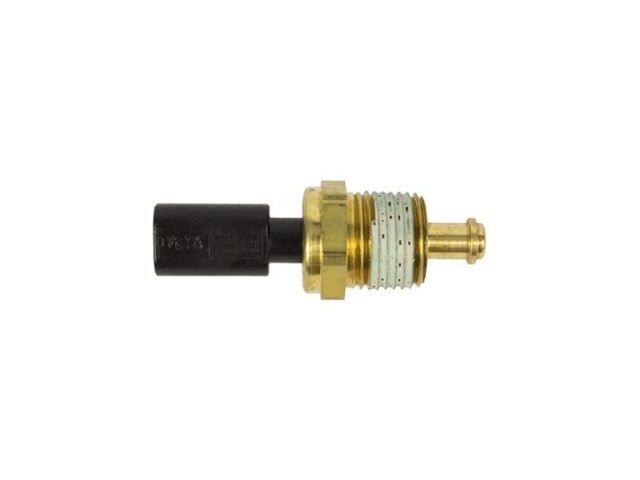
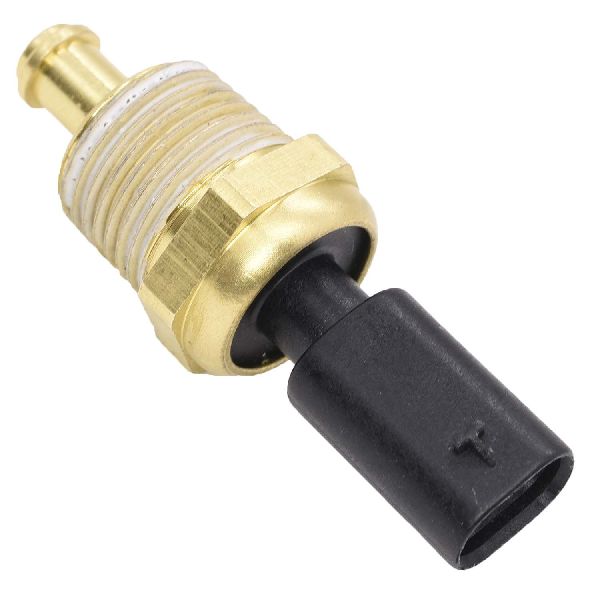
(OEM #e.g., Motorcraft WPT-975 (verify for specific engine))— This is only needed if the connector housing at the sensor is physically broken or corroded beyond saving. The primary issue is typically the wiring between connectors, not the connector itself.
Trusted brands: Motorcraft, Dorman
OEM price range: $30-$50
Aftermarket price range: $15-$30
Related Codes That Often Appear With This One
- P130D — TSB #SSM 47791 explicitly links wiring issues near the connectors mentioned (C1016 and C1168 on an MKX) to this and other engine-related codes.
Technical Service Bulletins (TSBs) & Recalls
- SSM 47791: Addresses engine coolant temperature (ECT) sensor codes that may be caused by a damaged wiring harness between specific connectors, and explicitly warns against replacing the sensor if wiring is the root cause. It clarifies that for the MKX, the inspection area is between connectors C1016 and C1168.
Platform-Specific Known Issues
- Per TSB #SSM 47791, the 2016-2018 Lincoln MKX may have wiring issues between connectors C1016 and C1168, leading to ECT sensor-related fault codes. The bulletin specifically advises against replacing the ECT sensor itself until the wiring has been verified as intact.
Mechanic-Grade Diagnostic Values
- Engine Coolant Temperature (ECT) Sensor Resistance — expected: Approximately 2000-3000 Ohms at 20°C (68°F), decreasing to 200-300 Ohms at 90°C (194°F).. Failure: Readings that are infinite (open circuit), near zero (short circuit), or do not decrease smoothly as the engine warms indicate a faulty sensor.
- ECT Sensor Voltage (at PCM) — expected: Around 2.0V on a cold engine, dropping to approximately 0.5V when the engine is at full operating temperature.. Failure: Voltage that is stuck high (e.g., 5.0V) suggests an open circuit or bad ground. Voltage stuck low suggests a short circuit.
Scan Tool Commands That Help
- Ford IDS (Integrated Diagnostic System): PCM Recovery / Module Reprogramming — This is an advanced function used if the PCM software becomes corrupt during an update or if a replacement PCM is installed. It forces a re-flash of the calibration file. This is not a standard reset procedure.
- Ford IDS (or equivalent high-end scanner): Parameter Reset — After replacing a major module like the PCM, a parameter reset is required to make the new module 'handshake' with other modules in the vehicle (like the BCM or anti-theft system). Failure to do this can result in a no-start condition even with a correctly programmed PCM.
- Any OBD-II Scanner / Manual Procedure: PCM Adaptive Memory Reset (Keep Alive Memory) — After any wiring repair or sensor replacement, it's crucial to reset the PCM's learned values. This can be done by disconnecting the battery for 15+ minutes or using a scanner function. After the reset, a specific drive cycle is needed for the PCM to relearn idle trim, fuel trims, and shift points.
Wiring & Ground Locations
- ECT Sensor (2.7L V6 EcoBoost) — Located in the engine valley, under the intake manifold. Access requires significant disassembly.. This is the sensor that provides the temperature reading. The wiring issue described in TSB SSM 47791 causes the signal from this sensor to be lost or corrupted.
- ECT Sensor (3.7L V6) — Located on the rear-facing side of the right (bank 1) cylinder head, under the intake manifold.. While the TSB is more commonly associated with the EcoBoost engines, a wiring fault affecting this sensor on the 3.7L engine would produce similar symptoms.
- Connector C1016 / C1168 — These are inline harness connectors. Their exact location requires a vehicle-specific wiring diagram, but they are part of the engine control harness between the PCM and the ECT sensor.. TSB #SSM 47791 specifically identifies the wiring between these two connectors as the area to inspect for damage on an MKX or Ford Edge.
- Ground G107 — Ignition coil ground point. Its exact location requires a service manual diagram, but it is on the engine.. A related TSB for other Ford models (SSM 50338) notes that a loose or corroded G107 can cause DTC P130D, a code also mentioned in the primary TSB for the MKX. This indicates a shared sensitivity to ground issues for this circuit.
OEM Part Supersession History
FT4Z-12A648-A (Motorcraft DY1298)→FT4Z-12A648-B (Motorcraft DY1309)— Part revision by the manufacturer. Reasons are not typically published but often involve improvements to material or internal design for better durability or accuracy.
Helpful Videos

We Have This Part in Stock


The information in this article is provided for general reference and educational purposes only. Vehicle specifications, procedures, and part compatibility can vary by production date, trim level, and region. Always consult your vehicle's factory service manual and verify part numbers before purchasing or performing repairs. Safety-critical components such as airbags, seat belts, and braking systems should be installed by a qualified professional.
- Lincoln MKX:
- 🧭 Diagnostic Flowchart
- 🎬 Helpful Videos
- 🛍️ Shop This Part
- What's Unique About the 2016-2018 Lincoln MKX
- Symptoms You May Notice
- Most Likely Causes
- Diagnosis Steps
- Parts You'll Likely Need
- Related Codes That Often Appear With This One
- Technical Service Bulletins (TSBs) & Recalls
- Platform-Specific Known Issues
- Mechanic-Grade Diagnostic Values
- Scan Tool Commands That Help
- Wiring & Ground Locations
- OEM Part Supersession History
- 🎟️ Get 5% Off