

OBD-II Code C1109: ABS Control Unit Voltage Malfunction
What C1109 means, why it triggers, and how to fix it
- Code C1109 indicates a power supply issue—typically voltage dropping below 9.6V or spiking above 15V—rather than a mechanical brake failure.
- Test your battery and alternator first, as a weak battery failing under load causes over 70% of C1109 codes.
- Inspect the 10-amp charging system fuse and clean all chassis ground connections before spending $600+ on a replacement ABS module.
- Verify your manufacturer's specific definition; C1109 disables the ABS on Nissans, but causes total loss of power steering on 2011-2016 Hyundai models.
- Expect your stopping distance to increase by at least 20% in wet conditions, as this code completely disables the Anti-lock Braking System (ABS) and Traction Control.
What Does C1109 Mean?
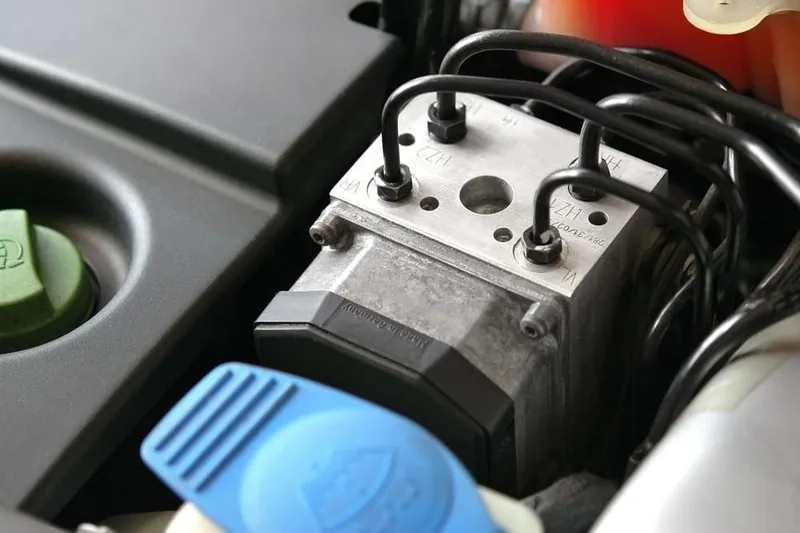
Code C1109 means the main computer detected abnormal voltage in the Anti-lock Braking System (ABS) control module circuit. The power supply is either too high or too low, preventing the module from functioning. This automatically disables the traction and stability control systems.
Technical definition: The SAE/OBD-II definition for C1109 is 'ABS Actuator and Electric Unit Power Voltage Is Too Low or Too High'. However, definitions vary by manufacturer. On Nissan/Infiniti, it is 'Battery Voltage Abnormal'. On 2011-2016 Hyundai models, it indicates an 'IGN Signal Error' in the electronic power steering (EPS) system. On Ford/Mazda, it points to a 'Traction Control OFF Switch' circuit issue.
Can I Drive With C1109?
Yes, But With Caution. You can drive the vehicle, but do so with extreme caution. Your Anti-lock Braking System (ABS) and Traction/Stability Control are disabled, increasing stopping distances by 20% or more in wet conditions. Do not drive if the red 'BRAKE' warning light is also illuminated, as this indicates a critical base braking system failure.
Common Causes

- Weak or Failing Battery (Very Common) — The most frequent cause of a C1109 code is a battery unable to hold a proper charge. The ABS module is highly sensitive to voltage and sets a fault if system voltage drops below 9.6V during engine cranking.
- Corroded Battery Terminals or Poor Ground Connections (Very Common) — Corrosion on battery posts or loose main ground wires prevent stable voltage delivery. On Nissan and Infiniti models, corroded secondary ground points under the dashboard frequently cause this code even when engine bay grounds look clean.
- Blown Fuse or Fusible Link (Common) — A blown high-amperage fuse cuts power to the ABS module entirely. On Nissan models, an alternator over-voltage spike often blows the 10-amp charging system fuse in the IPDM, triggering C1109.
- Failing Alternator (Common) — A faulty alternator causes either an undercharge (low voltage) or overcharge (high voltage) condition. An over-voltage state (above 15V) is a known trigger on many Nissan vehicles.
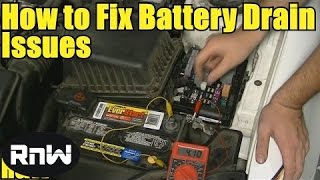
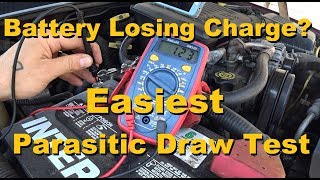
- Parasitic Electrical Draw (Less Common) — An electrical component failing to shut off slowly drains the battery overnight. 🎬 Watch: This simple guide shows you how to find a parasitic draw. This low voltage state triggers the code upon startup.
- Damaged Wiring or Connectors (Less Common) — A frayed or shorted wire in the power or ground circuit causes a voltage drop. This usually results from previous repairs, rodent damage, or water ingress.
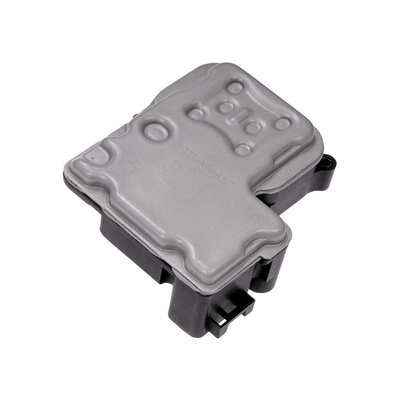
- Faulty ABS Control Module (Rare) — The ABS control module itself can fail internally. This is rare and should only be considered after ruling out power and ground issues with a voltage drop test.
Symptoms

- ABS Warning Light On — The primary symptom. The 'ABS' light on the dashboard illuminates immediately when the fault is detected.
- Traction/Stability Control Light On — Lights labeled 'TCS', 'VDC', 'ESC', or 'SLIP' illuminate simultaneously because these systems are disabled when the ABS module loses power.
- Brake Warning Light On — The red 'BRAKE' warning light illuminates, indicating a related base braking issue or an over-voltage fault warning on certain models.
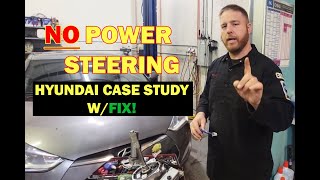
- Hard or Stiff Steering (Hyundai) — On Hyundai models where C1109 relates to the power steering system, the primary symptom is a total loss of power steering assist. 🎬 See how to diagnose and fix Hyundai power steering failure.
- Vehicle in 'Limp Mode' — On certain Nissan and Infiniti models, a C1109 code forces the engine into a fail-safe mode, severely limiting engine RPMs.
Diagnostic Flowchart

Tap your situation to follow the diagnostic path that matches what you're seeing on this code.
Common Fixes & Costs
- Replace Vehicle Battery — Parts: $150-$350, Labor: $50-$100, ~0.5 hr book time (DIY)
- Clean Battery Terminals and Ground Connections — Parts: $5-$15, Labor: $75-$150, ~0.8 hr book time (DIY)
- Replace Blown Fuse — Parts: $1-$10, Labor: $50-$120, ~0.3 hr book time (DIY)
- Replace Alternator
— Parts: $250-$600, Labor: $200-$500, ~2.5 hr book time
(Intermediate)
Nissan Versa (2012-2019): OEM - Replace ABS Control Module
— Parts: $600-$1800, Labor: $150-$400, ~2.0 hr book time
(Professional)
Nissan Murano (2003-2007): OEM
DIY vs Professional
- Replace Vehicle Battery — Beginner: True
- Clean Battery Terminals and Ground Connections — Beginner: True
- Replace Blown Fuse — Beginner: True
- Replace Alternator — Beginner: False
- Replace ABS Control Module — Beginner: False
Used vs. New Parts: Buying Guide
When a used part is worth it: For major components like an alternator or ABS module, a used part from a low-mileage vehicle is a cost-effective option for an older, lower-value car.
Donor-vehicle mileage cap: roughly under 80000 miles for the part to have meaningful remaining life.
Donor quality checklist:
- Verify the donor vehicle was not scrapped for a related electrical or braking system failure.
- For ABS modules, the part number must be an exact match.
- Avoid parts from flood-damaged vehicles or regions with heavy road salt use.
Decision logic:
- If The part is a battery → Always buy new. A used battery has an unknown history and is never reliable.
- If The part is an alternator or ABS module and a quality remanufactured unit is available → Favor the remanufactured part. It is rebuilt to OEM specs and includes a warranty.
- If The vehicle is over 10 years old and a new OEM part costs over $800 → A used or remanufactured part is an acceptable risk to keep repair costs reasonable.
Warranty tradeoff: Used parts typically have a 30-90 day warranty for the part only. Remanufactured parts offer a 1-year to limited lifetime warranty. New OEM parts offer the best warranty at the highest cost.
Worst-case if a used part fails: $300-$800 if a used part fails after installation, requiring a second labor charge and replacement part.
What Happens If You Wait — Timeline
- 0-1 month: Code C1109 appears, ABS and Traction Control lights are on. The underlying cause exists but hasn't caused further damage. ABS is disabled. (MPG impact: 0%% · Added cost: $0)
- 1-4 months: A weak battery strains the alternator, accelerating wear. An overcharging alternator damages the battery as electrolyte boils off. (MPG impact: 0-2%% · Added cost: $150-$350 (Premature battery replacement).)
- 4-8 months: Prolonged strain causes the alternator to fail. A prolonged over-voltage condition destroys the battery and blows fuses. (MPG impact: 1-3%% · Added cost: $400-$950 (Cost of a new battery plus a new alternator).)
- 8+ months: Catastrophic failure. Severe over-voltage (16V+) permanently damages multiple sensitive control modules (ECU, BCM, TCM). (MPG impact: N/A% · Added cost: $1500-$3500+ (Cost to replace fried electronic modules).)
Cost of Not Fixing It
- Immediate: Significantly increased risk of an accident. Without ABS, wheels lock during hard braking, increasing stopping distance and causing a loss of steering control. (Added cost: Potential insurance deductible or total loss of vehicle ($500+).)
- 0-3 months: If the cause is a failing alternator, it leaves you stranded without warning. A completely drained battery sustains permanent damage requiring premature replacement. (Added cost: $100-$250 for towing and a new battery.)
- 3+ months: Prolonged driving with an alternator over-voltage condition destroys sensitive electronic modules, including the ECU, transmission controller, or infotainment system. (Added cost: $500-$2000+ for diagnosis and replacement of damaged modules.)
Diagnosis Steps
- Read All Trouble Codes
Use an OBD-II scanner capable of reading Chassis (C-prefix) codes to confirm C1109. Note any other codes, such as U1000 (communication) or P0562 (low voltage), as they provide critical diagnostic direction.
Tools: OBD-II Scanner (with ABS capability) (Beginner) - Inspect and Test the Battery
Check battery terminals for corrosion and ensure tight connections. Measure battery voltage with the car off (should be 12.4-12.6V). Have a helper crank the engine; if voltage drops below 9.6V, replace the battery.
Tools: Multimeter, Terminal Cleaning Brush (Beginner) - Inspect Fuses and Ground Wires
Inspect the main ABS fuses in the under-hood fuse box. On Nissan vehicles, check the 10-amp charging system fuse in the IPDM. Follow the negative battery cable to the chassis and ensure the ground is clean and tight. Check for hidden corroded grounds under the dashboard on Nissan/Infiniti models.
Tools: Owner's Manual, Basic Hand Tools (Intermediate) - Test the Alternator and Charging System
With the engine running, measure voltage at the battery terminals. A healthy alternator produces 13.8-14.5V. Readings below 13.5V or above 15V indicate a faulty alternator or voltage regulator.
Tools: Multimeter (Beginner) - Perform a Voltage Drop Test at the ABS Module
Locate the main power and ground pins on the ABS module connector using a wiring diagram. Back-probe the power pin with the red multimeter lead and touch the black lead to the battery positive. With the key on, the reading must be under 0.5V. Repeat for the ground circuit. Higher readings confirm excessive wiring resistance.
Tools: Multimeter, Vehicle Wiring Diagram, Back-Probes (Advanced) - Conduct a Parasitic Draw Test
If the battery repeatedly dies, disconnect the negative terminal and connect a multimeter (set to Amps) in series. Wait 30 minutes for modules to sleep. A normal draw is under 50mA (0.05A). If higher, pull fuses one by one until the reading drops to isolate the draining circuit.
Tools: Multimeter with Amp setting (Advanced) - Switch Resistance Test (Ford/Mazda)
For Ford/Mazda vehicles where C1109 indicates a 'Traction Control OFF Switch' fault, disconnect the switch. Measure resistance across the terminals. It should be infinite (O.L.) when open and less than 1 ohm when pressed. Replace the switch if readings fall outside these values.
Tools: Multimeter, Basic Hand Tools (Advanced) - Test the ABS Module
If the battery, alternator, fuses, and all wiring pass testing, the ABS module is faulty. Use an advanced bi-directional scan tool to run internal self-tests on the module to confirm failure before replacement.
Tools: Advanced Bi-Directional Scan Tool (Professional)
When This Code Triggers (Freeze-Frame Conditions)
- Module Supply Voltage: 9.0 - 10.5 Volts (During engine cranking, voltage dips below the minimum threshold (e.g., 9.6V).)
- Vehicle Speed: 0 mph (Code is most often set when the vehicle is stationary and being started.)
- System Voltage (Alternator Charging): >15.0 Volts (Triggered by an alternator over-voltage condition while driving.)
Related Codes
- U1000 — This CAN communication code appears with C1109 in Nissan/Infiniti vehicles. The low voltage condition triggering C1109 causes the communication loss. Fix the voltage issue first.
- P0562 — Means 'System Voltage Low' and directly corroborates C1109. Seeing both codes strongly points to a failing battery or alternator.
- P0300 — A 'Random Misfire' code appears with C1109 because unstable voltage negatively affects ignition coils and fuel injectors. Address the voltage problem before replacing ignition components.
Climate & Environmental Factors
- Cold Weather: Low temperatures reduce a battery's cranking power. A borderline battery that works in summer will fail to provide the minimum 9.6V required during a cold start, triggering C1109.
- High Humidity and Road Salt: Salt and moisture accelerate corrosion on battery terminals and chassis ground points, creating electrical resistance that causes voltage drops.
How to Talk to a Mechanic About This Code
Say this: "I have an ABS light and a C1109 code, which indicates a voltage malfunction. Please start by testing the battery, alternator, and checking the main power and ground connections to the ABS module before looking at more expensive parts."
This signals you understand the most common causes are electrical basics, not a failed module. It directs the technician to follow a logical, cost-effective diagnostic path.
Avoid saying:
- 'My ABS light is on, can you just fix it?'
- 'I think I need a new ABS module.'
- 'Just do whatever it takes to get the light off.'
Questions to ask before authorizing the repair:
- What were the specific voltage readings for the battery at rest and during engine cranking?
- What was the alternator's charging voltage with the engine running?
- If you recommend a new module, can you show me the voltage drop test results proving the wiring is good?
- Can you show me the corroded ground wire or blown fuse you found?
Where to Take It: Dealer vs Independent vs Chain
- Dealer:
Recommended only if the issue is a known manufacturer-specific quirk or if initial diagnosis at an independent shop fails.
Best for: Vehicles under warranty., Complex manufacturer-specific versions of C1109, like Hyundai EPS issues requiring a TSB software update., Repairs requiring module programming after replacement.
Downsides: Highest labor rates., May recommend expensive OEM module replacement over diagnosing simpler wiring faults. (Typical cost: +50% vs. baseline) - Independent Shop:
Best fit for most C1109 scenarios. An experienced independent technician efficiently diagnoses the root electrical cause.
Best for: Out-of-warranty vehicles where cost is a factor., Diagnosing common causes: bad batteries, alternators, and corroded ground wires., Vehicles where C1109 is a straightforward ABS voltage issue.
Downsides: Quality is variable; look for ASE-certified technicians specializing in electrical diagnostics. (Typical cost: +0% vs. baseline) - Chain Shop:
Acceptable for a free battery test or replacing a battery after proper diagnosis elsewhere. AVOID for initial diagnosis of the C1109 code.
Best for: Simple, confirmed parts replacement like a new battery or alternator., Getting a free battery and charging system test.
Downsides: Technicians are often not equipped for in-depth electrical diagnostics like tracing bad grounds., High pressure to sell parts leads to misdiagnosis. (Typical cost: -10% vs. baseline)
When to Walk Away From the Repair
If the estimated repair cost exceeds 40-50% of the car's private-party value, consider selling or trading it in.
- Car worth $4000, fix is $2000: Walk away. A $2,000 repair represents 50% of the car's value and doesn't guarantee another part won't fail next.
- Car worth $12000, fix is $800: Fix it. An $800 repair is well below the threshold and restores a critical function.
What Scan Tool You Need for This Code
Minimum: A scanner that reads and clears Chassis (C-prefix) codes for the ABS system.
A basic $20 OBD-II reader only scans for Powertrain (P-prefix) codes. It cannot see or clear the C1109 code from the ABS module.
Budget: Topdon TopScan / ArtiDiag 600S (~$70) — Reads and clears ABS codes, shows live data for module voltage, and scans all vehicle systems.
Mid-range: Foxwell NT510 Elite / NT630 Plus (~$180) — Adds bidirectional control to run active tests on ABS components, crucial for advanced diagnostics.
Professional: Autel MaxiCOM MK808 / MK808BT (~$450) — Offers full bidirectional control and the 'ABS Auto Bleed' service function, required if replacing the ABS hydraulic unit.
Rent vs buy: Parts stores like O'Reilly Auto Parts offer free scanning services that read ABS codes. Many AutoZone locations only have basic engine code readers. Call your local store to confirm capability before making a trip.
How to Clear the Code After You Fix It
- Perform the necessary repair (e.g., replace battery, clean grounds).
- Reconnect the battery if it was disconnected.
- Use an OBD-II scanner to clear the code from the ABS module.
- Start the vehicle and ensure the ABS light does not return.
Drive cycle (~20 minutes): A specific drive cycle is not required for C1109; it returns immediately if the fault persists. However, if the battery was disconnected, a 20-minute drive cycle including city and highway driving is needed to reset emissions readiness monitors.
Readiness monitors affected: Evaporative System, Catalyst Monitor, O2 Sensor Monitor, Comprehensive Component
Before emissions retest: drive at least 50 miles to fully set monitors.
Watch out for:
- Clearing the code without fixing the underlying electrical issue results in the code returning immediately.
- Disconnecting the battery clears the code but resets all emissions readiness monitors, causing an automatic emissions test failure.
Will This Fail Emissions / State Inspection?
No — by itself this code doesn't fail OBD inspection (but it can keep readiness monitors from setting, which causes a separate fail).
- California: An illuminated ABS light does not fail the smog test. However, if the battery was disconnected for repair, incomplete OBD readiness monitors cause an automatic failure.
- New York: An illuminated ABS warning light is grounds for failing the annual safety inspection.
- Texas: An illuminated ABS light does NOT cause a failure of the state safety inspection. The inspection checks service brakes, but non-functional ABS is not a failure criterion.
Most Commonly Affected Vehicles
- Nissan 350Z / 370Z (2003-2020) — Triggered by a weak battery or poor ground connections, illuminating VDC OFF and SLIP lights. Corroded ground points under the dashboard are a known hidden cause.
- Infiniti G35 / G37 / Q50 (2003-2015) — Frequently caused by low battery voltage or poor ground connections, often appearing alongside a U1000 communication code.
- Nissan Versa (2012-2019) — Caused by a faulty alternator creating an over-voltage condition (>15V), which blows the 10A charging system fuse in the IPDM. Check this fuse before replacing the alternator.
- Nissan Murano (2003-2007) — Often related to failures in the ABS pump and hydraulic brake booster assembly. Service manuals focus on power and ground circuits to the module.
- Hyundai Elantra / Accent / Tucson (2011-2016) — CRITICAL: On these models, C1109 indicates an 'IGN Signal Error' for the Electronic Power Steering (EPS) module, NOT the ABS system. Diagnosis must focus on power steering.
- Ford Focus (2012-2018) — Appears as C1109:64, pointing to a 'Signal Plausibility Failure' in the 'Traction Control OFF' switch circuit, suggesting a stuck button or wiring fault.
Manufacturer-Specific Notes
- Nissan / Infiniti: This code is almost always related to battery voltage. The appearance of 'VDC OFF' and 'SLIP' lights alongside the ABS light is a classic sign of a weak battery or bad ground connection. Check for hidden grounds under the dash.
- Hyundai: On many Hyundai models, C1109 is defined as an 'IGN Signal Error' related to the Electronic Power Steering (EPS) module, NOT the ABS. Symptoms include a total loss of power steering.
- Ford / Mazda: On Ford and Mazda models, C1109 often points to a 'Traction Control OFF' switch circuit failure (e.g., code C1109:64). This indicates a stuck button or shorted wiring rather than a main power supply issue.
Real Owner Stories
2005 Nissan 350Z with VDC/SLIP lights
VDC OFF and SLIP lights stayed on. A scan revealed code C1109. The battery was 5 years old.
What they tried:
- Replaced the old battery, but the code returned.
- Checked alternator voltage, which was a healthy 13.8-14.4V.
- Cleaned visible ground connections in the engine bay.
- Removed the dashboard to access and clean the ground points for the ABS/VDC control unit.
Outcome: Cleaning the hidden ground connections under the dashboard resolved the issue. The C1109 code cleared and did not return.
Lesson: On Nissan/Infiniti models, if a new battery and clean engine bay grounds don't fix C1109, the root cause is often corroded grounds hidden under the dashboard.
2014 Nissan Versa with multiple warning lights
ABS, BRAKE, and BATTERY warning lights illuminated. Scan showed C1109. Owner suspected a bad alternator.
What they tried:
- Replaced the alternator with a used unit, but the problem remained.
- Tested voltage at the battery and saw a high reading of 15.4-16.0V, confirming an over-voltage condition.
- Inspected the fuse box (IPDM).
Outcome: Found a burnt 10-amp fuse for the charging system. Replacing this fuse corrected the over-voltage condition and all warning lights went out.
Lesson: In a Nissan with an over-voltage condition and C1109, always check the 10A charging system fuse in the IPDM before replacing the alternator.
2012 Hyundai Elantra with stiff steering
The Electronic Power Steering (EPS) warning light came on, and steering became very heavy. Scan tool showed code C1109.
What they tried:
- Checked battery voltage, which was slightly low (under 12.4V).
- Checked the EPS fuse in the under-dash fuse box and found it intact.
Outcome: Replacing the weak battery restored normal system voltage, clearing the C1109 'IGN Signal Error' and restoring power steering function.
Lesson: For many Hyundai models, C1109 is a power steering code. The primary symptom is loss of power steering assist. Always test the battery first.
How to Prevent This Code From Triggering
- Periodically Clean Battery Terminals and Ground Connections (Every 12 months) — Corrosion creates electrical resistance, causing voltage drops. Cleaning these points ensures the ABS module receives stable voltage.
- Test Battery Health Annually After 3 Years (Once per year) — Standard batteries last 3-5 years. Annual load testing identifies a weakening battery before it triggers voltage-sensitive codes like C1109.
- Inspect Alternator Drive Belt (Every 15,000 miles) — A loose or cracked belt slips, causing inconsistent alternator output, which triggers a C1109 code.
Frequently Asked Questions
Can I just clear the C1109 code?
You can clear the code, but if the underlying electrical problem isn't fixed, it will return immediately. If triggered by a one-time event like a jump-start, it stays off after clearing.
Why are my 'VDC OFF' and 'SLIP' lights on with the ABS light?
Traction control systems rely on the ABS module to function. When C1109 disables the ABS module due to a voltage problem, traction systems are automatically disabled as a safety measure.
Will a new battery definitely fix a C1109 code?
A new battery is the most common fix, but it is not a guarantee. If the problem is a bad alternator, corroded wiring, or a blown fuse, the code will return.
What's the difference between C1109 on a Nissan vs. a Hyundai?
On a Nissan, C1109 points to a voltage problem with the ABS module, triggering ABS/VDC lights. On a Hyundai, C1109 points to a voltage problem with the Electronic Power Steering (EPS) module, causing stiff, heavy steering.
My battery and alternator tested fine. What's next?
If the battery and charging system are healthy, inspect all ABS and charging system fuses. Next, check the main power and ground wires for the ABS module, including hidden grounds under the dashboard. Finally, perform a voltage drop test directly at the module connector before replacing the ABS module.
Could a parasitic draw cause code C1109?
Yes. A parasitic draw slowly drains the battery while the car is off. When you start the car, the low battery voltage triggers the C1109 code in the ABS module.
What is the most common misdiagnosis for C1109?
The biggest mistake is immediately replacing the expensive ABS module without performing basic electrical diagnostics. The fix is usually a new battery, cleaning a ground connection, or replacing a $5 fuse.
Key Takeaways
- Code C1109 indicates a power supply issue—typically voltage dropping below 9.6V or spiking above 15V—rather than a mechanical brake failure.
- Test your battery and alternator first, as a weak battery failing under load causes over 70% of C1109 codes.
- Inspect the 10-amp charging system fuse and clean all chassis ground connections before spending $600+ on a replacement ABS module.
- Verify your manufacturer's specific definition; C1109 disables the ABS on Nissans, but causes total loss of power steering on 2011-2016 Hyundai models.
- Expect your stopping distance to increase by at least 20% in wet conditions, as this code completely disables the Anti-lock Braking System (ABS) and Traction Control.
Helpful Videos
Shop the Parts Behind C1109
Below are the parts most often responsible for code C1109, ranked by how frequently each one is the actual culprit (per the diagnosis above). Tap any to see what we have for your vehicle.



The information in this article is provided for general reference and educational purposes only. Vehicle specifications, procedures, and part compatibility can vary by production date, trim level, and region. Always consult your vehicle's factory service manual and verify part numbers before purchasing or performing repairs. Safety-critical components such as airbags, seat belts, and braking systems should be installed by a qualified professional.
- 🧭 Diagnostic Flowchart
- 🎬 Helpful Videos
- 🛍️ Shop This Part
- What Does C1109 Mean?
- Can I Drive With C1109?
- Common Causes
- Symptoms
- Common Fixes & Costs
- DIY vs Professional
- Used vs. New Parts: Buying Guide
- What Happens If You Wait — Timeline
- Cost of Not Fixing It
- Diagnosis Steps
- When This Code Triggers (Freeze-Frame Conditions)
- Related Codes
- Climate & Environmental Factors
- How to Talk to a Mechanic About This Code
- Where to Take It: Dealer vs Independent vs Chain
- When to Walk Away From the Repair
- What Scan Tool You Need for This Code
- How to Clear the Code After You Fix It
- Will This Fail Emissions / State Inspection?
- Most Commonly Affected Vehicles
- Manufacturer-Specific Notes
- Real Owner Stories
- 2005 Nissan 350Z with VDC/SLIP lights
- 2014 Nissan Versa with multiple warning lights
- 2012 Hyundai Elantra with stiff steering
- How to Prevent This Code From Triggering
- Frequently Asked Questions
- Can I just clear the C1109 code?
- Why are my 'VDC OFF' and 'SLIP' lights on with the ABS light?
- Will a new battery definitely fix a C1109 code?
- What's the difference between C1109 on a Nissan vs. a Hyundai?
- My battery and alternator tested fine. What's next?
- Could a parasitic draw cause code C1109?
- What is the most common misdiagnosis for C1109?
- Key Takeaways
- 🎟️ Get 5% Off