

C1112 on 2017 Chevrolet Silverado: Service Trailer Brake System Causes and Fixes
On a 2017 Silverado, code C1112 triggers the 'Service Trailer Brake System' message. The most common causes are a weak battery or corrosion in the Trailer Brake Power Module connector, located on the frame rail above the spare tire. Always test the battery before replacing any parts, as this is the first step recommended in GM Technical Service Bulletins.
- Code C1112 means the Integrated Trailer Brake Control system has a fault and is disabled.
- Do NOT tow a trailer with electric brakes until this issue is fixed.
- The most likely cause is a weak battery or a corroded connector on the Trailer Brake Power Module, located above the spare tire.
- Always start your diagnosis by testing the battery's health, not just its voltage.
- Do not replace the control module unless you have confirmed all wiring, fuses, and the battery are in good condition.
What's Unique About the 2017-2017 Chevrolet SILVERADO
On this generation of Silverado (K2XX platform), the trailer brake system is known for its sensitivity to electrical issues. GM has issued multiple Technical Service Bulletins (TSBs) acknowledging that the 'Service Trailer Brake' message, often tied to code C1112, is frequently caused by simple problems like a weak battery or corrosion rather than a failed control module. The Trailer Brake Power Module (also called the TBCM or K133) is mounted on the frame rail near the spare tire, an area highly exposed to road spray. TSB #PIT5529A specifically notes that water can get into the connector if a cavity plug is missing or dislodged, causing a 'hydro-locking' effect that builds pressure and pushes the plug out, leading to terminal corrosion.
Diagnostic Flowchart
Tap your situation to follow the diagnostic path that matches what you're seeing on this vehicle.
Symptoms You May Notice
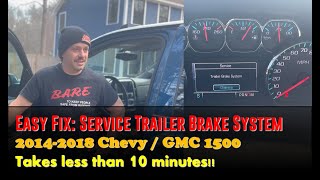
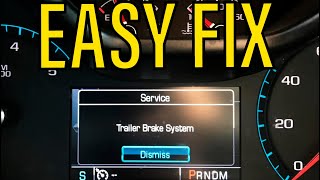
- "Service Trailer Brake System" message on the Driver Information Center (DIC).
- The integrated trailer brake controller is disabled and will not apply the trailer brakes.
- The gain adjustment on the controller will not respond.
- The message may appear intermittently at first, especially in wet or humid conditions, and then become constant.
- "Check Trailer Wiring" or "Trailer Connection Not Recognized" messages may also appear.
- Slow engine cranking or other signs of a weak battery, like dimming lights or electrical glitches.
- Replacing the Trailer Brake Power Module without first performing a professional load test on the battery and thoroughly inspecting the module connector and wiring harness for corrosion or damage. This is a common and expensive mistake, as the problem is often a simple power supply or connection issue.
Most Likely Causes
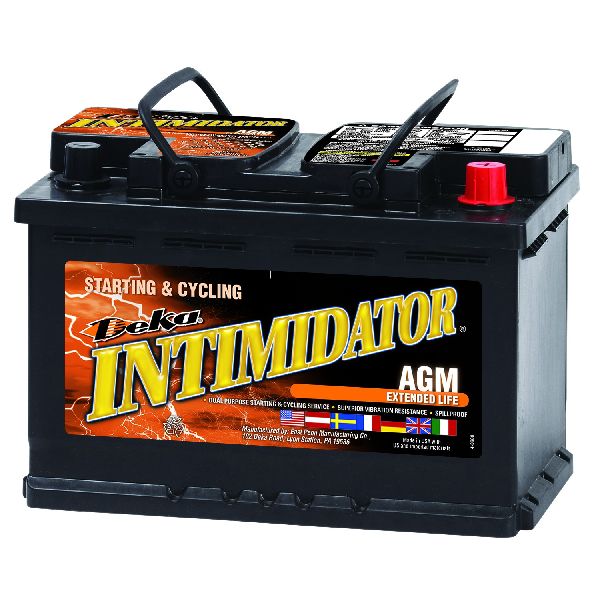
- Weak or Failing Vehicle Battery 🔴 High Probability → Shop Vehicle Battery As noted in TSB #PIT5521A and the superseding TSB #PIT5529A, the trailer brake control system is extremely sensitive to low voltage. A weak battery can cause modules to set fault codes before any significant starting issues are apparent.
How to confirm: Have the battery professionally tested with a load tester like a Midtronics GR8, as recommended by GM. A simple multimeter voltage check is often insufficient to determine the battery's health under load.
Typical fix: Replace the vehicle's battery. Ensure terminals are clean and tight.
Est. part cost: $150-$350 - Corroded Trailer Brake Power Module (TBPM) Connector 🔴 High Probability → Shop Trailer Brake Control Module TSB #PIT5529A points directly to this issue. The module (GM component K133) is located on the driver's side frame rail, above the spare tire, where it is exposed to water, salt, and road debris. Missing or dislodged cavity plugs in the connector are a primary cause of water intrusion.
How to confirm: Lower the spare tire for access. Disconnect the electrical connector from the Trailer Brake Power Module and inspect both the module's pins and the connector's terminals for green or white crusty deposits (corrosion) or any signs of moisture.
Typical fix: Clean the connector terminals with an electrical contact cleaner and a small brush. If corrosion is severe, the connector pigtail must be cut out and replaced. Apply dielectric grease to the connector pins before reconnecting to prevent future moisture intrusion.
Est. part cost: $10-$50 - Damaged Wiring Harness 🟡 Medium Probability The wiring harness running along the frame rail to the rear of the truck is susceptible to damage from road debris, improper jacking, or chafing against frame components. The dark blue wire (circuit 47) is specifically mentioned in TSBs as a circuit to inspect.
How to confirm: Visually inspect the wiring harness from the underhood fuse box back to the TBPM and the 7-pin bumper connector. Look for any breaks, chafing, melted sections, or corroded sections, particularly where the harness branches off or is secured by clips.
Typical fix: Repair the damaged section of wire using a weatherproof butt connector and heat shrink tubing. Ensure the repair is sealed against moisture.
Est. part cost: $5-$20 - Blown Fuse ⚪ Low Probability
How to confirm: Check the underhood fuse box. For a 2017 Silverado, key fuses to inspect are F19 (Trailer brake, 30A MCase), F22 (Trailer battery, 30A MCase), F34 (Left trailer stop/turn, 10A MINI), and F39 (Right trailer stop/turn, 10A MINI). A YouTube video also points to fuse #1 (a 30A J-Case fuse) as the main fuse for the trailer brake controller. 🎬 See this walkthrough for locating and checking the main fuses.
Typical fix: Replace the blown fuse with one of the identical amperage rating. If the new fuse blows immediately, it indicates a short circuit in the system that requires further diagnosis.
Est. part cost: $1-$5
Rare But Worth Checking
- Faulty Trailer Brake Power Module (TBPM): → Shop Trailer Brake Control Module While possible, this module is often replaced unnecessarily. TSB #PIT4595J notes that many returned modules are found to be fully functional. All other causes, especially battery, wiring, and grounds (like G401 on the rear frame rail), should be ruled out before replacing the module.
- Faulty In-Dash Trailer Brake Control Switch: → Shop Trailer Brake Control Module The switch on the dashboard that allows for manual application and gain adjustment can fail internally, sending faulty signals and triggering a code. However, this is less common than wiring or power module issues.
Diagnosis Steps
- Read all Diagnostic Trouble Codes (DTCs) from all vehicle modules with a professional-grade scan tool.
- Address any battery or low voltage codes first, as per TSB #PIT5521A. Professionally load test the battery's health and charge or replace it as needed.
- Clear the codes and see if C1112 returns. If it does, proceed with diagnosis.
- Inspect the underhood fuse box for any blown fuses related to the trailer brake system, specifically F1, F19, F22, F34, and F39.
- Lower the spare tire to gain access to the Trailer Brake Power Module on the driver's side frame rail.
- Disconnect the battery. Disconnect and thoroughly inspect the module's electrical connector for any signs of green or white corrosion, moisture, or damaged pins, as highlighted in TSB #PIT5529A.
- If corrosion is found, clean the terminals. If the connector or terminals are severely damaged, replace the connector pigtail. Apply dielectric grease before reconnecting.
- Inspect the wiring harness leading to the module for any visible damage, chafing, or previous poor repairs. Pay close attention to the dark blue wire (circuit 47).
- Inspect the ground connection G401 on the rear frame rail for tightness and corrosion.
- If no physical issues are found, use a multimeter to test for proper power and ground at the module connector according to the service manual specifications. With a scan tool, the TBCM Relay Feedback Signal should be between 3.2-4.1 volts.
- If power, ground, and signal circuits test good, the final step is to suspect a faulty Trailer Brake Power Module.
Parts You'll Likely Need
- Vehicle Battery — A weak battery is a primary cause of this code, as specified by GM TSBs.
Trusted brands: ACDelco, Interstate, DieHard
OEM price range: $200-$350
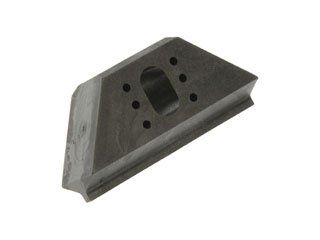
Aftermarket price range: $150-$250 - Trailer Brake Power Module
(OEM #84482243)— This module can fail, but more often its connector corrodes. It should only be replaced after ruling out all wiring and power issues.
Trusted brands: ACDelco, GM Genuine Parts
OEM price range: $70-$120
Aftermarket price range: $50-$90 - Trailer Brake Power Module Connector Pigtail
(OEM #89047377)— If the connector is too corroded to be cleaned, it must be cut out and replaced. Aftermarket versions like Dorman 645-509 are also available.
Trusted brands: ACDelco, Dorman
OEM price range: $30-$50
Aftermarket price range: $15-$30
Related Codes That Often Appear With This One
- C1113 — This code is for the Trailer Brake Control Relay Feedback Circuit High and often appears with C1112 as part of a general system fault, frequently cited together in the same TSBs.
- C1114 — This code relates to the trailer brake control output circuit. A fault in the power supply (C1112) can easily trigger a fault in the output circuit as well.
- U1505 — This is a communication code that can be set when the Trailer Brake Power Module loses power or has an internal fault, causing it to stop communicating with other modules on the vehicle network. (Mentioned in TSB #PIT5529).
Technical Service Bulletins (TSBs) & Recalls
- PIT5521A: Advises checking battery issues first when diagnosing C1112 and a Service Trailer Brake message.
- PIT5529: Notes to inspect the Trailer Brake Power Module connector for corrosion when C1112 is present.
Platform-Specific Known Issues
- TSB #PIT5521A: Communicates a diagnostic tip to address any battery issues first before performing in-depth diagnostics for a 'Service Trailer Brake Message' with DTC C1112.
- TSB #PIT5529A: Supersedes PIT5521A. Points to low battery voltage or a corroded Trailer Brake Power Module connector (due to missing/dislodged cavity plugs) as the primary causes for C1112 and a host of related codes.
- TSB #PIT4595J: Notes that many functional trailer brake modules are returned under warranty, emphasizing the need to check wiring (specifically dark blue circuit 47) and ground G401 before module replacement.
Mechanic-Grade Diagnostic Values
- TBCM Relay Feedback Signal Voltage — expected: 3.2 - 4.1 Volts. Failure: A voltage reading higher or lower than this range indicates a short to voltage, short to ground, or an open in the circuit. A higher voltage may be correctable with a software update per TSB #PIT4595J.
- Ground Circuit Resistance at TBCM — expected: < 5.0 Ohms. Failure: A reading higher than 5.0 Ohms between the ground pin at the module connector and a known good chassis ground indicates high resistance or an open in the ground circuit (G401).
- System Operating Voltage — expected: 9.5 - 17 Volts. Failure: The TBCM will set a fault if the system voltage drops below 9.5V or exceeds 17V during operation or initialization.
Hidden / Shadow Codes Worth Checking
- C1112 03: Indicates 'Trailer Brake Control Relay Low Control Circuit - Low Voltage'. This points specifically to a voltage drop, open circuit, or short to ground. (see via A professional scan tool like the GM GDS2 is required to view symptom bytes.)
- C1112 07: Indicates 'Trailer Brake Control Relay Low Control Circuit - High Voltage'. This points specifically to a short to a voltage source. (see via A professional scan tool like the GM GDS2 is required to view symptom bytes.)
Scan Tool Commands That Help
- GDS2 (GM Global Diagnostic System 2): Trailer Brake Relay Command — This is a bidirectional test that allows a technician to manually command the trailer brake relay ON and OFF. It is used to verify the integrity of the relay and the control circuit after physical inspections are complete.
- GDS2 (GM Global Diagnostic System 2): Monitor 'TBCM Relay Feedback Signal' — This data parameter should be monitored live to check for the correct voltage (3.2-4.1V). Watching this while wiggling the harness can help identify intermittent shorts or opens.
Wiring & Ground Locations
- G401 — On the driver's side rear frame rail, typically near the spare tire hoist or rear bumper.. This is the primary ground for the Trailer Brake Power Module (K133). Corrosion or looseness at this point is a very common cause of high resistance in the ground circuit, leading to code C1112.
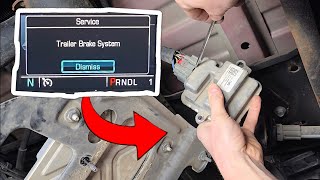
- K133 Trailer Brake Power Module Connector — On the driver's side frame rail, above the spare tire.. This connector is highly exposed to road spray. Pin 1 (Dark Blue, Circuit 47) is the power feed from the trailer brake relay, and Pin 8 (Black) is the ground (G401). Corrosion on these specific pins is the most frequent cause of C1112.
- X185 / X138 Connector — Near the underhood fuse block.. This is a major harness connector. Terminal 32 contains Circuit 47 (Dark Blue wire) for the trailer brake output. A poor connection or corrosion here can interrupt the signal from the front of the truck to the rear module.
Real Owner Repair Stories
- gm-trucks.com forum user (2017 Chevrolet Silverado 1500) — Intermittent 'Service Trailer Brake System' message, especially in wet weather. Code C1112 present.
❌ Tried (didn't work) Checking fuses., Visually inspecting wiring harness along the frame.
✅ What actually fixed it The owner lowered the spare tire, disconnected the Trailer Brake Power Module connector, and found significant green corrosion on the pins. The pins were cleaned with a terminal cleaning brush and electrical contact cleaner, dielectric grease was applied, and the connector was re-seated. The code and message did not return. - YouTube video by a professional technician (2017 Chevrolet Silverado 1500) — 'Service Trailer Brake System' message, no communication with the Chassis Control Module Auxiliary.
❌ Tried (didn't work) Checking all related fuses in the underhood fuse block (all were good)., Testing for power at the module connector (no power found on Pin 1).
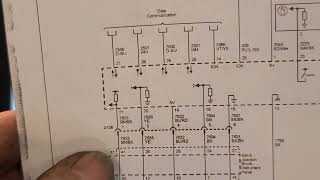
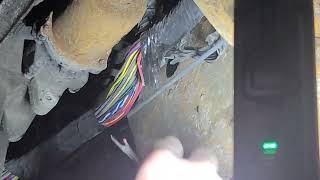
✅ What actually fixed it The technician traced the power feed wire (Circuit 2040 in this case, a red wire) from the underhood fuse block. They found a section of the wire inside the main harness near the driver-side running board motor that had corroded completely through. Repairing this section of wire by splicing in a new piece restored power to the module and fixed the issue.
When the Usual Fixes Don't Work
- In some documented cases, owners have replaced the Trailer Brake Power Module based on the code, only for the 'Service Trailer Brake System' message to return. The subsequent successful repair was often cleaning the G401 ground connection on the driver's side frame rail. This highlights the importance of TSB #PIT5521A's advice to check basic electrical systems (battery and grounds) before replacing expensive modules.
OEM Part Supersession History
23283011→85142121 (latest known)— Chain of supersessions: 23283011 -> 23402722 -> 84109401 -> 84482243 -> 85142121. These updates typically involve internal revisions for improved reliability and resistance to electrical faults.
Heads up: All parts in this chain are generally interchangeable for the specified model years. However, a new module (or a used one from another vehicle) will require programming to the vehicle's VIN using a tool like GDS2 to function correctly.
Helpful Videos
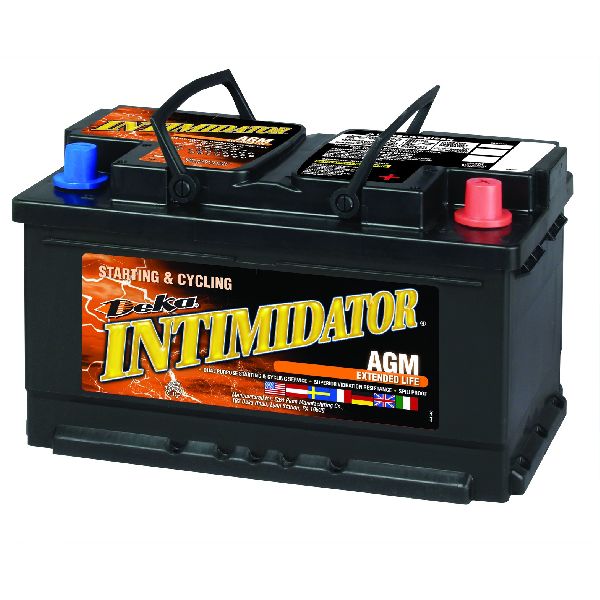
We Have This Part in Stock



The information in this article is provided for general reference and educational purposes only. Vehicle specifications, procedures, and part compatibility can vary by production date, trim level, and region. Always consult your vehicle's factory service manual and verify part numbers before purchasing or performing repairs. Safety-critical components such as airbags, seat belts, and braking systems should be installed by a qualified professional.
- Chevrolet SILVERADO:
- 🧭 Diagnostic Flowchart
- 🎬 Helpful Videos
- 🛍️ Shop This Part
- What's Unique About the 2017-2017 Chevrolet SILVERADO
- Symptoms You May Notice
- Most Likely Causes
- Rare But Worth Checking
- Diagnosis Steps
- Parts You'll Likely Need
- Related Codes That Often Appear With This One
- Technical Service Bulletins (TSBs) & Recalls
- Platform-Specific Known Issues
- Mechanic-Grade Diagnostic Values
- Hidden / Shadow Codes Worth Checking
- Scan Tool Commands That Help
- Wiring & Ground Locations
- Real Owner Repair Stories
- When the Usual Fixes Don't Work
- OEM Part Supersession History
- 🎟️ Get 5% Off