

OBD-II Code C1113: System Fault (Manufacturer Specific)
What C1113 means, why it triggers, and how to fix it
- Code C1113 triggers a 'Service Trailer Brake System' message on 2014-2018 GM trucks, but indicates a disabled Anti-lock Braking System (ABS) on Nissan and Ford vehicles.
- A weak 12-volt battery dropping below 9.5 volts during engine cranking is the primary cause of C1113 on GM trucks, requiring a professional load test before replacing any modules.
- Missing rubber cavity plugs in the GM Trailer Brake Power Module connector (located above the spare tire) allow water intrusion, causing pin corrosion that triggers this code.
- While the vehicle remains drivable, C1113 completely disables the integrated trailer brakes or ABS, increasing stopping distances by up to 24% on wet roads.
What Does C1113 Mean?
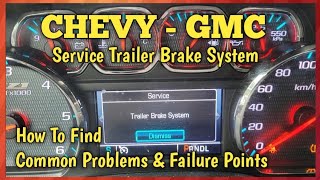
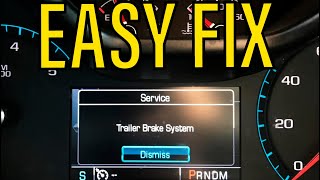
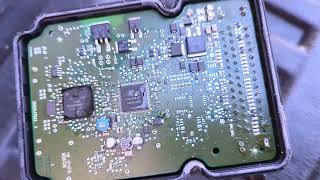
Code C1113 is a manufacturer-specific code with definitions that change by vehicle brand. On General Motors trucks and SUVs, it signals a fault in the integrated trailer brake control system, triggering a 'Service Trailer Brake System' message. 🎬 Watch: Common failure points for the GM trailer brake system. On Nissan vehicles, it points to a failed ABS G-Sensor. On Ford vans, it indicates a fault in the 4-Wheel Anti-lock Brake System (4WABS) module. On Suzuki models, it indicates a failure in the power steering torque sensor circuit. For Jaguar, it points to an internal fault within the ABS control module.
Technical definition: The SAE/ISO definition of C1113 depends on the manufacturer. For General Motors, it is 'Trailer Brake Control Relay High Control Circuit Short to Voltage' or 'Solid State Relay Enable Circuit Short to Voltage'. For Nissan, it is 'Lost Communication with Yaw Rate Sensor Module' or a 'G Sensor' fault. For Ford, it associates with the 4WABS module. For Suzuki, it is 'Torque Sensor Main And Sub Circuit Failure'. For Jaguar, it indicates a generic ABS module internal circuit failure.
Can I Drive With C1113?
Yes, But With Caution. Yes, but a key safety system is disabled. On GM trucks, you cannot safely tow a trailer with electric brakes. On other vehicles with an ABS light, your anti-lock brakes will not work in an emergency. While normal brakes function, the anti-lock feature is disabled, increasing stopping distances on slippery surfaces. NHTSA data shows ABS reduces fatal multi-vehicle crashes on wet roads by up to 24%.
Common Causes
- Weak or Failing Vehicle Battery (GM) (Very Common) — The trailer brake control module requires a stable 9.5 to 17 volts. A weak battery during engine cranking is the most common cause on GM trucks (TSB PIT5521A).
- Corroded Trailer Brake Power Module (TBPM) Connector (GM) (Very Common) — The TBPM is located above the spare tire, exposing its electrical connector (X411) to water and salt. TSB PIT5529A notes that small rubber cavity plugs often dislodge, allowing water to enter and corrode the pins, causing a short circuit.
- Failed ABS 'G' Sensor (Nissan) (Common) — On 2000-2004 Nissan Xterra and Frontier models, the internal solder joints of the G-sensor (deceleration sensor) crack from vibration and heat, causing an open circuit.
- Corroded or Damaged 7-Way Trailer Connector (GM) (Common) — The 7-way trailer plug at the rear bumper is exposed to the elements and develops corrosion or physical damage, leading to shorts that trigger the code.
- Damaged Wiring Harness (Less Common) — The wiring harness running to the rear of the truck (GM) or to a specific sensor (other makes) chafes, cuts, or corrodes, causing a short or open circuit.
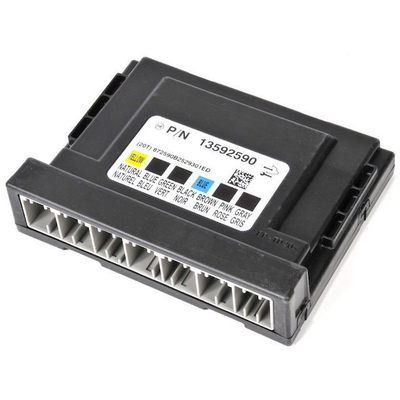
- Faulty Trailer Brake Power Module (TBPM) (GM) (Less Common) — The control module itself rarely fails but is frequently replaced by mistake. TSB PIT4595J notes GM receives many fully functional modules back from warranty repairs due to misdiagnosis of battery or wiring issues.
- Trailer Battery Voltage Higher Than Vehicle Battery (GM HD Trucks) (Less Common) — On 2020 and 2024 GM HD trucks, a connected trailer with its own charging system (solar, generator) raising its battery voltage above the truck's battery feeds back and causes a false fault (Customer Satisfaction Program N232414840).
- Faulty Trailer Brake Control Dash Switch (GM) (Rare) — The dashboard control switch assembly fails internally, sending incorrect signals to the module.
Symptoms
- 'Service Trailer Brake System' Message & Disabled Brakes (GM) — Triggers a dashboard warning message and completely disables the integrated trailer brake controller, preventing manual or automatic trailer braking.
- ABS Light On — Illuminates the Anti-lock Braking System (ABS) warning light on the dashboard for Nissan, Ford, and Jaguar vehicles.
- Slow Engine Crank (GM) — Because a weak battery is the primary cause, the engine turns over more slowly than usual when starting.
- Power Steering Warning Light (Suzuki) — Illuminates the electronic power steering warning light due to a torque sensor fault.
Diagnostic Flowchart
Tap your situation to follow the diagnostic path that matches what you're seeing on this code.
Common Fixes & Costs
- Replace Vehicle Battery — Parts: $150-$350, Labor: $50-$100, ~0.5 hr book time (DIY)
- Clean or Replace TBPM Connector (X411) — Parts: $25-$50, Labor: $100-$200, ~1.5 hr book time (Intermediate)
- Replace Trailer Brake Control Module (TBCM/TBPM) — Parts: $80-$150, Labor: $100-$250, ~1.0 hr book time (Professional)
- Replace ABS G-Sensor (Nissan) — Parts: $100-$200, Labor: $150-$300, ~1.5 hr book time (Intermediate)
- Replace Trailer Brake Control Dash Switch (GM) — Parts: $25-$80, Labor: $50-$125, ~0.8 hr book time (DIY)
Used vs. New Parts: Buying Guide
When a used part is worth it: Buying used electronic modules is rarely advisable unless the part is discontinued (like the Nissan G-Sensor). Source discontinued parts from reputable salvage yards with return policies.
Donor-vehicle mileage cap: roughly under 50000 miles for the part to have meaningful remaining life.
Donor quality checklist:
- Verify the exact part number matches; superseded numbers may not be compatible.
- Avoid parts from vehicles in flood-damaged or heavy rust-belt areas.
- Demand a 30-90 day warranty to protect against dead-on-arrival parts.
Decision logic:
- If The part is an electronic control module and new parts are available → Buy a new OEM or high-quality aftermarket part. The risk of a used module requiring dealer-only programming outweighs the cost savings.
- If The part is a simple mechanical component or switch with no programming → A used part from a low-mileage donor is a budget-friendly option.
- If The part is discontinued and essential for vehicle operation (e.g., Nissan G-Sensor) → A used part is the only choice. Test it immediately upon receipt.
Warranty tradeoff: Used parts typically have a 30-day warranty. New aftermarket parts carry a 1-year to limited lifetime warranty. New OEM parts carry a 1-2 year warranty.
Worst-case if a used part fails: $250-$500 if a used electronic module is faulty, wasting labor and non-refundable programming fees.
What Happens If You Wait — Timeline
- Immediate: Code sets and warning light appears. The associated safety system (trailer brakes on GM, ABS on Nissan/Ford) is immediately disabled. (MPG impact: 0%% · Added cost: $0. The primary cost is the immediate loss of a critical safety function.)
- 1-3 months: If caused by corrosion, the fault is intermittent, appearing after rain. Repeated exposure worsens corrosion from surface tarnish to crusty buildup. (MPG impact: 0%% · Added cost: $0-$50. The initial problem is fixable with a free battery test or contact cleaner.)
- 3-9 months: Severe corrosion eats away at the metal connector pins and deforms the plastic housing from heat caused by high resistance. (MPG impact: 0-1%% · Added cost: $150-$300. The connector pigtail requires replacement, involving cutting and splicing wires.)
- 9+ months: Unchecked corrosion damages the control module's internal circuits and wicks up the copper wiring under the insulation. (MPG impact: 0-2%% · Added cost: $500-$1000+. Requires a new control module, programming, and extensive wiring harness repairs.)
Cost of Not Fixing It
- Immediate: Complete loss of integrated trailer brakes (GM) or ABS (Nissan/Ford), creating a significant safety hazard and violating towing laws. (Added cost: Potential fines for improper equipment, or the catastrophic cost of an accident.)
- 1-6 months: Continued exposure of a corroded connector to moisture damages the wiring harness, requiring an expensive harness repair instead of a simple pigtail replacement. (Added cost: $300-$600)
- 6+ months: Ignoring the warning normalizes driving with a critical safety system disabled, leading to complacency and heightened accident risk. (Added cost: $10,000+)
Diagnosis Steps
- Read the Trouble Codes
Use an OBD-II scanner capable of reading Chassis ('C') codes to confirm C1113 is present. Note any other codes, as they provide important clues (e.g., C1112 on GM, C1185 on Ford).
Tools: OBD-II Scanner (with ABS/Chassis capability) (Beginner) - Test the Vehicle Battery (GM)
Have the battery professionally tested using a load tester (like a Midtronics GR8). A battery showing 12.6 volts can still fail under load, dropping below the TBCM's 9.5V minimum threshold during cranking. Test both batteries on HD trucks.
Tools: Professional Battery Tester (Beginner) - Inspect the TBPM Connector and Cavity Plugs (GM)
Lower the spare tire to access the TBPM on the frame crossmember. Disconnect the main electrical connector (X411) and inspect for green/white corrosion, moisture, bent pins, or missing rubber cavity plugs (TSB PIT5529A).
Tools: Socket Set, Flashlight, Safety Glasses (Intermediate) - Inspect the 7-Pin Trailer Connector
Check the truck's 7-pin trailer connector at the bumper for any signs of corrosion, moisture, or damage inside the plug.
Tools: Flashlight, Small Brush (Beginner) - Check System Fuses
Consult your owner's manual to locate and check any fuses related to the trailer brake control system or ABS. A blown fuse disables the module.
Tools: Fuse Puller or Pliers (Beginner) - Test the G-Sensor Circuit (Nissan)
Access the G-sensor under the center console. Using a multimeter, check for a 5V power supply and ground. The signal wire must read 2.5-2.7V when the sensor is level. Incorrect voltage points to a faulty sensor or wiring issue.
Tools: Multimeter, Trim Removal Tools, Socket Set (Advanced) - Perform Voltage Drop Test on Ground Circuit (GM)
Reconnect the battery and TBPM. Set a multimeter to DC volts. Connect the black probe to the battery negative and back-probe the red probe to the ground pin at the TBPM connector (Pin 16, Black wire). With the key on, voltage must be under 0.3V. Higher readings confirm high resistance in the ground circuit.
Tools: Multimeter, T-pins or Back-probe kit (Advanced) - Test the 'Solid State Relay Enable' Circuit (GM)
Access the TBPM connector X411. With the key on, back-probe the Yellow/Black wire at Pin 33. A reading near battery voltage (12V+) confirms the short circuit flagged by the module. A normal reading is 3.2-4.1V.
Tools: Multimeter, T-pins or Back-probe kit (Advanced)
When This Code Triggers (Freeze-Frame Conditions)
- System Voltage: < 9.5 Volts (During engine crank, especially in cold weather with a weak battery.)
- Event Time: Key-On or Startup (The fault is most often detected during the module's initial self-test.)
- Vehicle Speed: 0 mph (Fault often sets before the vehicle is in motion.)
- Fault Status: Intermittent (The fault appears after rain or a car wash and disappears when dry, pointing to a moisture/corrosion issue.)
Related Codes
- C1112 — A fault in the trailer brake control relay 'low' control circuit. C1113 is for the 'high' control circuit. Both are triggered by identical root causes like low voltage or corrosion.
- C1114 — Relates to the trailer brake control output circuit (power sent to the trailer), not the relay control circuit. C1114 points to a problem with the trailer's wiring, whereas C1113 is an internal truck-side fault.
- C111B — Another general trailer brake system code grouped with C1113 in GM service bulletins. It is diagnostically identical to C1113, pointing to the same battery and corrosion causes.
- C1185 — On Ford E-Series vans, this 'ABS Power Relay Output Circuit Failure' code often appears with C1113, indicating a single internal failure within the ABS module.
Climate & Environmental Factors
- Cold Weather: Cold temperatures reduce a battery's cranking power, causing system voltage to drop below the 9.5V minimum required by the GM Trailer Brake Control Module during startup, triggering a false C1113 fault.
- Road Salt & Humidity: Saltwater acts as an electrolyte that accelerates the deterioration of metal pins and wires. This is the primary cause of failure for the exposed GM trailer brake module connector (X411) and the 7-pin bumper plug.
How to Talk to a Mechanic About This Code
Say this: "For a GM truck: 'I have a Service Trailer Brake System message with code C1113. Per GM's TSBs, please perform a professional load test on the battery and inspect the module connector above the spare tire for corrosion before recommending a new module.' For a Nissan: 'My ABS light is on with a C1113 code. I suspect a failed G-Sensor; please check the sensor and its circuit.'"
This signals you have done your research, directs the technician to the most common fixes first, and helps avoid paying for an expensive and unnecessary module replacement.
Avoid saying:
- 'Just fix whatever's wrong'
- 'My warning light is on, can you look at it?'
- 'The internet said to replace this part'
Questions to ask before authorizing the repair:
- For GM: Did the battery pass a load test? Can you show me a photo of the connector if it's corroded?
- For GM: If you are recommending a new module, did you confirm the ground circuit is good and verify that programming is required?
- For Nissan/Ford: If you are recommending a new ABS module, what tests confirmed it has failed internally?
- What is the warranty on this specific repair, including both parts and labor?
Where to Take It: Dealer vs Independent vs Chain
- Dealer:
Use only if warranty applies or if a new GM module and programming are confirmed as the necessary final step.
Best for: Vehicles under warranty, Confirmed need for a new GM Trailer Brake Control Module requiring dealer-specific programming software (GDS2).
Downsides: Highest labor rates, May default to expensive module replacement without checking for simple causes like a weak battery or corrosion. (Typical cost: +50% vs. baseline) - Independent Shop:
Best overall fit. A good independent shop is the ideal partner for diagnosing and repairing the most likely causes of C1113.
Best for: Out-of-warranty vehicles where cost is a factor, Diagnosing common C1113 causes: battery health, connector corrosion (GM), and sensor failures (Nissan)., Handling module rebuilds for older Fords or installing customer-supplied alternative parts.
Downsides: Quality varies greatly; ensure the shop has strong electrical diagnostic capabilities., May lack the specific software to program a new GM module. (Typical cost: +0% vs. baseline) - Chain Shop:
Good for the initial battery test on a GM vehicle, but AVOID for any further diagnosis or repair of the C1113 code.
Best for: Free battery testing and selling/installing a new battery for the GM fault.
Downsides: Technicians are unlikely to be skilled in diagnosing chassis electrical faults beyond reading a code., High risk of misdiagnosis and being sold unnecessary parts. (Typical cost: -10% vs. baseline)
When to Walk Away From the Repair
If the estimated repair cost exceeds 40-50% of your vehicle's current private-party value, consider selling or trading it in as-is.
- Car worth $2500, fix is $1100: Walk away. A nearly $1000 repair for an ABS module on a 1996 Ford van worth $2500 is not economical.
- Car worth $22000, fix is $550: Fix it. A $550 repair for a new trailer brake module and programming on a 2015 Silverado restores a key safety feature.
- Car worth $4000, fix is $450: Fix it. A $450 repair to replace the discontinued G-Sensor on a 2002 Nissan Xterra is a reasonable cost to restore the ABS safety system.
What Scan Tool You Need for This Code
Minimum: A scanner that reads and clears Chassis ('C') codes, specifically for the ABS or Body Control Module. Basic engine-only code readers will not see this code.
A standard $20 'Check Engine Light' reader only communicates with the engine control module (ECM). Code C1113 is stored in the ABS module or Trailer Brake Control Module.
Budget: BlueDriver Pro (~$99) — Connects to your smartphone and reads/clears enhanced codes from systems like ABS and trailer brakes for most major brands.
Mid-range: Foxwell NT510 Elite (~$180) — Offers manufacturer-specific diagnostics. Reads live data from the module, crucial for watching sensor voltage (Nissan) or module communication status (GM).
Professional: Autel MaxiCOM MK808BT (~$550) — Provides full bi-directional control. Allows a user to actively command the ABS pump or trailer brake controller to function, confirming if the module or wiring is the problem.
Rent vs buy: Auto parts stores offer free loaner tools, but they typically only read engine codes. You must verify their loaner scanner reads 'ABS' or 'Chassis' codes. If not, buying a budget pick like the BlueDriver is the most cost-effective entry point.
How to Clear the Code After You Fix It
- Perform the physical repair (e.g., replace battery, clean connector).
- Use a compatible OBD-II scan tool to erase the Chassis trouble codes.
- Perform the system's self-test drive cycle.
Drive cycle (~15 minutes): Start the vehicle and idle for 2 minutes. Drive for at least 10 minutes at speeds above 25 mph. The warning message must remain off. Intermittent faults require multiple drive cycles to confirm the fix.
Readiness monitors affected: This is a Chassis ('C') code and does not directly affect emissions readiness monitors.
Watch out for:
- Disconnecting the battery clears the warning light temporarily, but does not erase the stored hard code.
- Replacing the Trailer Brake Control Module without programming it to the vehicle's VIN will not resolve the issue.
Will This Fail Emissions / State Inspection?
No — by itself this code doesn't fail OBD inspection (but it can keep readiness monitors from setting, which causes a separate fail).
- California: Will not fail. The California Bureau of Automotive Repair specifies that only an illuminated Check Engine Light causes emissions test failure. An ABS light does not fail the inspection.
- New York: Will not fail. NYS DMV regulations state that an inoperative anti-lock brake system or an illuminated ABS warning light are not causes for rejection.
- Texas: Will not fail. Texas Department of Public Safety inspection criteria state that an Anti-lock (ABS) lamp will not be cause for rejection.
Most Commonly Affected Vehicles
- Chevrolet Silverado 1500/2500/3500 (2014-2018) — Extremely common issue on the K2XX platform related to weak batteries and corroded connectors. HD models may have dual batteries, both of which require testing.
- GMC Sierra 1500/2500/3500 (2014-2018) — Shares the same K2XX platform and components as the Silverado, making it equally prone to C1113 from battery and connector issues.
- Chevrolet Tahoe / Suburban (2015-2018) — These SUVs use the same trailer brake control system as the trucks and suffer from low battery voltage and corrosion at the rear module connector.
- GMC Yukon / Yukon XL (2015-2018) — Highly susceptible to the 'Service Trailer Brake System' message from code C1113 due to shared architecture with GM trucks.
- Nissan Xterra / Frontier (2000-2004) — C1113 is commonly caused by an internal failure of the ABS 'G-Sensor' due to failing solder joints. The original part is discontinued.
- Ford E-Series / Econoline Van (1994-1996) — Indicates a fault in the 4-Wheel ABS module and often appears with code C1185. Replacement modules are difficult to source.
- Suzuki Ignis / Splash / Swift (2000-2014) — C1113 points to a 'Torque Sensor Main And Sub Circuit Failure' within the electronic power steering system, unrelated to brakes.
- Jaguar XK8, X-Type, S-Type (1997-2008) — ABS faults are common due to cracked solder joints inside the ABS control module, particularly for the pump motor's power pins.
Manufacturer-Specific Notes
- General Motors: The Trailer Brake Control Module requires 9.5V to 17V to operate. GM issued multiple TSBs advising technicians to test the battery's health before any other diagnostics for C1112, C1113, C1114, and C111B.
- Nissan: The G-Sensor (47930-7Z300) is discontinued. A VW/Audi sensor (part #1J0907651) from a Jetta or Beetle of the same era is a direct, compatible replacement.
- General Motors: A trailer battery with a higher state of charge than the truck battery feeds voltage back on 2020 and 2024 HD models, triggering a false C1113 and disabling the trailer brakes.
- Ford: On 1994-1996 E-Series vans, the 4WABS module suffers internal circuit board failure at the solder joints for the power relay, causing C1113 and C1185 simultaneously.
- Jaguar: ABS faults on late 90s/early 00s models stem from cracked solder joints on the ABS control module's circuit board where the main power pins connect, rather than failed sensors.
Real Owner Stories
2015 GMC Sierra 1500 - Easy Fix
Owner reported the 'Service Trailer Brake System' message appeared intermittently on cold mornings. They never tow a trailer.
Outcome: The battery failed a load test. Installing a new H7-AGM battery for $250 cleared the code permanently.
Lesson: On GM trucks, a weak battery is the most common cause. Always get the battery professionally load-tested before buying any parts (GM TSB PIT5521A).
2014 Chevy Silverado 2500HD - Misdiagnosis Story
'Service Trailer Brake System' message was constantly on. A local shop diagnosed a failed Trailer Brake Control Module (TBCM).
Outcome: The owner lowered the spare tire and found the main connector (X411) filled with green corrosion. Cleaning the connector with electrical cleaner and applying dielectric grease permanently fixed the issue.
Lesson: Do not replace the TBCM module until you personally inspect the battery and the module connector above the spare tire. Misdiagnosis is extremely common.
2002 Nissan Xterra - Unusual Root Cause
The ABS light was on with code C1113. The vehicle's ABS was not working.
Outcome: The owner installed a VW/Audi sensor (part #1J0907651), which is a direct, available replacement, restoring the ABS function.
Lesson: Searching forums specific to your make and model saves significant time and money, especially for discontinued parts with community-discovered cross-compatibility.
1996 Ford E-150 - Paired Code Diagnosis
ABS light illuminated immediately upon driving. A scan revealed codes C1113 and C1185.
Outcome: This combination indicates a common internal failure of the 4WABS hydraulic control unit circuit board. The owner sent the module to a specialist for a $250 board-level rebuild.
Lesson: When multiple codes appear together, they point to a single root cause. Researching the specific combination prevents replacing functional parts.
How to Prevent This Code From Triggering
- Apply Dielectric Grease to Connectors (Once every 1-2 years, or anytime disconnected) — Coating the pins of the GM TBPM connector (X411) and the 7-pin trailer plug seals out moisture, preventing corrosion.
- Test Battery Health Annually (Every autumn before winter) — An annual professional load test identifies a weakening battery before cold weather causes voltage drops that trigger false C1113 codes.
- Use a Battery Tender/Maintainer (If the vehicle sits for more than 1-2 weeks) — A tender keeps the battery at an optimal charge, preventing the low voltage conditions that trigger false codes on startup.
- Inspect Connector Cavity Plugs (GM) (Once a year) — Checking that all unused pin cavities in the X411 connector are sealed prevents the direct water intrusion path identified in GM TSB PIT5529A.
Frequently Asked Questions
Can I still tow a trailer with code C1113?
No. On GM vehicles, this code completely disables your integrated trailer brake controller. Towing heavier loads without trailer brakes is unsafe and illegal in most jurisdictions.
Why did the 'Service Trailer Brake System' light come on if I never tow a trailer?
The system runs a self-check every time you start the vehicle. A weak battery or a corroded connector triggers the fault even if a trailer has never been attached.
I replaced the Trailer Brake Control Module and the code is still there. What now?
This is a common misdiagnosis, as the module itself rarely fails. The actual cause is usually a weak battery or a corroded connector above the spare tire. GM TSB PIT4595J confirms many functional modules are returned under warranty due to this error.
Can a problem with the trailer itself cause the C1113 code on my truck?
Generally, no. A fault on the trailer side is a classic cause for code C1114. C1113 relates to the truck's internal relay control, except on some newer GM HD trucks where a trailer's charging system feeds voltage back.
What is a TBPM connector 'cavity plug' and why is it important?
A cavity plug is a small rubber seal inserted into any unused pinhole in an electrical connector. TSB PIT5529A highlights that missing plugs on the GM trailer brake module connector allow water intrusion, causing the corrosion that triggers C1113.
Is it safe to drive with the ABS light on due to a C1113 code on my Nissan?
Your normal brakes will work, but the anti-lock function is disabled, increasing the risk of wheel lock-up and skidding during hard stops on slippery surfaces.
Does a new Trailer Brake Control Module need to be programmed?
Yes. On modern GM vehicles, the Trailer Brake Control Module must be programmed to your vehicle's VIN by a shop with GM's GDS2 software.
What is the difference between a TBCM and a TBPM?
TBCM stands for Trailer Brake Control Module, the generic industry term. TBPM stands for Trailer Brake Power Module, GM's specific term for the frame-mounted control unit.
Can a bad wheel speed sensor cause code C1113?
No, not for the common GM trailer brake fault. On vehicles where C1113 indicates a general ABS module fault (Ford/Jaguar), a failing wheel speed sensor theoretically contributes, but typically sets its own specific code first.
Key Takeaways
- Code C1113 triggers a 'Service Trailer Brake System' message on 2014-2018 GM trucks, but indicates a disabled Anti-lock Braking System (ABS) on Nissan and Ford vehicles.
- A weak 12-volt battery dropping below 9.5 volts during engine cranking is the primary cause of C1113 on GM trucks, requiring a professional load test before replacing any modules.
- Missing rubber cavity plugs in the GM Trailer Brake Power Module connector (located above the spare tire) allow water intrusion, causing pin corrosion that triggers this code.
- While the vehicle remains drivable, C1113 completely disables the integrated trailer brakes or ABS, increasing stopping distances by up to 24% on wet roads.
Helpful Videos
Shop the Parts Behind C1113
Below are the parts most often responsible for code C1113, ranked by how frequently each one is the actual culprit (per the diagnosis above). Tap any to see what we have for your vehicle.





The information in this article is provided for general reference and educational purposes only. Vehicle specifications, procedures, and part compatibility can vary by production date, trim level, and region. Always consult your vehicle's factory service manual and verify part numbers before purchasing or performing repairs. Safety-critical components such as airbags, seat belts, and braking systems should be installed by a qualified professional.
- 🧭 Diagnostic Flowchart
- 🎬 Helpful Videos
- 🛍️ Shop This Part
- What Does C1113 Mean?
- Can I Drive With C1113?
- Common Causes
- Symptoms
- Common Fixes & Costs
- Used vs. New Parts: Buying Guide
- What Happens If You Wait — Timeline
- Cost of Not Fixing It
- Diagnosis Steps
- When This Code Triggers (Freeze-Frame Conditions)
- Related Codes
- Climate & Environmental Factors
- How to Talk to a Mechanic About This Code
- Where to Take It: Dealer vs Independent vs Chain
- When to Walk Away From the Repair
- What Scan Tool You Need for This Code
- How to Clear the Code After You Fix It
- Will This Fail Emissions / State Inspection?
- Most Commonly Affected Vehicles
- Manufacturer-Specific Notes
- Real Owner Stories
- 2015 GMC Sierra 1500 - Easy Fix
- 2014 Chevy Silverado 2500HD - Misdiagnosis Story
- 2002 Nissan Xterra - Unusual Root Cause
- 1996 Ford E-150 - Paired Code Diagnosis
- How to Prevent This Code From Triggering
- Frequently Asked Questions
- Can I still tow a trailer with code C1113?
- Why did the 'Service Trailer Brake System' light come on if I never tow a trailer?
- I replaced the Trailer Brake Control Module and the code is still there. What now?
- Can a problem with the trailer itself cause the C1113 code on my truck?
- What is a TBPM connector 'cavity plug' and why is it important?
- Is it safe to drive with the ABS light on due to a C1113 code on my Nissan?
- Does a new Trailer Brake Control Module need to be programmed?
- What is the difference between a TBCM and a TBPM?
- Can a bad wheel speed sensor cause code C1113?
- Key Takeaways
- 🎟️ Get 5% Off