

C1113 on 2015-2018 GMC Yukon: Service Trailer Brake System Causes & Fixes
This code almost always points to a problem with the trailer brake system's power supply or its related components. Before replacing any parts, fully charge and load test the vehicle's battery and inspect the Trailer Brake Power Module (TBPM) and its connector near the spare tire for corrosion. These two issues account for the vast majority of C1113 faults on this platform.
- Code C1113 on a 2015-2018 GMC Yukon is almost always related to an electrical power supply issue for the trailer brake system.
- Do not replace any parts until you have had your vehicle's battery professionally tested. A weak battery is the most common trigger for this code.
- The second most likely cause is corrosion in the Trailer Brake Power Module connector, located above the spare tire.
- Do not tow a trailer with electric brakes until this issue is resolved, as the trailer's brakes will not function.
- Avoid immediately replacing the in-dash control switch; it is rarely the source of the problem.
What's Unique About the 2015-2018 Gmc YUKON
On this generation of GM trucks and SUVs (K2XX platform), the trailer brake control system is notoriously sensitive to the vehicle's overall electrical health. GM has issued multiple Technical Service Bulletins (TSBs) that directly link codes like C1113 to low battery voltage or corrosion on modules located under the vehicle. Unlike other vehicles where this might immediately suggest a faulty control switch, on the Yukon, the diagnostic process must start with the battery and the rear-mounted Trailer Brake Power Module (TBPM). The TBPM's location above the spare tire makes it highly susceptible to water and debris, a well-documented failure point.
Diagnostic Flowchart
Tap your situation to follow the diagnostic path that matches what you're seeing on this vehicle.
Symptoms You May Notice
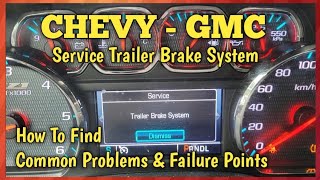
- "Service Trailer Brake System" message on the Driver Information Center (DIC)
- "Check Trailer Wiring" message on the DIC
- Trailer brakes do not engage when the vehicle's brakes are applied
- Inability to adjust trailer brake gain using the dash controller
- Slow engine crank may be noticed alongside the message, indicating a weak battery.
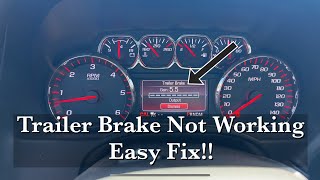
- The trailer brake gain output on the DIC does not register when manually activated
- Replacing the in-dash trailer brake control switch. This switch (gain control and manual actuator) rarely fails and is not the cause of C1113. The problem is almost always with the power supply or the module near the rear of the vehicle. One owner confirmed that replacing the switch did not fix the issue, which was later resolved by replacing a blown fuse. 🎬 Watch: How a simple fuse check can solve the issue.
Most Likely Causes
- Weak or Failing Vehicle Battery 🔴 High Probability → Shop Vehicle Battery As detailed in TSB #PIT5521A and later merged into #PIT5529A, the trailer brake control system on this platform is highly sensitive to low voltage conditions. A weak battery can cause these DTCs to set during engine cranking when system voltage drops.
How to confirm: Use a multimeter to check battery voltage (should be ~12.6V engine off, ~14.2V+ engine running). For a definitive test, have the battery's state of health checked with a professional carbon pile load tester or a digital tester like the Midtronics GR8, as recommended by GM.
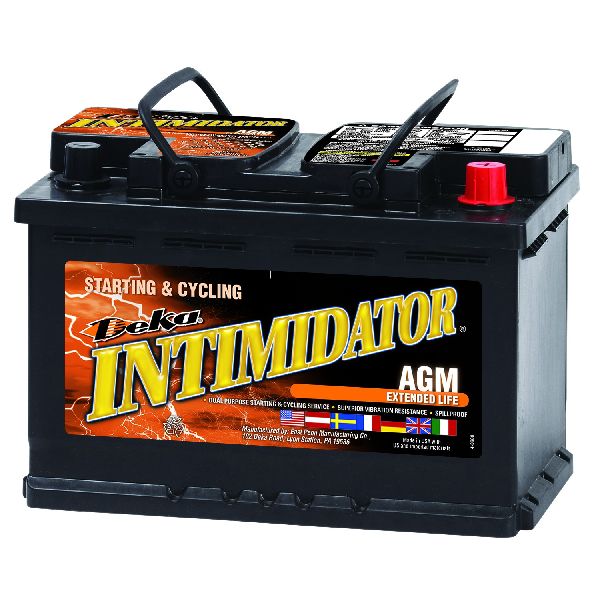
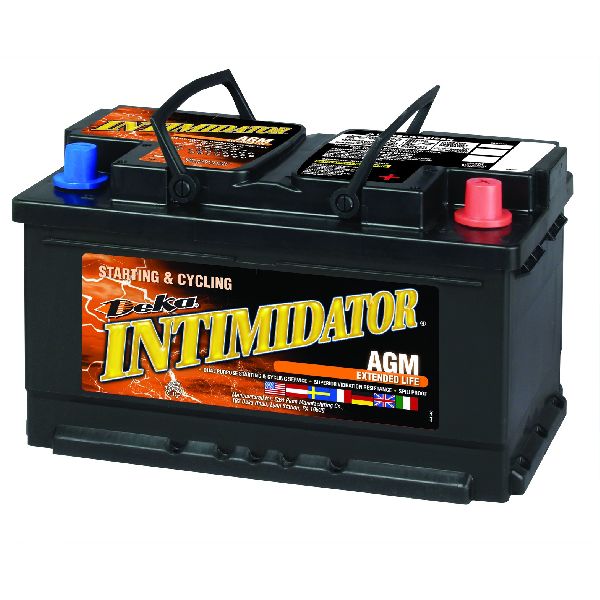
Typical fix: Replace the vehicle battery with a high-quality AGM battery of the correct group size.
Est. part cost: $150-$350 - Corroded Trailer Brake Power Module (TBPM) Connector 🔴 High Probability → Shop Trailer Brake Control Module The TBPM (GM component K133) is located above the spare tire, exposing it to water, salt, and road grime. TSB #PIT5529A specifically calls out water intrusion from missing or dislodged cavity plugs in the connector, leading to terminal corrosion. Forum users consistently report this as a primary failure point.
How to confirm: Lower the spare tire to access the module. Disconnect the electrical connector (a red locking tab must be disengaged first). Inspect both the harness side and the module side for any green or white crust (corrosion), moisture, or bent pins. Pay close attention to the rubber cavity plugs ensuring they are all present and seated.
Typical fix: Clean the connector terminals with an electrical contact cleaner and a small brush. Apply dielectric grease to the connector seal before reassembly. If corrosion is severe, the connector pigtail (e.g., GM Service Connector 19329472) and/or the module itself will need to be replaced.
Est. part cost: $20-$250 - Poor Battery Cable Connections or Grounds 🟡 Medium Probability → Shop Vehicle Battery Related to the low voltage issue, high resistance in battery cables or ground straps can mimic a weak battery. These vehicles have several key ground points on the frame and body that are exposed to the elements and can corrode.
How to confirm: Visually inspect all battery cable ends for corrosion. Physically check that the connections at the battery terminals, underhood fuse block, and main engine/body grounds are tight. A key ground location for the trailer brake system is G401, on the rear of the frame near the trailer harness.
Typical fix: Disconnect the battery. Disassemble, clean all contact surfaces with a wire brush or sandpaper until shiny, and re-tighten all connections to the proper torque specification. Apply a corrosion inhibitor. Replace cables if corrosion is excessive.
Est. part cost: $5-$300 - Faulty Trailer Brake Power Module (TBPM) ⚪ Low Probability → Shop Trailer Brake Control Module While less common than connector or battery issues, the module itself can fail internally due to moisture intrusion or electronic failure. This is often the final step after ruling out all other causes.
How to confirm: This is typically diagnosed by exclusion. If the battery is good, the connector is clean, all fuses are good, and power/ground tests at the connector are normal, the module is the likely culprit. A bi-directional scan tool can sometimes directly communicate with the module to confirm its status.
Typical fix: Replace the Trailer Brake Power Module. The replacement is physically simple (usually three nuts) after lowering the spare tire. Note that some replacement modules may require programming by a dealer or qualified shop, although many users report plug-and-play success.
Est. part cost: $100-$250
Rare But Worth Checking
- Damaged Wiring Harness: A wire in the harness leading to the TBPM could be chafed or broken. This is less common than a bad connection right at the module but is possible, especially if the vehicle has been modified, driven in harsh off-road conditions, or has been in an accident.
- Blown Fuse: Check the underhood fuse block for fuses related to 'Trailer Brake' or 'TRL B/U'. Specifically, on some models, fuses F1, F2, F14, F15, F16, and F17 in the underhood block are related to the trailer system. A short in the trailer wiring itself can cause these fuses to blow.
Diagnosis Steps
- Read all stored DTCs from all modules using a scan tool capable of reading Chassis (C) and Communication (U) codes.
- Begin by testing the vehicle's battery. Ensure it has a full charge (~12.6V) and passes a load test. Address any battery issues first, as per TSB #PIT5521A and #PIT5529A.
- Inspect the positive and negative battery terminals, as well as the main power connections at the underhood fuse block, for tightness and corrosion. Clean and tighten as needed.
- Inspect the main body and frame ground connections. A key location is ground G401 on the rear frame rail near the trailer harness.
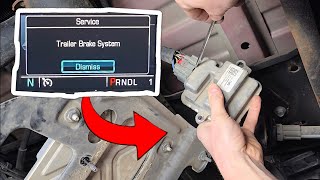
- Lower the spare tire to gain access to the Trailer Brake Power Module (TBPM).
- Disconnect the electrical connector from the TBPM. Carefully inspect both the harness side and the module side for any signs of moisture, dirt, or corrosion (white or green powder).
- If corrosion is found, clean the terminals using electrical contact cleaner and a small brush. Ensure all cavity plugs are present and seated in the connector to prevent future water intrusion. Apply dielectric grease before reconnecting. 🎬 See how to inspect and clean the rear module connector.
- If the connector is clean and the battery is good, use a multimeter to verify power and ground at the TBPM connector based on the vehicle's wiring diagram.
- If all external checks pass, the Trailer Brake Power Module itself is the most likely suspect and should be replaced.
Parts You'll Likely Need
- Trailer Brake Power Module
(OEM #85073617)— This module, located above the spare tire, can fail due to moisture and corrosion. It is the central component for controlling trailer brake power. Part number 85073617 supersedes 23104453, 23114650, and 23337305.
Trusted brands: ACDelco, GM Genuine
OEM price range: $120-$180
Aftermarket price range: $80-$150 - AGM Vehicle Battery — A weak battery is a primary cause of this code on the GMC Yukon, as specified by GM TSBs. An AGM (Absorbent Glass Mat) battery is recommended for these vehicles.
Trusted brands: ACDelco, DieHard, Odyssey
OEM price range: $200-$400
Aftermarket price range: $150-$350
Related Codes That Often Appear With This One
- C1112 — This code for 'Trailer Brake Control Relay Low Control Circuit' is often set alongside C1113 due to a shared power or ground issue.
- C1114 — This code relates to the trailer brake output circuit and can appear with C1113 if there are widespread electrical issues in the trailer brake system.
- C111B — Another common companion code related to the trailer brake control system, often triggered by the same low voltage or corrosion issues.
- U1556 — A communication code that can be triggered when the Trailer Brake Power Module is malfunctioning or has a poor connection.
- U1505 — A communication code that can be triggered when the Trailer Brake Power Module is malfunctioning or has a poor connection.
Technical Service Bulletins (TSBs) & Recalls
- PIT5529A: Service Trailer Brake Message With DTC's C1112, C1113, C1114, C111B, U1556 and/or U1505. Points to corroded terminals on the Trailer Brake Power Module connector or low battery voltage. This TSB consolidates and updates PIT5521A.
- PIT5521A: Diagnostic Tip - Service Trailer Brake Message with DTC C111B, C1112, C1113, C1114. Advises checking battery state of health first before performing any in-depth diagnostics.
Platform-Specific Known Issues
- TSB #PIT5529A: This is the most critical document for this issue. It combines previous TSBs and explicitly states the two main causes: low battery voltage and water intrusion into the Trailer Brake Power Module connector due to missing or dislodged cavity plugs. It advises checking the battery with a Midtronics tester before any other diagnostics and inspecting the TBPM connector.
- TSB #PIT5521A: This earlier bulletin specifically highlights that a "Service Trailer Brake Message" with codes including C1113 can be caused by low battery voltage, potentially noticed as a slow crank. It strongly advises addressing battery health first.
- Real-World Forum Experience: A thread on TahoeYukonForum.com from a 2015 Yukon Denali owner describes getting the message, not towing anything, and wanting to resolve the annoying warning. One user confirms that replacing the module under the truck fixed the issue for a time, corroborating the common failure point.
Mechanic-Grade Diagnostic Values
- Ground circuit resistance at TBPM connector — expected: Less than 5.0 Ohms between the ground circuit terminal and a clean chassis ground.. Failure: A reading higher than 5.0 Ohms indicates an open or high resistance in the ground circuit.
- B+ Voltage at TBPM connector — expected: A test lamp should illuminate when connected between the B+ circuit terminal (Terminal F) and ground.. Failure: If the test lamp does not illuminate, it indicates an open or short in the power feed circuit from the underhood fuse.
- Control Circuit Voltage at TBPM connector (Terminals A and C) — expected: 3.2 - 4.1 Volts with the key on, engine off.. Failure: A reading outside this range suggests a short to ground, short to voltage, or an open/high resistance in the control circuit from the main chassis module.
- Device Voltage Reference at controlling module (CCM/BSCM) — expected: 4.8 - 5.2 Volts.. Failure: A reading outside this range will set DTC C0870 and indicates an internal module or reference circuit fault.
Scan Tool Commands That Help
- GDS2 (GM Dealer Scan Tool): CCM/BSCM Data Display -> 'Trailer Brake Type' — Use this to verify if the truck correctly identifies a connected trailer as 'Electro-magnetic', 'Electro-over hydraulic brakes', or 'Undefined' (when no trailer is connected). An incorrect reading can point to a communication or wiring issue.
- GDS2 (GM Dealer Scan Tool): CCM/BSCM Data Display -> 'Trailer Brake Control Output Circuit' — This parameter directly shows the status of the main trailer brake wire (Circuit 47). It will display 'Okay', 'Short to Ground', or 'Short to Power', providing a clear direction for electrical diagnosis without needing to probe wires immediately.
Wiring & Ground Locations
- K133 — Above the spare tire, mounted to the frame.. This is the Trailer Brake Power Module (TBPM). Its connector is a primary failure point for corrosion and water intrusion, directly causing C1113 and related codes.
- Circuit 47 — Dark Blue wire running from the TBPM (K133) to Pin 2 of the 7-way trailer connector at the bumper.. This is the main trailer brake control output circuit. While C1113 is a relay control circuit code, faults on Circuit 47 (like a short) can cause system-wide issues and trigger multiple codes.
- G401 — On the rear of the vehicle frame, near the trailer harness breakout.. This is a key chassis ground for the trailer brake system. A poor connection at this point can cause high resistance, leading to intermittent faults and various trailer brake system codes.
- X411 — The main electrical connector at the Trailer Brake Power Module (K133).. This is the specific connector that must be inspected for corrosion and tested for voltage/ground when diagnosing C1113. TSBs point to missing cavity plugs in this connector as a root cause of water intrusion.
Real Owner Repair Stories
- YouTube channel '59 Motorsports' (2014-2018 GM Truck/SUV (specific vehicle was a Denali)) — "Service Trailer Brake" message on the dash.
❌ Tried (didn't work) Replaced the in-dash trailer brake control switch assembly.
✅ What actually fixed it Found and replaced a blown 30-amp fuse (Fuse #2 in the underhood fuse block) which was for the 'trailer battery system'. This cleared the code and restored function. - YouTube channel 'Fix It All' (2015+ GM SUV) — "Service Trailer Brake" message on the dash, manual activation not working.
❌ Tried (didn't work) Initially replaced the in-dash switch, which did not solve the problem.
✅ What actually fixed it Lowered the spare tire, disconnected the Trailer Brake Power Module connector, found no visible corrosion but cleaned it with electrical cleaner anyway, reconnected it, and the system began working correctly. The final diagnosis was a poor connection at the module.
OEM Part Supersession History
23104453, 23114650, 23337305→85073617— Standard part evolution, integrating new materials and technologies.
Heads up: No known incompatibilities; 85073617 is the correct service replacement for all previous numbers on the specified vehicles.N/A→19329472— This is the service part number for the mating connector (pigtail) for the Trailer Brake Power Module.
Heads up: This 16-way connector is required if the original harness connector is damaged by severe corrosion and needs to be replaced.
Model Year Variations Within This Range
- 2015-2018: The primary control module that communicates with the Trailer Brake Power Module (K133) may have different names depending on the model year and vehicle options. It can be referred to as the Chassis Control Module (CCM, K38), Chassis Control Module Auxiliary (K38A), or Brake System Control Module (BSCM, K160). This is important when consulting wiring diagrams or navigating scan tool menus.
Helpful Videos
We Have This Part in Stock



The information in this article is provided for general reference and educational purposes only. Vehicle specifications, procedures, and part compatibility can vary by production date, trim level, and region. Always consult your vehicle's factory service manual and verify part numbers before purchasing or performing repairs. Safety-critical components such as airbags, seat belts, and braking systems should be installed by a qualified professional.
- Gmc YUKON:
- 🧭 Diagnostic Flowchart
- 🎬 Helpful Videos
- 🛍️ Shop This Part
- What's Unique About the 2015-2018 Gmc YUKON
- Symptoms You May Notice
- Most Likely Causes
- Rare But Worth Checking
- Diagnosis Steps
- Parts You'll Likely Need
- Related Codes That Often Appear With This One
- Technical Service Bulletins (TSBs) & Recalls
- Platform-Specific Known Issues
- Mechanic-Grade Diagnostic Values
- Scan Tool Commands That Help
- Wiring & Ground Locations
- Real Owner Repair Stories
- OEM Part Supersession History
- Model Year Variations Within This Range
- 🎟️ Get 5% Off