

OBD-II Code C1119: Manufacturer-Specific Chassis Fault
What C1119 means, why it triggers, and how to fix it
- Code C1119 is manufacturer-specific: it means trailer brake failure on GM trucks, active suspension failure on Land Rovers, and CAN bus communication loss on Mazdas.
- For GM trucks, inspect the 7-pin trailer connector and frame grounds for corrosion before spending $300+ on a new Trailer Brake Control Module.
- On Land Rovers, a C1119 code requires a mandatory hydraulic system bleed using a specialized scan tool to remove trapped air before replacing any $1,000+ suspension parts.
- Do not replace the ABS module on a Mazda with a C1119 code; test the CAN bus network resistance at the DLC (target 60 Ohms) to locate the communication breakdown.
What Does C1119 Mean?
C1119 is a manufacturer-specific code with entirely different definitions based on your vehicle. For Land Rover, it signals a hydraulic pressure problem in the active suspension. For GM trucks, it indicates a fault in the trailer brake control system. On Mazda vehicles, it points to a communication error between the engine and traction control modules. For Nissan or Ford, it indicates an internal failure of the ABS actuator.
Technical definition: The official SAE/OBD-II definition for C1119 is not standardized. Its meaning is assigned by the vehicle manufacturer. The most common definitions are: * **Land Rover:** C1119-09 (Hydraulic Pressure) or C1119-62 (Hydraulic Pressure - Algorithm Based Failure) related to the Dynamic Response / Active Roll Control system. The -09 suffix indicates low pressure, while -62 suggests a sensor plausibility or signal error. * **General Motors (Chevrolet/GMC):** C1119 00 - Trailer Brake Control Relay Feedback Circuit. This indicates the Trailer Brake Control Module (TBCM) detects a short to ground, an open, or a short to voltage on the relay's feedback circuit. * **Mazda:** TCS Transfer Input Signal / Engine control system, torque reduction inhibit signal line. This indicates a loss of critical engine data (RPM, throttle position) from the Powertrain Control Module (PCM) via the CAN bus. * **Ford:** Internal ABS module circuit failure, communication issue, or a fault with the input/output speed sensor signal. * **Nissan:** ABS Actuator and Electric Unit (Control Unit) internal fault, requiring replacement of the ABS module. * **Hyundai:** Faulty Downhill Brake Control (DBC) switch or a problem in the ABS/ESC control unit.
Can I Drive With C1119?
Yes, But With Caution. Driving is possible, but with significant safety compromises. For GM trucks, the trailer brake controller is disabled, dramatically increasing stopping distances when towing. For Land Rovers, the active suspension is offline, causing excessive body roll and increasing rollover risk during evasive maneuvers. Drive cautiously directly to a repair facility.
Common Causes
- Corroded or Damaged Wiring/Connectors (GM) (Very Common) — On GM trucks, the trailer brake wiring harness and 7-pin connector are exposed to the elements and frequently fail due to water intrusion and salt corrosion.
- Contaminated Hydraulic Fluid or Air in System (Land Rover) (Very Common) — Internal failure of the hydraulic pump (fine grey metallic particles) or actuator seals (black rubbery sludge) releases debris that clogs the valve block filter. Air entering the lines from leaks or improper service causes pressure drops. Using incorrect fluid also degrades seals and causes contamination.
- Faulty Trailer Brake Control Relay (GM) (Common) — The relay controlling the trailer brakes fails internally, causing feedback circuit errors. This is an inexpensive, plug-and-play part often replaced as a first diagnostic step.
- Poor Ground Connection (All Vehicles) (Common) — A corroded or loose ground wire causes difficult-to-diagnose electrical issues. For GM trailer brake systems, the TBCM ground on the frame rail near the spare tire is a frequent failure point.
- Faulty ABS/TCS Module (Ford/Nissan) (Common) — For Ford and Nissan, C1119 points directly to an internal hardware failure of the ABS control module or the integrated actuator unit, requiring complete replacement.
- Faulty Dynamic Response Valve Block or Actuator (Land Rover) (Common) — The hydraulic valve block directing fluid to the active stabilizer bars fails internally due to contamination or wear. A faulty actuator causes pressure drops identifiable via a leak-down test.
- Faulty Trailer Brake Control Module (TBCM) (GM) (Less Common) — The main computer for the trailer brake system fails due to moisture exposure above the spare tire. On some Suburbans, it is integrated with the Fuel Pump Control Module (FPCM).
- Powertrain Control Module (PCM) or CAN Bus Fault (Mazda) (Less Common) — The traction control system is not receiving correct signals from the engine computer. This points to a deeper issue with the PCM or the CAN bus communication network, not the brake hardware.
Symptoms
- Traction Control (TCS), ABS, or Dynamic Stability Control (DSC) Light On — The most common symptom across all makes. The light is labeled TCS, DSC, or shows an icon of a skidding car.
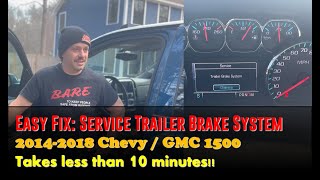
- 'Service Trailer Brake System' Message (GM) 🎬 Watch: How to fix the service trailer brake system message. — The driver information center displays a warning, and the integrated trailer brake controller is disabled, showing no gain adjustment.
- 'Suspension Fault' or 'Dynamic Response Fault' Message (Land Rover) — A red or amber warning appears on the instrument cluster, indicating the active roll control system is offline.
- Fluid Overflowing from Suspension Reservoir (Land Rover) — After shutting the engine off, fluid pushes out of the Dynamic Response reservoir cap. This is a definitive sign of air trapped in the hydraulic system.
- Increased Body Roll When Cornering (Land Rover) — With the Dynamic Response system disabled, the vehicle leans noticeably in turns, mimicking a standard suspension.
- Dead Instrument Cluster Gauges (Mazda) — In severe CAN communication failures, the instrument cluster loses engine and vehicle speed signals, causing gauges to drop to zero and the battery light to illuminate.
Diagnostic Flowchart
Tap your situation to follow the diagnostic path that matches what you're seeing on this code.
Common Fixes & Costs
- Repair Damaged Trailer Wiring Harness or 7-Pin Connector (GM) — Parts: $20-$100, Labor: $150-$300, ~1.5 hr book time (Intermediate)
- Replace Trailer Brake Control Relay (GM) — Parts: $40-$80, Labor: $50-$100, ~0.5 hr book time (DIY)
- Flush and Bleed Dynamic Response System (Land Rover) — Parts: $80-$180, Labor: $300-$600, ~2.5 hr book time (Professional)
- Replace Trailer Brake Control Module (TBCM) (GM) — Parts: $150-$400, Labor: $250-$550, ~1.0 hr book time (Intermediate)
- Replace ABS Module / Actuator Assembly (Ford/Nissan) — Parts: $500-$1500, Labor: $200-$400, ~2.0 hr book time (Professional)
- Replace Dynamic Response Valve Block (Land Rover) — Parts: $400-$1800, Labor: $400-$700, ~2.7 hr book time (Professional)
Used vs. New Parts: Buying Guide
When a used part is worth it: For electronic modules like a GM TBCM or a Ford/Nissan ABS module, a used part from a reputable salvage yard is a cost-effective option for older vehicles. Match part numbers exactly.
Donor-vehicle mileage cap: roughly under 100000 miles for the part to have meaningful remaining life.
Donor quality checklist:
- Verify the donor vehicle's VIN to ensure compatibility.
- Inspect connectors for corrosion or damage.
- For Land Rover hydraulic parts, avoid parts from vehicles with known system contamination.
- Used electronic modules require professional programming to your vehicle's VIN.
Decision logic:
- If The part is a simple relay or wiring pigtail → Buy new aftermarket; the cost is low and ensures reliability.
- If The part is a complex electronic module (TBCM, ABS) for a vehicle over 10 years old → A used part is a reasonable risk to save money, provided it can be programmed.
- If The part is a Land Rover hydraulic component (valve block, pump) → Favor new or professionally remanufactured parts due to the high risk of failure from contamination.
Warranty tradeoff: Used parts typically come with a 30-90 day warranty. New aftermarket parts offer 1-year to limited lifetime warranties. New OEM parts carry a 1-2 year warranty.
Worst-case if a used part fails: $300-$600 if a used electronic or hydraulic part fails after installation, requiring repeat labor and a new part.
What Happens If You Wait — Timeline
- Immediate: GM: 'Service Trailer Brake System' message appears. Land Rover: 'Suspension Fault' message appears. The relevant system is disabled. (Added cost: $0)
- 1-3 months (GM): A persistent short-to-ground in the trailer wiring harness continues to send fault signals to the Trailer Brake Control Module (TBCM). (Added cost: $250-$550 if the constant electrical fault damages the internal circuits of the TBCM, requiring module replacement.)
- 1-6 months (Land Rover): Driving with contaminated fluid or air in the lines causes accelerated wear. Clogged filters and valves strain the hydraulic pump. (Added cost: $1500-$4000 if neglect leads to the failure of the hydraulic pump or valve block.)
- 6+ months: Ignored warning lights lead to a failed state safety inspection. A minor wiring or fluid issue becomes a major repair due to consequential damage to modules or hydraulic components. (Added cost: $500-$4000+, depending on the vehicle and extent of damage.)
Cost of Not Fixing It
- Immediate: GM: Complete loss of trailer braking ability. Land Rover: Disabling of active suspension leads to excessive body roll and reduced stability. (Added cost: Potential for accident-related costs.)
- 1-6 months: For Land Rover: Driving with air in the hydraulic system or contaminated fluid causes accelerated wear on the expensive hydraulic pump and valve block. (Added cost: $1500-$4000 if the pump or valve block fails due to neglect.)
- 6+ months: For GM: A persistent electrical short in the trailer wiring harness damages the TBCM itself, turning a wiring repair into a module replacement. (Added cost: $250-$550 for a new TBCM plus programming.)
Diagnosis Steps
- Identify Vehicle & Read Manufacturer-Specific Codes
The meaning of C1119 is entirely manufacturer-dependent. Use an advanced scan tool to pull the full DTC, including the 2-digit suffix (e.g., C1119-09 for Land Rover or C1119-00 for GM).
Tools: Advanced OBD-II Scan Tool (Intermediate) - Visual Inspection of Wiring, Connectors, and Fluid
For GM trucks, inspect the wiring at the TBCM (above the spare tire) and the 7-pin trailer connector for green corrosion or frayed wires. For Land Rovers, remove the Dynamic Response reservoir cap and inspect the fluid. Fine grey metallic particles indicate a failing pump; black sludge indicates failing seals.
Tools: Flashlight, Clean lint-free cloth (Beginner) - Check Fuses and Relays
Inspect all fuses related to the Trailer Brake Control Module (GM), Dynamic Response System (Land Rover), or ABS/TCS system. For GM, swap the trailer brake relay with a known good one as a quick diagnostic test.
Tools: Fuse puller or needle-nose pliers (Beginner) - Check for Technical Service Bulletins (TSBs)
Search for TSBs related to C1119 for your specific vehicle. Land Rover has TSB LTB00057v5/2014 regarding contamination and bleed procedures, and GM has Customer Satisfaction Program N232414840 for false shorts on HD trucks.
Tools: Smartphone or Computer (Beginner) - Pro-Tip: GM TBCM Pinpoint Voltage Test
For GM C1119-00, test the relay feedback circuit. Disconnect the trailer brake control relay. With ignition ON, test voltage between terminal C (Tan wire) of the relay connector and a known good ground. A reading of 3.2-4.1 volts is normal. Below 3.2V indicates a short to ground/open; above 4.1V indicates a short to voltage. If normal, the TBCM is faulty.
Tools: Multimeter, Service Manual/Wiring Diagram (Advanced) - Pro-Tip: Land Rover Pressure & Leak-Down Test
Perform a guided hydraulic system bleed procedure using a Land Rover scan tool. Next, perform an actuator leak-down test (TSB LTB00057NAS5) by pressurizing the system and monitoring for a pressure drop exceeding 5 Bar in two minutes, indicating a leaking actuator.
Tools: Land Rover-specific Scan Tool (e.g., SDD, IIDTool) (Advanced) - CAN Bus Network Diagnosis (Mazda)
On Mazdas, C1119 is a symptom of communication breakdown. Check for 'P' (powertrain) or 'U' (network) codes. Focus on the PCM and CAN network wiring. Measure resistance between CAN High and CAN Low pins at the DLC; it should be approximately 60 Ohms with the battery disconnected.
Tools: Advanced OBD-II Scan Tool, Multimeter (Advanced)
When This Code Triggers (Freeze-Frame Conditions)
- Ignition Status: ON (The fault is typically checked during the module's power-on self-test.)
- Battery Voltage: 9.5-17V (The system requires normal battery voltage to run diagnostics; the code sets if a fault is detected within this range.)
- Vehicle Speed: Any (For GM, the 'Service Trailer Brake System' message appears at key-on, even when parked. For Land Rover, the fault triggers at idle or while driving.)
- Engine RPM (Land Rover): 600-800 RPM (On some Range Rover models, a C1119-09 for low pressure triggers specifically at idle when RPMs are lowest.)
Related Codes
- C1B11-62 — On Land Rovers, this code for the Pressure Control Valve is stored alongside C1119. C1119 indicates a general pressure problem, while C1B11 points specifically to the regulating valve.
- C1112 / C1114 — On GM trucks, C1119 relates to the relay's feedback circuit, C1112 to the relay's control circuit, and C1114 to the brake solenoid's control circuit. Differentiate them by testing specific TBCM pins.
- P-series & U-series codes (Mazda) — On Mazdas, C1119 is accompanied by powertrain ('P') or communication ('U') codes. C1119 is triggered by a loss of communication with the PCM, which must be fixed first.
- U0434 (Land Rover) — Indicates 'Invalid data received from dynamic response module'. Other systems recognize the Dynamic Response module is malfunctioning, confirming the fault lies within that system.
Climate & Environmental Factors
- Road Salt & Humidity: Salt spray and moisture accelerate corrosion on the exposed trailer wiring harness, 7-pin connector, and frame-mounted TBCM on GM trucks. Dielectric grease is a critical preventative measure.
- Cold Weather: Land Rover Dynamic Response fluid (STC50519) is specifically a 'Cold Climate' fluid. Incorrect fluid thickens excessively in low temperatures, causing slow system response and pressure faults.
- Low Engine RPM (Idle): On 2013-2017 Range Rover (L405) models, a C1119-09 fault for low hydraulic pressure triggers specifically when the vehicle stops and engine RPM is lowest, often due to a sensor plausibility issue.
How to Talk to a Mechanic About This Code
Say this: "I have a C1119 code. For my GM truck, please inspect the rear trailer harness, connector, and grounds for corrosion before quoting a new TBCM. For my Land Rover, please check the Dynamic Response fluid for contamination and perform a system bleed before quoting a valve block. For my Mazda, please focus on CAN network diagnosis and check for 'U' codes."
This signals to the technician that you understand the common, less-expensive failure points for your specific vehicle. It directs them away from expensive module replacements and toward the true root causes (wiring, fluid, air).
Avoid saying:
- 'Just fix the C1119 code.'
- 'My trailer brake/suspension light is on, can you look at it?'
- 'I think I need a new ABS module.'
Questions to ask before authorizing the repair:
- For GM: Did you find corrosion on the harness or test the relay and ground circuit? What were the voltage readings?
- For Land Rover: Did you find metal or rubber debris in the fluid reservoir? Was the system bleed procedure successful?
- For Mazda: Which other 'U' or 'P' codes were present with the C1119?
- Will the new module require programming, and is that included in the quote?
- Can you show me the damaged wiring or contaminated fluid that justifies the repair?
Where to Take It: Dealer vs Independent vs Chain
- Dealer:
Best for: Land Rover repairs requiring proprietary tools (Dynamic Response bleed)., Vehicles still under warranty., Complex module programming that an independent shop cannot perform.
Downsides: Highest labor rates., Defaults to replacing expensive modules rather than repairing wiring. (Typical cost: +50% vs. baseline) - Independent Shop:
Best overall fit, but requires vetting. An independent shop specializing in your vehicle's brand (or auto electrics for GM/Mazda) combines expertise with lower costs.
Best for: GM trailer brake issues (wiring, grounds, relays)., Land Rover repairs IF they are a brand specialist with the correct diagnostic tools., Out-of-warranty vehicles where cost is a major factor.
Downsides: A general mechanic lacks the specific knowledge or tools for Land Rover systems., Diagnostic skill varies significantly. (Typical cost: +0% vs. baseline) - Chain Shop:
AVOID. The complexity and vehicle-specific nature of code C1119 guarantees a high likelihood of an incorrect and expensive repair at a chain shop.
Best for: Simple, unrelated repairs like tire changes or oil services.
Downsides: Technicians lack experience with manufacturer-specific chassis faults like C1119., High risk of misdiagnosis, leading to unnecessary replacement of expensive parts. (Typical cost: -10% vs. baseline)
When to Walk Away From the Repair
If the total estimated repair cost for the C1119 fault exceeds 40-50% of your vehicle's current private-party value, seriously consider selling or trading in the vehicle as-is.
- Car worth $12000, fix is $350: Fix it. The repair for a common GM wiring issue is a small fraction of the truck's value.
- Car worth $6000, fix is $2200: Borderline. A $2,200 repair for a Land Rover valve block is 37% of the vehicle's value. Get a second opinion and assess the car's overall condition.
- Car worth $3000, fix is $1600: Walk away. The repair cost for a complex Mazda CAN bus issue is over 50% of the car's value. It is not an economical repair.
What Scan Tool You Need for This Code
Minimum: A scanner that reads manufacturer-specific codes from chassis modules (ABS, TBCM, ARC). A basic engine code reader will NOT see code C1119.
This is a chassis ('C') code. A basic $20 scanner shows 'No Codes Found' while your ABS light is on. For Land Rover, a simple reader cannot perform the essential hydraulic bleed procedure.
Budget: BlueDriver Pro (~$100) — Reads and clears enhanced codes from ABS and transmission modules on most GM and Ford vehicles. It lacks the bidirectional controls needed for advanced testing or the Land Rover bleed function.
Mid-range: Autel MaxiCOM MK808 / Foxwell NT510 Elite (~$150-450) — Offers full-system diagnostics and bidirectional control. These tools command relays for testing (GM) and perform service functions like ABS bleeding.
Professional: GAP Diagnostics IIDTool (for Land Rover) / Autel MaxiSys MS906 (~$500-1200) — The GAP IIDTool provides full dealer-level control for Land Rovers, including the critical guided bleed procedure. The Autel MS906 provides comprehensive bidirectional diagnostics and coding for any make.
Rent vs buy: For a one-time GM wiring diagnosis, a parts store loaner tool reading ABS codes is sufficient. For a Land Rover C1119, the required hydraulic bleed function is not available on rental tools; you must buy a capable scanner.
How to Clear the Code After You Fix It
- Reconnect battery negative terminal(s).
- Use an OBD-II scan tool to clear all DTCs from the relevant module (TBCM, DRCM, ABS).
- For Land Rover, perform the scan tool-guided system bleed procedure.
- Perform the specific drive cycle to confirm the fix.
Drive cycle (~20 minutes): For GM, a normal drive cycle of 20-30 minutes with varied speeds is sufficient. For Land Rover, cycle the suspension through all height settings, then drive over varied surfaces to ensure the Dynamic Response system activates.
Readiness monitors affected: This is a chassis code ('C') and does not directly affect emissions readiness monitors.
Watch out for:
- Simply clearing the code with a scanner does not fix the problem; the warning light returns immediately if the underlying electrical or hydraulic fault remains.
- Forgetting to program a new GM TBCM or Ford/Nissan ABS module prevents it from working.
- Failing to perform the mandatory hydraulic bleed procedure on a Land Rover after replacing a component guarantees the fault will return.
Will This Fail Emissions / State Inspection?
Yes — this code typically fails an OBD-II emissions inspection.
- California: While C1119 is a chassis code, an illuminated Malfunction Indicator Lamp (Check Engine Light) for any reason is an automatic failure.
- New York: New York's safety inspection includes checking ABS and stability control warning lights. An illuminated ABS or traction control light causes a safety inspection failure.
- Texas: In emissions-testing counties, an illuminated Check Engine Light results in failure. Statewide, an illuminated ABS warning light results in a safety inspection failure.
Most Commonly Affected Vehicles
- Land Rover Range Rover Sport (2006-2013) — Highly prone to C1119 due to issues with the Dynamic Response system's hydraulic lines, fluid, and valve block. Refer to TSB LTB00057NAS5.
- Chevrolet Silverado 2500/3500 HD (2007-2014) — Commonly experiences C1119 related to the integrated trailer brake controller. The TBCM is vulnerable to water damage above the spare tire.
- GMC Sierra 2500/3500 HD (2007-2014) — Shares the same platform and trailer brake control system as the Silverado, exhibiting the same C1119 faults caused by wiring or bad grounds.
- Mazda 6 (2004-2008) — Sets C1119 due to CAN communication errors between the PCM and the ABS/TCS module, often accompanied by 'U' network codes.
- Land Rover Range Rover (L405) (2013-2017) — Sets a C1119-09 fault for low hydraulic pressure specifically at idle when engine RPMs are lowest.
- Ford F-150 / F-Series Super Duty (2009-2014) — C1119 points to an internal failure of the ABS module, requiring module repair or replacement.
- Nissan Titan / Armada (2004-2015) — Indicates an internal fault within the ABS actuator and control unit, necessitating replacement of the unit.
- Hyundai Santa Fe / Tucson (2007-2012) — Associated with a faulty Downhill Brake Control (DBC) switch or a problem in the ABS/ESC control unit.
- Chevrolet Suburban / Tahoe (2007-2014) — Shares the trailer brake system with HD trucks. Failure of the integrated TBCM/FPCM module triggers the C1119 code.
Manufacturer-Specific Notes
- Land Rover: The system is highly sensitive to air locks, causing the fluid reservoir to overflow after engine shutdown. TSB SSM64917 mandates a full system bleed with a diagnostic tool before replacing parts.
- General Motors: The 'Service Trailer Brake System' message appears even without a trailer connected. GM issued Customer Satisfaction Program N232414840 for 2020-2024 HD trucks where a high-voltage trailer battery causes a false short.
- Mazda: C1119 is a 'ghost' code indicating the TCS module is not receiving data from the engine computer (PCM). Diagnosis must focus on the PCM and CAN network, not the brake system.
- Ford / Nissan: Unlike GM or Land Rover, C1119 strongly indicates an internal, non-serviceable failure of the ABS control module/actuator assembly, requiring complete unit replacement.
Real Owner Stories
2008 Chevy Silverado 2500HD - Easy Fix
Owner bought the truck used with the 'Service Trailer Brake System' message constantly on. The truck had 150,000 miles.
What they tried:
- A previous shop had already replaced the Trailer Brake Control Module (TBCM) but the code returned.
- The owner first checked the 30A fuse under the hood, which was good.
- Next, they replaced the trailer brake control relay on the frame rail, a $40 part.
Outcome: Replacing the relay fixed the issue immediately. The 'Service Trailer Brake System' message disappeared and did not return.
Lesson: On GM trucks, always start with the cheapest parts. A faulty relay or blown fuse is a common cause for C1119 and much cheaper than replacing the TBCM module.
2014 Range Rover L405 - Misdiagnosis Story
Owner experienced a 'Dynamic Response Fault' message with code C1119-09 (Hydraulic Pressure). The fault only appeared when coming to a complete stop at idle.
What they tried:
- A diagnostic scan tool showed the system passed all self-tests, and the vehicle handled normally.
- The owner assumed a pressure drop at low RPM was the cause.
- Instead of replacing the expensive pump or valve block, they investigated the sensor circuit.
Outcome: The owner wired a 1000-ohm resistor into the pressure sensor circuit to slightly increase the voltage reading sent to the control module. This tricked the computer into thinking idle pressure was 2 Bar higher, preventing the fault from triggering at a stop.
Lesson: On Land Rovers, C1119 is sometimes a sensor plausibility issue, not a major hardware failure. If the fault only occurs at idle, investigate sensor readings before replacing hydraulic components.
2006 Mazda 6 - Unusual Root Cause
Vehicle came in with the Check Engine Light, TCS light, and Battery light on. The speedometer and tachometer were dead. Scan tool showed C1119 and could not communicate with the PCM.
What they tried:
- Technician initially suspected a failed PCM or ABS module.
- Further diagnosis revealed other communication ('U') codes were present.
- Tracing the CAN bus network wiring led to the discovery of a poor connection at the steering position sensor.
Outcome: Repairing the poor connection at the steering position sensor restored communication on the CAN network. This cleared the C1119 code and allowed the gauges to function correctly.
Lesson: On a Mazda, C1119 is a 'ghost code' indicating a communication breakdown on the CAN network. Always look for other 'U' codes and diagnose the network itself, not the ABS/TCS parts.
How to Prevent This Code From Triggering
- Apply Dielectric Grease to GM Trailer Connector (Once per year, or anytime the connector is unplugged) — Dielectric grease is a non-conductive, waterproof sealant. Applying it to the 7-pin connector prevents moisture and road salt from causing the corrosion that triggers C1119.
- Clean and Protect Frame Grounds (GM) (Every 30,000 miles or during underbody service) — The TBCM and relay rely on a clean chassis ground. Cleaning the main ground point on the frame rail near the spare tire to bare metal prevents intermittent electrical faults.
- Inspect Land Rover Dynamic Response Fluid Level & Condition (Every 15,000 miles or annually) — Regular inspection catches contamination (metal particles, sludge) early before it clogs the valve block or damages the pump, preventing a multi-thousand dollar repair.
- Use a Protective Cover on Trailer Plug (Daily habit when not towing) — Using the built-in spring-loaded cover keeps road spray, salt, and debris out of the 7-pin connector, significantly reducing the rate of corrosion.
Frequently Asked Questions
What does C1119 mean in simple terms?
It means a computer detected a problem in a chassis system. Because it is a manufacturer-specific code, it means trailer brake failure on a Chevy, but active suspension failure on a Range Rover.
Can I fix code C1119 myself?
On a GM truck, replacing a corroded trailer connector or relay is a simple DIY fix. On a Land Rover, the repair requires expensive diagnostic tools to bleed the hydraulic system, making it a job for professionals.
Will clearing the code fix the problem?
No. Clearing the code only turns the warning light off temporarily. The code returns as soon as the control module runs its self-test and detects the same electrical or hydraulic fault.
My GM truck shows C1119 but I never tow a trailer. Why?
The integrated trailer brake control system runs self-checks every time you drive, regardless of whether a trailer is connected. The fault lies within the truck's internal wiring or modules.
What is the most common misdiagnosis for C1119?
For Land Rovers, it is replacing the expensive valve block without first performing a full system bleed. For GM trucks, it is replacing the TBCM when the actual problem is a corroded wire or bad ground.
I found contaminated fluid in my Land Rover. Can I just flush it?
A flush is necessary, but you must identify the contamination source. Fine grey metallic particles indicate a failing hydraulic pump, while black rubbery sludge points to a failing actuator seal. Flushing without replacing the failing component guarantees the C1119 code will return.
How much will it cost to fix a C1119 code?
A wiring repair or relay replacement on a GM truck costs $150-$350. A complex hydraulic valve block replacement on a Land Rover costs $1,000-$2,500.
Can a bad ground wire really cause the C1119 code?
Yes. A poor ground connection is a frequent cause on GM trucks. The trailer brake control module relies on a solid frame ground to operate; corrosion here causes intermittent electrical faults.
Why did my Range Rover suspension fluid overflow?
Fluid overflowing from the reservoir after engine shutdown is a definitive symptom of air trapped in the hydraulic system. When the engine stops, compressed air expands and forces fluid out, requiring a full system bleed.
Key Takeaways
- Code C1119 is manufacturer-specific: it means trailer brake failure on GM trucks, active suspension failure on Land Rovers, and CAN bus communication loss on Mazdas.
- For GM trucks, inspect the 7-pin trailer connector and frame grounds for corrosion before spending $300+ on a new Trailer Brake Control Module.
- On Land Rovers, a C1119 code requires a mandatory hydraulic system bleed using a specialized scan tool to remove trapped air before replacing any $1,000+ suspension parts.
- Do not replace the ABS module on a Mazda with a C1119 code; test the CAN bus network resistance at the DLC (target 60 Ohms) to locate the communication breakdown.
Helpful Videos
Shop the Parts Behind C1119
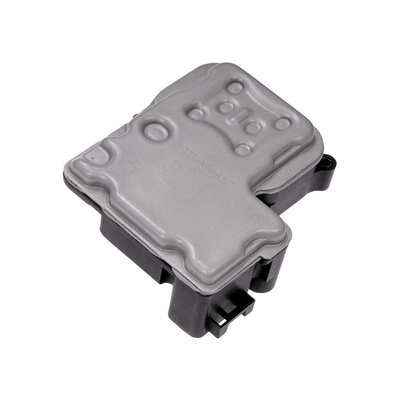
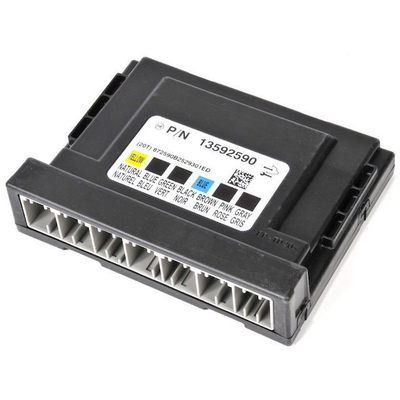
Below are the parts most often responsible for code C1119, ranked by how frequently each one is the actual culprit (per the diagnosis above). Tap any to see what we have for your vehicle.




The information in this article is provided for general reference and educational purposes only. Vehicle specifications, procedures, and part compatibility can vary by production date, trim level, and region. Always consult your vehicle's factory service manual and verify part numbers before purchasing or performing repairs. Safety-critical components such as airbags, seat belts, and braking systems should be installed by a qualified professional.
- 🧭 Diagnostic Flowchart
- 🎬 Helpful Videos
- 🛍️ Shop This Part
- What Does C1119 Mean?
- Can I Drive With C1119?
- Common Causes
- Symptoms
- Common Fixes & Costs
- Used vs. New Parts: Buying Guide
- What Happens If You Wait — Timeline
- Cost of Not Fixing It
- Diagnosis Steps
- When This Code Triggers (Freeze-Frame Conditions)
- Related Codes
- Climate & Environmental Factors
- How to Talk to a Mechanic About This Code
- Where to Take It: Dealer vs Independent vs Chain
- When to Walk Away From the Repair
- What Scan Tool You Need for This Code
- How to Clear the Code After You Fix It
- Will This Fail Emissions / State Inspection?
- Most Commonly Affected Vehicles
- Manufacturer-Specific Notes
- Real Owner Stories
- 2008 Chevy Silverado 2500HD - Easy Fix
- 2014 Range Rover L405 - Misdiagnosis Story
- 2006 Mazda 6 - Unusual Root Cause
- How to Prevent This Code From Triggering
- Frequently Asked Questions
- What does C1119 mean in simple terms?
- Can I fix code C1119 myself?
- Will clearing the code fix the problem?
- My GM truck shows C1119 but I never tow a trailer. Why?
- What is the most common misdiagnosis for C1119?
- I found contaminated fluid in my Land Rover. Can I just flush it?
- How much will it cost to fix a C1119 code?
- Can a bad ground wire really cause the C1119 code?
- Why did my Range Rover suspension fluid overflow?
- Key Takeaways
- 🎟️ Get 5% Off