

OBD-II Code C1120: Chassis Control System Malfunction
What C1120 means, why it triggers, and the definitive guide to fixing it
- Code C1120 is manufacturer-specific, meaning it points to an Electric Parking Brake (EPB) switch on a Honda, but an ABS solenoid on a Nissan.
- On 2016-2022 Honda and Acura models, spilled drinks in the center console cause over 80% of C1120 codes by shorting the EPB switch.
- Always check for loose connector pins or damaged wiring before spending $900+ on a replacement ABS control module.
- Driving with code C1120 disables your Anti-Lock Braking System (ABS) and stability control, significantly increasing your risk of skidding in an emergency.
What Does C1120 Mean?
The C1120 code is a manufacturer-specific chassis code indicating an electrical circuit fault within the vehicle's handling and braking systems. Because it is manufacturer-specific, the exact failed component varies by brand. It most commonly points to a shorted Electric Parking Brake (EPB) switch, a failed Anti-Lock Braking System (ABS) module, or a faulty wheel speed sensor.
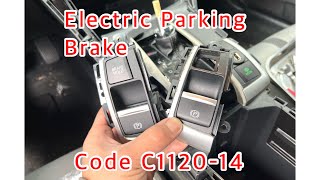
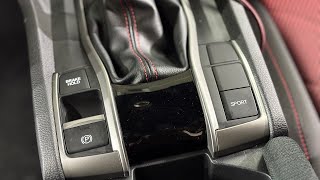
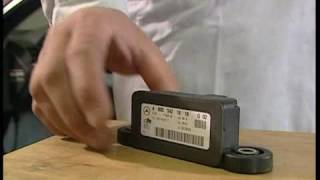
Technical definition: There is no universal SAE/ISO definition for C1120. On Honda and Acura vehicles, C1120-14 means 'Electric Parking Brake Switch Circuit Malfunction'. 🎬 Watch: Diagnostic walkthrough for the C1120-14 code on a Honda. On Nissan models, it indicates an 'ABS Solenoid' fault. On Mercedes-Benz vehicles, it points to a 'Yaw Rate Sensor' fault within the Electronic Stability Program (ESP).
Can I Drive With C1120?
Yes, But With Caution. You can drive because the primary hydraulic brakes remain functional, but it is highly discouraged. The disabled Anti-Lock Braking System (ABS) and stability control significantly increase the risk of wheel lock-up and spin-outs during emergency maneuvers. Furthermore, a non-functional Electric Parking Brake (EPB) creates a rollaway risk on inclines or fails to disengage entirely, stranding the vehicle.
Common Causes
- Faulty Electric Parking Brake (EPB) Switch (Very Common) — The most frequent cause, especially on Honda and Acura models. The center console switch fails internally, almost always due to spilled drinks seeping into the unsealed housing and shorting the circuit board.
- Damaged Wiring or Poor Pin Fitment (Common) — Wires fray or connectors loosen over time. On Honda CR-Vs and Subarus, loose connector pins cause intermittent signals, triggering the code without a broken part.
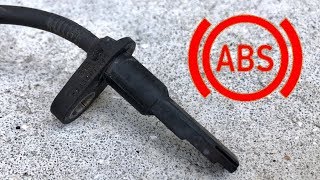
- Faulty Wheel Speed Sensor or Hub Bearing (Common) — The wheel speed sensor or the magnetic encoder ring on the wheel bearing fails due to rust or physical damage, disrupting the speed signal sent to the ABS module.
- Failed ABS/VSA Control Module (Less Common) — The main brake system computer fails internally. This is a common, expensive failure on Nissan models, often accompanied by specific solenoid codes.
- Faulty Yaw Rate Sensor (Rare) — Specific to Mercedes-Benz, this indicates a failure in the Electronic Stability Program (ESP) sensor that detects vehicle rotation.
- Low Battery Voltage (Uncommon) — A weak battery causes electronic modules to malfunction and set false chassis codes during the vehicle's startup self-test.
Symptoms
- Electric Parking Brake Inoperative — The electronic parking brake will not engage or disengage when you pull the switch.
- ABS and Stability Control Lights On — The Anti-Lock Brake System and VSA/ESC warning lights illuminate steadily on the dashboard.
- Red 'BRAKE' Warning Light Flashing — The primary red brake warning light blinks continuously, indicating an active parking brake fault.
- Brake Hold Feature Disabled — The 'Brake Hold' function, which keeps the car stopped without holding the pedal, ceases to work.
Diagnostic Flowchart
Tap your situation to follow the diagnostic path that matches what you're seeing on this code.
Common Fixes & Costs
- Replace Electric Parking Brake (EPB) Switch — Parts: $45-$90, Labor: $80-$150, ~0.8 hr book time (DIY)
- Repair Damaged Wiring or Connector — Parts: $10-$50, Labor: $150-$300, ~2.0 hr book time (Intermediate)
- Replace Wheel Bearing Hub Assembly — Parts: $150-$350, Labor: $200-$400, ~2.2 hr book time (Intermediate)
- Rebuild ABS/VSA Control Module — Parts: $150-$400, Labor: $150-$250, ~2.0 hr book time (Professional)
- Replace ABS/VSA Control Module — Parts: $900-$1900, Labor: $150-$300, ~2.0 hr book time (Professional)
- Replace Yaw Rate Sensor — Parts: $400-$550, Labor: $150-$250, ~1.5 hr book time (Intermediate)
Used vs. New Parts: Buying Guide
When a used part is worth it: For a high-cost part like an ABS module, a used unit from a reputable seller saves $1000+. For a low-cost, high-failure part like an EPB switch, always buy new.
Donor-vehicle mileage cap: roughly under 100000 miles for the part to have meaningful remaining life.
Donor quality checklist:
- Verify the part number on the used ABS module matches your original part exactly.
- Purchase from a seller offering at least a 90-day warranty.
- Check photos for corrosion or bent pins inside the connectors.
Decision logic:
- If The failed part is the EPB switch. → Buy a new OEM part. The cost is low and it's a common failure item.
- If The failed part is the ABS module and a reputable rebuild service is available. → Rebuild your original module. This is cost-effective and avoids VIN programming.
- If The failed part is the ABS module and rebuilding is not an option. → Buy a used module, but budget for professional VIN programming.
Warranty tradeoff: Used parts typically have a 30-90 day warranty. New OEM parts have a 1-year warranty.
Worst-case if a used part fails: $500-$1000 if a used ABS module is faulty or requires complex programming, doubling your labor costs.
What Happens If You Wait — Timeline
- 0-1 month: Warning lights (ABS, Brake, VSA) illuminate. EPB and Brake Hold features disable. The fault may be intermittent at first. (MPG impact: 0%% · Added cost: $0 (Safety Risk is High))
- 1-3 months: The fault becomes permanent. The EPB fails to engage, creating a rollaway risk, or fails to disengage, stranding the vehicle. (MPG impact: 0%% · Added cost: $150-$300 (Towing fee if EPB gets stuck on))
- 3-12 months: Driving without ABS leads to unintentional wheel lock-ups during hard braking, causing flat spots on tires and requiring premature replacement. (MPG impact: 0%% · Added cost: $350-$1000 (Cost of towing plus replacement of two tires))
- Long Term: If an accident occurs, an insurance company argues you knowingly operated a vehicle with a disabled safety system, leading to a denied claim. (MPG impact: 0%% · Added cost: $1,500-$10,000+ (Denied insurance claims or legal fees))
Cost of Not Fixing It
- Immediate: Increased risk of collision. Your vehicle's ABS and stability control are disabled, significantly reducing your ability to control the car in an emergency stop or skid. (Added cost: N/A (Safety Risk))
- 0-3 months: The Electric Parking Brake (EPB) fails to engage, leading to a rollaway risk, or fails to disengage, stranding the vehicle. (Added cost: $150-$300 (Towing))
- 3+ months: Driving without ABS causes intermittent wheel lock-up during braking, creating flat spots on tires and requiring premature replacement. (Added cost: $200-$800 (Tire Replacement))
- Long Term: Being involved in an accident with an ignored safety system fault leads to disputes with your insurance provider regarding liability or coverage. (Added cost: Variable (Legal/Insurance))
Diagnosis Steps
- Read the Fault Codes
Use an OBD-II scanner capable of reading Chassis (C-codes) to confirm C1120 is present. Note the full code (e.g., C1120-14) and any accompanying codes, as they dictate the diagnostic path.
Tools: OBD-II Scanner (with ABS/Chassis capability) (Beginner) - Perform a Visual Inspection
For Honda/Acura, inspect the center console around the EPB switch for sticky residue from spills. For all vehicles, visually check the wiring harnesses near the ABS module and at all four wheels for obvious damage or corrosion.
Tools: Flashlight (Beginner) - Test the EPB Switch Function
Turn the ignition on (engine off). Attempt to engage and disengage the parking brake. Listen for the brake motors at the rear wheels. If the switch feels mushy, sticks, or produces no motor sound, it has failed.
Tools: None (Visual/Auditory Test) (Beginner) - Inspect and Wiggle the Primary Connector
Access the suspect component's connector (e.g., the EPB switch on a Honda). With the vehicle on, gently wiggle the connector. If dashboard warning lights flicker, you have an intermittent connection due to poor pin fitment. Disconnect and inspect for green corrosion or liquid damage.
Tools: Trim removal tools, Screwdriver (Intermediate) - Test the Wiring Harness
Using a multimeter and a vehicle-specific wiring diagram, check for continuity on the wires between the suspect component and the control module. Check for a short to power (12V) and a short to ground on the signal wire.
Tools: Multimeter, Wiring Diagram (Advanced) - Advanced: EPB Switch Signal Test
Back-probe the EPB switch connector. With the ignition on, verify the 5V reference and ground wires. The signal wire's voltage must change when the switch is operated. No change confirms an internal switch failure.
Tools: Multimeter or Oscilloscope, Wiring Diagram (Advanced) - Advanced: Wheel Speed Sensor Circuit Test
Disconnect the suspected wheel speed sensor harness. Use a multimeter to verify 5V or 12V reference voltage from the ABS module on one pin and a solid ground on the other. If power and ground are present, the sensor is faulty.
Tools: Multimeter, Wiring Diagram (Advanced) - Advanced: Passive Wheel Speed Sensor Test
For 2-wire passive sensors, measure resistance across the sensor pins (typically 800-2500 Ohms). Next, set the multimeter to AC Volts, spin the wheel by hand, and verify it generates at least 0.1-0.2 VAC. 'OL' resistance or zero voltage indicates a dead sensor.
Tools: Multimeter, Jack and Jack Stands, Service Manual (Advanced)
When This Code Triggers (Freeze-Frame Conditions)
- Vehicle Speed: 0 mph (At startup or when attempting to use the EPB switch.)
- Battery Voltage: 11.5-12.5V (Engine Off) or 13.5-14.5V (Engine On) (Code sets if voltage drops below 10.5V during module self-test.)
- EPB Switch Status: Implausible Signal (The control module receives an irrational signal, such as 'on' and 'off' simultaneously.)
Related Codes
- C1120-14 / C1120-96 — Honda/Acura specific variants. C1120-14 indicates a circuit malfunction (open/short). C1120-96 indicates the switch is operated continuously, suggesting a physically stuck button or internal short.
- C1122, C1124, C1126 — On Nissan vehicles, these codes appear alongside C1120 to pinpoint specific failed solenoids within the ABS actuator assembly. Multiple solenoid codes confirm a failed ABS unit.
- C0035 to C0050 Range — These codes indicate a fault in a specific wheel speed sensor circuit. If C1120 appears with one of these, it tells you exactly which corner of the car to investigate.
- U1000 — A CAN communication error code. If present with C1120, the ABS module is likely failing and disrupting network communication.
Climate & Environmental Factors
- Moisture and Humidity: Spilled liquids on interior switches or water ingress in engine bay connectors cause short circuits and trigger the code.
- Road Salt and Corrosion: In the 'Rust Belt', corrosion destroys wiring harnesses, connector pins, and compromises the seals on electronic modules.
- Heat Cycles: ABS modules located in the engine bay are subjected to constant thermal cycling, eventually cracking internal solder joints on the circuit board.
How to Talk to a Mechanic About This Code
Say this: "I have a C1120 code on my [Your Car's Make and Model]. Based on my research, I'd like you to start by diagnosing the most common cause for this specific vehicle. For a Honda, please check the EPB switch and connector first. For a Nissan, please confirm if other solenoid codes are present. For a Mercedes, please test the Yaw Rate Sensor circuit."
This signals you are an informed consumer and directs the technician to the most likely and cheapest fix first, preventing them from immediately quoting an expensive, unnecessary repair like a full ABS module replacement.
Avoid saying:
- 'Just fix whatever's wrong'
- 'My ABS light is on, can you look at it?'
- 'Whatever you think is best'
Questions to ask before authorizing the repair:
- What is the full fault code, including the suffix (e.g., C1120-14)?
- Based on my vehicle's make, what specific component did your diagnosis pinpoint as the failure?
- If you are recommending a module replacement, have you priced out a rebuild service or a used part as an alternative to a new one?
- Can you show me the old part after the repair is complete?
- What is the warranty on the recommended parts and labor?
Where to Take It: Dealer vs Independent vs Chain
- Dealer:
Recommended for warranty work or complex module programming. For a common Honda EPB switch issue, a dealer is overkill and will be the most expensive option.
Best for: Vehicles under warranty, Complex diagnostics on German makes like Mercedes-Benz that require proprietary software., Repairs that require programming a brand new, VIN-locked control module.
Downsides: Highest labor rates, often 1.5-2x more than independent shops., Defaults to replacing an entire assembly instead of a smaller, failed component. (Typical cost: +50% vs. baseline) - Independent Shop:
Best fit for most C1120 scenarios, especially the common failures on Honda, Acura, and Subaru. Offers the best balance of expertise and value.
Best for: Out-of-warranty vehicles where cost is a factor., The most common C1120 fixes, like replacing the EPB switch on a Honda or a wheel speed sensor., Coordinating cost-effective alternatives like sending an ABS module for a rebuild.
Downsides: Quality and diagnostic capabilities vary widely. Vet shops based on reviews and ASE certifications., May lack the latest manufacturer-specific diagnostic tools for very new models. (Typical cost: +0% vs. baseline) - Chain Shop:
Use with caution. Acceptable if you have already self-diagnosed a simple part failure (like an EPB switch) and just need it installed. AVOID for initial diagnosis of a C1120 code.
Best for: Simple, clear-cut parts replacement like brakes, tires, and oil changes.
Downsides: Technician skill varies dramatically; lacks the diagnostic experience for complex electrical codes., High pressure to upsell services; replaces parts without a confident diagnosis. (Typical cost: -10% vs. baseline)
When to Walk Away From the Repair
If the estimated repair cost exceeds 50% of the car's private-party market value, seriously consider selling the car as-is or trading it in rather than repairing it.
- Car worth $8000, fix is $350: Fix it. This is a low-cost repair on a vehicle with significant value remaining.
- Car worth $7000, fix is $2200: Borderline. A $2200 repair for a new ABS module is a significant percentage of the car's value. Strongly pursue a rebuild service (approx. $500-$700 total cost) or a warrantied used part before proceeding.
- Car worth $3000, fix is $2200: Walk away. The repair cost is over 70% of the car's value. It is not economical to perform this repair.
What Scan Tool You Need for This Code
Minimum: An OBD-II scanner that reads and clears Chassis (C) codes, specifically for the ABS system.
A standard $20 code reader only reads Powertrain ('P') codes for the check engine light. It cannot see or clear the C1120 code from the ABS module.
Budget: Autel MaxiCheck ML629 / BlueDriver Bluetooth Pro (~$80-110) — Reads and clears engine, transmission, ABS, and SRS codes. This is the minimum required to confirm the C1120 code is present and to clear it after the repair.
Mid-range: Innova 5610 / XTOOL D7 (~$300-350) — Adds bidirectional controls. This allows you to actively test components, such as commanding the EPB motors to engage or cycling the ABS pump solenoids, which is critical for advanced diagnostics.
Professional: Autel MaxiCOM MK808Z / Launch X431 Series (~$450-1200) — Provides full, dealership-level functions including bidirectional control, live data graphing, and special functions like VIN programming for replacement modules.
Rent vs buy: Many auto parts stores offer a loaner tool program. You pay a deposit which is fully refunded upon return. However, confirm the specific loaner tool is capable of reading ABS codes, as basic readers cannot.
How to Clear the Code After You Fix It
- Use an OBD-II scan tool capable of accessing the ABS/Chassis system to clear the fault codes.
- Perform a complete drive cycle to ensure the fault does not return.
Drive cycle (~30 minutes): Start with a cold engine. Idle for 2-3 minutes. Drive for 15-20 minutes with mixed city and highway speeds, holding a steady 55 mph for at least 3 minutes. Coast from a higher speed down to 20 mph without braking. Park and turn the engine off for 10 minutes.
Readiness monitors affected: Chassis codes do not affect emissions readiness monitors.
Watch out for:
- Using a basic $20 code reader will not clear 'C' (Chassis) codes.
- Disconnecting the battery rarely clears this code from the ABS module's non-volatile memory.
- If the underlying short circuit is not fixed, the code returns immediately upon startup.
Will This Fail Emissions / State Inspection?
No — by itself this code doesn't fail OBD inspection (but it can keep readiness monitors from setting, which causes a separate fail).
- California: An illuminated ABS or red BRAKE light will NOT cause a smog check failure. The inspection only fails for an illuminated 'Check Engine' light.
- New York: An illuminated ABS warning light is NOT a cause for rejection. However, an inoperative parking brake results in an immediate safety inspection failure.
- Texas: An amber ABS light is NOT a cause for failure. However, an illuminated red 'BRAKE' warning light or a non-functional parking brake WILL result in a safety inspection failure.
Most Commonly Affected Vehicles
- Honda Accord (2018-2022) — Extremely common issue due to the EPB switch (Part No. 35355-TVA-A21) failing from liquid spills. Honda issued multiple TSBs to investigate this.
- Honda Civic (2016-2022) — Prone to the exact same EPB switch failure caused by liquid damage as the Accord.
- Honda CR-V (2017-2022) — Experiences C1120-14 due to poor pin fitment at the EPB switch connector, causing an intermittent connection diagnosed by wiggling the harness.
- Subaru Outback / Legacy (2010-2018) — 2015-2018 models are affected by TSB 06-87-22R for a broken plastic clip on the rear EPB actuator connector, fixed with a new clip or zip tie.
- Nissan Maxima / Altima / Murano (2009-2015) — C1120 points to a fault with an internal ABS actuator solenoid. This repair exceeds $1,500 for a new ABS module.
- Mercedes-Benz C-Class / ML-Class (2001-2008) — C1120 indicates a fault with the Yaw Rate Sensor (N64), a key part of the Electronic Stability Program (ESP).
- Kia Sportage (2017-2021) — Related brake system warnings are linked to recall SC206, addressing a fire risk from a shorting HECU (ABS module).
- Ford Mondeo / Fusion (2013-2020) — Appears for various electrical faults. Diagnosis must focus on checking for accompanying codes and general wiring integrity.
Manufacturer-Specific Notes
- Honda / Acura: The code almost always points to the Electric Parking Brake (EPB) switch in the center console, primarily caused by liquid damage from spilled drinks.
- Subaru: EPB issues are often caused by faulty connections, not failed parts. A broken plastic clip on the rear actuator connector is a known issue (TSB 06-87-22R).
- Nissan: C1120 points to an internal ABS actuator solenoid failure, not an external switch. This is a very expensive repair if replacing with a new part.
- Mercedes-Benz: C1120 is an Electronic Stability Program (ESP) code for the Yaw Rate Sensor. It is completely unrelated to the parking brake.
Real Owner Stories
2019 Honda Civic with 30k miles - The Classic Spill
Owner's 'Brake System' and 'Parking Brake Problem' lights came on. The EPB would not engage or disengage. Code C1120-14 was present.
What they tried:
- A visual inspection of the center console revealed sticky residue from a spilled drink around the EPB switch.
Outcome: The owner replaced the EPB switch assembly (Part # 35355-TBA-A12). The repair took less than an hour using basic trim tools. After clearing the code, all functions returned to normal.
Lesson: On a modern Honda with C1120, the first and most likely cause is the EPB switch itself, often due to liquid damage. Always inspect this before authorizing more expensive diagnostics.
2018 Honda CR-V at 55k miles - A Case of Misdiagnosis
All brake-related warning lights were on, with code C1120-14 stored. The EPB was inoperative.
What they tried:
- Initially suspected a faulty EPB switch.
- A technician performed advanced diagnostics and found that gently wiggling the connector to the EPB switch caused the lights to flicker on and off.
Outcome: The problem was not the switch, but poor 'pin fitment' in the electrical connector. The technician adjusted the connector pins to ensure a tight connection, permanently resolving the fault without replacing parts.
Lesson: If a new part doesn't fix the issue, check for loose connections. An intermittent fault that changes when you move a wiring harness points to a connector problem, not a failed component.
2007 Mercedes ML320 - The Unusual Cause
Owner experienced the ETS/ESP light illuminating and the vehicle's brakes unexpectedly applying at highway speeds. The shop found code C1120.
What they tried:
- The mechanic replaced the Yaw Rate Sensor twice, assuming the new part was faulty, but the code persisted.
- A continuity check of the wiring showed no issues.
Outcome: A specialist revealed a poor ground connection for the traction control module located behind the headlamp. Fixing the ground connection resolved the C1120 code and the dangerous braking behavior.
Lesson: On makes like Mercedes, C1120 is not related to the parking brake. If replacing the primary sensor doesn't work, the fault lies in the supporting electrical system, such as a corroded ground wire.
How to Prevent This Code From Triggering
- Use a waterproof center console cover or spill-proof mugs. (Daily habit) — On Hondas, the #1 cause of C1120 is liquid spilling from the cupholders into the unsealed EPB switch. A simple cover prevents a $150+ repair.
- Perform a full brake fluid flush every 2-3 years. (Every 2-3 years) — Old, moisture-contaminated brake fluid causes corrosion inside the expensive ABS hydraulic control unit, destroying the internal solenoids.
- Inspect and clean electrical connectors in the engine bay and at the wheels. (Every 2 years, especially in rust-belt regions) — Corrosion on the main ABS module connector or wheel speed sensor connectors causes high resistance and triggers faults. Applying dielectric grease prevents these issues.
Frequently Asked Questions
Is it safe to drive my car with code C1120?
You can drive cautiously for short distances, but your main safety systems (ABS and stability control) are disabled. This significantly increases your risk of a skid or collision in an emergency. Get the vehicle inspected immediately.
Why does the C1120 code mean something different for my Honda than for a Nissan?
While powertrain codes (P0) are universal, chassis codes (C1) are manufacturer-specific. This allows carmakers to assign codes to their unique systems. Therefore, C1120 points to an EPB switch on a Honda but an ABS solenoid on a Nissan.
Can a spilled coffee really cause this expensive repair?
Yes. On many modern cars like the Honda Accord and Civic, the electronic parking brake switch sits right next to the cup holders. Spilled liquid easily drips into the unsealed switch, shorting the electronics and triggering code C1120.
My mechanic wants to replace the whole ABS module for over $1,500. Is that necessary?
It depends on the vehicle, but a full module replacement is rarely the first step for a Honda or Subaru. For those makes, the problem is usually a $70 EPB switch or a loose wire. Always insist your mechanic diagnoses the simplest, cheapest causes first.
I replaced the EPB switch and the code is still there. What now?
If a new switch doesn't fix it, the issue is in the wiring or connector. On some Hondas, the problem is poor 'pin fitment' at the connector causing an intermittent open circuit. Use a multimeter to test the circuit for continuity and shorts between the switch and the VSA module.
Can a weak battery cause the C1120 code?
Yes. Low or unstable battery voltage causes communication errors between electronic modules, including the ABS controller. If you experience other strange electrical issues, test your battery and alternator before starting complex diagnostics.
What happens if I ignore my ABS light?
Ignoring the light means you are driving without anti-lock brakes and stability control. This drastically increases the risk of losing control during sudden braking or evasive maneuvers. Furthermore, a car with an active ABS light will fail safety inspections in states like Texas and New York.
Key Takeaways
- Code C1120 is manufacturer-specific, meaning it points to an Electric Parking Brake (EPB) switch on a Honda, but an ABS solenoid on a Nissan.
- On 2016-2022 Honda and Acura models, spilled drinks in the center console cause over 80% of C1120 codes by shorting the EPB switch.
- Always check for loose connector pins or damaged wiring before spending $900+ on a replacement ABS control module.
- Driving with code C1120 disables your Anti-Lock Braking System (ABS) and stability control, significantly increasing your risk of skidding in an emergency.
Helpful Videos
Shop the Parts Behind C1120
Below are the parts most often responsible for code C1120, ranked by how frequently each one is the actual culprit (per the diagnosis above). Tap any to see what we have for your vehicle.



The information in this article is provided for general reference and educational purposes only. Vehicle specifications, procedures, and part compatibility can vary by production date, trim level, and region. Always consult your vehicle's factory service manual and verify part numbers before purchasing or performing repairs. Safety-critical components such as airbags, seat belts, and braking systems should be installed by a qualified professional.
- 🧭 Diagnostic Flowchart
- 🎬 Helpful Videos
- 🛍️ Shop This Part
- What Does C1120 Mean?
- Can I Drive With C1120?
- Common Causes
- Symptoms
- Common Fixes & Costs
- Used vs. New Parts: Buying Guide
- What Happens If You Wait — Timeline
- Cost of Not Fixing It
- Diagnosis Steps
- When This Code Triggers (Freeze-Frame Conditions)
- Related Codes
- Climate & Environmental Factors
- How to Talk to a Mechanic About This Code
- Where to Take It: Dealer vs Independent vs Chain
- When to Walk Away From the Repair
- What Scan Tool You Need for This Code
- How to Clear the Code After You Fix It
- Will This Fail Emissions / State Inspection?
- Most Commonly Affected Vehicles
- Manufacturer-Specific Notes
- Real Owner Stories
- 2019 Honda Civic with 30k miles - The Classic Spill
- 2018 Honda CR-V at 55k miles - A Case of Misdiagnosis
- 2007 Mercedes ML320 - The Unusual Cause
- How to Prevent This Code From Triggering
- Frequently Asked Questions
- Is it safe to drive my car with code C1120?
- Why does the C1120 code mean something different for my Honda than for a Nissan?
- Can a spilled coffee really cause this expensive repair?
- My mechanic wants to replace the whole ABS module for over $1,500. Is that necessary?
- I replaced the EPB switch and the code is still there. What now?
- Can a weak battery cause the C1120 code?
- What happens if I ignore my ABS light?
- Key Takeaways
- 🎟️ Get 5% Off