

OBD-II Code C1141: A Comprehensive Guide for Diagnosis and Repair
What C1141 means, its manufacturer-specific variations, and how to fix it like a pro
- Code C1141 disables your ABS and stability control, increasing emergency stopping distances by up to 25% and requiring immediate repair.
- Never replace parts based on the C1141 code alone; its meaning varies from a $50 Ford tone ring to a $2,000 BMW ABS pump depending on the manufacturer.
- Use an advanced OBD-II scanner to monitor live wheel speed data; a sensor reading 0 MPH while driving confirms a dead sensor or broken wire.
- Test your battery and alternator before replacing expensive ABS components, as voltage drops below 12.4V frequently trigger false C1141 codes.
- Save up to $1,500 on BMW or VW ABS module failures by removing the unit and sending it to a specialized electronics rebuilder instead of buying new.
What Does C1141 Mean?
Code C1141 indicates a fault detected by the ABS control module, but its exact meaning depends entirely on your vehicle's manufacturer. While commonly defined as a front-left wheel speed sensor circuit failure, it means a missing tone ring tooth on Fords, an ABS hydraulic pump failure on BMW/VW, and a B34 ESP brake pressure sensor fault on Mercedes-Benz. You must use a scanner that provides manufacturer-specific definitions to diagnose this code accurately.
Technical definition: The SAE/OBD-II definition for C1141 is manufacturer-specific. Common definitions include: 'Wheel Speed Sensor LF Tone Ring Tooth Missing Fault' (Ford), 'ABS Hydraulic Pump Motor Relay Circuit Failure' (BMW/VW Group), 'B34 ESP Brake Pressure Sensor Electrical Fault' (Mercedes-Benz), and 'P/S Motor Circuit Voltage' (Suzuki). Always use a scanner that reads OEM-specific ABS codes.
Can I Drive With C1141?
Yes, But With Caution. Yes, but drive with extreme caution. Your primary hydraulic brakes will function, but the Anti-Lock Braking System (ABS) and Traction/Stability Control systems are disabled. Wheels will lock up during hard braking, increasing stopping distances by up to 25% on dry pavement and significantly more on wet or icy roads. Loss of steering control during a skid is a major risk. Repair the vehicle immediately.
Common Causes
- Faulty or Dirty ABS Wheel Speed Sensor (Very Common) — The sensor failed internally or metallic debris and rust block its magnetic tip from reading the tone ring.
- Damaged or Cracked ABS Tone Ring (Common) — The toothed reluctor ring cracked, lost a tooth, or swelled with rust, creating an implausible signal. On most modern cars, this ring is integrated into the wheel hub assembly.
- Damaged or Corroded Wiring/Connectors (Common) — The wiring harness leading to the wheel speed sensor chafed, broke, or corroded due to road debris and moisture, causing an open or short circuit.
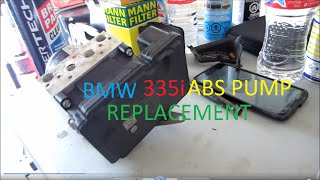
- Failed ABS Hydraulic Pump Motor or Relay (Less Common) — On European vehicles (BMW, VW, Audi), C1141 points directly to a seized ABS pump motor or a failed power relay within the ABS module.
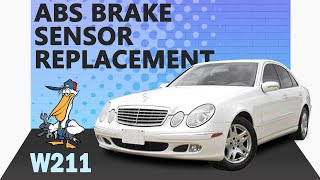
- Faulty Brake Pressure Sensor (Less Common) — Specific to Mercedes-Benz, this code flags a failure of the B34 brake pressure sensor located on the master cylinder or SBC hydraulic unit.
- Low Battery Voltage or Charging System Fault (Less Common) — The ABS module is highly sensitive to voltage drops. A weak battery or failing alternator causes the module to store erroneous fault codes.
- Failed ABS Control Module (Rare) — Internal failure of the ABS control module's circuit board. Consider this only after ruling out sensors, wiring, and tone rings.
Symptoms
- ABS Warning Light is On — The primary symptom. The ABS light illuminates and stays on the dashboard.
- Traction or Stability Control Light is On — Electronic Stability Control (ESC/ESP) relies on wheel speed data. When a sensor fails, these systems disable and trigger their warning lights.
- Loss of ABS Function — During a hard stop, wheels lock up and skid. You will not feel the characteristic brake pedal pulsation of ABS activation.
- Unusual Noises or Grinding from Wheel Area — If the cause is a failed wheel bearing with an integrated tone ring, you will hear a grinding or humming noise that changes pitch when turning.
- Hard or Unresponsive Brake Pedal — If the fault lies with the ABS hydraulic unit or a brake pressure sensor, the brake pedal feels unusually stiff.
Diagnostic Flowchart
Tap your situation to follow the diagnostic path that matches what you're seeing on this code.
Common Fixes & Costs
- Replace ABS Wheel Speed Sensor — Parts: $50-$200, Labor: $100-$150, ~1 hr book time (DIY)
- Replace Wheel Hub Assembly (with integrated Tone Ring) — Parts: $150-$450, Labor: $200-$400, ~2.5 hr book time (Intermediate)
- Repair Wiring or Replace Connector Pigtail — Parts: $20-$60, Labor: $150-$300, ~2 hr book time (Intermediate)
- Replace Brake Pressure Sensor (Mercedes-Benz) — Parts: $80-$250, Labor: $150-$250, ~1.5 hr book time (Professional)
- Repair ABS Control Module — Parts: $150-$400, Labor: $150-$250, ~1.5 hr book time (Professional)
- Replace ABS Control Module or Hydraulic Unit — Parts: $1000-$2500+, Labor: $200-$350, ~2 hr book time (Professional)
Used vs. New Parts: Buying Guide
When a used part is worth it: For expensive electronic components like an ABS Control Module, a professionally rebuilt unit saves $600-$2,000 over new. For mechanical parts like wheel hubs or sensors, buy new high-quality aftermarket parts.
Donor-vehicle mileage cap: roughly under 100000 miles for the part to have meaningful remaining life.
Donor quality checklist:
- Match ABS module part numbers exactly; variations for AWD vs. RWD are not interchangeable.
- Verify the donor vehicle's history to avoid flood-damaged electronics.
- Used ABS modules require VIN-specific reprogramming.
Decision logic:
- If The failed part is a simple ABS sensor. → Buy a new OEM or high-quality aftermarket part.
- If The failed part is a wheel hub assembly. → Buy a new OEM or reputable aftermarket (Timken, SKF, FAG) part. Never buy used bearings.
- If The failed part is the ABS control module and a new one is over $1000. → A rebuilt module is the best choice, provided it comes with a warranty.
Warranty tradeoff: Junkyard parts offer 30-90 days. Rebuilt modules often include 1-year or lifetime warranties. New aftermarket parts usually have 1-3 year warranties.
Worst-case if a used part fails: $300-$600 if a used electronic module is dead on arrival, requiring repeat labor.
What Happens If You Wait — Timeline
- 0-2 months: If caused by a failing bearing, a faint humming noise appears over 40 mph. The ABS light is intermittent. (MPG impact: 0%% · Added cost: $0)
- 2-4 months: Noise becomes a distinct grinding that changes pitch when turning. ABS light remains on permanently. (MPG impact: 0-1%% · Added cost: $50-$150 (Premature tire wear))
- 4-6 months: Loud clunking noises and steering vibration. Excessive play damages the wheel hub. (MPG impact: 1-3%% · Added cost: $500-$1,200 (Requires new hub assembly and tire))
- 6+ months: Bearing seizes or disintegrates, potentially allowing the wheel to detach. Extreme safety hazard. (MPG impact: N/A% · Added cost: $1,500-$4,000+ (Suspension and brake destruction))
Cost of Not Fixing It
- Immediate: Loss of ABS and stability control. Wheels will lock during emergency braking, causing skids. (Added cost: N/A (Safety Risk))
- 0-6 months: If caused by a bad wheel bearing, continued driving causes uneven tire wear and damages the wheel hub. (Added cost: $200-$1000+)
- 6+ months: Catastrophic wheel bearing failure causes the wheel to detach, destroying suspension and brake components. (Added cost: $1500-$4000+)
Diagnosis Steps
- Retrieve Manufacturer-Specific Codes
Use an OBD-II scanner capable of accessing the ABS module. Record the C1141 code and its exact manufacturer-specific definition. Note any other codes present in the ABS or Engine modules.
Tools: Advanced OBD-II Scanner (Beginner) - Live Data Analysis
Monitor the wheel speed PIDs from all four wheels while driving slowly. The faulty sensor will show a reading of zero, an erratic signal, or a speed that does not match the other wheels.
Tools: Advanced OBD-II Scanner (Intermediate) - Visual Inspection of Wheel-End Components
Safely raise the vehicle and remove the affected wheel. Inspect the ABS sensor and wiring for physical damage, chafing, or melting. Examine the tone ring for cracks, missing teeth, or heavy rust.
Tools: Jack, Jack Stands, Lug Wrench, Flashlight (Intermediate) - Verify Battery and System Voltage
Ensure the battery reads above 12.4V with the engine off, and the alternator produces 13.7V-14.7V while running. Unstable voltage sets false ABS codes.
Tools: Multimeter (Beginner) - Test Sensor Circuit Integrity (Wiggle Test)
With the scanner displaying live wheel speed data, wiggle the sensor's wiring harness. If the speed reading flickers or drops out, you have an intermittent break in the wiring.
Tools: Advanced OBD-II Scanner (Intermediate) - Inspect the Relevant Fuses and Relays
Locate and inspect all fuses related to the ABS system. If the code definition points to the ABS pump motor (BMW/VW), test the associated relay.
Tools: Owner's Manual, Fuse Puller, Multimeter (Beginner) - [PRO TIP] Test Passive (2-Wire) Sensor Resistance and Voltage
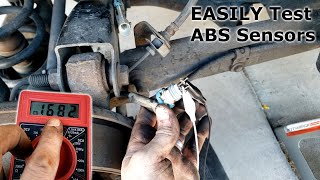
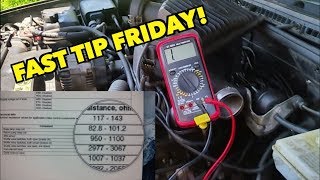
Disconnect the sensor and probe the pins with a multimeter set to Ohms. A good passive sensor reads 800-2000 Ω. Next, set the multimeter to AC Volts, spin the wheel, and look for 0.5-1.0V.
Tools: Multimeter, Service Manual (Advanced) - [PRO TIP] Test Active (3-Wire) Sensor Voltage
Back-probe the connected sensor with the ignition ON. Check for a 5V or 12V reference voltage on the power wire. Probe the signal wire with DC Volts; spinning the wheel should produce a rapidly pulsing voltage.
Tools: Multimeter, Back-probe Pins, Wiring Diagram (Advanced) - [PRO TIP] Analyze the Waveform with an Oscilloscope
Back-probe the sensor's signal wire. A good sensor and tone ring produce a clean square or sine wave. A single dropout in the repeating pattern confirms a cracked or missing tooth on the tone ring.
Tools: Oscilloscope, Back-probe Pins (Advanced) - [PRO TIP] Check Sensor Air Gap and Mounting
Ensure the sensor is fully seated. Rust buildup on the hub mounting surface pushes the sensor away from the tone ring, weakening the signal. The gap should be roughly 1mm.
Tools: Feeler Gauge, Cleaning Brush (Advanced)
When This Code Triggers (Freeze-Frame Conditions)
- Vehicle Speed: 10-70 mph (Sets across a wide range of speeds as soon as the module identifies an irrational signal compared to other wheels.)
- System Voltage: 13.5-14.5V (Normal operating voltage; the code often sets during a self-test immediately after engine start.)
- Brake Switch Status: Off (Sets during steady-state driving without brake application, as the module constantly monitors for valid speed signals.)
- Engine RPM: 1200-3000 RPM (Typically sets during normal city or highway driving conditions.)
Related Codes
- C1142, C1143, C1144 — Functionally identical to C1141 but correspond to the other wheels. If multiple codes are present, suspect a weak battery or failing ABS module.
- C1140 (Mercedes-Benz) — Often appears with C1141 on Mercedes vehicles, strongly confirming the fault lies with the brake pressure sensor, not a wheel speed sensor.
- U-prefix Codes (e.g., U0415) — Indicates a communication failure between the ABS module and other computers, reinforcing an ABS fault but not pinpointing the cause.
Climate & Environmental Factors
- Cold Weather: Extreme cold makes plastic wire insulation brittle and prone to cracking, exposing wires to moisture.
- Snow and Ice: Heavy snow buildup in wheel wells physically blocks the sensor's line of sight to the tone ring, causing temporary signal loss.
- Road Salt and Humidity (Rust Belt): Salt accelerates wiring corrosion and causes rust to build up under the ABS tone ring, forcing it to swell and crack.
How to Talk to a Mechanic About This Code
Say this: "Hi, my scanner shows a C1141 code for my [Year/Make/Model]. Since this code's meaning varies by manufacturer, please confirm the specific definition and check live data from the wheel speed sensors before recommending parts."
This signals you are an informed customer. It directs the shop to perform a proper diagnosis rather than replacing the most common part, saving you money by avoiding incorrect repairs.
Avoid saying:
- 'My ABS light is on, can you just fix it?'
- 'I think I need a new wheel speed sensor.'
- 'Just do whatever it takes to turn the light off.'
Questions to ask before authorizing the repair:
- What did the scanner define the C1141 code as for my specific vehicle?
- What did the live data from the wheel speed sensors show?
- Did you visually inspect the sensor, wiring, and tone ring for physical damage?
- Can you provide a detailed estimate breaking down parts and labor?
- If recommending an expensive ABS module, how did you definitively rule out cheaper components like wiring?
Where to Take It: Dealer vs Independent vs Chain
- Dealer:
Best for: Vehicles under warranty., Complex manufacturer-specific faults, like ABS module failures on BMW or Mercedes-Benz requiring specialized programming.
Downsides: Significantly higher labor rates and parts costs., May recommend replacing an entire expensive assembly when a smaller repair suffices. (Typical cost: +50% vs. baseline) - Independent Shop:
Best fit for most C1141 scenarios. A shop with advanced scanners diagnoses sensors, wiring, and tone rings more affordably than a dealer.
Best for: Out-of-warranty vehicles where cost is a major factor., Common C1141 causes like a Ford tone ring or standard wheel speed sensor replacement., Flexibility in using high-quality aftermarket or rebuilt parts.
Downsides: Shop quality varies. Ensure they have modern scanners capable of reading manufacturer-specific ABS codes., May lack the latest software for programming new modules. (Typical cost: +0% vs. baseline) - Chain Shop:
Avoid for diagnosis. High risk of misdiagnosis and paying for incorrect parts due to lack of specialized ABS diagnostic equipment.
Best for: Simple, unrelated maintenance like oil changes.
Downsides: Technician skill and equipment are often unsuited for complex, manufacturer-specific codes., High pressure to meet sales targets leads to misdiagnosis. (Typical cost: -10% vs. baseline)
When to Walk Away From the Repair
If the estimated repair cost exceeds 50% of your car's current private-party value, sell the vehicle as-is.
- Car worth $3500, fix is $2200: Walk away. A $2,200 repair is over 60% of the vehicle's value.
- Car worth $10000, fix is $650: Fix it. A $650 repair is only 6.5% of the car's value and restores a critical safety system.
- Car worth $5000, fix is $2500: Borderline. Get a second opinion. See if a rebuilt ABS module for $600 is an option instead of a new one.
What Scan Tool You Need for This Code
Minimum: A scanner that reads and clears ABS codes and displays live data streams for all four wheel speed sensors.
A basic $20 engine code reader cannot communicate with the ABS module. You must see the manufacturer-specific code and watch live wheel speed data to identify the failing sensor.
Budget: BlueDriver Pro Scan Tool (~$100) — Connects via Bluetooth to graph live data from all four wheel speed sensors, allowing you to visually identify a sensor dropping out.
Mid-range: Foxwell NT630 Plus (~$150) — Dedicated handheld unit with bi-directional controls for automated ABS pump bleeding after hydraulic repairs.
Professional: Autel MaxiCOM MK808S (~$500) — Professional tablet with full system diagnostics and dealership-level bi-directional controls like ABS pump activation.
Rent vs buy: Auto parts stores offer free scanning, but their tools may not be available for extended test drives to watch live data. Rent a tool for a one-time diagnosis; buy one if you repair cars regularly.
How to Clear the Code After You Fix It
- Perform the physical repair.
- Reconnect the battery if it was disconnected.
- Use an OBD-II scan tool with ABS capability to erase the C1141 fault code from the ABS module.
- Perform the drive cycle to allow the ABS module to self-test.
Drive cycle (~15 minutes): Start the engine and idle for 2 minutes. Drive in a mix of city and highway conditions, reaching 40-50 mph for several minutes. The ABS light remains off if the repair was successful.
Readiness monitors affected: ABS/TCS System (self-monitoring)
Watch out for:
- Using a basic code reader that cannot access or clear ABS codes.
- Not fixing the root cause, causing the code to return immediately upon startup.
- Assuming disconnecting the battery will clear the ABS module memory.
Will This Fail Emissions / State Inspection?
No — by itself this code doesn't fail OBD inspection (but it can keep readiness monitors from setting, which causes a separate fail).
- California: An illuminated ABS light does not fail a California Smog Check, which only tests emissions.
- New York: Many shops fail vehicles for an active ABS light, treating it as a critical safety system failure.
- Texas: An amber ABS light does not fail a Texas safety inspection, though a red Brake warning light will.
Most Commonly Affected Vehicles
- Ford Explorer, Escape, Focus, Fiesta, Transit (2006-2017) — Commonly caused by a cracked or rust-swollen rear ABS tone ring.
- Mercedes-Benz C-Class (W203/W204), E-Class (W211), ML-Class (W163) (2000-2016) — C1141 almost always indicates a fault with the B34 brake pressure sensor, not a wheel speed sensor.
- BMW 3 Series (E46, E90), 5 Series (E39, E60), X3, X5 (2000-2015) — Often points to a failure of the ABS/DSC hydraulic unit or the pump motor relay.
- Volkswagen / Audi Golf, Passat, Tiguan / A4, A6, Q5 (2003-2014) — Frequently indicates a problem with the ABS hydraulic pump or its power relay.
- Kia / Hyundai Optima, Forte, Sorento / Ioniq, Elantra (2010-2020) — Typically points to a standard failure of the wheel speed sensor or wiring.
- Suzuki Swift, Ritz (2004-2017) — C1141 is defined as 'P/S Motor Circuit Voltage' and indicates a fault in the Electronic Power Steering (EPS) system.
Manufacturer-Specific Notes
- Ford: Rear ABS tone rings on 2006-2010 Explorers are separate from the hub and notoriously crack or swell with rust, causing false signals.
- Mercedes-Benz: Do not assume C1141 is a wheel speed sensor fault. On most models, it refers to the B34 brake pressure sensor on the master cylinder.
- BMW: This code commonly points to an internal failure of the ABS/DSC control module. Module repair services are a popular alternative to expensive replacement.
- Suzuki: C1141 is often unrelated to braking. It indicates a voltage problem in the Electronic Power Steering (EPS) motor circuit.
Real Owner Stories
2008 Ford Explorer at 115K miles with C1141
ABS and traction control lights stayed on permanently. No drivability issues were noticed.
What they tried:
- Replaced the left front ABS sensor, but the code returned immediately.
- A mechanic used a scanner with live data, showing the LF wheel speed dropping to zero while driving.
Outcome: Physical inspection revealed the rear tone ring on the driver's side CV axle was cracked and swollen with rust. Replacing the CV axle for $350 resolved the issue.
Lesson: On Fords, C1141 frequently points to a cracked tone ring, not the sensor. Visually inspect the ring and use live data before buying parts.
2008 BMW 328i (E90) at 95K miles
The 'trifecta' of warning lights (ABS, DSC, and Brake) illuminated. Cruise control stopped working.
What they tried:
- A dealership quoted $2,300 to replace the entire DSC/ABS hydraulic unit.
- The owner researched forums and opted to send the ABS control module to a specialized electronics repair service.
Outcome: The repair service rebuilt the module for $250. With labor to remove, reinstall, and bleed the brakes, the total cost was $600, saving $1,700.
Lesson: For BMWs where C1141 means a failed ABS module, using a reputable module rebuild service saves thousands compared to dealership replacement.
2005 Mercedes E-Class (W211) at 130K miles
ABS, ESP, and a red 'Brake' warning light appeared. The brake pedal felt normal.
What they tried:
- An independent shop scanned the car and found codes C1141 and C1140.
- The mechanic immediately suspected the brake pressure sensor based on the manufacturer-specific definition.
Outcome: The mechanic replaced the brake pressure sensor on the SBC hydraulic unit and bled the system for $500. The codes never returned.
Lesson: On Mercedes-Benz, C1141 almost always points to a brake pressure sensor, not a wheel speed sensor. OEM-specific definitions prevent costly misdiagnoses.
2012 Suzuki Swift at 70K miles
The power steering warning light came on, and steering became extremely heavy. The ABS light was off.
What they tried:
- The owner suspected a failed power steering pump.
- A scan revealed code C1141 in the Power Steering Control Module (PSCM).
Outcome: The definition for C1141 on this Suzuki was 'P/S Motor Circuit Voltage'. Cleaning a corroded power connection at the electronic steering rack restored power.
Lesson: On some Suzuki models, C1141 is completely unrelated to brakes and indicates a fault in the electronic power steering system.
How to Prevent This Code From Triggering
- Clean ABS Sensors and Tone Rings During Brake Service (Whenever replacing brake pads or rotors) — ABS sensors attract metallic brake dust. Cleaning the sensor and tone ring with brake cleaner prevents signal-blocking buildup.
- Flush Brake Fluid Every 2-3 Years (Every 2-3 years or 30,000 miles) — Brake fluid absorbs moisture. Water contamination corrodes the internal components of the ABS hydraulic unit, leading to expensive failures.
- Apply Dielectric Grease to Electrical Connectors (When servicing sensors or repairing wiring) — Dielectric grease provides a moisture-proof barrier, preventing water and road salt from corroding connector pins.
- Periodically Wash the Vehicle's Undercarriage (Seasonally, especially after winter in salt-belt regions) — Washing away road salt reduces the corrosive environment that destroys wiring harnesses and tone rings.
Frequently Asked Questions
What is the most common mistake when diagnosing C1141?
The biggest mistake is replacing the front-left wheel speed sensor without confirming the manufacturer's specific code definition. On a Mercedes, the problem is likely a brake pressure sensor, while on a BMW, it is often the ABS pump. Always use a scanner to read the exact definition and view live data before buying parts.
Can I replace just the ABS tone ring?
It depends on the vehicle. On older Fords, the tone ring is a separate part that can be replaced. However, on the majority of modern cars, the tone ring is integrated into the wheel bearing and hub assembly and cannot be replaced separately.
Can a weak battery cause the C1141 code?
Yes. Sensitive electronic modules like the ABS controller require stable voltage. A weak battery or faulty alternator causes voltage fluctuations that trigger false diagnostic codes.
How much does it cost to fix code C1141?
Costs vary widely based on the root cause. A simple wiring repair or sensor replacement costs $150-$350, while a new wheel hub assembly ranges from $350-$800. Replacing an ABS control module exceeds $2,000 at a dealership, but using a module rebuild service drops the cost to $400-$700.
Can I just clear the C1141 code?
You can clear it, but if the hardware fault remains, the code returns instantly as soon as the ABS module runs its self-test upon startup.
Will a C1141 code cause my car to fail a safety inspection?
Yes, in many jurisdictions like New York, an illuminated ABS warning light is grounds for inspection failure. However, in states like California and Texas, an ABS light will not fail a smog check or safety inspection.
What is the difference between an active and passive wheel speed sensor?
A passive sensor is a 2-wire magnetic pickup that generates its own AC voltage signal, typically reading 800-2000 ohms of resistance. An active sensor is a 3-wire component powered by the ABS module that outputs a clean, digital square-wave DC signal.
Key Takeaways
- Code C1141 disables your ABS and stability control, increasing emergency stopping distances by up to 25% and requiring immediate repair.
- Never replace parts based on the C1141 code alone; its meaning varies from a $50 Ford tone ring to a $2,000 BMW ABS pump depending on the manufacturer.
- Use an advanced OBD-II scanner to monitor live wheel speed data; a sensor reading 0 MPH while driving confirms a dead sensor or broken wire.
- Test your battery and alternator before replacing expensive ABS components, as voltage drops below 12.4V frequently trigger false C1141 codes.
- Save up to $1,500 on BMW or VW ABS module failures by removing the unit and sending it to a specialized electronics rebuilder instead of buying new.
Helpful Videos


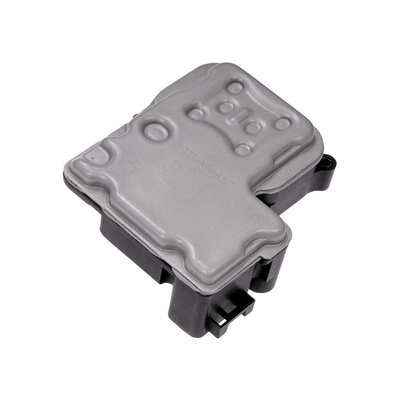
Shop the Parts Behind C1141
Below are the parts most often responsible for code C1141, ranked by how frequently each one is the actual culprit (per the diagnosis above). Tap any to see what we have for your vehicle.




The information in this article is provided for general reference and educational purposes only. Vehicle specifications, procedures, and part compatibility can vary by production date, trim level, and region. Always consult your vehicle's factory service manual and verify part numbers before purchasing or performing repairs. Safety-critical components such as airbags, seat belts, and braking systems should be installed by a qualified professional.
- 🧭 Diagnostic Flowchart
- 🎬 Helpful Videos
- 🛍️ Shop This Part
- What Does C1141 Mean?
- Can I Drive With C1141?
- Common Causes
- Symptoms
- Common Fixes & Costs
- Used vs. New Parts: Buying Guide
- What Happens If You Wait — Timeline
- Cost of Not Fixing It
- Diagnosis Steps
- When This Code Triggers (Freeze-Frame Conditions)
- Related Codes
- Climate & Environmental Factors
- How to Talk to a Mechanic About This Code
- Where to Take It: Dealer vs Independent vs Chain
- When to Walk Away From the Repair
- What Scan Tool You Need for This Code
- How to Clear the Code After You Fix It
- Will This Fail Emissions / State Inspection?
- Most Commonly Affected Vehicles
- Manufacturer-Specific Notes
- Real Owner Stories
- 2008 Ford Explorer at 115K miles with C1141
- 2008 BMW 328i (E90) at 95K miles
- 2005 Mercedes E-Class (W211) at 130K miles
- 2012 Suzuki Swift at 70K miles
- How to Prevent This Code From Triggering
- Frequently Asked Questions
- What is the most common mistake when diagnosing C1141?
- Can I replace just the ABS tone ring?
- Can a weak battery cause the C1141 code?
- How much does it cost to fix code C1141?
- Can I just clear the C1141 code?
- Will a C1141 code cause my car to fail a safety inspection?
- What is the difference between an active and passive wheel speed sensor?
- Key Takeaways
- 🎟️ Get 5% Off