

OBD-II Code C1146: Ultimate Diagnostic and Repair Guide
What C1146 Means, Manufacturer-Specific Causes, and Pro-Level Fixes
- Code C1146 disables your ABS and stability control systems, increasing your stopping distance and risk of skidding during emergency maneuvers.
- The definition of C1146 is manufacturer-specific: it indicates a right-front wheel speed sensor on Fords, a yaw rate sensor on Nissans, and an indirect TPMS fault on VW/Audi vehicles.
- Do not replace parts without testing; use an advanced OBD-II scanner to view live wheel speed and yaw rate data to pinpoint the exact failing component.
- Expect to pay between $150 and $350 for a typical wheel speed sensor replacement, but costs exceed $1,000 if a Nissan/Infiniti yaw rate sensor requires replacement and zero-point calibration.
What Does C1146 Mean?
C1146 is a manufacturer-specific chassis trouble code indicating a fault within the Anti-lock Braking System (ABS), Traction Control (TCS), or Vehicle Dynamic Control (VDC). The vehicle's computer detected an electrical fault, typically an open or shorted circuit, from a key sensor. The exact component at fault varies significantly by manufacturer, making it crucial to identify the specific definition for your car.
Technical definition: The SAE/ISO definition for C1146 is assigned by each manufacturer. For Ford, it means 'Speed Wheel Sensor RF Circuit Open'. For Nissan and Infiniti, it refers to a 'Side G Sensor Circuit' fault. For Volkswagen and Audi, it indicates a 'Tire Pressure Monitoring Display Signal Error' or an 'EEPROM Malfunction' within the ABS control module.
Can I Drive With C1146?
Yes, But With Caution. Yes, but with significant caution. Driving with code C1146 disables your Anti-lock Braking System (ABS) and Electronic Stability Control (ESC). This dramatically increases the risk of losing control in an emergency maneuver or on slippery surfaces. Without ABS, your wheels lock during hard braking, preventing you from steering to avoid obstacles. Without ESC, the risk of a skid or rollover is higher. Repair this promptly to restore these critical safety features.
🎬 Watch: A pro guide on how to diagnose an ABS light.Common Causes
- Faulty Wheel Speed Sensor or Damaged Tone Ring (Very Common) — The wheel speed sensor is the primary cause. The sensor fails internally, or the toothed tone ring it reads becomes cracked, swollen with rust, or contaminated with metallic debris, leading to an erratic or missing signal. This is frequent on Ford and Volkswagen Group vehicles. 🎬 See how corrosion ruins Ford wheel speed sensors in this video.
- Damaged or Corroded Wiring/Connectors (Common) — Wiring harnesses for wheel speed and chassis sensors are exposed to harsh conditions. Wires stretch during suspension work, rub through their insulation, or break internally. Connectors fill with water and corrode, causing an open or shorted circuit.
- Faulty Yaw Rate / Lateral G-Sensor (Common) — This sensor measures the car's rotational speed and side-to-side forces. It fails internally, sending incorrect or no data to the control module. This is the most common cause for this code on Nissan and Infiniti vehicles.
- Faulty Tire Pressure Monitoring System (TPMS) (Less Common) — On vehicles with indirect TPMS (VW/Audi), the system uses wheel speed data to infer tire pressure. A fault in this system triggers C1146. On vehicles with direct TPMS (Hyundai, Kia, Chevrolet), a failed TPMS sensor in the wheel or a module problem sets this code.
- Low Battery Voltage or Poor Ground Connection (Less Common) — ABS and ESC control modules are highly sensitive to system voltage. A weak battery, failing alternator, or a corroded main chassis ground causes communication glitches and triggers a C1146 code, even if no primary sensor has failed.
- Recent Suspension, Tire, or Brake Work (Less Common) — Mechanical work near the wheels inadvertently causes this code. A wheel speed sensor wire is stretched or not re-secured properly, a connector is not fully seated, or a new TPMS sensor is not programmed correctly.
- Failing ABS or Vehicle Stability Control Module (Rare) — The control module itself fails due to internal circuit board problems, software corruption, or memory (EEPROM) errors. This is a more expensive root cause.
- Brake Fluid Level Switch or Brake Pedal Switch Fault (Rare) — On some Ford models, a C1146 code is triggered by a fault in the brake light switch circuit, which the ABS module monitors to know when the brakes are applied.
Symptoms
- ABS Warning Light On — The Anti-lock Braking System (ABS) warning light is illuminated on the dashboard. This is the most common symptom.
- Traction Control or Stability Control Light On — The light for the Traction Control System (TCS), Vehicle Dynamic Control (VDC), or Electronic Stability Program (ESP) is on, often in conjunction with the ABS light.
- TPMS Warning Light On — The Tire Pressure Monitoring System light is on, which flashes or remains solid, particularly on VW, Audi, Hyundai, and Kia models.
- Erratic Braking or Stability Control Activation — The ABS pulses the brakes unnecessarily at low speeds, or the stability control activates during normal turns, creating a brief, unexpected braking sensation.
- Brake System Warning Light On — A general brake system warning light illuminates in addition to the ABS/TCS lights, indicating a broader fault has been detected.
Diagnostic Flowchart
Tap your situation to follow the diagnostic path that matches what you're seeing on this code.
Common Fixes & Costs
- Replace a Faulty Wheel Speed Sensor — Parts: $50-$150, Labor: $100-$200, ~1.2 hr book time (DIY)
- Repair Damaged Wiring or Connector — Parts: $15-$50, Labor: $150-$300, ~2 hr book time (Intermediate)
- Replace Wheel Hub/Bearing Assembly (with integrated tone ring) — Parts: $150-$400, Labor: $150-$300, ~1.5 hr book time (Intermediate)
- Replace a Faulty Yaw Rate / G-Sensor — Parts: $700-$900 (OEM), Labor: $150-$250 (includes calibration), ~1.8 hr book time (Professional)
- Replace a Faulty TPMS Sensor — Parts: $40-$120, Labor: $50-$150 (includes programming/relearn), ~0.8 hr book time (Professional)
Used vs. New Parts: Buying Guide
When a used part is worth it: For high-cost components like a Nissan/Infiniti Yaw Rate Sensor ($700+ new), a used part from a low-mileage, accident-damaged vehicle is cost-effective. For inexpensive parts like wheel speed sensors, the labor cost to replace it outweighs the savings, making a new part with a warranty the smarter choice.
Donor-vehicle mileage cap: roughly under 60000 miles for the part to have meaningful remaining life.
Donor quality checklist:
- Verify the donor vehicle's VIN to ensure part compatibility and check for recalls.
- Ensure the donor was not scrapped for electrical or flood-related issues.
- Visually inspect connectors on used parts for corrosion, bent pins, or harness damage.
Decision logic:
- If Part is a wheel speed sensor (<$150 new) → Buy a quality aftermarket or OEM new part. The risk and labor of a repeat failure with a used sensor isn't worth the small savings.
- If Part is an expensive module like a Yaw Rate Sensor (> $500 new) → A used part from a reputable salvage yard with a warranty (30-90 days) is a reasonable choice.
- If Part is a wheel hub assembly with an integrated sensor → Buy new. The bearing is a wear item, so a used assembly has an unknown and limited remaining lifespan.
Warranty tradeoff: Used parts offer a 30-90 day functional warranty. Aftermarket new parts come with a 1-year to limited lifetime warranty. OEM new parts carry a 12-month manufacturer's warranty.
Worst-case if a used part fails: $200-$400 if a used sensor or module fails after the warranty period, requiring a second part purchase and repeat labor costs.
What Happens If You Wait — Timeline
- Immediate: ABS, Traction Control, and Stability Control warning lights illuminate. The safety systems are immediately disabled. The vehicle's standard hydraulic brakes remain functional. (MPG impact: 0%% · Added cost: $0 (Safety risk is the immediate cost))
- 0-3 Months: Continued operation with disabled safety systems, increasing the risk of loss of control in an emergency. An intermittent fault becomes a permanent 'hard' fault. The vehicle fails any state safety inspection. (MPG impact: 0%% · Added cost: $0)
- 3-12 Months: The original point of failure degrades. A chafing wire rubs through completely, or a corroded connector deteriorates further, making the eventual diagnosis more difficult if new symptoms arise. (MPG impact: 0%% · Added cost: $0-$50 (Potential for more complex diagnostic time))
- 12+ Months (Worst-Case Scenario): A persistent, unfixed short-to-ground in a sensor's wiring harness overheats and damages the corresponding driver circuit inside the ABS control module. This escalates a simple wiring or sensor repair into a costly module replacement. (MPG impact: 0%% · Added cost: $1000-$2000 (Cost to replace and program a new ABS control module))
Cost of Not Fixing It
- Immediate: ABS and Stability/Traction Control systems are disabled. Increased risk of wheel lock-up, skidding, and loss of control in panic stops or on slippery surfaces. (Added cost: N/A (Safety Risk))
- 0-6 Months: Continued operation without key safety features. Fails state safety inspections. The original fault degrades further, leading to complex intermittent electrical issues. (Added cost: $0 (unless it causes a more complex diagnostic issue))
- 6+ Months: A persistent short circuit in a sensor harness damages the ABS control module's driver circuit over time, turning a simple sensor repair into a costly module replacement. (Added cost: $1000-$2000 (Module damage))
Diagnosis Steps
- Read Fault Codes & Check for TSBs
Use a manufacturer-specific OBD-II scanner to confirm C1146 and get its specific definition for your vehicle. Search for Technical Service Bulletins (TSBs) for your year, make, and model related to C1146, as manufacturers often release known fixes.
Tools: Advanced OBD-II Scanner, TSB Database Access (Beginner) - Analyze Live Sensor Data
Use an advanced scanner to view live data from the ABS module. For a suspected wheel speed sensor fault, drive slowly (under 10 mph) and watch the speed readings from all four sensors. A sensor that reads 0, is erratic, or lags behind the others is faulty. For a suspected yaw/G-sensor fault (Nissan/Infiniti), watch the sensor's output in degrees-per-second. It should read near 0 deg/s when stationary and change smoothly during turns.
Tools: Advanced OBD-II Scanner with Live Data (Intermediate) - Visual Inspection of Wheels and Wiring
Safely raise the vehicle. Visually inspect the wiring harness leading to each wheel speed sensor. Look for chafing, melting, or obvious breaks. Check the connectors for corrosion or pushed-out pins. Inspect the ABS tone ring for cracks, swelling from rust, or missing teeth.
Tools: Flashlight, Jack and Jack Stands (Beginner) - Signal Swapping for Confirmation
If you suspect a bad wheel speed sensor and the left/right sensor connectors are compatible, swap them. Connect the Right Front sensor to the Left Front harness connector and vice versa. Clear the codes and re-scan. If the fault code moves to the opposite side, you have definitively proven the sensor itself is the point of failure.
Tools: None (or Jumper Wires if connectors differ) (Intermediate) - Check Tire Pressures and TPMS Function
If the code definition is TPMS-related, verify all tires are inflated to the placard pressure. On VW/Audi with indirect TPMS, attempt to reset the system via the infotainment menu. For direct systems, use a TPMS tool to confirm each sensor is broadcasting a signal.
Tools: Tire Pressure Gauge, TPMS Scan Tool (Beginner) - Test Active Wheel Speed Sensor Voltage
For modern 2 or 3-wire active sensors, resistance tests are invalid. With the connector plugged in and ignition on, backprobe the signal and ground wires. You should see a digital square wave signal on an oscilloscope when the wheel is spun. No signal or a distorted waveform points to a bad sensor, tone ring, or wiring issue.
Tools: Oscilloscope, Backprobe Pins, Wiring Diagram (Advanced) - Test Passive Wheel Speed Sensor Resistance
For older 2-wire passive sensors, disconnect the sensor and set a multimeter to Ohms. Probe the two pins on the sensor side. A good sensor typically has a resistance between 800 and 2,000 Ohms. An infinite reading (OL) indicates an open circuit, while a reading near zero indicates a short. Compare the reading to the sensor on the opposite wheel.
Tools: Digital Multimeter, Jack and Jack Stands (Advanced) - Test the Sensor Circuit with a Multimeter
For a suspected sensor circuit fault (e.g., Ford 'RF Circuit Open'), disconnect the sensor and the ABS module. Using a wiring diagram, identify the two pins for the suspect sensor at the module connector. Measure the resistance through the wiring. An infinite reading (OL) confirms an open circuit (broken wire). Wiggling the harness exposes intermittent breaks.
Tools: Digital Multimeter, Vehicle-Specific Wiring Diagram (Advanced) - Test Analog Yaw Rate / G-Sensor Voltage
For an analog yaw rate sensor (Nissan/Infiniti), disconnect the battery and locate the sensor under the center console. Reconnect the battery and turn the ignition ON. Backprobe the sensor's connector. You should find a 5V reference wire, a ground wire (<0.1V), and a signal wire. With the vehicle stationary on a level surface, the signal wire should read approximately 2.5V. Any significant deviation indicates a failed sensor.
Tools: Digital Multimeter, Trim Removal Tools, Backprobe Pins (Advanced) - Check for Module EEPROM Reset (VW/Audi)
If a VW or Audi shows C1146 with an 'EEPROM Malfunction' definition, the issue is a software glitch in the ABS module's memory. Before replacing the module, use a diagnostic tool like VCDS to access the ABS module's 'Basic Settings' and perform the 'Reset to factory settings' routine specifically for the TPMS.
Tools: VCDS or equivalent VW/Audi Diagnostic Tool (Advanced)
When This Code Triggers (Freeze-Frame Conditions)
- Vehicle Speed: 15-25 mph (The ABS module performs a self-test upon startup once the vehicle exceeds a low-speed threshold (10-15 mph). A hard fault is logged at this moment.)
- Vehicle Speed: 45-65 mph (An intermittent fault from a sensor or wiring is captured during steady-state highway driving, where the module expects all wheel speeds to be identical.)
- RPM: 1200-2200 (Light throttle/cruise. The code is less likely to set during heavy acceleration or deceleration, as wheel speed differences are expected.)
- Battery Voltage: 13.2-14.5V (Normal operating voltage. A low voltage condition (<12V) at the time of the fault indicates a power supply issue as the root cause, rather than a sensor failure.)
Related Codes
- C1145 — On Nissan/Infiniti vehicles, this code is for the 'Yaw Rate Sensor Circuit' and appears with C1146 ('Side G-Sensor Circuit'). Since both sensors are integrated into one unit, seeing both codes together is a definitive sign that the entire Yaw Rate/G-Sensor assembly needs replacement.
- C1155 — On Ford vehicles, C1146 points to an open circuit for the Right Front (RF) wheel speed sensor. C1155 indicates the identical fault but for the Left Front (LF) wheel speed sensor. This isolates the problem to a specific corner of the vehicle.
- C1236 — A generic code for 'Low Speed Wheel Sensor Signal Missing'. C1146 on a Ford is more specific, indicating an 'Open Circuit', which points directly to a broken wire or a complete internal sensor failure, rather than just an erratic signal.
- U0121 — This code means 'Lost Communication With ABS Control Module'. If seen alongside C1146, it suggests a failing ABS module, a power/ground issue to the module, or a CAN bus communication failure, rather than a single sensor fault.
Climate & Environmental Factors
- Cold Climates / Rust Belt: Significantly increases the failure rate of wheel speed sensors. Road salt and moisture accelerate corrosion, causing the sensor body to seize inside the metal bore of the wheel hub. The ABS tone ring swells with rust, cracking it or causing it to contact and destroy the sensor.
- High Humidity: Accelerates corrosion in wiring connectors. Moisture seeps past weather seals, causing pins to corrode and leading to intermittent or permanent open/short circuits. This is a common cause of circuit-specific codes like C1146 on Ford vehicles.
How to Talk to a Mechanic About This Code
Say this: "I have an ABS and traction control light on, and my scanner shows code C1146. I'd like to schedule a diagnostic appointment. Based on my vehicle [Insert Your Make, e.g., Ford/Nissan], I suspect it's either a wheel speed sensor circuit issue or a yaw rate sensor fault. Can you please start by testing the specific sensor and its circuit rather than quoting a module replacement?"
This signals you've done your research and understand the common causes for your specific vehicle. It directs the technician to the most likely problem area and discourages them from starting with the most expensive and least likely fix (like replacing the entire ABS module). It establishes you as an informed customer.
Avoid saying:
- My ABS light is on, can you just fix it?
- I think I need a new ABS module.
- Just do whatever it takes to get the light off.
Questions to ask before authorizing the repair:
- What was the specific point of failure? Was it the sensor itself, the wiring, or the connector?
- Can you show me the faulty part and the live data from the scanner that confirms the diagnosis?
- If it's a yaw rate sensor, does the repair estimate include the mandatory 'Zero Point Calibration' after installation?
- What is the warranty on the replacement part and your labor?
Where to Take It: Dealer vs Independent vs Chain
- Dealer:
Recommended for Nissan/Infiniti repairs that require mandatory 'Zero Point Calibration' or for vehicles under warranty. For other makes where it's a simple sensor swap, an independent shop is more cost-effective.
Best for: Vehicles under warranty, Complex manufacturer-specific issues (e.g., Nissan/Infiniti yaw rate sensor calibration), When a Technical Service Bulletin (TSB) requires a specific software update
Downsides: Significantly higher labor rates and parts costs., May be quicker to recommend expensive module replacement. (Typical cost: +50% vs. baseline) - Independent Shop:
Best fit for most C1146 repairs, especially on Ford and VW/Audi models where the fix is typically a wheel speed sensor or wiring. Vet the shop to ensure they have modern diagnostic tools for ABS systems.
Best for: Out-of-warranty vehicles with common faults like wheel speed sensors (Ford, VW)., Owners looking for a better value and a direct relationship with their mechanic.
Downsides: Quality and diagnostic equipment varies greatly; ensure the shop has an advanced scanner capable of reading ABS/chassis codes., May not have the specific tool for post-repair calibrations (e.g., yaw rate sensor). (Typical cost: +0% vs. baseline) - Chain Shop:
Use with caution. Acceptable if the diagnosis is a straightforward wheel speed sensor replacement on a common vehicle. AVOID for any C1146 issue that involves wiring diagnostics, module issues, or calibration (especially on Nissan/Infiniti).
Best for: Simple, clear-cut wheel speed sensor replacements where you have already confirmed the diagnosis.
Downsides: Technician skill varies widely., Often lack the advanced diagnostic tools or expertise for complex electrical diagnosis or calibrations., High pressure to upsell leads to unnecessary repairs. (Typical cost: -10% vs. baseline)
When to Walk Away From the Repair
If the estimated repair cost exceeds 40-50% of the car's current private-party value, sell or trade it in rather than fixing it.
- Car worth $4500, fix is $2100: Walk away. The repair cost is nearly 50% of the car's value. It's not a sound financial decision.
- Car worth $15000, fix is $950: Fix it. The repair cost is well below the threshold and restores a critical safety feature.
- Car worth $3000, fix is $1200: Borderline. This is a tough call. If the car is otherwise in excellent condition, it might be worth it. If it has other pending issues, it's better to walk away.
What Scan Tool You Need for This Code
Minimum: An OBD-II reader that specifically reads and clears Anti-lock Braking System (ABS) fault codes. A basic engine-only code reader will NOT see C1146.
A standard $20 code reader only communicates with the Powertrain Control Module (engine and transmission). Code C1146 is stored in the ABS/Chassis Control Module. Without a scanner that accesses this specific system, you cannot read the code, view live sensor data, or clear the light after the repair.
Budget: BlueDriver Pro (~$100) — Reads and clears ABS codes, displays live data from wheel speed sensors, allowing you to see which sensor has failed while driving. An excellent choice for DIY diagnosis of wheel speed sensor faults.
Mid-range: Foxwell NT630 Plus / XTOOL D7 (~$150-400) — These scanners offer bi-directional control. This allows them to perform an 'ABS Bleed' after hydraulic repairs and perform the 'Zero Point Calibration' required for yaw rate sensors on many Nissan, Infiniti, and Toyota models.
Professional: Autel MaxiCOM MK808 / Launch X431 Series (~$500-1200) — Provides full OEM-level diagnostics. These tools reliably perform all necessary functions like ABS bleeding, sensor calibrations, and module programming for a wide range of vehicles. This is the level of tool a professional independent shop uses.
Rent vs buy: Many auto parts stores like AutoZone scan your ABS codes for free. This is the best option for a one-time diagnosis. However, they will not clear the code for you. If you plan to do the repair yourself, you must buy a scanner capable of clearing ABS codes to turn the light off.
How to Clear the Code After You Fix It
- Ensure the repair is complete and all connectors are secure.
- Use an OBD-II scan tool with ABS/Chassis system capabilities to erase the C1146 fault code.
- Start the vehicle and drive it, exceeding 15 mph to allow the ABS module to perform its self-test.
Drive cycle (~10 minutes): Drive the vehicle for at least 5-10 minutes, including turns and reaching a speed of at least 25 mph. If the warning lights do not return, the repair is successful. The ABS system self-tests at each startup, so a single drive cycle verifies the fix.
Readiness monitors affected: None
Watch out for:
- Disconnecting the battery does not clear a C1146 code from the ABS module's memory.
- If the root cause is not fixed, the code returns immediately after the vehicle starts moving and the ABS module runs its self-test.
- Basic OBD-II code readers only access the powertrain module and cannot read or clear chassis codes like C1146.
Will This Fail Emissions / State Inspection?
No — by itself this code doesn't fail OBD inspection (but it can keep readiness monitors from setting, which causes a separate fail).
- California: Will NOT fail the smog check. California's emissions test focuses on the Check Engine Light and emissions system readiness monitors, not ABS faults.
- New York: Will fail the safety inspection. A 2017 bill (S6334) makes an illuminated ABS warning light a cause for inspection failure. It will not fail the emissions portion of the test.
- Texas: Will NOT fail inspection. As of 2025, safety inspections are no longer required for most non-commercial vehicles. For commercial vehicles, an illuminated ABS lamp is not a cause for rejection.
Most Commonly Affected Vehicles
- Nissan Rogue, Armada, 350Z, Murano (2005-2015) — Extremely prone to Yaw Rate/Side G-Sensor failures triggering C1146. For some 2008-2015 Rogues, TSB NTB13-088a notes that aftermarket 12V accessories cause RF interference and falsely trigger TPMS-related codes.
- Infiniti G35, FX35, QX56 (2005-2012) — Shares the VDC system with Nissan; C1146 is most often caused by a failed Yaw Rate/G-Sensor located under the center console.
- Ford F-Series Trucks, Escape (2008-2016) — On these vehicles, C1146 almost always means 'Speed Wheel Sensor RF Circuit Open', pointing to the right front wheel speed sensor or its wiring. On many F-150s, the sensor and harness are sold as one unit.
- Volkswagen Golf, Jetta, Polo, Passat (2010-2018) — Frequently linked to the indirect TPMS. The cause is a failing rear ABS sensor or a damaged/corroded ABS tone ring on the rear wheel bearing, which must be replaced as an assembly. Some 2016+ models log this due to an EEPROM error requiring a TPMS reset.
- Audi A3, A4 (2010-2018) — Similar to VW, this code relates to the indirect TPMS. Diagnosis focuses on the underlying ABS wheel speed sensor data. A system reset via the MMI is the first step after confirming tire pressures are correct.
- Chevrolet Silverado, Suburban, Tahoe (2014-2019) — Relates to the direct TPMS. The 2019 model year was a transition period, using both 315 MHz and 433 MHz sensors, so verifying the correct frequency is critical during replacement.
- Hyundai Santa Fe, Tucson, Elantra (2013-2020) — Indicates a TPMS fault. After replacing a sensor, a specific OBD relearn procedure is required using a TPMS tool. For 2019+ models, the TPMS is reset through the 'User Settings' menu in the instrument cluster.
- Kia Sorento, Sportage, Optima (2012-2020) — Frequently points to a direct TPMS issue. The service kit (valve stem, grommet) leaks before the sensor itself fails electronically. A full relearn procedure is necessary after sensor replacement.
Manufacturer-Specific Notes
- Ford: For Ford, C1146 is highly specific, translating to 'Speed Wheel Sensor RF Circuit Open'. The diagnostic path immediately focuses on the right-front wheel speed sensor, its wiring, and connector.
- Nissan / Infiniti: This code is the classic sign of a failed Yaw Rate/G-Sensor assembly, located under the center console. After replacement, a 'Zero Point Calibration' with a capable scan tool is mandatory. A major recall exists for the ABS Actuator on some 2015-2018 models which causes a fire; if the ABS light is on, it is critical to have it properly diagnosed.
- Volkswagen / Audi: On these makes, C1146 is typically for the indirect TPMS and does not mean a sensor in the wheel has failed. The problem is a fault with one of the ABS wheel speed sensors (often a rear one) or its tone ring. A flashing TPMS light indicates a system fault, while a solid light means low pressure.
- Hyundai / Kia: This code is almost exclusively related to the direct TPMS. A common scenario is the code appearing after new tires are installed, caused by a damaged sensor, an incorrectly programmed aftermarket sensor, or failure to perform the OBD relearn procedure.
Real Owner Stories
2016 VW Passat at 114K miles with TPMS fault
Flashing TPMS light and C1146 code appeared intermittently at highway speeds (>60 mph). Tire pressures were correct and the TPMS reset function in the infotainment system did not solve the issue.
What they tried:
- Checked tire pressures and performed multiple TPMS resets via the car's menu.
- Visually inspected wheel speed sensor wiring and found no obvious damage.
Outcome: Using a VCDS scanner, a technician found that both rear wheel speed sensors provided interrupted signals at high speed. The root cause was failing/corroded ABS tone rings, which are integrated into the wheel bearings. Replacing both rear wheel bearing assemblies permanently fixed the TPMS fault.
Lesson: On VW/Audi with indirect TPMS, a C1146 code is almost never a tire pressure issue. It is a fault in the underlying ABS wheel speed sensing system. Live data analysis is key to seeing which sensor is dropping out.
2006 Infiniti G35 with VDC/SLIP lights on
The 'VDC OFF' and 'SLIP' lights were constantly illuminated on the dashboard. The owner had recently installed new wheels and tires.
What they tried:
- Disconnected the battery to try and reset the system, but the lights returned immediately.
- A shop scanned the car and found codes C1145 (Yaw Rate Sensor Circuit) and C1146 (Side G-Sensor Circuit). The dealer quoted over $1,500 to replace the sensor assembly.
Outcome: The owner found a forum post detailing a common wiring failure. The orange power wire to the yaw rate sensor (located under the center console) provided interrupted power after starting the car. The owner fixed it by cutting the faulty power wire and splicing in a new, fused power source from a constant 12V location. This restored power to the sensor and extinguished the warning lights.
Lesson: For Nissan/Infiniti, C1145 and C1146 together strongly point to the yaw rate sensor assembly. However, before spending $1,000+ on a new part, verify that the sensor is receiving consistent power and ground. A simple wiring repair saves a very expensive part replacement.
2011 Ford F-150 with ABS light
ABS and Traction Control lights came on. A basic scan tool confirmed code C1146, defined for Ford as 'Speed Wheel Sensor RF Circuit Open'.
What they tried:
- The owner first replaced the Right Front (RF) wheel speed sensor ($50 part), but the code returned.
- They inspected the wiring harness more closely and found that the wire had rubbed through and broken inside the plastic loom near the upper control arm.
Outcome: A wiring repair was performed using a weatherproof butt connector and heat shrink tubing. The total cost was under $10 for repair materials, plus the cost of the unnecessarily replaced sensor. The code was cleared and did not return.
Lesson: A 'Circuit Open' code on a Ford points to a break in the electrical path. This is the sensor itself failing internally or a broken wire. Always perform a continuity test on the wiring from the sensor connector to the ABS module before replacing parts to confirm where the break is.
How to Prevent This Code From Triggering
- Perform a brake fluid flush, including an ABS bleed. (Every 2-3 years) — Brake fluid absorbs moisture over time. This moisture causes internal corrosion in the delicate valves and electronic components of the ABS hydraulic unit and module, leading to expensive failures. A full flush requires a scan tool to cycle the ABS pump to purge all old fluid.
- Clean ABS sensors and tone rings during brake service. (Every time brakes are replaced) — Metallic brake dust and road grime accumulate on the magnetic tip of the ABS sensor and in the teeth of the tone ring, disrupting the signal and causing false codes. A quick cleaning with brake cleaner and a soft brush prevents these issues.
- Apply dielectric grease to sensor connector seals. (When replacing a sensor or performing wiring repairs) — Applying a small amount of dielectric grease to the rubber weather seal of a connector (not on the pins themselves) keeps moisture and road salt from getting inside. This prevents the corrosion that causes 'circuit open' or 'short' faults.
- Inspect and secure sensor wiring after any suspension work. (After replacing struts, control arms, etc.) — It is easy to forget to re-clip the ABS sensor wire to the frame or suspension components. A loose wire rubs against a tire or axle, quickly wearing through the insulation and causing a short circuit that triggers code C1146.
Frequently Asked Questions
Is it safe to drive with code C1146?
It is physically possible to drive the vehicle, but it is not safe. Your ABS and stability/traction control systems are disabled. In a panic stop, your wheels lock up, increasing stopping distance and causing a loss of steering.
What happens if I don't fix code C1146?
Ignoring the code means you continue to drive without the protection of ABS and stability control. The warning lights remain on, and you fail any vehicle safety inspection. The underlying problem, like a damaged wire, worsens and affects other systems.
How much does it cost to fix C1146?
The cost varies widely based on the cause. A simple wheel speed sensor replacement costs $150-$350. However, if the cause is a Nissan yaw rate sensor, the repair costs between $850 and $1,150 due to the expensive part and mandatory calibration.
I just got new tires and now I have a C1146 code. Why?
This is very common. The tire shop likely damaged a TPMS sensor during the change, installed an incompatible aftermarket sensor, or failed to perform the necessary TPMS relearn procedure.
Can a bad battery cause code C1146?
Yes. Control modules for systems like ABS and stability control are highly sensitive to voltage. A weak battery causes communication errors between modules, manifesting as a C1146 code even when no sensor is bad.
Why does my traction control light turn on with the ABS light?
Traction control, stability control, and ABS all rely on the same primary inputs, especially the wheel speed sensors. When a fault is detected, the computer disables all dependent safety systems as a precaution, illuminating all respective lights.
Will clearing the code make the light go away?
Clearing the code with a scanner only turns the light off temporarily. The ABS system performs a self-test every time the vehicle is driven. It detects the hardware fault again immediately, and the warning lights return.
Key Takeaways
- Code C1146 disables your ABS and stability control systems, increasing your stopping distance and risk of skidding during emergency maneuvers.
- The definition of C1146 is manufacturer-specific: it indicates a right-front wheel speed sensor on Fords, a yaw rate sensor on Nissans, and an indirect TPMS fault on VW/Audi vehicles.
- Do not replace parts without testing; use an advanced OBD-II scanner to view live wheel speed and yaw rate data to pinpoint the exact failing component.
- Expect to pay between $150 and $350 for a typical wheel speed sensor replacement, but costs exceed $1,000 if a Nissan/Infiniti yaw rate sensor requires replacement and zero-point calibration.
Helpful Videos
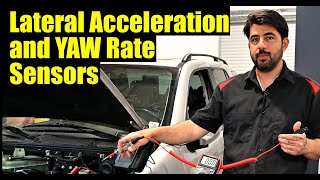
Shop the Parts Behind C1146
Below are the parts most often responsible for code C1146, ranked by how frequently each one is the actual culprit (per the diagnosis above). Tap any to see what we have for your vehicle.



The information in this article is provided for general reference and educational purposes only. Vehicle specifications, procedures, and part compatibility can vary by production date, trim level, and region. Always consult your vehicle's factory service manual and verify part numbers before purchasing or performing repairs. Safety-critical components such as airbags, seat belts, and braking systems should be installed by a qualified professional.
- 🧭 Diagnostic Flowchart
- 🎬 Helpful Videos
- 🛍️ Shop This Part
- What Does C1146 Mean?
- Can I Drive With C1146?
- Common Causes
- Symptoms
- Common Fixes & Costs
- Used vs. New Parts: Buying Guide
- What Happens If You Wait — Timeline
- Cost of Not Fixing It
- Diagnosis Steps
- When This Code Triggers (Freeze-Frame Conditions)
- Related Codes
- Climate & Environmental Factors
- How to Talk to a Mechanic About This Code
- Where to Take It: Dealer vs Independent vs Chain
- When to Walk Away From the Repair
- What Scan Tool You Need for This Code
- How to Clear the Code After You Fix It
- Will This Fail Emissions / State Inspection?
- Most Commonly Affected Vehicles
- Manufacturer-Specific Notes
- Real Owner Stories
- 2016 VW Passat at 114K miles with TPMS fault
- 2006 Infiniti G35 with VDC/SLIP lights on
- 2011 Ford F-150 with ABS light
- How to Prevent This Code From Triggering
- Frequently Asked Questions
- Is it safe to drive with code C1146?
- What happens if I don't fix code C1146?
- How much does it cost to fix C1146?
- I just got new tires and now I have a C1146 code. Why?
- Can a bad battery cause code C1146?
- Why does my traction control light turn on with the ABS light?
- Will clearing the code make the light go away?
- Key Takeaways
- 🎟️ Get 5% Off